

 Apple Podcasts

 Spotify

 Youtube Music

 RSS Feed
 YouTube
 Pandora
 iHeartRadio
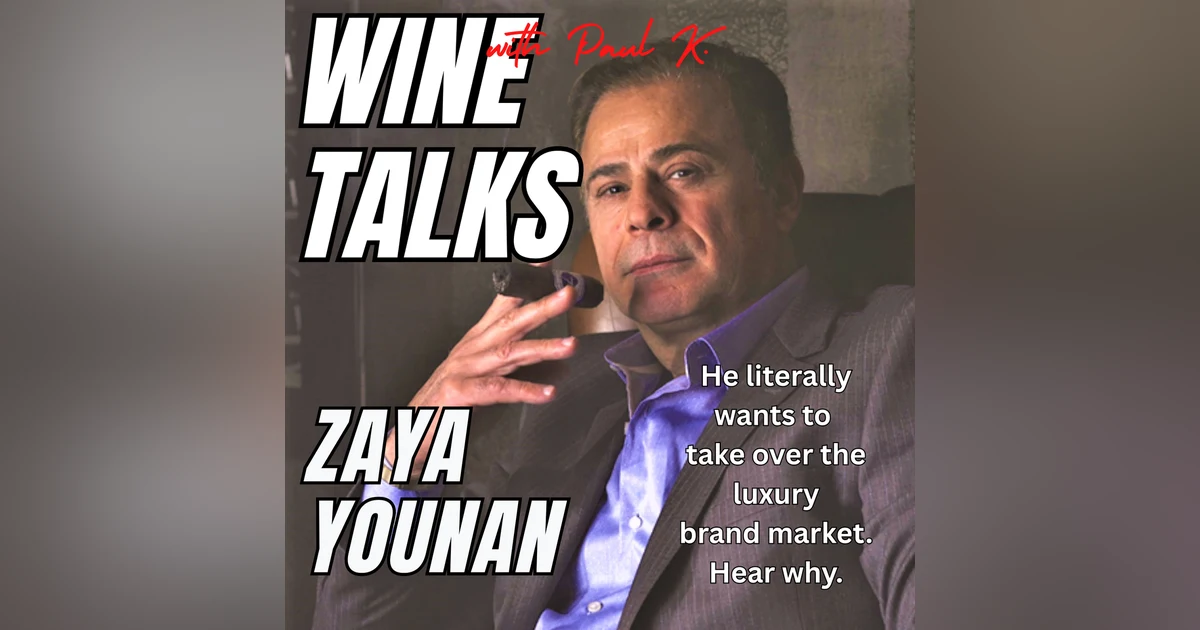
With $25 In His Pocket, He Left Iran at 13 Years Old. This Is His Story. Zaya Younan.

I was asked to taste a wine and give an opinion of its quality. It was very good. A St. Emilion from a Chateau I did not know. The wine had never been in the US, and the wholesale company was new to the idea of even carrying a St. Emilion. My curiosity required me to ask the wholesaler, "Maybe the Chateau owner will come on the show?" "Let me check." "He would love it"
So then I though I'd best look up the guest (this was one hour before his arrival). OMG..this Zaya Younan is a formidable businessman with over 1200 patents, 5 hotels, three golf courses, a fine cigar company, and now 2 Chateaux in France. I was humbled; for him taking the time to drive to my studio to be on the podcast, shows serious humility....but maybe I shouldn't be so surprised. This is often a trait of successful people: Do what it takes.
Zaya Yonan’s story is so cinematic, you’d think Spielberg had optioned it already—after all, how often do you meet someone who bought his ticket to America at age 13 by painting bicycles and hustled his way from Tehran’s crowded streets to the boardrooms of General Motors, before helming a global luxury empire of vineyards, hotels, and world-class spirits? On this episode, you’ll be invited deep into Zaya’s personal odyssey, where survival, vision, and relentless drive transform childhood struggle into the highest echelons of success. You’ll hear how a chance encounter with an American principal in Iran sparked the dream that shaped his life, how the hunger for opportunity forged discipline and resilience, and how an immigrant’s appreciation for the nuances of culture, flavor, and ambition blossomed into a lifelong pursuit of excellence. Layer by layer, the conversation uncorks everything from engineering breakthroughs at GM—where Zaya’s after-hours tinkering changed the game—to his uncompromising standards in wine, cognac, and vodka; you’ll discover why he believes terroir and tradition trump short-cuts and quick profits every single time. Along the way, you’ll learn why luxury, for Zaya, is less about showmanship and more about a soulful, intellectual connection—whether you’re savoring a Saint-Émilion Grand Cru or admiring a watch. Listeners will leave with more than stories: you’ll gain rare insights into what makes a wine “talk,” how French winemaking culture prioritizes complexity over convenience, and how food, heritage, and even adversity can fuel an entrepreneurial spirit. Most importantly, you’ll reflect on how Zaya’s tale of grit and gratitude reframes both the immigrant experience and the real reasons we chase—and cherish—luxury.
Try the wines here: www.frenchconnectionwinespirits.com.
#winepodcast
#WineTalks
#luxurybrands
#ZayaYonan
#PaulKalemkiarian
#immigrantstory
#luxurywine
#Bordeaux
#SaintEmilion
#winemaking
#entrepreneurship
#successstory
#cognac
#wineeducation
#wineinspiration
#luxurylifestyle
#wineindustry
#podcastlife
#wineconversation
#storytelling
0:00 You cannot just go out and buy pallets of wine and, you know, Hope that in 10 years you'll sell them at a better price. The vast majority of the wines, they will not take any value over 10 years. Sit back and grab a glass. It's Wine Talks with Paul Kay. Hey, welcome to Wine Talks with Paul Kay. And we are in studio today in beautiful Southern California about to have a conversation with Marc Lefleur all the way out in Geneva, Switzerland. Hey, have a listen to a couple of shows that just put out one coming up with Zaya Yunan. And this story is unreal when it comes out in about a week and a half. I mean, it's really, really quite interesting. But not while we're here today. Here to have conversations with Mark Lafleur. Welcome to the show. Thank you, Paul. Honored to be with you. From Geneva, Switzerland, along the way. Yes. So it's nighttime there, I think, right? 7 o' clock, 8 o' clock. Evening, evening, 7 o' clock. Beautiful sky. It's summer, summertime today. Are you Swiss by birth? No, I'm American by birth, actually. Born in Guadalupe, West Indy. My parents traveled a lot when I was a child and we ended up in Switzerland when I was 4 or 5 years old. So I've been here for quite some time. Wow.
1:20 How interesting is that? So what languages do you speak? We speak a few different languages in Switzerland. Obviously you have to learn mandatory German when we go to school and then we have a few options. So it's quite common to speak a fourth language, if not more. And my fourth language is Italian. In French. In French, obviously. Yeah, yeah, yeah. Wow. You know, I just had this guy I was talking about whose show is coming up, incredible story from Iran and he says, I came to America. I was 13. I did on my own. I showed up, I and they put me in German class in, I think it was in Illinois when he, where he landed at 13 by himself. He didn't bring his parents or anybody. He just decided he was leaving Iran and coming. I said, why would they put you in German class in Chicago when you're coming from a country that speaks Farsi?
2:16 So it didn't make any sense to me. But my father's from Cairo and he spoke five languages as part of the culture, which is not a very American thing to do, to have a multicultural, the background in languages as you're, as an American. So it's really interesting. Do you find that that language skill set is an important skill set in the wine trade? Yes. Well, in my, in my in my situation, it is because especially the Italian. I. I'm personally very fond of Piemont wines. I travel there very, very frequently. And obviously, speaking Italian opens a lot of doors in terms of building relationships with the producers. There's just a whole different way of being welcomed there when you speak the language.
3:06 I'm saying this, the Italians are very welcoming to everyone. There's no doubt about that. But surely speaking the language helps. Well, we were in Piemonte just a few months ago. I opened my big mouth because we like to go to Monaco for the Grand Prix. And I told some friends because every year we've told them that we've gone, they said, no, you know, it's too expensive or whatever the reasons are. This time, five of the couples said, yeah, we want to go. So I was straddled with 12 people to move around, and I, of course, wanted to do some wine events. And we started in Pomonte and had an incredible time there. Dropped into Monaco for the race, headed to Bordeaux for some tasting and podcasting there, and then came home. It was very gracious. But what a world of difference between wine cultures such as Piemonte. I don't know if you want to call Pimon to Piedmont, Pimonte, and just to say Bordeaux, you know, just a world of difference in the rural aspect of it, obviously, the grapes and the. In the terroir. But how do you. How do you define that with your clients when it comes to collecting and investing wine? Yeah, we can still. We can start from there. That's a good. That's. That's a good comparison. I think there are differences, I would say, in all areas. You mentioned terroir, you mentioned grape varieties, all these aspects, of course, but I think
4:38 the production in Piedmont is still very artisanal compared to what Bordeaux is doing. Bordeaux is at the top of the pyramid. It's a rich man's game in a good way, in the sense that there's a lot of capital available for the. For the. For the classified chateaus. They are competing for excellence, they are innovative. They are doing a lot of research to understand the environment in which they're growing the grapes, to understand how they can better in terms of wine quality. It's high tech in Bordeaux for the top tier chateaus and in Piedmont is more, I would say, reminiscent of what's happening in Burgundy in terms of approach.
5:31 And all the Piedmont producers have gone to Burgundy to see how things are done over there, to be able to learn more and replicate quite a few of the Burgundy approaches in Piemonte, that's an interesting comparison. And for the listeners, I don't think we properly introduced what you do as an investment consultant and building investment portfolios around wine, which is a really interesting concept. And we'll peel that back a little bit later. But when my dad was selling wine in the 70s in his wine shop as a French speaking, you know, his French was a second language or third language and a key understanding of the French culture. But he always sort of not complained, but he always sort of would say, hey, you know, the way the Bordelaise have positioned themselves, they've sort of not over romanticized, but romanticized the value of a good glass of Bordeaux and not exclude the rest of the wine world, but to sort of position itself, as you said, as king of the hill. And I think that's still true, that certainly they've been able to elevate their status in the world of wine based on the classification. And I guess the natural rarity of the wines is that, I mean it seems like it's always been a solid investment for someone to invest in a top growth Bordeaux.
7:01 That's a topic I love speaking about. And Bordeaux wines are not that rare as one would believe. And I think there's a misconception around the top. The first growth, for instance, as to their, their scarcity. Muto hot shield is is produced to about 300000 bottles per vintage. Margaux is 150 000. I think Lafitte is probably the smaller producer out of the first roast, it's still 100000 bottles. We're not talking about super rare bottles at all. And I think this is where Bordeaux faces issues, is when there's a global slowdown in market demand, they rapidly into oversupply situations and stress on pricing. That's when we see prices go down. Right.
7:57 Whereas Burgundy and Piemonte producers, well, historically in Burgundy and now for different reasons in Piemonte, we'll get to that. But Burgundy has top wines globally celebrated that can be produced at levels of what, two, three, four barrels, a thousand bottles, up to 5,000. So I mean the, the scale of what Burgundy and Piemonte is producing on single site vineyards is completely different from what Bordeaux is doing with hundred thousands of bottles of the, of the first growth. You know, there's so many directions that take that thought because again, these classified growths, they're positioned as you know, I think in general, the general public when it comes to wine would barely know how to pronounce them, let alone they would certainly say that the rarity of them would be, would be the eminent feature. And here we are saying there's no up to 25,000 cases of one and 115,000 cases of another. And that, that's quite voluminous. But it's still, it's still, they, they still have a demand and they still have a rare, an exclusivity to, around them. And if you talk to, let's say, novice collectors, novice investors, that's where they're going to go first, is to say, oh, well, I have, I have Lafitte in my cellar and I have Petrus in my cellar and I have,
9:28 I have, you know, Margaux in my cellar. It. And that's not changed in a long, long time. Does Barolo in Piemonte have that kind of, I don't know, what's the word I'm looking for? Do they have a kind of intrigue? Yeah, well, I think what you, what needs to be factored in is that Bordeaux has 150 years of marketing ahead of Burgundy and Piemonte. That's fair amount, you know, so there's, there's, it's. They started selling bottles in the 19th century. Right. So we're talking about a status that has grown ever since. Right. Whereas Burgundy is probably building a status at global scale in the past 50 years, maybe. And the Piemonte past 20, 30 or so. Right. So Piemonte is amongst what I call the investment worthy regions, the emerging, the emerging region because they're very new to, I would say the, the global public. And when you say of investment, are you talking about financial gain in the, in the future or quality or a little bit of both? Aging potential. I've got this in my cellar. I can't wait to taste it in five years, 10 years, 15 years kind of thing. Or like we're going to spend some money on some wine, put it in the cellar and then we're going to see how it does
10:59 in the future. Yeah, exactly. I think it's very important to, to, to make a distinction between what could be seen as a speculation and investment. Speculation would be betting on a few high priced bottles and hoping for a quick return in two, three years or so. Wine investment doesn't work like that. Returns are when they do actually happen in the expected way, or rather at the 10, 15 year horizon, if not more. So investing in wine, in essence. What does that mean?
11:41 That means whether you're collecting at home, whether you're using a managed storage solution, usually in bond, the, the essence is placing capital in wines that have a strong potential to age 20, 30, 40 years in terms of developing quality, while at the same time they will become rarer and rarer on the global market marketplace. So the, the, the, the, the target is to be the owner. Preserved wine that can age well, and of which you may find yourself being the only owner to have a case to sell on the market in 20, 30 years down the road. So that's interesting. So you, you have to sort of, not only, I mean, I guess the Bordeaux classified gross going back to that would be sort of the blue chip stocks, you know, everybody knows what they are. There's no, there's not necessary to predict their value in the future in the sense of quality, certainly not in financial gain or at demand for those aged Bordeaux in the future.
12:51 But man, if you're predicting potentially what a Barolo might be worth or, you know, another part of the world, Burgundy for instance, as well, that takes a little bit of skill and a little bit of understanding of where wines are, where the vintages, where the terroir is at the time that those vintages are made, in order to not only predict the quality of them, but potentially predict the rarity of them. When that happens, is that kind of your skill set? Is that what you're trying to invest into your, for your clients? Yeah, I think, I mean, no, no, no one can guess the future in terms of valuation.
13:34 You cannot draw a continuous line from the past, hoping the future will mirror the past. So the, the one thing that we can't put on the table is the understanding of terroir quality of aging potential of the wines in the volumes of production and potential demand going forward, I think we can use the data at hand and make an assumption rather than a prediction. Right. And in the case of Piemonte wines, Barolos and Barbarescos, what is interesting today is climate change, which is very honestly rather playing favorably to that region for the time being.
14:25 And I can see that for the next 10, 20 years, obviously if it gets much warmer quicker, it might be an issue. But the Nebbiolo grape variety that goes into the Barolos and Barbaresco is a late ripening grape. And historically on some cold vintages, the, the producers had a hard time to reach maturity with their grapes. And sometimes on the colder vintages, well, those Baros and Barbarescos would always remain rather austere and difficult to drink, even after some decades. Right. But the few degrees or degree and a half perhaps, that we're having on average today and in the Piemonte region is actually, in my opinion. And you can, you can see, you can hear that from producers helping the, the quality of, of the grapes generally. So we have a context here where the wines are absolutely superb coming out of the past vintages and long aging potential. Softer tannins, more approachable because both of. Both because of riper, riper grapes and, and improved white making, of course. So we have top quality, good, good climatic conditions, long aging potential in the wines versus Burgundy at, I would say, comparative caliber, maybe. Yeah. A quarter to, to
15:58 half the price. Yeah. You know, it's kind of interesting. I. I did. I did this for 35 years, tasted every Tuesday from 9am to 2pm you know, amassed 100,000 wines under my palate. Excellence. It took a long time for me to. To grasp the value of good Barolo, good Nebbiolo. And it almost wasn't until we went on this trip where I started to understand, you know, that terroir differences and how, how special the grape is to produce these rather unique wines in that part of the world. Does when somebody comes to you, it says, I want to invest in wine.
16:39 Is that what they say? Or I want to create a cellar that might have future financial value. What's their typical purpose of coming to Marc Lefleur and, and trying to figure out what they're going to do in the wine world? Well, usually they, they are already collectors. They have knowledge around wine, and they do have a feeling that they can probably do something a little bit more rational than purchasing by compulsion and drinking and enjoying, which they do, and they will continue doing. But if they have some extra cash to, to lay aside, they. They may be looking for a route of purchasing wines that is very simply backed up by a little bit more of data and analysis. And usually there's, there's a. There's an understanding that storing the wines in bond far away from home, not only for avoiding to drink them, because if you start drinking your investment well, then, well, that's great because you're drinking great wines. But the idea is to keep them aside. Usually they come to me to organize a managed inbond storage solution, which is kept. So wines are kept in professional storage.
17:56 That's interesting, because my career, look, my business was the original Wine of the Month club, and it was. Wines were 15 to $20 retail. That's what people bought, which is obviously a very important segment of the market. But I found there were two types of sort of unophiles that were really into wine There was the one type of unophile, which I see a lot, which is they just chase the biggest brand they can to say in the next conversation with somebody at dinner, I only drink this. I. I have this in my cellar. And that's one type of collector. And then there's the other type of collector that actually seeks to understand the value of that glass of wine, not just to talk about the brand name, but to actually talk about the wine you have. Are those two segments that exist, or are there more when it comes down to collectors and people investing in wine? No, I think you're. I can see those. Yeah, those. Those two polls as well. But what.
18:56 What often happens is that investing in wine and has a lot to do with deconstructing false beliefs. What. What I like to call. We talked about Bordeaux just before, but most often collectors who want to start investing in wine with a view not necessarily to drink the bottles, but to. To have them as cash in the bank. They. They would come to me and say, oh, you know, I love this wine. I would like to invest in this wine. Or, I've heard about this. Is this a good investment? And usually it's not the case, because the wines that you love continue loving them, but they're not necessarily a great investment for different reasons. I mean, we talked about Mouton, which is an amazing wine. There's many great reasons to acquire Mouton on a regular basis, because it's one of the top Bordeaux that can be found, and it's fabulous. But that's not necessarily where you want to put your. Your cash today. If you have a view of. Okay, I want to see some valuation over 20. 10, 20 years. All right, so there's. There's. There's. There's conversations I have with my clients around these topics. Sharing data, deconstructing false beliefs and. And showing them a route which is going towards properly rare products versus perception of rarity. You think there's social and political pressure on the perceived value of these wines.
20:29 And what do I mean by that? It's currently the. The sort of social view of Bordeaux is that anybody can go there. There's lots of Chateau for sale. You can invest if you want. And. And there certainly was some degree of exclusionary practices when it comes to real estate in Bordeaux. Burgundy's always been that way. Burgundy is very tightly controlled, as you know, there's people standing in line to get access to vineyards. Does any of that play into what. What you talk about with your investors? Yes, yes, there's a bit coming Back to Bourdeaux. I think there's a lot, there's too much generalization, like there is too much generalization in the world of wine everywhere. I think there's been last year a lot of talk, the media was talking about it, well, here in Europe, but I think in the US as well, of wine growers taking the vineyards out to replace it with other agricultural, whatever they, they could go for. But the French government, they subsidized, you know, taking the vineyards out. So the, the picture of Bordeaux was, was, was widely damaged because of, of that situation. But we're not talking about, we're not talking about the top level, but we're talking about the entry level. Right, which is a very different business, a very different segment that has nothing to do with investment, by the way. It's a, it's a different segment that
22:02 has produced wines in large quantities. The Bordeaux appellation is very big in itself. And they did suffer from competition from Italian wines that probably, yeah, cheaper entry points, better value for money, Spanish wines, New World wines as well. And I would say when I say entry category, we're talking about bottles, let's say €10, €15, a little bit dollars is 1.2. I think today these wines suffered from huge competition from European wines and from wines from beyond.
22:45 And obviously in that segment there are some producers, some wine growers who were probably very ambitious, creative, but did not necessarily have the financial, you know, the capital to actually improve the wines that they were producing. And they did suffer from the competition at the end. And then many others did not even seek to improve what they've been doing for ages. Right. And for during the 80s, 90s and the beginning of the century, all of the entry category, Bordeaux was selling easily. And now suddenly it's a wake up call and say, well, it doesn't work anymore. Yes, well, you've been doing the same thing for 40, 50 years and well, the world is changing and competition is there. There's great wines from elsewhere coming into France as well. And, and, well, what's your plan?
23:37 Well, I don't know. I've been doing this for 50 years and it worked so well. Not going to work anymore. Right, so this is one story about the entry category Bordeaux on the other opposite side. The all classified chateaus for large majority are, as I said, I think earlier in the call, are really engaging. Passion, determination, capital, technology, whatever's out there to improve, perform and come out vintage after vintage with the best possible product. Right. And so these chateaus are obviously still there, suffering from the global economy, that's a different story.
24:27 The market is not great for top end wines right now. When you're a seller for the buyer, it's fantastic. Right. So it's a great time to invest. It's a great opportunity, great window of opportunity to, to collect at this point of time. But you said something interesting, I want to pause you there. That made me see the marketplace a little clearer. And as a vendor of wine, I always felt, you know, margins were important. Buy it as least expensively as I can. As long as I keep maintain what's in the bottle as quality and sell it for a fair value. You know, I was not the type that would sell it for as much as I can. It would be what I thought its market value was. And so the whole idea of my club at the time that was started, you know, 50 years ago was we're going to send you the best of what's on the street for the price that they were offering. So we would compare $20 cabernets with $20 cabernets and $50 bordeaux with $50 bordeaux and tell you amongst those segments, these are the better values. And so that's what, so that that marketplace is convoluted, congested, influenced by all kinds of market forces which, not the least of those things like white claw and bubbly flavored drinks and the non alk movement and the low elk movement and all the other things that are happening sort of in society.
25:50 But then as I got out of the industry or started getting more mature in the industry I'm talking About the last 20 years, you start to realize the value of this honest glass of wine that reflects terroir, that tells you about the expression of where it came from and when it came from. And these, those market forces tend to start to dilute a little bit. Even though you're saying there's pressure in that area as well, of course, because general consumption is down and you know, the lots of societal changes, but less volatile than that congested part of the marketplace that, that. I will talk about your response to one of the posts in a minute. But is that, do you see that as accurate? Yeah, yeah, absolutely, absolutely. I think it's. Now it's, it's correct. I think that the congestion is clear. The, and I don't know if I like, I like this comparison because I use it every now, now and then. But the, you know, it's like I'm into cycling. I love cycling. The Tour de France is starting in a month, right. So we'll, we'll all have our eyes on the Tour de France. But you know, it's a, I love. Watching it, by the way. It's a three week, it's a three week race, right?
27:04 And the, at the start of the race you have 180 or 200, you know, cyclists. And as, as the race goes and they hit the mountains and you know, the hills get steeper. Well, at the back of the peloton, you know, those who are not well prepared, well, they, they drop off, right? And some drop out of the race. And at the end of the race when they reach Paris, well, way less cyclists than they were at the beginning. And it's every year like that, right? And well, the Tour de France is still not great, but those who are not well prepared, well, they, they kind of drop out, right? And, and in the congested wine segment, it's, it's, it's the same, it's the same thing, the same reality. If you're not pre, for, for competition, for change. And I'm not saying change in terms of, oh, we have to do things completely different, but when I say change, it's just other, other product production regions coming out with great products at better value for money. And so, yeah, that obviously, you know. It'S, it's an interesting problem and I, this is the part that drives me crazy. In particular, why, why we got in touch with each other. Your response to one of the posts or somebody's response to your post. Because wine, it's slow, right? It's once a year that you have a chance to do something with it and you can't predict all the things that are going to come from your vintage and what the market's going to be ready to take on. Because you're looking
28:34 five to seven years down the road. Like, if you think Syrah is going to be hot, a hot product, I mean, for instance, look at Sauvignon Blanc or Sancerre, for example. 20 years ago, 15 years ago, you couldn't sell Sancerre to save your life and only to collectors or at least aficionados. And now I see people ordering Sancerre, you know, in Spanish restaurants and, and it's like, okay, when did that happen? Well, it's slow. It's very slow. And so when it comes to innovation in our industry, what does that mean? I don't, I don't know what it means. And here I am, I've spent 35 years doing this. I don't, I don't think new packages, you know, are innovation. I don't think putting things in a tetra pack is innovation or cans or low alka. I don't think that's innovation. That's just a response. I'm not sure what the word innovation means, but because it's so slow and because we have little chance, it. Sometimes the dynamic has changed before you can respond to the previous dynamic. Now, in this particular case, in your case, with investment wines, that has been, yeah, Bordeaux through some tough times. And we have this, you know, it is cyclical. It's like any industry that level of wine seems to be not immune from, but pretty close to the general consumption of wine is a problem. And that leads to this question.
29:56 You responded to a comment about terroir. You posted a comment about terroir and how it's driven, how it's, you know, as you and I would see it, being in this industry as long as we have, is the critical part of a wine and what it should be expressing. I'm going to stop for a second. I threw this out at a winemaker, a Bordelaise winemaker the other day and I said, you know, there's really no such thing at that level of a bad vintage. It's certainly there are vintages that are better than others to your palate. But when it comes to the idea that a successful vintage is explaining to the taster, this is the year and this is the place that we grew it, that's a success. And we might like the 15s bread in the 14s, but that 14 can be pretty good.
30:40 You know, it could be a great expression of 1940, 2014. So when you see those comments, like, well, we have to be more innovative. We have to, you know, we have to respond. We have to. And your comment was like, no, it's. What are you going to respond to? What, what are we doing? We're not going to put Lafitte in a can. Exactly. Yeah. You know, it's like, yeah, let's, let's repatch. Yeah, let's repackage the 15 again, see if that works. And I don't think that's going to help the market too much. Yeah, no, right, so what are they, what are they talking about? Do you know what this idea of terroir, the idea. Let's just take one comment that was just made that the idea of terroir is past his prime.
31:31 Yeah, again, again, there's so much to say on, on the topic, but again, let's, let's, let's make some differences, some distinctions here, which are really important. I Think there is. I did this post on terroir which was, I think it was important just for me to refresh everyone's memory on the importance of the notion. But it is true that the terroir really applies to wines that do really have a terroir that specifically provides a set of wine profile and taste inside whatsoever. A good example, a good example here in Switzerland is Geneva. Geneva is a wine producing region, but they have a very, very poor soil.
32:21 In terroir, Nothing remarkable. Whereas 50km away in the next canton, there are really nice terrace vineyards bathed by the sun. Great terroir, it's a different, it's a different ball game. Right. So clearly Burgundy has one of the most richest terroir in the world, Piemonte as well, Bordeaux as well. There are other regions that have poor terroirs, poor soils, but the climate is favorable to wine growing. And you can grow wine very well. And then you may produce wines that are less influenced by the terroir because there's not that much under the soil that will influence the taste. Right. So it's more about winemaking and choices of grape varieties and blending.
33:18 So I think that the notion of terroir is absolutely essential to many of the great wines, but that does not mean that it's always an essential component. Right. Then coming back to the question about innovation in wine, I think the most important thing that anyone could do is go and see the wine growers, speak with the wine growers. It is such a stressful job to actually start from January with a new vintage. You don't know what the climate is going to give you. Climate is changing. There are more storms, there's more hail, there's more ups and downs, there's colder weather patterns, unexpectedly frost, heat waves, is going in all directions. And what was always a stressful job, meaning that you start the year hoping that the, you know, the year will be successful all the way up to September, October, the harvest, and every day of, of, of the year is, is a stress, is a challenge for the wine grown and it's become even more challenging. How am I going to do to ensure that my vineyard is going to produce quality grapes in the climatic conditions that we have today? And
34:49 to ensure that it requires a lot of adaptation in the way the vines are trimmed, in the way the soils are plowed, treated and so on. And so innovation, there's no time for innovation there. How do you. It's about taking care of, of your land, of your 10 hectares or 20 hectares of vineyard. Right. And the decisions the radical decisions that can be taken could go as far as, well, we're going to take this grape variety out and replant it with another grape variety because we believe the soil will handle it.
35:37 Also in the context of global warming, and also perhaps because the demand, the market is perceived as more welcoming for another grape variety. But by taking such a decision, as you said, it's a very, very long shot. If you plant a different grape variety, it's going to take you 5, 10 years to produce the first vintage of a wine that you will deem grape good enough to commercialize, and maybe 20 years to see it become, you know, the wine that you envisaged at the beginning. So it's not about, oh, well, the market is changing, next year we'll do this or. Yeah, right, exactly.
36:24 What. That's the part that's driving me crazy. And I was like, if you took this, that'd be an interesting study. I don't know if you'd be able to figure this out, but if you took the segment of consumers, just segmented them, and you said, okay, well, in America, if you pulled a hundred thousand people and said, do you drink wine? The common knowledge is, at least according to the Wine Institute, 25,000 would say yes. But of that 25,000, that includes the person that goes to the local Olive Garden chain restaurant of Italian food and orders a house Chianti. You know, they would say, I drink wine. But are they a candidate to care about wine? Probably not. And so the segments of consumers, there's always been a certain amount of people that want to learn about wine and are, are challenged by learning and just want to learn. There's also the group that's completely intimidated by it and stays away from it, and then there's people in between. So I don't know if that's ever changed, if it will ever change. And if, if, if today's generation thinks that, you know, innovation changes that. It just hit me as you're speaking that if you, if you try to take terroir out of the conversation and somebody responded to your, somebody responded to one of your responses of your last post about terroir, and the person said, if wine isn't dumbed down soon, it's going to be out of business. I completely disagree with that because it's always been the same. It's always been the same product.
37:55 It's no different than it was when Noah landed on Mount Ara. And that's what it is. It's fermented grape juice. Maybe we've improved the production value and the quality, et cetera, but it's still the same product. And so if you try to dumb it down and take all that out of the conversation of wine, which I think is innovation in its own self, then all you're doing is Talking about a 14 or 12% alcohol beverage and that then you're lost everything because White Claw is 6% and there's RTD cocktails that are 20. I mean, you're, you've just put wine into the mix of, of all the rest of it. If you can't discuss grape varietal on terroir, I mean, you've ruined it.
38:37 And it's. Why would you do that? I think there's a question in there or not. I think there's, there's room for everyone. And there are multiple segments, as you say, there's multiple segments there. There are. There, there's a segment that doesn't need to look very far beyond the glass they're enjoying, and that's fine. Others, others want to know whether the wine has been organically grown and what was the winemaking process, because. Not so much because of the, of the wine knowledge that they want to acquire, but they just need it to be organic because they believe everything should be organic, which is fine as well. So they, they may be sensitive to that aspect and others are looking for more knowledge.
39:28 And so, yeah, there are many different segments. But I think that the response of dumbing down is because we see that, we read that. I think it's a little bit, I would say, the end of civilization. I'm glad you're so glad you said that. I just wrote that. I just wrote that. I'm telling you right here in this paper. I wrote civilization as a word. No, but I mean, great empires have gone down, and most often by dumbing things down, you know, I don't think there's a great future for erasing what makes the richness of whether it's wine or anything else might. You know, it's kind of interesting because you probably, as you in Geneva, when you sit with your friends or family and you start having a nice meal and there's a good bottle of wine there that quite often, if not all the time, that that conversation ends up about that bottle of wine. And what's interesting when those happens here, in fact, I have a big event in my home tonight. We're going to be exposing some new Armenian wines that have come to America.
40:38 Obviously, this event, that's the conversation. But amongst the regular conversation, the topic of Wine comes up. And even though there are. Everybody at the table's got a different level of knowledge of wine, that conversation is not intimidating by most people. And most people, because of the environment, you're sitting, having a meal, and you're relating, and there's a lot of camaraderie there that the intimidation goes away, regardless of your study of wine. And the reason I wrote down Civilization is when I was interviewing Florence Catiard from Chateau Smith Old Lafitte, they also own a winery in Napa.
41:20 I had a similar question, and she said, yes, of course. We think that. Because it's. Because when you have that glass of wine, it is welcome to civilization. And. And I go, what? That is so profound. I hope I can use it. Which I just did. And then there's a movie out that I saw on the plane recently. It's a French movie. It's about. I think it's about the first restaurant ever or something, or the first chef that broke away from. From. And it's a woman chef at this point. But anyway, the. The protagonist in the movie says, wine is the intellectual part of the meal. And I thought that was very profound. So White Clock cannot be the intellectual part of the meal.
42:00 A tetra pack, wine sold, or bag in the box. Imagine this, Mark. You're sitting at dinner and you've got this big box on your table, and you pull the spigot out and you put your glass under. And that's supposed to be the intellectual part of the meal. Yeah, but sadly, I think the. The word intellectual is. Is. Is. Is negatively perceived by a segment. Whereas I think the. There's joy in the intellectual conversation. And all the tastings I organize because I entertain my clients, I do tastings for institutions, different formats, and people enjoy drinking and tasting what I'm serving. But people like to talk. People enjoy the conversation.
42:58 They want to listen, to participate. And some of the tastings I do in my cellar, I can't kick people out because. Not. Because they. Obviously they're enjoying the wine, but they enjoy the conversation. And this is what wine is about. Right. So if. If there's nothing to say anymore because everything is dumbed down, where's. Where's the conversation going, you know? Yeah, it's a really good point. It's a really good point. And I was annoying to see that word. We're gonna have to dumb down wine. Dumb it down. What is that saying about the people you're dumbing it down to? So that's another point. Right. You know, in the investment world, I'VE had some interesting people on the show. And I got a text not too long ago from a. Actually one of my good clients who is a great collector.
43:46 He's got one of those sellers where you put your thumb on the thing and the door opens. And whenever I find an interesting vintage that comes our way or offer, I'm offered something from one of the suppliers that's unique. He usually takes up. Takes me up on it. But he sent me a picture of a recent dinner in, I think it was Singapore or Shanghai. And he's with Rudy, you know, the famed fake wine guy. And you know, I don't know if you know the whole story, but he is. The initial chink on the wall when he got busted was because he produced an 1890 something burgundy in the chateau. Confessed they had never made that vintage. Yeah. And he got turned in. Right.
44:29 So do you, do you. And then I had. Richie forgot his first name from Sotheby's on the show. And we've talked about how Sotheby's might vet wines. And he admitted that probably some fake wines got through even their scrutiny. And there's a lot more forensic opportunities now than there were in the old days to detect fake wine. But do you subscribe to this NFT and blockchain management of vintages with. Not only with wine, but Scotch and places, things like that? Not really. I think, I think all these. I think as long as there's not, I would say, a globally adopted protocol where all producers agree on, you know, the methodology of authentication.
45:26 You know, if you use a blockchain, you have to use it from out of the gate. Right. If you buy a wine that has been traded two or three times and you put a, you know, you put your transaction on the blockchain, it doesn't change the fact that before you don't know what happened. Right. So it's. And so then if you acquire today only exclusively wines that are blockchain certified from day one today, while you're closing the door on the majority of the wines you would want to drink. Right. So it's a bit of a.
46:08 I would say it's too young of a process to be able to implement it across all valuable wines. And. And again, we're talking about. Yeah, there would need to be a commonly adopted protocol, but try to get the French to agree amongst themselves. That's a tough one. Trying to get Italians in French to agree on. Forget it. It's not happening. Well, I think it's interesting. Sorry to interrupt you. I think it's interesting. I think there's certainly some value to it. At least it's stored properly and there's provenance there. But like you said, as soon as it is released from that, then all provenance is gone. And you have no idea. And there are limited number of winers that have taken up these blockchain companies to supply, supply. Plus it's sitting somewhere that you're not sure always about what it is. And the way I've handled it here, I think some people would have a great level of confidence and comfort using a Blockchain Company and NFTs to protect their wines. That's perfectly fine.
47:16 My strategy here in Los Angeles has been that I only do business with really reputable known Bordeaux houses that, that are import. Like there's one here called Duclos, which is part of the Moex group. And I know those wines are coming direct from the wineries because of the, the trust factor, which is almost the same thing. Right. So that's important. Which, which kind of scares me a little bit. I did buy some Margaux a few years ago and I'm. The more I have discussed this, the more I realized I didn't buy it one of my regular suppliers. And so I have to assume it's real just because of the percentage, you know, play on that. But I didn't get it from Duclos, one of the guys I know. I mean, you would expect Southern Wines and Spirits, the largest supplier in America, to only have documented wines as well as R, D, C and some other players.
48:12 But I thought it was an interesting feature and different than other blockchain ideas. But I can see people saying, look, I feel comfortable with it. They pay good money to do that. You have to pay off site storage, do that. Do most of your collectors have their own sellers that they store in or do you have them in Bond somewhere? They do both. Because most have, I mean, all wine investors are wine lovers. So they have either a seller at home, small or large. Depends on. And they have. And when they come to me, they actually open a storage account, professional storage account in Bond, so that they have the, you know, they have the two sides. Yeah. You know, it's interesting.
48:56 I had not. I was not a collector. I had no interest in collecting. I was just, I was a vendor. I. I never had a seller of my home. I had a warehouse here with 30 or 40,000 miles at any given time in it. And so what did I need a seller at home for? Right. And. But when I sold the company two years ago and during COVID since we did so well and people, you know, everybody was buying everything. I, I started to order some interesting wines, a lot of Grand Cru Burgundies and some classified growth Bordeaux and all kinds of interesting things. And the buyer of the company wanted none of it. They want none of it. They like. No, whatever you have that was for sale through the club subscription model.
49:37 We'll take that. Which my average cost on those wines was three to four dollars. And we're not interested in anything in your cellar. And I built a cellar here at the office, which was, you know, obviously temperature controlled. Etc. So now I was going, whoa, I have like almost 3000 bottles, 2800 bottles of wine that I had to find a home for. I don't have the space of my home. I was able to build a cellar that would hold about 900 and now I have still about 1800 here at the office under temperature control. And I'm not complaining. No, don't consider not complaining. But it's been fascinating to.
50:23 It's kind of interesting. I never would have. Would have had a. Let's just say the average bottle of wine that we drink at home is probably over a hundred dollars. That would have never occurred during my days in business. Just. I wouldn't have done it. I sold wines that were $20 and that's what I had. But it's fascinating to taste through these things as I can now. I paid for them a long time ago, so it's, it's okay. But I was interested to, to know how your, how your customers typically do that, because I do. I had this conversation yesterday with this, this gentleman who was on the show who's a brilliant, brilliant man, I sort of mentioned at the beginning of the show, who just invested $300 million in Salt Dominion, in some vineyards and some. And. And mentioned to me he threw away his first vintage. Just tossed it. Didn't even sell, didn't resell the juice, just tossed it.
51:15 And I thought, well, how, how committed, you know, to this industry to invest that kind of money? I mean, what do you think? You're never going to get it back? Probably, right? Probably. Probably a good chance of that. So what's the next step for you as you navigate this industry? Are you. Branch, you said you put on tastings and you invest collectors, you invite. Is there any on Horizon you're looking at venturing into in this industry or just perfecting what you're doing? Yeah, there's these various projects, discussions going on, and there's a lot of appeal from the financial areas in Geneva, Switzerland, banking world. A lot of interest for them to offer wine investment to their clients for a variety of reasons, status reasons and diversification, and also as a way to offer something else than a dot on. On a trend line.
52:22 So it's also. That's what they've been telling me. I'm not inventing. We don't have any. We basically. We don't have anything sexy to sell to our, our clients. You know, we're always saying the same, you know, mixture of stocks, et cetera, et cetera. So if we could offer some, some wine investment, you know, that would be helpful because that would provide some, you know, some appeal and. But it's, but it's difficult to standardize and scale collections of very rare items. You can build funds with a lot of Bordeaux because they're produced in large quantities and they're rather liquid, but then the performance is not that great. So that doesn't work either. Right. So there's discussions in that direction that might be one of the next projects to come. Come alive. Yeah, rather. Was that rather liquid? A pun? Say again?
53:20 Was that a pun? That Bordeaux investment's rather liquid. So actually, I'm going to finish with this thought and we'll just discuss real fast. We're already out of time. But there's been, over the years, through my career, one in particular in America and California in particular, this group of, of of investors, Well, I guess they were investors that were going around, they're buying pallets and pallets of things and nothing, nothing of any pedigree, just wines that they expected to go up in value as they store them. And you paid these people to buy these wines for you, and then you would, they would hold on to them for you, and then they would claim that they would resell them in the future to restaurants or retail. And it, it failed miserably. In fact, it failed so much that at the Wine of the Month club, I was able to make a fair amount of money buying them back from them at pennies on the dollar, what they paid.
54:21 And here I am now offering these incredible invested, incredibly aged wines that were not of any pedigree, but just nicely positioned as a quality product. Because people bought off on this idea of just buying wine, aging it and it getting more valuable. And nothing can be further from the truth, at least at this, at least this level of wine. And here we are. You're able to show, and I think wine. Didn't wine outperform the stock market? It did. Yeah. I did. For especially during the 2016, 2022 period.
55:03 But what is really important is to understand that there's no magic. Every asset evolves by cycles. There are periods that are more favorable, others that are less favorable. It's a little bit more volatile than one would think. The fine wine investment market, which is a good thing because it offers windows of opportunity to the space. And also I think that the most important thing to have in mind is that investment grade wines and those that really have the potential to perform are so, so small in terms of volumes versus what is produced at global scale, that just to piggyback on that story you told, you just shared is, no, you cannot just go out and buy pallets of wine and Hope that in 10 years you'll sell them at a better price. There's most wines, the vast majority of the wines, they will not take any value over 10 years.
56:06 It's just because there's too much volume, because there's no global traction, because it's not of a certain pedigree. It doesn't have status for many reasons. So picking the right items is quite a complex job and it requires a lot of knowledge of data. And even there, you can also go wrong. We're going to leave it that great thought and what a pleasure to have you on the show and have a chance to talk about this segment of our industry, because it's an important one and it brings value to the industry and to your client base. It's been fascinating. I hope we can do it again.
56:47 Likewise, Paul. It's been enjoyable. Thank you so much. I look forward to more controversial posts. Yeah, yeah, there'll be a few. Yeah, there'll be a few. There'll be a few. I have some ideas coming up, so. And I love them. I mean, it's great talking and seeing everybody jump in. It's good. Yes. Cheers. Thank you, Paul.