

 Apple Podcasts

 Spotify

 Youtube Music

 RSS Feed
 YouTube
 Pandora
 iHeartRadio
Can a Napa Winemaker Outsmart Changing Trends? Samantha Sheehan Reveals Her Formula
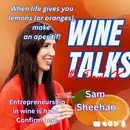
It is not everyday that one gets to podcast with a success story in the wine trade. Particularly, these days.
Samatha Sheehan is just that...but that wasn't her plan. Certainly, she wants to be a success, but that was not the objective when she made a batch of an orange aperitif...and had only a handful of cases when a major retailer ordered a pallet; let the fun begin!
Samantha Sheehan laughs about rumors of her Olympic gymnastics past, but her real talent is flipping the script on California wine—vaulting from outsider to tastemaker, conjuring vibrant nectar from the land, and doing it all with moxie, candor, and a wild eye for the next wave. If you think the wine industry is just tradition poured into a bottle, Samantha's journey will jolt you like a chilled aperitif on a sweltering day. In this electrifying conversation, you'll find out how a twenty-something LA transplant traded pinstripes for grapevines, and how sheer curiosity (plus a penchant for citrus) sent ripples through the old guard of Napa.
Inside the barrel of this episode, you'll swirl stories of serendipity: an impulse trip to Champagne, knock-and-enter visits to tiny French cellars, and the electrifying realization that ordinary people can make extraordinary wine. Samantha reveals what it means to chase minerality and acidity in a region obsessed with scores and opulence, and how marketing isn't just a game of bottle labels—it's a race to craft things you love before the market even knows it wants them. She exposes the grind behind launching a brand; you'll witness her awkward cold calls, battles with labyrinthine label laws, and the leap from "house project" to placement in retail giants, all threaded with the thrill of risk.
Survival in today's wine world means adaptation, and Samantha pulls back the curtain on how to navigate oversupply, shifting tastes, and the ruthless bureaucracy of distribution. From pandemic chaos to the dizzying glut of brands crowding the shelf, she cuts through the noise, showing why small-batch visionaries are sometimes the only ones agile enough to innovate—and why big companies keep their eyes on little upstarts. Her wisdom isn't just for winemakers; it's for anyone eager to turn small passion into big impact in the face of relentless competition.
And beneath it all is the love story between wine, land, and storytelling itself. Samantha's ode to the tactile, handmade process of harvesting, pressing, and tasting serves as a rallying cry against bland mass-production—and a reminder that true intrigue lies in the hands that coax character from the soil. She invites listeners to ask: What makes a bottle memorable, and how do you forge authenticity when everyone else seems to be chasing the same spotlight?
Uncork this episode and taste every nuance—crisp revelations, bittersweet truths, and the bright finish of inspiration. Here's just a squeeze of what you'll discover:
🍊 How a single glass of Lillet (with a twist of orange) inspired Samantha to invent a category-bending aperitif before the spritz craze hit
🍊 Why chasing trends is a losing game—and why your best bet is making what you crave, before the crowd catches on
🍊 The inside scoop on navigating modern wine distribution—plus the pitfalls and payoffs of big versus small wholesalers
🍊 What it really takes to build a following when the wine shelves are more crowded (and competitive) than ever
🍊 The secret power of transparency and storytelling in a landscape packed with lookalike brands—and how naming every ingredient can set you apart
Crack open this episode for a masterclass in bold risk-taking, industry taming, and the sweet, zesty rewards of blazing your own path.
It's not everyday you podcast with a success story in these times. Sam Sheehan is just that; a success story in a crazy industry at a crazy time.
And she couldn't be more humble. So humble, that our conversation turned very emotional at the end and we both came away with a sense of udnerstanding and connection.
-
Poe Wines: https://poewines.com
-
Ultraviolet Wines: https://uvwine.com
-
Mom and Pop (Aperitifs): https://momandpopshopwine.com
-
Matthiasson Wines: https://www.matthiasson.com
-
Favia Wines: https://faviawine.com
-
Hess Collection: https://www.hesscollection.com
-
Dariush: https://www.dariush.com
-
Faust Wines: https://faustwines.com
-
Saintsbury Winery: https://www.saintsbury.com
-
Sine Qua Non: https://sinequanon.com
-
Total Wine: https://www.totalwine.com
YouTube: https://youtu.be/hLKeNg724-g
0:00 When I drive through Napa, I'm reminded constantly why I'm there. I mean, driving through the vineyards is so beautiful. Just the artisanal manner of the process, it's like so tactile, like picking grapes at the crack of dawn and bringing them in and pressing them and tasting the juice and doing punch-downs and tasting the wine as it evolves and then enjoying it with dinner and your friends and being able to share a bottle. Like, a lot of people just don't wanna make anything, and being able to bring this beautiful bottle of wine for dinner and kind of tell the story about the winery. Sit back and grab a glass. It's Wine Talks with Paul Kaye.
0:44 Hey, welcome to Wine Talks with Paul Kaye. And we are in studio today in beautiful Southern California. Not quite 102 today, about 90 degrees. Gonna have a conversation with Samantha Sheehan. They call her Sam. You go by Sam? Yeah. And she's got, I'm gonna read something from ChatGPT just so you understand. who this woman is. Samantha Sheehan is a Napa-based winemaker and an entrepreneur running 3 distinct brands at once. She makes Burgundy-inspired Chardonnay and Pinot Noir under Poe Wines, California Cabernet under Ultraviolet Wines, and citrus-forward dye-free aperitifs from Mom and Pop. Wine enthusiasts named her 40 Under 40 Tastemaker in 2021, and Food and Wine magazine put her on their Women to Watch in Wine list. Today she's with us to talk about it. That was pretty simple, huh? ChatGPT actually got me right that time.
1:33 Yeah. In the past, they've said that I'm an Olympic gymnast, that I like grew up in Croatia. So, well, tell me about your gymnastics career. Yeah, I definitely never did gymnastics. You're not from Croatia, clearly. Yeah. She is not a Croatian name. No. Thanks for coming in. And this is gonna be a lot of fun tasting through the Aperitif wines. We'll talk about those. But the thing that kind of caught my attention right out of the chutes was this Burgundy-inspired Chardonnay and Pinot Noir. And the reason that caught my attention was it wasn't that long ago, and since you're— since you were 40 Under 40— well, I'm not going to ask you how old you are, but at some point you were 40 Under 40 when wine enthusiasts respected your career.
2:16 It used to be early in these years, maybe the years when I worked in my dad's shop, where you used to say, this is so Burgundian. And then the Central Coast Chardonnay or Willamette Valley Pinot Noir, and say, this is so Burgundian. And we don't hear that so much anymore. What inspired you to do that? Yeah. Well, again, this is ChatGPT that said this, not me. Okay, I'm gonna cross that off the list. Yeah, when I first, I moved to Napa from LA in 2009, and I started working for a winemaker who was very well known for making some of the biggest, most extracted wines in Napa Valley. Mm-hmm. And he was getting these huge scores from Robert Parker. And I felt like, at that time, scores were so important. The consulting winemaker was so important. And everything was sort of Parkerized. And a lot of the wines were just very, like, big and rich. And when I moved there, I was like 24, and I started making these kind of higher acid Pinots and Chardonnays and Pinot Meuniers. And I was making Champagne method sparkling wine, and they were lower in alcohol, but the alcohol wasn't what I was focused on. I just really loved minerality and brightness.
3:37 And it was sort of different from, I think, what a lot of people were doing. up there at the time. And I think saying this is Burgundian-inspired was just sort of saying it was different from what was really happening in California, or at least what everybody was talking about in California. Yeah. And I think everybody knew what that meant right away. If you were saying, oh, I'm trying to make a higher acid, brighter, low alcohol wine, or lower alcohol, maybe that was a little bit more of a mouthful. So everyone said Burgundy-inspired. That's an interesting thought. I never thought of that. It could have been why people said that. I always thought it was because they were aspiring to be Burgundy and that you're not going to get Burgundy here. You're going to get California-inspired wines, but they are leaner.
4:26 You want them to be more mineral. But why did you— what made you think of that? What year was this, you said? 2009. '09? Yeah. Um, because right now I think that the industry in general, the people that are drinking, or at least in my crowd and the people that I still sell to, they're like getting away from that Napa extractive Cabernet and that those brands that established that style, which also moved into Paso, you know, is a little passé, and that we're looking for more interesting, intricate, elegant wines? Yeah, I mean, I don't think any of it is wrong, because when I think about what I first started drinking out of college, I remember the first, like, bottle of California wine that really blew me away was a bottle of Sinequanone, and that was, like, pretty high in alcohol. It was very ripe, but I think I, at that time, I didn't really understand bitterness and acidity, and so that big ripe fruit was so pleasurable, and it really got me into wine. And I think just everybody has a different taste. Some people love big fruit and, like, opulent richness. And I just— the type of food that I eat, like, I eat a lot of fish and rice and vegetables.
5:44 And so those types of wine don't really— it doesn't really, like, pair with what I eat. So I drink a lot of Champagne. I love Chablis. I mean, I love California Chardonnays. Yeah. They're just higher in acid just because it kind of goes with what I'm eating. But yeah, it's definitely changed. The pendulum just always seems to swing. And it went very far towards these really big, rich, opulent wines. And I think also people were following scores. They were buying wines because they had these big scores. And now it doesn't seem like any of the critics are as influential as Parker was at the time. And now it's interesting how it kind of swung from Parker to— I was part of this group called In Pursuit of Balance, and it was all about Pinots that were really high in acid and lower in alcohol. And Parker called us the anti-flavor elite, which I thought was hilarious. Wow, he was all over you guys. Yeah, because it was the complete opposite direction of what he was doing, of what he liked. And now everyone's drinking RTDs and hard seltzers. So you just never know where it's gonna go. But I always— what do you think of that though? So you, you've created a brand of citrus-based, um, aperitifs.
7:03 Uh, that's certainly a market-driven type product that, that either researched to figure out that there's needed, or you just really like the idea of trying to sustain. Uh, you know, I think we discussed this briefly with this vodka that I tasted, which is— her pitch is she's recycling or the sustainability of using B-grade fruit, as she called it. And here you're making these citrus pear teams. Was that driven by what you thought the market wanted, or you just thought this was a really fun project? I feel like if you're trying to do what the market wants, you're already too late. So I've just always done what— I've always made things that I really like and that I want to drink at home. Yay! Because I feel like also if something's not popular and you made it just because you thought it was going to be popular, then you're not even going to enjoy it yourself. That's right. So I've just always made things that I love. And when I started Mom and Pop in 2017, that was before this sort of spritz craze in America. Like, Aperol was not on every menu at the time. I had heard about it. I've heard of Aperol Spritz, but I really didn't know what Aperol was at the time. I was sitting at a restaurant in Napa that's right on the river, a little French restaurant called Anjol. And the owner poured a glass of Lillet for me over ice. And I remember thinking, oh, this is so complex and interesting. This tastes like a cocktail. I love all of this bright citrus, but it's made from wine. And I didn't know a lot about spirits at the time. I knew wine.
8:37 And so I felt like I could really relate to it. You just poured it out of the bottle and it tasted delicious. So it was, like, easy to enjoy. Lillet Blanc? Yeah, Lillet Blanc. And so I thought immediately, like, I love this, but I wish it had more citrus. I wish it was a little less sweet. Just being a typical winemaker, kind of picking it apart and wondering, could I make something like that? And not to knock Lillet, because it's a beautiful product with a lot of history. It was just a typical winemaker thing. And so I took a barrel of my Manchester Ridge single vineyard Chardonnay, which is this incredible vineyard that's about 2,000 feet above Anderson Valley. And I added Seville orange peels to the Chardonnay because that's the marmalade orange, and I love the smell of marmalade. Yeah. I just think it's so unique.
9:26 And then I added some different botanicals to it. I added a little bit of vanilla bean to give it, like, warmth and richness. I added orris root, which is a fixative used in gin that just really gave it this nice, like, floral quality. And then I went to bottle it and I realized I didn't know how to label it, 'cause you couldn't label it as a wine. And so I went onto the TTB's website and it said I could either label it as a vermouth or as an aperitif. And at the time I didn't know what an aperitif was, so I labeled it as a vermouth. And here's where it gets really complicated. I guess you live and learn that way. Yeah, I mean, this is like me being really silly. I thought, oh, if I label it as a vermouth, then people are gonna use it in a martini. They're not gonna taste it. They're just gonna rinse their glass with it. They're never gonna really enjoy it.
10:11 So, how do I stop them from doing that? So, I carbonated it, and I put it in a mini, like a 375 champagne bottle, and I called it a sparkling citrus vermouth. And I sent a sample to my distributor who carries all these very esoteric California wines. Like, they carry a lot of orange wines. He said, well, this tastes really good, but I don't know what a vermouth is. I don't know what a citrus vermouth is, and I sure as hell don't know what a sparkling citrus vermouth is. How funny. So I realized that even though I thought it tasted delicious, that I maybe needed to make it a little more commercial. So that's how it ended up in the bottle, like as a still aperitif. But speaking of Lillet, do you know what a drink is? 3 parts Gordon, 1 part vodka, half part Lillet?
11:01 3 parts? 3 parts Gordon's, which is gin. 1 part vodka? 1 part vodka, half part Lillet. No, what's that? You're not a James Bond fan, huh? Oh, shaken, not stirred? Yeah, well, actually, there's another funny joke in the movie about that, but that's his— I know what a Vesper is, but that's a Vesper Martini. Okay. Well, Lillet is not, you know, it used to be very popular in my dad's shop. It was very popular, but it hasn't been so much. And it's so interesting to hear that inspired you to create something completely off the wall that was— and not— what's interesting to me is you didn't want to doctor up or butcher the Lillet moniker, the brand, not the brand value, but the style. And you just created your own.
11:44 Well, I thought it was just going to be something that I was going to drink at home, and I was going to give to our friends. And so that's why I named it Mom and Pop. It was like our little house Aperitif. My husband's a label designer, so he designed the Matthiasson label, Favia, Hess Collection, Dariush, Faust. He's done hundreds of labels. And so he designed the packaging. How much did he charge you for that? He always says I'm his most annoying client because I have the most projects. But what was funny is a friend gave a bottle to Jordan McKay, who was the writer for Wine and Spirits magazine at the time.
12:28 And he called me and he said, hi, is this Samantha Sheehan? Is this your brand, Mom and Pop? And I said, yes. He said, is this a commercial product? And I said, well, can you define commercial? 'Cause I only had 22 cases. And he said, if I recommend this to people, can they buy it? And I was thinking in my head, yes, if somebody calls me to buy it, I will sell it to them. And so he put it in Wine and Spirits magazine as one of their top new spirits of the year, and it was actually listed first. And then— Come on, wow. Yeah. Out of just sheer, just playing around, thinking through a glass of wine on the river in Napa. Yeah. And so I got a call from Total Wine, and they asked if they could buy a pallet of it for their stores. And I said, I only made 22 cases. And so I realized I needed to make more. I'll do half a pallet. Yeah. And so the brand has just really evolved over the years, and just sort of serendipity. It just— Oh, that's amazing. Kind of met the market where it is right now. Spritzes are hugely popular.
13:28 Um, the category is kind of on fire, and it just happened. So what happens then with— let's get into the bowels of the wine trade right now. You know, everybody's suffering to a certain extent. Some brands, you know, they've not only survived, but there's this traction with them. But most will complain. I had Bodegas Lays in here yesterday. You've got Ultraviolet, which is, I'm guessing, Bordeaux-style wines, or at least Bordeaux grapes. And you have Burgundy wines. Now, are those through the regular distribution channels? And are you seeing any difference in sales volume from those brands? Yeah, I mean, I think the brands that are fully mature, that have all of— they're in every account already. Like, they're seeing decline as people drink less.
14:18 But when you're a smaller brand, And there's so much room to grow. There is the space to grow. So my brand is still growing, which is great, but it's small. It's not fully established yet. So yeah, I mean, I hear this a lot from our friends who have larger brands, and I really sympathize, but I just think people are drinking differently too. No question about that. Again, in 2009, when I started making wine, everyone was drinking Cabernet, and they wanted big scores. And mom-and-pop sounded totally bizarre to anybody I would've talked to about it. But now everyone is so open-minded, and there's all kinds of drinks on the market that are really popular. So I just think people are drinking differently. And I also think there was just too much wine on the market after COVID. Oh, for sure. I talked to so many people whose sales were just through the roof. And ours were— the direct-to-consumer sales were insane. Oh, COVID was great for us. Yeah. And so everybody made so much wine, like things that they would've never made if COVID hadn't happened. And I just think we have to get through this, like, surplus and excess. And then the fact that people were stocked up and then they started drinking less than they were before, it was just sort of a bad combination. We were like 30% up during COVID but it was— I knew it was false because we, In the DTC world, which this is all I did for 35 years. And, you
15:49 know, we were prolific digital marketers, 33 million emails my last full year. Um, but I saw the writing on the wall earlier than that, and '19 was gonna be a tough year. And then '20 turned it around, of course. And then literally the week after COVID was over, I saw the sales start to plummet. My wife and I are like, look, we've done this for long enough. it was probably time just to get out. And somebody bought it actually, which is interesting to me. But the point being, that did change the habits of the consumer, I think radically. Mm-hmm. And I think it all comes around. You know, there's, it was overplanted. They're pulling up roots everywhere you go now. The fine wine category is, Like you said, there's a stability to it when it comes to some brands. But I just thought of something that you said, which was your friends that have bigger brands. Would they have ever— but not they necessarily, anybody— think like you thought about this Spritz idea? Just take not even a risk. I don't— you may not even thought of it as a risk. You probably just thought, I'm going to make this thing for fun. But would they shift gears like that?
17:04 I don't know. I mean, I think a lot of the bigger companies, it's hard for the bigger suppliers to launch these new innovation brands because you really have to have almost like a founder-led team launching it. Yeah. And so the bigger companies tend to buy brands that are already shown to be proven. So yeah, I think it takes kind of a small company to grow something that's so unique and different. And then I think the bigger suppliers, if they see that it's proven, then they'll purchase it and grow it. But the real challenge is that right now, distributors, it's such a challenging environment for the distributor.
17:51 What a mess. That if you're with a small distributor, I mean, I love the small distributors, but it's I mean, it's a really hard business for them. And it's hard to grow your brand with a small distributor because you can't be in Costco or really service Total Wine— Right. —or service the big accounts with a small distributor. You need to be with a big distributor to really show growth. But the big distributors are servicing their largest suppliers. So as a small innovation brand, you can't just go into a large supplier and have success unless you have like a big team and you have— you're aligned with other brands. So yeah, there's just this challenge of how do you create something that's really innovating and interesting and have the resources to grow it with a big supplier? Yeah. You know, today's world, the consolidation of of distributors is it leaves you with either ultra small or mega. And both have their drawbacks.
19:04 You know, in the heyday of this company, there was lots of wonderful places to buy wine and interesting palate people that are suppliers that were tasting their wines and putting them on their book. And I got all kinds of interesting people in here. And I mean, how can Young's go to RNC and RNC go out of business? I mean, how does that happen? Yeah. In this crazy world of alcohol. But you still took a risk and still came up with this idea. How many placements did you have to have before a supplier would say, you know, we want to buy you? Yeah. Hundreds? I don't know if it's necessarily the number of placements. It's also like, what is your velocity in each account?
19:47 Because they want to know, are customers pulling this off the shelf? Yeah. Is it like retail ready? And then in the on-premise, they want to see that you're having good velocity and sell-through, and they want to know what the opportunity is, like what type of accounts are you in? So it's not necessarily like the number of accounts, it's sort of the, just the success within the accounts. Because there's, there used to be, well, I have friends that have an RTD. It's a beautiful RTD. They win awards all over the place. You know, it's an octagonal bottle that's kind of deep, deep purple. And it's, you know, I actually have a taste-off with my martinis, which I consider myself one of the great martini makers, as well as Manhattans. And I had my son-in-laws blind taste them, and I was a— I was first, but it was pretty close. And for RTV like that, of that quality— but they call me regularly and say, you know, we need some advice on this. Not that I'm in that sector, but they just changed distributors again, and they want to have dinner soon because they're the want some advice, and I don't— I'm running out of advice because I've never sold a brand like that, and I've never seen a consolidation of distributors like that, like has happened.
21:01 So I just wondered what the trigger point was. That— did you go out and pour the stuff off at restaurants, or did you go pour it at the Whole Foods? And— Yeah, I think that when you have a brand, it's like an innovation brand, there's so much that you there's so much to learn. Yeah. Like, there's so much kind of like— we made so many tweaks and adjustments to really get our product right. Like, for starts, being a winemaker, I just thought people would drink it over ice. And then— and I thought I would be selling it to beverage sommeliers. And our first customers were actually some of the, like, top 50 bars in California. They were these really well-known, like, cocktail mixologists and I didn't know anything about cocktails, so I was really intimidated to go in and talk to them.
21:47 But a friend of mine who's actually a very well-known bartender said, but bartenders don't really know anything about winemaking, so you have something to teach them. And why don't you learn about cocktails from them? Like, you don't have to know. Huh. And so that was really kind of broke down some barriers. But what I learned was that an aperitif needs to be dilutable. 'Cause you're adding sparkling wine and maybe even sparkling water, or if you're making a cocktail with Mom and Pop, you need to add spirits to it. And so, it couldn't be as kind of light as a wine. It really needed to have the body and texture to stand up to that dilution. Wow, that's an interesting thought. Yeah, so the product has changed so much. So, I think you can't just think, I'm gonna make this product, and I'm gonna hand it off to my distributor, and they're gonna go and do all the work and sell it. Like, you really have to spend a lot of time kind of in the accounts, meeting with the gatekeeper, the buyer, and then seeing the customer interact with the product to understand, like, how does this product live in the world? Like, what does it need to taste like? What does it need to be able to do?
22:58 What does it need to look like? What does it need to communicate? There's so much to learn in the beginning. And if you have a new product too. Like, we're an aperitif in a fine wine division that's now carrying spirits, but there's a lot that we do to help our distributor make sure that the reps have the tools they need to be able to sell the product. So it's kind of a bit more legwork when you have a product that's unique, but then the nice thing is you don't have a lot of competition. That's because, you know, the old days, you touched on something very important. Particularly for listeners to understand, and I'm moderating this wine panel on Saturday for 100 attorneys, and they're gonna have to learn this part too, which is distributors used to build brands. There used to be traction in that, and that doesn't happen anymore. It hasn't happened for years. You need to go to it with the traction, like you said, the velocity in those accounts to get just to raise their eyebrow. And then once you get it in there, continue to support it. Because they look, they're going to get it in the customer's hand when the customer wants it, but your job is to help the customer want it. Mm-hmm. So how do you balance that strategy with what you're doing with your fine wines, both your Burgundy style and your— is there crossover in that strategy, or are you just working the regular angles for the regular wines and trying to get into the hands of the consumer that want those things. Yeah.
24:29 The distributor, I mean, I forgot what the numbers are, but the amount of wineries there were in California in 2000 versus how many wineries there are today, there's just so many brands with so many SKUs and so many stories. Like, as a sales rep, when you have 300 wineries in your book, each with like 6 SKUs, like, how do you remember all of that? I mean, that's, and they all want, to be buy-the-glass. Like, every cab that has a buy-the-glass price point cab wants to be on every menu. Like, there's just so much competition. So I think that's the challenge for distributors right now.
25:11 And there's less of the big distributors. And the big distributors can't lose their biggest customers because you saw what happened to RNDC when they lost Brown-Forman and Tito's. Correct. Yeah, then they went out of business. And like, It's incredible. Like, Mom and Pop is with Southern, and if Southern goes out of business, like— Yeah, what are you going to do? It's terrible. So I don't want them to lose their biggest customers because I don't want them to go out of business. So I understand the focus. It's business first. That's very understanding of you. Yeah, well, the business has to survive for the partnership. So that's sort of, yeah, first thought is just too many brands. And because of that, we all have to do a lot. The brands have to do a lot more legwork to market themselves. And To have a good selling proposition, because even if the sales reps are taking out your product, like, a customer isn't going to buy it because they're taking it out. It has to be really great quality, you know, for the price point. It has to have brand recognition, and their customers have to order it. So, like, you have to do all of that work for your distributor to be able to get it in. Exactly. And in terms of, like, overlap between mom-and-pop and the wines. Yeah. I think the best thing about it is a lot of aperitif brands don't talk about the ingredients. It's like a secret family recipe, and they just won't share it with you. And now people want transparency of ingredients. So I think the fact that I am a winemaker, and I can show the wines that I've made next to the
26:44 aperitifs, and I can talk about every single ingredient that went into it, and Our back labels now list all of the ingredients. So I think it really sort of just strengthens the brand. You answered my question, which was going to be, you must be for labeling, which is a big hot button in the world today. I've had chefs tell me, like, you know, and winemakers say, well, that's like going back into the kitchen at a Michelin-starred restaurant saying, what are you putting in my food? I don't know if I agree with that analogy, but I think it's great that you're able to do that and not— and like, for instance, years and years ago, I went to a winery in Cucamonga, and I loved this guy's Zinfandel. And it was in this big giant 1,500-gallon redwood vat. And I go, bottle this for me. But he put it in the glass and it was like orange.
27:35 It had prematurely turned color. I don't know why, but the flavors were— He's like, oh, we can fix that. And he takes some Mega Purple or whatever it was called, Mega Red drops in there and bring the change. No problem. I go, I can't, I can't buy the wine knowing that you do that. I mean, if you did tell me, maybe I'd buy it because I didn't know. But now that you did it, I can't, I can't do that. But you said something interesting about the competition. In Wine Paris, there was 6,000 vendors, each with at least 10 SKUs, right? It must be more than that. There are probably 100,000 wines here. And I walked around, I went, Wow, what other industry where everybody in this show is competing for the exact same thing? You said it, the house pour, by the glass pour, or on the shelf, or at the wine shop.
28:27 And I'm like, that's amazing competition. And every— with their different styles. And then the story, every— we talk about the story. You gotta have the story. Let's tell the story. You're telling your story. Well, there's a lot of stories to tell too, to get that kind of traction. Yeah, how do you differentiate and make it memorable? Yeah. And I think winemakers, we sort of had this pitfall where everybody was kind of speaking the same way in terms of how we were marketing wine brands and how it was sort of like a little bit of a template that we were all following. And you go onto a winery's website and here's this amazing Portrait of the Vineyard, and that's like the first thing you see. So I think we also sort of got in our little winemaking bubble, and there just wasn't a huge amount of differentiation. And then came natural wines, and it was like, oh, here's something totally different than what everybody else is doing.
29:24 And it was a pendulum swinging a totally different direction. Well, you know what, first, do you Do you think that model is old? I mean, in other words, you're going to tell a story, or do you think there's room for that model forever? Because wine's so old, it's been around forever, and there's just— it's just the honest glass of wine that makes you feel something. Or do you think that the— like, there's this whole group on LinkedIn rethinking the wine industry, and I don't know that that's really necessary for everybody. Not everybody can create an aperitif. Not everybody can put a wine in a can. I had a woman sit there tell me that she thought Lafite was going to be in a can one day. Right? That'll never happen. No. So, is there room in our industry to be that original model, which has survived centuries? Yeah.
30:15 I mean, when I drive through Napa, I just, I'm reminded constantly why I'm there. I mean, driving through the vineyards is so beautiful. And The— just the artisanal manner of the process. It's like so tactile, like picking grapes at the crack of dawn and bringing them in and pressing them and tasting the juice and doing punch-downs and tasting the wine as it evolves and then enjoying it with dinner and your friends and being able to share a bottle. Like, a lot of people just don't want to make anything, and being able to bring this beautiful bottle of wine over for dinner and— Kind of tell the story about the winery. So why is that so intriguing to the human soul? Why is that? Which part of it?
31:00 The story or the agriculture? No, the actual reality of it all. I mean, that's what brings us to the wine table for honest, good wine. And when you talked about this opulent style from Napa and even some of the brands on the shelf like Apothic Red and Cali Red from Snoop Dogg, those things, don't do that. You know, they're just— they're wine versions of a drink. But the real wines, the ones you make and the ones that we enjoy, bring us to the table to experience that. Mm-hmm. I've never got— well, I don't think it's definable, really, why that— why this is so intriguing. The vineyards, the beauty of them, you know, picking them and fermenting them and watching it metamorphosis into wine. I mean, what is that intrigue? What is it? Yeah, just some, like, natural instinct to, like— I suppose. I always think it's interesting how they say never to paint your restaurant blue, 'cause blue is, like, a color of, like, poison dart frogs.
31:57 Like, it's not an edible color. Interesting. So seeing that blue makes you not hungry. Right. You know? I suppose it's a human thing. Yeah, and so I think in terms of food, we're more, you know, I mean, other than these bright electric colors that are really Instagrammable or photographic, I just, yeah, maybe we're just attracted to natural nature when we're eating. I suppose. I think it has something to do with, I think it has something really to do with the earth, a conduit to the earth, and a real wine that really grabs its minerality, that really grabs its character from its nutrients, that has to fight for those— that energy comes out of properly made wine. And when you talk about natural wines for a second, I mean, they were always natural. We screwed it up, right? Somewhere in the '30s. I think it was natty versus natural. Yeah. That was where it got lost in translation. Well, I know, but I mean, I always— it makes me laugh because the Bordelaise, you know, wine hundreds of years old, the Burgundian monks, they weren't putting pesticides on their vineyards and they were making, and not only making incredible wines, but learning that across the street, that hectare of soil was different than the one that they're standing on, came from complete natural processes. I mean, and now
33:27 we're going back to that, which is great. I did a Bordeaux house yesterday. They're 100% biodynamic, which you wouldn't even know. They don't even talk about it. Hmm. Just because they want to be. That way. Yeah. That's what they want to produce. There aren't a lot of luxury wines that are really expensive that are natural wines. No, that's true. But it's funny, I don't know about Napa as much. I haven't heard the conversation, but there are a lot of Bordelais that are at least organic. So what— but what— so this intrigue for you as a person, when did that happen? Which intrigue? Winemaking. Oh, why did I get into wine? I guess that would've been an easier way to say it. Yeah. My brother and I went to college together, and my brother's college roommate was really into wine because his father was into wine and had taught him a lot about it. And so my brother's college roommate got my brother into wine, and then my brother introduced me to Champagne.
34:24 And well, actually, it's kind of funny. That'll do it. Yeah. And so my brother and I decided to go to Champagne for vacation. I know we were like 22, and we flew to Champagne, and we went, you know, we tried to get appointments at some of the big houses through friends. And then we just decided to spend like 2 days just driving around the different towns. And so we were like driving from village to village in this rental car, and neither of us spoke any French, and we were just like knocking on people's doors. Well, I was a little confused 'cause— That's funny. I thought, you know, being from LA, when you hear about a Champagne region, I thought it was gonna be all these like châteaux, and like big estates, but it's not. It's just all these little houses. And the signs are so funny 'cause it'll say like Champagne so-and-so, Champagne so-and-so, and it just points to the house. Yeah. And I was like, wait, is that where the person lives? But like, where's the winery?
35:21 And so we'd see a sign that said Champagne so-and-so pointing to a house, and we would just go knock on the door and say, tasting, tasting. And one of the places we went to, It was a Grand Cru village in Champagne. And it's a good place to knock on the door, right? Yeah. And this guy answers the door and he's like our age. He's like 24. And he said, oh, come in. And the door leads into his kitchen and his grandmother or great-grandmother, who's like 90-something years old, was standing over the stove cooking a stew. And this is like 11 in the morning. And he leads us into what I thought was a coat closet. So I was like, oh no, we're going to get murdered. And it's like this windy staircase down into these caves that are under his house. I mean, it looks like this totally normal cookie-cutter suburban house that could have been in Orange County. And underneath it was this magical world. Not even like a vintage châteauesque thing. No. It was just like a house. Like a drywall, steel, wood stud type, huh? Yeah. How funny. And so we go down into this cave. And the first thing that completely blew my mind was the walls were all chalk. And so if you just scraped your fingers on the walls, they would be covered in chalk. And he had just a couple of barrels down there because he sold most of his grapes that came from this Grand Cru vineyard. And he said, listen to the
36:53 the barrel, and he pulled out the bung, and we put our ears up to the little hole, the bung hole, and we could hear this, like, snap, crackle, pop. It sounded like Rice Krispies, and it was his, like, Chardonnay fermenting. And I just had this moment of, oh my God, normal people can make wine. Like, you don't have to be— How interesting. The 5th generation of some magical winemaking family, like royalty. And that was when I decided I wanted to get into the wine industry. That's so interesting, like connecting the idea. You walk through this house, the grandma's making the stew, and then you go down and here's this guy making Chardonnay. And then you connected it with a regular person in a regular little village. In a regular house. Yeah.
37:37 Yeah, it was— And so when you got home, what'd you do? So I first, I thought I wanted to import champagne. And so I decided to move to Napa. And I took a job Working Harvest. And it was— well, actually, I went to a wine shop in Napa, and I was talking to the owner, and I was like, I really want to get into the wine industry. And he's like, well, why don't you? I said, well, who's going to hire me? I have economics and finance background. I don't know anything about wine. And he said, oh, that doesn't matter. He said, I know this winemaker. His name is Mark Harold. He just sold this brand called Maris, which Maris was a wine that Mark Harold was making in his garage.
38:17 He sold the brand for $10 million. It was just the name and label. He was like getting these huge scores from Parker. And he said, he's opening a new winery in downtown Napa. He just sold his brand. You should go meet with him. He's hiring. He told me he's hiring. Here's his phone number. And so I call him and he answered the phone. He's like, hello? Like the funniest way to answer the phone. And I said, hi, I heard you're hiring for this new winery. And he goes, what? Was I in uniform? for this new winery. And he's like, what? Like, he had no idea what I was talking about. How funny. And I was like, no, the owner of this shop told me you're opening a new winery and you're hiring.
38:58 And he said, okay, like, can you meet my general manager at the winery tomorrow? And so I showed up and I was like wearing these very silly, like, little shoes that you would not wear to a winery and a skirt. And they kind of like gave me this skeptical look and said, this is Sean, he's the winemaker. This summer he's gonna be topping barrels on a ladder, and we need somebody to watch Sean while he's on the ladder and make sure he doesn't fall off the ladder. What a great job. And it was kind of funny 'cause I had actually just taken a job at Deloitte right outta college, and I had taken the LSAT and gotten a scholarship to law school. Oh, you were gonna go to law school too, huh? And completely disappointed my parents when I told them I was gonna take a job making $30,000 a year watching a guy to make sure he didn't fall off a ladder. And I ended up, this winery was brand new, and it was being built from the ground up. So they'd put in roll-up doors, floor drains, pumps, and wastewater tanks, and all of the equipment.
39:58 But everybody who was working there, they were all just winemakers, and no one knew how to use Excel and build out a budget. And the owner, the other partner, was an investment banker in New Jersey. And once he heard that I had a finance background, he was like, oh, great, can you build out a model to show me revenue projections and when I should break even? And I remember forecasting to 7 years, which was— I really didn't have any historical data. Of course not. So I was just sort of guessing anyways, but I was like, even after 7 years, you're not break even, so I don't know what to tell you. That kind of sounds realistic. Yeah, and that's when I had the realization that I would never open my own winery. People always ask me if I, would ever wanna have my own winery. And I always say no, because it's an entirely separate business, and it's really hard to be profitable, and it's really nice to be nimble and dynamic. And I work out of Saintsbury in Napa, and I love them, and they're the best partners. That's a cool one. And I don't have to own the facility and manage all the employees, but— It was a Pinot Noir house, weren't they? Yeah. Yeah. Yeah, they're incredible. I love them. You know, that's funny. I did a panel for the— moderated another panel. Well, I brought that up all of a sudden, but it was, It ended up being this, that discussion. This was for the Marshall School of Master's program at USC. And one side of me was the guy that owned the land. He owned the tractor, he owned the wedding chapel, he owned the tasting room, the building, the house, everything. And then the other guy was starting a brand, a Napa brand. And, you know, it was the interesting irony between them.
41:30 And I don't remember, I know one, I know the guy that owned everything, he's no longer in business. I don't know if this brand, but this brand was gonna be one of those $200 bottles. bottle Napa brands, which I can't imagine today is— You gotta have a really loyal following. Yeah, unless you have a really loyal following. So did they just think you were nuts? Like this brazen young girl with the wrong shoes comes banging on my door? And maybe that's why they were intrigued by you because you were willing to do that? I think everyone's always just thought I was nuts. At least I have a lot of fun doing it. Does it change at all? No, no. I don't know, life is short and we're so lucky to be in the wine industry. I just want to enjoy what I do. I thank my dad every day.
42:13 He's passed away, but for doing that. But where Rafael's sitting, I had a young girl. She was an intern here. Yeah, she thought she was interested in wine. Her parents have a little vineyard in the valley here. They do crush the grapes, but she ended up getting attracted to it. She's coming out of Cornell this year with her degree in enology. And she did an internship at Château Bailly in Pays d'Oc-Léon. And she's full bore into this, the lifestyle. And I think I'm really proud that I was able to move the needle for her into that because it's such a great industry. But I think you're on the right side of it. You know, I think it's really maybe serendipitous, but very bright the way you're handling it. Oh, thank you. And doing that just to invest in that. And I always asked my— never got a chance to ask my father why he didn't do it. He was— 1974, he sat with Bob Trinchero and tasted what was then Sutter Home White Zinfandel, before it was White Zinfandel. Was it Bob Torres from Trinchero? Yeah. I love Bob. Yeah. He lives in our neighborhood, actually.
43:19 Oh, really? Yeah. This is— he's in the tasting room and was up there all the time. I've been his son, or I might know his son. Yeah. Oh, really? Yeah. So I do thank my dad for doing this. But go to lunches, talk to people like you. We're fortunate to get out before the thing. We were on our way to Napa in February 2020, and I was asked to sit with the beat writer of the Napa Valley Register. And I thought it was gonna be this article about, hey, who's this direct-to-consumer guy? He's been doing it for— and no, she was trying to figure out what are we gonna do here in Napa when this thing gets locked down? And these small mom-and-pop wineries that don't have a chat bar, chat button on their website, may not even have a website. Hmm. What's gonna happen to these people?
44:20 Have you seen, um, have you— has that settled down, the post-COVID sort of attrition from, from the wineries? There's still people suffering and probably closing. Well, Gunlock Bunchy just closed. Yeah, I'm— yeah, I'm sure there's a lot of wineries that are gonna just quietly go out of business. But again, I— so sad. I got invited to this event in LA, this big wine event. It was actually mostly a natural wine event. But I looked at the list of wineries that were pouring, and there were like 80 wineries, and I had never heard of 78 of them. And I looked— They're domestics, all of them? Yeah. And I looked them up, and a lot of people, it was like their second job. They did something else, like they were a director or producer, and they also had this wine brand. And I just thought, Again, I just think there was an oversupply, like too many brands, too many SKUs, too many wines. And I just think we just have to kind of reach equilibrium again. And I think a lot of— I think there were a lot of wineries that weren't really profitable to begin with because there's just so much cost and overhead that goes into having a winery. Yeah. I mean, all of the compliance and the accounting and And then if you own a winery, I mean, it's so expensive to operate, and the equipment is so expensive. So I think all the wineries that were kind of on the edge before, you know, are the ones who will close. And
45:51 I think the ones that hadn't really built solid brands, and they weren't really doing the work, like, those will close. And, you know, probably some really great brands. You wonder if, like, people go up there thinking off the top of their heads that, you know, how hard can it be? And it's a vanity brand. The lifestyle is where I want to be. And if you have enough money to do that, you're a surgeon or government contractor and you made a lot of money, you can do it great. Or you were successful with a previous brand. But I think for the most part, the people that go up there, if they don't have that earnest passion— To do the work. You got to do the work. To do this work, you know, it's just a futile exercise in business, which is a tough— it's just a tough business anyway. It's just not going to sell itself. No, it doesn't sell itself. There's a couple of kids, one of them was a Trinchero descendant, and the other one was a Wagner family descendant. I don't know if they were direct, but they were both— they were in here years ago. And they were selling a brand. I forgot the name. Was it Carlo and Josh Feltz? It wasn't Carlo and Josh. I know well. I love Josh, but he's not of Wagnerian descent. No, this was, um, this was— they were making the wine at Trinchero, I think. Okay. And they were talking about they got to get these 100 placements. That's where this idea came from that I asked about. They had to get 100 placements before Trinchero would put it in their own book. Okay. It never landed in their book, so they never got there.
47:18 And this is, you know, they're just— they were talking about this effort it takes to go out and make these calls. Open these accounts. And the young girl that I was telling you about, she, her family has this vineyard and they made some wine. And the husband's a developer. In fact, he's building a home for us right now. Talented guy. And one day he came here with 5 cases of their wine. He goes, this is the dumbest business I've ever seen. Oh gosh. 'Cause he goes, I can sell a house for $6 million, you know, make some money. And here I am with my Mercedes, you know, filled with 5 cases of wine at $20 a bottle. Yeah. delivering it to you for a dollar's worth of margin, you know?
48:00 Yeah. It's just not any fun. So, congratulations on what you're doing and how you're doing it. It's really quite intriguing and inspiring to hear your story. Oh, thank you. And I appreciate you coming in to say it. We're out of time, actually. We were out of time a little while ago, but I wanted to hear more. What else is going on today? Are you seeing some other accounts? I don't know. I'm just following Rafa around. Oh. Whatever he says. Whatever he tells you to do. How long are you down here for? Just here till tomorrow. Oh, till tomorrow. I flew in yesterday. Have you ever heard of JetSuite? Oh yeah, it's the best. They fly out of Napa. Yeah, they went, they started in Napa. Yeah. It's like 2 or 3 days a week. I don't know, but it's 15 minutes from my house. Oh, sweet. So I showed up 20 minutes before the flight, walked on. It was also cheaper than Southwest. I know, I've had that experience. It was amazing. Yeah, and I was just down here in an hour and 15 minutes. You could fly into Burbank? Yeah, it's, uh, well, yeah, it has its own little terminal there. Yeah. And I have to go back tomorrow because today is my 6-year-old's birthday and I'm missing it. Congratulations.
49:00 And he kept saying to me, you're not going to be here for my birthday. So I've got a bunch of presents for him. I'm going to walk off the plane with them and hopefully I'll make it up to him. That's a good job, Mom. Yeah. Is that number one? Your only child? I know. I also have an 11-year-old. Oh, wow. Another little boy. You're busy. Yeah. Yeah. Especially because the 11-year-old's into club baseball. So he's on a club team in Sonoma. So I have to drive him to Sonoma for these all-day games. Well, you know that I was a— I'm sure you know this already by researching me, but I was a high school baseball coach. And I'm joking. I'm sure you didn't know that. And I'm back on Little League field with my 8-year-old grandson because the coaching is so bad that I had to make sure that he got proper coaching. And more power to you. Do you never play baseball? I played baseball. Oh, you did? Okay. I played high school ball, but— Okay. I thought you were joking about the playing baseball, but you are coaching. No, no, I coached high school baseball and I love it. Where'd you coach? Arcadia High School. And I coached a lot of softball too. I had 3 girls.
50:03 Okay. So when we're up there, you know, if you need a little hitting lessons or some fundamentals, you know, I can help. Even pitching lessons. I pitched softball. Did you really? Yeah, I was like— That's my passion is softball. Really? Yeah. Yeah, I was a really good pitcher. Wow, you're tall. Yeah, and I had all these like fun different pitches. Like I threw like, you know, changeups and curveballs and fastballs and drop balls and rise balls. Wow, that's great. Your dream. I loved it. I still like dream that I'm playing, but I know nothing about the baseball pitching mechanics. And my 11-year-old loves to pitch and I can, I can never give them any good tips. But that's one of the greatest things that I felt, that my relationship with my daughters was all softball when they were kids. One was a catcher and she was very good at it. And my other one was a social player and she was talented. And then my youngest was probably— they don't listen to the show, but she was probably the least talented kid I ever coached.
51:00 But it was the best season. Wow. Because there was no expectations. I knew of her and she had some pretty good highlights, but we just had so much fun together, which is really what it's for. Yeah. Right? I'm hoping that your son has fun with the club because it could be so demanding. Yeah. Like, you're probably away every weekend. Yeah, my dad passed away a few years ago and my fondest memories of him are being on like the pitching mound, like pitching in a game and watching him walk up towards the field, taking his work, like his sports coat off to come, like knowing that he left work early. How cool. To come all the way out to watch me. And then he coached my teams when I was a kid. That's very cool. And so my dad was always my best friend. And a lot of it was all that time we spent together while he was coaching me. And so when my son asked if I would coach him, his team, I was like the only mom out there that was coaching boys baseball. I think that's right. It was kind of hilarious. Yeah. Yes.
51:58 And at first I felt like I didn't really get any respect, you know, from the boys. And then I would throw the ball to a dad and I throw harder than the dads and they would go, And then I would actually like get some, a little bit of, you know, then the kids would start listening to me. But it was so much fun. I think my 11-year-old and I are best friends, I think because of all the time we spent together at baseball. Yeah, I'm not coaching the club team because it's very serious. It's too serious. Yeah, and they're very good. But I did have fun coaching the Little League. I can go on forever for rec ball, but my wife accuses me of being, favoring my middle daughter. And my middle daughter was the catcher. And she was good at it. And she was smart. You have to be smart to play both sports. It's not just the talent. And you have to be like quick.
52:44 Think quickly. I go, look, Sam, my wife, she said, for hours on end, I would be communicating with Lisa without communicating. You know, we were giving her signs, or we had verbal signs that we used to— so every pitch she and I were communicating together. So that relationship just exists. It's just you can't change that. Yeah. She goes, well, you still, you favor her. I just found her catcher's glove the other day in my closet. That was very, like, it was very emotional for me. Oh, I love that. So good luck with that. This is great. Thank you. Love to hear that. It's a lot of fun. Thank you for coming on the show. Oh, thanks for having me. Cheers. Yeah, it's fun to chat.