

 Apple Podcasts
 Spotify
 Youtube Music
 RSS Feed
  YouTube
  Pandora
  iHeartRadio
 Why Your Favorite Wine Tastes Better on Vacation: The Secret Ingredient Revealed. Simone Spinner
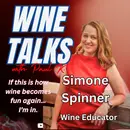
She has a new book "The Only Thing You Need To Know About Wine Is What You Like: The Essential Guide To Wine" and it nails it.
When the entire industry is trying to find their footing and predict the market to make their next move, Simone is busy talking to the consumer; the actual people who we all are trying to court. And I think you will find this book full of.....common sense.
Simone FM Spinner could spin a tale about wine that would make even Hemingway set down his glass and lean in closer. In this episode, you'll be immersed in a conversation that stretches far beyond wine facts and flavor wheels, challenging everything you thought you knew about what makes a glass memorable.
You'll discover why Simone believes the "sommification" of wine has stolen some of the joy right out of the bottle—and how the industry itself is trying to win it back, one story at a time. Paul and Simone dissect the disconnect between pouring facts at consumers and creating emotional, lasting experiences around the wine.
Pour yourself a glass as Simone takes you inside the true art and neuroscience of wine, where it's not about nailing the tasting note or reciting terroir specifics, but about conjuring up sensory memories, emotional connections, and the stories that stay with you long after the last drop.
You'll learn how visual cues, like the collages in Simone's latest book, can unlock flavors more powerfully than words ever could. From bustling vineyards in Italy with cannolis at the ready, to quiet moments over a Sauternes shared with family—these are the places where wine reveals its soul.
Simone and Paul show you why knowing what you like is just the beginning, and how your palate's journey is shaped by culture, context, even your body chemistry. Each bottle, they argue, is an invitation to live vicariously and to reflect on how wine intersects with memory, history, and joy.
By the end, you'll see why Simone's mantra is that the only thing you need to know about wine is what you like—and why the path to discovering that is the grandest adventure of all.
What you'll learn in this episode:
-
🍷 Why stories and context sell wine far better than facts and terroir
-
🍷 How "sommification" may have made wine intimidating—and how to bring the fun back
-
🍷 The roles of art, neuroscience, and memory in truly experiencing wine
-
🍷 How visuals and sensory cues unlock tasting notes better than academic jargon
-
🍷 Why "knowing what you like" is both simple and surprisingly complex
-
🍷 The cultural, historical, and emotional forces that shape your palate over time
YouTube: https://youtu.be/XuQ_b2xnYgU
0:00 That's how we should discuss wine. Like, if you're standing at a festival pouring wine to a bunch of people, nobody wants to hear, like you were talking about, about the terroir. They want to hear that person say, you know, I first tasted this wine in Italy at the vineyard with XYZ person, and then the grandma came out and she brought us cannolis. That's going to sell the wine. Sit back and grab a glass. It's Wine Talks with Paul Kaye. Welcome to Wine Talks with Paul Kaye. And we are in studio today about to have a conversation with Simone FM Spinner. Can I, can I ask you what FM means? Yes. Frequency modulation.
0:44 But in my case it means Francis McKenna. Yeah, I was gonna say like FM AM and then Francis McKenna. Okay. My guest today, Simone FM Spinner, has taken one of the more fascinating paths into wine. She started in the arts, ballet, music, painting, and philosophy before wine completely captured her attention. Since then, she's become an educator, author, researcher, and serious student of how we actually perceive and experience wine. She's explored everything from whether wine can be considered art to neuroscience, terroir, climate change, and the future of the industry. Please welcome Simone Spreiner, or welcome to the show, Simone, again. Thank you for having me back. The last time we talked was January of 2022. So it's been a while. Oh, you looked it up. Yeah, I actually listened to it a couple of weeks ago. Oh, interesting. Do you like that? Because I only listen to the shows again because I want to see some of the pertinent points, but I hate hearing myself. I don't like the sound of my voice at all. I don't like to be on camera. And I know that it's It's something I need to embrace. But like doing reels on Instagram and stuff, I'm the last person to do it because I don't, I don't, I don't know how actors do it.
1:59 But I listened to it again because there were some pieces of research in there that we talked about that I thought would be relevant to kind of touch on again. Well, let's, let's, we'll start, we'll start right in with that. What were some of these things that we talked about? Because it was a few years ago, things have changed in the industry. I mean, radically changed actually since then, even though that was on the precipice of some of the changes we're experiencing. Right. It really was. So we can talk about the state of the industry in a minute. But the things that struck me when I went back and listened to that was how we talked about the sensory analysis. And that's kind of my specialty.
2:39 You know, I worked in the trade for 20-plus years carrying a bag and buying and selling and all of those things. But the thing that captures my interest the most is the sensory analysis. And I'm working on another book after these books about that experience. And I wanted to go back and listen to what we talked about and how— the thing that I wanted to readdress was when we were talking about how you're on the Amalfi Coast, with your wife or your significant other, and you buy that carafe of wine that's nothing, and it's the best wine that you've ever had. And then you bring it home and have it again a couple years later with pizza over the sink or something, and you're really disappointed. And it's the wine in context. That's true. The wine in the experience.
3:36 And you mentioned that people were texting you pictures from their vacations and how odd that was. And I just wanted to revisit that concept because it's so much of what's going wrong in the wine business right now is people are, I think that the sommification of wine, which I'm in that, kind of made people afraid of just sitting down with a glass of wine and enjoying it for what it is rather than it being a quiz or a test or a performance or having to get it right. And I just think we need to get that off. The somification. That's an interesting term, the somification. I like that. Somification. Well, I used to call it the cult of wine, but I'm in it, so I thought I better stop doing that.
4:30 So continuing that thought, and I I think it was yesterday or the day before, the local market here in Southern California, one of them in Southern California, has been making a big effort to promote wine sales. I mean, obviously bottle sales are off in most places. Yeah. And so they've created a club, which, you know, of course is dear to my heart. Right. And then they're doing these tastings. And I took a picture, I haven't posted it yet 'cause I suppose I should, you know, gray the guy's face out. But it was exactly what was wrong with the wine trade today. And so a woman came up to the booth, he's pouring off, whatever you can pour off these days at a tasting like this. And he goes directly into the terroir and the elevation and all these specifics.
5:14 And I'm thinking to myself, first of all, her eyes glossed over immediately. That's not why she walked up to the booth is to be lectured on, I mean, literally lectured on elevation changes and what it does to grapes. And I took a picture, I was gonna post it and just say, this is exactly what's wrong with what we're doing. Mm-hmm. But it's not universal, do you think, that everybody does this? Aren't there some, movements in this industry where people are trying to develop the experience of wine and keep away from all that sommification? I love that word. Isn't it a great word? I think there's a real push-pull. I think that people are trying to break away from that culture of the last 10 or 15 years of the sommification, the need to get it right, the need to one-up each other, the need to know the most, and then the need to spew that at the consumer. I think there's a real push-pull. People are trying to get away from that, but then the ego still wants us to be the smartest person in the room when we're the ones behind the table pouring the wine.
6:28 So it's It's just a recalibration that has to happen. It really does. I was listening to your podcast the other day with Doug Frost, and he was kind of mentioning the same thing. You know, we just have to go back to maybe not the Chianti in the basket, but you can buy that at Trader Joe's. At the Costco, yeah. And it's not that bad, you know, because really it's just the camaraderie and the experience and making it fun. And we've lost the ability in the trade to make wine fun. That's why the consumer's eyes glaze over. It's not fun having facts drilled down to you, even when you are interested in those facts.
7:12 You know, there's a part of that, I don't wanna interrupt you, but there's a part of that that's very academic. And I think it's a very important part of the academia. It's much like many industries and many subjects of academia, which is we need those people that have the PhDs that go into this subject and dissect it and they talk about it. And that's not the person we want in the forefront of the consumer. Right. But we certainly need the level of education. I have a cousin who just got a job and he's gonna be sent to Burgundy to study for his WSET. And it was very interesting to me 'cause he feels like he's gonna enter the wine world because he gets his WSET level 2 or 3 or whatever it is. The wine world. Really, we understand that's more of a way to study about wine, and all those things are available to us any way we want them. But to be in a structured environment to learn about wine and then take a test, yeah, I learned about wine, is kind of irrelevant to the realities of what wine is on the street, right? It doesn't really mean that much. You don't really learn that part until you get in there like you have. Right. Sold, studied, read, and connected. But does that, does some of this relate back to your study of whether wine is a neuroscience or whether it's an art. And so that the conversations around wine, like you're talking about just a fiasco of Chianti, really don't deal with academia. It deals with the art of wine or the neuroscience of wine. 100%.
8:38 It deals with the art and the neuroscience of wine, for sure. The cross-modal perception. Have you ever had Dr. Charles Spence on? You should. He's a mad scientist. He's the head of this experimental psychology department at Oxford, and he uses wine as a case study all the time. He's brilliant. You will love him. It does. It goes exactly to what I've spent my life studying. But I'll tell you, you know, I did all that credentialing. I thought it was gonna get me somewhere in the wine business, and it never did, ever. I never got a job offer for getting WSET diploma. I never got a job offer for getting a PhD in wine either.
9:23 It's not going to get anybody anywhere. Wow. That's a powerful statement. That is a powerful statement because you've got to do it on your own. I had to do it on my own. And in fact, I think sometimes it can be an inhibitor to success in wine because your boss doesn't want you to be smarter than them. Typically. You know? So I think it can be a hindrance. Some of the best wine reps I know have no credentials at all, but they're really good salespeople and they know a lot about wine. They're very passionate, but they haven't gone down that path. I think that one of the problems with the wine business is that we put, not the business, but we inside the business put so much pressure on ourselves to get all these certifications. And then it doesn't translate into a salary. I think Doug was talking about that the other day. It doesn't pay. Yeah, he did. You have to do it because you're so fascinated and you're so passionate.
10:34 I mean, I can't think of anybody that would go through all of that without just being completely fascinated by wine. Well, don't you think, I mean, I'm in the middle of a Bordeaux series. You mentioned earlier that we have been doing a lot of stuff on Armenian wines because I was trying to express the idea of winemaking and, you know, bringing it to the world, which is, here's a little country that nobody knows the name, the grapes or the names. No one knows the regions, and they're trying to break into the world of wine, and this is almost impossible. Right. And so, It seems that the old model, uh, of Bordeaux, for instance, and I just had a, I had the owner of Pontet-Canet in the shop yesterday, and it all seems to be going back to this experiential side of wine, which we started the conversation with, which is sitting in front of the Parthenon or something and having a carafe of wine. But— Yes. It is about the experience. And so the academia sort of follows up and the way it, The way I express this is sometimes, as intimidating as some people— intimidated as some people are about wine, they don't want to talk about necessarily.
11:48 They don't want you helping them in the store necessarily, because it's an intellectual decision sometimes to decide what you're going to buy. 100%. But you open a bottle of wine at a dinner with even people you don't know, and that conversation no longer becomes intimidating. It just becomes a really great conversation about what's in this glass. 100%. Do you find that when you're out and about having wine with people that you may not know very well, and that the intimidation seems to melt away? Of course it does. Of course it does. Because the business created the intimidation. Wine's been around for what, 8,000 years? 10,000 years. Do you really think people 4,000 years ago were intimidated to drink wine?
12:39 Even 100 years ago. No, they couldn't wait to get their hands on it, probably. Exactly. But there was no intimidation factor. We, the industry, created that problem, and now we have to uncreate that problem. Excuse my My stuttering today. But is that not the same problem that Michael Broadbent might have had in the '70s and some of these other— Charlie Waugh and those guys? Did they not suffer through it or did they create it? They started the ball rolling. I think if you look back to The first people who were really talking about wine were writers and philosophers.
13:31 They weren't even wine trade people. You know, like Hemingway, for example, talked quite a lot about wine because he drank quite a lot of wine. But nobody was intimidated by that. That's a good point. I think when we started to fine-tune it to the point where it had to be really quantifiable, And then if people weren't experiencing that same thing, like when they read a tasting note by Broadbent, if they weren't experiencing the same thing, then they thought they were wrong. And people don't like to be wrong. They don't want to be embarrassed by not matching that tasting note. Yeah. You know what I'm saying? Well, I get it. And you probably suffer through this as I do. I go to restaurants, I look at the list. Sometimes restaurants like to put the tasting notes. And as experienced as I am, I mean, literally 100,000 wines, I read the notes and I don't know what it tastes like.
14:33 Right? I mean, I don't really know what they're saying because it's a little generic sometimes anyway. And I had one writer on, one wine writer on the Wine of the Month Club here. His name was Ed Massiana. And he used to— we used to talk about it, and he would say about people that can swirl a glass, smell it, tell you the region, tell you the grape, you know, we— some of us can do that. I'm not that great at it, but I can do it. But he would say, so what? Like, big deal. Mhm. Maybe that just intimidates people even more. It might enthuse people, inspire them to think, wow, what an interesting guy, he can do this. But as far as looking at themselves, they'd go, what am I supposed to do? I can't do it. But I really can't tell what a wine tastes like when I read those notes. You know what? I used to be that person too. I could get it right down to the vineyard, and it's just a magic trick. It's just a performance.
15:32 So you know what I did? And not to totally be promotional, but that's why in my new book I did this. I created these collages that are the tasting notes. Oh, interesting. Yeah. That's a pretty picture. So this is, actually, I was gonna jump into that because I'm looking at your history here. And so that's the white wine side? Yeah. Is that kind of like a, is that kind of like a, A physical version of, or more expressive version of the aroma wheel kind of thing? Kind of. Yeah, exactly. And then I did it for individual, like here's Cabernet Franc.
16:15 I did it in Barbera. Oh, that's so interesting idea. Yeah. So that was the whole premise is when people read the tasting notes, they're confronted with this word salad, right? But it doesn't necessarily trigger in their brain what's really going on. If you look at a picture, we're all visual. I don't care what anybody said, we all looked at the pictures, right? Yes. We didn't necessarily read the articles, if you get the reference. So it's a picture book, and that's how we learn to read as kids. We look at picture books. We're visual learners. Humans are visual learners. Some people are audio learners.
17:01 Most people are visual learners. And I think that when you're reading the words, it doesn't necessarily stimulate your brain into realizing— if you read strawberry, you read strawberry. It's black and white text. If you see a picture of a strawberry, you can— That's a good point. You can taste it. You can feel it. You can smell it, you know, you can get into it in such a way. So I'm with you. When I go to a restaurant, honestly, I usually order a gin and tonic, to tell you the truth. That's actually what I get that question, what's your favorite wine? And I say gin. Gin. Exactly. I like a good gin and tonic. Gin and tonic is pretty old school. I mean, that's pretty '80s and '70s. It's pretty interesting. Yeah.
17:46 Well, you know, you wrote a book. Your first book was Denver Food: A Culinary Evolution. And not the subject notwithstanding, but you liken it to a Bourdain style with your encounters with Anthony Bourdain. Yes. And the shows I'm working on myself are Bourdain-esque. And I'm wondering, since I read this here, if that sort of style that he brought to the screen for food, which when you think about it, like No Reservations and Parts Unknown, you really didn't get into the nuances of that food, the flavors. You— it was more about the cultural experience around the food.
18:28 Absolutely. Sometimes it was political. Sometimes, like in the Cuban episode, he's talking to the guys about baseball, which is their favorite subject. Um, isn't that kind of what wine should be like? And is that how you're trying to promote the idea? Yes, 100%. I'm a huge Bourdain fan. The Cook's Tour series is probably still my favorite. If you go back and watch that very first TV show he did, you know, it was very green. He was very quirky. It's why we all fell in love with him, because he was so nerdy and quirky and embarrassed all the time. And everybody can relate to that. He's a little— Yeah. And then he progressed into a little bit more of a caricature of himself by the end. But, yeah, he didn't sit there and dissect the foie gras and tell us what it tasted like. It was about the people and the story and the location and the place. You know, one of my favorite episodes, He went to San Sebastian several times. And I love just how he talks about the food without saying, telling us what the tasting notes are of the food. Nobody cares. No.
19:47 Nobody cares what the tasting notes are of the wine, really. They wanna know what it makes them feel like and how it can make them happy and connected. And yes, having, you know, a conversation. If you go to a restaurant, you're sitting at the bar, Because I go alone mostly to restaurants and sit at the bar and have a glass of wine and strike up the conversation with the person sitting next to me, strangers. And, you know, we'll talk about it or I'll let them taste my wine or whatever. And I don't tell them I'm a wine nerd. But we just get to talking. Well, I want to grab something and read it to you. Hold on just a second.
20:33 I have it here. I was gonna read it yesterday. This is actually Hemingway. Okay. And it's from A Moveable Feast, which was his story about his tenure in Paris. But tell me if this isn't exactly what we're talking about. He says, as I ate the oysters with their strong taste of the sea and their faint metallic taste that the cold wine washed away, Leaving only the sea taste and the succulent texture. And as I drank their cold liquid from the shell and washed it down with the crisp taste of the wine, I lost the empty feeling and began to be happy and to make plans. I think that's one of the most eloquent discussions of what wine is.
21:21 100%. I became happy and began to make plans. Yeah. So that has nothing to do with the academia of it all, right? Nothing. But it's exactly what I talk about when I talk about the sensory exploration, because he's discussing the sensory exploration in only the way that Hemingway could, or Bourdain. You can really hear Bourdain's voice speaking those words at the same time. Because he was a huge Hemingway fan as well as I am. But that's how we should discuss wine.
22:03 That's how people should discuss wine. If you're standing at a festival pouring wine to a bunch of people, nobody wants to hear, like you were talking about, about the terroir. They want to hear that person say, I first tasted this wine in Italy at the vineyard with XYZ person, and— then the grandma came out and she brought us cannolis. That's gonna sell the wine. That's it. Wouldn't that sell you a bottle of wine? Because you want to live vicariously through that experience. How, how do you feel then about these? I mean, I went to the supermarket the other day. My, one of my new little sort of Instagram series is gonna be taking, since I've had so many people on the show, there's so many stories to tell, grabbing a bottle off the shelf and just telling a 30-second story.
22:51 I did it with Opalo the other day. I did it with I did it with a couple others. I did it with Sanford. You know, the first one I ever bought, my, the first one my dad ever allowed me to buy was Sanford Pinot Noir. And, you know, back then it was a storied wine. But how do we, how do we tell people that those, I'm not gonna say that they're not honest wines. Almost every one of those wines has been played with, acidulated, sugared, something to do with it to provide, you know, consumer-level wine, which is fine. Yeah. It's necessary. But yesterday I had the, like I said, the Poney Canté. I always get it wrong. Poney Canet. Canet. Canet.
23:31 On the show. And we were discussing this idea of an honest glass of wine. And it seems to me, at least in my experience, that when even a novice has an honestly made wine, which is really trying to just be the objective of the winemaker and the château owner and express the terroir and the time and the place, that almost everybody can agree this is pretty interesting stuff. Even if I don't drink red wine, kind of like, I don't drink red wine. Okay. But taste this and see if you don't just feel something that you didn't feel before. And maybe we describe that. I don't know. Do you, have you had those sort of encounters with people when they taste a real glass of wine?
24:13 Absolutely. And that's where my whole master's degree in is wine art comes in. Some is and some isn't. These honest bottles offer an experience that's more unique than a commercial homogenized wine does. Mm-hmm. I don't know if Coca-Cola, sorry Coca-Cola, but I don't know if Coca-Cola offers you an honest experience or an aesthetic experience, maybe. But I don't know. But when you're drinking something that's usually pretty small production made with such intentionality, I do think that the novice to the expert has a more unique experience with that wine than they would with— you know, a bigger box brand that's commercially produced and homogenized.
25:20 He says something very important there. I don't wanna gloss over it, and that is the Coca-Cola thing. You know, when Pepsi was doing their taste-offs in restaurants, and I mean in supermarkets, Coca-Cola was running the ad where, I wanna teach the world to sing. And so you weren't buying this carbonated beverage, you were buying this idea of this worldly, position as yourself in the world drinking Coca-Cola. And maybe, maybe that is what, you know, the wine story should be in that it's taking you to a different place at a different time that you need to experience, you can experience. One of the greatest ads of all time. Yeah. I think it's one of the greatest. And then they brought those same people back like 25 years later and they all had their kids with them. And really anybody from a certain era, like I grew up in the '70s, That was a huge thing. The Coca-Cola, the song. I think if wine could capture that essence, we wouldn't be having the problem we're having. So, but I hearken back to a couple things, and I've brought this up on the show. Maybe you heard it when you heard some of the recent shows where we were in Palermo and I had this amazing wine service. It was, I had chosen an Antinori Super Tuscan off the list. And he just made me feel like, our whole table feel like that we were, you know, part of the king's table that day serving wine. And it was this wonderful, I think he was Albanian or something. And I just,
26:52 I tipped him separately. I said, look, this was the most amazing service I've ever had. Now, that could be intimidating, but he didn't make it intimidating. He made you feel like you did something very special by ordering the wine through him. And then you think about like Downton Abbey, right? Yeah. Where every time there was a dinner, there was a scene where, you know, the butler or the— I forgot the term of the gentleman— went to the cellar to choose the wine. Right. And that kind of represents more than just the character of this wine. It represents this emotional side of wine where it becomes part of the experience of a meal in old-time England, possibly. And last night, I had all my kids, I had all 3 kids over and all the grandkids. And, uh, which is great, of course. And I brought out a Sauternes.
27:49 And all my, my kids, my own kids, of course, are educated and taste a lot of wine. But my in-laws, my son-in-laws hadn't. And they just got so emotionally connected to this wine. Didn't know anything about it. Just tasted it and said, whoa, like, what is this? Right. And is that when, is that when the winemaker gets it right? Like they've, they've learned to express after years and years of harvesting and, and managing grapes that they finally, you know, they get that grape the right way at the right time for the right moment and produce emotion. I think it is partially the winemaker gets it right, but I think it's the wine culture behind that winemaker that gets it right. You know, the centuries of going into that bottle that that whole little community has devoted to making that style of wine.
28:50 Like Madeira, for example. Mm-hmm. The centuries that go into making— it's one of my favorite wines. I could drink it all the time. I don't, but I could. The centuries that go into making that wine, the intentionality behind that, style is so important that the winemaker has to live up to that reputation. So they work so meticulously to build these gorgeous bottles of wine. And I think that's what makes people like you and I fall in love with wine. And now your son-in-law, right?
29:32 Because when you have an experience of a wine that has this background, this history, and everybody in that community working together from the farmers to the vendors to the producers, but also the restaurants, the hotels, everybody surrounding that Saturne, the whole culture, the artists, the musicians, you know what I'm saying? It all goes into making that wine what that wine is. And I think people can tell. You can tell. You can tell when you're drinking a really exceptional wine from a specific region. And I'm not talking expensive, I'm just talking exceptional. No. Sometimes they're not the same thing.
30:22 You know, when you were in Palermo, I'm sure you had some wine that was of the indigenous grapes of the region made by some little producer that were mind-blowing. We'll never get to taste that again because that was your Amalfi Coast experience. That was your aesthetics in action right there. We were on that same trip, actually. It's funny you said that. We went to a, a real cooking sort of school, like it was part of this tour thing. And we actually went to this little place and we, we kneaded bread and we, we made focaccia and, and we tasted, it was basic wine, carafe-style wine from Sicily.
31:03 Sure. But, you know, it was, it, I knew what the level of quality it was based on, you know, what we were doing, but it sure tasted great, you know, in this environment, in this kitchen with this fire burning and all. It was just part of the whole thing. And, One of the things that's going on, and maybe this is why you wrote the book, in this industry is, you know, the Gen Zs, everybody's arguing about the millennials and the Gen Zs, whether they drink wine or not. And, you know, and I look at the actual consumption numbers, they're not that bad. I mean, they're off a little bit, but they're not that bad. And I think every generation eventually comes around to what we're talking about. Mm-hmm. But is your book trying to reestablish the idea that it's more than just a beverage, which is, I think, one of the complaints of the industry in general is that we've been marketing wine as a beverage rather than an experience. And are you trying to bring that back into fold with the book? Absolutely. Absolutely.
32:00 I'm trying to do a couple of things with the book. One is make wine fun again, make it an experience, and also make it Yeah. Take it back to the era of wine pairing with food, not technically pairing with it, but having your wine with a meal, with family, with friends, and discussing it philosophically, which is just what happens. You know, people get really into— like, I'm sure your conversation with the Saturn the other night was just rich with philosophy. So I'm trying to do that. The other thing I'm trying to do is, again, with the pictures and the way I structured that portion of it, I created a class and a method 15 years ago called The Only Thing You Need to Know About Wine Is What You Like. And that's the title of the book. The only thing you need to know about wine is what you like. Mm-hmm. The clever bit is it takes you quite a while to figure out what you like. So you have to go through all this different experience to figure out that you really only wanna drink, you know, Châteauneuf-du-Pape or whatever. And in that, I developed, I'm also a pretty big Sherlock Holmes fan, the greatest detective of all time.
33:32 So I developed the Wine Sensory Brain Addict because I love his brain addict theory. where your brain can only hold so much information, and you need to kind of eliminate all the clutter so you can just focus on this information to get the job done. Hmm. So I don't really talk about terroir or soil or anything like that. I mean, I could have, but I mostly talk about this wine sensory brain addict. For example, when you were in Palermo the other day, I'm sure there were lemons, right? Of course. So you can think about the lemon, and you can smell the lemon in your mind. You can taste the lemon in your mind, right? So in my seminars, I would take 4 different wines, and then I would get the fruits and the spices and the vegetables that are the typical tasting notes for those wines and put them on plates. And let people play around with that and smell the lemon and taste the lemon and taste the cherry. And then we would distill that down to what kind of lemon is it? Sorrento lemon or is it Meyer lemon? You know, and distill down and play with the wine, play with our senses, play with our food like we do when we're little kids. And that
35:03 increases your enjoyment because it makes you excited, right? So your little nerves are all ignited. But that's kind of what I put into the book was exploring this brain sensory wine addict to figure out what it is that you like about wine and then looking at the competitive sets for that. You know, I had this story I told many people about going to Paris and sitting in front of a, you know, we're just in a regular old tourist cafe, and I ordered the quiche, and it was delivered to the table, and my wife looked at me and said, what's wrong with you? And I said, this is— I haven't smelled this for 50 years, 'cause it smelled exactly like my mother's quiche. And it was the most contextually, I mean, it's the context of that and the texture of all that was so real at that moment. And then along my career tasting all these wines every Tuesdays, and I've repeat tastings of certain vintages or, or 5 to 7 vintages down the road of a particular winery, I started to have those same sensory memories and going, wow, I, I remember this wine, this style, or for even matter, um, you know, many varietals from the same winemaker at the same winery in the same vineyard.
36:21 Mm-hmm. And realizing that this, there's a there's a common thread between either the vineyard's character or what the winemaker was doing with the grapes. But I can sense it across the whole product line. And that's— but you said something interesting. To learn what you like takes time. It does. And when I— when my dad started Wine of the Month Club in 1972, it started as a way for people, for him to weed out all the junk he tasted and just present good wines at the wine shop. But then eventually it became this lesson for yourself if you subscribed to weed out. Because I was going to send you a good example of Sonoma Chem or a good example of German Riesling.
37:03 And if you didn't care for it, then you had that guidepost, you know, those guardrails to know where you should and shouldn't go, at least in the near future. Right. And the reason I sold the company, one of them was that problem. Uh, the, uh, the value of the club stopped. That value of that club just stopped. And that was because the crap that was coming into America, being bottled, the stuff I was tasting had a serious decline in quality. Sure. I couldn't find these interesting, the interesting lots of wine that were tucked away in a warehouse somewhere. Those were dried up. And so all I was getting at the price point that I was selling things at was just, you know, Tetra Paks of, you know, Tetra, 20,000-liter gallons of crap or 20,000 liters of Spanish white. They had no character. And so I couldn't provide that service anymore. I couldn't help you figure out what you liked because these represented nothing.
37:57 And so this is a very interesting point you're making, is finding the things you like. Huh? I think it's so sad. And that is part of why people don't want to drink wine anymore. There's so much bad wine out there. But then we shame people if they like that bad wine. That's not good either. But to figure out what you like, it does, it takes time, you know? But think about it this way. When you're a child, you probably don't like Dijon mustard. You like yellow mustard. You know, you have to graduate to the Dijon mustard for the most part. I think it's a really good example for wine. When you're, when, when I was in my 20s and I was first drinking wine, I mean, I grew up in a family where there was wine. So I already was pretty well experienced into wine. By the time I was out on my own and was purchasing wine, I was drinking stuff I would never drink now.
39:01 You know? That's a good point. That's a really good point. I would never drink it now. I mean, would I taste it and evaluate it professionally? Sure. But I wouldn't drink it. And what I even drank 15 years ago, I probably wouldn't regularly drink now because we change and our life leads us on a path of experience, hopefully. And you either develop a different kind of a sophistication for food and wine and things like that. Most people don't. love what they loved 20 years ago. No, but that's an interesting thought. Let me just see if I can develop that a little further. And I have this theory about terroir. Of course, anybody that does this like we do every day, you realize that terroir is not just the environmental part of the wine. And it's not just the air and the soil and— Culture too. Yeah, it's this, it's the impact of the culture on the winemaker and the area. It's not something you taste necessarily like tannic acid, but it is— I can't imagine that the people at Pichon Longueville, when the Nazis came in and shot the place up, that that story that was handed down to winemaker to winemaker isn't influenced how they perceive what their job is.
40:21 And I wonder if that doesn't flip itself around as the consumer, that our experiences over time, not only maybe getting more sophisticated in the palate and we understand the complexities, but just Our life experiences change the way we perceive things, and that changes how we might view a glass of wine. 100%. Absolutely. And the function, the reason you're drinking the wine changes. When you're stressed out and you're cocktail drinking is a different experience than when you're On the Amalfi Coast or in Paris or even in Texas Hill Country, wherever you are, having that glass of wine with— at the tasting room or whatever is a different type of wine drinking and taste complexity than the stressed-out wine drinking or the holiday wine drinking. They all bring a different quality to the wine, you know, that are— That's interesting. I don't know, maybe it could go insofar as to our body chemistry at that moment. You know, maybe our body chemistry when we're happy is different than when we're stressed.
41:40 I don't know. That would be something really interesting for somebody to study. Not me. I was just gonna say, is that your next book? Maybe I should be. That's a good idea. But, um, I think all of these different things, but when it comes to the winemakers themselves, There's a different stewardship for the land before the Nazi occupation than after. That's true. That's a really good example of what you're talking about. I'm sure you've read the amazing book Wine and War. The Klatschups are good friends, actually. Yeah, I love everything they've ever written. I've devoured and given many, many books away.
42:21 Champagne Charlie, You know, he was— Yeah. He owned property in Denver where I am right now. But I'm sure that the way that the intentionality of making the wine, not just as a function of global market, but I'm sure in Bordeaux or Burgundy or even Champagne during, before, during, and after the war, the intentionality of making that wine is completely different. You know, you can't even suggest that it's the same product. Right. And so that would lead to something different, something— and that part's harder to quantify, right? I mean, it's harder to explain to somebody, but because of the influence that might have and how they feel. And then one of the conversations we had yesterday, we're almost out of time here, which is unbelievable, but— I can always come back.
43:16 Yes, you will. We were talking about yesterday with the Bordeaux maker about, you know, there is, there are certainly consumer trends that we need to be aware of in the wine world to accommodate that. And, and it's always a balancing act for a winemaker, particularly one, let's say Bordeaux, where there's an explicit terroir advantage to, to maintain this consumer awareness, but also be true to the brand that you're making. And that, so when I open a glass of anything from that area, Monet, Canet, uh, for instance, that I know that's what I'm drinking. Right. And I suppose that's inherent to the, to the vineyard and, and the philosophy.
44:02 But we also have to, so, and it seems to be the rise in a lot of these really, really great second labels, and now no longer second labels of Bordeaux, but just separate brands. Sure. You know, not just the leftover grapes kind of thing where they're actually developing brands that for the, to experience that château at a price point that most people could experience. And I think they're some of the greatest value in the industry right now. Oh, I do too. Absolutely. Um, although I grew up in an area, era as you did, when you could buy first-growth Bordeaux for $100, you know? Absolutely. So I think it's great that they're exploring those things. I think one of the things wine needs to remember and the business needs to remember is we shouldn't be pandering so much to the consumer. I know we have to have the consumer to buy the wine, but I think if wine were to remain more authentic to itself, to its reason, to its own essence, rather than trying to please the consumer all the time, that it would be more successful because the consumer's a moving target.
45:12 You know, you brought up Anthony Bourdain. He never tried to please the consumer. Yeah. Or his producers or anybody. And in that, he pleased so many people because he was always, for the most part, maybe not toward the end, but he was pretty true to himself. I think if wine would just focus on being wine like it has for 10,000 years and less stressed out about pandering to these younger generations who are going to get there. I didn't drink good wine until I was probably in my 30s. I drank some wine, but I didn't drink great wine until, you know, I eventually got there. I mean, I was in the music business in my 20s and I was doing other things for fun. You know, I think, I think it's, I think that's right on. And I, and I, it's, it's a scary proposition, but certainly, you know, the grand Bordeauxs are not gonna go off and put their wines in a bag in a box. They're not gonna put it in a can, you know, they're not gonna acidulate it. They're not gonna add sugar to it. None of those things are gonna happen. And so they have to stay the course. And that's kind of the model. Right. Which is interesting, 'cause it seems to me this is just, it's just humanity. You know, people come into an industry, they're young, They don't have any experience and they, they try to apply their lifestyle and their, their, their methodologies to an old, old industry. And it just screws things up because they don't have enough experience to understand. Like there's this one group rethinking the wine industry. What are you rethinking? I mean, I don't get it. Um,
46:42 that's how I feel about rewriting wine language. Yeah. Oh, that's the stupidest thing I've ever heard. Wine language exists. the way it does because of where it comes from. And you know what? Everybody can go out there and learn it. I learned it. You learned it. Stop trying to change it. That's part of the problem. Wine has to be true to itself. Look, you know, this is my last thought on that, but when Gary Vaynerchuk was describing wines with, you know, as Froot Loops and, and, you know, Lucky Charms, so you change the language, you, you know less about that wine than you did before because who the hell would match, you know, who would understand what Lucky Charms does to a glass? how it tastes in a glass of wine. It's ridiculous. So where can we get the book? The name of the book again? The book is The Only Thing You Need to Know About Wine Is What You Like.
47:31 This is just my proof copy. And then there's a journal workbook that goes with it. And they're on Amazon. You can get them on Amazon or chasinggrapes.com is my website. And that's where I also do my wine seminars and I do coaching and coaching for people taking tests. But mostly I do wine seminars, multisensory interactive, where I pair wine, art, and music. They're super fun. We should talk about that next time. We look forward to that. And it's good to see you again. And we'll, we'll look forward to getting the book and thumbing through it and seeing where you've departed from the traditional methodologies to bring it to the streets, which is really what we need to be, need to be doing. Just make it fun again. That's what we need to do is make it fun again. Thank you so much for having me on. I really enjoy talking with you.
48:27 My pleasure. Cheers. Bye.