

 Apple Podcasts

 Spotify

 Youtube Music

 RSS Feed
 YouTube
 Pandora
 iHeartRadio
Wine, Terroir, and Storytelling: Cecilia Guzman and the Evolution of Chilean Winemaking
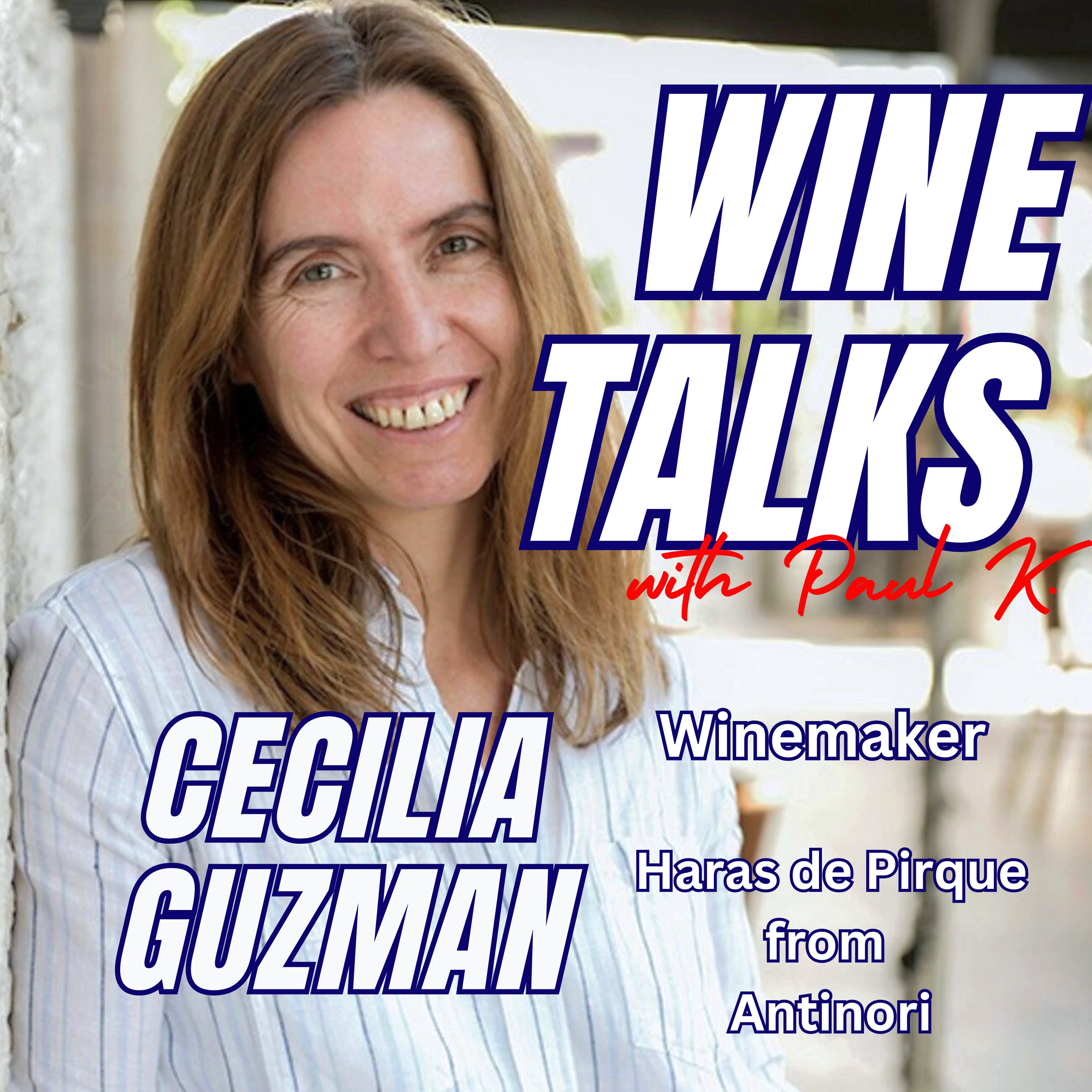
When people enter a room, you instantly get a sense of their disposition in life. Are they smiley? Frowning? friendly? Gregarious? and you instantly if this is going to work. I knew instantly that this was going to work when Cecilia Guzman walked into the studio.
Sitting down in the studio in beautiful Southern California for this episode of Wine Talks was a real treat—one of those times you just know you’ve got the right guest in the right seat. Cecilia Guzman, winemaker at Haras de Pirque (and yes, I stumbled through the name a couple of times—years of Spanish and still getting tripped up), joined me for a conversation that took us deep into the world of Chilean wine, from the fun of making it to the relentless challenge of selling it.
Right from the top, Cecilia hit me with one of those insights I love: “Making wine is kind of easy. It’s fun and easy, but selling wine, it’s another stuff.” Isn’t that the story of this business? We’re all drawn in by the romance—the vineyards, the sunshine, the “lifestyle”—but it’s once the barrels are tucked away and the corks are in the bottles that the real grind begins. And, as she pointed out, the business has changed dramatically in the last twenty years. Getting your label noticed in today’s flooded market is a whole different challenge than staking out your vineyard back in the day.
Now, Cecilia’s story isn’t the usual “dreamer buys some vines” tale. She’s the general manager and winemaker at Aras de Pirque, a property now 100% owned by the Antinori family—six hundred years in wine. Yes, you read that right, six centuries! I always marvel at how these wine dynasties, whether Italian, French, or American, get the itch to go explore somewhere new. In this case, the Antinoris, looking for that “departure from the regular,” were drawn to Chile’s potential—the terroir, the freedom from strict appellation rules, the lure of doing something different.
Cecilia’s philosophy on wine really shines when she talks about letting the place shine through—how it’s not about making the best Chilean Cabernet, but making the best wine for that unique spot in Pirque. That notion of terroir, of honest wines that truly express where they’re grown, is something I can get behind. The challenge, as we both lamented, is getting that magic to translate to the consumer, bridging that gap from heartfelt winemaking to the retail shelf.
But what I found most refreshing was her practical outlook. She sees Chile as a land with advantages—natural barriers, low disease pressure, and a real push towards sustainability. There’s a bit of humility in her voice when she talks about how Chile can almost do “organic by default.” Yes, their greatest challenge is, as she puts it, the weeds! (The kind in the vineyard, not the grain—note to self, remember the translation next time).
What really stuck with me, though, was Cecilia’s sense of continuity and patience. When you only get one shot a year, it takes decades to build real wisdom—and she’s been racking up vintages for thirty years. The Antinoris may have centuries behind them, but every year in Chile still brings new lessons, new surprises, new stories. And isn’t that just the heart of wine? It’s history in a bottle, culture at the table, a product that’s always made better when it brings people together—at home in Chile, or halfway across the world.
If you ever get the chance, I’ll tell you, visiting Chile is on that bucket list. From the vineyards to the Andes to those family tables where stories linger as long as the finish on a great Cabernet. Cheers to Cecilia, and to the stories we keep uncorking together.
-
Haras de Pirque
Website: https://www.harasdepirque.com/ -
Antinori Family (Marchesi Antinori) Website: https://www.antinori.it/
-
Los Vascos Website: https://www.lafite.com/en/the-domaines/los-vascos/
(Owned by Domaines Barons de Rothschild (Lafite)) -
Undurraga
Website: https://www.undurraga.cl/ -
Don Melchor Website: https://www.donmelchor.com
#winepodcast #Chileanwine #CeciliaGuzman #PollyHammond #winemaking #winetourism #AntinoriFamily #sustainablewine #terroir #vineyardmanagement #winemarketing #womeninwine #organicfarming #Argentinewine #CabernetSauvignon #Merlot #wineculture #biodynamicwine #wineindustry #foodandwinepairing
0:00 We always say that making wine is kind of easy. It's fun and easy, but selling wine, it's another stuff. Sit back and grab a glass. It's Wine Talks with Paul K. Hey, welcome to Wine Talks with Paul K. And we are in studio today in beautiful Southern California about to have a conversation with Cecilia Guzman. I was going to say the accent wrong. Even after like eight years of Spanish, I still said it wrong. Hey, have a listen to show that I just put out with Chef Slay, David Slay. He is a local restaurateur. He's got four or five restaurants in the beach areas of Southern California. Incredible insight into how wine is sold at the table. Have a listen to that. But not why we're here here. Would you call yourself the head winemaker? Welcome to the show by the way.
0:49 Thank you. Thank you very much, Paul. Thanks. I know you, you've been traveling a lot. You just got back from Vancouver. Was that business? No, no, it was family issue. But it was fine with one of my kids. 16 years old. You had family in Vancouver. Going to spend four months there in a school. In high school. Wow. Yeah, so yeah, kind of a challenge for him and for us. That's great to get out. Get out Chile. And you know, Chile is so small at the end. So in the answer that, yeah, it's good to have them, the experience to be abroad a little without the parents at the end. You're the winemaker Haras. No, no, no, Aras. Haras. Aras.
1:29 The Pirk. Which is. How old is that winery? Well, the winery is 20, almost 26 years. It's kind of young. Yeah, very young. But the project began in early 90s. So the vineyards were planted at the time, you know, this Chilean entrepreneur named the family, was the Mati family. And he has this property, a very beautiful property, 600 hectares. So let's say 12. Just call it 12,000 acres. And horses. That's huge. Horses and yeah, huge for being near to Santiago. So at the end he has a stat farm and he planted the vineyards, 100 hectares of vineyards in the early 90s. A little of everything at a time. That's an interesting way to start because you know, the wine lifestyle is so sought after. You know, people look at wine as this luxurious product. It certainly you and I would believe that it's a reflection of. Of culture, reflection of terroir, et cetera.
2:33 But to the, to people that aren't in the trade that are looking in and they look at people that are in the trade and they get successful. And then certainly in California, you go to Napa Valley and you build the big chateau and you, you realize how hard this is. Is that in Chile as well, is the lifestyle of wine sought after? It happened to be like that. But you know, we always say that making wine is kind of easy. It's fun and easy, but selling wine, it's another stuff. So today we have so many, many good wines in the market. And showing your product and selling your product is a challenge. So at the end, it used to be that way, but today the people involved in the business knowing much more to where to plant or where to buy, sell your wines, you know, has changed in the last 20 years. A lot, A lot, a lot. Yeah. I mean, we sold our company two years ago because of that. I wasn't prepared to, to learn it all over again. We had learned a lot and we done sold a lot of wines. We talked about, but. But trying to understand what the nuances of today's marketing were going to be.
3:45 But you're. But your winery is owned by a very large family. Yeah, today we are. The Property is owned 100% by the Antinori family. So they've learned how to sell wine. Yeah, they have been in the market for 600 years. So they have something to say about it. Yeah, for sure. Why did they come to Chile? They were looking to invest something in South America. They looked for some wineries in, you know, in Argentina and in Chile. But they stay with Ares de Pique because they believe in the product. They saw the potential. You know, we were just beginning. It was our first or second harvest. When they came, Renzo Gotarella and Pierantinori saw the potential we have and they decided first to invest in a joint venture. The idea, the original idea was to, you know, make one wine together. But, well, quickly after it, it began a. It became, sorry, a 5050 ownership. And today we are fully honored by the family. Wow. Because a lot of wine related families have come to Chile or Argentina. French. Yes, French and Spanish, Italians, Americans are there.
5:05 You know, Piero is down in Patagonia and from, from Italy as well. I wonder what the allure is. Is it because it's a new place, it's a new world, it's a new opportunity, it's new character. What? Well, big companies and I think in the case of the Antinori family, they were looking for something different in South America. They didn't have a property in South America. And it's the good thing of being far away from everything, you know? Yeah. I guess it's a departure from your regular. Yeah, yeah. So something different, another foot, you know, other place. And when you really think about wine and wine culture and everything, it could be different all over the world.
5:50 So they're always curious and doing different things. And that's why the Antinori came to Chile, looking for something different. Part of sort of the exploration into California, Napa, Central coast, Willamette Valley in Oregon for the French has been no rules, no appellation control. Yeah. You know, and you get a chance to experiment, I suppose, innovate on your own as to what you want this to be. Tasting your wines. Clearly a slight departure from the old school. Wonderfully fresh, expressive character. You know, you sense the grape in these wines. Well, the thing is, Paul, that we look after the terroir, after the place, over the, you know, soil, weather, everything together to get a wine from the place. That's why I always say we're not trying to make the best Chilean Cabernet from, you know, it's what we are trying to do the best for that place that's unique. And when you remember Birque, when you taste a bottle of wine of Arras, you know, our job is complete there because it's the terroir thing, it's the, you know, show the grape and the place and the people that work there in a bottle. And that's what, that's why it's so, you know, nice to work without, you know, real rules in appellation. We have appellations in terms of origin, geography, but
7:22 not in terms of how we make the wines there. So you can express the place more than the people. You express the place. So that's beautiful too. And the part that it's hard to explain to a regular consumer. And we were. My, my son in law was in town last week and he's quite academic and he loves. He won't drink cabernet in Bordeaux or Burgundy. He only drinks interesting things from interesting places. And I was trying to. I was trying to balance this idea and we just talked about a little bit what. It's fun and easy to make wine, but it's much harder to sell it. But there's something so unique about a properly made bottle of wine, an honest bottle of wine that expresses where it is, that lights many people up, but then the reality of trying to sell it, you know, and I don't know if there's a. If there's space between the idea of a terroir driven wine, honest wine, and then the consumer like what happens in the middle that we try to.
8:23 I'm not sure I'm asking the question. I'm just trying to sort of explain my position on, you know, the part that we understand or that we see and then what we see in the. Market, see, what we have, you know, see and try to do in Chile about that is that try to get the people there. You know, we have a lot of tourism coming from Brazil, from Chile, from states, Europe. And when you taste wine surplus, when you taste the wines there and you see the place, you can really show the product at the end there. As we told, as we were talking, so many good wines, but the place is unique. So you have to show the place. You have to show experience.
9:05 We go with the tourists with a personalized experience. We try to do the best for them. And then it's how you say it in English, mouth to mouth. That's right. And that's the way we do it today. Obviously, you bring less than 1% of the people that drinks your wine all over the world. But at the end, that it's helping the industry, the place. You know, showing what we do in the place is what makes a difference for us. I think that's a critically important part of today's wine marketing world. And that experience, it's slow, you know, only a handful of people at a time. But we have a company that has an experience of 600 years. Yeah, that's true experience. Yeah, they are patient. Yeah. Because that's wine tourism. California is down. Wine tourism is very popular. I've had a wine tourist group here on the show. I've had one tomorrow in the Morning with the Armenian, you know, tourism group.
10:12 And I think that that's kind of where we have to go now. The Wine of the Month club, for instance, what you see there in that picture, we used to go to places and we would stand there and we would shake the hand of the potential customer and we would share our experience of my dad's story coming from Cairo, blah, blah, blah, and that when you shook their hand and they got that next box, the next package, they would remember that conversation. Just like, if they come to Chile, can they meet with you or they meet with your tasting staff? Yeah, also no. The place is. Our place is also quite unique. We have a wine with the shape of a horseshoe. Maybe you will not remember the name of the wine, but you will remember that you have been there at the end, you related things. And the experience today is about that.
11:00 And not only the winery. When you have your wines with friends, family dinners, that's what is kept in your memory. At the end with the wines. Do you think every generation comes to wine properly? I mean, some later than others, like we're talking about Gen X now, they're drinking White Claw and other junk, but eventually they have that glass of wine or they, they realize what it can do and be. I would love to say yes. I would love to say yes. That's the way, you know. But at the end, you know, family, friends is everything. Wine and food, it's everything related. So it's, it's very difficult to take 100% the wine away from the table. You can't do it.
11:47 So at the end they will see what we have there in the table. They will taste different things. When you have wine in the table, you have different stories to tell about people, about the places, about where did you have troubles before? So I think it will be difficult to take it away. That's a good point. Last night we were at dinner in a Thai restaurant in Hermosa Beach. I walked in, somebody goes, hey, Paul happened to be a very well known sommelier from used to be at the Jonathan Club downtown and a blogger and a writer. And I listened to their conversation. They had two friends in from New York and there was their first time at Hermosa Beach.
12:29 Most of the conversation was about food and wine. And I thought that's just natural. It's just what happens. And we hope you and I hope that everybody gets a chance to do that, you know, once in a while to have that storytelling. Absolutely. So we were talking about some of the early vintages of Chilean wines that were done here. And when I started in 1987 with my father, one of the first wines that I tasted as part of the company was the 1987 Los Vascos Merlot. And Merlot was, you know, Merlot was the defaulted red wine of Chile at that time. And Sauvignon Blanc was the white. Of course, Sauvignon Blanc still seems to be this, the workhorse of the white wines from Chile. But Cabernet seems to have crept in and taken over where Merlot used to be. Is that accurate or no? Well, I think that's almost 60% of the vines we have planted in Chile's Cabernet Sauvignon is the queen variety. The queen grape there for sure. And in the last 20 years we have been in planting Cabernet and all the grapes in the right places. And that's all the, you know, it's all about that it's all about having the best Cabernet.
13:45 You will have the best Cabernet if you plant it in the foothills and you plant it in the right places. And Arras is that, you know, the right place for Cabernet Sauvignon in this case, and for Merlot at that time, maybe it was Carmen Air. Yes, Carmenier was very popular. Yeah, very popular Chilean Merlot at the time of. In the early 90s, before that. So maybe you had a Carmen Hermon and a Merlot, and. Well, Merlot is not popular all over the world. No. We have some issues with the clones and, you know, and the weather and the heat. So there are special places for Merlot, beautiful Merlot that make part of some very interesting wines of Chile. Salma Viva, as you know, the Melchior, beautiful wines of the place. But you have to be very, you know, focused in where you can produce Merlot in our. Isn't that just, you think about it, 1988, you know, the Merlot's very slow since it's only one time a year, you get to decide and test or replant or, you know, then you have to wait five years or four years to get a vintage that's, you know, acceptable for making wine from.
14:59 And I think that's part of the industry, part of the allure of it and part of the trouble with it. There's a lot of contemporary thought about changing the language and being contemporary and innovating, but you don't get that many chances. How long you've been doing this? 30 years. 30 years. Do you think that an experienced winemaker gets 60 in vintages under their belt at least? Yeah, at least. Okay, so 60 to 70 minutes, that's not a whole lot when you think about the chances you have and all the different changes. And now you're in a new area, theoretically, to the world of wine, Chile's relatively new. And you're still learning every day. And it will be forever, you know, because climate change, the soils are different. We have 80 hectares. And not every parcel is the same as the other, so they can develop different wines. So at the end, you're always learning. This is forever, you know, and it's also the interesting part, obviously, today, nowadays, there's a lot of technical, you know, analysis, you know, procedures that you can. You can. That you can guess a little more, what it will happen in the future with those wines, with the quality of the place, etc. You have a lot of data that we didn't have before. But anyway, it's the experience as you said it was, when you plant, you have to wait three or four years to really understand if what you thought
16:30 or what you see in this project is true. So. Yeah, well, that's agronomy at the end. And that's what, that's the fun part. That's the fun part where when you work with the antineurity, it's a big family, old family and you have 600 years of experience, you can take that and put it also in, in your place. I never thought of that. That regardless of where the experience is, just the, the management, the you maximizing the value of the vineyard, making sure you're not over planted or under planted, all those, all that experience is brought to the table without too much experimenting to figure it out because you've already done it all.
17:12 You know, chili always was. And I haven't tasted as many as I used to like the Wine of the Month Club. When I stood there Tuesdays when I told you about how we hear these stories. Chilean wines were in Argentina, wines were prolific. Every Tuesday I would taste them. But toward the end I wasn't seeing as many. But it was always thought of as sort of a value proposition. You know, the wines were always, you know, floor stacked at the rest market. And good wines, I mean quality wines in Duraga, other brands like that. Does that change or does it still feel like that. In the average. It stays.
17:52 Yeah. But they are very nice, beautiful new projects or that have redeveloped, let's say the brand. Because to make a good wine in a bright place with the, you know, correct clones and the nice, the proper yield and everything, it takes time and of course money. So you can't. The only category that is increasing in tiller the sales all over the world is the category of the reserve category. Let's say the wines. Yeah. Over $15, over $20 fob. So at the end, the Chilean category, the nice Chilean categories is increasing in terms of volume today that I have seen. And Don Mercourt Merchure. I have some of that. Yeah, it's a beautiful wine. It's my poem. I don't think I've ever opened it with that. You can open it. It's a beautif 100%, 100 points in the Wine Spectator. Best, best wine last year, you know, for, for the Wine Spectator. And it's really. They have doing a great, great, great job there.
19:05 I'm so happy that the guy that bought my company didn't want any of those. Yeah, for sure. You have them. Yeah. You know It's a wine that can last 20, 30 years in a bottle. No problem. I think I'll open it tonight. Yeah, that's true. You should. You know the other thing that's interesting too about Chile and Argentina as well. Any country that has been natural, and that's not the right word, but are the farms in Chile contaminated? Like, if you came to America, you'd have to probably decontaminate before you could start to grow organic or biodynamic farming. But it would seem to me, and I know that like, like I was talking about Piero and Cenza, he talked about the Patagonia vineyard. You know, he's like, the Armadillos are coming back and this is the, the, this is what they're seeking is this very organic and biodynamic farming. Well, that's a good thing of, of being far away from everybody. Yeah, we have the mountains, the Andes, huge mountain. Then we have the Pacific Ocean, the north.
20:06 In the north we have the desert. So at the end we are very isolated. And then the, the farming in Chile, in terms of the wine business is almost all we are in the sustainable project Wines of Chile. A Chilean organization has involved every winery in this beautiful project of being sustainable, certified sustainable by a company. And it really works when you take care not only of your grapes, you take care of the community, the people who works with you. And everything is really makes for us a different standard in terms of production. And yeah, Chile is very, I always say that is the, is the place that is almost mandatory to be, you know, organic. Because when you see, you know, a French book of diseases, it's like, you know, very, very high, a lot of pages. And then for the table Chilean, you know, we have few diseases, few insects, really, that doesn't make a lot of harm to the, to the, to the vines at the end. It's a way to do it. Our challenge is weeds, for example. But yeah, it's that. Wheat.
21:23 Wheat. How do you say? The grain? No, the, the grass that's. Oh, the grain. The grass that has. Oh, interesting. Yeah. So it's the way of producing wine in Chile, especially reds. You know, for the white wines in the coast could be a more challenging for. But for red wines, Indian, you know, high places as Aras is mandatory. So that's interesting because there's, there's, you know, the biodynamic movement that you saw the book over there. You, you, the vineyards that a biodynamic vineyard looks substantially different than a well trained, pesticide laden, you know, properly farm Vineyard. And it's such an interesting irony between the two because, you know, weeds are good. You know, certain types of weeds are really good. Right? They. They nourish the soil for the next vintage. And that's. It goes, it goes from there. In California, America, we. We've ruined our farms, you know, and it always fascinates me that, you know, farming was organic and it probably was very sustainable and it probably was biodynamic long before all these chemicals came into play. And now we applaud ourselves for going back to where it was in the first place. We created this problem.
22:44 Yeah, for sure. Humanity, sunshine, has always created our own problems. But, you know, for the vineyards, I think we have something good at that, is that we don't have to produce a lot of yield. So if you keep it low, if you keep it sustainable at the end using that word, you don't know to use a lot of different things to. It's not grains. It's not that you have to produce more yields per hectare to feed someone. The less you have, the more concentration you can get.
23:24 Maybe you can get a better wine. So at the end, low crops, it's not necessarily a lot of, you know, things to grow. Yeah, chemical things to grow. So at the end, coming back, also, it's good that you, we relate today the, you know, winemaking or vineyards, vineyard projects as a farming is. You have, you don't only have vineyards or vines. You have, you can have other products there. You bring the tourists into, you know, into your. Into your winery is. You have, you can have cheese production because you have chefs that are, you know, eating or eating the weeds there. You have a sustainable 100 thing. That's a circle thing. A circle recycling at the end. What is the livestock of choice in Chile? Is it beef? Yeah, beef. Not as, you know, Argentina, like, you know, Argentina, but we have beef. Yes, of course, beef. And, you know, other, other small animals, but mainly beef. So if, if you're going up the Andes from the coast, you know, it's a big thing now in Argentina. You know, elevation, Malbecs, and we, we plant them at 2,000, 3,000 meter, whatever the, you know, meter. A thousand meters to 2000. Is that a thing in Chile as well? Going up, you say?
24:55 Yes, yes, because especially in the Maipo, where you are very close to the Andes. Well, Chile is divided in terms of geography. Give us a north to south, sort of large Appalachians like my folks. For the north, we have Limari. Limari. Then we have Casablanca, near to the coast. Then we Have Maipo more in the mountains. Then you have a very nice area. Then you have Maule, very hot today. And the dry farming, for example.
25:37 Then you go more in the south, like 600 kilometers from Santiago, you go to Biobillo, where you have Traigen and Mayeco, very nice spots for Chardonnay and for Pinot Noir. And then we are developing some other areas in the south, like Tiloe and Tilletico or more in the south that's to develop at the end. So there's a lot. There's a lot because in Chile you can plant everywhere if you have water. You can plant everywhere, you have access to water. Is it becoming, I mean, I don't think in its history that wine was culturally part of the Chilean diet or regiment. I mean, obviously it's kind of the Mediterranean. Has it always been part of the dinner table in Chile or is it something totally.
26:22 Since, you know. Yeah, absolutely. Wine has been. We are a wine producer country since, you know, Eva, since, you know, the Spanish people came with the first wine. So we are talking about 200 years and has only been part of the family, you know, dinners or lunches or whatever with friends. Always wine is present there. I have to come. Yeah, you have to. I have to come soon. Yeah, you have. It's a beautiful trip, you know, going south, going down to South America, visiting Argentina. So it's a special place in Chile, so near the coast. It's beautiful. Well, when you said the desert and then the mountains, I mean, it's kind of like California. Right. And we have all these very similar spaces that you can go one in one day in one day in all these different places. Yeah, we always say that you can go to the beach in the morning and then in the afternoon, or vice versa and. Or to ski in the. In the afternoon. So it's a great place to ski. Ski the Andes. Yeah, yeah. Invest in that company. You will have a ski center 45 minutes from Santiago. Yeah, it's a great place. Yes. Yeah. I asked this question a lot and I haven't asked it lately, though. And I actually was researching you're biography things and I was asking chapters for some stuff and it came up with the same question I always ask, which is. And
27:54 it goes kind of goes back to this idea that we have to balance consumerism and selling wine with what we produce and how we want to express what we get from the vineyard. But let's just say this is a tough question. If profitability was not part of our equation, if there was a Way that wine was just made, it didn't matter if we sold any. Would what would you make something different? Well, nice question. It's a tough question. Yeah, but it's a nice question because. It'S hard to imagine that there's no profitability required. Well. In where we are, where we are located in, we are producing the best we can.
28:41 So today it's difficult to say you what I will go and do differently in terms of, you know, vineyard. For me, you know, being in charge of the viticulture of the estate is, you know, 90% or 99% part of the wine. So we have developed in the last 10 years with the Antinori family a very nice new project there. So we have invest a lot. So how to make things differently today? Yeah, maybe in winemaking could be a different thing, but in the vineyard today, we have been developing what we can do the best today to make this wine. So maybe always keeping in the organic, maybe going into the, you know, in how you call this.
29:38 This. No, almost no farming, just to, you know. Yeah, right. Just. Yeah, yeah. So. So what would you call that? Regenerative. Yeah, regenerative. Regenerative could be to do more trials of different things. But today where we are there, we are trying to do our best. I mean, do they give you free reinforcement? Cecilia gets to do what she wants. If she tells everything. Yes. If the communication is perfect, yes, great. Yes. Yeah. But no, they are very, very, very, very involved. You know, they don't leave the projects by itself. What I've seen with the Antinori, have been working with them for the last 20 years, is that they develop the brand, your brand at asdbk. It's not only an Antinori brand in Chile, they make your brand to be successful. They try to successful all over the place, you know, in Chile, obviously, and all over the world. So we work a lot in the brand with The Antinori support 100% there for every. Everything you. You need. So it's for us, it's. It's just learning all that's kind of interesting. I was just thinking Antenoris. I just bought some actually for my home seller. Some of their Super Tuscan type 1.
30:59 But there's no Italian varietals there. Are there any? No. We are trying to make the best Cabs or best Chilean wines we can, but not the, not the Sangiovese. Wouldn't that be innovative to put like Sangiovese or Narello Mascalazi or something? You know, the soil, the Weather, the climate, everything there. No, doesn't work. Yeah, I think you can't just move that. No. It would take now years and years to figure that out. Right? Yeah. Yeah, I think they, they're right not to. To put San Yves in, in Pirque. It's kind of interesting because I'm looking at this bottle up here. The, it's a Martin Brothers Nebbiolo, which is from Paso. We featured in the club in like 1992 or something. And you know, Italian varietals were very big in, in Paso in those days. Now it's French varietals, I mean, Roan varietals on the west side and Bordeaux varietals on the east side. But it, you know, I guess it's, I guess eventually, you know, what settles in that vineyard is going to be what makes good wine and represents what it's trying to do. Yeah, well, they always say that they have enough Sangiovese in Tuscany.
32:07 We don't need any from you guys in Chile. Okay, that's funny. So I noticed on your bio here that you're the first female general manager for Chilean winery, which is really interesting to hear. It's just in this show, in fact, I sent a young girl who was an intern here. Her job years ago was to write the conversation points whenever I had a female winemaker or proprietor in. And she ended up in Cornell University as an enology student and she just got back from a six week stint in Bordeaux at Chateau Bailly. So there was a hot topic in America. You know, I've not had that conversation lately. It seems to have, you know, scores have settled a little bit. There are more women coming out of enology school than there were.
32:55 There's less still in, in the executive ranks of wine manufacturer. But in Chile, is Chile behind the curve on that? No. Well, it's. Well, it says you're the first one here. Well, are there more, let's put it. No, there are more people. You know that there's a lot of women in the wine industry in different positions. At the end, some of us are in the productive line. Let's say it takes a chance. I am the state manager of the place because the Antinori doesn't place Italian people in the places they buy or they invest. They try to keep the people. If they have the correct people, they go ahead with the project. So women in Chile, in terms of, you know, different works, not only in, in the wine businesses, so all over, you know, not behind. How did you like. I mean, Was it in your family or you just thought it was fun?
34:01 What? Well, in Chile, you have to be an agronomist to be a winemaker. It's different in other places. You know, for example, in Italy, you can just go and study winemaking from. From straight. From the first. And I always loved farming and to work with people, machines, you know, diverse things. And when I was in the university in the early 90s, again, the. How you say, the specialization of analogy comes up again because, you know, the business was boosting all the time. It began all over again because it was very depressed in the 80s.
34:43 And when they opened, you know, this organization in the university say, well, this is for me, you have, you know, vines of production. You have to work with people. You have a winemaking that I loved. It was in my family, but not really. It was a farm that we used to have with vines that produced, you know, regular wine. And my grandfather. But, you know, I really love it. I love it from the beginning, and I'm really. I love to put my hands on it. And it's the, you know, in winemaking, you can do that. Yeah, that's so nothing in the house. Like, you know, I grew up stocking the shelves, and I. I didn't.
35:29 Even when I left college, I went to corporate America and I had no intention of being in the wine trade. And now I thank my father every day for telling me, come on over and just check this place out. You know, maybe you'll. Maybe you'll want to do it. And it. But it still took me 10 to 15 years of the 35 years to grasp the value of that glass of wine and this, the connection to the humanity that it has that nothing else has. Like that gin doesn't have it. Yeah, because it's about culture. You were saying that before, you know, it's about people. It's about having lunch with your family.
36:13 And a bottle of wine that represents people, culture, places, stories, you know, in a bottle of wine, doesn't matter how much it costs, it has a lot inside in terms of. Well, yes, everything, what we were saying. So at the end, wine is a product that can show you a lot of things, that can make you talk, that can make you, you know, have a lot of stories. So it's a beautiful product idea. It tells a story. It tells a story. I always. We talk about this sometimes with winemakers and proprietors and people that just have gotten immersed in it. And that is your history since you were born in Chile and you went to Chilean University and You studied agronomy, the Chilean agronomy.
37:06 That. That shows up now. You can't say, well the acids from this and the, you know, but the history shows up. It's like I talk about this one, one woman who's in. In South Africa now. May Elian Long song. She was. I've tell the story a thousand times, so people probably tired of hearing it, but she was in her parents chateau when the Nazis came and shot the place up. And I have to believe that that story told to the generations and she owned the Comtesse de Longville shows up in the bottle somehow. Absolutely, absolutely. All your experience as winemaker are also in the bottle. I spent a couple of years in France to continue my studies and obviously that part of me is there. My 26 years in the Arras de Pirque is, you know, 26 years, man. Yeah. It's not only, you know, the wine is part of me.
38:01 I'm part of the wine too, and part of the place, you know, and part of the inventory. You know, there's a. There. I just thought of something when you said that there was a character of wine from Chile that proliferated what I'm now realizing was probably lower end wines. And that was just pungent green pepper herb stuff. And then I read that it was a particular fault of something and then I read. No, it's just the terroir thing. Do you know what I'm talking about? This way overdone Green pepper, green herb. Well, I think the first times we planted all the grapes, no matter where. And Carmen Air did it. Carmen Air, for example, if you produce a lot of yield there or you plant it in the wrong place, not up in the hills or not in a dry place. Yeah, it will be, you know, does that. Yeah, it got. That's those bell peppers and everything. But if you put it in the. If you plant it in the correct place, it's a wonderful wine. It's a wonderful wine. Yeah. So at the event it's Everything is about terroir. At the end it's all about the terroir. Yeah.
39:15 So what's next Atas? Well, we. What are you working on? We're finishing our vineyard project. This new 80 hectares. We have replaced the old ones and trying to be consistent. I think, you know, my Poandes has a lot to say still. It's very, you know, classic wine from Chile. But we have a lot to improve anyway. And that, you know, concern about details every day in everything you do is part of what is our, you know, challenge today? Well, I thought when we tasted today, it was really interesting because the textures were different from the. From the blend to the Cabernet, to the Sauvignon Blanc and the Chardonnay as well. I thought that the Sauvignon Blanc has such wonderful fruit exposure. You know, it wasn't lime green stuff. It was really got some complexity in the white Sauvignon Blanc as well as the Cabernet. Very expressive.
40:18 And sometimes you don't taste the fruit. Sometimes you just taste all the other stuff. And this, you could taste the fruit here. And I thought that was really good. We're working on that. You know, always trying to put the fruit, you know, first. What I have learned with the Antinori, too, is that you don't put your best Cabernet in your best wine or your more expensive wine and your lower cab in the entry level. You know, you work every parcel to the potential it has. So that's, you know, the difference we make with that as wines. We select the parcels, we classified it, and then we work with that in the vineyard and in the winery to making that wine. So that is different.
41:02 You know, it's a different perspective. How to say it. It's kind of cute. The young girl I was telling you about when she was invited to work at Chateau by in Bordeaux, she goes, uncle Paul, I don't know, you know, the Armenians. Everybody's an uncle and everybody's an aunt. Right. I'm sure probably in Chilean culture as well. Yeah, for sure. Absolutely. And she says, but I. I don't think I want to work in the vineyard. That's what they're offering. I said, listen, girl, if you're going to be a winemaker, you got to be at the vineyard. That's just the way it goes. So what's next in this trip? We're out of time already, which is hard to believe, but you're doing an ambassador trip. You're out exposing people. You started Vancouver with your son, but now you're in la. Tastings, dinners, tasting tastings, trying to show the wines. You know, when you are here, you can really maybe say a different thing that hook the people up about your wines. What we are trying to do there, to invite them there. I really think it's a place you have to visit Chile in general terms also, you can go to Argentina if you want. Yeah.
42:14 But if you love to travel, it worth it, you know, so go there, taste the wine surplus, and it's a beautiful experience. You know, I just got back on my road bike, you know, the bicycle with a helmet. I mean, can you ride over the top of it? Does anybody ride their bike over the top of the Andes to the other side? Or is it too cold or too hard? Is there even a road that goes all the way over? There are roads to do that for sure, but not all the mountains. Through the, you know, through the. You can go with it in the. In the road, the same as the trucks do. Yeah. Yeah, okay. Yeah, you can do it, but not in winter. Not in winter, please. I won't make that part of the vacation. Such a pleasure to meet you and chat about what you're doing. Thank you for your time here. All the success forward while you're here in the US And I know the wines will be well received and. And maybe have to check out one of these events that you're doing great. Thank you. Thank you for your time. Cheers.