

 Apple Podcasts

 Spotify

 Youtube Music

 RSS Feed
 YouTube
 Pandora
 iHeartRadio
Wine Takes You Places. That Is The Point. Hear From Pauline Wlodarzyck of Chateau Giscours
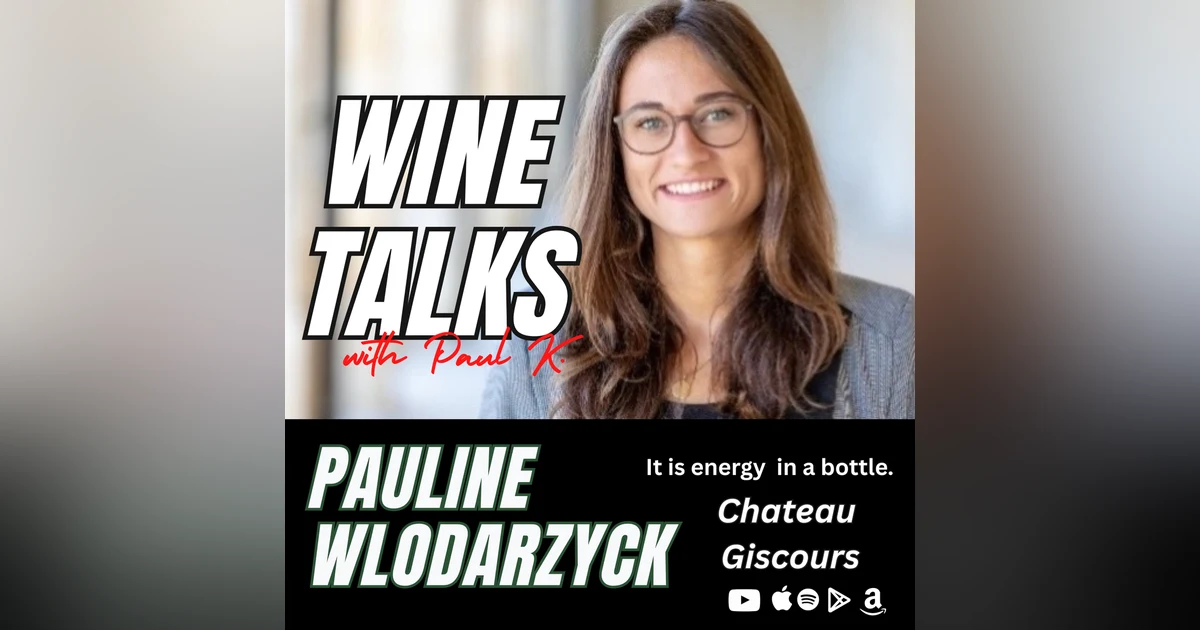

When last in Bordeaux, I spent some time with Veronique Sanders-Van Beek, the Director of Chateau Haut Bailly. And as a result, she offered an internship to one of my favorite interns who graced the Wine of the Month Club. The young girl arrives shortly in Bordeaux to start her journey.
I learned from Mdm. Veronique that her husband, Alexander Van Beek, is the Director of Chateau Giscours, a third growth of the famed 1855 Classification. When I heard that Pauline was in town to share the wines...I took the call immediately.
Pauline Wlodarzyck might just be the only person who can make stopping time—if only for a minute—as easy as popping open a bottle of Bordeaux. In this episode of Wine Talks, you’ll discover how Pauline, export manager of the storied Château Giscours in Margaux, sees wine as a passport for both the palate and the mind—a way to travel to Bordeaux, Italy, or even back to your grandmother’s kitchen table. You’ll get an insider’s guide to the new frontiers of wine, exploring what it means to savor an emotional moment, whether you’re uncorking a celebration-worthy champagne or a third-growth vintage with 450 years of roots in its soil. Pauline and host Paul Kalemkiarian delve deep into the challenge of sharing wine’s magic in a distracted, technology-driven world, and debate if there’s such a thing as a bad vintage at all. Listeners are treated to tales of precision in the vineyard, from “sequential harvests” to the surprising role sheep and family play in sustainable winemaking. They examine how modern innovation in Bordeaux isn’t just about new gadgets but about understanding the very DNA of the land and respecting biodiversity—a far cry from the bag-in-box revolution. Whether you’re a seasoned sommelier or just a curious drinker, you’ll hear firsthand how the philosophy behind every bottle—from grape to glass—shapes not just the wine, but the moment you share it. Pour a glass for this one: you’ll come away not just knowing how to taste, but how to remember, connect, and celebrate wine as both a witness to history and a companion in life.
✅ Ever wondered how opening a bottle of wine can transport you across the world—and back in time? ✅ Pauline Wlodarzyck joins host Paul Kalemkiarian on “Wine Talks” to reveal how every sip is a journey of emotion, history, and unforgettable flavor. ✅ From the vineyards of Bordeaux to the heart of Southern California, explore how wine is more than just a drink—it’s a story waiting to be told, shaped by tradition, terroir, and a touch of innovation. ✅ Tune in now and discover why your next glass can spark memories, connect you to the land, and introduce you to new adventures in taste. Cheers to meaningful moments! 🍷✨ #WineTalks #WineJourney
#WineTalksPodcast #BordeauxWine #ChateauGiscourt #WineTasting #WineEducation #WineAndEmotions #BiodiversityInWine #FrenchWine
0:00 When you open a bottle, it's where you just for one minute, you kind of stop time and you just drink it. Feeling the emotion, trying to travel to Bordeaux or travel to Italy. Also trying to feel maybe the different emotion, the flavor that you have that reminds you some the tart from like your grandmother or like every recipe also. So this is a real, I think, a great treats. Sit back and grab a glass. It's Wine Talks with Paul K. Hey, welcome to Wine Talks with Paul K. And we are in studio today in beautiful Southern California. Actually, it's like 102 yesterday, which was very hot to play a little league game with my grandson. But other than that, having a great time here at the studio. But to have a conversation with Pauline, I said, look it, this is the problem. You know, I say it and then it comes to saying it. I can't say it.
0:57 See, with the French accent, the Polish name was great. Introductions in just a minute. Hey, have a listen to a show I just released. Gerard Bertrand was in town and had a chance to sit with him for about half an hour just before a tasting with 150 people. But it was rather fascinating about his philosophy and how his father was able to bring him into the fold and understand the philosophy of making wine in the Provence. But not while we're here. We're here to have a conversation with Pauline. She's the export director or manager of Chateau Gor. Welcome to the show. Thank you. What a nice surprise. You know, I'm driving a freeway and I get a text from Sebastian. Do you want to do a podcast? Of course, yeah. I mean, great. Yeah. I mean, just travel like here, from Chicago, New York, now Los Angeles. So it's great. A little bit of a tour kind of. Yeah. But it's great.
1:44 It's great to be under the sun. And this is like, similar to what you did today. Where we sit, you have psalms and restaurateurs come and taste wine. And can you tell the story of chateauguy School? This is totally new for me. New podcast, new videos. It's great. New adventure. Yeah. But yeah, it's kind of what we're doing. Trying to share the stories, all the image, the wine, also talking about it. This is really important and especially today to bring the wine at the table, to open it with our client, with even the client from the restaurant. So this is also why the wine is made, to share it all together. I'm glad you brought that up. Yeah. My pen's running out of ink because I had this conversation more recently than before, and that is.
2:29 It seems to be more important these days with the congestion and the Internet and the people looking at their phones all the time and getting barraged with messages that we show them the wine, that we taste the wine. No, I agree. It's also, I think we are losing a little bit like, this interest as like. And it's the beauty in the wine industry where you have so many different wines all around the world. Even if you're talking about Bordeaux as, like, maybe it's iconic wines, like, even the different classification, etc. But you're lost because you have so many different styles, so many different. Also new wine. You're talking about, like, zero alcohol wine. You have, like, also the natural, biodynamic, etc. So it's great. You can find your choice and you can find your own style, but we really need you take the time. I think it's also why today, when you open a bottle, it's where you just for one minute, you kind of stop time and you just drink it.
3:32 Feeling the emotion, trying to travel to Bordeaux or travel to Italy. Also trying to feel maybe the different emotion you. The flavor that you have that reminds you some. I don't know, you're the tart from, like, your grandmother or like every recipe also. So this is a real, I think, a great treat. And even every people I meet, I met, I meet. They also brings me new. New adventure, new stories. So I learn also a lot with them. And so important. You when you said that story about emotion. Because I was sitting at a Paris Parisian tourist cafe in a bistro, and they brought the quiche I ordered.
4:17 And of course, in America, for a long time, there was this joke about real men don't eat quiche kind of thing. Okay. Did you know that? Yeah, that was years and years ago, but now it's okay. So. And I stopped and my wife says, what's wrong with you? And I said, I haven't smelled this for 50 years. And whoever made the quiche that day at that restaurant made it just like my mother. She made a lot of French food. And it's so. It's so powerful to the smell to conjure up something and the memory that comes from smell and taste that you don't get the other senses. But it's kind of a. It's kind of an issue these days because we're so taken over with sales on the Internet. Sales, you know, buy a whole case of wine for $20, you know, $60. I should exaggerate $60 to $80.
5:06 Let's get show up at this place and you're going to have this party with us. And it seems to me that wine has always been about what you just said and it always will be about what you just said. And now we. But we have to work harder today to tell people that message. I agree to come back. Also, what you said is I think this power of going back to also when like your childhood or everything that actually it's your. Your roots, like, you really. And I think even if you have all the telephones, all the technologies, you can in a way come back to that. And that's the beauty in this industry. But it's harder. And also you have these easy access. Even you were mentioning buying online. So you don't really understand what you're drinking. You're like buying names or you will say, like, it's just like on the top of the page.
6:06 So that's why. And that's hard work. And I'm really happy also to do this job. It's at some point with the connection you will make with even you or even like with the people who will. Who are listening today, they will say, all right, I kind of understand better this property and I also maybe want to travel to visit it. I want to experience, to feel like really deep, like, what is this wine and how it is located? And then also you can be kind of proud or happy to share it because you will say, wait, like, I really appreciate, I don't know, like this mindset. They have the philosophy and this is where we can, I think, make the difference. And also the fact that the wine with all these flavor, the aromatic, et cetera, everyone is like, not open, but like, they can find their own description, they can find their own taste. That's why when I'm doing a tasting, I'm like, what do you smell? I'm like, it's not true or wrong. It's really how you experience it. Of course, if it's like a white and you're saying like, maybe I saw like strawberries or like something you will be. Maybe I will just guide you a little bit more on that one. But it's also, I think today you try to learn more. And this is a new for them as like technology is kind of 100% and you know how to deal with it. So it's kind of easy. So it's challenging. And you
7:36 just need to bring back the way to stop for a minute and being also with your friend on the moment. At the moment. At the moment. Yes. And this is really. And you really totally sum up very well where. Yes, this is just the moment to stop everything you're doing and taking the. Time again, you know, you were, you. You mentioned that you were in New York for a few years and you were selling Chateau Palmer. With that the only brand you had was a champagne house. Champagne. Yes, Champagne house. Champagne Palmer. Yes. So it's interesting because that's considered a luxury item.
8:17 Now. I. I am part of the group that says, look, you should drink champagne all the time. It's just part of your regiment. We drink a lot of champagne in my house. Unfortunately, I taught my son a lot how to do that and that's costing me more money. But was there a difference between selling a product that would be presumed to be a luxury item? The Chateau Guiscort is a third growth Bordeaux. So it would have that sort of moniker as well. But is there a difference in the way people perceive a Bordeaux? The first regarding there is two point of view. The first one as like our direct client who will be the restaurant or like even the wine shop where for them opening a bottle of champagne or like just trying to know if they will buy it or not. It's easier with champagne as like I will never say no to champagne. It's kind of great. Okay. Even I have a hard day. I have so many supplier coming today. Oh, another wine. Oh no, it's champagne. Good, I will. It's kind of great. Always time for that, right? Yeah, I mean it's really what we hear. But then for wine now Chateau Gisco I can offer the final consumer will be. Maybe it's not easier. But like they have also these Bordeaux story linked or they have also the fact that they realize kind of the prestige in a way. And also this is a region where and we are so fortunate. But like with Chateau Gisco, we have almost 450 years of history. Wow.
9:47 So we have also kind of these passionate people like families who were really behind and really supporting the wine since a long time. So they are even every day trying their best to bring the wine as today also more on the table. It just different. As like champagne, it's also more linked to like celebration. So it could be just a different aspect of consumption. As like Champagne will be only during like New Year's or that will be during just celebration birthday or like even some. I will say here like when you graduate, graduate parties, Bordeaux, you know that you can really enjoy kind of during all the year even with dinners as champagne as well. But it's more the Mindset, I think that people have. So as a consumer, the final consumer point of view, that will be for us, as today we have more opportunities to open the bottle and to highlight it on the table. You know, it's funny, we were in Japan last trip, I went and saw Chateau and they were telling us that Vuvre makes what, 50 million bottles or something? Yeah, you know, and that's fascinating to me, even after 35 years of selling wines, that no one would feel that it's a huge house. I mean, huge. This isn't just like a small. This isn't just even an average house, this is a
11:18 big house. But champagne carries that, that. That feeling of uniqueness. And boutique always, almost always, which is really fascinating. And of course, Bordeaux does too, particularly classified growth. Are people surprised when they hear that there's 450 years behind? Especially when I'm saying the oldest vineyard is from 1923? Are you kidding? Really? Yeah. I think also comparing. It's not the real comparison, but like you mentioned Vev Clico, where this is also boutique, as all the people behind, even if it's bigger, you actually have much more people behind that. They are trying to reach this precision and to find also the way to highlight even more what's this unique terroir, like the property himself. So I would really come back on Chateauge, this school, where even if we have. So it's 100 hectares of vineyard that will be around, I mean, maybe 160, 180 acres. We have 400 acres of forest, meadows, we have a lake as well. That's kind of bring a new uniqueness on it.
12:37 Because if you compare even in the wine region as like the Medoc left bank, and then you get into like Margaux and then Chateau Giscourt, it's such like a big estate, but it's big also by the biodiversity and like the ecosystem we have around. So that's also for us, the great talk. And as today also, I think coming back on the consumption on like, how. I mean, the consumer, they will buy their wine. We are really taking much more time and also paying more attention to the grapes themselves. Like, if you have a bottle of wine today with you, you're talking also for all the people who were in the vineyard, the insects, the animals, because they are part of the wine. And also, personally, I'm convinced that 70%, even almost 80% of your wine, it's made in the vineyard first. When you harvest the grapes, if you really have the time, you pick the grapes at the perfect ripeness.
13:37 You will have at the end, kind of less work to just highlight. You have the purity of the fruit that will be just more gentle and very. I will say velvet or like very kind of delicate wine. And as for Gisco, for example, but we have 200 people coming during the harvest, only harvesting by hand. So it's kind of like a big army coming. But this is also the beauty when during September, October, that is the moment were actually a year behind, you were working hard in the vineyard under so many different conditions. The vintage. That's also this heart of blending in Bordeaux, where you adjust regarding the different vintages and the conditions, but the weather conditions.
14:26 But like with the 200 people, you can be ready on time. And also has, for example, these 19, 23 year old or the year that's pretty high. Yeah, you can really sell, select the plant or like the vine you will harvest at the right time. And this is actually what we are doing. We name it the sequential harvest. That means we will even come three to five times, even in the same vineyard. But just to harvest different plants, like different vine, to really just choose the right one. And at the end, and I really love, like the image before, as you just wanted to also make volume. You pick everything at once. And then you kind of do whatever you wanted in the. In the cellar. Say it's not the same.
15:14 It's not like on the sorting table. It's not an hospital. It's even more like a nursery. Everything is already healthy, ripe. So you really have already your almost final product better. So this is really, I think, the difference that you have. You know, I wonder if that's. You use the word biodiversity, which I hear a lot about these days. They would never speak of that. And I'm reading a lot of old magazines from the 60s and 70s to see what they were talking about. Then they don't talk about that. And I wonder if that's more of a contemporary thought process for winemaking, for, you know, for sustainability. So that. That's a hot topic. And I think wine is a classic industry for sustainability based on what we do. But I'm just. It's interesting.
16:02 And maybe that's the. Maybe that is what gets the wine industry back on track, because we're competing with white claw and flavored drinks, which I don't understand. You know, my daughters are millennial. I have three daughters. They're all millennials. They don't drink this stuff, thank goodness, because they like my wine, but good. It's also a generation of natural. And you can see In America, we're finally catching up to the French and keeping stuff out of our food that we shouldn't have in there. But you know, they drink this stuff and it's full of junk. And I'm wondering if this biodiversity, the idea of sustainability, the idea of not necessarily organic and biodynamic, I don't think that's really totally understood by that generation yet. But at least the idea that here's a product that represents and is cognizant of the earth and where it's grown. And because wine is going to be here.
16:58 We're just in a slump because of the competition. Yeah. Of what's going on in the marketplace. But I wonder if that's. Do you sense when you talk about biodiversity, they understand that even means that this is new and that animals are back. And actually, yes, animals are back. We have 60 sheep, forest, for example, and we even have a person in charge of them. And the land we have also provide kind of these management, I will say on the ship, where it's also for the community that we have around the chateau. So Giscourt in Margaux, the village where we are located is Labarde. And this village, you have different families living there.
17:43 And just linking with Giscort. 20 families who are living in this village are working at Chateau Giscor. So that's also for us, linking on the family the Easter rim, getting these people working next to the chateau where they observe and they see this biodiversity when they feel and they can eat also like what they have in the vineyard, the garden we have, we provide them vegetables we provide like at some point we have also some pigs. So we really have. It's very farm to table. And that's really the word where this. Is not just a New York buzzword. No, no. The idea, it's really bring back the wine.
18:30 Where it was lamb at the beginning, it was just hectares of lands. And farming was the first, I would say, work that we were doing here. And we are just fortunate as today to have a beautiful vineyard and a beautiful wine, a fantastic wine as like also the people who are behind trying to highlight and really get the best of what we produce. But biodiversity to come back, even on what you were asking today, now it's hard for the people to understand. But that's why also I like when I'm going to some meetings and we taste the wine, I have pictures where you can really understand. Like, this is where we have the sheep. This is also the chef cooking. This is even you see the biodiversity like as the forest, you see the chateau kind of lost in the middle of this forest, you see also like the COVID crops. To give you an example, last year we planted 12 tons of COVID crops. Cover crops will be the grass, mustard seeds.
19:30 Yeah, it's a lot. But it's also because we adapt every year regarding the vintage, how we can work better, how we can go deeper on this understanding on the. On the soil. Also about how regarding this hot temperature we will get, we can kind of protect the vineyard. Or also if it's raining a lot, we will adjust as well. And we benefit with Chateau Giscourt of like very old vines, so the roots very deep. But also the soil, it's gravel, so they drain a lot, like the water. So that's perfect. But at some point, when it's raining a lot for three months, you're like, how we can manage that? So that will be some type of herbs or like even grass that you will put into the soil that will aerate a little bit more. And also we benefit from a lake that is really close to it. So that's kind of also drain to the lake. So all these different elements will participate and are part also of Chateau Giscourt. So this is a word that I use a lot as it's really the DNA of the house. And I really feel, and I'm convinced that when even you drink some wine of Chateau Giscourt, you get these vibrance, you get into the wine, kind of this light. It's really the word that we describe it as like all the energies, the beautiful ecosystem we have bring us much more. Also freshness and beautiful acidity in the wine. Do you think the goal at G Score, Bordeaux, Napa,
21:03 Alsace, at this point in time, with wine. Because I had a wine historian on the other day, it was an incredible conversation. Wow. I know nothing now. When you listen to a guy like that, I don't know anything. But do you think that that is the. What is the goal? We've moved into biodiversity, some biodynamics, some organic. The end goal, and the best I can come up with, is to create a product that does take you to that time and to that place. It's always been a sense of time and place. That's the buzzword. Right. But you, as a group at Giscor, have to have an objective every year. To do what? Produce the best. What does that mean? It's a good question. Best representation of this, of the vintage, best representation of the philosophy. I think it's kind of both and going really Back to basics as the soil himself. And what we are fortunate to have as like the vines, the vineyard himself. It's. This is here like, it's.
22:18 We're talking about like wine. We're talking about. But it's grapes first. And it's really every year the goal will be to first be grateful for like the weather and how we will be able to get some grapes. But then it's also, of course, to make the best wine. I will say it's not the best. It's just to highlight and to represent what we have. The terroir, when we're talking about terroir, it's the soil, the climate, even the sun exposure, the rainfall, the vineyard, like, even the human being as well has like how they work, et cetera. So the goal will be actually for you tonight to drink a bottle of Giscore and to be proud as like, we made a wine that is drinkable, but also that brings. We come back on. Brings emotions that give you pleasure, that give you also like some good memories. Because as I'm also convinced that when you open a bottle, as for example, we have Gisco 2010 right now, but if you open it, yeah, we will drink it just after. But yeah, opening it even tomorrow with another person, you will have another emotion. It will be another moment. So you will maybe appreciate it a little bit differently. Even if it's the same wine.
23:48 I'm really convinced the moment, the company you have, the weather, if it's like even under the sun, if you are like, I don't know, it's the winter, et cetera. And that's why also the beauty in wine is when also you pair it with food. You can really highlight the food or complement the wine with some food that really bring more emotion and more even sensation. As like despairing could be very, very fantastic. You're making some really good points that are making me think, which is one thing about wine. It's very. There's a French movie out, I saw it on the plane and one of the comments is, I think it's about. I think it's about a woman who's a chef, who is the chef for this house.
24:37 And then he. I don't know if they fall in love or not, I can't remember. But one of the comments he makes in the movie is wine is the intellectual part of the meal. And that is such a true statement because it makes you think about all kinds of things. And that's what it should do, right? All the pieces that you say are going into this glass should create some emotion. Another winemaker told me once, I'd never heard it this way. He said, wine is the only product in the world. A. There's two. I have two comments for that. One is you could take halfway across the world from Bordeaux to Los Angeles and say, this is who we were 2010, and this is where we are because of where we're from. And it expresses. It should express that, right? Yeah. So that's a really interesting thought. But his thought was, there's no other product where you pick a grape and you. And it can produce another product that can be screwed up or represent where it came from or represent the quality of the grapes. Whatever. You can't like. And he. The way he put it, you can't do that with a tomato because there's no second product. Right. Except tomato sauce. But wine creates a whole separate. I mean, the grape creates a whole separate product line that does represent someplace and some time. So if you're doing that every year, this is. I'm going to catch with this one. This is a good one.
26:01 You like this? Okay. If. If you're true to that philosophy, every year there are no bad vintages, right? Because yeah, there are some that taste better than others. Make you feel something other than the other one. But as the success of the wine itself is, does it represent that place and that time? Do you agree with that? Yeah, I agree. Yeah. No, and I really like also the fact you said there is no bad vintage, especially today. As. Even as Concret Colosse, you have so much. Even technology, hard work, studies, people behind. And even how we work in the vineyard, how we adapt and we adjust regarding the vintages where you will just made a different style. Not style really, because you have the same backbone and the same DNA, but it will be different.
27:00 Maybe. I don't know. A vintage as like 2017 will be ready to drink. And you will. You won't leave it as like a 2018 or like a 2010, where this one, you can even leave it. I mean, for even 20 more years. Even more so as the moment you know the vintage, how it was and how it expressed itself. You will also adjust how you drink it. 17, maybe you will just start it with the aperitif. 18, you will have it like with a beautiful piece of beef. 10, you can maybe have it with a cigar. Like you can also adjust and adapt all the time. Have you heard the term that people are using? Sorry, I was checking the time on the Internet. Do you pay attention to anything like on LinkedIn, all the people talking about lip service, we call it lip service, but the use the word they're using now, and it drives me crazy to a certain extent is innovation. And I don't know, like Chateau Bailly, she's innovative. She made this, this cool winery where you go and have this experience. You can, you can dine on top of the fermentation tank. Yeah, that kind of cool thing. Right. I think that's like experiential innovation, right? Yeah, innovation, experience. I don't think putting Chateau Giscore in a. In a, you know, three liter bag in a box is innovation. No. And that's not the goal. Yeah, but. But I mean, what.
28:34 What does that mean to the Bordelays to be innovative? For the innovation will be more how we can understand better our terroir. And what will be the elements that will help us to understand it? That will be maybe for example, in the vineyard, like this weather, kind of. I don't know the word in English, but like the kind of meteorologies, like just to understand better the weather or like even. Yeah, even the soil, you will kind of dig in it to have the different layers to understand how deep it is and also to see at which point you will reach.
29:20 I will say for you the level you want to go with. Or today, like even last year we had kind of some rain, especially during the spring that was kind of a lot of rain. But we have now kind of some soon. So like some equipment that gave us the concentration of water into the soil. So that will help us even regarding the COVID crop, regarding the vineyard management. So that's more about that, this innovation. It's about how to understand and work better with the environment and the weather conditions in the cellar. It will be more how today we will try to reduce sulfide. For example, we set a discourse since 20.
30:06 We don't put sulfite at the beginning to kind of protect the grapes. We have a natural yeast that will actually protect naturally the grapes. And then you have the first fermentation. Of course, you will put a little bit of sulfite before, like we put them in the barrels. And then when you do the bottling, but that's it. And sulfite actually just a little, but everyone is kind of crazy about it. But you have even more sulfite in like the dry apricot than even in wine. I know, it just. You need work carefully. And I'll say cleverly. I don't know if I can say that just with a. Sure. So this is different steps on every different element that you can bring together that will make the wine more just pure.
30:55 There's a restaurant. I don't know if I ever seen a restaurant. I've seen a restaurant like this in Paris. It was called the Sizzler. It's still around. Actually. There's more sulfites in your bowl of salad because they have salad bar and they're all dusted with sulfites. I mean, don't you wonder why the lettuce is sitting there for, you know, eight hours and it still looks fresh? Yeah, it's all sulfites. Right. And people understand that because they always talk about, I get headaches from the sulfides. It's not the headache, it's not the sulfites. You're not consuming many. And I don't know. My wife's cousin has a winery in Armenia. Oh, yes. He's just start. He's a very famous entrepreneur with carpets. Okay. And he has this goal to create a wine that best represents Armenia.
31:41 But they were going the biodynamic route, you know, mostly. And he said we had a whole bottling just change. Like, it's just changed. And his partners are French, and he sent me the bottles. They were very good. You know, they're very palatable, but they're much more rustic because they change and they put no sulfite. So it does change things. If you don't put it in, it's harder to control. In fact, I wrote this down. The other thing about grapes and making wine is the primary function, the primary thing that goes into a quality bottle of wine, which he said is the grapes, 80% of it, at least. It's out of your control. Right. I mean, for the most part, you can trellis and you can change the canopy and all this stuff, but. But ultimately, it's up to God to do this, you know, tell you what's. What's going on out there.
32:31 How did you get involved with. You know, you went to Chateau Palmer, the Champagne. But prior to that, were you in the wine business? Yes. So it's been almost seven years. So I started more actually to be interested in wine as I come from champagne. So I'm fortunate to be outside. I'm born in this area, in this beautiful region of Champagne, and my family is involved in champagne. But it's really, for me, I made kind of this step into wine during my studies. I did a bachelor degree in international business, but they had a wine club where I really wanted to explore, like. To be into it. Yeah.
33:13 So it's actually this wine club where you need to train the student, but they are very young, so you just start to show them a Bordeaux different than Alsace, than Champagne. So it's kind of easy, but it's also an approach that it's different that don't drink to drink, drink to appreciate, to learn a little bit more than behind this glass of wine. You have people who work and you have this biodiversity, et cetera. And I really fall in love with that and the people I met as well, that really kind of make the difference. And that's why I choose to make a master degree in wine. It was like wine business. And I went, oh, thank you. So I went to Bordeaux for that. And since that, I will say that's two years. I also joined the wine club over there that was a little bit more consecrated with Aussie. And we kind of compete at some point with some wine tastings from other wine clubs, from other schools. And I just started with Chateau Felon Segur in Saint Esteban. That was my first job. I had one the other night. It was so good. Yeah, they make very, very great wine.
34:25 And so that was my three first year. I joined negotiation and then moved to New York for two years. And now here I am again, Chateau Giscore. And I'm also very fortunate because it's G score and it's a kind of a great link. But we also have Calla Rosa in Tuscany. So this is an estate coastal of Tuscany, 10 minutes from Bulgaria, where you get this Super Tuscan, but with them Margales. Touch. So this is, I don't know, promising wine. Are there any other Bulgari Super Tuscans that are French influenced? I mean, even you have Sartassicaia that is kind of. They don't have a French influence. So. No, it's the French influence. It's even by the varietals, where you get the Bordeaux blend with like, Cabernet Sauvignon, Merlot, Petiverdo, Cabernet Franc. That's where it kind of started. But Calla Rosa. And even if you really are specific on the French influence, the owner of Evan Giscor and call Rosa, they are Dutch Erasma. Yeah. So it's kind of, you know, everyone together, passionate about wine and making great wine. But there is a. There is a. An expression, even if you're in Italy that's clear when you have a Super Tuscan, that these are not grown in France or these are not grown in Napa. But. And that's what's fascinating.
35:47 About some of the wine trades. There are many French that have come to Napa Valley. Many. Right. They've come to. It's interesting because they consider this the new world. You get to do whatever you want. But there is an influence. There is a part of the terroir. In my opinion of a wine isn't just the climate and the season and the. The growing season. It's all the experience the winemaker and the pickers that bring to the table is part of that terroir. And I. So I think it's hard to get away from the fact that there's a French influence even in a Super Tuscan or in a Napa Valley red wine, because of the way they think. Let me see if you agree with this.
36:29 For instance, I was talking about May Alliant long song from the Comtesse de Langueville. And I have to believe that the story she saw when the Nazis came and what they experienced afterwards and when. When. When the occupation left and they had to recover. All that experience has to end up in the glass, doesn't it? The very grades, the stories that come from them. That what her father told her. It's all these how even in the past, like today it's kind of more. And I really also seeing everything that happened in the past that's also made the beauty in wine. Because you really hear from like you were talking about this book like wine and war.
37:22 It was hard at the beginning to make wine and it was really. You also say like things to go like it's really the nature. It's true. Now we are more a new element that will highlight some of the terroir. But that's also linked with this French influence. So like it's not because we are with Chateau Margaux, like in Margaux for Chateau G's Corps. We just have regarding the experience of the analogue Thomas Duclos or like from Jerome Poisson, who is forest like the register so in charge also like of this winemaking through like every different experiences he had.
38:07 I like them and can try with a new terroir, with a new soil. Also to make this new. Not innovation, but like really to also make a. The best of what you can. You can have. Do you. So here's the scenario. Let's say this is an interesting thought because not one's better than the other necessarily. But one winemaker. 20 years they've been making wine in the same vineyard. And as you know, 20 years is hardly even enough time time for one person to understand a vineyard, right? With all the different conditions that can occur once a year. If you gave those grapes to that person and they made a wine and you took a winemaker who has 20 years experience, but only 20 different chateau all over the world, New Zealand, Australia, South America, doesn't matter. Give them the same grapes, you get two different wines. That's going to be obvious. So it was one better than the other? Not necessarily. But it seems to me that the, that the experience and the knowledge base of that vineyard that you almost know, based on the conditions going into picking season, what that wine should be like, what, what expression I think is going to come to the table, because I've seen it so many times. You think you have those conversations in the back room at the winery, like, do we think about what this thing's looking like as the growing season occurs? It's kind of very interesting. No, really, as
39:38 when you have even the grape. I read this point, it's really only the terroir. Of course, you impact it a little bit with how you manage the vineyard, etc. It's really if you do like very strong extraction maceration, or more like infusion, if you use oak or no hook. So that will directly imbibe the wine. And I think in the room in the winery, you have all the people saying, oh, how we make the wine 30 years ago, we need to do the same, but we will adjust it with our experiences and with the new equipment, et cetera, with the technology. So in a way they are trying to do the same, but we know that it will be different, I think.
40:23 And it's when also you taste Chateaugie Score, like through different vintages, as you still have to get this, that the thumb so like then the backbone, like really the DNA of the house, that of course you will try to work hard on that. But everything else, it's to kind of complement it and like highlight it or like make it a little bit different. But you even Chateau G Score, I think if you really say like three words about like the wine, and especially when you will open a bottle of Chateau Giscot, will be this beautiful elegance with like the power himself has like the Cabernet, we have the historic Cabernet and the gravel, that really brings this beautiful tension also and like structure to the wine, but also the precision. And when I'm talking about precision and Alexander Van Wyck, he's the general manager of Chateau Giscourt, he used to say that. Wait, wait, wait, that's Veronique's husband. Yes, I know. That's why when you mentioned. Yeah. When you mentioned Ovail, I was like, that's a great pick. She's great. Yeah.
41:33 He mentioned that with Chateau Giscot, we are working as hard, like on the tannin as, like, pixels is like every, like together, all these pixels will make something very velvet, very silky tannins. And this pixel is like all together is like the precision, how you pick them, how you get them. You will have something very smooth, very elegant and delicate. It's not like a B, like, I mean, in the bowels. It's not aggressive. You just delegate a little. And as you did just with your pen. That's a really funny thing you saw me do this. Because when you were describing that was perfect. And I'm thinking, okay, here's these little dots and that'll represent something that's coming into this one. And you said something important, this backbone. Because wine is criticized by generations that it's though, it's always been consumer, consumer driven because we want to sell it. But this is a very delicate balance to produce a backbone from vintage to vintage that reminds you that this is Chateau Giscourt.
42:44 Yeah. But still represent, you know, what's happening out there. And that's. So you could have us like the shelf item right there in that picture. You know, you go get an apothic red or Josh Cabernet, and they are deliberately doing what they need to do to make it taste like it did last time. Yeah. And that's, that's a, that's a problem for me. I mean, I mean, it's great that those wines bring people to the table. Otherwise, don't drink wine and eventually they get bored of those and they're going to step up to something else. So that's a really important part of our business. But then you have to just, you have to figure out a way to maintain that terroir, maintain the, the vintage. But still, I have to know. This is Chateau's G score. Yeah.
43:28 That's really interesting. By the way, a young girl used to sit right there. She was an intern of mine. Okay. Four years ago. And she, her job was to write the talking points when I had women winemakers and people like you in export directors, et cetera. And she got so interested. She had other influences to her wine career. She was accepted to Cornell Immunology School. Yeah. And so her first year just finished and she. We worked on Veronique. And she is going to be an intern starting June 1st. That's fantastic. Yeah. Till June 11th, she'll be at Chateau Aubai Okay. And her mother is going to stay the whole six weeks with her. She speaks French, which is nice, but I was so proud that she was able to do that. And thanks to Veronika, she was very cordial and gracious to do that. And I thought, what a perfect place for her because of Veronique's leadership and what she's doing out there. Yeah. So. So I didn't get.
44:27 I didn't finish this. There's two things that you talked about. One is we didn't get to like. Yeah, you were. Was wine in your family? Yeah, like every night, like at dinner. You know, it was kind of, I would say, bottle of champagne, even. I like to say even when I was a baby, I got maybe like a spoon of champagne, you know, that gave me like, a lot of energy. Yeah, go, girl. Yes. So, yeah, part of the family. Like, even my uncle is the winemaker in champagne. My other uncle is more like in the vineyard, so he's taking care of the vineyard and my parents. So it's. It's what we kind of name Dublactif. So it's kind of like they have their own work in the suburbs of Paris. But then during the weekend, we are going in the vineyard. So it's very, very small. It's less than an hectare. So it's really small. Could be like, for example, 2,000 bottles. So very few. But we are even giving the grapes to a cooperative as, like, we don't have the facilities. And even, for example, any custom lock, we don't have a label for it.
45:31 But I'm even proud and, like, very fortunate and grateful to have, like, this little piece of land where I used to do the harvest there. I used to even do the work during the summer, you know, like, even to D or even, like to remontage. Like, I would say, even when you're in the vineyard. Like, at some point. I did some vinification in South Africa also to kind of extend a little bit my knowledge. But, yeah, part of the champagne and the roots I have. Yeah, I got fortunate on this. And it's more the people I met after that, with all the studies that I really get involved. And I was.
46:12 I'm here, and I love the job. I love talking about wine. This is for everyone. A new adventure all the time. You have new story to tell. And I'm learning a lot every day. You never stop learning. Yeah, exactly. That's fascinating subject. And that picture behind you is 1975. It's my father and I, and he was a pharmacist by trade. He had a small chain of pharmacies. Okay. One of. One time, the. The pharmacist said, if you want to buy my liquor store. Wine shop, you have to. It was a liquor store. You have to buy the pharmacy. But they didn't want the pharmacy. He wanted to be on it. Yeah. And a very academic guy became very, very knowledgeable for the 70s. And in fact, I hate to say this, but one of his good friends and customers was Mr. Barrett, who won the Judgment of Paris in 1976. You know, they were neighbors. Anyway, that was just a little gem. Yeah. So. But it's not every day, even after I got out of daily selling wine. Thank goodness that I don't thank him for bringing me into this, because I have two. I have a brother and a sister, and neither one of them were either not interested or I don't know what the difference is, but, man, I don't know what I'd be doing, and I would not be able to appreciate what I appreciate. So. And I fast forwarding when we were in Paris in 1993, when I told you I had dinner with North Comtesse, we went to
47:44 Tour d' Argent. Oh, okay. And we were celebrating a. An event. A real estate event. Yeah. And we went back, my wife and I, this last month, and we had a cologne, Cigur. Nice. Yes. Okay. And. And I. And I told my wife, I said, you know, just to be able to understand a little bit about what is happening behind the scenes here, to be able to do this, makes me feel good, makes me feel proud that we. That this is an industry that intimidates a lot of people and. But it's a subject that everybody really wants to know. Yeah. I can't imagine that even in New York, in New York or anywhere else that you go, that the conversations at the dinner table don't end up with your friends about wine. I agree. And all the time. Yeah. New York as well, is kind of a very intense city, but you have all the different nationalities. It's a carrefour. Like, it's really everyone all around the world. And that's also the best place to have access to all the wine of the world. Really.
48:48 It's even easier to get some Italian wine in New York than in France. It's kind of crazy, but it's true. You can't get it. I mean, terrible. But yeah. No wine. I agree. And it's also why the beauty here with even this podcast and how we have, like, an oatmeal. It's A good time to enjoy it. But. Yeah. Because we're already out of time, if you can believe it. It. Okay, great, great. She's great. We're out of time. No, no. Yeah, great. Like we made it on good time. So perfect. So I wanted to taste this. But I'm going to ask you a question. There's no pressure here. I mean, you, you. This is a French doctor. In fact, there was something came up the other day that his name came up.
49:29 His name is Dr. Mory. Okay. And the book is called Wine is the Best Medicine. This is written in the 70s and it's. He was an MD regular and a homeopathic doctor. So he wrote a book on human ailments. Okay. So you could have fever or diarrhea or gout or hypertension. And he has the prescribed wine. Yeah. Okay. Now I'm going to give you a problem and you're going to give me. I'll give you three choices. Okay? Now it's kind of like the master of wine test. It's not about really get the answer right because no one ever does hardly. It's about like what the thought process was. Is why you chose. Shows that. Okay, so let's just say you have. Let's say you have an allergy. Okay. In general, you could have dry champagne, you could have a Madok, or you could have a coat de bone. I would go with a dry champagne.
50:21 Why? There's a dosage too, by the way. Yeah. I think it's just by the bubbles himself can help to maybe feel better. So the bubbles. Okay, that's. Whenever I ask that one of those questions that answer champagne is often the bubbles. It's awful. Makes you feel good. Yeah. It's joyous. Yeah. It makes you happy. Yeah. Well, that was wrong. So tell me, what is the good answer? It only actually, literally only 33% of the time. Just the. The sheer percentages are because the answers are kind of funny. It was the Madoc and I gave.
51:02 Oh, the Madoc, Yeah. That was sort of a. You know, that was sort of a softball pitch for you because. True. Yeah. I'm sorry, Another one. Let's say another one. So. And the reason is they represent the modification. Okay, so allergies represent a modification causing the body and the influence of a substance foreign to it, which is termed. Termed an allergen reactions appear as secretions of the mucous membranes or edema of the subcutaneous cellular tissue. These unpleasant reactions do not prohibit the reasonable use of an appropriate wine. He didn't even give Us a good answer. He just said drink wine. Drink wine. I mean. Yeah. Rich in natural potassium. This alkaline metal in small doses acts as a water excretion. Works on water excretion problem.
51:54 So it's basically I guess going to help you not be so mucusy. I guess. Okay. What is the dosage? This is more important. What do you think Dr. Murray would suggest if you have an allergy, how much madok you should have. Let's say in a day. In a day. Wow. At least one. At least one. There's two glasses of me Douglas is a meal who doesn't do that anyway. But. All right, all right. I mean cheers to that. I mean like let's. That's right. So tell me about this. The nose is phenomenally complex. Yeah. So we have here so Chateau Giscore 2010.
52:35 So we'll be mainly Cabernet Sauvignon will be like around to be very kind of easy block, like 70% then 30% mellow. That's kind of to really make it easy for even people to remember Chato's core. But of course you adjust. Can you imagine it's 15 years old. I mean there's nothing. I didn't even think of that. That's. There's no other product in the world the last 15 years unless it's got preservatives coming out of it. On the nose is crazy. It's so complex. You have. And there's all kinds of cool. Yeah. You give in some mocha, you get some like. Like orange dust. At some point you get this fruit but like kind of ripe fruit. Yeah. The color is almost kind of bleak, you know, like kind of the. But not quite there yet. Like still youthful with a little work youthful. That's actually even when you will drink it, you will see has like how crazy the beautiful acidity is still here. And that's actually for me the main challenge for all the wine as like when you age them, if you want to still age them, you still need the acidity. And as 2010, it's one of these phenomenal vintage like in Bordeaux, it's kind of the really 2005, 9, 10, 15, 16, 18, 19, 20, 22.
53:55 It's kind of the grand milism. It's like really the one that wow stand out by everything. Everything where amazing together. So here even 2010 for now, you already have this beautiful evolution. Plus it's very seamless. You know, there's not a lot. There's no ups and downs in this nose. It's very soft but full. But I'm not getting separation which is really cool because that's just from the. Age you get some spice as well. No, definitely. Wow. Fun this. Thank you for sharing this. Of course. You know we're at an hour so this is over but thanks for being here and have a chance to chat and bring wine and hearing your philosophy and what's going on over there. And I hope that I am supposed to go to Bordeaux and visit Lisa. It's going to be a little problematic. It's June and July so I want to go back probably the just before harvest. Okay. Please let me know. We'll be happy to welcome you there. Over there and see. Yeah. I had Florence Cathedral on the show thanks to the Globe boys. So yes, she's waiting to. She goes but we can only speak French then.
55:11 Okay. I spoke English with you. She says let's try. That's true. Monseva. Yes. Sever. Thank you. Cheers. Cheers.