

 Apple Podcasts

 Spotify

 Youtube Music

 RSS Feed
 YouTube
 Pandora
 iHeartRadio
Why Wine Education is Failing—and How Storytelling Could Save It. Meet Vincent Anter "V is for Vino"
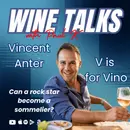
I have been jealous of Vincent for years. When in wine media, the audience is small (though Vincent and I agree on that we need to change that), so navigating marketing a wine show to find the eyes and ears of the people that care, is more the battle than producing the show itself; even one as professional and well-produced as his show "V is for Vino."
So here I am, a wine DTC guy wanting to be a star of wine media, and here he is, a wine star wanting to be a DTC guy. I guess the grass is always greener. We had a hoot.
Trading drumsticks for decanters might not sound like the smoothest career move—but then, the best wine stories always begin with an unlikely pairing. Imagine a young musician, hustling gigs in Santa Monica, realizing after a hundred late nights that the sold-out stadium might have to wait. Instead, a different kind of stage was beckoning, one with vineyards for backdrops and vintners for collaborators. This episode uncorks the saga of a rock-and-roll hopeful who followed his curiosity straight into a glass, and in doing so—with just a camera, a liquor license taped to a Santa Monica apartment window, and a head full of ideas—accidentally birthed one of streaming's most dynamic wine travel shows.
The conversation focused on those hustling, uncertain beginnings, peeling back the curtain on the unexpected trials of launching a wine club in a marketplace glutted with bland bottles and even blander regulations. Vivid tales emerge from the trenches: of liquor control boards bewildered by a mail-order club at a city apartment; of sleep-deprived weekends filming "on location" with nothing but motel coffee and ambition for fuel; and of realizing that making a wine club "feel like a club" is at least as complicated as rehearsing a band, but a lot more rewarding when the notes finally ring true.
A key theme that emerged was the power of memory and community—the stories woven into every glass, the toasts echoed around supra-filled Georgian tables, the emotional connection that lingers long after the bottle is dry. The discussion explored the quiet revolution happening at the margins of the wine world, from Lebanese hillsides to the clay amphorae of Georgia, and why the story behind the bottle matters more than the varietal on the label. There's humor, too: in watching new drinkers' eyes glaze over as an eager bare-bones tasting room host launches into soil taxonomy, in making sense of what "natural wine" really means, and in charting a course between tradition and trend.
As the reels of this episode spin, listeners will come away with a patchwork of anecdotes, hard-won lessons, and a blueprint for making wine something personal, transportive, and unforgettable. Here's what you'll discover:
🎞️ Why high production values in wine shows can make the difference between forgettable and transformative storytelling
🎞️ How small-batch wine regions like Georgia, Armenia, and Lebanon fight for recognition—and what their ancient toasting rituals teach about hospitality
🎞️ The real reasons most American wine clubs fade (and what it takes to build a community that lasts beyond the shipment)
🎞️ How buying wine from a grocery store differs—culturally and emotionally—from building relationships with boutique producers
🎞️ The secret to making a wine club that feels exclusive and alive, by weaving together experiences, stories, and personal touches that last far beyond the last glass
Places and sites we talked about:
-
amazon.com/prime-video (for Amazon Prime)
-
somjournal.com (SOM Journal)
-
journeymanmeat.com (Journeyman Meat Co)
-
totalwine.com (Total Wine)
YouTube: https://youtu.be/qBSx_33_jpE
0:00 I want a wine to taste like the place it came from, even if I don't like it. I'd rather have a wine that I don't like and at least is trying to say something than a wine that tastes like every other wine from every other place in the world. Sit back and grab a glass. It's Wine Talks with Paul Kaye. Hey, welcome to Wine Talks with Paul Kaye, and we are in studio today in beautiful Southern California, about to have a conversation with Vince Anter out in Chicago. Chicago? Yeah. Suburb of Chicago. The suburbs. 'Cause it says here, I'm gonna read the AI, uh, spread here. My guest today wore out his guitar strings chasing rock and roll dreams before he ever chased a rabbit down the rabbit hole. A certified sommelier who traded the stage for the vineyard and somehow made both look effortless on camera. He's the founder and host of the international wine-winning wine travel show V is for Vino, and originally from Cleveland, but now calling Los Angeles his home. That's why I asked the question. Why would it not? No. Yeah. So it's mildly outdated. I did live in LA. I lived in Santa Monica for 10 years, but moved here maybe 2, 3 years ago. Is that when you were rocking and rolling?
1:11 Like, did you play at the FM station and the whiskey and all that? Yeah. So that's, I mean, that one led to the other. You want me to dive in right now? The full story? Yeah, let's take it. Let's see. I want to hear this because I, like I said, go ahead. Yeah, one, one went to the other. So, and, and I've actually found this, the more wine people I talk to, so many of 'em have that music. You, you as well, right? So many of 'em are into music. I think it's the same part of the brain. It could be. But, but what happened was I moved out to be a rock star. I was a drummer all growing up. I also played guitar and sang and songwrote, went to do that in Los Angeles right after college. Found that that was quite difficult and quite a lot of people want to do it. Who knew? So as I was doing that, I was paying my way in bars and restaurants like one does. A lot of musicians working as a server, as a bartender. That's kind of where I fell in love with wine initially. So when I was done going for the whole music thing, I kind of had the self-realization I was good, not great. And, you know, LA, you need to be great as a prerequisite, and then you also have to have a lot of luck. And so I said, all right, I can do this wine thing. I, I really like it. I'm gonna go for my certified sommelier exam. I took that exam. I went through the whole process with the Court of Masters and a couple levels of WSET as well, and just kind of found that I didn't love that process
2:44 for an average consumer. I didn't mind it for me. You know, I didn't mind as a wine professional working in restaurants to take that exam. But what was frustrating was if you just wanted to learn as an average Joe and you wanted to get closer to your wine, or for that matter, if you wanted intro to wine courses as a professional and you didn't want to pay for those quite expensive courses when you're first starting out, what option was there? And that was how the idea for Via Sorvino started. I wanted to make a resource for people to learn and have wine education. And since then it's evolved into this wine, food, and travel show that's kind of become a little bit of wine education, a little bit of wanderlust, uh, kind of Bourdain meets Alton Brown is the way I describe it. You know, it's, you, that short introduction of what you've done has created 1,000 questions because, you know, you touched on so many interesting points and not the least of which is, you know, trying to come to America or come to Los Angeles to be a musician. Of course, it's just congested. And when you said, you know, I was good but not great, you're kind of suggesting it starts with that, right? It starts with that. You've got to be really, really good at it. And then maybe you'll get a break and get into it. Isn't that like a wine bottle? Like it starts with what's in the bottle first, and then whether you're successful in selling it or making it to the market is a whole different story. But at least, at least got to be good in the bottle. But this idea— I love that analogy. Yeah, I love that. switching gears from one
4:15 media, which, you know, is congested, to being successful in probably a more congested and more intimidating environment of media and having been successful with V is for Vino is incredible. And because everybody wants to learn about wine in this whole academic— I agree with you completely. If you want to learn about wine, you can. It takes some effort. If you want to go through the academic side like you did, that's, you know, costly and you know, usually results in no work. So, but you end up creating a show that's voluminously popular. That doesn't just happen. What was the impetus for that when you started the show? And then you realize, wow, people are actually watching this thing.
5:02 Yeah. Yeah. You know, so going back to that good, not great, I always, I have this expression I follow in my life, which is good will be good. And it means if If you're putting good effort and good work, uh, and it's meant to be, you'll feel it. And when I used to play music, I would beg and plead for people to come to my shows to listen to the music. And even though I was working hard towards it, I don't— I feel like the people who are successful in music, they have no other options. Mm-hmm. Their mentality is, I'm gonna be this or I'm gonna be homeless on the street. And I never had that with it. And so I, I always felt, one, that wasn't really where my true calling was, number one. And then number two, I had to, it was a boulder to get people to listen to my music. You know, I'm pushing uphill all the time. The first episodes of V is for Vino I released, and I'll talk about how that happened, but when I first released those episodes, they didn't go viral. It wasn't the success it was today.
5:56 There's no such thing as overnight success except for a select few. But there was such resonance with the audience. They, people were like, oh my gosh, they were sharing it. I've been looking for a resource like this. This is so helpful. People are DMing me, they're emailing me. So I knew I was onto something right away and that, that good will be good train, right? If something's good, you will know it. Uh, and, and that's how I felt when I launched Via Cervino. Essentially what had happened was I was working in Santa Monica. I did my SOM exam, as I mentioned, and I wanted to create a wine club. Funny enough, it was not gonna be a TV show. It was gonna be a wine club. I know your world.
6:37 I wanted to make a wine club that happened to have some video. So what would happen is you'd get the wines delivered to your door. It was maybe a, I wanted it to be mini bottles, but 12 to 24 mini bottles. And then I do a video course in these places that kind of teaches you about the wine and the producers. I actually had a liquor, uh, Type 85 license. Mm-hmm. retail, limited off-sale retail California license. I, I tell this story, I had to get it. You can get this license, it's a shipping license for California wine, and you don't have to have a, a business that you operate out of. You can get that license out of your apartment. And so that's what I did in LA. But I had that liquor sign, you know, the, the big giant ABC license is being applied for liquor sign in my apartment. Yeah. In my apartment window. And so everybody's calling the ABC and they're going, is there a bar opening up in this apartment?
7:28 That's, that's really funny. Yeah. So I ended up getting the license eventually. You know, you post that for 30 days. I tried to sell wine. It is tremendously complicated, both from an inventory perspective, also legally, as you know, with the 3-tier system that, that ended up being such a time and resource suck. And then the show portion of it, as I mentioned, started to take off. I filmed a very basic episode. Our first episode was 22 minutes long in Santa Barbara because it's, you know, 2-hour drive to get up there from LA. It was filmed in one long weekend where my cameraman and I, who I met also working in restaurants, filmed it like on no sleep and in a Motel 8 overnight, you know, 3 hours, 4 hours of sleep, and then we were back at it. And for context, now our shoots are anywhere from 7 to 10 days and they involve a crew of 5 or 6 of us. So we did it really quick, but we launched that first episode, first 3 we filmed and launched, and they, they all got really, really good responses. I said, hey, I'm onto something. Let's see how we can make this TV show thing work. And so that was the, that was the start. Well, you made the right move. You know, we sold the Wine of the Month Club here after 35 years in March of 2023. And you already touched on it again. Once again, you say 2 minutes worth of stuff that's got that's packed with content to peel back. But, you know,
8:58 my wife and I were like, look, we've, this has been a great run. We didn't expect anybody to buy it because the industry was starting to spiral outta control. Mm-hmm. And somebody did buy it. But the, the date that we sold it was very specific, and that was March 31st, 2023. And that was because as a CPA, as she was, she goes, I am not gonna do 38 more tax returns. So when you talk about the complication of 3-tier marketing and all the licensing it takes, you know, we had all— we had 6 licenses. I could import/export, I could do distilled spirits, I could manufacture, you know, a TTB license as well. And we used all of that to try and be compliant. And I just, I just posted on LinkedIn I wasn't really compliant. We could— I was going to say we could, we could talk for 3 hours about the, the system and how frustrating it is. As, because what it essentially does is it just locks out small to medium-sized businesses and it makes it so that you have to have tremendous amount of resources to be compliant. Or you have to not be compliant, which is also not fair. I mean, you know, you want to do the right thing, you want to follow the rules as they're given, but it's so challenging to do that it's impossible for a small business to do. Can't do it. And compliance, since we did our own, you could use some other, I posted the other day on LinkedIn about the subject that you could do your own compliance. compliance, but a lot, there's a lot of services to do, but like, just, you know, the margins are skinny enough. And so let's talk about this for a second. You had this, what, what did you think then before you
10:28 became a media star? What did you think then was so alluring to be in the subscription side of the wine business? Because you, you had your credentials, you loved the subject. It was a means to an end. Just, yeah. I didn't want to be in the subscription side. It was the way I was gonna fund the travel and shows. I see. I had to have a business model. There was, there, I was like, okay, I love the idea of these videos, but how am I gonna make money? So the idea was make money off the wine sales and use that to fund the, the kind of the show and just my, my life. That was the monetization. Not that I minded selling wine, but that wasn't the passion. The passion was to tell the stories. You know, you know what's interesting though, serendipitously you did it the right way, at least in today's modern world. My, we started so long ago that, you know, there was such a still novel idea that it was the music club.
11:18 You probably remember them. There was the, I forgot the name of the thing, but you got 6 CDs for a dollar and then you had to buy 6 more at retail. Yes. Well, that was the, that was the impetus of the model of, you know, mail-order wine. My dad started in the '70s as well as the Book of the Month Club. But you didn't have to earn the credibility because the novelty, the idea was there already and people just trusted you outright because this is what you did. But today's marketplace and today's consumer, Just to start a club from scratch without any kind of following, quote unquote, I think would take an enormous amount of capital and probably fail. But here you have this— Yeah. And it did. Yeah. They did already. It did take enormous amount of capital and it did fail. I gave it up until about this year, which is, which we could talk about. But I, yeah, I finally brought it back this year, but it took 10 years to get there. Well, I noticed, I watched a couple videos and I noticed that you've stumbled across a couple young ladies that are able to, to do this. And so let's talk about club marketing, club work. I mean, again, it starts within the bottle. Your selections have to be, they have to ring home. They have to feel, make people feel something, or else, you know, what's the point of joining Vince's club? And how are you doing that? What, what are you doing to select these wines for this club? Yeah, I actually wrote, so I write a recurring article for the SOM Journal every, every edition, and I wrote one. And my title was, Your Wine Club Should Feel Like a Club. And this was kind of the philosophy that I went into for
12:51 my club. But I think anybody starting, you know, if you're a winery or a creator starting any sort of club, but especially in wine, it needs to feel like more than just a transaction of shipping wine to your door. They can go to wine.com for that. They, there's a lot of ways to do that. I wanted it to feel like an extension of what they already love about Via Cervino. So if you're a winery, it should feel like an extension of your winery. So the first thing we're doing is every shipment gets about a half-hour-long video where I do the same thing I do in my travel episodes, but for the wines on the table. And I explain them, where they're from. I give my tasting notes, you know, the structure, what I would pair with it.
13:33 And it's well done and it's well produced. So that was the first thing. And then the second thing is I'm throwing in Bonuses from people I know. You're getting one like bonus items, so whether it be bonus merch in our first package or maybe I'm gonna do a salami from one of our one of our people Journeyman Meat Co featured in our episode in Sonoma. So you're getting bonus items. You're also I think getting access to me. So we're gonna do a quarterly hangout where I hang out with all the club members on a Zoom. We taste together. You know, all the things that have made Via Cervino a community, because if we talk about the show, what's really been able to keep it alive, it's not me producing video and getting money from the videos.
14:18 It's our community. Mm-hmm. Our, we have a VIP club, which is basically our, similar to a Patreon. We've got a fair amount of people in that and they give $5, $10, or $20 a month and they get behind the scenes access and they form a community. We do trips with them. We just did a Bordeaux cruise earlier this year, 60 people in Bordeaux. And now I wanted the wine club to fit naturally into this community, right? So that's how I'm going to approach it. And that's how I think wineries should approach it. A winery should say, hey, what am I offering besides wine? If you're part of this club, a club is a club. It should give you exclusive access to events. It should give you access to the winemaker. It should give you early releases. Mm-hmm. It should give you things other than just the wine. You know, it's one of the first pieces of advice I got in 1988 from one of my dad's associates when he handed the place. My dad would tell you that he sold it to me for a dollar. And I will tell you ceremonially, he did give me a dollar in the car. We were driving back from a tasting, but then we wrote up a contract where I paid him every month for as long as he lived. So I did really— It wasn't really like that. But one of the pieces of advice I got was exactly that. And this is a long time ago. Which was, what's it to me? You know, what's— everybody wants to know what's in it for me as a club member. And if I'm just buying wine, like you said, from wine.com, you can do that. And I saw this over and over and over again from people, retailers that thought that the subscription model was just another
15:51 revenue stream. And they don't realize it's a separate business completely. It has to have its own separate— Mm-hmm. functionality and its own separate rules and its own separate value to the consumer than the walk-in trade at the retail store. It just has to be that way. And it sounds like you're doing that. Correct. Correct. It should be a club. It should feel exclusive. It should feel like you're part of something cool and bigger than just money for wine. That's, I, I, that's how I feel on it for sure. And I, I took it up again after 10 years because I did find some partners who are basically handling all of the stuff that I just told you I don't wanna handle all the, right, inventory logistics, shipping. They do it for all sorts of creators like me, not just me, but anyone who wants to basically start a club in the wine space. And so now they're pooling the resources to do that, and I can focus on what I do, which is creating great content, getting people involved, serving my community, and they handle all the logistics. Did you think this of you when you were, you know, on stage? I saw some video. There's some, rather dramatic expressions on the stage while you're playing the guitar. Did you know this of you, that this was something, you know, not the wine side necessarily, but the media side, that the idea that, you know, it could— or it just serendipitously occurred?
17:07 I think I've always— some of that skill set applies, right? I mean, being in front of a camera isn't much different than being in front of a stage. It took some learning. I got better at it as we did. I've done 25 episodes now, plus a bunch of other content, but it's, it's not dissimilar. And I think I always liked the idea of not so much the quote unquote fame or whatever you wanna call it, the notoriety. I liked the idea of bringing people either joy or education or bringing value to people in that way. That's really where my passion is with V is for Vino. My secret goals of Via Trevino—it's not to make it the biggest company so that I'm a huge star. It's to get people to travel more, to get people to understand different wines and try new wines that they wouldn't have tried on their own, and to get people to be more confident about wine just just generally. And the fourth one that I couldn't have predicted is to build an amazing community of people who all get to know and love each other. And that's kind of what we're we're. that's been a byproduct, but the best possible byproduct of creating this show is we have— I have people who are such diehard fans of this show that I have relationships with them now. I know them. I know about their families and their kids, and we keep in touch. And it's been the coolest part of the whole experience. You know, it's kind of a— your timing might be perfect. It
18:39 didn't happen overnight. We know this already. And none of it, it never does. It takes, it's a slow grind to get here. It was a slow grind for Wine of the Month Club to grow as it did. And there's a lot of fun stories to tell offline, but here you're, you're called a celebrity. There is all kinds of celebrity-based stuff now. I think I did a calculation. I can't remember how many basketball and NFL players are that have wines. Over the many years that we've done this, They've come and gone. Most of 'em cut off the top, you know, forget the fact that they care about the wine or care about wine. But if I get 30% of every sale, I'm, you know, I'm happy kind of, kind of relationship. And enotourism is a growing faction in the wine trade. And I believe this is part of the experiential side of wine is that you're obviously promoting, but enotourism's huge.
19:30 Yeah. To get on a boat, to get on a plane, go to Bordeaux, go to Burgundy, go to Armenia, go to wherever and experience wine that way. And when I travel, obviously wine is part of my agenda, but the people I travel with really experience something pretty cool. So your timing is incredible to have a celebrity status, enotourism, and then work off of that. How important is production value when you do this? I mean, your production value is extraordinarily high. Thank you. But you mentioned in the beginning, it was a very, you know, it was, amateurish as mine currently is. But isn't that again, what's in the bottle first? And when it comes to media production value?
20:15 I joke that I've given myself golden handcuffs. Like, I probably could have done this show with me and maybe my wife or handheld and done more blog style. I started with the high production value. It became a differentiator of our show versus anything else on the internet. And now I'm stuck with it for better or for worse. I, if I did lower production value, I could probably do more episodes more quickly. But I do feel like the package is important. You know, I'm proud of the show that we put out. And I think the other thing that it allows me to do is tell the stories more accurately. Mm-hmm. As opposed to just me showing up with One handheld camera or something.
21:03 Yes, it takes a lot more work for me to show up with the crew. It takes more funding, it takes more planning before we go there, and then it takes a lot more editing, but it gives me the options to tell the story properly. I spend so much time in the editing bay. So we, I edit, I started editing 100% and I still do probably 70% of our editing. Wow. Because, because a lot of it, It's a lot of work, especially for an hour-long episode. I think people don't understand that. I'm basically making a full-length movie every year, but on a very small team. And when we have all these different footage and options, and then I can write the voiceover and I can make it nice, I can tell the story the way it should be. And the example I'll give was our Lebanon episode, an episode I always wanted to make. I'm Lebanese. My, I have some family there. I never visited.
21:57 I brought my brother along and we told some really incredible stories from people who have been through a ton. That part of the world, as you know, is always going through something. And of course it's going through something again. We got lucky in our timing. It was right before everything that started happening a few years back. So we got in right before all that. Otherwise, I don't know if we would've ever made the episode, but I was able to tell the story of these people who have endured so much hardship and yet still continue to see wine as an identity and as part of their culture. And if I just showed up with a handheld camera and didn't have the production value, I don't think I tell that story the way it needs to be told. That's a, that's a, you touched a lot there. Since I'm Armenian and we've been, I've been trying to promote the Armenian wine trade, which is a whole different story. But I just did a podcast with Château Biac and it's Gabriel Asali and he's from Lebanon. And of course the Dow brothers are from you know, Beirut. So it's, it's an interesting hotbed of, of wine culture that I think is completely missed by the, the wine world in general. And of course, the public wouldn't even ever know unless you drank Château Musar or something. Then, you know, who, who would even heard of it? It's what a great story to tell. And I think ethnicity is such an important part of the wine history, the culture of wine. Wine is culture, right? It's And if wine is part of your culture as a, as from Beirut or Lebanon or Armenia or France, it's in your culture.
23:29 It's just who you are. It's that expressive. I, I don't think I've seen that episode. I'd like to see it. I'll have to play it. You'd also enjoy, not Armenia, and I'd like to get there, but we did Georgia. And Georgia was, when you say like wine was part of the culture, like, oh my gosh, it felt like, it felt like a version of France. So, you go to Georgia, and there's wine shops on every corner. You go— it's at every meal. But it's such a part of their history and identity. They have traditions around wine. If anybody who's a fan of our show hasn't seen that episode, it's one of my favorites. I go to a supra at the end of the episode, and a supra is a big feast, and it's led by somebody called a toastmaster, a tamada. Mm-hmm.
24:14 And if we give a toast in America, what you do is you say, hey, happy birthday to Joe at the table. We love you. You've been a great friend for years. We toast, we drink, and then we're done. And that's the toast, right? The toast is over. The Georgians use wine as a way to toast dozens, a dozen-plus times throughout the meal. Mm-hmm. So you have a sip of wine. The toastmasters, important job. They say, We're going to toast this time to anybody who we've lost, whether that's our troops, whether that's a grandfather, or any— He pontificates on the people that were missing for 2, 3 minutes. Then you down your entire glass. You have the whole thing. You drink the whole glass.
25:03 You have a little bit of food. Then about 10 minutes later, time for another toast. And we do it again. We refill the wine glasses. We talk about love. You toast to love and the concept of love, and he pontificates on love for a while, and then you do the same thing. I sat there, by the end of this meal, of course, you're, you're quite buzzed, but also I sat there thinking, man, like what an amazing part of wine, uh, culture wine is for them. And like, when did we, I feel like, when did we lose this? Yeah. I was like, man, this is just so special. I don't know if Armenia, I know you're, You're part Armenian, right? Or you are Armenian? Full-blooded. Full, great. I don't know if they have anything similar, but I just felt it there. Like, oh my gosh, it's such a part of their life every day. Well, you know, Georgia and Armenia slug it out as to who has the oldest history in wine. And of course they found the 6,000-year-old winery, which is currently in Armenia, but it wasn't Armenia when they established it.
26:01 So it could have been a Georgian thing. Who knows? That argument goes on. It's funny, I have a good friend who was born here, but he's, his Armenian heritage where he grew up and his family was much thicker than mine. And he does that exact same thing. You know, we go to these dinners and when we went to Bordeaux, we were staying at Château Bailly and I was going to give a speech because I had put this trip together. So I got up and I go, Zav, his name is Zav. I said, I want you to feed me the speech as a, as sort of a humorous thing. And so I just let— he would say something, I would say it, then he would say something, I would say it, because they're so good at it and understanding, you know, the soulful part of a toast like that. Like you said, not just like, happy birthday, you're a great guy, I'm glad we're friends, but this really deep feeling of what we're doing there. Do you think that's— do you think, you know, Georgian wine, let's just stop there for a second since you spent so much time there. There have been many distributors in Los Angeles who focused on Georgian wine. A guy named Stetson Robbins, I think he's still around. I just had a guy in the shop who thinks he's, you know, turned the corner for Georgian wines, but they never, as well as Armenian, as you don't even see Croatian wines in America, really. These ethnic wine cultures that are great and have great stuff to tell and great history in the bottle never seem to get any real traction. in non-ethnic markets.
27:27 Like in Armenia, in LA, there's tons of Armenian markets. They all have the Armenian wines, but you, no one's making, no one's killing it here because you just, the traction's so slow. Do you think these stories are the most important part, your show and people like that? So, I mean, that's, I'm not tooting my own horn, but just anybody who's telling the stories, like the, the reason that wine is exciting is because of what's behind it. Mm-hmm. So like understanding the way they use Quevrey and how it is literally a sacred product to them, all of a sudden, like, yeah, I don't care what the wine tastes like. I gotta try it because you just, it's such a part of that. And I try and do that with everywhere we go. We started our show in relatively on-the-beaten-path places. I did a couple regions in California, and then I went Washington, and then our first International episode was Prosecco, you know, up in Northern Italy.
28:21 And then I started want— the more I got into it, it's kind of like your wine journey. Like everybody starts with, you know, some nice fruity, fun Cabernet and that's great. And then the more you get into it, the more different things you want to try and the more you want your flavors to kind of skew into savory and things that you wouldn't find, not just fruit bombs. I did that with the show. The longer I've gotten, the more I want to go farther away and to places that people don't know about. I love French wine. I drink French wine all the time, but I'm trying, I, I've covered now most French wine regions and I'm like, I'd like to try and venture off. I wanna, I did Croatia, we did Georgia, we did Lebanon. Uh, I, I, I have places I want to go that are, you know, if I, and if I'm going to an on-the-beaten-path place like Spain, I want to go talk about sherry. Mm-hmm. I want to go to Jerez and talk about a wine that people don't really know. Mm-hmm. As well. I just went to Portugal. I've got this episode coming out in about 4 months or so, we went to the island of Madeira because it has an incredible story. So yes, Portuguese wine is not undiscovered, but I think a lot of people don't know much about Madeira, and I want to tell those stories. So the, the longer I go with the show, the more I want to go to these places that are more undiscovered or, or more esoteric.
29:37 I, I'm sure Bartholomew Broadbent would love the fact that you're doing a Madeira show because he'll talk about how Madeira has fallen out of Grace, you know, since the English were so into it, but hardly you hardly talked about it anymore, let alone drunk. You know, you said something important though. The other day, somebody was in here as a Bordelaise, and he was we were just talking about consumerism and education and wine, and he said something to the effect of you know I'm not a butcher. I don't study the cuts of a cow, but I know when I have a really, really good steak. And I— and we just want people to experience wine where they taste that wine the first time, like you were talking about, like something interesting, not the fruited-up Napa Cab, but something interesting that everybody would go, hmm, wow, this is interesting. I've never heard— tasted this before. And certainly wines like the Georgian wines, Croatia, I couldn't believe it when we were there, the quality of the wines. I couldn't put pronounce any grape, never heard of them. And I relied on the somm at the restaurants to pick something for us and blown away by the quality of the wines. And they never get here.
30:54 Leading to this, we went, there's, you heard of the RAW group? Isabelle Légeron, she's a French MW, but she's got this group called RAW and she goes all over the world and displays orange wines, natural wines, biodynamic, whatever, whatever. whoever joins her group. And in Georgia, when I went to the Georgia section recently, there was that old school quivery section, you know, like you were talking about the amphora type wines and they just, you know, they just reeked of cellar and mildew and must. And, and then there's another table of Georgian wines that were contemporary, modern, crisp, light, not necessarily fruit forward, but certainly more contemporary in character. What do you think? I have things to say about this. Yes, please do. So I think the Georgian wine, every, every one of these countries that isn't getting the recognition it deserves, I kind of feel is that for a different reason. So with the Croatian wines, for instance, cuz we did an episode in Croatia and what I found was they just don't really make enough to export. They pretty much drink, they're high on their own supply, as they say. They drink most of their wine. They don't, a lot of 'em don't feel the need to export and expand. They, they're selling fine.
32:10 The same thing with Swiss, right? Swiss apparently makes some amazing wines. They drink it all. With the case of Lebanon, it's been a challenge because of all the challenges they've been through, especially everything, the economic turbulence and the war and things like that. With Georgia, one of the things that happened was that they got a reputation for natty, funky, unclean wines. I went to a place in Georgia, a winemaker. His name is Iago. He makes the— he's like, you ever heard of the expression, like, the comic's comic? He's the natural winemaker's natural winemaker. Okay. He is completely Mm-hmm.
32:51 uninterventionist. And I say unintervention because even everybody knows, even if you're a winemaker and you say we try and do minimal, you still have to make a lot of decisions along the way. So what happened was I watched what he does and how much work it takes to make natural wines that are shelf-stable for the long term and done right and done in a clean fashion. It takes a ton of work. Mm-hmm. And what happened was a lot of people wanted to make natural wine because they liked the idea of having clean wines. Who doesn't? But they didn't have the know-how or the expertise of how to do it properly. He has to go into these quevries with the— he brings these old-school organic material scrubbers and he uses, I think, don't quote me on it, but I think it was limestone ash or something that he would scrub the inside by hand. He's in the quevery scrubbing it. And then he follows such a strict protocol. of the filtering, the natural filtration process. And that happens because you're able to naturally filter and make a clean wine because you wait the appropriate amount of time for the must and the grapes to separate from the juice. And he knows when that happens. And there's about 100 different things that he does to make one of the most pure, most squeaky clean natural wines I'd ever had. I
34:21 was blown away by this wine. And I, so the, the answer to that question of like Georgia is like, you're seeing more of that the right way being done again. And it's, it's really fun. Vasi Subhani's another producer, world-renowned winemaker, uses Qvevri, but does it in a really, really amazing, incredible way. Also has some oak and some contemporary stuff. So, I hope we see more of that is basically what I'm saying. Are there any of those wines here? Iago, you could probably find the Vasi Subani stuff for sure. And then who else did we do? Ooh, we did the Château Mukrani. That was wonderful. They make more Burgundian-style, modern, brand new, clean, modern facility, not really using cuverie as much. So we had a fair amount of producers I think you can find in the States, but it probably depends on your state. And that goes back to our little 3-tier system conversation. It probably depends on what state you're in. Well, the reason I asked that was, for instance, in Armenia, one of the bigger wineries called Karas, available even at Total Wine. You know, Michel Rolland was the, was the oenologist, consulting oenologist. He told the owner, look, yeah, you, you can grow wines in this, this terroir and this soil, but it's going to take 100 years to figure out what it's going to produce, which I think is accurate for any new you know, wine region. But here's a guy who's spending an enormous amount of time, enormous amount of time trying to make sure his wines are perfect and represent what they're supposed to do, which is a natural wine. And you probably remember the early
35:54 days of biodynamic in California. You couldn't drink the stuff. And it was almost an excuse for it to be undrinkable. Well, it's biodynamic. It's like, I don't care. I wanna be able to drink it. Yeah. And it didn't need to be the case 'cause you just told a great example of what, It's just hard. It's just hard to do. Yeah. It's hard work. It's hard. It, it, there's no, there's no, you can't put any makeup on the line, right? That's— No. You can't put any preventative measures. It's kind of like, you know, what's, what's easier to take care of your body? Is it easier to eat right and work out, or is it easier to take medicine when you're sick? You know, like it's, it's, it's tough to do. It's, it's tough to find the, the balance. It's harder to do upfront, but it pays dividends. But you gotta know what you're doing. And I think in that case, the case you just spoke about, because of his meticulous study of it and his experience, the marketing side of wine like that, the brand value, which is another problem in that sort of natural wine world, which is there's so— there can be so much variation in the quality from year to year because that winemaker hasn't spent the time and has the experience to filter it the way you're talking about, to process the way you're talking about, so that there is some kind of brand theme from year to year. Because since you're not doing anything, you can't, you, you can't throw acid in it, you can't throw sugar in it, you can't balance it anyway. You have to balance it through the process. And that's the only way to do it. Let me ask you— And reputations stick. Just one last thing on that. Reputations stick. You know, when you get a reputation as a country that the wines are one thing, it's really hard to shake. It's that old, like,
37:27 trust is, you know, takes a long time to build and very quick to destroy. Chile was the same way. I went there and, and I'm, I'm talking about these very high-end Chile wines and everybody's like, they just make cheap wine. What are you talking about? They can't make wines to cost $80, $90, $100 and have it possibly be worth it. So shaking those reputations takes time. That's really hard. I don't know if you ever can sometimes in this trade because part of the reason people always ask me about this, it's like, you go to Napa because you made a billion dollars, you know, doing asphalt for the government or you're an eye surgeon and you really hit it. And then you realize when you buy the chateau and you, you start hiring people to, to groom the grapes and to pick them that, you know, it's really, really hard to make a dollar. And you, even somebody as wealthy as that wants to at least break even. And it's just, it's just not that easy to do.
38:17 You know, I was at, uh, the supermarket the other day in Pavilions in Hermosa Beach. I probably shouldn't have called 'em out, but I did. Um, They have a club, a wine club. It's— I just joined the, you know, the email side of it and it invites you to different places. I couldn't believe it the other day. I was standing at the Starbucks at the Pavilions and they were, they were advertising a dinner with, with Wagner. And I couldn't believe that they were able to get this guy to come down to LA and do a wine dinner. That was just phenomenal. That's how I run it. He's probably moved enough of his product that they were like, hey, can you— That's what it has to be. So, but, but at the same time, they have this guy, he's there on the weekends.
39:00 Sometimes he's pouring a quarter ounce of a whiskey, but the other day he was pouring a Venetian, um, uh, Pinot Grigio or something. And, and this woman walked up. Now, this is a woman just shopping, right? Doesn't wanna be stopped, probably, but she gets stopped and she's sort of engaging him. He starts in with the terroir and the soil type and the weather. And, and I'm, and I'm looking at the guy from a distance. Going, that is the wrong, I mean, you're just gonna kill this woman. She already probably has the kids at home that are waiting for her to come home and you're dragging her down into the terroir of this Pinot Grigio. She doesn't care. Do you think there's too much of that in this industry right now? Still with sort of the aristocracy of wine?
39:41 There's definitely a cool kids club that I'm not in. And I've said this before, uh, the cool kids club, because I don't work currently in a, you know, like a Michelin restaurant or a restaurant where I'm an active sommelier. And so, There's definitely a cool kids club. I, I think though it's tough because I think those things are helpful. Like, I don't like— I talk about things like structure, you know, acid, tannin. I, I talk about those things. I talk about the soils in my videos. But at the same time, I think you're right in that like you don't need to lead with that. The real gem is either the story or one, like, I like the impression of a wine when I do my tasting for the wine club. Actually, I did the video. First thing I'm saying is like, what is my first impression of this wine? Like, this is a, you know, is this a fun, easy drinking summer wine? Is this a serious wine that's meant to be done with something braised and, and by a fireplace? It's the old sell the benefits, not the product kind of thing. Right. Sure. What's the benefit of, of opening this bottle of wine? Is it the, the structural components and the flavors, or is it the occasion you're gonna have it with? The people you're going to have it with, or the food you're going to have it with, and the time you're going to have when you drink it. That's like the what I hope to. That's why I want people to go to physically to the regions whenever they can. That's why that's my secret goal. I'm a big believer in travel opening up, you know, everything your worldview. You know, it can really really change your life, and these experiences can only happen with a little bit of
41:11 friction. You know, when you go out and you put yourself outside your comfort zone, and you're tired, and you're jet lagged, and things go wrong in the travel, and you miss your train. If you get on that trip, one or two amazing life-changing, I'm gonna remember for all time moments from a winemaker or whatever it is, a food, a restaurant, like that's worth the trip to me. So I, that's what wine is. And then that wine that you have at that place, you'll remember it forever. That'll be a wine that you take with you. When people sell, oh, people aren't drinking wine, how do we sell wine? You tie it to a memory. I took Château Biac, you mentioned when we went on our Bordeaux trip. I know Gabe, he's awesome. He was in our episode. Oh yeah. We talked about it. Yeah. Yeah. We took 60 people to his winery, to their winery, the family winery, Gabe and Yumna. They put on one of the most magical events ever. We had a 60-person dinner that was not only amazing wine and food, but it was emotional and powerful. And they, they couldn't believe, I couldn't believe that I had built something that brought people here and the people couldn't believe they were a part of it. And the winemakers couldn't believe that their family legacy had into something as special. These people are fans of Château Biac for life. Mm-hmm. You talk about a way to make, create a loyal customer, give them an experience that they won't forget. Go outta your way to, you know, remember that it's their 40th anniversary coming up and send 'em a bottle. Like, that's how you make customers over the long term. It's a long game, you know, it takes a long time to build brand loyalty with enough people. But that's,
42:42 that's what I always say that travel can do. You know, you can create those memories. That's amazing opportunity that you just mentioned and how you pull it off. I don't know. I did this not too long ago, a couple years ago, and my wife and I love going to Monaco for the Grand Prix and everybody goes, it's too expensive. And they've said that for years and it's really not. I mean, for the entertainment value, it's actually not that expensive. But all of a sudden, all my, these friends said, yeah, we'll go. I'm like, what? So all of a sudden I had 12 people and I wanted to go to Piemonte and then I wanted to go to Bordeaux and And I had to think, and it all worked. Like, I think we've been gone 12 or 14 days and there wasn't one lost passport, not one missed plane. The trains were on time.
43:22 And I'll never do it again. 'Cause it'll never, it'll never, it's not gonna happen. But you bring up an interesting point, which is people will pay if you're giving them something that has value past what the product is offering alone. People will pay whatever it costs. I'll give you an example. I am a big John Mayer fan. When I go to see him, I have a transcendent experience with the music. Yeah. He's playing at the Sphere in Vegas. I bought the most expensive concert tickets I'd ever bought. I, I can't— I, I was like, almost like, I was like, I can't pay this for a show. But you know what? I was like, I'll just— I'll work a little harder. I'll not go to a different concert later this year because I was like, I will pay for that once in a lifetime experience to see John Mayer at the Sphere. It's never gonna happen again. I'll fly to Vegas, I'll do the whole thing.
44:14 Another example is I am a big Christopher Nolan fan, and when The Odyssey came out, I went and saw it on the 70mm. LA, probably big on this, they have the screens. And whatever you charged me for that movie, I would pay it. I don't think you might say it was that expensive. I'm just saying you could have charged me any price and I'm going to go see it. Yeah. And because it has the value that you know, I have this relationship over the long term with these artists and, and with these creators. And so if you want your customers to have that sort of relationship with your winery, not just a transactional relationship. This badge is Les Amis du Vin, which was a, a group of wine enthusiasts in the '70s and '80s.
44:59 I'll tell you the whole story offline, but my dad had a chapter. There were 150 chapters in in America. Big magazine, like blew away The Spectator. The Spectator wasn't even around then. It was just— The Spectator was just a newspaper at that time. So this guy had a 4-color magazine. Michael Broadbent, Charles Waugh, everybody, Harry Waugh, all writing. And my dad used to say we'd put on these dinners in Palos Verdes Estates and they'd go to Marineland and they would get in the room with the shells on the ceiling and Robert Mondavi would speak or whatever. And the reason I bring that up is that experience is the same thing. It's domestic, but we can remember that evening and what we tasted and the food we had. And you talk about the '70s, and I'm wondering if— and we're running out of time here— but I'm wondering if the wine industry didn't put itself in this box it's in, which is this doom and gloom, dropping sales, and all the things that are going on in our industry, Because they went to a merchant transaction-based type of business, trying to flood the market with low-end, 50-cent-a-liter junk, you know, putting in fancy labels. And all of a sudden we're back to what I think is a necessary part of what you're, which was what you're doing, which is the experiential part of wine, to connect the honest glass of wine to something other than an internet sale. Yeah. And I, it's, I struggle to try and diagnose the problem too much because everybody's trying
46:30 to diagnose the problem. Yeah. And I don't think there's a silver bullet. I think it's probably a multitude of issues. One of the biggest ones though, in my opinion, is that we treat, at least in the US, I know it's falling worldwide, but at least in the US, we've always treated wine like some sort of luxury product, like a perfume or a watch. It's taxed and it's not seen as part of the meal the way it is when you go to Europe where they subsidize it and they support their farmers, they support their growers. Here it's the opposite. We tax it and we regulate it. We talked about the 3-tier system and we make it very, very hard to get your hands on and very, very hard to affordably sell. And then you go to a restaurant and now every single bottle starts at $70 and people can get a beer for $9. And so you've, you've kept out a whole generation when they're young, 'cause you have to learn about this stuff when you're young. And then, you know, Mm-hmm. And then as you get more money, you can spend more money on wine as you progress through your career. But you would hope that people would start drinking wine in their 20s, that they don't have to wait till they're 30, 35 when they're coming into their prime earning years to just start exploring the world of wine. I'm also big on typicity. I almost brought it up about 3 times in this conversation when we were talking about places. I want a wine to taste like the place it came from, even if I don't like it.
47:50 I'd rather have a wine that I don't like and at least is trying to say something than a wine that tastes like every other wine from every other place in the world. Mm-hmm. And unfortunately, most people's experience with wine in the US is in grocery stores, and grocery store wines are made to be ubiquitous. They are made to all taste unoffensive so that nobody brings 'em back. Nobody's upset. They keep buying 'em. There's no personality there. And so I'm so big on shopping in wine shops or a wine club or whatever, but go to a, go to the source, go to the winery, go to a small wine shop. That's just so big for me. It's, I tell people, you could pick anything on the shelf and it's gonna be similar in character than the one next to it. I mean, there are some brands out there now that, You know, maybe there, even in Napa, there seems to be a movement toward specificity to the sub-appellation. I mean, it's very hard to tell in Napa the sub-appellations, particularly in the valley floor. The mountain fruit, yeah, it's a little easier, but in general, you know, it's gotten this lousy, cloying, fruit-forward style that's been selling, and that's what people are buying. But you're right. It's, and how do you, how do you even differentiate between the wines on the shelf when every single one of 'em has a shelf talker. I mean, there's so many yellow tags hanging at Ralphs. And just again, going back to the, this, you know, the partially the grocery stores, but it's most, it's mostly the system. They push the wines that are, are, like I said, going to be just so, so similar and the same. And
49:21 it's tough to tell people, don't buy your wine at a grocery store. That's a weird sentence if you're just getting into wine. It's like, why? Why not? I don't understand. They sell wine at the grocery store. It's a huge selection. I see hundreds of bottles. Why can't I buy this wine? And it's really hard to get people to— You can't stop for 6. Yeah, it's really hard to get people to break those habits. Any new habit is hard to do. It doesn't matter if it's working out or eating different or cooking different or shopping somewhere new. So that's my biggest advice. Single piece of advice I give to people when they're first getting into wine is you don't have to spend more money. Just go to a different— go to a small shop. Well, let's close on this because I want to hear about the club a little bit. So I think it's quarterly. Mm-hmm. Yeah, it's a shipment.
50:04 Quarterly shipment, 4 to 6 bottles. Every bottle has a place in the box. One is a wine from a previous episode, so you can go watch the episode with the wine, which is really fun and was always my intention, um, when I started the show. So you can literally be traveling vicariously. One is our wine of the month, which we're gonna drink together one of the months on a Zoom call. So you hang out with me, we drink it together. One is a seasonal pick, strictly be— I mean, it's all seasonal, but that one is strictly— I, I'll give you an example. I did a Boal Madeira for the first box because it's a perfect Thanksgiving wine. Nobody's thinking to bring dessert wine. Everybody's bringing pinots and chards and Beaujolais, but nobody's bringing dessert wine. One bottle of Madeira. Can do 20 people because you just need a little taste and it pairs great with all the desserts. So there's a seasonal wine. There is usually a— what's the other one?
50:59 And oh, my go-to, something that I drink on the regular, a go-to Vince's pick. And then I usually put 1 or 2 more in there plus the gifts. It's around $250 a quarter-ish, give or take $20, depending on your shipping and what's going on in the pack and things like that. And yeah, it's, it's just a lot of fun and it's something that I've worked a long time towards. But even if you don't, if you don't want to spend money on the club, that's totally fine. You can watch the show for free. That's free, free on YouTube or other places where Amazon Prime and things like that, but it's free on YouTube. Come watch the show. If you want to get mildly involved, we'd love to have you as a Vino VIP member. It's super affordable and helps us continue to create content.
51:40 You You've added great value to this. And when you said you had a Madeira for November, one of the premises of my dad's club up until, um, up until the internet, up until marketing the internet became a requirement, because we used to handshake virtually every member we had back in the early days because we were standing at a booth somewhere at some show or at a restaurant show or Taste of LA or whatever. And we would tell them at that moment that in the holiday season, you're gonna get a sparkler and you're gonna get a dessert, either port or late harvest or Madeira or sherry or something. And people expected it and they learned to love it.
52:22 And then when the internet started, we weren't shaking the hands of these people and they weren't reading the stuff. And then we would ship the dessert wine. We'd get all these complaints. So we stopped doing it. We made it available, uh, to people that remembered it. Mm-hmm. But it was very hard to convince the general group of people that this was just something you should have on your shelf during the holidays. It's just important. But I commend you on that because that's great. We need to open that marketplace for people to understand as well. Such an honor to have you on the show. That's what the video component is for. Yeah, exactly that. Great. Sorry, I interrupted you, but yes, that's, that's the point is like, I want people to be connected to the place and the wine. Some wines you can only appreciate by understanding what they're supposed to do, what the tradition is, what the history is. And so that's, that's the goal. I'm, I'm gonna give you the, the hardest uphill thing you've ever heard of or thought of in this industry. 'Cause my budget just— of course, you're talking a while ago 'cause we stopped doing it. But to find dessert wine, uh, or late harvest or anything like that, or sparkler, had to be less than $350 a bottle. Cost? Are you asking me to pick? No, that's what I— that's what my budget was. Oh, that's what your budget to include. And so I would start like in June and I always met it and it was always great. But it's— but that was— see, it was a different time and I'm a little jealous now. And I wrote this thing on LinkedIn the other day where I sold— I regret selling the company
53:54 but not why you think I regret it. I don't regret the 25 employees and the— I still have a workman's comp issue out there and it's been 5 years. But I regret is the opportunities right now to find some really, really great wines with really, really great stories at an affordable price because there's a lot of 'em out there, as you know, with bankruptcies and overstock and vintage, long vintages, et cetera. It's just, I really, would've relished the opportunity to find some of these really great wines. And I'm, I, I'm jealous that you get to do it. Yeah, I'm, I'm looking forward to it as well. It's been a long time coming, uh, and it has, it has kind of come full circle. You know, I started as I wanted to have a wine club. I went to the show, now I got the wine club again. Sick. But the, the show, the show will always be the, the core of, you know, and the community, as I mentioned, I, I love having that community and building it. And I'm trying to do virtually what you did, which is you know, shake the hands of everybody, if I, even if I can only do it over a computer screen. Well, you're doing it right, and it's been an honor to have you on the show, and I hope we can continue the conversation in studio one day or wherever. Done. I'll hit you up when I come to LA. We'll do it. Cheers. Good to see you.