

 Apple Podcasts

 Spotify

 Youtube Music

 RSS Feed
 YouTube
 Pandora
 iHeartRadio
Too Small to Fail: Passion, Humility, and Purpose at Saarloos and Sons Winery
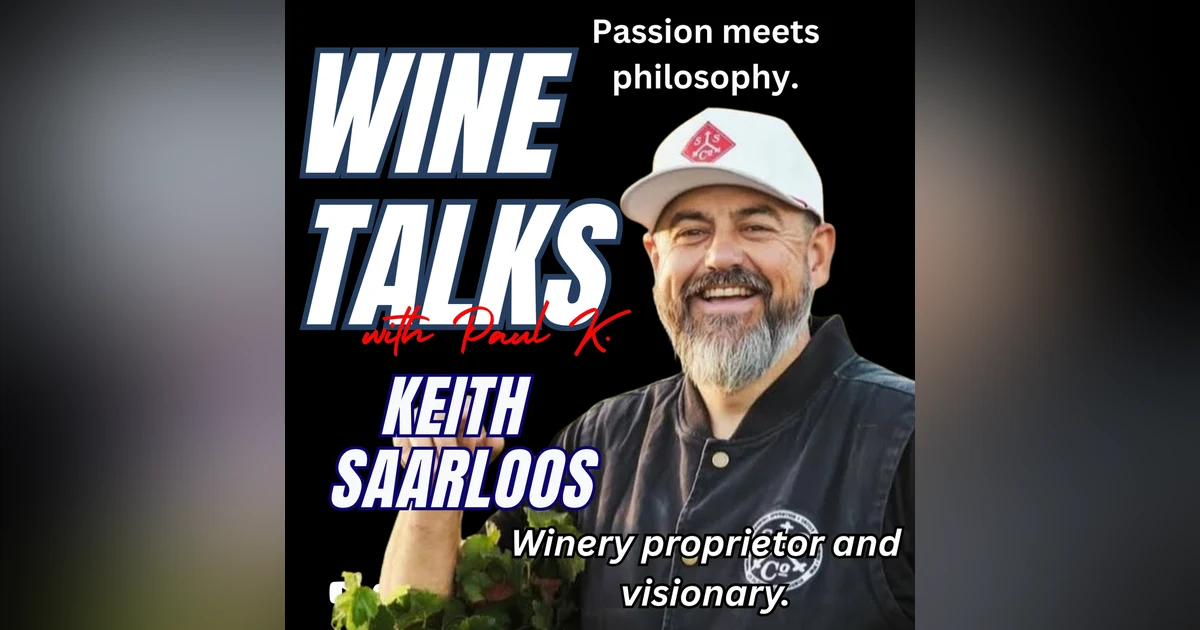

In all industries there are the visionaries. People that make industry veterans raise an eyebrow and reflect "this is exactly who we need."
Keith Saarloos is that person for me. I won't bore you with my tenure but suffice it to say, I've been around the block...enter Keith Saarloos. I am so inspired by this man, I want to find a way to start a podcast with him. News on that later.
What is cool....eac and every time I receive an inquiry to visiting the Central Coast wine district and specifically, Los Olivos, I recommend Saarloos and Sons...and each and everytime, Keith takes the moment to engage the guest...in my opinion, this is rethinking the wine business, not social metrics and boxed wine.
We started off with Keith Saarloos sharing his roots—growing up in Southern California, the life lessons learned working in his family's business, and his journey that eventually led him to the Santa Ynez Valley. I loved listening to Keith reminisce about those early days, from delivery routes that taught him everything about the region to how customer service is at the heart of every great business.
Keith opened up about how his family shifted from the dairy industry to farming and, after a tough chapter as apple growers, ultimately found their way to planting grapevines. He talked about the serendipitous way the winemaking journey began for the Saarloos family—less out of a carefully mapped business plan and more because of resilience, optimism, and a willingness to learn by doing.
We got into the nitty-gritty of what it means to be a real farmer and winemaker—how everything from humility to the willingness to "burn the ships" and never quit has shaped the Saarloos approach. Keith emphasized how much of wine’s magic comes from the honest, sometimes gritty, work in the vineyard—not just from slick marketing or a pretty label. If you came into winemaking thinking it was all about lifestyle and glamour, Keith quickly dispels that myth and gives you the reality: hard work, family, and a deep connection to the land.
One of the most moving parts of the episode was when we talked about the legacy of family. Keith spoke about the loss of his father, what it means to try to fill those big shoes, and how the wisdom and values passed down through generations end up in each bottle they produce. I could really feel the passion when Keith explained that every bottle is a story—often with a family member’s photo on the label—a piece of living legacy.
We didn’t shy away from the philosophical side of wine, either. We discussed why people are drawn to this lifestyle, the concept of terroir in Ballard Canyon, and the intangible, almost spiritual connection between what’s in your glass and the land it comes from. We even touched on biblical references to wine, and what it means for wine to be more than just a beverage—but rather something soulful, connecting people and places through time.
And of course, we contrasted this authentic, family-driven approach with the rise of mass-market, formulaic wines. Keith was gracious in saying there’s a place for gateway wines like Cali Red and even Martha Stewart Chardonnay, but he also explained why the heart and humility found in bottles from people like him is irreplaceable.
All in all, this episode was about more than just winemaking—it was about family, authenticity, hard lessons, and the kind of artistry that comes with real passion and a sense of place. Whether you’re into wine professionally, come from a farming family, or just love a good story, I think you’ll take something away from my conversation with Keith Saarloos.
Thanks for joining me on this episode of Wine Talks—until next time, cheers!
YouTube: https://www.youtube.com/watch?v=FVXBNSkpIsQ
#WineTalksPodcast
#SantaYnezWine
#FamilyWinery
#WineStories
0:00 It's here, it's now. It's winetalks with Paul K. Hey, welcome to Wine Talks with Paul K. And we are in studio today in beautiful Southern California, about to have a conversation with Keith Sarloos. Saarloos. Saarloos, however you want to say it. Wine Talks, of course, available on iHeartRadio, Pandora, Spotify, wherever you hang out for your podcasting and always sponsored by the original wine of the month club, now sporting the sweet and series of wines. But not while we're here. We're here to talk to Keith about all things wine. Already had a stimulating conversation off camera. Welcome to the show. Hey, thanks for having me. This is truly a pleasure. This is amazing. I love it. I love it. I walked in, saw graffiti. I, I saw, you know what, what does it say on the side of the Dom? Dom was a tagger right there. You had me and I'm like, oh, I'm home. You know, this is comfortable. Feels great. I have. You are the only person that's. That's accolades. Yeah. The only person that's noticed that really at the end cap there, that's the best part. I know. Like, so that was the one. When you walk in, the artist is going to put their most important piece where it punches you right in the face. And I saw that and I went, I took a picture of it and I'm like, I'm home. We don't know that. We don't know that. Dom Perignon was not a tagger. Well, you have to tag the bottle. I mean, something. That's right. I signed a lot of bottles.
1:26 But thank you for having me. This is, this is a rare treat. Well, you drove down from Santa Nez a couple hour drive to come down on the show. I appreciate it. The most beautiful drive in the world. And you heard, you heard your buddy Matt Kane on the show and I did. He was. You are the second guest in this new studio. I, I feel very, it's unbelievable. I feel very welcome. Yeah, I appreciate that. This setup's amazing. Appreciate that. Thanks for coming. Thanks for having me. So you. But you came from Sandy's because you're making wine up there. Yes, we are. But you, that's not how you started this group. You were. You're from here. Yeah. So born and raised. Yeah, born and raised. Southern California. Bellflower, California, the friendly city. There you go. That's a plug for Dan Coops. That's true. There it is. And my parents grew up there. It was known as Derry Valley. Went to high school There, basically my entire world was as far as I could ride my BMX bike. Right.
2:16 Those days was a long way, long way. You could make it to Seal beach, we could make it maybe to Whittier up the riverbed, which was really the freeway of bikes. And then, you know, then when I was 16, we had a, the original business supported the dairy supply side of it. And then as the dairies moved out and homes moved in, we turned into lawn and garden supply. And like I was 16, somebody threw me a clipboard and a list of deliveries to make and I was, you know, I passed my test at 8am by 9am and I was in a truck. And just basically I got paid to explore and make deliveries all over Southern California. So just even coming here, it's like I knew where to eat, I knew where to get off. The Thomas Brothers know, sitting in the back. But I, I'm a Southern California kid that got pulled to the Santa Valley, Los Levos. I'm gonna stop right there.
3:08 Isn't that the greatest job? Because I was a delivery guy too. The greatest. And you learn the back roads, you learn the restaurants. I, I put 50, 000 miles on my car when I, my first sales job. And I, you know, I'll never forget what I learned and who I met and the places I went. The fact that you like for me, being, being 16 years old, being trusted with deliveries for a family business, enough money in my pocket to go eat wherever I wanted. I had, I knew where to get off. I learned how to judge cars. You know, I ride motorcycles now. And you, you like, if I see a type of car, I can almost tell the proclivity of what's going to happen. And then basically got, you know, just got to know every nook and cranny. And you learn, you learn how to handle yourself because you learn customer service. You are the backdoor salesperson. That's right. You are prideful in what you do. And then after you make a delivery and you go on to the next one, you're, you're happy again. And, and it's freedom. It was great.
4:04 I mean it made me totally unemployable. I learned great respect for, for semi tractors. Oh yeah. I mean those guys, those that work, they do. And I worked Vernon and I worked South Central, I worked all the area. And you go, wow, these guys, you know, just have, let them have their. They'Re the, right away, give them the space. And if you, if you know how to drive with them. Yes, they'll take you anywhere. You'll never get a ticket, and you'll get about 80 miles. You tuck in between two and just roll. You're great. Cross country. Cross country. It's funny, you know, it's interesting you're talking about that because you are salesman, you are the face of the company, regardless of whether you sold the goods or not. And here you are running your own winery. Yeah.
4:45 What's the name of the winery? Sarlos and Sons, which is really the name of a trucking company. It's really that Sarlos feast. Wow. Yeah. This is Santa Inez. Yeah. Specifically, Los Levos. You know, Sorrelson Sons was. Is really a, you know, to know. To know about what we do. My grandfather lost his father when he was young, and he was kind of on his own, Grapes of Wrath style, no pun intended. From Iowa to California. And my. My dad and my uncle work with my grandpa when it was a dairy supply business. As that transformed, they all worked together in a room pretty much like this that had no walls, but three desks in it. And one was sales, one was, you know, president, one was this. And you would come in and yell at whoever you needed to yell at, but everybody else in the room heard it. Yeah. Wow.
5:34 And then, you know, I worked with my dad, my uncle, my grandpa. You know, me and my brother are two different people, but very similar. And Sorrelson Sons was kind of an homage to that. And, you know, really started this winery probably in the, you know, lowest point of my life. It sounds very weird to say, but it was providence. It was. This was. If I. If everything else didn't happen to me, I wouldn't have, number one, been there and then been forced into doing this. So Sorrows and Sons is kind of the, you know, we're very family centric. I put all pictures of people I love on the bottle, people who are part of it. My cousins are a part of it. They have their own brand, Waylon, two doors down. This is downtown Los Libres.
6:21 Or that's your. That's our tasting room. That's my office and tasting. Yeah, right. And then we farm two vineyards and two different Avas. And one of them is in the Ballard Canyon Ava, which is. We have, you know, great neighbors with, you know, Honada's in there and Stoltman and Beckman and Larner and a bunch of other great people. And so that's. And we were part of the map signing. Like, you know, we established an Ava, which was really cool. And then. That's the establishment. That's. Yeah, that's. West Hagen wrote it all to do. Yeah. Wes Hagen wrote it from. Formerly from Clopepe and now at Antevero Sellers. Wes is he. He's the next person that should sit here because he's a. He's the Google of wine, where you ask him one little question and you get 30 pages of answers, but you only need one.
7:04 I love Wes. But the other one's El Camino Real, which is on the corner of zaca Station Road. 101, 154. You know, just down the road from Firestone. You know, the Godfather really of the valley. Yeah. Fess Parker, Demetria, basically covering, you know. As a region has ballot. You know, ballot Canyon is. We're going to talk about this. It's certainly a buzzword of people in, In. In the trade that like. It's like saying Anderson Valley, these, this area that's becoming known for its own thing. How long is. How long was the ava? Was it years ago? I think, man, scary. That's probably a decade now because you have to. You have to tell the Fed. You got proved to the Fed there's something different about it that makes you have to prove. I learned so much through that process.
7:49 And, you know, soil composition, history, the reasons where and why. What makes you different than just over the hill? Why can you draw this little map line using no words but only directions and reach this point and then go due south here for you have to. We physically walk the whole perimeter to really draw it on the map. And, you know, an ava, I think is important because you could say, where do you live? And you could say California. And California means a lot of different things. But you can say, oh, I live in LA county means a lot of different things when you get down to, I live in this town, this city, this neighborhood, this block, this house. Right. And what makes you special? Because really, you know, we're getting my, My, not my philosophy, but my thought of. You know, I, I love both of our properties very much. Ballard Canyon and El Camino are night and day different.
8:46 And even our vineyard on. On Ballard Canyon, it's probably the most photographed vineyard. Really. Yeah. It's. We're on the COVID of the phone book when I go pay my taxes. There's no one ever. Yeah, but that was my. That was a big deal to my. And then the, you know, the, the rose book about the region, he put us on the COVID which was really unbelievable because it used to be a apple orchard. But telling the story of a place is, you know, when you read Books and. And. And you're. You're seeing the person go through trials and tribulations. If it's taken out of time, it doesn't really mean anything. But if you read Huck Finn and know what's happening when that's happening, all of a sudden, the region, the. What's happening around it, the actual person, you can see how they're shaped by all of those things. Like, we.
9:39 We release one wine. We release our Syrah every year, which is the same clone grown on three different hills within, you know, from here, that wall separate from each other, but one's a big terrace, one's kind of a rolling hill, and we make farm the same way, we make them the same way, and they all taste differently. So explaining terroir to someone becomes very easy, you know, sense of place, because I would say so terroir is real. And they go, okay, what's that mean? I said, well, you have three kids, same DNA, same house, same food, same family. That's a really good explanation, right? And do you expect them to be the same personality? And the answer is no. And I said, well, then how can you expect any of this to be the same? We're telling one story from our property, you know, once a year, and I get to live in a valley that's full of, you know, punks and miscreants. Like, there's no corporatization of where we are. It's. It's pretty hardcore. It's kind of interesting. Sorry about a long answer. No, no, no, that's. You're the guest. If I talk too much. You know, my test is when I decide whether the show. I'm connecting the show properly is I'll. I'll pick random spots after I release and go, you're talking too much. Because it's not about me. It's about you guys. This is.
10:47 We want to tell you. I just want to come talk to you, man. So I appreciate that. But. But something that's interesting you just said about this appellation, that there was why. Why back in the history of time. And you. Let's just pick Burgundy as probably the most, you know, prominent example where the monks were trying to find these little pieces of land and they gotta. You know, you said you walked the perimeter of Ballot Canyon, and here these monks are like, you know, three steps they got up. The soil's different over here. The. The thing that I feel like I get to be a part of and the. The timelessness of it, you know? You know, I can launch into Ballard Canyon, very easy. Where I can say, you know, with, with all of our neighbors. Okay, at 2:30 today, the wind's going to blow from here to there. There's this different soil composition. It starts from here, goes all the way down to here. There's. This is the lowest point. This is where the fog goes. This is where the sun rises. This is the warmest part of the vineyard. This is. And, and you only get that from time to. Because a lot of, you know, a lot of this industry is someone who, who did well at something else. And now they're going to impose that same level of success upon the wine world at all costs. And. Okay, but you're right, fine. But you know, I'm not really interested in that. The, the part that gets interesting is, you know, they have enough money, they buy a piece of property, they're going to plant the varietals they want on that.
12:10 And right there it's like your kid's a, you know, your kid could have been a world class hockey player. And, and you're making them, you know, be a gymnast and, and all of a sudden you're like, it's not going to go well. But for us, you know, we came into this because we wanted to grow something from the, you know, my dad passed away three years ago. I'm sorry. Yeah, it was a big tree that fell in my forest, you know, and my grandfather who grew up on a farm in Iowa, left it to the older brothers because, you know, there was a bunch of like again, grapes wrath and was on his own and. But he always viewed farming as a noble profession and around the dairy industry and a lot of the families that we're, I grew up around same thing.
12:55 And because, you know, 1.5% of this population is feeding the rest of us three times a day. Right. You know, and growing something from the ground, raising cattle was just a dream. My grandfather's and I always say be, be careful with what you fall in love with because that's the best version of you while you're doing it. And your kids will pick up on that real quick. And so my dad loved baseball and he loved working. And I as an idiot picked work and my brother picked baseball. Well, that's a, let's suspend that for a second. But you said something important, particularly the. Part about, yeah, stop me. Success of, you know, people, successful world. They want to buy this lifestyle. And we'll get into that conversation. But when you, when you said that this is not an easy job, farming is not easy.
13:38 Farming is Historical farming takes experience for it to get better and better. And there's a story of Fowles Winery in Australia. And Matt Fowl is wonderfully masculine guy who, like, literally hunts his own lunch, you know, and his winery was a Coke executive who thought he could apply Coke beverage marketing, guerrilla marketing to wine business. And it promptly went out of business because that's not what it is. It's a passion for doing this job and presenting the product that you best represents where, where and where it's from. That's how you win. That only makes it worth it. Yeah, it's a good point. So that, so it leads to this, this whole idea. We go to Napa Valley with Los Olivos wherever we go, and we go, oh, what a lifestyle. Or we watch Sideways, oh, there's, you know, Santa's Valley and the Hitching Post, whatever. And we, we want that. And so we think we can buy that. No, no, no. The. The question is why? Why do we want that? Yeah. Right. Why do you want it? That's the question. And then you can't just buy it, though. You can buy it physically, but you can't. Don't you have to earn this lifestyle? The idea of the passion for it? I think. I think so.
14:52 I. I come from. I've never went wine tasting really, before. I open a winery. That'S. Now, that's pretty interesting. Ever. Right. And it wasn't part of the thing. It wasn't. And so I've come into this in a very different way, I think, than. Than most people have. And you know, most people, when they, when they see someone on stage singing to a billion people. I was thinking about this actually two days ago, where what percentage of the people in the audience wish they were the person on stage? Probably, I don't know, 10%, maybe. Maybe it's more. I don't know.
15:36 Right. But I. When you get into any form of, like, real art, the. The part of. The part that's drawn. Draws you to it is rarely the thing that is the reason that person's on stage. And, you know, if you locked yourself in a room when you're 13 years old with a pawn shop guitar and just. And beat on it like it owed you money. Right. And you just never stopped. Then eventually one day, maybe you'll make it to that stage, but when you do it, it'll probably be the least interesting part of your journey. And it's a good point. I understand why people like this lifestyle because it looks really neat from the outside, but usually the People that are doing that, you know, they're paying someone to come up with their labels. They're paying someone to make their wine. They're paying someone to farm it for them. They're paying. And it's like, well, if you didn't write the songs, why do you get your name on the album? And I come from a bit of a different area where, you know, my. Up until my dad passed away, he was the guy on the tractor. Just always. He didn't get into this because he wanted anybody to know who he was or, you know, my dad never made a bottle of wine in his life. He wanted to do the work. He wanted to grow something from the ground, which, you know, is. Is a trans. Is a transformative thing. Yeah. Because you have to be optimistic. You have to get up and earn it. You have to be there when things go wrong. You know, the. So God Made a Farmer I
17:09 is probably one of the greatest poems ever written because you have to be tough as an anvil and soft as shit all the time and humble as hell. And. Well, speaking of, if you're not humble. Yeah. If you're not humble, you sure. You sure will be soon, right? And what I like about that is, is taking something from, like, right now where we're pruning and we're making, you know, 23 different decisions per vine, times, you know, 2,000 vines an acre times 50 acres, we're making all of these farming decisions, and we're trying to get that fruit from a bud and get to watch it. Right. Bud to a grape. We pick and then take that off and not screw it up.
17:58 I always think, like, coming here, you know, you're sharing so much information and stories and things with so many people about something they can't taste until they come and taste it. That's right. And it's. It's like saying, oh, this song is like this, but you can't hear it yet. And. And the beauty that I think is associated with that is. Is mostly it's kind of what we're. It's describing more what we're doing out in the vineyard than what we did in a winery. Right. For sure. You're always talking about the place. You're always talking about who's around it, what was happening, context rarely did. You know, sometimes you get. Is this stainless steel or, you know, and that. And then you're like, it doesn't matter, you know, but. But it. What you're really. What we're always describing is the work part of it, the beauty part. Of it. And that's the thing. I think I've. I've fallen. My dad fell in love with and I love doing it alongside of him. You know, we're, we're still. My wife, my mother, my daughter, my son are still at the, you know, 3:00am picks and, and we're still doing it because the hard work, the stuff everybody pays other people to do is the stuff we love. It's, you know, that you think about that lifestyle idea.
19:09 This by the lifestyle. And I love it when friends go to Napa. Let's just pick Napa, because that's everybody's destination. And they see Dave Del Dado's giant monstrosity or that Persian, whatever that thing is that guy built, and I kind of go, that's. But that's not what it is. How great the stuff isn't. It's not that. And the humility. That's not, that's not humility. Hubris, right? Well, it's hubris. It's. To me, it's the over compensation of knowing how much you actually were involved in it to, to do it. Like, it's true. Like going back to the music analogy, if, if I go, you know, Jackson Pollock's one of my favorite artists and I don't see him really enjoying to go to go to a art show, right? Because what he wants to do is back in a barn, right?
19:55 And I think those are the true artists, right? The people that are almost entirely impossible to love. And they're doing it for a great reason. I mean, you brought up Wink, right? Me and my cousin were talking about that last week and I said I outlasted him. You know, it's. It's true. It. Being big and being whatever doesn't mean it's better. It just means there's a Ponzi scheme anyway. Well, yeah, you listen to the rats. I know. I can't wait. Listen, anybody like going hard on stuff, I will listen to every line of it. But there's something about. And I learned this from the clad strips and that Nazi thing, and it kind of hit me in the middle of the conversation what you're doing and the history of what you're doing. Now, we don't have all the history that the French do and even other parts of the world have in wine, but we're creating that now. And it's coming from people like you who are farming the land, who can tell the stories of the things they've learned from the land. It's not the things you've learned from you know, the fermentation, you know, using stainless steel or oak, it's what you've learned from the land that makes the difference. So I thought, wow, the steak doesn't come from a herd, it comes from a cow. Comes from the cow, right? And there's a lot, you know, with anything I always say, you know, exalt the farmer. Because whatever restaurant is, you know, three stars or whatever, where they probably either are raising their own cattle or they have a relationship with someone and the farmer's doing 90, 90% of that work so they can sear it on two sides and serve. Because, you know, food is not about let's, let's hide it. It's about authenticity, right? The best meal of your life is someone who love that you love
21:28 that cooks you something that they, they thought of you and made it that's real. And you know, for us, that's like, I, I don't sell the stores, I don't sell to restaurants. Every one of our bottles goes directly to someone that's either come in and tasted it or has been there before and has joined our family, you know, and because of that, I know who I work for. I work for them and them alone. And there's something really beautiful about that and there's something real freeing about it. And when you know the people you work for like that, it's like, you know, I don't mind working 380 hour weeks this week. I know the guy from the friendly city. End of the, end of the philosophy. You know, how do we end up in, in, in San Livos farming? You said that it was almost serendipitous. You. Yeah.
22:19 So my old man and my mom, the saint, the real saint of the story, it's like, you know, every SOS man is an idiot and every woman he's married to is. Deserves way more, way better than him. We can define that around. Oh, that's easy. Our house actually just maniacs going to work every day and then coming home and their wife's, you know, pulling the, pulling us back. Had that discussion last night, actually. That's a good one. But you know, when you're full of passion and you're doing things like that, then, you know, my, My old man bought a, a piece of property on top of Ballard Canyon that was just a hunk of. And it had an app, had a Fuji apple orchard on it and he was pumped and ready to rock and, and we farmed those apples all year and had a neighbor that said, I'll buy them all and he was with a big huge, you know, now a very big grocery store. As I tell you, my father in law who fought in World War II, won't buy Fuji apples because he thinks they're Japanese. That's true. They're good.
23:22 But went to deliver them, got them turned, turned away like at the dock, you know, and yep, came back and shoved them on the ground. Watched cattle eat them and there's, you know, a lot of crying and throwing up and what are we going to do now? And all the terrible stuff. And I was still living in, down here in Southern California and kind of commuting back and forth. And my mom, again, the hero of the story says, you know, why don't you tear. I don't know what we're going to do. All that, you know, normal psycho. Of course, once you tear it out and put in grapes, seems like people want those, you know. And went down the street and asked Rusak, if we plant fruit, will you buy from us? Yeah, sure. You know, that. And that launched the ships. Wow. And we planted that simple. I mean, I don't know if you do that today in today's environment. We walked some. Hey, we bought. No, we were that dumb. That's the truth. You know, naive and planted them, you know, planted all our vines and, and this isn't cheap. No, it's cheaper than.
24:19 But planted all of our vines and started farming them. And it's kind of like, you know, people weren't you scared and all that. And number one, it's, that was a burn. The ship's moment when you tear all the apples trees out and they're in a pile and they burn for a month. I mean, it's like when you land on the new world, you go like this, well, which way are we going? How are we getting home? And the ships are on fire and you're like, well, not that way. So we're going to go through. Wow. And you know, no, we're, we're just too dumb to quit. That's another great Sarlos term. But we farmed them. And my wife and I, I said as soon as, as soon as you're pregnant, we're out of here, you know, because we're in Southern California. But we knew we wanted to raise kids up in a, you know, this is pre Internet. This is pre, you know, Amazon delivering there we had electricity. That was about it. That's pretty good. That's pretty good. And hard floors. And we did have potbelly stove in the barn we lived in and pregnant and had the kid baby grew up, you know, laying right between us in a, in a bedroom and I was out picking and you know, working side by side with my dad and Pedro and Alfonso and, and another little small crew and then would deliver our fruit to wineries who purchased it from us. And that's amazing. The one thing, it's like no one gave me an instruction manual and I brought a kid home and it was like how do you raise a kid? The answer is no one knows. No one knows. And, and so we do a lot of scientific wild ass guesses and we do things that seem right and never taken a class.
25:50 I've read a few books but mostly it's hey, what do you think? And consensus of like well let's try this out and see what works. And. I wonder what other careers or industries because you know there's that there's always a competing philosophies about being let's say a seller rat and just earning your way through and there's many. Well that's a totally different job. You know, we're talking the farming side of it. Same with the farm side. Like do you have to go to school? I mean somebody sent me an email today with, with a video of some advanced bio invasion. Not invasion, but a product that you put in the soil. It is, I don't know what I did understand it myself but, but really, I mean it's such an organic and I hate to use the word like that but it's such an organic job and it's such a, it's so much about history and, and trial and error and trying to make it work. I always describe it as being a, like a great fisherman, right. Or a goal of, of a great fisherman or what makes a great fisherman. A great fisherman is someone who goes out and keeps doing it and then has a proclivity for the wind blows like this. And I've had pretty good luck doing this and you should probably use this about this time of day and where should I cast? You know, just like, you know, underneath that dock or whatever. Right.
27:08 And it doesn't mean you're going to catch fish every cast but it means that you have a better chance of doing well. And I think with farming, you know, the crop grows best in the farmer shadow. It's always going to be like that, always. If you're going to pay someone to clean your car, they're going to pay, they're going to, they're not going to exceed the dollar amount you paid them to do it. They're going to probably do a little less than that's profit. But when it's for you and when it's for customers and it's. And you've already been humbled by, you know, being a failed apple farmer. Right. There's nothing you wouldn't do. That's huge. Yeah. And it, it happened that way because it had to. Huge lesson and.
27:48 Yeah. So long story short was farming, selling to other people. I was up there, you know, we had a couple coffee shops and, and, and trying to make it and live there. And 2008 rolled around and, you know, staring at, staring at my wife in the kitchen, telling her she deserves better than this. And, and she's like, in the same way my mom said, why don't you plant grapes? You know, it seems like people want those. My wife goes simply, you should do the wine thing. And it's like, I don't. I mean, I'm like, I can't do that because to me, you know, you have the Clandenons and the Linquist and, you know. Yeah, right. Firestone. It's like these people. I don't know anything. These, these are the. Here we are. You know. And she goes, well, you know, like, people like it. And you know, we were talking about Matt Kaner and, and Silver Lake wine and meeting them at just the right time. And they're his. Hey, this is good. They were the inspiration. This was inspiration for you? It was. I think the right answer is, I wouldn't say. My wife says it's self deprecating, but no one hates me more than me, in all honesty, anywhere in the world.
28:56 And I say that with humility because I know what kind. I know who I am. And every day I try to get up and bury that person. And if I can do it, I'm not really impressed by it in general. I don't say, oh, look, interesting introspection. Yeah. I mean, I can go into a whole other layer of that. But the beauty of it is when you come in humble and not knowing what you're doing and thinking, everybody else, this is how I viewed it anyway. Everybody else knows 10 times more than me, but what they can't do is outwork me. And so if I work, you know, 10, 8 to 12 hour, you know, if my day is half day, 12 hours, or. And I did that for years. I said, I'm gaining, I'm gaining four hours every day on everybody.
29:45 And I, for four years did everything I needed to do before 11am Then I would pour till 5 and then start up again. And keep going because this is how I was going to feed my daughter and feed my son. And somebody says, why did you do this? The answer is to feed two people. To give my wife the life I promised her and everything else doesn't really matter. Does she like the farmer's wife life? Yeah, but my wife is her own absolute force of nature. Same as my mom. Yeah. And, and my sister in law because we're, we're not easy people to be married to. You know, my brother played baseball. My wife, she'll tell you the same. Well, yeah, you know, and, and usually passionate people aren't. They're very difficult to love. And I, my wife is, is not. My wife never, never told me I'm right when she thought I was wrong.
30:47 And she will be the first person that if I have a question, I'll go talk to. And even now, even more so now, you know, she had. Because here's the truth. She has always has my best interests in mind because I'll. If you appreciate what I'm doing, I'll keep giving non stop. So growing, you know, when we were farming and making that transition to I don't want to sell fruit to other people because I was in charge of selling all the fruit as well. And I said, well, if I just keep this, well then okay, I can make this much wine. And kind of started figuring that out. And then now I'm really pleased to say between, you know, Windmill Ranch. I promised my dad, I didn't know he was going to pass away, but I promised him one day, you know, I won't sell one piece of fruit out of this vineyard somewhere. And I have the photo when I took it. And he goes, wouldn't that be, wouldn't that be amazing? And going from zero to I, I don't sell fruit out of that vineyard. It all goes into Sorrelson Sons bottle. Wow. And then our other vineyard, between Art, myself and Brad and Greg, we, you know, I think we sold 7 tons and all the rest goes into, you know, primarily Sorrelson Sons. But our, our wine.
31:58 And so now I'm, I'm from, I took the hard road, took the pro route that I didn't know we needed to take. So we're still out there farming it, we're still growing it, we're still making it. The only place you can buy is our tasting room and online. Wow. And, and that's a tough model. But it, but it's the only. I'm talking business now. It's a tough model. It was tough Because I came from a distribution background. Yeah. And I saw little. I saw little guys get eaten and I never want. And one of the famous stories around our family is my dad, My dad thought he was going to get an award from a customer being like distributor of the year or something to him. And, and they, and he lost. They lost half their business in one day. I mean of. If they were doing a hundred thousand dollars. They just. My, My family's company became a fifty thousand dollar business one day. And those were always stories that were told, you know, around the table. Just like what happened at work today. Well, probably not going to get new shirts kicked yesterday. Yeah, hey, we're probably not going to get new shirts around here for a while, stuff like that. And because of that, it was like I wanted to be like. We were talking about growing up in Southern California. One of the things I truly miss is you earned your spot. I love to skateboard, surf, Snowboard, ride motorcycle, whatever. But you earned your place and you looked up to people
33:31 and they kind of decided if you made it to the next level or not. You know, it's, it's almost, it's like. It's like street jiu jitsu, right at that point. That's true. And, and I still skateboard, by the way. Do you really? That's amazing. We gotta talk about that. But the, the part of it like I respect my elders. I, I want. Huh. You miss your dad Every day. I can't talk. That understood this, you know, the. No, like my dad passed in June and every day does go by that I don't want to call and say, you won't believe who I spoke with today or who, you know, what I learned today from the wine side, you. Know, you just lost him. Yeah. June, I can give you the best. Here's the only advice I can give you is if you were close to your father.
34:21 My dad was. My dad was pretty tough on us being a good dad. But my brother and I were, you know, we're vicious competitors to each other really. Right. Oh, we'd punch in the face. You know, we were, we're. We'd throw each other through walls, break TVs. And then you go, just fix it. And then walk out back, you know, go outside. That was it. My mom, my mom's the youngest of six kids, so she was kind of used to it. But as my dad became the person he was supposed to be, my dad was a, you know, president of our business. But then when my dad found the valley and lived out, his father's dream.
35:04 By doing it, I saw my dad become the person he was always meant to be. Changed him. Not changed him, but he became generous. Yeah. Not with altruistic. He was the guy that would stop flat tire. Didn't know the person. How's it going? Invite people. But giving wine out of the tasting room. Here, just take this. You know, that became everybody's dad in the valley kind of a thing. And what I miss is having someone I trust implicitly, someone that maybe my relationship with him. It was just like talking to myself that was 22 years older than me. Same guy, same personality, same everything. And there it was. There I get. I got to talk to.
35:54 I got to pick up a magic phone and talk to myself and get the best possible advice from 22 years. Not. Not how I'm feeling today. Right. Not what I need to do tomorrow, but the long. That long. I know exactly what you're talking about. And one day, the phone, you know, didn't pick up and. But. I would all. You know, we have a family creed. We put it on a wine which is honor and prepare, which is we live to honor those that have come before us, and we prepare the way for those yet to come. That is. That is what our business is. So I have people I love on there. Great outlook. Thank you. And I have my kids on it. And. And kids I'm. And my brother's kids. Kids I'm preparing for. It's not about me. Right. Where most people want to come in. Hey, this is my name on this bottle. Right. Sarlos is not me. I'm a sons. And it's about everybody else.
36:45 And. And that's how we feed people. That's how we take care of people, blah, blah, blah. But the advice part of it is the person I want to become is the person that my dad always thought I could be. The highest level of myself, the highest level. The person who takes my. I am. I like to fight. I'm. I. I do. I love it. You know, I. If. If there's a controversial subject, I'm ready to pull the pin, roll the hand grenade down the middle of a party, and then see who wants to get into it. You know, I love it. And. But that. Take the high road. Hey, man. View's better, right? Dunk it down there. Take the high road. Let it go. This will pay off. Somewhere down the road. That was your dad. Yeah. And. And he instilled that into me. Yeah. And my kids know him.
37:36 And. And since losing him, my brother and I, you know, we're taking care of mom, though. Mom doesn't need it. Our conversation was post traumatic ascension. We're going to do. Let's go now. No one's. No one's out there holding the shield for us anymore. That's true. I. I could tell you it's a true thing. I don't know if I wanted on this. You know, even if. Even if. Even if you didn't feel like that was the case. They were alive. You realize it later. Oh, right. This was, you know, that. That they were the shield. That now you don't have a shield. I lead blocker. Yeah. You know what I mean. And now it's up to me. Yep.
38:19 And up to us. And he prepared you for that though. So, you know, it sounds. You don't really become a man till the day you lose your dad. Weird. It's a great way to hear it. And when you said that, was I prepared? Was I ready? No. But I was prepared. And all of a sudden with him being gone, you know, I knew I had to be in the tractor seat. I knew I had to be out. So my. My life shifted from just selling wine, making wine, doing this, doing this, to now I need to sit in the king's chair and be out there getting this ready, preparing, making sure this happens. Took on all that farming aspect of it. And it was hard, real hard because now it was, you know, being out there thinking, you know, 10 steps ahead, have learning that I need to be able to depend on people, giving people an opportunity for them to be depended. Upon and missing that. That maybe at the end, like with my father. Yeah. He was still tell stories. I have all his stories on. On my phone. Every time start up his mouth. That's like gold. And I had. I had the huge honor to be. Put him on the podcast once just in his house and telling stories. Business stories mostly, but. Yeah, but you don't realize that when this. That the shield is gone completely. Yeah. Maybe he was only 5 or 10% effectual because he was older. He was 93 when he passed away, so he couldn't articulate all the thoughts he wanted to, but he was good health and everything. But when like
39:51 the other day they were. My parents were huge antique collectors. They were. They. They taught me to go to the auctions. They. They went to Europe. They bought half a container of stuff. They auctioned off. They made so little money, whatever. But they're just the chase. Yeah. They're hustlers and the. The chase. I love base to know. And I brought home this piece of silver, which, on the three kids, I'm the only one that really appreciated those things because I was the kid. Yeah, I don't know. Maybe like you said, you're the most like your father. You know, there's the picture of him handing me a bottle of Claude de Val, actually, which is what that is. I mean, if you just full stop. If you look what that picture is. Yeah, it's huge. It's your father handing you a bottle of wine. What are you doing today? Yeah, exactly. I know. It's all those wines there too, the ones that he chose.
40:34 So. So the other day, I was. Paul, my. My wife's like, what are you doing? I go, I'm polishing the silver. Says no one ever. Right. When's the last time my mom would have freaked if she saw me, like, break out of silver polish? And the thing that disappointed me the most is this one piece I was polishing. I never got the story. It's a crazy piece of silver. It looks like it's from Thailand or somewhere else. Is beautiful piece, but I never asked him the story of this one. I got most of the stories, but not this story. And I feel like I got cheated out of this story amongst others. So it's a. It's a huge loss, and you have to. But you're right. You become the king's chair. It's a great way to put it. Speaking of the king's chair, we were talking about this off camera a little bit. Yeah. And he had a great definition for what is in the glass. Oh, yeah. Because what you and I are trying to tell and the math canners of the world and many other people have been on the show lately that are anti Callie Redd, Snoop Dogg, and Martha Stewart Chardonnay. Well, hold on. I would.
41:38 Here's the thing, though. Those are great gateways. They are. I. I agree with that. And you know what? I agree with that. If. If, If. If Snoop brought. If Snoop Dogg brought you to wine. Because I've seen it myself. I mean, I want you to roll the pin and let's see if it goes off. Well, I mean, it sounds funny, but I've been pouring wine for so long that the kids who were eating cupcakes at our tasting room are now in our wine club. Yeah, right. And. And I've saw a couple who grew up where I grew up. I saw their first date, and now they have kids. Right. But now they went from, well, what's this about? To their hunting. They're hunters.
42:20 They love this thing. And it has made their life better. We had someone that came in that just needed to use the. The bathroom stayed, got locked into wine, and all of a sudden we got to give them what you've done probably a million times that hopefully what this podcast does is you hand somebody light bulb and they go, oh, my gosh. And they just put it above their head and they're like, holy cow, what are we talking about here? There's all of this holy cow. It's like turning someone onto a genre of music they've never heard. And if Cali Redd does that, fine. Well, we've always had. Well, I can't believe how fast is going. We've all. I don't have anywhere to go. We entry level ones. I mean, sure, my father stopped in 1974 in Napa Valley. Sadly, the Cali Red is probably better than a night the early 70s.
43:03 Well, he stopped at Trinchero and set her home and had had a glass of pink wine with Bob Trincaro. He's like, Bob's like, what I. What should I do with this stuff? And that was the entry level wine in the 70s, right. To the extent that, you know, it. Caused Rose was pizza wine. Yeah. So. So I agree. There's maybe my just not disdain. I hate the fact that it's called wine, though. That's the hard part. That's maybe that's the best definition, like why they call it wine. Just called beverage. So bringing up Matt Kaner, I don't know if he came up with this or I did, but it's if. If you're drinking wine as a beverage, you've missed 90% of the point. Right. That's a good point. That's a good point. Sorry you were on. But there is this. So let's just fast forward that. We've got these people. You've. You've educated somebody. You've. The people that are eating cupcakes and Twinkies in your taste room are now like going, whoa, there's something about this.
43:47 And I. That's all we tried to do. Right? We want people to experience what we think we experience. They knock, we open the door. And so defining that is what I thought. You did a great job. When we're sitting in a conference room, because I asked that question all the time. What is it? Why don't we get so excited about Maui Blanc, the pineapple wine? Why don't we get so excited about fermented, you know, apple cider? Why don't we get so excited about other fruits there's something about the grape that you said it would. It's no longer a grape. Yeah. So, you know, I'm. I would definitely say, you know, I'm. I. I'm an introspective. I want to learn as much as I possibly can, but I'm also farming, and I'm also a pretty spiritual person. There's a lot of wars going on inside me, but I always think that there's a. There's an interesting correlation between growing something from the ground and seeing something come forth. You know, right now, we're pruning, we're making all those decisions, but we're leaving, you know, a bud right here. And I know that everything that my every light house payment, every tank of gas, tuition, food, everything in my mind is right inside that bud. So when we have frost, when we have bud break, I'm sleeping in a car out there, because that's what's standing between me and total failure. I got to get
45:18 the frost protection I got. Right? Time everything. Talk about humility. Well, it's. Go ahead. Yeah, it's true. But it made it worth it, right? And so when you finally get to that point of harvest where you took something from nothing, helped bring it forth, gave order to chaos, because I. I think that's probably. I'm only good at two things. One is creative problem solving, and two, trying having chaos go like this. And when it comes through me, comes out like. Like chaos being the infinite variables in a farm. The vineyard hates you. The thing that you. Everything have to do to do everything. Vines don't grow like this. Yeah, they grow like this every which way.
45:59 That's the point of it. And you're training, training, training. How about beneath the soil? We're going on in there everywhere, and you're just kind of in the middle of it, and you're. You're. You're trying to tack based upon wind waves and weather and everything helping and all your moving sails, you're trying to push this way, trying new things. Let's try this over here. Let's. And it's just chaos at all times. But when you get to that point of. Of harvest, it's kind of like missing out on, you know, being pregnant. And then all of a sudden, boom. It's there. It's. There's a. There's such a beauty to the process from here to there. And then when you go through the winemaking process, you know, you pick it, you deliver it. You're. You're.
46:40 I think, respectful, because you spend all year Doing something, you don't want to cloud it up, but you want to give his best chance of success. You know, all of that thing I. Just said, I've never heard of that way. But it's like if you're not doing what you're doing not to discredit anybody that buys grapes. Not just crazy. No. Pay attention. But no, it's like being, it's like birthing a child but never having the pregnancy. It's. It's like having a two year old show up at your door like this. Yeah. Because really, maybe your first intimacy with that wine is with the, when you pop it and you're, you put a label on it, maybe. I think there's a lot of that, especially if your name's on the sign. And that's one of the things I'm very proud about with like Santa Barbara county in general. If the name's on the sign, the person is probably in the building and, and that doesn't exist really anywhere else in the world. Yeah.
47:32 So, you know, that's my huge pump for our, you know, band of psychos that is up in Santa Barbara County. It's great. But when you, when you get to that point, you know, there's a point in the winemaking process when you're pressing, you know, you've gone through with it when it's a red and you've gone through all the, the maceration punch downs and everything else and pumpovers and da, da, da. But then, you know, the, the voodoo of, of yeast has worked its magic and turned sugar into alcohol and acids are in line and this and that and the other. And you go to the press and then all of a sudden it's just wine and it's as different as a physical form. And then now we're going to release the soul, right? We're going to put that soul in a bottle. And you know, it sounds weird to say this, but like whiskey is always, how long did it sit in the barrel?
48:19 And wine is always, how long has it been in the bottle? And to me, that metamorphosis, it's, it's beautiful because the whole point of it is you can drink it today. You know, we don't sell a wine that you can't drink today. Rip, rip the cork. You know, it's a bad day to be a cork. Zach Santa Cruz said it. I love it. Because we're ripping corks today. We're pouring glasses, we're drinking it. I'm like, do you like it? And yes. It's like well, you drink it today then. But if you wanted to, if you want to see all of those tannic acids form those beautiful long chains and you want, you want the thread count to go from burlap to silk. That'll take time. And you can jump and jump the line, but it's going to cost you money because what you're doing is taking care of that bottle, making sure it's preserved, putting in the best possible light so that when you, they open it, they're going to get that. That's why, you know, older wines are expensive. You raise it from a pub, you're. Taking care, you're like, I will take this into my charge and I'll keep it here. But to me, always that, that day when you're pressing and you go, there's the soul has been released and what are we going to do with it?
49:22 Now that's interesting because I always talk about this, by the way. I'm excited. I'm saying stuff to you. Who's been in wine for much longer than I have. New ways or a new perspective. It's a perspective pretty exciting. That's. Not everybody can articulate like you're articulating. It's an important thing. But I've always said this about the wine industry. Not always, because when I got into it, it was business for me. I was a businessman. I sold copiers for a big company and I sol software to bigger companies. And then all of a sudden I'm selling $20 worth of wine. Not even that, it's $5 worth of wine. Yeah. Different product. Learn to appreciate it. But you learn to appreciate a customer differently. Totally. Well, I've always been a customer service kind of guy, but the, the, the point I'm making is all the things we do today, you're talking about whether stainless steel or oak is just periphery to its.
50:14 The process of it changing from one form to another. Does it matter, the soul of it? Does it matter what type of guitar and what type of amp this song is being played on? No. See? No. So that's the value of this. And we're talking about this off camera a little bit. The soul of what wine is. I believe that the definition I always come up with is like it's, it's an ethereal product that connects you to the soil. If it's a sense of time and place, it should be anyway. And you should taste that place. You should take you somewhere else when you taste it. Yep. And now that's where the Cali reds and the, the, those Things can't do that by their nature, but the winks of the world can't do that by their nature.
50:59 But you can. And we're gonna go back biblical a little bit because that. But that's also. Before you go in the biblical part, which I'm excited to talk about, that also makes us too small to fail because when you have invested all of that into it, when I sit here and we're talking about our dads and my voice quivers every time I bring them up, right Then pleasure is a form of payment. My buddy Heath Penner said it. I'll never forget it. Because you know what, Working alongside your old man for as long as you did, or as long as I did, or being out there and. And having great stories. When we're picking grapes at three in the morning and our hands are frozen, or when we go to the winery and we're eating a great lunch, or we're doing that, that has to be.
51:48 That has to be a massive form of payment and doing it. And when. So when, if you come in with money and say, I want that life, that's tough, you don't know what the. Payment'S going to be because you don't really like it. There you go. You didn't earn it. So that was a little bit of a circle around. But it's a good point, though. I mean, it's a very valid point. Yeah, it's. The hardest parts of this are the parts that's work that are the parts that are worth doing. But because they're hard, people tend to pay people to do them for them. And I have found so much pleasure and love and I've learned so much by being in a tractor, mowing or seeding or driving and knowing that everybody behind me is in danger. And if my foot comes off this thing, we've got two tons of grapes and it's a. It's raining and the hills going down. All of that stuff where all of a sudden, if I was still in bed, I would never know anything about that. That's right.
52:45 And I think the wine now embodies that. There. There is like. This place has a great vibe, but it's a building. Right? Sticks. Sticks. But the vibe of here and the people who, who are a part of it fill the room. Fill the room the rest of the way. You know what I mean? And I think with wine you get so much of that. Where it was this, we turned it into that. But along that line, all of that's just getting soaked into it. And, you know, for me, it's why I'll. I'll put my dad's face on a label. My mom, my brother's, my. And it's like, this is the story of our family right here. And you get to bring it home, and hopefully you share it with someone you love around your table. And then that. That. That is complete. That handoff is complete. So I go to the biblical. I tell people all the time, like, wow, my dad. Like, we sold my dad's house away. We got a list, really left a list of people came clamoring to buy it. But, you know, all the memories. It's like the memories are the memories. Yeah. The house is a stick. If somebody's gonna tear it down one day, does it really matter? Yep. It's irrelevant. It's the history and the value you got living there or you or your parents living there that matters. And those. You'll never be able to change that. Even with the clag strips, it hit me after they're telling these stories and they're talking about Attila the Hun, you know, shedding blood in the vineyards of. Of Champagne. Even In World War I, some of the phosphorus tank shells still contaminated the ground. You can't blow. And I thought, wow, that. That has to have an influence, whether it's
54:17 the family that suffered through the wars or whether it's. The family has to have an influence of what they're making. We. We went 75th anniversary. We have a wine called Courage, named for my great uncle John, who died D day plus 16 in town. Wow. So a couple years ago, we went to France as a whole family. It was a great trip. We went to Normandy, looked around. Wow. That's incredible, though, isn't it? But the thing that blows me away was there people still making wine that year. Think of that. Yeah. No, it's amazing that. Yeah. The fact that Allied invasion, the Nazis coming over the hill, you know, France giving up in 24 hours. This was other than, you know, Churchill. You get the Russians on the other side. You get us actually getting into this thing without those things happening. You know, man in the High Castle is an amazing book and show, but. But people were still farming grapes, making wine, hiding their wine because they were.
55:18 The fact that people built caves and then hid those caves because that was. That was who they are as a family trapped inside that bottle. That is our work. That is our ethos. That is where our family is located differently than anywhere else. This is our combination of grapes in which we planted them. We are going to harvest them. We make one wine, even if you're our neighbor. And on all four sides, what we do is unique and special and different. Doesn't exist anywhere else in the world. And this is something we need to keep, is something we need to protect and we need to hide from these horrible people. And it's hard in this day and age to explain that to anybody. Where you and I are sitting here, you know, are we going to protect.
56:02 A Walkman in the future? Are we going to protect a DVD player? What is worth protecting? There's nothing to worth protecting. There's art, you know, even, even music. The fact that most music is digital. If that goes, we're losing all of this. Right. That's a scary like next level scenario to this. But it remains so tactile, it remains so ancient, it remains so familial because great wines and I don't know any of this. And you could probably speak with ours, but the, the generational lineage of what they have learned over time in specific places that said, okay, whoa, whoa, whoa. Something special is happening here. Something special is happening actually up there and over there.
56:45 Not so much here, but there and there. And then how they have handed down that information, what to do, what to grow, where to grow it. If this happens, do this when you should pick what you should look like. You know, the Farmer's Almanac that they have. I'm only 25 years into this and the fact that I've learned all that in 25, I can make different decisions today than over there. And if the, you know, a next generation is coming up and if they're interested in that, I have a whole bunch of information to give them. That we've been doing three generations. That's your look, that's your motto. Yeah, that's. You put in the bottles and you're. I mean, let's face it, the new world is the early cycle of all this. But you are doing the exact same thing. Yeah.
57:25 That these farmers did in the, who knows, at the turn of the century. But they, they weren't wrong. No, they were wrong. And we, you know, we keep. Things keep happening faster and like Cali Red comes out or whatever, you know. But I think the beauty of what we get to do is. Well, that's the question I asked is the heart kind of. He took a minute. Well, it's here I asked this question. Oh, if you're stumping, Matt, I'm in. Well, it takes a minute because it sort of divides the, the, the Cali Reds and the Martha Stewart Chardonnay from the thing you're doing. Well, what you're talking about is soulless commerce, Right? So now what if the, what if profit had nothing to do with wine? Profit has to be in wine. Well, no, it does now, but let's just say take a theoretical approach. If. Would, would wine be different? Would the approach be different? Would, in fact, I said this to.
58:13 Matt, I believe wine would be worse if there was no profit involved. So you, you think, you think that the capitalism of wine or the profitability of wine would. I guess the competition, the pressure, we don't care. Pressure. Because there's a comment from the Burgundian just after World War I, when they were creating some of the appellations, and he said in the meeting, in the Appalachian meeting, saying, look, we shouldn't even advertise, you know, people should bang a door to her. We should make the best wine we can and people will come. Yeah. So that would suggest to me that. Way I don't advertise. We're still going to make good wine then. Well, I back to why did, why did I get into this, feed kids and take care of my wife? She gotta be able to sell something. Buy all of our fruit from our own property, make sure everybody's taken care of.
59:01 So that when I sell a bottle out the front door, I know the chain of people that, that is taken care of from plow to porch. That's it. So when you say, like, why am I here today? Right. I love talking to you. It was an awesome thing. But I'm Also, I want 10 more people minimum, you know, to, to know, find out about us and get in their car and drive 150 miles. Sure. So when you say if we took out profit, I hunger and a need to succeed. I needed to succeed in this business. Like I was being held underwater. Like I needed to breathe. Like that's, that's the level of commitment I had to. This has to work. I told my wife flat out in the kitchen, I mean, we're. I'm either going to be a success at this or I'm going to die trying. And when you have profit, when you, when you have the ability, when, when the carrot is there that you go, if I get up and I outwork, if I work 12 hours and everybody else is working eight or four, I'm going to gain on them and I'm going to get. My goal is not to be the biggest. I never said that. But my goal is to be as efficient as possible, to be able to put as many wines in people's hands as possible that they buy from us for, like, 13 years. I mean, our tasting room's been open 13, 14 years.
1:00:28 We have a. I won't give you the percentage, but a massive percentage of people who signed up year one are still in. And is that because I make the best wine in the world? No, I'm not the best. Far from it. But I want to be the people's champ, right? I want them to know, like, when I post pictures of us picking and my daughter's there and family's there, people say, why do you post pictures of all that? I said, because no other winery can. Because I'm out here doing it. That's right. And I think that that is worth something. I think being out there, it's the reason you do it. You know, if you want to. If you want to hit a home run in the ninth inning or whatever, you have to be the person that is addicted to the cage.
1:01:14 You want to go in there and hit and hit and hit and hit and hit so that when you go and step into a box, you look at someone and you go, I am. I'm about to devour your lunch. And you'll tell them, this is what I'm going to do, and this is how I'm going to do it. And because at that point, you have to succeed. You want. Not only do you want to succeed, you have to. So the profit in wine, our wines aren't exorbitant. All of my wine, and I probably shouldn't say, don't sell in the straw, but it's all supply and demand driven. The less I have, if I'm selling out too quickly, the price is too low. If I'm selling out too slowly, I should lower the price. That's it. That's how I. That's how I price every single one of our wines. That's it. I know what's coming down the pipe, and then the numbers slide up and down. So I suppose then, by the way. I want to go back to your biblical thing, because I.
1:02:02 Well, sorry, I'm getting long answers to short questions. No, no, not at all. Good. I think it's the we. We need. First of all, it's harder to run a podcast when I only get one word answer. So I can just tell you that right now. Keep it rolling, man. I have. I literally have nothing to do today. I'm here to do this. We'll go another 15 minutes or so. We can break this into two. Actually. I'm here to answer every question. They found a winery in Armenia. 8, 8,000 years old, 7, 6,000 years old shoes, amphora, the whole thing. And so there's a whole bunch of places you could take that direction of that convers of that finding. Because wine was important part of life. Then you could probably predict what the best vintages were like. I think they've determined King Tut's tomb. You know, he had certain vintages, you know, 5 BC or something. And you know, that was a good vintage. Obviously the king's going to drink the good stuff. Right. So. But you know, the, the Bible said that Noah landed the ark on Mount Arad and that's the first thing he did. You know, of course he became drunk and we don't know about that part. We should talk about that. We don't want if it's vinnis, vinifera and all the classifications all before that.
1:03:08 And so it's been part of our life forever. Yeah. And, and, and is in, in the Bible in many, many cases. But we were laughing a little bit off camera when a sermon. My, my son in law is an Anglican priest and his father was our pastor and he was talking about when Jesus turned water into wine. And I quickly, my wife's like, what are you doing? I'm in the pew with the calculator. What's the size of this thing? I googled like this. I forgot the vessel that they had back then. How many cubits? Yeah, yeah, yeah. And I determined that there were 3,500 people at the wedding based at. For seven days. For seven days. Yeah. And based on today's consumption. Now I don't know if they drank more or less back then, but my. Guess is more probably okay. Oh yeah. And so.
1:03:53 But then it goes. Okay. But that means the whole village came, right. Isn't that what they did? It was a. Yeah. It was a party. When you were cracking out the wine, you were saving this for years and years. And when you're gonna throw this thing, you don't throw a party for one night now. It was, it was a festival, basically. Yep. So that actually we've had two weddings at my home. Both my younger daughters and you know, the wine guys having the wedding. And they were, these were big affairs. Oh yeah. You. I made sure. Yes. That this was not wedding wine, so to speak. This was going to be. Yes. Like people have to go, wow, I'm going to Paul's house for the wine. I'm trying to show off, but I, it wasn't because I'm I'm. I'm well aware of that pressure. Okay, so here, the head of comment, we're going to get into what you said earlier about, about Mary. Oh, yeah. But on that dovetail that, that conversation. I tell people that are putting on weddings. Why.
1:04:48 Why in the, in any remote sense would you skimp on the wine, take it away from the valet guy or take it away from the band? Yeah, but why would you want people to come away from your wedding, your celebration of your daughter or son's wedding and go, man, the wine sucked. Why would you do that? And so we went to a wedding in Temecula and they were pouring Aldi's blind owl. It was absolutely unpalatable. Just get rid of the valet person, let them park themselves, and they'll come back and say, wow, this is a great wedding. It's a great wedding. Yeah. So we were talking about the wedding when Jesus returned water to wine. And you had a, you had a story about that. So it was interesting. Well, my whole theory behind this one is, number one, that, you know, Mary, I should probably preface by saying, you know, I'm trying to look at the Bible through 20, 23 eyes. And I. When people usually picture God, they picture a Renaissance painting, you know, floating and long beard. And that's. And that's.
1:05:48 I've radically changed that notion in my mind. And just like you and I are having this great conversation here, if we go back years and years and years, people were having conversations similarly. Right. Connection is never going to go out of style. So my theory behind this one is, number one, this party's been going on for seven days. Number one, Mary's been there for seven days. So the, you know, I'm not trying, doing everything I can to not offend Catholics. But, you know, Mary was having a good time at a wedding. And the things she comes to her son about someone that, that she was told by an angel is the son of God, virgin birth, the whole deal says, you have to do something. We're out of wine. So that is. Perspective is amazing. Really. Perspective, Right. So that means Mary goes like this, this party's awesome. I want to keep it going. We're out of wine.
1:06:41 I bet my son can do something about this. Right? So runs over and. And they even have a little debate about it, you know, where it' not my time, what are you doing? Kind of a thing. And she's like, come on, do the thing. Do the thing. Which tells me that at some point, that was not. That was the first public miracle. Yeah. But Jesus was turning water into wine for his mother. You know, probably right. Which is great. I mean, it's just great story. Who else? Who else? But really, seriously, when you think about it, your interpretation of that story would be, who else would have convinced him to do it? Nobody. His mom. Like, I always think about that situation. My. Like we had a wedding. My brother's wedding was. Or a reception was up there and the booze was gone within literally an hour of this party. And my mom comes running down, she goes, you need to go to the store here. Here's a. With a. She handed a roll of money and she goes, just buy everything again. And we literally did. We drove down there. There's a great story because Adam Firestone was there and we were just throwing wine into a cardinal rancho. My two buddies, Matt, Matt, Peg, Cliff, Jason, throwing it in there. And he goes, what are you buying? Boys like that. And this is a great sales story because he goes, oh, we're just grabbing this. And they ran out of wine that. He goes, hey, put that back. He put it all back and started grabbing Firestone wine and throwing it into the thing and goes by that. That's better. You know, what a salesman. So was Brooks still around at that point? Brooks is still around. Yeah. If. If you want me to go into like a two minute diatribe about the. The guy. I mean, Brooks is
1:08:12 a friend. The entire Firestone family is amazing. But, you know, Brooks Firestone 1973, leaves Firestone tires because he was in your. You know, this. I'm going to brutalize the story. But was in. In Europe selling tires for Firestone. This is, you know, grandpa's company. Yeah. Kind of thing. And he saw steel Vulture radials coming in and he comes back to Ohio and says, hey, we need to do this or we're gonna get our lunch eaten by. By these other tire companies. And there. And that was hubris of we're Firestone, we know what we're doing. Right. As well. And he left. Left the company.
1:08:52 My grandma worked here on Firestone Boulevard during World War II. That's now the Citadel. Yeah, right. Making Firestone beautiful. And you know, Brooks left there, came up to the Santa Nez Valley and early 70s and planned the first vineyards, established the Santa Barbara County Ava, basically, you know, between there and Zaca Zaka Mesa. And. And he buckshot it, you know, pinot next to cab. And really was the. The moon landing of wine in Santa Barbara County. And because of that passion. Crazy. You know, Brooks is an amazing guy. Passionate. Now he sings in choirs around the world. He probably was in France. Saw the Michelin people. Who's. Who's out now promoting food. You know, they're with their Michelin Guide in 1929. Whenever he started that, he's going, wait a minute. Oh, this. But, you know, it's funny, because this is the honest part of this business that we don't have anymore. We don't see it. And my early days of doing this, when I went to a big trade tasting, Brooks was pouring. Yeah.
1:09:56 And why was he there? Why was he there? Why? You didn't answer the question. No, I want to know why. Because. Because he was passionate about the thing he was doing. Of course. Yeah. Right. I mean. I mean, they're. He. He. Dick, look. That tasting, I think, was Wine Warehouse at the time. Let's go. That was Dick Sanford. Pork. Okay. Yeah. Fast Parker. Was it Eli or Fest Fess? Okay. He poured. He would hand out pictures of him as Daniel Boone. I still have it somewhere in here. Chris Parker, by the way, nice plug. Has Third Window Brewing and the best burger in the world. Festus Grandson. Okay. Grandson. Okay. Unbelievable. Dick Smothers. Yeah.
1:10:37 Which is Foxen. Huh? Dick spots. Yes. The Smothers brothers. Oh, okay. Sorry. But I. I would think Foxman would probably be there around that. I don't remember. But as you know, Dick and Dick and Tommy Smiles. Yeah. You know, celebrities. And Pat Paulson. Okay. Who ran for President, 1968. He. He was pouring, and I walked up to him, I said, hey, Adrian Listinger. Because he was on Get Smart as this character. Because, yeah, I was a really good murderer then. And I'm like, you know, and they were. So here's the difference. And it goes back to what. What you asked me, which is they weren't celebrities behind the tasting table. Yeah. They were farmers and winemakers. Yeah. And they were so approachable. Yep.
1:11:18 They didn't care. You know, Pat Paulson had a wine called Refrigerator White. And when I brought up with Monty Montgomery, his son, you know, we laughed and laughed because no one who remembers this stuff. Right. But there was an honesty about it. But you're the one thing that While you were telling that, that. That unbelievable capture in time. There's also something that's very similar about all those people. Like Fess Parker, beautiful singer, you know. Really. Oh. He would have. At. When the Fess Parker Inn was in Los Olivos on a Wednesday night when Fest was around and his wife was around, they would have. They would play around a piano, and all their friends would go in and do that. It was never. No. I went with my dad a few times. He goes, hey, let's go here. Let's go hear the. The golden era of movies, okay? And then you go in there and the, the guy playing piano, I'm totally Powers Powell, he was a superintendent at the Rancho Sisqu School, which is in middle of nowhere up Fox and Canyon. He was a superintendent, but he would play the piano for Fess and for their thing and all that. All Fess's buddies, that golden era would come in and sing around the piano. Wow. And they're okay, like chilling, right? The only person I ever saw my father in law get tongue tied around was Fess Parker. Right. But then you take that, you take the Smothers Brothers, you take now I'll throw Brooks in there. Because those are all artists. Those are artist souls. Those are people that want to
1:12:51 conjure something into existence that did not exist before. Good point. That is that to me. Now if you want to find the heart and soul of wine, the thing that's not a beverage, the thing that isn't, you know, Cali red or what a cash grab. It's. It's people like that, that, that find something worth doing that they, they love that they love it all the way through. And I think, you know, in a world of curation, not creation, right, right now it's easy to be an Instagram influencer and then give your opinion on everything else Yelp has done that. You know, all the stuff, all the things where it's like, what? You're not the one in the arena, but you are going to comment, you're going to comment on it, right?
1:13:46 Something has to break. Well, I get these freaking Instagram and TikTok, right? And I'm there. I mean our company's there. Anyway, something has to break. But I think the break point is, is authenticity. It's harder to find. It truly is. But like today I'm here because I want to tell people what we do. And I'm like, I've told you, I just threw out like 80 other names of other people that are in our wine region that are awesome and you should probably go see them too. But it's still the great part about it is this within. It took me less than two hours to get here in Monday morning traffic. And there's 13 million people. I know there's 13 however many people in Southern California. And what they don't know is the probably the best and most.
1:14:34 We were at 20, 21 wide range of the year. You within two hours you have the most hardcore street level people that are just like me, passionate out of their minds about what they're doing. And the greatest punk rock wine region in the world is less than two hours away from your doorstep. And Los Olivas is really quaint, fun place. Go to Bob's Bakery. Totally. Really? Really. We were there not too long ago and I hadn't been for years and years and years. Best food in California is in our valley. It's unbelievable, you know, but that, that's. Something which just says very important to the extent of what this is. I was thinking about these people that we were just talking about. The fest parkers of the world.
1:15:16 Yep. All right. We're bouncing all over the place. Well, it's a different time for wine and you're, you've. I'm going to tie this together. But it was a different time for wine. It was a more honest time. It was certainly the isotasties, the giant tastings, they're all market their wine. Sure. But there was a certain authenticity and humility about it that, that without the sars. Carlos with an S Sarlos makes it easier. Sarlis's son's wines. Yeah. And others like that from Los Olivos will lose that humility because the post, you know, pre judgment of Paris wine was very honest. There was nothing else for it to be. Yep. Post judgment Paris, it still took 10 years. I mean Jim Barrett didn't retire from his legal practice to like 1986. Yep. Like 10 years later. So.
1:16:04 And here then we entered the realm of commercialism. If I was to put a, you know, a moniker on what the timeline. Sutter Homes White's Infidel. And then the idea of formula wines and then, you know, apothic reds are now and all those things. Sarlos and Sons and people like you in Los Olivos and other parts of the country, we're going to lose that humility. We're going to lose that honesty about the wine if it, if it falls in the hands of the winks, the naked wines. You know, we're destined for it. Maybe. I have this theory. Let me finish. Okay. That's one thing, I have this theory and this is the, this is the irony between the millennials who drink White Claw. But it's at the same time say they want sustainable organic things in their life. It makes no sense.
1:16:50 Sometime at some point in someone's life because of what you're doing and hopefully what I'm doing, that that aha moment happens with a glass of Wine. And it'll never go away. I think. I think it's so embedded in the human soul, based on what we talked about, that it can't go away. It will never go away. The. I think that whenever there are people that are doing it the right way for the right reasons that will always be envious to people with that see an opportunity and with money, with whatever, you know, without a.
1:17:34 A true, honest thing, there would be nothing to replicate. Like, anybody who copies me is. Is at least a year behind, right? So I'm going to keep plowing ahead, doing what I do. Like, I see people rip my. Rip off my labels, you know, try to do what I do, but I go, you're a year behind. Because I'm already working on two years from now. And that opportunity of commercialism, of soulless capitalism, of, well, if we jump on this right now and it's happening in a boardroom and there's the people in the boardroom making the decisions and finding the money, they're finding money from other people, they're giving it to other people. They're, okay, we're going to make 10% on this.
1:18:16 And if it fails, no one cares. Without. Without that authenticity, right? Without the, The. The great things like the old mate, like the main street, like old towns. Right now they build malls that look like old towns. That's right. You know, it's a great. It's true. But the, the part that I will always love and, you know, going back to it is, you know, when you step into the. Like an old bar, it has a good vibe and people are nice. Bartender kind of remembers you, and you're like, I want to come back here. You know, there could be a. There's a Chili's right next door still. So that same bar, same. All this corporate and everything else. The beauty part about wine is it is unemployable.
1:19:05 The people who work in wine that truly love it are absolutely unemployable people. They will show up late and they will leave this. They will give you their heart and soul. But it is. They're. They're not the most reliable. It's like surfers, right? If the waves are good, they're gone. The. The part that I love is it's impossible to be. You have to be a pirate to do what we do. You can't be in the Navy, because why does this place. Why is it awesome? Because you. This is its own pirate ship, right? You're selling the wines you want to sell. You're putting the things on the wall that you want to do. Why are you here talking to me in the morning?
1:19:46 Because you have something to say. You wanted to create something that didn't exist yesterday, and here it is. Here it is right in front of us today. The graffiti on the wall says so much about. Because it means like it is. It is anti everybody else. It's pro. You. You. You've made it say what you wanted to say, but you didn't do it by printing something off at Kenko's. You had an artist come in, throw it up on the wall, create it. But it said the thing you want to say when you walk in, you go, isn't that awesome? It's great. That could be ripped off instantly tomorrow. But the place, it's like saying, I want to buy your house because I want your life. That. That way. It doesn't work that way. And I think with wine especially, you know, too small to fail. It reminds me he said that.
1:20:29 And I appreciate your observation of what this place is. Yeah. Well, I hope I got it right. Because, you know, when I thought through it, my wife's like. When she walks. When she. What I'm trying to do in the lobby, when you walk down the red and the gold, I'm sort of trying to rip off John Charles Boisse and what he's done. Because I love Francophile and I love this opulent French stuff. She's like, what are you talking about? Like, what are you. Like, it doesn't fit. But she did shut me down on part of it. Because you're talking about how wise our wives are and we use them. But. But I. I thought to myself, you know, am I going to put the wood panels and the racks? And I'm like, no, I'm not doing. No. So forget it. But as a fellow. One pirate to another, I recognized it right away. It was amazing. But it's kind of like Applebee's where they. Yeah, yeah. You know, they. They take some cracker bar pictures and they put them on the. This is really what they did. I know, but when you walk into the restaurant, if. If it's in Monroe, there's some old pictures of Monroe. But once you. Once you get past that. Sloppy. It's corporate America, I guess. Totally. It. It's like 12 microwaves. We're gonna have to wrap this up. We're gonna have to do it again for sure. But I'm gonna ask this. Funny. This is. Please. This is a fun book. This is called Wine is the Best Medicine. It's a book by A French doctor. The white. The answers are French. The answers to the questions we're going to give you are French wines. Okay, so I don't do this for everybody because. Particularly Italian winemakers, but this is a. This is. He was a homeopathic doctor as well as an MD and he's come up with a whole bunch of maladies, human maladies, like allergies, anemia, bronchitis, etc, and the proper French wine cure.
1:22:00 Sure. Now, this is kind of like the master of wine test or the master Psalm test, which is the answer, yes or no? I mean, you know the answer. How many of the. How many of the answers are port number one? None. Because None. It's not French. Oh, sorry. So you. The key is justifying the answer. Okay, I can do that. Okay. It's not about. Remember, it's not lying if you believe it. Nobody gets it. Right. The number of people get this question right is exactly the. The percentage chance, which is 33. Okay. Okay. So let's just say. Let's say you have hypertension. Oh, I do have hypertension. So you can have a young Beaujolais. And there's also a dosage to this. A young Beaujolais, a Sancerre. Is Grenache in there or Santa Mill? Oh, so no Grenache. What? Those are my three choices.
1:22:55 Beaujolais. A Beaujolais, a Sancerre or a Sant Emilion would help your hypertension. Yep. Which one? Beaujolais. Why? What is that? Beaujolais. You think that's. Well, when I think about a Beaujolais, what I usually think of is. A. Spring afternoon, relaxing, soft, beautiful. Okay, so you're talking about emotional relationships. Oh, yeah. I think I would say as a medicinal. Like when I asked. Grenache. Right. It's like Grenache to me is always that. That when you are really stressed out, the only thing you want to be is feel that freedom of being 18 and not have any pressure. Right. And I always think of Grenache as being that beautiful. Catch all. It's a farmer's grape, it's a winemaker's grape, it's a drinker's grape. It's in pretty much everything. And when you drink it, it's youthful and soft and it's not dragging. It's not a cat getting.
1:23:57 I'm using the cheat sheet because the book's got a lot more. But none of the answers are Rhone varietals, any of these things. I did. I just realized that after you brought that up. Well, now I'm gonna That's my insert. My insert with hypertension. This is a medical doctor. How did I do? So now I would have said Beaujolais. Okay. Because I would have said maybe Cote to P. Volcanic soil, whatever minerals. I'm gonna. I'm gonna tell you right now, totally out of my depth on that. Okay. I know Ballard Cane pretty well, but right here, so. Same. Same difference. Yeah. The answer was Sancerre. Okay. And the reason was there. These wines are diuretic and they cause release of urethra chlorides.
1:24:39 Okay. So more importantly, what do you think the dosage is? Like, how much, how many? Well, here's the real question. Are we talking about glasses of wine? Are we talking French? I mean, something substantial. So I probably say bottle. Yeah, it's a bottle a day. Perfect. Hey, as we like to say to every one of our customers, a bottle a day is all we ask. Yeah, that's the way. The old almond commercial. That's right. Keith has been fabulous. I've had you here, by the way. Thank you for having me. We can do it again anytime. I have this. I took this whole setup, I bring it to this winery. We'd love to set you up. How many people on a weekend do you get up there? Oh, you know, I. Well, we just had the worst rain regular weekend. Like, how many people are coming through, like, our tasting room? I don't know. On a spring. Good spring Saturday? A lot. But not too many. Yeah.
1:25:33 I mean, it sounds like a weird way to put it where we, you know, the thing that we have overcome. Now, I know this is off top, but we offered a lot of reservations, and reservations were. Are mostly. Hey, we'll make sure we have a seat for you. And like, through going through the pandemic and everything else, I, you know, trash my backyard. Rebuilt it, Put, you know, places so people can sit. I won't say the thought because I just got the phone with Rex Pickett. The guy that wrote Sideways. Yeah. A great guy. He's an old friend. He was on my show way back when and told some great stories. But what he's been doing. This will lead to what I'm trying to tell you. Yeah. Because Napa is so expensive to taste wine. It's now 8, 500. How can you afford to do it? Yep. That now they're offering experiences with these tastings. And John Charles. I haven't brought him up. He's a good friend, and I. I respect the guy's business. Human. Intensely in his wine. His father was responsible for some of the best burgundies in the world has had it. Added him as. As part of the experience. So you can go to the Buena Vista.
1:26:36 Yeah. And hang out with Rex Pickett. The guy wrote Sideways, and hear all the stories. And so they've. They've added an experience to this tasting. Yeah. So here's the experience. They come up one weekend on a Ballard Cannon. They walk into your tasting room, and there's. There's Keith and Paul with the microphones. Oh, yeah. Totally recording from. And my wife has always said, why don't you put little seats here and let your customers come? I have. I have a perfect backyard. I'd be happy to promote it to our. Our wine club and everybody else and have a little get together and say, hey, this is a lot of fun. Oh, I love it. It'd be great. Okay. And quite honestly, if you line up a couple more people from the area, they probably love it too. Yeah. Yeah. All right. Thank you. Thank you for the honor. That's. That is the longest podcast. I could have talked to you for five hours. We could. We'll do it again anytime.
1:27:22 Cheers. Cheers. Thank you for listening to Wine Talks with Paul Calum. Karen, don't forget to subscribe because there's more great interviews on their way. And of course, all these podcasts are sponsored by the original Wine of the Month Club, 48 years in business. Don't forget to visit our website, wineofthemonthclub.com Folks, have a great time out there in the wine world. Cheers.