

 Apple Podcasts

 Spotify

 Youtube Music

 RSS Feed
 YouTube
 Pandora
 iHeartRadio
Science, Grapes, and Adventure: A Wine Student’s Summer at Chateau Haut-Bailly
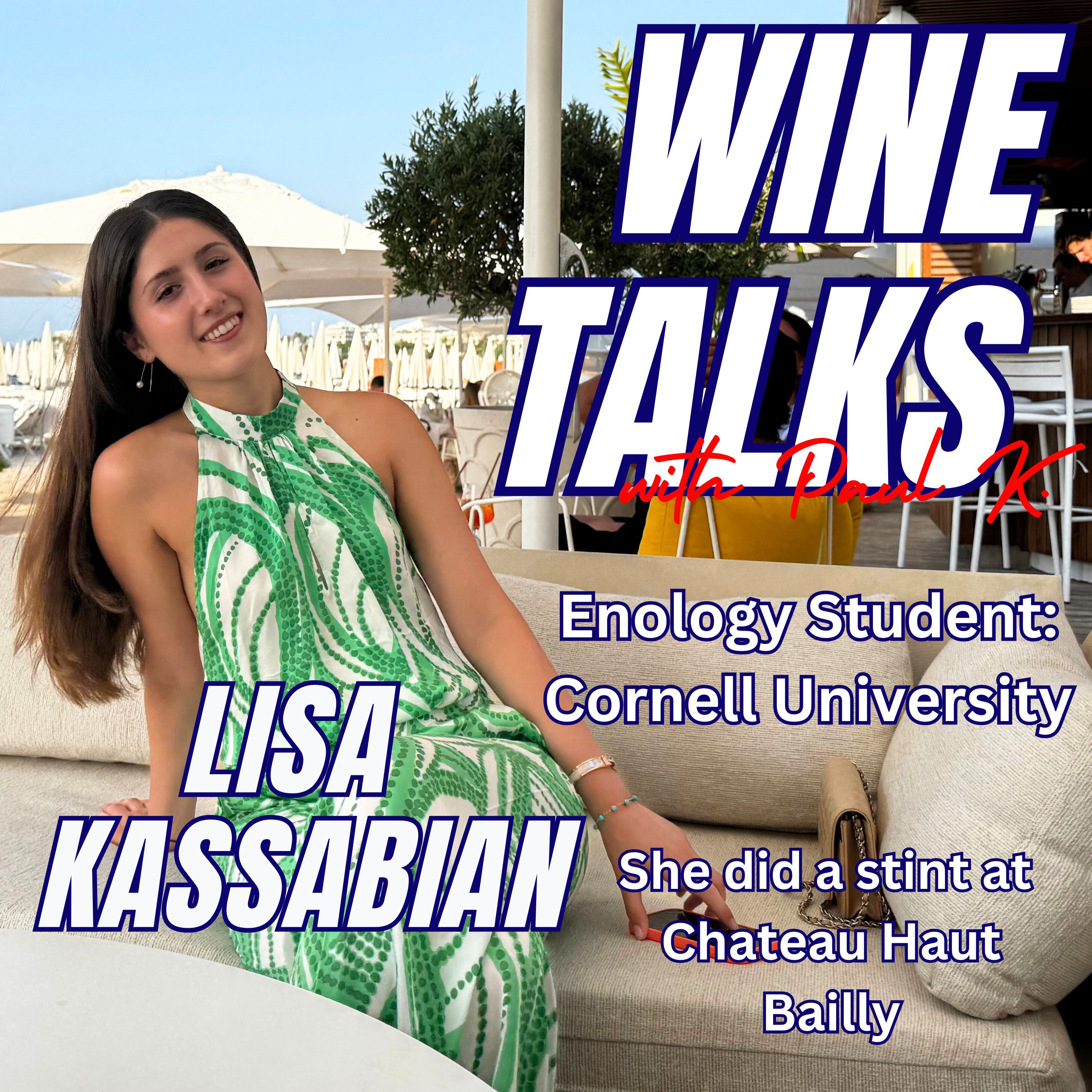
A few years ago, a young woman was interning at the Original Wine of the Month Club. Her internship revolved around social networking, office duties, and one particular job that may have set her career path. Lisa Kassabian was to write the talking points for all my podcasts that featured a woman in wine.
She would research the guest, write up peritnent points, present the to me and together we would redirect or correct. When that work was completed, Lisa was invited on set to hear how her questions worked and how the guest would respond. Maybe I had something to do with it, it would certainly make sense...because eventually, Lisa became an Enology student at Cornell University.
At the University, all students in this curriculum are required to do an internship before they graduate. This is the story of Lisa's internship at the famed Chateau Haut Bailly.
For sure, if you want to know the insights a young wine Enology student might gain from the academic side and the practical side of wine...this is the episode.
Lisa Kassabian never expected that an afterschool “All About Grapes” club would spark a journey from a Los Angeles vineyard to the heart of Bordeaux. In this episode of Wine Talks, you’ll discover how a childhood passion for science—and a hobby vineyard at home—led Lisa from California to Cornell, and ultimately, to an eye-opening internship in France. You’ll gain a rare behind-the-scenes view of the very real intersections between wine, science, and culture, as Lisa reveals how pruning and fermentation chemistry connect to centuries of tradition. Listen closely and you’ll learn what really happens when theory meets the terroir: from tackling grapevine netting and barrel racking to navigating French hospitality, language barriers, and immaculate cellars. Through Lisa’s first-hand stories, you’ll hear what distinguishes French winemaking—the meticulous attention to detail, relentless innovation, and deep cultural ties that set Bordeaux apart from Napa. Ever wonder what it’s like to balance the academic rigor of soil science classes with tasting your family’s Sauvignon Blanc in sunny California? Or how it feels to pour wine at a charity gala in a historic French château? This episode peels back the reality of building a global wine career, from landing international internships to learning the business beyond the classroom, and even discovering which French pastries pair best with your morning commute. By the end, you’ll understand not only the pathways women are carving into the industry, but also why every bottle holds a world of stories, science, and adventure—a revelation sure to inspire future vintners and aficionados alike.
Cornell University
https://www.cornell.edu
UC Davis (University of California, Davis)
https://www.ucdavis.edu
Château Haut-Bailly
https://www.haut-bailly.com
Sequoia Grove Winery
https://www.sequoiagrove.com
Smith Haut Lafitte
https://www.smith-haut-lafitte.com
Château Lynch-Bages
https://www.lynchbages.com
Château Giscours
https://www.giscours.com
#wineTalks #LisaKassabian #PaulKalemkiarian #viticulture #enology #CornellUniversity #wineinternship #ChateauHautBailly #Bordeaux #NapaValley #womeninwine #Frenchwine #wineeducation #vineyardmanagement #winemaking #winescience #Frenchculture #wineindustry #winecareers #winepodcast
0:00 I've always loved science and nature, and I feel like wine, viticulture and enology just pairs both of the science and the wine together. Sit back and grab a glass. It's Wine Talks with Paul K. Hey, welcome to Wine Talks with Paul Kay. And we are in studio today in beautiful Southern California, about to have a conversation with college student Lisa Casabi. And introductions in just a minute. Yes, I am the guy that sold 17 million bottles and tasted 100,000 wines the way all by myself. But that's not why we're here today, because Wine Talk started because of those 100,000 wines I tasted. There's 100,000 stories to tell.
0:42 And today, I'm really delighted and excited to hear from Lisa Kazabian. She is a student at Cornell University, going into her third year of the College of Agriculture and Life Sciences with a specialty in viticulture and enology. Welcome to the show. Thank you. And thank you for having me. You're welcome. Well, you sat on the other side of this studio before, right? You used to write. I used to write the little notes for you about the people who you had on the podcast. And I remember sitting on the couch over there on the other side of the podcast, watching you ask people questions, and now I'm on the other side. It's cool. It's like, what the heck? Yeah. What is he talking about? And you actually. But you were. You. I don't think you were even thinking about the wine trade then, were you? No, I was. I mean, I was just thinking this is such a cool experience, and it would just be nice to apply my sciences into something.
1:41 But this. This adventure is amazing. Actually. I had this idea yesterday because a guy delivered your chateau by you wines, and he goes, is this a bar? And I go, no, but wouldn't that be cool if this, like, setup was like a wine tasting room, and then once in a while there's a podcast going on while people are enjoying their wines? It would be really cool. That'd be fun. Yeah. Well, we'll pour some Chateau Bailly while we're doing that. So why did you get. I know that your parents built a little vineyard in the Valley in Los Angeles and growing Cabernet and Merlot, I think. Right. And was that just for fun that they did that? Yeah, they've always had a little passion for wine and wine making, and they started this little passion project, and it's been growing ever since. We sell about 5,000 bottles, which is so small, but it's growing. I didn't Realize it was that much. Yeah, It's a really cool adventure. And that's what brought me into the wine industry because I've always loved science and nature, and I feel like wine and viticulture and enology just pairs both of the science and the wine together. And like their wines. Yes.
3:02 Not to be biased, but I. I love it. I had to put that out there. Yeah, no, I absolutely love it. So, like, I don't know, this must be on their third or fourth vintage by now. And they're picking the grapes, they're fermenting them. And you participated in most of that. Yes, and I have a bottle after my name, which is a Sauvignon Blanc. And it's an amazing, nice, crisp, easy, drinkable wine. And I think it's perfect for a nice hot summer day, especially in sunny California. You sound like a real wine person. Yeah. Learning to be.
3:42 Is it what it's called? Lisa's blend? I wish. What do they call it? Just Lisa. Oh, just Lisa. Just. Okay, great. Yeah. So we, along the way, which we are, I've tasted the wines, of course. In fact, your dad brought in the first vintage of the Cabernet grown on the property, and he was a little disappointed in what it tasted like the night before. But then when we opened it here in the shop, I go, you know, this is very palatable, you know, particularly for a first vintage from an area that's not known for wine, et cetera, et cetera. And the wine had flattened out. He goes, I didn't realize it would change like that. It changed a lot because of the acid, but slowly then it seems that this sort of interest in enology, you always like science kind of developed. You sat here, wrote some talking points, and I think I deliberately had you do talking points for most of the women that came in here, because women in wine is a very hot topic right now. Right. And winemakers, there's like 25% of all winemakers that come out of college are women. But that's gone up considerably and they're still looking for more executive positions for women in the business. But when did you say, you know what, I think I'm going to pursue this?
4:54 It was my junior year in high school, and I wanted to do something with the science and the nature, and I started All About Grapes club at my high school. And I think that's where it really just took off because I. We worked at the vineyard at my high school and I brought in so many different things that were grape related products like Concord Grape Jam and just grapes itself and juice and this and that. And I think that's where it really just took off, because somebody had mentioned that you could use grapes not only for wine, but also for, like, you know, topical cosmetics and this and that. And I just, I just fell in love with the idea of science and using grapes for wine and just everything. Just. I was a member of the backgammon club in high school and like the old movie club, and here a young girl starts the All About Grapes club. Yeah, they didn't allow this. I mean, they allowed this because you didn't say it was all about wine. You said it was all about grapes. It was. It was all about grapes. Yeah. You're not telling me that you had little wine coolers in the back at the meetings or anything like that? No. You know, it's funny, you said that about the curative and the health benefits of, of grapes in general, which is in the book in front of you, the French Paradox. But, you know, you. Were you getting it? When we get to France, we're going to talk about Smith Old Lafitte, because they have a very famous cosmetic brand. Right. That came from there.
6:27 But. So when you went out to find college to decide where you're going to go and your brother had gone to Cornell, you applied. Did you only apply to enology schools or did you apply? No, I applied to a bunch of other schools as well, but the three schools that really spoke to me were all related to viticulture and enology, and I got into Cornell and UC Davis as well. And I mean, I picked Cornell because my older brother was there, and it was a familiar school to me, but I think just vidiculture really spoke to me, and I honestly would not think of another school to be in. And you went to Napa a couple times and sort of talked to some people, essentially through Sequoia Grove. Yeah. And would that. Was that interesting? Yes, it was very interesting to see just everything, like, from. You could see everything from the start of the grapes, the vines, all the way through to the actual product of the wine. And I just, I loved seeing the whole entire process being able to see and even implement everything into it. So I, I.
7:44 So you went, you got accepted and you got excited. I remember, I remember the day. Yeah. The phone calls, texts Lisa got, and you got there. What was your first. Were you intimidated? Was it, Was there. Was the science too much? Was it, Was it what you expected? It's okay for it not to be what you expected. Just wonder. Your initial Impressions were when you got there, started this thing. I didn't realize how much of science was actually applied into the enology and the viticulture side. So I was just a little bit like, whoa, there's so much in the sciences. But it's amazing learning about all these different types of science classes and all these different stuff.
8:30 It's cool seeing how much applies into it. So you studies, you're studying fermentation sciences. Yeah. Agriculture? Yeah. Like soil science, plant science, like orgo, chemistry, bio, all those types of classes. And so was that what you expected? Were you like, I don't know, I want to do that. I should have gone into architecture. I mean, I knew there was a lot of sciences into it, but I didn't, I wasn't really expecting anything. I just, I, I knew science was going to be in it. But, you know, it's interesting and I've brought this up many times, there are two paths in this industry and then there's the hybrid of the path. One path is what you're doing and then now you became a hybrid of that path. But the other path is, you know, these people start in the cellar, washing down the tanks and cleaning the vineyard and I mean, cleaning the winery. And then they go in the vineyard and they don't go to any school for it. Right. To me, that's a really interesting dynamic for this, for an, for any industry. Like, you probably couldn't do that with semiconductors because you'd have to know something about computer science. But you can with wine and you can make good wines on, on both paths. One of them gives you a more worldly look at it, you know, more detailed look of the science and the chemistry, etc. But the other one is like, you know, the way they made wine all the time. Right. It's such an organic product. Right. So I want to know at Cornell, at school, and you're in New York,
10:04 right? Is it New York? Yeah, yeah, I forgot. How do you get any practical experience on what is going to go on in your career besides classroom and learning about the chemistry? How do they sort of prepare you for the idea you're going to be in a vineyard? Well, I mean, our classes are more so catered towards that. We have last year I viticulture or vineyard management class and I learned about netting, pruning and all these different types of subjects that are involved in vineyard management.
10:45 And then I also took a bunch of wines classes like Grapes to Wines with Gavin Sachs. And it was, it's a cool place to learn about all the different molecules that are involved in the winemaking process. And in one of my other classes, you know, we learned about how much fermentation actually exudes out carbon dioxide. So I feel like with all these little different, detailed things within the class, we learn about wine. And then outside of class, it's at our vineyard, at home, or just, you know, searching up different types of things. If anything comes to mind, it's. Well, the reason I brought that up is like, you know, business school. Business school's great.
11:40 And what I find really interesting in the wine trade is that many, many, many, many come out of their master's program at Harvard, and they come out of Cornell, they come out of Columbia, and then they apply to it, they try to apply their business school methods to the wine business. It never works. Right, right. And so I'm wondering then what you're learning so far, and you're going into the third year, so you've had enough under your belt. And understand when you got to France, and we'll tell the listeners in a second what happened, that there was a huge distance between sitting in the classroom and going in the vineyard. Let me explain to the listeners real fast. Lisa worked here. Then at Cornell, they said they want you to.
12:24 They want you to have an internship. Right. Or is it required to have an internship? Yeah, it's required to have an internship. Before you graduate or like at some point. Yeah, before you graduate. I mean, anytime before. Yeah. And so when we heard this, we were going to find a place and it could be anywhere in the world. Right. They don't really care. Yeah. Why did you, why did you want to go to France? Well, because your mom speaks French. Yeah. But also because France is a well renowned and well known winemaking region. So I thought it would be perfect. I mean, I could live there, so it's okay. I just wondered because there's so many places to go. And Napa, of course, in California, which is, and I think one of the big differences between the two. Let's just say California would be the New World versus Old World being New World being Australia, New Zealand, America, South America. Those are all what they consider New World appellations. And then you got this history like that's been developing for hundreds of years and the wine trade in France, and that's why it's so inspiring. Right. So we set out to find you an internship, Right? Yeah. And you, you researched a lot. I, I did, I did. And I mean, you introduced me to Veronique and her team at Chateau Haute Bayou, which was an amaz with such an innovative and wonderful team. And I want to thank you again for. For
13:54 that introduction. But it. I mean, I honestly wouldn't have asked for really anything else, because as you were saying before, that internship really did open my eyes to how much Cornell preps you for the real world, because everything that we were doing in the vineyard or in. In the racking as well, in the cellar, the vineyard really just like, it was basically what I studied at school, which was so amazing. That's pretty much what the question. But let's go back to. For the.
14:34 For your. For your fellow students and anybody that's listening, that has a child or a. Is going to think about going in that career you set out. We. We sent a bunch of emails out. We didn't even know if. If wineries had internships, particularly, you know, in June, which is not. There's not a whole lot going on. Right. In the winery. Right. And you. You put a fair amount of work into trying to at least send letters, you send questions. You send all kinds of things. Right. Did you. I don't. Did you send anything to Napa Valley at all? No. You did. It's just all France. It was all France. I love it. I looked for Napa, but I. I thought it would be such a. More interesting. Yeah, it would be way more interesting. And then when. When we got the offer, when. When Veronique responded, were you scared at that moment? A little bit, yeah. Yeah. I was nervous to see how. I mean, I would be there for my whole summer. I was like, oh, my God, that's so much. But, yeah. But now looking back, I want to go back. Yeah, of course. Yeah.
15:41 I desperately. Sandra and I desperately tried. We started a big project here in Monroe, and there's no way I could leave because the contractor was on a billion questions. And so I felt. I felt cheated that didn't get. Come visit you guys while we were doing this. So we'll have to do it separately. A different occasion when you go back. So you get to France, your mom went with you to get you settled. And what was your first like? I mean, look, you're in a foreign country. They're speaking a foreign language. You're exposed to the language, or you didn't know the language, and you're not sure about what your education brought to the table at this point. Right. And you're probably a little nervous standing there with these people.
16:21 Oh, I was so nervous the day before. I was like, oh, my God, what am I gonna do? Like, I don't even speak their language. I was so nervous, but actually getting there the first day, even with the language, barri barrier, I felt so welcomed, and they were all super nice, and I got a tour of the vineyard, the office, everything, and everybody just had a welcoming smile, and I. I just felt like I was at home. Well, that's great. Yeah. Well, she. She was the reason. It was because of her demeanor, Veronique Sanders Van Beek, that I even suggested that. Because she just wanted a woman in wine. Right. And her famous quote, which you probably heard a few times, he had the audacity to hire a woman. And that was about the owner, who I think the son lives in la. Right, Right. In Santa Cruz. In Santa Cruz Chateau Bailly. So I thought, okay, this might be a great match because she is very welcoming. And one of the comments she made to me after we were done on our podcast, and I'm going to start producing some reels out of that, was she goes, I felt very comfortable having a conversation with you, which I'm not trying to pat myself on the back, but the idea, I thought, wow, she felt comfortable. And this is. And I didn't know her English level. I didn't know anything at that point that this would be potentially a good match. So. But one thing that I think is very funny and ironic is one of the things you told me when we were looking into doing this. You said, well, I don't really want to be in the vineyard.
17:54 And the first thing they did was put you in the vineyard. Because I didn't know how much I knew and how much they were expecting of me. I was just nervous about. About that. And actually now going through with the vineyard and going through with everything, I realized there was really nothing to be nervous about, which is really good because Cornell had prepped me and I was ready. But also, they were also very nice. What was your impression of Bordeaux? Now, I'll tell you mine. Before I went, you're thinking, this is rural, you know, countryside, and that's all it is. And you go from winery to winery, and it's actually not that.
18:43 It's a pretty big city. Yeah. And how did you find the city? Do you find it friendly? You find it food, the whole thing? Yeah, it was. It was really cool. It was massive. There was a bunch of different stores, a bunch of different restaurants, and it was like a mini Paris. And I wasn't expecting that once I got there, I thought it was going to be like that, like, more so rural and vineyards kind of Like Napa. And I got there and I was like, wow. So, I mean, everybody there were. They were very welcoming and they're very nice. There was a little hairdresser right below our apartment, and they, they were very nice. We. My mom went there to get her hair done, and I went there to get my nails done as well. And they were just English, no problem at that point. Yeah. But they're, they're. They were super nice. And I feel like that goes with everybody there as well. You know, the, the, the. I went there in 1993. I went to Bordeaux, the biggest wine tasting event of the world at that point. I was so angry that I couldn't speak the language. I was so angry I couldn't communicate because English was not nearly as prevalent as it is today. Right.
20:00 And your mom and I were discussing how we want to work on our French, and her French is much better than mine, but she want. We don't want to work on our French and they want to work on their English. Yeah. So there's like a little bit of a push pull when you first meet people like what you're going to do. Right, right. But. But I was so angry at it. I. I swore I would never go back. And then my father speaking French. I decided before he passed away that I would learn so we could just chat and remember his childhood, because that's when he learned it. And now I can't wait to go back and have become this Francophile because there's something so amazingly interesting about the history of. Of that part of the world. Right. How did, how was your French? No problem.
20:45 I mean, I, I learned a little bit. Do some words out there. Right, right. You know, because there is a. There is a hybrid language which is like, you throw. You speak English, we throw some French words in there. Vice versa, you know, French with some English. Right. But are you inspired to possibly learn now? Yeah, no, I definitely am. Especially after this. I for sure am. Because for me, when I go, I don't want to leave because I don't. I don't want to ever want to have to give it up. Right. And I want to continue practicing. So you know what I did yesterday? I went to chapter because I. And I said, write me a lesson. This is my level of French. Write me a lesson. I want a vocabulary lesson. I want grammar, and I want to be able to speak, you know, so wrote this whole thing. So hour one, then I did hour two, and yesterday. Tomorrow I'm going to do hour three. It does the whole thing for You. It progresses. I don't have to pay somebody. It works really good. It looks really cool. It really works. Oh, my God.
21:43 You're in the vineyard, you're working in the winery. And it sounded like they put you through all kinds of things, not just vineyard management, but you went into the office. You went into the winery itself. What did you do in the office? And what did you do in the winery? So to start with the winery, I was part of their racking. So we clean the barrels, move the wine from the barrel into the tank, and then back into the barrel. And I was helping out with that. And then also in the office, I helped out with their charity event that they had, which was called Back to Care. Oh, you did. You worked on that? Yeah. Wow. And I just helped assemble some of their little parting gifts or. And the speaking notes as well, and just here and there, whatever they needed help with. And I also helped with their hospitality. So they had a bunch of industry tours, and I helped set up for the little dinners and put, like, the silverware in a. Very nice and precise. In the setting.
22:57 Very important. Yeah. And. How was. How was your opinion of this is what amazed me about my daughter Lisa, when we went and visited her at pastry school. How immaculate the French keep their kitchens, their. The wineries, and of course, the winery requirement because of bacteria and yeast and everything floating around the air. Right. Was that revealing to you? Yeah. Even just through the. Through the tours, everything was just so precise. It had to be like, all in a straight line and it was all very precise. And then in the winery as well, they had little hidden cupboards for the water or for the electricity. And the tanks itself were under all these different panels to make it as if there was nothing there. And I just thought that was so cool and how their attention to detail was amazing.
23:57 Do you think that's a major difference in cultural exchanges between American America, which I'm not dissing America, of course, but that there's. You see a stark difference between the way the cultures treat those things. Yeah, no, I definitely did see that. Can you imagine a kitchen, a restaurant in America? Well, there are many, but I mean, a typical restaurant in, like Los Angeles have a kitchen is spotless as they are in France. Yeah. I mean, both. I think both can get. Can do it. Yeah. And get equally as spotless. But it was. It was so cool walking through the winery and everything was just so tucked away and put away. It was. That winery, for the listeners, is touted as one of the great innovations in wine trade. Let's get in the wine business a little bit, see. See if we can peel some things back. You know, the industry is in a difficult period right now and innovation is this big word, right, that. Then I even interviewed the professor of innovation and the business school of USC to get an idea from him and he had. It was very difficult to explain what in the wine trade would be considered innovative. Like you're a student. Would you think putting wine in a can is an innovation? Yeah, I mean, I suppose from a definitive innovation is a good innovation. That's the difference. You don't have to answer that bag in the box, you know, these bladders. Is that a good innovation? It's innovative. Is it? Does it advance the needle of the kinds of things, you know, Chateau Bailly
25:31 does? I don't think so. But what she did, that winery is extraordinarily innovative. Right. So when they did this charity event, which is a famous bike ride, how much? Been a few years they've done this. I think three or four years. And they raised a lot of money. Yeah, but did they do it upstairs on top of the barrels? Is that where they were on top of the tanks or the one underneath. It for the event? Yeah, it's like the dinners or whatever they did. Yeah, they did it in their old winery. So it was. Oh, really? It's now turned into like a boutique and a reception area where they have massive dinners and they had hosted it there. Oh, man. I thought because they got that cool winery and they got the glass tasting room and then they got. You walk around the new winery and then they. You can have events underneath and on top. On top of the barrels and everything. Yeah, they did. Do they have done events over there? But this event, they didn't. Huh. So it was the other building and. In the back across the. The way from the chateau. Yeah. Interesting. Okay. Well, she, she's. And then if. What's interesting to me about Veronika is that, you know, her husband is the director of Chateauguy.
26:46 Score. So, you know, that's. I wonder. Okay, let me ask you, what do you think they talk about when they get home? I. I have no idea. I was actually thinking about that. Yeah, I didn't. I have no idea. I think, you know, I would go home with Auntie Sander and we, we would continue to talk about what happened during the day. And then that got, you know, like, wow, we're doing this 24 hours a day. But, you know, wine. Let me ask you this, this different. Do you feel like there's A difference in the lifestyle of wine in France, in the lifestyle of wine in America? Probably, yes. I don't know how to pinpoint and what to pinpoint it at, but.
27:28 Probably yes. It just seems to me that at least in the Napa Valley and I had a conversation yesterday was from Paso Robles, and it was a little bit different viewpoint of the business, but seems like so much of the Napa Valley is wealth that's been created elsewhere. And then they come and we want to buy the lifestyle of the wine business. Right. And then we realize how hard it is. Yeah. And then. But France, particular place like Chateau Bay, where she's been running it for like 20 years or something. Right, right. Where it is. It is the lifestyle. It is life as part of the culture of the business. That's the part that's romantic to me.
28:09 Yeah. No, I really like that too. Especially that everybody's just so into it and all the workers, too. Everybody just loves it. They love the lifestyle. They are really just drawn to it. Is there any conversation about the current state of affairs, the current state of business in France about wine? I Don't they really discuss that. No. They want the harsh reality to settle in on this. Either they didn't want to say it or I didn't ask. I. I also didn't ask. So what are they? What's she making now? They have the Grand Vent, which is the Chateau Bailly. Right. And then what else do they have? They have the. The Grandfant Chateau Haute Bailey 2, which is the one lower. And then HB and. And they have those three lines.
29:01 So you guessed it. They stopped making the pop. That switched. They renamed it. They renamed it to hb. Oh, they did. Okay. And then Lepard. It used to be Lepard and Now it's to HB2. So they just made it. What the. Obviously, the grand vine is the best stuff and the best barrels, whatever. They do the best vineyards. What's by you too, it's the one. A little bit lower. And they also make very good wine, but it's with the. A little bit lower. But is it the vineyard difference? So sometimes when I think it's been happening in Bordeaux, France lately is they're not creating what they call second labels, even though it's got Roman numeral tune next to it. But they're actually creating a new brand, which is a diff. There's a difference between that and what we might do in America, which is.
29:55 Well, we have our Caymus and we have the Caymus Blah, blah, blah. And that's usually in some cases they go through all the barrels and the best barrels they put in the grand vault and then the second barrel. So it's really a second label of the second tier of quality. And I think with Obail and other chateau in Bordeaux they're actually creating a new brand that represents something else besides just the second level of wine. Like an actual sipage difference or Malone, you know the different cuvee or grapes from a different part of the vineyard or grapes that are only five years or six years or seven years old, the vineyards rather than the 25 year old vineyards. Do you know the differences between those wines yet? I don't know. I don't know for sure. I'm pretty sure it's, it's the not as desirable graves. Right. So it's like because they'll go through the barrels, they'll taste them all. In some cases they'll say well we're only going to make, you know, 25000 cases of the grand vault and then the rest is going to be whatever. Right. So the La Pop then, which means the Pope as we know your French is coming along.
31:08 It is. It came from that vineyard you said you worked in, which is the other little chateau they have. It's got like a six bedroom hotel or something. Right. And there's a, there's actually a Pope bronze statue there in the, in the chateau. Oh, I didn't see it. Yeah. So I wonder if that's where the grapes were from that area. From that vineyard. Yes. It's about like a one or two minute drive from the Chateau Haute Bayou vineyard and they have their own little parcels over there and it's, it's like the hotel and you look out from your window from probably your room and, and you just see the whole vineyard. It's, it's magical. Did you go into the little town right there? Yes. Little cheese shop and a little bakery right there. Yeah. Do you like that part of the lifestyle? Like you can go down the street to Boulangerie.
32:04 Yeah, Fromagerie. It was, it was nice. In the morning before I got to work I would, we would go to the boulangerie, get my lunch and then it be like a two minute drive down to, to work and then I would start my day. It was, it was such a nice life. So did you think like why don't we, why isn't this in America? Why can't we go down the street and have a decent baguette? Did you think that I did think that, but, I mean, it's. It's different. It's different. It's different. It's all part of, like. It's all built into the system. So when you went touring, since you're there six weeks, where'd you guys visit? We went to Chateau Smith Haute Lafitte. Oh, yeah. It was beautiful. The Cathiards. Yeah. Mr. Cathiard, I heard. Yes. And then I saw him.
32:58 He gave a little bit of a tour at the beginning next to the barrels that they were making. And then I also went to Lynchbaj, which was spectacular. Pretty fancy. Yeah, you fancy, huh? Yeah. I saw them do the. It was a whole gravity flow so they wouldn't use pumping over, and they brought all the grapes into, like, a little tray, and they, like, lifted it up, brought it over, down into the barrels. It was. It was cool. And then I also went to Chateau Gisco. Yeah. Yeah. I've not been there.
33:41 It was beautiful. Yeah. You have to go. It was your husband at another. Another time. Yes. Alexander. Alexander. So did you think you'd ever be saying, like, well, they're doing a gravity flow, you know, here, and they're doing pump over here, and, like, was that. You say it with such confidence. It's amazing. Yeah. I mean, you know why I was so nervous getting into the internship is because I didn't know all of this, and now coming out of it, I. I feel like I have, like, a little part of my heart there. That's great. Yeah, you do. It's not like you feel like you do. Yeah. So that was actually part of the leading question earlier, which was how stark a difference was getting into the field, getting into the bowels of a winery. I mean, winery is not just making wine as business and charity events and all those kinds of things that go with it. How different. How real did that feel compared to the academic side of it? Like, you show up and you're like, wait a minute. You know, we're in the classroom. Yes. We made. What was that grape you guys made wine from that was frozen before? Oh, Riesling. Yeah, it was a Riesling gravy that was like frozen juice. And yet, I mean, that's clearly not what you experienced in. In France. So was that exciting? Inspiring, intimidating? Which maybe all of them, honestly.
35:02 Yeah, it was all of them. I was honestly intimidated and nervous and also excited. Very excited going into it. But now, after being through the whole entire internship, I. I look back and I'm. I'm so happy. And. And so. Yeah. And the Food. What'd you think of French food? It was great. I had. I went to the restaurant called 1925, and it was so. It. It was so good. You were there six weeks, so you had to experience. Yeah, we. We went. I think we went to a new restaurant every single day. Like, so, like, you go to Armenia and, you know, at least when we first went, everybody had kebab, everybody had tomatoes, everybody had vegetables. That was like the cuisine period. And it's not like that anymore. But in France, you know, if you stick around long enough, you're going to have very similar meals of very similar places. Beef bourguignon, and there's going to be escargot and all the rest of the things that are typically French. Right. And so sometimes you come away going, I really could go for a hamburger right now, but. Yeah, but what was so special to Bordeaux is the foie gras. Yeah. Did you like that?
36:17 It was okay. Have you had it before in America? No, it was illegal. If not, maybe still is in California, probably, which is ridiculous. But I love it. I. I tried it and I. It was. It was nice. I just don't know. I wouldn't gravitate to it on a menu another time. Yes. I have tried snails. They're really good. But what's a little pastry that's actually known for and known in Bordeaux is the canel. Yes, the canele. And, yeah, it's like a. Maybe like this big, and it's a little bit domed in the inside or on the top. It was really good. Is that the little pastry that's like a little mini tower?
37:02 Yeah, yeah. That's very famous. Yeah. You enjoyed that? Yeah, it was pretty good. Yeah, they're pretty good. But there's probably places. So when we go. When I go to Paris or Bordeaux, I listen to podcasts of chefs and things and where they go. Right. And so. And that gives you. This is another thing that's interesting about European culture, that. That Americans don't have regional and very specific pastries and breads. Right, right. We don't really have that. No. But that's. So I'll give you a little insight on why that is. The French and the Italians and most of Europe protect those regionalities.
37:45 Right, right. So Bordeaux wine, you can't grow Pinot Noir. Right? You can, but you can't call it Bordeaux. In Burgundy, you can't grow Cabernet. You can, but you can't call it Burgundy. And same with cheeses, same with butter. Right. And I think that does a Lot to protect the culture in America. You can get Texas chili in New England, and you can get New England clam chowder on the Southern. Southern California. Right. And that we've kind of blurred the lines. So here's the interesting thing for me. The French love this idea of the New World. Yeah. Because they can come to America and do whatever they want. Right. They can grow Syrah, they can grow Pinot Noir, they can grow Chardonnay in places that they wouldn't expect. And they can eat whatever they want. Whatever they want and feel whatever they want. But I'm jealous of the fact that they protect their culture. Yeah. And that's why I want to go back.
38:37 It was. It was really cool seeing that. And also, we went to the. Sorry. We went to the Atlantic coast and we tried the Dune Blanche. It's like a little puff pastry. And it had like, a little. It had like a vanilla and a bit of a rose water type taste for the inside filling. And it was. It was so good. You have to try it. That's the. Because you're bars guy. Yeah. And you like rose water. Yeah. It was kind of like the bone cheek. That was the most disgusting thing I ever tasted when I went to Sandra's first Christmas dinner. Really screams disgusting.
39:18 Maybe it was it rose water or it was almond something. There was something else, but. But it was so good. You have to try it. And so in Paris, what did you find in Paris? We're actually out of time. What. What did you like about Paris? Is that you've been to Paris before, though, right? Yeah. Yeah. It was just a weekend trip because the weekends I had off, we went up to Paris and we just walked around, went into different restaurants. Nothing really is coming to mind right now, but nothing like, spectacular. I want to go back to this because having this podcast with the clad stripes. When I explained when you walked in, just for the listeners, the Clatstrops have written four or five books on the wine trade, but her last book was on the last Empress of France called.
40:04 Her name was Eugenie. And you went to Chateau Guiscord. And we'll call this the last subject. And so I brought that up. I told them, I said, you know, my intern was there and she went to Giscourt and they were talking about Chateau, talking about Eugenie. Then I realized there's so many connections between the culture of France and she had a lot to do with. With Paris. And I'm going to encourage you to get the book and listen to the audiobook because much of what you enjoy in Paris is because of her. Wow. This unsung woman of French patriarch that literally designed Paris. Wow. And changed the way it was perceived by the world was done by this woman. And what did they tell you at Chateauguy Score about her? Do you remember? Yeah.
40:56 They said that on her way down from Paris to beat she. They made Gisco the castle that it is now to have her come and have a little stop on her way down to Viaris, which is also a very beautiful place that you should go to. Did you guys go to the hotel there? Yeah, her place. That was her house. Yeah. Isn't that amazing? Yeah. I didn't realize that before until I had gone to Jisku and I learned the story. But everything's. You should go to beauty. It's. What I did was I told the way this book reads is very seamless. You can just read it without stumbling. And. And I kind of liken PD Cladstrup, the author of the book, to Gertrude Stein, who is a famous art and author critic of the 20s. But the way this book reads, you can either been to Paris many times and know what she's talking about because of what Eugenie did and she. The way she explains with it, or you could read the book and then go to Paris and go, wow, this is what she did. Wow.
42:07 That's how important what this woman's contribution was to. To Paris and France. And then she got exiled. Wow. And lived her life in exile after that. They ran her out. Did you go to. I'll finish it. Did you go to Plus Concord, which is where the Tall Tower is? And. And Van Cleef is in there and the Ritz and the Ritz Hotel is there. It's all in this big circle. I don't. I don't know. You've probably been here, but I probably have. I just don't. It's not like coming to mind. So this story, when she ran out, there was like 60,000 people. You're talking about 1890. Something like you talk about a long time ago. Wow. Yelling off with her head.
42:47 And she's holed up in this room. And they had to get her out and she ended up in Spain and then left her life span in exile. But. And I. And when you go to Paris, you go to Concordia. Oh, my God. This is like history standing in the middle of this amazing place. And. And you did in Chateau Bailly and in Bordeaux and then rounding out your. Your, Your career or beginning your career in this industry. Yeah. It's been really fun. To hear your story. Thank you. And I. And I wish the best in this industry. You're. You're. Every day is something new in this trade, and it is really fascinating to live.
43:28 Yeah. And when do you go back to school? I go back in two weeks. And you're just going to tell stories? Yeah. Let's just wrap up with it. You have to write a paper. What do you have to. What do you have to tell them? I have to tell him what I did and what I learned from it, and I'm in the process of writing it right now, but I have so much to write about. It's great that it's fresh in your mind. Yeah. Well, thank you for coming in and taking the time to talk to us. Thank you. I hope we inspired a few young, promising vintners to be, you know, to hear your story and inquire too. Yeah. Thank you for having me. You're welcome. Cheers.