

 Apple Podcasts

 Spotify

 Youtube Music

 RSS Feed
 YouTube
 Pandora
 iHeartRadio
Navigating Change in the Wine Industry with Bernardus Winemaker Jim McCabe
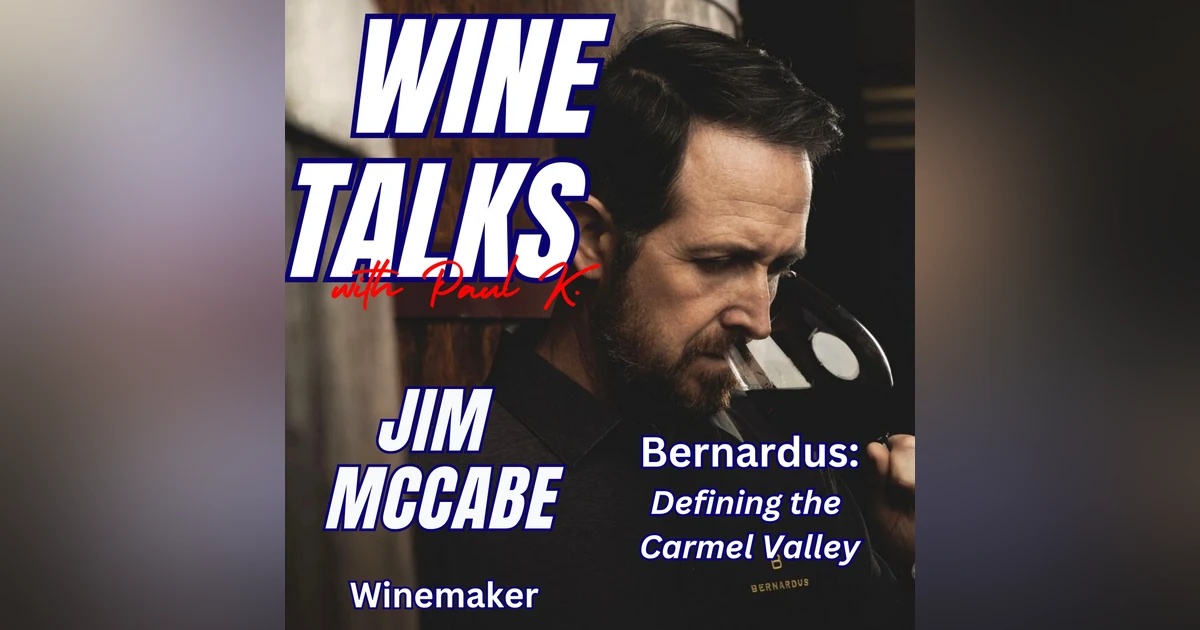
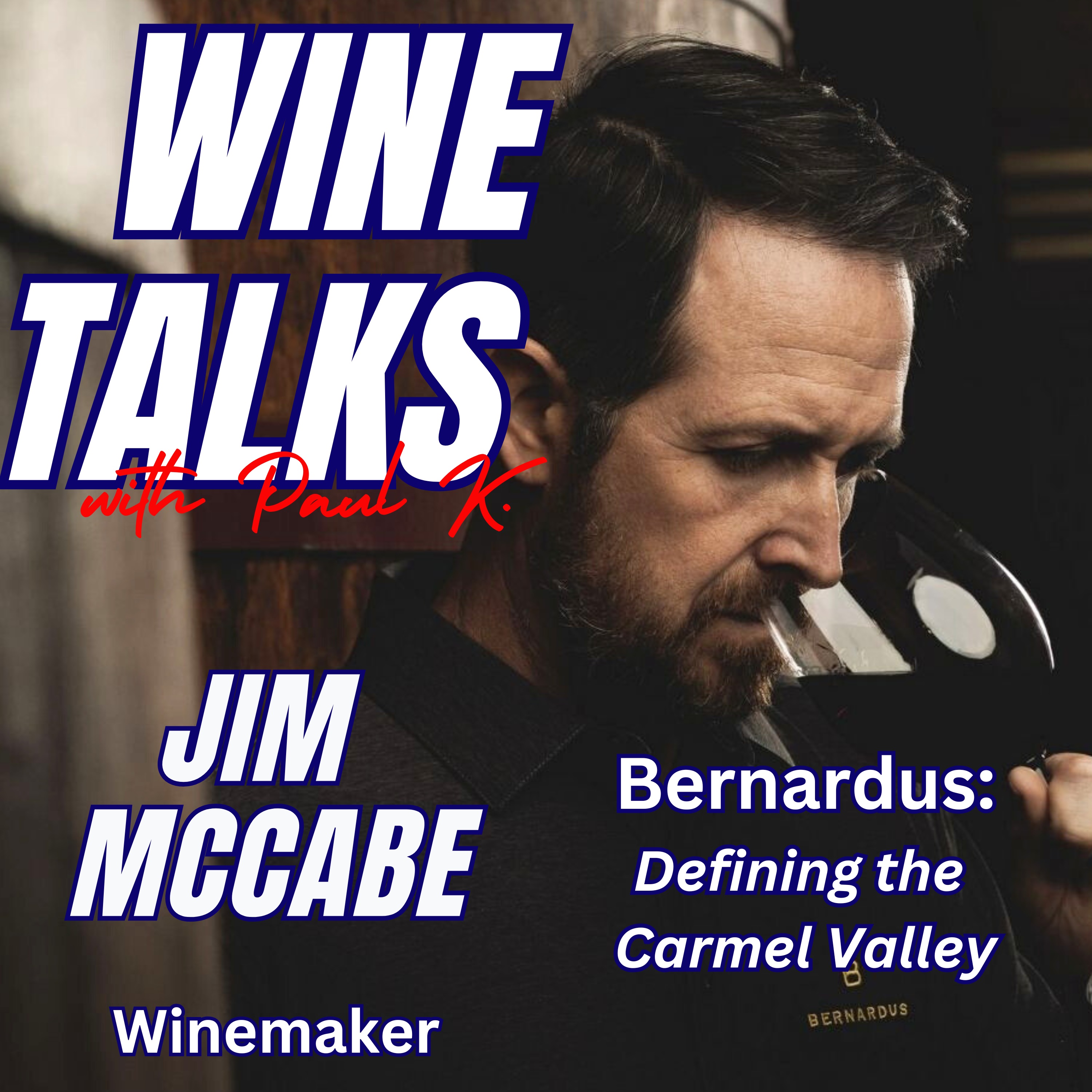
The wines of the Monterey Peninsula, and particularly those of the Carmel Valley, are exquisite. It is always just so interesting to have the some grape grown in different parts of the world and be so different...soely on the location and environmental influences of the vineyard.
When tasting Bernardus wines, you taste complexities entirely different than anywhere else in California. These wines are something special and Jim McCabe is responsible.
I also had to alert him to the famed folk guitar store, McCabes in Santa Monica.
You might say Jim McCabe’s side hustle—building guitars—makes him a craftsman twice over, but it’s his day job as winemaker at Bernardus Winery that will have you tuning your curiosity to new frequencies. In this episode of Wine Talks, I invites you to uncork not just bottles, but the entire lived experience of crafting wine in California’s stunning Carmel Valley.
You’ll learn why great wine isn’t just about the grapes, but the ebb and flow of history, land, and a willingness to embrace both tradition and careful, gradual innovation. Jim doesn’t just talk barrel aging or fermentation science; he brings you to the heart of winemaking’s enduring mysteries—the art of blending picks from different harvest moments, the challenge of warding off smoke taint during wildfire years, and the ever-changing dance with nature that means no two vintages are ever the same.
What does it take to draw younger generations to honest wine when technology and taste are shifting faster than vines grow? Jim and I candidly dissect the battle between old-school storytelling and the rise of social influencers, while reflecting on the timelessness of grassroots, word-of-mouth enthusiasm. Along the way, you’ll pick up on the slow, patient work behind the scenes—why relationships with grape growers matter, why incremental rather than drastic change is key, and how history and tradition shape every bottle.
By the end of the conversation, you’ll come away with more than the technical notes of Bernardus’ famed Pinots and Chardonnays; you’ll understand the emotional charge that a simple sniff of a great wine can trigger, and why, whether you’re a seasoned sommelier or new to the wine world, this is a craft that always keeps you guessing, learning, and savoring just one more glass.
#winepodcast #CarmelValley #MontereyPeninsula #BernardusWinery #PaulKalemkiarian #JimMcCabe #winemaking #wineindustry #boutiquewineries #winemakerstories #winehistory #vineyardmanagement #wineinfluencers #socialmediawine #SauvignonBlanc #PinotNoir #Chardonnay #winetourism #winetasting #winetrends
0:00 Ultimately, if you have a really good glass of, you know, Sauvignon Blanc or Chard or Pinot that we're making, I want that to draw the people in. You know, the messaging can be difficult. When we're tasting with the younger kind of the Instagram influencer types, it was great to see them go, like, maybe not be skeptical, but be friendly, but then just taste the wine. And then they're like, oh, okay, I get what you're trying to do. Sit back and grab a glass. It's Wine Talks with Paul. Kate. Hey, welcome to Wine Talks with Paul K. And we are in studio today about to have a conversation with Jim McCabe of Barnarda's Winery. Introductions in just a minute. Yes, I am the guy that sold 17 million bottles direct to the consumer and tasted 100,000 wines along the way.
0:47 And more importantly, I heard a hundred thousand stories. And that's what Wine Talks is about. Tell the stories about the wine trade, the backstory, what's going on behind what you see in the stores. That's why we're here Today with Jim McKay. Welcome to the show. Hey, Paul, thank you so much for having me. I appreciate you taking the time. Well, this is. This is what I do, man. This is. I'll talk to anybody that listen to me. As my mom would say, you know, I was going to say when you came in this morning, you're a luthier, you make guitars. Yeah, it's kind of my. My side hobby is, you know, during co, I needed something to do because I couldn't go out and do the. The normal stuff. So always, ever since I was a little kid, I kind of wanted to build a guitar. And I finally said, you know, what, if not now, when? And that's kind of stuck with me. So when I'm not at the winery, you know, when they let me leave, I go home and go up to. I have a little. Little wood shop there. Let the shackles off you and. Yeah, when they. Yeah, when they take the shackle. No, I have one of those kind of like those collars for dogs.
1:42 Yeah, it starts beeping if I get, you know, too far away. Yeah, yeah, yeah, yeah. So wait a minute. Where are you staying while you're here? So I'm staying at a place called Hotel Amarano. It's in. In Burbank. Yeah, A nice, nice little place near New War. Say, the. The most famous folk guitar shop here in Los Angeles is McCabes. Well, hey, Jonathan, I gotta go. Paul's been nice. Yeah, yeah. When I was Playing the banjo. Back in those days, I lived in the beach area and I drive up the coast to Santa Monica. It's right near the ocean of the Pico. And it's just the hoot. It's like a hoot nanny. You know, they would have these concerts in the back with the steel chairs, and I would go in there and I. When I played the banjo, I played a lot. And I could play, you know, I wasn't, you know, it wasn't skilled at it, but I could play it. And you go in there and you pick the banjo off the wall and just start picking a song, and then some guy will come in and grab a guitar and just start playing it. Yeah, that's neat. It's so fun. That's like that, that language between musicians. You know, you can play a few chords and then someone can hear that and jump in and. Yeah, and the Luther there, he was there forever in his long beard and. And he had this tuning fork up above here, and he pulled a string and then you tune the guitar. It was great. It was great. Yeah. So you should, if you have a chance, you really should check it out. But that's not what we're talking about here. We're talking about wine. But so Bernardus is in Carmel Valley, which is kind of interesting because, I mean, the Monterey Peninsula is great for wine, great for Chardonnays and Pinots and now, of course, some Bordeaux varietals. But you don't see a lot of Carmel
3:15 Valley designated wines. How many winers are on there? No, it's a. It's a relatively small kind of wine community, I think in the general Carmel Valley area. We're probably the largest winery at about. We do 50 to 60,000 cases a year. So we're, you know, pretty good size, but. But not huge. You know, there's some other kind of smaller boutique wineries out there, a couple of new ones, too, which is always exciting to get some. Some younger folks in and opening wineries. So just in. Just in the kind of Carmel Valley area where we are, there's. There's four or five kind of smaller, smaller wineries. Is there a wine trail? Like, if I was visiting, like. Well, I told you we were up at the Concord Elegance a few years ago. Can you go. Just go visit wineries? Yeah, yeah, yeah. There's. There's a bunch of cool stuff to do in the Carmel kind of Carmel Valley area as far as wine and tourism. Yeah. Besides golf and, and the, the amazing cars you see, especially during car week. Yeah. Yeah, there's a. There's a bunch of tasting rooms in Carmel itself. If you've ever been to Carmel, it's this kind of cute little beach town. Really cute. Yeah, Cottages, some N. Was a couple great restaurants there. But, you know, there's also the wine presence there as well. And then if you drive kind of southwest, you get into Carmel Valley and there's some really great up and coming small wineries there that are doing cool stuff. Especially up on. There's like a little ridge above Carmel Valley and they're planting vineyards up there.
4:46 There's an old Talbot vineyard there that's probably the first near planted. And they made some really great Chardonnays. Hans up there now. Hans Han's a bit south of there in. In the slh, but unfortunately they've. They've sold and closed. Han is Hans no more. You're kidding. No, no, they. They've been a stalwart in the area since I think, the plating, like the 70s. Yeah, like one of the first Bordeaux. Varietal types, which has never been a, you know, stronghold of. Yeah, you know, they were making, you know, they're a large production wire there. I think they're somewhere up around 800,000 cases, you know, comp 60,000. But, you know, they're making some good Pinos especially. They had some smaller production kind of vineyard dozen and stuff as well too, weren't they? Yep. Smith and Hook vineyard is where it started. Yeah, yeah, yeah. It's, you know, changing every. You know, everything's in flux, so. Well, I suppose we can talk, we can discuss that a little bit. This is. Industry, obviously, is going through a lot of changes and, you know, I can see that 50 to 60,000 cases. Are you guys concerned about the marketplace right now or do you have a strong following of the Bernard wines? I mean, we looked at my database and the last time I tasted it was 23. So we've been around for a while, but.
6:02 Yeah, yeah, we've been around for a while. You know, we're really focused on creating a quality product that, you know, ultimately tries to sell itself or ultimately cancel itself. You know, I've feel like if we focus on quality and then we turn it over to our excellent sales team and we're also looking to make inroads down south. We've always been a strong kind of regional brand, strong in the Monterey Peninsula. The folks that live around Monterey, Carmel area know Bernardus. No, that's for, you know, quality charts, Pinot and Bordeaux blend. But, you know, we are seeing this, as you know, the wine street in some ways is in a flux. But so we're looking to kind of strengthen and make sure what we're doing is, is top quality while also see if we can make inroads down south and kind of expand a little bit if there's, if there's a possibility to. So what do you think the. Do you ever follow this stuff like on LinkedIn or socially, like, people are in. The Gen Z's are out there, not the spare the Gen Z's. I mean, I raised three millennials. But, you know, there are, it seems to me our generation, or my generation is probably victim to it and, or part that does it, and that is you look backwards or you don't look. You don't look backwards. So you start either make the mistakes that the generation before you made, or you don't learn from the mistakes they made and you're just floundering a little bit. And the Gen Zs are all talking about, you know, wine
7:32 has to be in a better position to attract us to taste. You taste wine. We don't care about this and we don't care about tasting notes like your father did. And the language needs to change. And I just. What is innovation and then innovation. Everybody's talking about innovation, but nobody's talking about any idea. Like, they're not putting thing out there. Like, here's what innovation means. What would innovation mean at Bernardis? Would it be varietal differences, pruning differences? I think. Let me start with kind of your first kind of comment or question about how do we appeal to a younger audience. And yeah, it is. It is a kind of a shift in dynamic from kind of the traditional paper publications. You know, that's not something that, you know, younger people are that engaged with. So, like, how do you get that Spectator enthusiast. Yeah, yeah, yeah, yeah, things like that. So, like, you know, we're looking to do more of an online presence, you know, social media presence. We recently did a wine dinner where, you know, not only did we have kind of members of the traditional press corps, but, you know, invited some, some wine influencers there too, to get the word out to younger fol. And I think ultimately, like, you know, when you, when you include those people in, trying to get the word out, I think that's a really good place to be. You want to, first of all, have a good product, have a good glass of wine to share with them, and then, you know, be inclusive and listen to their ideas and what's appealing for them. Because ultimately, if you have a really good glass of, you know,
9:05 Sauvignon Blanc or Chard or Pinot that we're making. I want that to draw the people in. The messaging can be difficult, but when we were tasting with the younger kind of the Instagram influencer types, it was great to see them go, maybe not be skeptical, but be friendly, but then just taste the wine. And then they're like, oh, okay, I get what you're trying to do. And then hopefully our enthusiasm for making the wine kind of translates to them and for them to get the word out about it. So you really haven't explained. Explain anything different than what my dad did in 1975 with this group here, which is hold a dinner and have people come and taste the wine. And if you stay the course of what you're trying to do and you're not playing around with flavorings and sugar content, you're just making an honest glass of wine, that eventually that message comes through.
10:01 That's why I tell people, you got to stay this course, because nothing's different. Okay, maybe the marketing's different. We don't have Larry Tate from the Bewitch show doing advertising anymore. But you have influencers, and you have TikTok, and you have all those things. Those are just avenues 100, 100%. And like. Like, I work these events, sometimes we do pourings, and I realize that, you know, every time somebody has a good experience with, whether it's, you know, talking with me or with one of our wines, maybe, you know, they tell their friends or have a dinner and they have their wines, and it's this just kind of grassroots marketing, which is so important that, you know, I don't want to speak in, like, too.
10:48 Too big a generalities or put two things in too big of a box, but, you know, focusing on that and. And while also, like, you know, appreciating what publications like the Enthusiast or the Spectator have done in the past and being appreciated that. But, you know, like you said, maybe. Maybe the. The. The oldest new again, and just having these dinners and having the word of mouth and, you know, using social media and. And using that to. To kind of bring people into the fold and show people that, like, yeah, we're creating just an honest glass of wine, you know, from. From vineyard to bottle, and hopefully that. That speaks for itself. And the team we have in place is passionate about the wines we make. And I think that kind of enthusiasm can translate to sales to get. Getting our name out there. So I think. I think that's accurate completely Accurate. And so I think there's a confusion between the methodologies of telling people, which is the influencers, and, and even that's going to change one day.
11:50 I, I think personally, social networking, I'm not going to talk about this in too detail, but I did a lot of it when I was selling wine, you know, emails, all of it could eventually implode on itself as well. What's funny that I really get a kick out of, there's a couple of influencers that started out saying, we're going to demystify wine, which is like this, in my opinion, one of the dumbest things, because it's never true. You can't demystify it. It's an academic, intellectual subject that's been going on for thousands of years. And even today, in a recent French movie, he says it's the intellectual part of the meal. That's what it is. So to break it down and dumb it down is almost impossible. And the point I was making was some of these influencers that start out with that sort of, I don't know anything about wine.
12:38 We'll just go to the market, we'll buy a bottle. And then now they're talking like a spectator, you know. Yeah, yeah. He was just. Two years ago, you're saying this is stupid. Now you're like saying the same thing that they're doing because this is the way the, this is what wine is. Well, that's like. So I had a kind of a weird way to get to the wine industry. And I feel like you're kind of. You just explained my journey a little bit. Like, I thought wine was pink. It came in a box. And your mom, you know, drank with their friends on Saturday. Saturday evenings. But big box. Big box. Yeah, yeah. You know, you know, not, not the three liter box. Yeah, not the leader and a half box.
13:19 No, just like, you know, it can be so many different things. But you were. Started that way, you. Yeah, I just sort of started from. From nothing or, you know, no influence or not knowing anything about wine, really. And what did you want to do? I was, I was in graduate school to be a teacher. I was in graduate school for history at Sonoma State University, which was kind of my first. Like, oh, there's, you know, they have a wine business program here and we're surrounded by these beautiful vineyards and like, I feel like I'm, you know, I got transported into a Steinbeck novel. So it's just like this beautiful kind of marriage between the natural world and this wonderful product that, you know, Comes from. Comes from the ground.
14:08 And, yeah, I just remember this. It was a 2006 Pinot Noir from Ingrid's vineyard, Bernardus, and I drank it. I was just, what. What is this? It's like, it's not in, you know, it's not in a jug with the handle. Yeah, right. You know, it's not coming in the bag. Sweet. It's not sweet. Yeah. It's. It's just this very, very different experience. And that was the first time when I was like, oh, I want to explore this. I want to, like, understand. I want to understand what this is and how this got from, you know, from the vineyards, these wonderful vineyards, to this bottle. And, like, this is just a totally different experience than I've ever had. That's interesting.
14:50 Curiosity. But you were on. You were studying to be a teacher, which is in history particularly, is, you know, curiosity itself. Yeah. So applying that. If you're going, if you hadn't done this, you. You may be teaching history, but isn't so much of what you do in the vineyard and what you think about when you're processing a wine and when you're aging it, doing the things, kind of contingent upon history, isn't it part of the equation? It's. Well, it's interesting. It's like a connection that's, you know, connecting us back to our forefathers that, you know, we're putting smashed up grapes in a clay pot and hoping for the best. Yeah, right. No, that actually is one of my interest is like, historical winemaking and, you know, and what they did and how they. What they added to wines. But, yeah, there, there is that neat connection between what we're doing now and how it's, in a lot of ways serving the same purpose as it did, you know, 2,000 years ago. It's a way to bring people together. It's something to talk about. It's something new to experience.
15:54 You know, is. Is this vintage of wine going to be something superlative? Is it something we need to work on? I think that's a really, really exciting aspect of the wine industry too, is every year is a little different. Like, you know, if I open a bottle of Heineken today, tastes like a Heineken. If I get my time machine, go back 10 years ago, open Heineken again. Heineken, future Heineken. You're the first one to use that analogy, which I use all the time. And you use the same beer that I talk about. Yeah, no, it's. It's an analogy that I like to use. It helps explain to people, like, well, why sometimes I ask, well, I had, you know, you know, a 2020 Chardonnay, and I had the 22. And it's different. Like, why. You know, it tastes different to me. Why is it different? And it's. Because it's an agricultural product. It's.
16:48 It's. You know, we're not going in there, especially at our winery, and, and trying to. We're not trying to hide anything. You know, we're trying to take the. The. The grapes from the vineyard and shepherd them to the bottle with kind of minimal intervention. You know, obviously, we'll step in if something, you know, if something's not up to. To our quality standard or we'll try to feature something that, you know, because of the year, it's tasting really, really good. But there is that. That kind of variance you get from year to year. That's exciting. It's always, you know, one year we might be dealing with, like, a reduction in the winery. The next year you may be dealing with, like, you're fighting oxidation for whatever reason, even though you're treating it very, very similar. Like, you know, your winemaking protocols are saying, your sanitization protocols are similar.
17:45 What happens in the vineyard is so contingent for, you know, the quality of wine that year. It's. That's one of the things that kind of keeps you excited about being in the industry is just that. That difference. You know, you're doing a similar job, but you're dealing with. Yeah, yeah. And how can we. And that's the other challenge is how can we make the absolute best bottle of wine? How can we create the kind of, the. The purest expression of what's happening in the vineyards and get that to the consumer? And I think that you just answered a question, to rephrase it, the purest expression of.
18:26 Of what that vintage and that all. All the things that led to that vin vintage are. And I say it this way, and I had a French wine maker here, go, I'm going to start using that, which is, there's really no bad vintages. Because if a wine is made honestly to reflect by definition of time and place, and if that conditions that year weren't as good as the year before, yes, the wine will be different, but if it's expressive of that time and place, it's a success, because you haven't played with it. And I think the comment you make about Heineken, which I say about Jack Daniels and Jim Beam as well, which is, this is the master distiller's job or the brewmaster's job to make sure it does taste the same year to year. And they're dealing with variables, too. But their idea is like, I drink Heineken because it tastes like Heineken, and I drink Jack Daniels because I get a buzz. Not good because it tastes like Jack Daniel. But wine is not to do that. Unless you're talking about jug wines from the 70s, like gall. You know, they're using all kind of ameliorators to create a standard product. So I think, kind of. To piggyback on your comment there, like, 2020 was a really challenging, interesting year for us because we had big fires. Kind of in the.
19:42 In the. In the Big Sur Mountains and in Carmel Valley that went over into the vineyards. Was it ash and smoke? Taint ash and smoke? We actually didn't pick reds that year because the kind of. There's these molecules that are in wines that express themselves as, like, taste smoky in the wine. And red wines are particularly susceptible to that. Wasn't there something in 2005 as well or around that time? Because there was a lot of smoke tank. Yep. Yeah. Yeah, you'll see that. I remember I was trying. It was from another. Was it 2000, maybe in 2009, like, of this merlot from 2009. It was a fire year. Yeah. And you would taste it, and initially you'd be like, okay, it's like a nice Merlot. And then the finish, it was like. I think someone, like, put a cigarette butt in the bottle of wine. It was wild. We might have had the same wine because it was a Merlot, too, that I remember. I can't remember exactly, but I remember it was early 2000s, and I.
20:37 And that it kept. The funny thing is it kept coming around and the price kept coming down. Yeah. So it came to me at 120 a case, and it came to me 100. And it came to me, and it was like three bucks a bottle, and you can have them. Like, it still tastes the same. Yeah. Yeah. Even if it's $3. So the other. The other day, I was at a tasting. I brought this up on a show before, but I was at a. After all these wines I've tasted and. And sorting them out and trying to find the best values and tasting. My dad taught me taste the ones that don't even smell right because that's how you're going to learn the flaws, all that stuff. But I put my nose in a glass of barsack the other day at a Bordeaux tasting, and I've it completely.
21:21 My emotion level went through the roof. And I'm wondering if that's kind of your ambition is like, somebody smells that glass or tastes that wine and kind of takes a breath. Like, wow, There's. We make a pinot from Rosella's vineyard in the St. Lucia Highlands. And when. When it's on, it has this really kind of like a rose petal aroma to it, and it's just this. This beautiful aroma. And, like, there's times where I don't even want to drink it because it just smells so good. Yeah, right. And. Yeah, I'm hoping. I'm hoping that, like, someone gets that bottle of wine and. And has that, you know, that kind of shared experience for what we're trying to do, and they can smell it and, like, appreciate, like, the work that goes into the vineyard and then, you know, getting it all the way to bottle. But, man, there's. There'.
22:14 Fulfilling and it. And it feels really good to. To open a finished bottle wine and to realize, like, you know, we. We got it. We got it. You know, the grapes came in, and we were able to shepherd over, you know, the course of the year, really. And it goes through a lot of different kind of iterations. Like, that's kind of funny. Some days, I'll come in, I'll be doing barrel tasting. We do like, a. My assistant, Wyoming, and I go through and do barrel tastings weekly to make sure we're keeping up with everything and the wines are in a good place. And sometimes I'll come in, I'll try and be like, man, they're gonna back up the Brinks truck. I'm gonna be like, the best winemaker. You know, pictures on the magazines. And other days, I'll come in and I'll take someone's like, I gotta get my resume together.
23:01 Yeah, trouble here. But that's funny. Yeah, it's just like that, you know, that. That natural fluctuation that happens during the year, as the wine ages, too, is. That reflection of what we just talked about, which is like, you're really kind of out of control. I mean, if you haven't made any serious mistakes, like not clean the barrels properly, that. That part of the process is really out of your control. It's. The natural process is taking over, and you don't know. Yeah, no, as. You know, as long as. As long as we don't get in the way of it. So, you know, we have to be really careful that. Yeah, we, you know, make sure the winery is clean, the tools we're using are clean. You know, we use ozone to sanitize all our hoses. You know, you don't want to accidentally introduce any bacteria, spoilage use into those barrels.
23:47 Make sure the barrels are clean. You know, if we're taking all those steps to make sure that we're doing what we're supposed to do, the wine still goes through ups and downs. It tastes so much different from just that young pressed pinot. And then it goes to barrel and it starts going through malolactic, the, you know, malactic transition. And it starts picking up some, a little bit of oak influence. And you can get some, like, if you're tasting it during, during ML, you'll get some, like, little odd flavors. You get some, like, sulfide things going on. There's just weird flavoring. Like, start worrying. It's just like, no, no, you have, you have to wait. It's like baking that souffle in the oven. You can't, you can't open that up. Yeah, don't open that oven up. Yeah, just. You gotta wait. You have to be patient. At the same time, you know, you have to do our due diligence and make sure we're not forgetting anything important.
24:38 Like keeping the wines topped up is really important. Keeping things clean is really important. You know, checking the chemistry and making sure the numbers aren't getting out of whack at all is really important. That being said, you know, if we're, we're taking all those steps and we're trying to just do minimal soft interventions on the wine just to kind of guide it from primary through malolactic, and then, you know, nine months of aging in oak and then getting ready to bottle it. Is that something new? You've been there since 2006, I think. You said, or 2009. 2009, yeah, 2009. So you're talking, you know, 16 years. And that's a, you know, because it's a once a year thing, it's a very slow industry. I think another part of the younger generations don't understand is that, you know, those to react in the wine industry is very slow. The marketing wise is certainly you can make, make instant changes, but the actual production and practicality of wine is a very slow process. So to your point, if you're gonna plant a new vineyard, you don't really know what you have until four, three, four, five years later. You know, you can make sure you pick a good site. Your road direction's good, your clone selection is good, your farming's good. But, like, how will those grapes react to all those things and you have a pretty large fiscal investment into planting those vi. And then you really don't know. Like you can, you know, do all the work, but you won't know until, you know,
26:11 and then another year of the winemaking. So I mean, I sold my 60 acres of land in Paso Rolla's when I found out how much I cost to plan it. Yeah, yeah. Because they wouldn't let me build a houseless. I did plan it. And the planet was way more than. Our house irrigation and then water regulations and labor. Yeah, it's, it's like you said, it's a slow industry. You know, there's a woman in, in Texas and I bring this up. My daughter just is being moved from a little town called Potsdam, New York to a little town called Paris, Texas. Not too far from Paris, Texas is another town called Shankoville. Shankerville is the found is one of the first free cities in America post Civil War. And this woman, her name is Stephanie Franklin, has decided because her grandfather was a Shankel and their family founded this town that she was going to go put a winery there. Okay. There's no grapes anywhere nearby. It's not part of the Texas, you know, Lubbock Wine Trail has nothing to do with it. You're talking about, you know, you don't know what you're going to get. I mean, here's a completely blank slate. And so she started with, you know, a nurseryman to come out and just sort of. And they end up with, with pretty bizarre varietals that based on the soil content, microbiology and everything, you know, like tannat and some other unusual varietals that might grow there. And I thought, wow, what a, what a risk. Yeah. I mean there's nothing that points to the chance she'll have success except for her pure
27:43 perseverance. But that I, I, I think that's exciting too is I've been reading about like non traditional wine growing regions and how those are popping up around the country. So I'm from Massachusetts originally, went to UMass Amherst. It's pioneer Valley. They grew tobacco there for a long time. Really? Yeah. And there's these little wineries popping up and they're, they're using either kind of hybridized native and French varietals. They're experimenting with growing like Chardonnay and I think Malbec there and then some, some native, some native grapes as well, which I don't remember the, the proper names for them. But it was really interesting seeing these people like yeah, they're experimenting with this stuff and it's, it's pretty inspiring to see. Like, you know, like, think California on the east coast. You think the Finger Lakes, they're doing some stuff in like North Carolina. But then like, I don't know, this like random valley in Massachusetts. Yeah, you wonder what then.
28:52 I think it's, I think it's very good and I think that maybe it's not so good for the traditional regions. So in other words, if there's only so many wine drinkers in the world or at least in Massachusetts, and they start leaning towards some of their home grown stuff that, you know, the big houses are, the bigger brands or districts may, you know, may or may not see a difference, but it's kind of interesting. That's adding to the mix of, of diluting what to do and it's a rather organic dilution. In other words, if I'm in Massachusetts, I think maybe I'll try some of this Massachusetts wine or virgin Virginia wine or whatever. I mean, I think I did one Virginia wine in 35 years. Now there's a, there's a lot you know as well as Long island. But there's a guy in Kansas City, Missouri, and you. His name, the winer is called Terravox. I read about him in the Smithsonian magazine. I had him on the show. His name was Ice Old. We were talking about this woman in Shankoville and we're talking about some new varieties. For instance, in Massachusetts, this guy found a book from the 1800s and you know, that part of the country really was the hotbed of winemaking. I mean, LA certainly was too in the late 1700s. But before prohibition, when Prohibition came, they tore up all those vineyards. And when Prohibition was over, the government went back to the, to that part of the country to replant muscadine and all these different varietals and, and none of them are Vintis vinifera. They're all Venus, Lambrusco, stuff like that. Well, this guy, only
30:25 to say, this guy, I was fascinated by him because he took these 14 varietals that were supposedly ancient American varietals and planted them in Missouri in the mountains of, outside of Kansas City. So he has no historical data to work with. Like on Lisa, if you have Cabernet or Malbec or something, you understand the grape and there's all kinds of tomes written about it. You have no history of the soil or the weather or anything to work with. And you've got all these iterations of 14 different grapes. To try to make work. And I thought, wow, what an infinite number of variables that just be so hard to do. And he also said, I've already scrapped four of these varieties. I cannot get them to make wine that you can drink.
31:13 I don't know. I think that's exciting. Cool. I think it's inspirational that it's kind of what we're talking about. It's this historical thing that people have been making wine for thousands of years, and we're still trying to figure it out. We're trying to try to figure it out. That's a good point. Yeah. Every time I think I know what I'm doing at the winery, something comes up, and I'm like, it's just the. The more answers you get, the more questions you have, you know, it's like. Have been changes fundamentally on how the winery looks at winemaking from 2009. Yeah. You know what? So our. Our old winemaker, Dean Decors, who was my mentor and was kind enough to take me under his wing and kind of teach me his methods of winemaking slowly over the years, like you said, it's a slow industry. We have a good architecture in place for our wine program, but we're always looking to make improvements. And. But we do that slowly. We don't want to make, like, a wholesale change, like, to our Chardonnay or. Okay, all of a sudden we're doing 100 stainless ferment and no ML. You know, we would. We don't want to, like, you know, there's people that like our style of wines. But. But if we can, maybe we can make it half a percent better. Yeah. Okay. You know, and that, you know, that adds up over the years. You know what? You don't.
32:35 Well, let's make a more dramatic example going from. And this. You said that one of your wines, when you tasted the Chardonnay, was a sort of a Gundian, a style which I haven't heard a lot lately. You know, in the 80s, we would say that it's very Begundian, very borderless, but it's. It's less analogy now and more about, you know, Carmel Valley. And I thought that was an interesting comment because it was very Burgundian in his character. I thought it was really good. But, you know, the Burgundians, for instance, they never use pesticides. It was always natural. You know, it wasn't until the, you know, the 50s or the 40s that we started doing this. And so I always. And I. I always annoyed me when I. People would say, this is Natural. This is organic. Well, it really was. Why are we patting ourselves on the back to go backwards when it always was organic?
33:23 But, and so only leading to this, if, if you haven't changed much there, then you're not, you didn't go from adding, you know, mega red or mega purple that stuff is called, to not using it kind of thing. It's always been this sort of organic approach anyway to the idea of this grassroots approach. More like. Yeah, I think of us as like a big boutique winery essentially. You know, we have many, many barrels of Pinot and Chardonnay primarily, but each barrel is tended the same, the same way. You know, we have a good, we have a good barrel program in place. We, yeah, we have, we, we kind of have a good kind of program architecture that, that we can build off there, good kind of methodology. We've been working with the same vineyards for 25 to 30 years in some cases. So having that those relationships with the growers too is really, really important. So, like, I know, okay, I, you know, it's, it's August 15th. I need to go out to Rosella's Vineyard, so Brian's Vineyard, Gary's Vineyard, and just start charting the progress of, of the season and having those kind of long lasting relationships with growers.
34:45 You get comfortable with their styles and they get comfortable with your wine style. They say, hey, Jim, we're, you know, we're getting a heat wave in. We're going, we're going to be going from like 23 and a half bricks to we got to watch out. We should, we should pick now. And having that trust relationship with, with those folks. None of this is estate. The, the marina swine. You tried the, the border style. That's the state. Yeah. So for the listeners, you know, we're talking about estate bottling, meaning the grapes are grown and managed by the winery. But you also have contracts or relationships with growers, which is interesting because a lot of, a lot of growers never ever make wine from their grapes. And then some feel like, oh, I'm going to take advantage of this and try to get into the wine making business. And they realize at that point, now we're into brand building, it becomes business and it's kind of a different animal. But from your standpoint as the winemaker, that relationship is really important to guide what you want the grapes to come out of, how we're going to canopy the grapes, how we're going to shade them from sun, how we're going to irrigate them, how we're going to do all the things we knew to maximize that.
35:53 And that's the slow part of wine because you only get one shot a year to make those small changes to see how it's going to affect it. If I can hit that point, that picking point where kind of the acids and the sugars are at that crossroads where we're not having to really adjust the wine ph or adjust the sugar level in the wine, that's really like, like one of my main goals. So like the grape is physiologically right, it's tasting good, it's, it's ready to be picked and it's ready for our style of wines. You know, one of the things I'll do is, for instance, if we're like our, our ESL Pinot, which, which you tried, you know, we get, we get five or six picks from one vineyard, about 19, 18 to 19 tons each. Well, I might want to pick a little on the earlier side for the first ones because it's going to be kind of a little bit more fruit forward, a little bit more acidic. But let the later picks, you know, let those get not over ripened, but you want to have more of those riper, like that baked fruit, you get like some, some more intense color off of those ones. And ideally, if, if you can find kind of the right picking dates and then blend them together, ultimately you add up with something that's hopefully a little bit more than its part. So you have this like really pretty fruit forward wine that also has some body. And that's, you know, part of the fun as well is the, the blending aspect of winemaking. That reminded me of
37:25 stocking those shelves right there in that picture. And you know, the Frenchman blending, you know, the early, early drinking approachable grape like Merlot, with a longer, you know, tenured wine like, like Cabernet to create, like you said, a hole that's greater than the sum of its parts. But it took California a little while to figure that out. And one of the wines I used to put on the shelf, it used to say 100% cabernet. They were so proud of that, you know, that it was 100%. We're not diluting with anything. And then I read about the Bordelaise at some point that they would put all kinds of stuff and they sometimes put wines from Tunisia in.
38:09 Didn't really matter. It wasn't a consumer issue. And I thought, well, what a difference in consumerism. The consumer was like, hey, as long as I like it, it tastes good. Lands in England. Yeah. Palatable, sure. You Know, we're okay with it. But, man, today, you know, just labeling alone requires, you know, exposure to a lot of stuff. I think that's kind of interesting. So what's new? What's coming up for Barnardists and the experiment with grapes. Experimenting with other vineyards. Yeah. So you have some screw caps. We have some screw caps. You know, we found. We used to do all. All corkable products. We found that people like the screw caps. I love them. Because tasting 65 wines. Oh, yeah, yeah, yeah, exactly. But, you know, you might. Well, some people might want to only have a glass or two of wine and put it in the fridge and drink it. The. Actually, I. I don't know what that's like.
39:04 Yeah, yeah. I don't know what that's like. But. No, we found. You found. That's good. You know, we like to stick with the cor, especially for something like the marine that you tried. You know, if you're going to lay down and have it cellared, it seems to especially like, you know, there is that interaction between the environment through the cork to the wine, which helps it age so that marinas can. You can lay that down for 10, 15 years and it'll still be drinking good. And I think that's important, having that, you know, that interaction with the environment for those wines. I wonder if that. I think the screw capital first came on. Well, even synthetic works, too. A little bit of a shock. I mean, you can't even find a New Zealand wine in a cork finish anymore, so that didn't affect their market marketability. But there's still some romantic component to.
39:56 And traditional component to it to a cork. And I don't know. I don't know where that goes, you know, whether generationally it. It gets it. It dilutes even more. And so that screw caps here are more pertinent or this romantic traditionalism continues. There's something really satisfying about, you know, when you're pulling a cork and that you hear that pop and it comes out, and it's like, you know, a little bit more exciting than just twisting the. You know, there was a guy. There's a kid that called me. He was an intern somewhere, and he was. They're creating a cannabis drink, you know, CBD drink. And he was asking me about sources for corks and bottles. And I said, why? He goes, because we want. In this beverage, we want them to have that same romantic uncorking experience with a drink. I said, well, how does it taste? He goes, it tastes like that sounds good. Let's work on that part first. Yeah. Isn't that what's in the bottle important? Right. It's like I've started a band. Here's our album cover. Yeah.
40:56 With no songs. The music's. Yeah, the music's terrible. Yeah. You know, I. My premise on the show these days is less about what's in the bottle, which is. Which. Which would presume, now they think about it, that what's in the bottle is proper. Right. Honest. Yeah. Made properly, this. Forget all the other stuff you see at the market, honest wine, but more about why it's in the bottle. Why do you do this? What. What is this is. What is it that. Why does Bernardis exist in the first place? I'll get a little into the history of the winery and then I'll maybe talk a little bit about myself. So the winery was founded in about 1990.
41:42 This guy, Ben Pon, he's from the Netherlands. Really interesting guy. The Pond family started business in the Netherlands and then eventually won the rights for the. To export the Volkswagen Group. Oh, wow. To. To North America and South America. That's a reasonably large account. Yeah. It turned out to be a pretty fortuitous and good business decision. And so Mr. Mr. Pond's dad is. Was actually one of the people that helped designed the first VW bus. It was cool. If you go to the Rijksmuseum in. In. In the Netherlands, in Amsterdam. Yeah. There's like this little drawing. Iconic. Yeah. Of.
42:29 Of this idea for a transport vehicle. Yeah. It ended up being the. The VW bus. But I got Mr. Pond an introduction into car racing, and he raced for Porsche in the 60s, actually won his class at Le Mans in 68, I believe. So that's one of the things that brought him to the. The Carmel Valley area is we have this great Laguna Seca racetrack there, and they have these really, really cool historical races. You can go there and see, like, a 1920s Bentley. Yeah. Like, roar down the track 100 miles an hour. It looks. It's really cool. Yeah, it's really cool. So that kind of brought in the area. You know, it's great. Great golf there, too, which is also white. And then there's. When he was there, he noticed there's, like, these small local wineries. Darnie is an old one that had a good reputation making these cabs. They're kind of interesting, really tannic, made to be laid down for a long time. And he got into that and he said, you know what? I want to try that out.
43:31 So they purchased an older winery, kind of rehabbed it, redesigned it, and planted some cab in merlot out in Carmel Valley. While they were waiting for Cabin Merlot, they started making a little Pinot and Chardonnay. And you know what? The Pinot and chard that comes from the Santa Highlands is. Is awesome. And this was, you know, this is in the. The early to mid-90s when that area wasn't as well known. You know, people were first doing some first plantings there. So Bernard, you know, was able to get in and start these relationships relatively early. And it's just kind of. It's kind of grown from there. And so he got into it because, you know, it's not an unusual story. You make a lot of money, and I want to have a brand and then just, you know. But he's survived. It looks like that part of the wine trade where it's more than now than just this passion that started as like, yeah, I should have my own wine brand. Now it's like a real passionate project to produce. He can. And so then. Yeah, yeah, no, no, you're. You're.
44:35 You're right on that. And that's kind of exactly what happened is, you know, he got more into it as he learned more about wines. He worked with the winemakers there over the years and, you know, creating a really nice Sauvignon Blanc. He really enjoyed Sauvignon Blanc. We found a farmer that had some Sauvignon Blanc and create a relationship with him, and he planted a bunch of SB for us and the area. It's kind of more along the Salinas Riverbed in the Royal Seco area. It just turns out to be this really nice spot for growing just fruit forward S.B. Yeah. Very expressive. Yeah, yeah, it's. It's one of my favorite wines to make too, is. Is SB it's really enjoyable. The price point is good and, you know, just having a. Having a cold glass of sp on on the summer days, you know, can't. Can't beat that, really. It's kind of funny, we don't drink much white wine at our house. But when I sold the company in 2023, the buyers only bought what was sellable through the club, which were wines that averaged $20 retail. And I had collected. I wasn't really a collector. My dad, I said, you got 30,000. You know, you had 3,000 cases of wine in your warehouse. Why are you going to buy one to collect it? So. But during COVID was very. It was very lucrative for that in selling. Whatever you told them buy, they would buy. And so Then I ended up with almost
46:06 3,000 bottles of a lot of pretty important stuff that was selling until the day Covid was over. And then it stopped selling. Yeah, I know. So I ended up with this great seller which I had to go home. I never had a seller at home. I didn't even have a little refrigerator. It was always here. And so I, I built a 800 bottle seller and now that's depleting much faster than expected because my son in law and my daughter with us after the fires that didn't lose their house, but they, they were displaced for a little bit. So my depletion rate's much higher. Yeah, a couple more mouths to. Well, we're out of time already, if you can believe it. So your first podcast. Hey, it was very good and you, you, you answered the questions, you survived it all and now you're a pro. Good. Yeah, I'm glad.
46:55 Hopefully the editor won't charge you too much for this one. Paul. I appreciate the time and it's nice talking to you. Good luck. Good L. A trip down here. You here for a couple days or. Yeah, I'm here till Thursday morning. Wine dinners or anything? Dinner last night and then today I'm with. With Jonathan from, From Southern. Yep. And then tomorrow, I, I think tomorrow we're going to do some on premise stuff, so. Yeah. Yeah, great. Good luck with that. Cool. All right, thank you, Paul.