

 Apple Podcasts

 Spotify

 Youtube Music

 RSS Feed
 YouTube
 Pandora
 iHeartRadio
Is Port Wine Dying? The Battle Between Tradition and Millennial/Gen Z Tastes. Rupert Symington
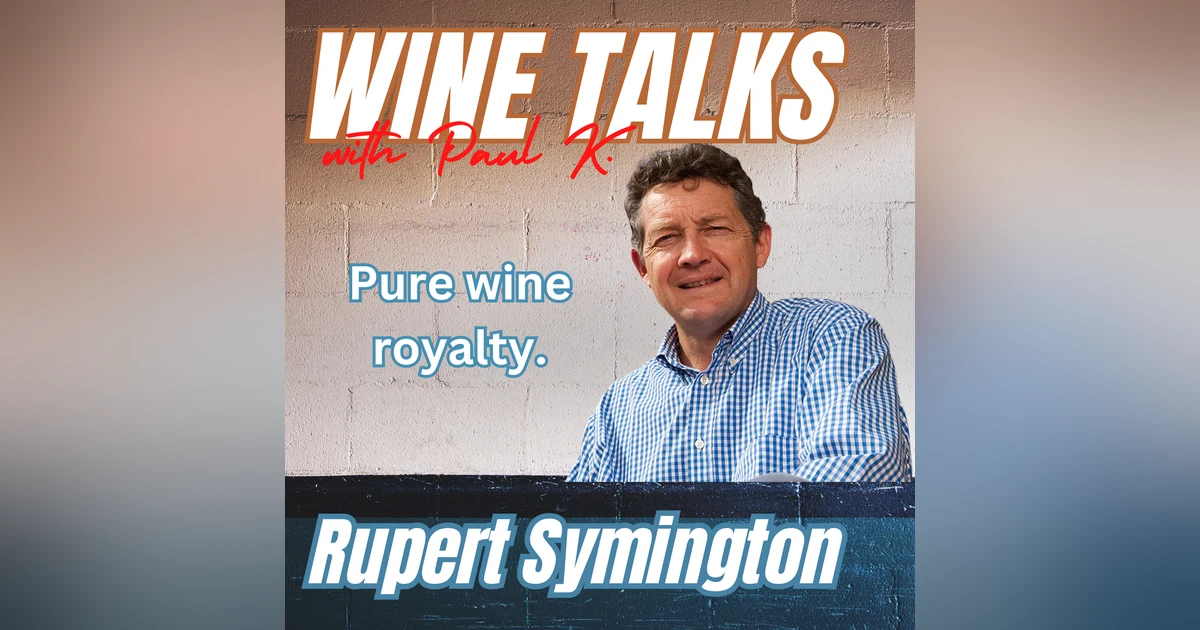

When I mentioned a good friend I was heading to Portugal, he says "look up Rupert, he has an interesting story.""
And I did...but because I was travelling, I did not spend the time researching the upcoming guest, a mistake I have never made again; you see, Rupert Symington is literally wine royalty...and I had no clue.
Rupert Symington is the kind of guest who could convince you that the real secrets of port wine are hidden not in the bottle, but behind family names, fortified histories, and backroom deals struck centuries ago. If you think port is just a sweet afterthought or a dusty bottle reserved for granddad at Christmas, get ready to have your assumptions shattered. This episode ventures into the shadowy borderlands where commerce, politics, and survival collided—painting port not as a relic, but as a living testament to international rivalry, regulatory gamesmanship, and enduring British influence in Portugal’s very soul. You’ll learn how wars, political treaties, and a dash of scandal led to the accidental birth of port 02:11, and why some of the best “Portuguese” wines might owe more to London’s drawing rooms than Douro’s slopes. Rupert doesn’t just spill the wine—he spills the industry’s deepest anxieties: why vintage port, once equal to Bordeaux, is now almost an afterthought and how tight regulation and power moves have locked out newcomers 28:10 15:20. Is port’s old world mystique its greatest asset—or its Achilles heel? If you’ve ever wondered what’s really swirling in your glass, this is the episode that won’t let you look away.
Here’s what you’ll learn—no sugarcoating, only intrigue:
🍷 Why port’s power structure is locked down tighter than any other wine region, and how the ancient Methuen Treaty still shapes your options today 24:37
🍷 What it really takes to break into the port world, and why some upstarts never stand a chance against the big names—all by design 15:20
🍷 How the British rewrote Portuguese wine history out of self-interest, laying a foundation of control, class, and privilege that echoes centuries later 02:11
🍷 **Why the best port for collectors used to rival, then fell behind, Bordeaux and Burgundy—and whether its next revolution will come from within or collapse under its own legacy 28:10
0:00 Hey, welcome to Wine Talks with Paul K. And we are in an away game, like an away away game. We're out here in Porto, Portugal about to have a conversation with Rupert Symington on the history of port and the history of Graham's winery. Introductions in just a moment. Hey, have a listen because the. The Psalm TV group just released cup of Salvation. It comes out on the 6th of October. It's already out by the time you hear this. And it's about a family in Armenia, the Kushgarians. It's a father daughter ensemble and it's about the history of wine in Armenia as well as this plight by the Kashkarian family to bring it back to life post Soviet world. It's a crazy, crazy story. Have a listen, but not why we're here today. Here I have a conversation with Rupert. So glad you could join us this morning. Morning, Paul, how are you? I'm doing great, thanks. It's good to see you again after your trips to la and our, our mutual friend Don Schliff and his incredible collection of.
0:57 Yes, I'm very bummed. I was invited to a wonderful magnum tasting in a couple of weeks. Weeks time, it's just been canceled. I was looking forward to tasting these amazing 100 year old bottles of port. The, the last one which was his Quinta Noval, the Phylloxera Free Vineyard Nationale. Yeah, National. And I was like honored because the history with my father and Don and Don and I for many, many years when he ran wine warehouse but you know, there was only a couple of these bottles were the last bottles known to exist and I'd like. So how many can it serve? 30 or 40 people maybe. Right. Well, Don's the only person I know who filled in his swimming pool to build a wine cellar. I've been done and I was. People always go wait a minute, the best collection in the world might maybe in Glendale, California. This is not necessarily the hotbed. Anyway, so interesting to be here and experience Porto as a town not been here. And I'm starting to think about this, the experience of port and the idea of its beginnings and why it happened. And then the difference between the English versions and the Portuguese version, you shed some light on the sort of the history of Portugal. So port really started when particularly the British market was looking for alternative supplies of decent red wines.
2:23 Britain was at war with France in the 17th century and British merchants came down, they toured the coast of Spain and Portugal in search of say, decent wines and they settled in place called Viana Do Castelo, which is about an hour north of here and discovered some decent wines and they started shipping them to the uk. As the business increased they became a bit more adventurous. And reportedly some people traveled up the Douro river and discovered about 60 miles inland, some monks growing red wines which were quite extraordinary. They were much richer and sweeter in fact than the wines from the coast.
3:13 And these wines were then transported downriver on flat bottomed wooden boats to the coast to then be trans shipped to the uk. And what happened in the next hundred years was a bit of almost like a gold rush. There was, you know, people piled into the port trade. At some point during those hundred years people started realizing that the wines could referment on board ship and often they'd arrive in poor conditions. So they started dashing the wine with a little bit of brandy wine spirit. And that gave rise to what we call fortification which today is the difference between port and all other wines is that we actually add brandy to the, to the port during fermentation so we preserve some of the natural grape sugar in the fruit. So port went on to become the most popular, best selling and probably most expensive wine in the world. This is back in the early 1700s. And many of the of the sort of British merchants who, who were engaged in the trade ended up. In 1703 there was a treaty signed between Britain and Portugal called the Methuen Treaty and that gave conferred rights on British merchants to do business in Portugal.
4:37 And from then on a number of firms were established. Warren Company was established in Vienna in fact in 1670. But from 1720 onwards it became Warren Co in a Porto. There were later comers like Dow in 1798, Graham in 1820 and Cockburn in 1815. But Port went on to become, I say went on to become sort of the wine of the middle classes in the UK in particular. And today most British people still buy a bottle of port at Christmas and have it on their Christmas table, which is not very nice for us. It's still the, it's one of the biggest markets especially for better quality ports, even today. You know, it's interesting because during, I think in my heyday we were probably one of the biggest purchasers of port during the holidays.
5:39 We seem to have had a group of customers through our direct to consumer company that liked it at Christmas time. But that's not what you guys want. You wanted to drink it all the time, right? And actually we've evolved our port offering. I think where we are today we're at the cellars in Villanova de Gaia. This is. Gaia and Porto are a bit like Buda and Pest. They're two different sides of the river. They're the same, effectively the same city, but with different names. We're about 100km from the Graham's winery, which is upriver. The river Douro starts in northern Spain. It's one of the longest rivers in Europe. And it comes down as it enters Portugal. It comes through a mountain range where it's cut a channel through the mountains. And this valley is quite extraordinary. It's probably one of the driest areas where grapes are grown in the world without irrigation.
6:42 We are starting to use irrigation to mitigate climate change. But traditionally the grapes of the Duro have been. They're growing in this semi desert. And when you deny a vine water, when it doesn't have enough water, it produces obviously a much smaller crop and much more intensely flavored berries. So pork grapes are small and sweet. They're picked at about 14b compared to some Napa Valley Cabot Cab, which would be about 12 and a half. So once the port is. The port is all made up in the Douro Valley and the wineries are all about 100 miles, 100 kilometers from here. And today we don't sadly transport the wine anymore on boats. We bring it down by truck.
7:29 But we have two very different climates. The Douro gets very hot in the summer. It's not a very good place for long aging of port. So what we do, we bring them down and we have a warehouse here with about 5,000 barrels of what we call aging tawny. Tawny is the name we give to. It means brown, the color of the port. When you leave port in a barrel for 10 years or more, it loses that purple color and it takes on a sort of amber and the flavors become more dried fruits and less fresh fruit. Tawny has caught on, particularly in the summer months. We serve it chilled and it's quite nice to have opened up probably especially in the US a completely new experience of port. People used to buy a lot of, you know, reserve rubies and vintage ports. Now they're buying probably one bottle in four. Is a. Is a bottle of Old Tawny, a 10 year old or 20 year old tawny port. The conditions on the coast are ideal for maturing tawny. There's a higher humidity here. This cellar here is built with quite sort of tall ceilings. The wine never. The temperature varies between about 16 and 18 degrees centigrade throughout the year. So it doesn't get too hot. Porto is a Bit like San Francisco. We get a lot of fog in the summer, so when it gets too hot, the fog comes in and cools us down. So basically an ideal place to
9:00 age port. So we have. The port is very much a split industry. We have all the vinification, the vineyards upriver and then all the administration and storage is down here on the coast. It's a beautiful city. We had dinner on the river last night and just enjoyed every minute of it. We had no expectations and didn't understand the history of Portugal. And you're Talking about the 1700s and the English trade was. I mean it seemed like with champagne as well. And now you're talking about port Madera and sherry. That the British market was pretty much the market for all things when it came to wine or fermented products. Is that the case today? Is. Is Britain still the main consumerism? It's less so. I think you know that. Funny enough, the biggest market for port today is Portugal. And in value, France is still the biggest in terms of volume.
9:57 The French market grew in the 1960s and 1970s when people were looking for other alternatives to the traditional aperitif market. And France is a huge aperitif market. And port is the only imported wine that's ever been successful. In France, I think it grew to one point. It was about three and a half million nine liter cases. It's about a third of the total. It's fallen off a bit now because I mean, you know, generally these were lower quality ports sold quite cheaply. But with Portugal's entry into the EU and with basically progress, port having been in the 1970s a fairly low cost product, labor in Portugal was cheap. We were able to sell port competitively with other drinks in the European markets.
10:49 Now port has probably reached a point where it's quite inexpensive. It's a luxury for a lot of people. I can't think of any French arrested fermentation. There's something called mori, I think. And very few of them, if they are Muscat de Beaumont, Venice. Yeah. And. But, but port is. Is it. It's very much. There's two markets for port. There's the northern. Sophisticated northern markets drink port as a digestif. So after dinner that. That would be the uk, most of Scandinavia, the usa, Canada, and then you've got places like Belgium, Holland and France where it's drunk largely as imperative. And the quality tends to be.
11:42 In Europe, it's much a standard ruby or tawny ports, whereas in the northern markets tends to be reserve ruby and above. So the better Quality ports are sold in the us, the UK and others. So how about the markets like the Asian markets that tend to be behind the curve? The they tend to start with Bordeaux and the classified gross and the best Napa and then they learn that there are other things in the world. Is that part of the world catching on to fortified brands? Funny enough. I mean, we, we've been trying to sell port in Japan for about 30 years without success. But so interesting, you know, places like South Korea, Taiwan, Singapore, even Indonesia, which is dodgy Muslim country, we're seeing extraordinary growth.
12:28 I mean, not from a very high base, but I think South Korea did over half a million euros worth of business for us that year, which would have been unheard of 10 years ago. So there is sort of potential port has a sort of enduring quality. And what's helping port a lot is all the people who are coming to Porto. There are a lot of Koreans coming to Porto now and I believe we've invested a lot in our visitor experiences here. And if you can give people a good experience when they visit, they'll take your brand as home, as a memory and hopefully buy it when they get home. So we have seen a little bit of that. You mentioned earlier off camera about the idea of marketing in today's world. And things are off a little bit. I sold my company because of the same reason at the time.
13:22 And part of it is what you just said, the experiential part of wine is so important that they come to Porto. They come to this beautiful facility we're sitting in today and every time they open that glass of grams or wares or Dow, they're going to say, remember that, honey. Remember that whoever their significant other is that they had this glass. And it's different than the premise that my father's company was started on, which was the idea that somebody was selecting wine for you that had evaluated everything they could. Now it's about. And maybe it's the generations, maybe it's the millennials, maybe it's the Gen Xs, maybe it's the Gen Z's that are like, no, I want to be part of the experience. People want to go downstream and people want to understand the origin of everything they, they source. I mean, even my wife is refuses to buy, you know, tomatoes that are not grown in Portugal. Yeah, really. There you go. So, but I think, you know, with, with poor Port, there is an incredible story to be told. It's a bit of a shame that a lot of people who visit Gaia here, this facility, don't have the time to get up river because it. That is truly one of the most beautiful wine regions in the world. And I say that, you know, without.
14:33 Without any shame. It's a beautiful, beautiful place, and it's a great place. You can take a day trip. There's a train that runs up. Up the river, and, you know, it's. It's actually just a beautiful way to spend. Well, that's one of our questions. I'll ask it on. On. On. We. Yeah, yeah, we have all the day off tomorrow, so to speak, and we want to get into the valley and see what's going on. So. Great. We'll talk about that in a minute. But, yeah, I think it's possible. You know, one of the things that's happened to Napa, as you already know, Bordeaux is a little simpler maybe, but I mean, it's almost impossible to. To start a brand. Right? I mean, the cost of land, the cost of equipment, the cost of picking, fermenting, and then waiting four years to release is rather expensive. And so it's almost impossible to just take Napa for an example, to get involved and try and do this is it. Can you start a winery in Portugal? You can, but there's a. Port has a sort of peculiarity that by law, you have to have in stock three times what you sell.
15:31 So if I wanted to sell a case of port next year, I'd have to buy three cases this year and have it in stock at the end of the year to have the right to ship next year. So port is very capital intensive. There's a lot of money tied up in unsold stock. And that's a rule of the. That's the government. Government, yeah. We have. We have a thing called the Port Wine Institute. Institute, and that. That regulates our industry. We are actually one of the most regulated industries in the world. We have. We need a license to plant a vine and then a separate license to be able to turn that vine, that. That. Those grapes into port. Wow. And, you know, those licenses are very expensive because they're. You can't. You can only buy them.
16:15 You can't make. Print them. But, you know, we are. There haven't been that many new pork companies formed. I know I can think of one or two over the last 20, 30 years. But there's been a lot of consolidation in the industry, bigger groups buying out competitors. So my family bought Coben's Port. We bought the. The wineries and the vineyards in 2006, and in 2010, we bought the brand, and it's about. It's a. It's a business which, you know, it's about scale. There aren't that many customers in the world for ports. You just have to be more relevant. But that said, there are a lot of small independent growers who do a great job, make great wines and they, you know, they. They have their. Their fair share. So.
17:06 Well, it's, you know, you mentioned something very important. You've already seen it. I don't know about worldwide, but you certainly see in the United States the consolidation of not only manufacturing, but the. The distribution of wine and port and distilled spirits in America is becoming smaller. Smaller number of players and you become this line item in a book and that's not so hard. Now your family. How did the Symingtons get involved with this? Is this back? My great grandfather was born into a family in Scotland and his father was a man of letters. He was a poet. You know, I don't think he ever did a day's work in his life, but he had a. He had inherited a small fortune.
17:52 And unfortunately my great great grandfather went bankrupt when a bank failed in Scotland in the 1880s. And so my great grandfather, aged 18, was sent out to work for a family friend who were the Grahams for the Grahams textile business, which was here in Oporto. There's a textile mill. They had another mill in Bombay in India. And anyway, my great grandfather worked for Graham's for about three years and he decided that the wine business was a bit more attractive than. So he started. He actually conducted a port sale on behalf of the Portuguese government.
18:37 Was another business that had failed a port business. And there was a sort of large stock to be disposed of. Anyway, my great grandfather successfully disposed of the port and was given awarded a title by the Portuguese government which he didn't take. He conferred it on his assistant. But anyway, he got a taste for the port trade. He married a lady called Beatrice Atkinson, whose family had been here since the 1650s in the port trade. And that's where it all began. My great grandfather had three sons who took over the business in the 1920s and ran it successfully.
19:19 World War II was a body blow. There was rationing. There was very little. The 1945 vintage had to be bottled in sherry bottles because there were no glass bottles available in Portugal. And we basically business almost failed in the 1950s. There was no money to pay salaries. There was no business. My father, for instance, was denied a job in the business because there wasn't money to pay more family members so he only joined in 1960. Luckily in the 60s, things started to recover for the port trade and the French market grew very, very fast in the 60s and gave us a bit of breathing space.
20:07 Vintage port came back and grew quite rapidly, which is our most profitable line in the 60s and 70s and we had some successful launches. We bought. In 1970, my father and his cousins bought Graham's. So originally we'd had Dow and Waugh in the family fold until 1970, 1970 we acquired Graham's and then we took it from there. My generation started working in the 70s in the business and by 1996 we had acquired the assets of Cobens. So each generation has added something. But it all goes back to the gentleman who we call AJS Andrew James Symington, who arrived aged 18 in Porto in 1882. Do you tell that story? I mean, you tell that story public. If you do a t. If you were coming to LA in October and you're probably going to make some presentations, you tell that story because that's fascinating story. I, I, if people ask, I tell the story, but it's quite lengthy, you know, and, and there's a lot more detail which I, I haven't told you, but, but there's a lot, there's a lot in there. One of the things you're talking about, World War II and I just finished the book Wine of the War from the Clad Strip couple. We had dinner with them last time we were in Paris, which is a fascinating tale of the Nazis coming to, to France. I don't know what happened in World War II in Spain and Portugal was there. Well, Spain obviously was neutral, but it was very much under the,
21:37 you know, under the. Franco was very much allied with Hitler. Portugal was neutral, sort of tucked away. Anyway, towards the end of the war, Portugal sort of sided with the, obviously with the Allies. But my father was taken by his mother and with his siblings they were evacuated to Canada. So they spent the two years of the war in Montreal. Wow. For their own safety, the British government advised in 1940 for all British nationals to leave Portugal and they sent a, a ship to take everybody away. Some people remained. My grandfather remained. He was unfortunately became very ill. When his family went to Canada, he was taken ill and spent most of the war convalescing. But he stayed here. And the business, it continued to make wine. It didn't sell a whole lot, but it kept ticking over and Portugal was really quite, and it is, I mean, it was a backwater back then and it's still, you Know, we're very much at the. The edge of Europe. You know, we're about as far from Ukraine as you can get in Europe. But. But we have. We've noticed a lot of friends of ours from Southern California posting that they were here and that they. Pictures in front of the churches and things. Wow, this is pretty interesting
23:07 that has become that popular for tourism and based on the stores and the. I mean, we were on that street yesterday. Well, yesterday was a holiday. Right. So Republic holiday. Yeah, but man, it was very crowded. So during this period during the war. Let's just stand there for a sec, for a minute. The. The vintage port idea was still alive. I mean, the industry was struggling, probably weren't selling much. You couldn't get glass, probably. Well, cork shouldn't be a problem in Portugal. But they were still declaring vintages during those years. Yeah. So we bottled the. We didn't do anything in 39, 40, 41, 42 or 43 or 44, 45 was declared as a vintage. But that decision was taken in 1947, you know, to come two years after the harvest. But not because of the harvest quality, just probably the politics of the well. And it was an outstanding harvest in 1945 was incredibly good quality.
24:09 Back then we had only one farm. Actually, that's not quite true. We had two farms. We sold at one of our farms in the 50s when business was tough. But those wines, the war and Dow 45, were blended by my great uncle and grandfather, respectively. They were identical twins. It's just a lovely story of these two winemakers. One ran the war sample room and one ran the Dao sample room. And they were separate, really separate tasting rooms. And apparently one of them left a glass on the bench and his brother came in, picked up the glass and smelt it and said, melons.
24:55 Five minutes later, the other brother came and picked up the same glass and went, melons. So they had exactly the same. We actually have a different. Different taste. That's very funny. So let's talk about vintage port for a minute for the listeners, what that means, because it's interesting to me, you all the. Is this part of the consortium of port makers that you submit samples? Do you all just get together and decide that the vintage is incredible and then you can declare vintage? And that's how we get the declared vintages. So declaration was a system that started in the late 1800s and it was really an honour system. The Douro does have because of its positioning. It has rain that comes in from the coast, hits the mountains and Depending on the year, more or less rain falls in the Douro, and that can quite seriously affect the quality of the grapes that are grown there. Once every three years or so, there are the ideal conditions to make truly great wine. And the port trade decided early on, rather than do what the French do in Bordeaux, which is, you know, you sell every year at a higher price and say it's better than the last one, the port trade actually, you know, self limited and said, well, look, we're only going to go out and ask customers to pay for the wines from the truly great years. So that originated what we call the declaration of a vintage, where the.
26:23 A number of shippers would look at their wines and then either conferring with each other or not or independently, they would decide, let's declare the 1945, for instance. The next question is, well, what do you do in years that you don't declare? Well, the answer is we make and bottle wines, but we sell them for a much lower price. They're wines, they're very good wines, but they're not the, the grapes. So vintage fort is a wine that is typically, obviously the grapes are grown in a great year. The wine goes into bottle at a relatively young age, about 18 to 20 months old. It's bottled and it's bottled without any fining or filtration. So it's a wine like a table wine.
27:10 It'll live its life in bottle port being a very. It's obviously higher in alcohol with the addition of the brandy. It's also naturally sweet. It has an incredible longevity. So vintage port took off and became famous because of it. It was a wine that, you know, and a lot of wine making was dodgy. Back in the late 1800s, a lot of red wines would go off after aging bottle. Vintage port, happily, not only didn't go off, but it got better. So the wine became much more interesting. After 20, 25 years, the tradition evolved to give a godchild or a grandchild a pipe of port or a few cases of port, because it would be ready when the child reached drinking age 21 or whatever the wine would be, and it would be in good shape. So port went on to become, or vintage port to become one of the. You know, it's interesting to remember that as recently as the 1950s, the top vintage port names traded for the same value as first growth Bordeaux. So really, vintage port was investment grade. I don't know where we went wrong or where they went right, but I mean, we lagged a little bit. The Mouton, well There's not too many dodge slips in the world. Right. But no. So Vintageport went on to become, I say, investment grade wine. The UK was really the sort of place de Bordeaux equivalent. Was
28:44 the London wine merchants actually responsible for bottling a lot of vintage port back in the 1950s, 1960s. From 1970 it became mandatory to bottle here in Portugal. So that was a change in the way vintage port was done. And from the 1970s onwards we started accumulating quite large cellars of. So whereas in the past London wine merchants would do the cellaring and, you know, the elevage of the wines, from 1970 onwards it was up to us to, to do that, that work. So today we offer the wines on Premier. So we ship some wines, maybe about 2/3 of what we bottle, we ship within two years of harvest and the rest we hold back, you know, to supply restaurants in the future and private sellers with nicely mature. And in a minute I'll take you and show you the one of the cellars in the back here. And it's vintage port is stored lying down like red wine. It's unlabeled. It's just a cork in a bottle and some nice wine inside.
29:50 That's an interesting thought and it'll move us to the contemporary part of this conversation because vintage port being basically ruby port and it acquires its character and transformation in bottle. Exactly. But, but the laying down of wines in bottle was something that only really started, you know, in any wine sector in the 1830s because prior to that bottles weren't cylindrical and you, you know, you couldn't lay down a flagon in a. Also, corks tended to rot and drop out, so you'd risk losing your production. So I think it was when the cylindrical bottle was first invented that gave rise to this competition between Burgundy and Bordeaux and port to see whose wine would last best.
30:42 And before that there was no such thing as aged wine because there was no way of doing it. But port certainly came out. Vintage forte is one of the best sort of long term bets if you wanted to wait 25 years. Unfortunately today those 25 years are not on the Gen Z radar. Everyone wants instant gratification. So it's one of the reasons Vincent Sport hasn't done so well in recent years is because of the time it takes to get to perfection. Well, it's kind of interesting because it has to be in the bottle, it has to age. You know, tawny port for the listeners, it's aged in the barrel before it gets put in the bottle. So it's less, it's less relied on it to be in the glass. And this goes to this question because we're going to move to contemporary problems that we have in our industry. Cans, tetra packs. And I have a conversation coming up with a professor at a major university in America whose, whose job it is to find food grade coatings that will allow wine to last, let's say, 24 months in a can.
31:46 And that's, that's absolutely. And the argument is the carbon footprint and it just can't happen in import, it can't happen in Borno or Burgundy, which is, can't be the political movement. This is not a political show. We have to be careful of that. But we haven't discussed climate change. Not going to have time today. But the idea that we're going to worry about the. Not because they worry about sustainability, that's important too, but somewhere we have to say, look, we need glass for what we produce. And putting, you know, vintage port in a can just isn't. But luckily in a vintage port is only, you know, it's less than 1% of everything we produce. And I for one would be more than happy, you know, we ship God knows how many cubicles, tons of glass around the world. That's true, you know, every day.
32:39 And I'd love to find a, you know, I think the whole wine industry needs to, you know, move on because there are very few wines that need to be aged in bottle. You know, that's true. I mean most wines are, you know, drunk probably, you know, on the day they're purchased and, and bottled probably a week before that. Right, so that's true. It's. So it's a really, the tetra pack idea, I think is great cans. You know, we did have an experiment with a mixed port drink in a can, but the problem is whereas cans of soda are pressurized, you know, they've got the pressure of the gas. When you put wine in a can, it's very easy for the can to get bent or distorted and that reduces the sort of charm of it. But anyway, I noticed downstairs you had some sustainability awards. And I think of all the industries in the world that, that produce anything, whether it's widgets or semiconductors or wine, that the wine business is probably the most ideal for sustainable operations. Yeah. So we became a B corp about four years ago, which is, I think, you know, the gold standard of, you know, it obliges you to actually write, you know, change your company statutes to, you know, to recognize. And it's not about just saving money on, you know, glass or putting in solar panels as a whole. You know, it's how you treat customers, it's how you treat your staff. There's a whole lot of. It's a point
34:09 based system. I'm really pleased we've done it. It's a great, you know, we were the first Classified Bee Corp Winery in Portugal. There are a bunch in the us, European standard. US standard, yeah. And. But we've also joined a group called the International Wineries for Climate Change, which is headed up by Kendall, Jackson and Torres from Spain. And there's some pretty strict rules that it's all about reducing your carbon footprint. And one of the things I'm fascinated about is how we can capture the carbon that we produce with port.
34:49 I always say the port because we only ferment half the sugar into alcohol. We're already producing only half the carbon footprint of any other wine industry. But it'd be nice to be nice to actually capture that carbon and put it somewhere. And we're working quite hard on it. The whole industry is working on ways of. It's not only just capturing the carbon, but it's also then transforming it into something that's storable rather than letting it clear into the atmosphere. The climate change, you know, Burgundy is affected by it. And I, again, it's not political as to why there's climate change. I think everybody can agree in our industry that there is and there's problems now that oddly is probably a month behind its typical harvest this year. And, you know, other, other parts of the world are a month ahead of what they would do normally. What's happening here? So here we had on this harvest, just finished the last grapes about three days ago.
35:45 We had the most extraordinary. We had three weekends in a row of heavy rain. And there's a sort of harvest rule of the portrait. Any rain during the harvest is not good news. The first weekend, you know, created some actually quite necessary because we have such dry summers here that, you know, order to finish off with the ripening. It's quite good to have a little bit of rain at the beginning of September to allow the vine to start circulating its SAP again and finish off the ripening of the grape. So that first rainstorm was not a problem at all. When we had another one the next weekend, another one the weekend after that, that's when by the third week we were seeing some rot appearing. We were seeing some dilution of the. And a month prior to that, we'd had an attack of the sharpshooter oh no. And which basically stops the photosynthesis process. It basically injects something into the leaves which kill off the leaves and stop the. So that was a. It affected mainly the duras priora, the most easterly part of the dura affected it quite badly. And that sort of suspended some of the bomais. Rather low, lower than ideal. But on the whole we've made above average quality wines. Despite those two. The weather problem and the. And the sharpshooter problem. Every year is getting stranger. So we had these torrential rainstorms in May, April,
37:18 May of this year, and then reasonably cool summer, which is quite welcome. Um, last summer was the opposite. We had a sort of temperatures 45 degrees centigrade for sort of three weeks in July, which ended up drying up most of the grapes. Certainly I have a vineyard that I own personally and I lost something like. Last year I lost something like 40% of my production to dehydration, which was really much fun. I noticed the Symington still wines down there. We'll wrap this up with just that conversation about still wines. We were here, were in Bordeaux at the expo in 1993 and we went to the Portuguese booth. You know, of course it was vino verde and there was port and things. But the still reds were really quite awful back then. What has happened worldwide that these. I had one last night. It was fabulous that the Portuguese have seen the marketplace for still wines, or they decided to. They always made them probably, but decided to get into this. I think there's two factors here. I think that the. The old fashioned consumer of.
38:21 Of wine in Portugal was a bit like the. The old fashioned Spanish consumer. They, they liked wines that spent 20 years in. In wooden vats and were bottled, you know, like, sounds delicious. Balsamic vinegar, you know. And, you know, I, I think it was a lot of, you know, a lot of wines, a lot of oxidation and, and some, you know, some sort of excessive wood aging. There was a new course that came into Villarreal University, started a winemaking course, University of Trages Monch Utad. And that bred a whole generation of young winemakers who were going overseas for experience. And basically the whole wine industry, I would say from the mid-90s, started cleaning up its act. You know, they were better. There was temperature control for whites. There was, you know, more understanding of bugs in the wine and chemical processes and just generally better. And this sort of coincided with a change in consumption. People looking for fresher, younger reds and whites.
39:32 And I would say we came seriously into red wine from the Duru in, in 2000. Prior to that, we made wine as a byproduct because we have this odd system that our port vineyards only have a certain percentage of our grapes are allowed to be made into port. There's a pork quota, and then everything else over and above that quota has to be declassified. And we would basically take the best grapes, make them into port, and then the lesser grapes would be made into a rather rough and ready table wine. From 2000, we decided to take a more sort of studied approach and we went into partnership with Bruno Pratz, who was the former owner of Coste Estonnel in Bordeaux. And we make a wine together with our 23rd year working together, called Chrisea, which I'm happy to say now sells at a price which competes with our best ports. And it's now my, my original goal and I've managed that project for the family for 23 years. And the objective was to end up with a wine that justified taking the best vintage pork grapes and transforming them into red wine instead of port. And I'm happy to say that cuisine now sells at the same price as a, as a good vintage port. So it was a worthwhile.
40:52 They're quite complex. They have a ton of body, they've got great balance. The one we had last night at this restaurant, just, you know, every time I tasted it, I thought, wow, there's something to taste in this. It's fabulous that we get to experience grapes like Turriga Nacional and Cezanne, those kinds of things, as a still wine. Well, luckily Portugal hasn't gone down the, you know, the Cabernet and Syrah route. You know, we've stuck to our indigenous varietals and there's really exciting wines being made now in, in the down Galantejo, the Douro and even Vinga Verde. You know, Vin Verde was known for inexpensive, high volume whites with a bit of fizz added, you know, and, and my family's just bought a vineyard up on the Spanish border near Monsant, which is actually one of the. Was one of the first estates in Portugal. They're probably the first estate of being there to bottle Alvarino as a single varietal back in the 1920s.
41:51 Really? Wow. And we've got great plans for that. We've also acquired a vineyard down on a mountain on a bench 500 meters up in the Alentejo, so on a mountain range, not on the plain. And there we're making the most extraordinary whites and reds. The whites are particularly stunning My friend Daryl Corty. I don't know if you know Daryl. I know Darryl well. Tasted the Font Silja white and declared it to be as good as a medium ranking white Burgundy, which made us all very happy. That's very kind of me. Thank you, Daryl. But it's interesting. So we are branching out of obviously our land holdings in the Douro are the biggest and our main operation is wine make operations in the Douro. But we are branch.
42:38 We've now got something in the Matasia and something in bingo ver to expand the portfolio. Well, we're going to have to leave that for the next conversation because I want to hear about that. Monsant wines are one of my favorites from this part of the world. It's such a pleasure to be here and have a conversation with you. I know you got a lot on your plate. I mean, I didn't realize you just brought in the last grapes three days ago. So you're in the fermentation now, so. Well, I'm luckily not involved in any way in the harvest. So I've been sitting at my desk in Porto most of the time when my cousin Charles has been up running his viticulture team and winemaking team. But we've just opened up a brand new winery up in the Ataid Valley which is on the northeastern part of the Douro. And it's going to be LEED certified. We hope it's a sustainable design. And you know, we're finishing it off. We had to get it open for the harvest. It's not quite finished. It's got a living roof. It's a pretty cool building and it works. It made really good wine this harvest. How about that?
43:44 How fascinating that there's. The twins were going at each other now the cousins are working together. This is a fascinating conversation. Thank you again for your time. I hope to see you in la. What's. What's on schedule when you're there? So I'm going to go and visit the new owners of Wine Warehouse. What's the end of it? Breakthrough. Breakthrough beverage. Yeah. Which I'm looking forward to that. And I'm also. I've got a couple of press events in San Francisco, which I'm going to be doing. So. Yeah, I'm looking forward to it. I'll be. I'll be there in like two weeks time. Yeah, that's right. Yeah. Thank you again. Cheers. Great call. Thank you. Take care. Hey, welcome to the adjunct to the Rupert Symington conversation. In Portugal, when my wife and I set out to go to Europe. This last month, we had all the intentions of the world of going to Armenia to shoot some footage with their news organization about the changes in the wine industry. We have a whole 10 episodes that we want to produce and do some podcasting.
44:49 My wife is going to go to a woman's conference. But the war changed all that, and so we were sort of stuck. We didn't know where to go, what to do. You have tickets, they're already paid for. You know, that's just kind of a mess. And you're on the fly. Despite the fact that we have so much technology in our hand, it's still cumbersome to reroute a trip like that. But we're fortunate in that we were able to reroute to Portugal. So after we left Italy, which I talked about, we ended up flying to Paris. And after Paris, we spent four, four nights in Portugal, in Porto, which is north Portugal. A couple of things that are important about the Portuguese wine industry. My father and I visited France in 1993 and went to Vin Expo, which is the largest wine show in the world. And we went to the Portuguese booth and it literally was virtually unpalatable. Now, port, as we know, is a dessert style wine that is made through arresting the fermentation of the fermented grapes. And what that does is it leaves a residual sugar amount in the wine.
46:10 And they arrest the fermentation by pouring distilled spirits into the fermentation tank. Brandy, typically. And all of a sudden their fermentation stops. There's high sugar content and high alcohol content. Hey, it can't be that bad, right? And it's a fascinating beverage. We got to spy vintages back to the 1800s when we were there in Portugal. But I bring it up because port wine is the north part of Portugal. And also now they're making rather stupendous and world class still wines. Still wine being non dessert, non sparkling red and white wine, basically.
46:55 And the interesting part about the port trade over the years, and it sort of came about because the trip to England for their regular wine, they were experiencing secondary fermentation and spoilage along the way back in the late 1700s. And so they decided to start adding alcohol to it. And this is the resulting product and rather sophisticated and elegant. But now that they're making regular wines, trigonacional, Cezanne, other kinds of grapes, they're getting some world class recognition on their regular still wines. And you'll see them at the markets. Now, Whole Foods does a lot of Portuguese Red wines. The point of that being I had a chance to sit with Rupert Symington, as you just heard, who is on the English side of the Portuguese wine trade. There are two basic types of Portuguese port makers in Portugal. There's the Portuguese owned ones like Ramos Pinto Kopqui, the ones that we visited as well. And then there's the English versions like Taylor Fladgate or Taylor, as well as Mr. Symington's winery, Graham's Dow Ware. So when the industry started to change and the product became shippable, the English got involved.
48:21 The Portuguese and the French weren't getting along, so the English took that position and all of a sudden now they're trading and the English went in and started to buy up some of these Portuguese houses. This is hundreds of years ago. So it's a rather interesting conversation with Mr. Symington, as you've already heard, because of the evolution of not only port, but there's still wines as well. We did not get to go to the Douro Valley as he suggested, because of the timing of our trip. But next time for sure, when we come to Portugal and go to the Porto region, we will go upstream on the River Duoro and visit this.
49:05 What's to be one of the most beautiful wine growing regions in the world. And there's some very interesting pieces to that. One is it's so steep that it's impossible to mechanically harvest the grapes. So the grapes are all hand harvested. And there's a particular vineyard from Kythan called the Nasty now, which for some reason as high as it is on the mountain, was not affected by phylloxera in the 1800s. So it's never been uprooted. And so here is this amazing parcel of land that creates one particular port that I was. What's the word, Honored to be invited to a tasting recently to taste what they call a vertical of this particular vineyards. Ports, meaning vertical, meaning different years. All the way through 2016, we went back to the 1800s, the two day tasting. So I'm particularly partial to port. I'm particularly interested in the history of port and I think that you were able to get a good grasp of what happens there and the personality it takes to be part of the trade. In this last podcast with Rupert, Cheers. Have a listen.
50:32 Thank you for listening to Wine Talks with Paul Calum. Carry and don't forget to subscribe because there's more great interviews on their way and folks have a great time out there in the wine world. Cheers.