

 Apple Podcasts

 Spotify

 Youtube Music

 RSS Feed
 YouTube
 Pandora
 iHeartRadio
Is It Going To Work? Ancient Wines, Modern Idea: How Armenia Is Sharing Its Bottles: Vahe Baloulian.
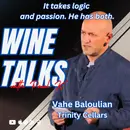
This is cleaver, and grass roots. Vahe has an idea to promote the wines of Armenia, one bottle, one dinner, one enthusiat at a time. And, if you ask me, that is what it is going to take to get the industry grounded again.
There is alot of spectulation on the role AI will play in this renassance, and most likely the role will be voluminous, but AI cannon the place of sharing a bottle of wine with a friend. And Vahe is proposing this very idea.
If you’ve ever wondered how the wine world can get shaken up by a little friendly challenge, you’re in for a treat! In this episode, host Paul Kalemkiarian and guest Vahe spill the wine (figuratively) on why the second week of November is something to circle on your calendar: Armenian Wine Week—globally!
What’s the Big Idea?
During Armenian Wine Week, every Armenian is encouraged to:
- Buy 2 bottles of Armenian wine.
- Gift 1 bottle to a non-Armenian friend—spread the love, and the tannins!
- Challenge 3 friends to do the same—think of it as the “Ice Bucket Challenge” but far more delicious (and less shocking to the system).
As Vahe quips, “Every Armenian is a boat that can take this wine to the ocean of wine drinkers” 00:18. You don’t even have to drink it all yourself—just share, enjoy, and invite others to the wine party. Imagine your Thanksgiving table with a bottle from “my ancient land” and a great story to go with it! 00:24.
The Grassroots Spirit
This isn’t your typical top-down campaign. Vahe describes it as purely grassroots—no big-budget ads, just community, passion, and a dash of friendly competition. There’s no event to organize, no one to blame, and no committees to argue over poster colors 44:39.
It’s “everybody’s wine week,” with customizable logos and materials—so if you hate the color, make your own (and maybe throw in some glitter if you’re feeling festive) 46:46.
Why Armenian Wine (and Why Now)?
Armenian wines have come a long way. Once, they were (to put it gently) “virtually undrinkable” according to Paul Kalemkiarian 05:12, but now there are bottles that belong on the world stage, at a price that’s still a bargain 10:14. The experiment is simple: let the world taste and discover them. And if you need a makeshift conversation starter while gifting your neighbor a bottle, drop the “world’s oldest winemaking region” fact for bonus points 15:53.
How Do You Measure Success?
It’s easy: when distributors start running out of stock and wine shops need to restock those Armenian labels, you’ll know the experiment worked 45:32. Until then, every bottle shared is a tiny wave in that “ocean of wine drinkers.”
Want In?
Keep an eye out for www.armenianwineweek.com (coming September), where you can find which wine shops, distributors, and restaurants are on board. And remember—there’s no wrong way to participate, as long as you’re sharing, toasting, and challenging others to join in the fun 46:00.
So pour a glass, pass a bottle, and be the waves that bring something ancient to someone new! Cheers—may your “wine networking” be strong and your stories unforgettable.
-
Trinity Canyon Vineyards: https://trinitycanyon.com/
-
In Vino (wine bar in Yerevan): https://invino.am/
-
Armenian Wine Week campaign: https://armenianwineweek.com/, https://armenianwine.com/
-
Wine Armenia Network: https://winearmenia.org/
0:00 The idea is the second week of November is Armenian Wine Week globally. Mm-hmm. And that includes a challenge. Every Armenian buys 2 bottles of Armenian wine, gifts one to his non-Armenian friend, and challenges his 3 friends to do the same. Every Armenian is a boat that can take this wine to the ocean of wine drinkers. You know, we don't have to be drinking that wine, but if you buy 2 bottles before Thanksgiving, put one bottle on your table, and gift one to your neighbor, your friend, your colleague, and say, here is from my ancient land, and challenge your friends to do the same. Sit back and grab a glass. It's Wine Talks with Paul Kaye. Hey, welcome to Wine Talks with Paul Kaye. And we are in studio today, beautiful Southern California, kind of warm out here in Monrovia, California. About to have a conversation with Vahé Baloulian. He is the co-owner of Trinity Canyon Vineyards, as well as the first wine bar in Yerevan, Armenia, in vino, as well as a Club 6100 and more things. Welcome to the show. Thank you. Thanks for calling me and checking it out. You were, um, you were with Ara, and I think he's my cousin. We haven't determined that completely yet, but he's, uh, at LAC Distributors. And so he carries, uh, the Trinity Canyon wines?
1:25 Yes, he does. How long has he been doing that? Because I've never seen them. Actually, he was our only distributor since we started. I can't remember the exact year, but there is a 2013, our first vintage year. So, they brought that. It's been that long? It's been that long, yes. You know, I'm a little disappointed that no one's ever brought them to me to taste. But you tasted them in Yerevan. I tasted them in Yerevan. Well, let me just tell you a quick story. When I went out to Yerevan the first time in 2000— well, we went in 2007. We'll talk about that in a second. But then we went back when the industrialization or the commercialization of Yerevan sort of occurred already. Now we've got restaurants and places to go. And somebody said, you've got to go see Mariam at Invino and put on the show. And I, I don't know anybody there.
2:15 And we sat down and it took me about 3 seconds to figure out that she understood what she was talking about and that there was a keen interest in the wine trade coming from Invino. Then it so happens the next night my nephew was holding a mixer there who lives in Los Angeles, but he had heard about Invino as well to hold this financial mixer. And so I showed up and we had a great time together. How did that happen? Tell me, tell me a little bit about it. The idea of a wine bar in a country and in a city that almost no one knows about. What was your impression? Well, I moved. I lived around the world. I lived in about 10 countries because of my work. Lived, not visited. Just where you go shopping, you take kids to kindergarten, that kind of lived in a country. And in 2004, we opened our first restaurant, which is called The Club, which is quite legendary place in Yerevan. And when in 2011, we kind of made a move from— at the time we lived in Vienna. We made the move to Armenia on a more permanent base because we wanted to take our kids to school in Armenia. We didn't want to stay in Europe and come back to the US. And I kind of saw that there is no place that you could go and just have a glass of wine as I'm used to doing in Spain when I lived there or in Austria or anywhere. Yeah, that's true. In most places and without having like a heavy meal. You could go to the club and
3:48 other restaurants and wine, but you have to order some food with it. And I decided to open this wine bar. We found a place on Saidian Street, but I told my partners that I don't want to work with the old folks anymore. They were my age. So, I offered their— So, I offered their children, as Maryam told you in your conversation with her, that I offered them to become partners at In Vino. I said, we'll do everything together. And they jumped in on the opportunity. Marianne was 18 at the time and she stuck around. The other son of my other friend left, Alexander, and she became really a very important person in the wine industry in Armenia because she also dived into it and she learned about it. She went to academy, she teaches in academy and all that stuff that she— Well, it is. So it was born from you traveling international, and certainly wine culture is an international— in fact, I consider one of the top 5 markers of a culture, right? Absolutely.
4:57 Land, language, if there's one, food, music, wine, right? Agreed. That's what you think about, right? So, you're in Spain and you're going to have a nice glass of wine, or you're going to go to Austria, you're going to go to France or Italy. And no one really thought of Armenia as that place. In fact, in 2007, and I was the wine guy from Los Angeles that showed up, it was virtually undrinkable. Yeah. There were people who would still carry the tradition and continuously make wine. That's how we got actually into the winemaking because in the club, we used to sell Armenian wine. Some bottles were good. The same bottles with the same label were terrible. And we complained a lot, and this is a known story. We complained a lot and our friends, winemakers, told us, you know what? Shut up. We'll get you— go buy your land. We'll help you out do it. It was all in a friendly manner and they helped us to do it. The first wine we did, I think, with Kers, with Bahar. Second wine was with Maran and others. They helped us. And in '13, the '13 vintage, we did on our own with our winemaker, Artem Parsayan. And that's how it went on. Armenian wine, when we started opening, when we decided to open in Vino, people were saying, oh, it's not going to work. It's also a very famous story. And the funny thing is that a lot of distributors who worked with us, they said, oh yeah, we'll you the wine, you'll pay us when you sell it. Second week we opened, they called and asked us to cover the— to pay the bills because everyone was scared that it's not going to work. Yeah, right. I was going to
6:29 say that. Reality set in. Reality settled in. But we did. We had no problem doing it. And then it kind of took off with time when people started educating themselves about wine. They learned more and they understood that you don't have to be scared of People would come and say, I don't understand anything about wine. I said, I don't understand anything about cotton, but I wear this shirt because it fits. That's clever. Yeah. So I used clothing a lot to sell it. The idea that we don't understand how— where it is made, what's the length of the thread and all that stuff, but we wear it. And if I'm interested, I will go and find out where it was made and that kind of stuff. So wine is the same thing. I say, you drink it, you like it. The point is to buy wine from a good place where you know it's a good wine, not a fake wine.
7:18 wine which tastes good. You know, it's funny you use that analogy because I, I sold a lot of stuff over my career, and that's what I kind of am. But, um, and we'll talk about this idea that wine, if you set out just to sell wine, it's then devoid of any passion. It, it can't, it can't work, right? But I used to tell people, because I sold equipment that was very expensive compared to my competitors, and I would say Is that the cheapest suit that you can buy or the best suit that you can buy? You know, that makes you look good. Yeah. And so that's the way my equipment was. It was not the cheapest, but it was the best for your purposes anyway. So how does that explain to me then from 2007, now we're at 17 years after freedom, we're still making wines that are virtually undrinkable. I tell the story about, we, I forgot which winery it was and where we were going on the bus. We stopped. Not in either village. I've heard that. Yeah, you drank it.
8:17 Yeah, but it was a concrete vat, open air, and they had been sealed with like, you know, tar. And of course, you know, I'm like looking at it going, oh my God. And of course, I have to tell him because of the Armenian pride situation, this is really good, when it virtually almost made me sick. But how does it— how did that happen so fast? Obviously, you were part of that transition from let's just say 2007 to 2026, where there's some world-class wines coming out of the country? Yeah, like with everything, we started learning about things and we started learning about good food, good drinks, good wine, and people started questioning why we can't make our own good wine. And there was good wine in the country, it just was hard to come by and you couldn't know which good wine, which bottle carries this wine, because they all have the same label. But in one bottle, they had good wine, then they would run out of it and they would just bottle anything else into that bottle. That's not good. That's not good, but because nobody cared. They understood that people didn't really care. They put some sugar in it and you would sell it as a semi-sweet wine. And in the weddings, they would drink vodka anyway. So, that's how it went. But then came people who, like Ernő Kan and Zsolik and Everyone who was interested in making good wine and our local Armenian winemakers also decided that— there are some people who decided that, look, we have to pay attention to
9:50 quality and make really wines that would compete with everyone in the world. And that's how in 2010, '11, '12, '13, the good wines started showing up on the shelves, which you could safely say, if I drank this wine with this label, I open second bottle, it's going to be the same. Do you think it competes? I think it more than competes. The misunderstanding is that people say, you know, this wine is— for $20, I can buy good wine, French wine or Spanish wine. And my argument is no. For $20 that you pay for Armenian wine, you can buy maybe good, similar quality wine for $40, $60. We underprice Armenian wine because we're not known. So, you buy a quality Armenian wine for $20, $25, Same quality, you cannot buy for French— for that money, you cannot buy French or Spanish or Italian wine. You have to pay a lot more to get that quality of wine. You can buy cheap, crap Armenian that they sell in the supermarkets today.
10:54 I was in LA. Has that happened as America— this is my dad's wine shop in 1975. There was a whole row of things like Matusse and Lancers and Boone's Farm Strawberry Hill. And then there was a fine wine section. So, let me see if I can articulate this question. In that if you go to the supermarket in Los Angeles and you walk down the aisle and you see all the same stuff, Apothic Red and Josh and Snoop Dogg, and almost all of that stuff, if not all of it, has been played with. It's been acidulated, it's been sugared, it's been, uh, it's been actually normalized so that somebody that buys Josh can buy it again and know it's going to be similar. And the only way that you can do that just to add crap, right? Is— does Armenian— do Armenian wines do that in general? I don't mean add crap, but I mean, do they— are they more sympathetic to the terroir and more sympathetic to the grape quality, more sympathetic to the naturality of the wine than— I think the small producers and some big producers, uh, that have a part of their production treat as a small producer. They make industrial wine that they can send out to Russia and everywhere else and give— Yeah, the Russians will give to them.
12:10 Sell to weddings where also they would drink anything, people, because they don't care. They just have to have one bottle of wine and everyone drinks vodka. But the small producers really care a lot about the quality, the land, the terroir. One thing we don't pay much attention to still is vintage. You could order a vintage of '22, they would send you 3 bottles of '22, 3 bottles of '23, because they run out of '22. That's also changing. They're changing by the attitude of restaurants who say, no, no, I ordered '22 because I priced '22 lower than '23, because '23 was better vintage than '22. And they go, What are you talking about? But they learn it, as we learned about the land, about quality of grapes, about selection, about not hand harvesting, and everything else that brings quality to wine. So it's a learning process.
13:10 It hasn't been long. It's 2007. No, but it's done amazing things. It's 20 years, and it didn't start in 2007. They bought— Ernkan and Armas and others bought these huge plots of land, and they put a lot of work in it to fix it. We bought our land in— we started in 2008. In 2009, we incorporated. So, it's not that much of a time. Like, Van Ardi came in the same years. They also— so, there was a lot of effort put into bringing that quality to Armenian wine. And what you said about learning about country from using wine as one of these 5 pillars— Yeah, cultural expression. Cultural expressions.
13:51 I absolutely agree. I mean, people, we, you know, we in our village, in our vineyard, grow tomatoes, cucumbers, aubergines for our restaurant. But people don't come to Trinity because we grow tomatoes. They come because we grow grapes and we make wine. And people don't travel to Armenia to say, oh, we have to go eat tomatoes there. They come because— In one part also because they want to know it's one of the most ancient countries that made wine, and they want to see it and experience it. And a lot of people get pleasantly surprised when they come to Armenia nowadays. That's a funny— I laugh because that's true. They probably don't fly to Armenia now that there's more ways to get there to taste tomatoes. But man, when you taste a tomato there, you realize, what have I been missing all this time? They should come for that as well. The apricots, the cherries. And I always tell people, we went to a wedding not that long ago. I'd never picked a cherry. I look for fresh fruits all over the world whenever I travel. Like, if I can pick a pear up in the Dolomites, you know, and taste what a pear off the tree tastes like, I want to do it. And the first time I ever tasted a cherry like that was at this wedding. There was a cherry tree at the church, and I was able to taste a fresh cherry. And it's like, it's a whole world of difference. I wonder if they bring that You know, the story of— and you have this bottle of wine here, the 6100, which is the theoretical age of Adamy Cave—
15:25 is that story relevant, do you think, in the wine world internationally? It's relevant. It opens doors, but you cannot sell story all the time. Like, you cannot sell, uh, a sob story all the time. People, at one time, they start, uh, this empathy disappears. And of course, we have a beautiful history to tell about. It's a door opener, I think. When people ask why we should drink your wine, we say, because we have unique grape. And also, this grape has been grown since the time immemorial where it all started. And I'll tell you a very interesting story why it resonates. In 2000— I don't know the exact year, I won't remember, but it's easy to find out. We were at Vinexpo in Bordeaux, and the vino was already open. And I was thinking of importing champagne. So we went to Trappier stand, and I talked to someone. I said, look, we are from— we would like to import your champagne to understand how much it costs, what are the conditions, this and that.
16:30 And the lady gave me the card. It was the daughter of the It's a family-owned, or maybe not family-owned, but family-run. And she gave me, and the last name was Drappier on the card. So she said, where are you from? And I said, Armenia. She said, give me a moment. She ran and she brought her dad, who was the head of Drappier House, and said, you're from Armenia? I said, yes. He said, you know, it would be an honor to have my champagne in a place where it all started. These were his words. Wow. Yeah. And we were like, Do they really care? Yeah, no. But so I'm bringing his wine to Armenia, but he's saying, it's an honor for me to be in a place where it all started. Wow. So he knew that story already?
17:18 Huh? He knew that story already? It was after 2011, so they knew the story because Amina opened in 2012. So it was after that. They knew the story and they honored it. They really appreciated it and they understood. So I think it does open the doors, but then you have to give quality. wine. You cannot ride on that story for too long if you sell crap. I like the language. What's interesting is there— somebody forwarded me, and I'm a huge fan of Champagne. There's Widow Clicquot's book right there. Yes. She's a friend, Tilar Mazzeo.
17:58 And I, unfortunately, I taught my son-in-laws how to drink Champagne. And now it costs me too much money. But somebody forwarded me the other day either an Instagram post about an Armenian-owned champagne house. I don't know exactly the story. I've heard that, you know, there's a champagne factory in Armenia, which during Soviet times, we had no problem calling it champagne. Yeah, that's right. So they still, it's a Yerevan champagne factory, I think. I don't wanna tell something I don't know 100% about, but I know that they had, place in Champagne, but I might be wrong. I've been trying to— But it's not hard to find out. No, I found the guy and I keep emailing them and I keep finding a way. And what I was trying to ascertain, and I have— no one knows this answer yet, but somebody you did, which was, does the guy have a relationship with Armenia? Does he— is his heritage an important part of his culture in Champagne? If that's the case, I want to I want to go out there and see him and do a show with him.
19:02 But you know the name? I, I'll look it up when we're done. I don't remember his name, uh, but we'll find it. So we were talking about the story about the Armenian culture. When I was at Wine Paris— and Vinexpo is amazing, right? I mean, like this 1-mile-long building. Yeah, I was in both in Bordeaux and Paris, but then I moved to Paris. It's crazy. But so I was in Wine Paris last year in February. This now be an annual trip. And, um, I went to the Armenian booth, of course. But what hit me when I walked around— and I knew a lot of people, a lot of friends, a lot of people have been on the show, uh, done business with over the years— I couldn't think of any other product in the world where you would go to a trade show and every single booth has the exact same product. In other words, they're trying for the same space in the same shelves at the same restaurants at the same bulk sale, whatever they— however they market their wines, everybody in those 7,000 booths are selling the same thing. And the only way to differentiate yourself is some kind of story. And but the story is not enough. That's the first thing I've determined, because you just talked about it. It could be that this 6,100-year-old, um, cave is becoming a little tired of a story. Everybody tells it.
20:26 And it's kind of— it kind of hit me that the story has to be an earnest story. It has to be a real heartfelt story, meaning it comes from your passion, Vaya's passion to be in this industry, because it takes nothing more or less than that, right? Pure passion, purpose, pursuit, perseverance. The margins suck, right? The headwinds are enormous. And the only way to prevail is to not give up. Yes. Is that— and I think this is what's been happening. And I'm hoping the Armenian culture of wine recognizes that. Yeah. A lot of people got excited and they started making wine in Armenia by buying fruit from somebody else and playing with it and creating their own juice and their own wine and putting their own label. Some of them disappeared. Some of them persevered, but I don't think Armenia can survive only based on Armenians drinking this wine, Armenian wine industry. We will become a small, you know, in some forgotten place where if we don't spread out our wings and go to the world and show what we can do. And being passionate about it and loving it is extremely important because when Imina opened, we were happy to see that quite a few wine bars opened.
21:54 And they thought that we would be angry that they're competing with us and we would go and congratulate them with the grand opening, bring the bottle of wine. Everyone was shocked why we would go and congratulate our competitor because we understood people would drink. We don't like opening chains. Every— our restaurant has its own unique personality. We don't open Twin Vinos. Right. You don't duplicate that. No, because you cannot. It's bullshit and it's not going to work. But many of them closed. I mean, all of them closed because most of them didn't really care about wine. They thought it's a, you know, my friend does good, my neighbor does great pizza, I can do better and I will sell the pizza as well. And then there are 600 pizza shops opening and then I'll die. So, the Armenian way. Yeah, it's actually probably global way. More than just Armenian. In some way, yeah. So, a lot of places, they came and said, oh, we will sell our glass by— our wine by glass for 700 drams instead of 800 that you sell. I said, if you think people come here for this 100 drams, try it. I don't know, maybe they do, but I was sure they didn't. And that price actually didn't change for the last 14 years. We still sell wine glass by 800 yuan, which is like $2.50. You know, I don't think— and I think you've just said it— but there's an American colloquialism, build a better mousetrap and people will beat a path to your door. And it's not true because you can have all the best mousetraps in the world, but if no one knows about it, nobody senses I mean, you have to have a gleam in your eye when you're selling wine. You
23:27 have to have a passion and inspiration that you can convey to the client, either directly to the client when they're tasting wine or to the distributor who's selling you the wine or to the winemaker who's making the wine or vice versa. You know, that has to be interchanged because without that, it's just another product and there's not enough money in it for just another product. Yeah, exactly. We did it because we loved it. Actually, the funny story is at the time when we opened in Vina and then a few years later, I was CEO of a very large IT company in Armenia with a few thousand employees. And one of the employees in the evening, he came to Invino, he saw me drying glasses, and he went to the founders and said, I just saw our CEO washing glasses at Invino. Are we not doing great? Wow, what an interesting story. And the founder said, now you know how to do business. You will learn this. In Armenia, it's not used to that.
24:20 They're not used to owners doing things that much. Especially in restaurant business. So in the morning, they would see me sweeping the asphalt in front of the sidewalk in front of In Vino. And then I would go and give them advice how to run their company. And in the evening, I would serve wine at In Vino. So when we just opened, after a few years, obviously we still do that, but I do it in restaurants, in our restaurants. I run the restaurant side and Mariam does it at In Vino. I don't know how you— That's the only way to do it. Yeah. And I think that's an international requirement. I mean, and I always find this fascinating. In LA, let's just take LA for instance, even America, hospitality has— it's been ebbs and flowing right now. In general, hospitality is not in a very good place. The people aren't there that understand and train in hospitality properly.
25:16 But it's interesting to me, like the French, the Italians, there's this legacy of restaurants. that, you know, Trois Gros and, and, uh, Ferdinand Point and places like that where it's a lineage. And to, to be in business in LA for 30 years, you know, is a, is un— very unusual as a restaurateur and usually doesn't survive the next generation. But culture and hospitality in different parts of the world are part of the process, a part of the family, a part of what you do. It sounds like that's what Yeah, our restaurant is 22 years old, the club. Yeah. We opened in 2004. Imbina is almost— what is it now? 26. So, 14 years old. Will be 15 soon.
26:02 That's amazing. We do it because we love it. If I stop it, it's like I get rid of my child, and I won't do that for anything, you know? Because it's something that grabbed— my kids were raised there. Yeah. I spent the night before my daughter was born in the club because it was close to the hospital. So, there are a lot of memories there. And a lot of people say, oh, I grew up in the club. Oh, I saw this concert in the club. The club is the name of the restaurant, but we used to do a lot of cultural events. Same with In Vino. Some winemakers, they tried wine at In Vino first. Now they're making wine because they discovered wine at In Vino. Yeah, right. And it's a place where people gather because they don't look at it as a place where they will sell me something.
26:53 We make wine, but we have a wall with all Armenian winemakers' photos on the wall, special wall for Armenian winemakers. So, if somebody drinks this wine, say, you know, this guy is the guy who makes it. So, there is a relation. They understand connection. They understand connection. And then they would come and see a lot of winemakers doing their business meetings or seeing their friends at Envino. It's a competitor store. But then nobody looks at it as a competitor still. You know, I think, uh, all, you know, rising tides float all boats. You know, they— I don't think people understand that in general in business, particularly restaurateur, where if you're the only restaurant in a town, it's your destination. But when there's more than one restaurant, they— and you're not necessarily competing, but you're bringing the whole— absolutely bringing everybody up. Now, I didn't— when I sold the Wine of the Month Club in 2023, you know, that was a very important consideration of mine. I was not gonna be able to hand this to my kids. But at that time, the way industry is, is and still is, you know, I wouldn't— I didn't want them to be fighting that I was fighting the fight I was fighting. And it was gonna be the first year probably in 50 years that we weren't gonna make any money. And that, you know, that's sort of depressing. And it was— Yes.
28:02 And I didn't see the horizon changing for a couple of years at least. And now it's already been 3 years and it's still, it's still a struggle to be in that part of the business. You know, what's interesting to me And I'm not gonna name any names, but you've been in business all your life. You've been in consulting, you're in high tech. I see it every year. I see a handful of people come out of business school, whatever school, from a different industry, from selling shoes, from selling clothes to try and apply all those principles to the wine business, and they've never worked.
28:44 I've never seen anybody buck the regular pathway to the consumer through one of the methods that they learned in business school. And I can cite examples— again, I won't name any names— but, um, you know, high-level MBAs who decided that they were going to apply all this stuff they learned to wine. And then all the laws, the regulation, the margins, the methodologies, the, the fact that wine really is— when people say it's subjective, it is subjective what you like, but the subjectivity is a very emotional subjectivity. Like, there's no reason why you have to walk into the market and buy the same exact thing every time you buy it, but it's so emotional you have to.
29:32 It's very hard to break out from those kinds of things. But have you seen that where where people come into this industry, whether it's restaurateur or the wine business, with this magnanimous vision of what this is gonna be and realize it's a cold slap in the face? Actually, I've seen both, but I separate in my mind, not technically, not scientifically, just for me, like you say, emotionally. There are 2 different types of wine industry for me. One is a traditional industry, which I'm more adherent to and a fan of. And there's industrial industry, When you look at the industrial part where they look at wine as a product that you have to produce, that you have to stamp it, and it's in a conveyor, and then it works because they don't care and the drinkers don't care about that wine. They just need something on the table. They would buy it. It's cheap.
30:28 The bottle looks nice. The label is shiny. They would buy it. And then there is another section of the wine industry where it's family-owned, where it's Or it's friends who are passionate about it and they won't give up for any reason. And this part is what attracts me a lot. So those guys from MBA, from the schools, I worked as a consultant and I worked as an executive. So I have both— Yeah. I've been in both shoes. And my former CEO, when he learned about that the owners are sending a consultant to to give us advice. He said, I hate consultants. He was a self-taught millionaire. And I said, why? He said, they tell you, give me your watch and I'll tell you what time it is.
31:19 So these people would be successful in this industrial environment because they look at wine, they don't see wine, they don't see the passion, they don't see the villager, they don't see the grower. They see a product that has to be sold. So they look at the marketing and this and that, And they really don't care about the rest. And they understand that it has to be good product as well. So it's not like they sell bad wine, but— Right. That's the approach. When we look at wine, it's for us part of our soul. And if they say, you have to change this so it sells well, we might fight tooth and nail and say, if I change that, it might sell well, but then it's like I betrayed myself and I don't care if it sells well anymore.
32:00 Because if it sells well, who cares if I'm not happy? It can sell 10 times more. If it doesn't make me happy, then I don't care if it sells 10 times more. That's a good point. It's not only financial. You can have a child who is very successful, but he's a criminal. I mean, you're upset. You're not that happy. Some parents maybe not, but I would be very upset. That's an interesting point. But if he's happy and he's rich and he's doing well, then it's a totally different story. So there is this separation for me. You know, I have to— I wanted to be a media— I wanted to act.
32:42 And I know that it's just a struggle, right? Even when I retired and sold the company, I went to acting school. Yeah, it's probably not for you. And I thought to myself, would you have enjoyed that lifestyle but been happier? Not that I'm unhappy, but that you're pursuing this idea of entertaining people and inspiring people by what you do. but probably not making a whole lot of money and just fighting it the whole time? And I don't know the answer to that question, you know, because I, I have a daughter who's a French-trained boulanger. You know, she's— what she does inspires me to no end. And, you know, it's not the most lucrative business in the world, and we're working on something right now, but it makes me feel so good that she's able to inspire people with what she creates. like that.
33:30 You know, you were talking about consultants at the Wine of the Month Club, which was contemporarily extraordinarily digital. We did everything. I mean, there isn't a piece of digital marketing that we didn't understand and tap with the metrics, the whole thing. And I went through probably a dozen consultants from not just the 50 years, but just the part where digital started to make sense. And, uh, and where you need to understand Google Ads, you need to understand Facebook Ads and influencer marketing and affiliate marketing and all the email marketing, all this stuff. In fact, in 2022, we sent 33 million emails. Okay, so we understood it. But the one thing that bothered me at the end of the day with the consultants was, and I started to push back, was you don't understand what I do. Like, if I'm selling a widget, okay, there's some of those metrics applied. But wine is so different and so emotional and so hard to find the people that are gonna be interested in a wine that I realized I was paying the consultant to be educated in my— in what I do. Exactly. Right? And then half the time they didn't get it. And so they would move the needle a little bit and say, look, we moved the needle, but there wasn't any profit in that needle.
34:41 So who cared? Right? They didn't understand that. And I think that's the difference in the wine trade nobody gets this emotional tie that comes with purchasing wine, either at a restaurant or at a store. And you spoke about the boats lifting everyone. It's a California story, actually, as well, where everyone came together and then they sent these people to Paris for the Judgment of Paris classification, right? In Armenia, it's We use a lot of consultants, but because we are generals, we know better than them. That's right. But we learn. We learn a lot.
35:24 Even our name, we have a very good French friend who does organic wine in Vantoux. And we were looking for a name, and it was 3 friends, and he turned and said, À Tétoie Trinité. À Tétoie. And that's how it started. We were looking for Armenian name, this and that. And he said, and we didn't want to we said it's probably— there is a reason behind it. It's nothing religious, although Maryam's father thinks he's a saint, but he's not. But there is no religious thing. Maryam's father is my partner, Hovhakim, in the Trinity with Andronik and Koyan. So now, when we opened Invino, the idea was to lift all those boats, to give a place.
36:09 First, the simple idea just to have a drink without food, but also to have a place where we could sell only good Armenian wines. Good, not by my taste. Good by— even now, we don't select wines for INVINO, Armenian wines. When a new wine comes out, they bring it to INVINO. We call a panel of specialists— Mm-hmm. —of 15, 20 people, and they do blind tasting, and the winemakers can participate. And if it doesn't collect a certain number of points, we can't sell it. it. Because everyone is a friend. That's amazing. That's how we select wine. So nobody can come and say, I know you, you're my friend, can you sell my wine? No, I can't. I will be happy to if it goes and you can participate. It's a blind tasting. Because when you drink it at your vineyard, everything tastes great. But when you drink it in comparison with others, it might taste great, it might not. We had that conversation. I'm going to interrupt But it's an important topic. And then I want to talk to you about your, your grassroots movement here.
37:14 At the Wine of the Month Club, every Tuesday at 9 o'clock, I went to the tasting room, which was just on the other side of this wall, and I waited until 2 o'clock, and whoever showed up showed up. Sometimes the winemaker came. Sometimes— this podcast started because winemakers would come and very important château owners would come. Yeah. And so, yeah, it does make a difference if it's blind or not because you can And what the conversation I had with Mariam was, she would tell them, to the winemaker, look, you know, this is— Absolutely. And I could never do that. No, it was part of the deal. But I think in Armenia— They give all the notes. I think the point there is Armenia is at that point where you need to have those conversations, honest conversations about what you're serving. But they're also expecting it. When we say we cannot sell your wine, they say, why? What can we do differently? And we say, look, here are the notes that people wrote about your wine. So, you can read them and you can understand why it didn't collect this many points. That's great. And it came also because one day I was at the expo with one banker from Armenia, and she said, you know, when people come to us, winemakers asking for money, for loans, and we say, give me proof, give me an idea why you think you'll succeed, they say, our wine is sold at Invino. And it's not because Invino is such a— because of this panel, because they know if wine is sold at Invino, it means 20 specialists, sommeliers, wine educators, winemakers decided that it's a good quality wine. You know what that— you know what that is?
38:47 Let me interrupt you again. I'm going to say that's 1975, that picture, and that is the beginning of that kind of logic in America. So I think in its, in its, um, proper form, Armenia is, you know, 50 years behind the trend of what is done, but that's the right place to be. Because my father was the first guy in LA virtually that said, no, just because it says Robert Mondavi on it, I'm not putting it on my shelf unless I taste it. Yeah. And he would convene doctors who supported his pharmacies upstairs in the tasting room that I set up and taste the wines and they would do the same thing you're doing.
39:32 That doesn't happen anymore. I mean, there are certainly fine wine shops who do that, but most of the subscription model today in America is full of, you know, 50-cent-a-liter Tetra Paks of crap because the margins are there. Yes. You can have a case of wine that costs you, what's that, $4.50 in the juice and $1 a bottle and you could sell it for $5 a bottle. You're making money. There's something money And that's what was going on. I tell you something, when I read trade publications about wine in America, I'm very bothered by the language. There is no soul in that language. No. It's SQAs, it's these cases that— the language used is very industrial. I agree with you. It doesn't speak to me, and I don't want to be part of that kind of thing. It's funny you brought up Judgment of Paris. Jim Barrett, who was the maker of— Yes, of course. Orichette de Montalegre, used to come in the store all the time. They were neighbors of ours. And in fact, I sent an email yesterday to his youngest son, Kevin Barrett, because it's, it's Beau who's the president now.
40:40 His young— his younger brother's name's Kevin. I surfed with him back in the day. And it's my 50th high school reunion is coming up next month. And I emailed Kevin. I said, you bring a bottle of Château Montelena to the union, and I'm gonna bring a bottle of Château Lascôme. And why? Because that's where Jim Barrett was sitting when the phone call came through that they had won the white side of the Judgment of Paris. I said, wouldn't it be fun to taste those 2 wines just, just as a history memento between your father and my father? But, um, you're, you're, you're out with a grassroots campaign Yeah. And, and this is important, I think. And I'm gonna dovetail into Gini Fest and a couple other conversations I've had with some Armenian winemakers and distributors.
41:25 First of all, um, I have been to dozens and dozens and dozens of wine events, tastings, hundreds of tastings, but dozens of regionally specific tastings put on by the region. Paso Robles, Napa Valley, Sonoma County, Wines of the World, which are all international. Does the Armenian— is there a coalition of Armenian winemakers that would produce a show like that in the diaspora? It's not a show. That's the thing. You know, when I look at all kinds of events that failed, done by Armenians, I saw 3, 4 things that the reason they failed. That, in my opinion, one was that we were trying to do it as teamwork. It doesn't work in Armenian culture. There is no teamwork.
42:18 Yeah, I wonder why. Look at the sports. Our boxers, our weightlifters, our wrestlers are doing great. Our football team sucks. All our— Oh, the team sports you were talking about. Every player is great, but the team sucks. I mean, it doesn't suck, but it doesn't win. Team players are not part of our game. It's not in us. Second, We always find somebody to blame why it didn't work. Yeah. Stepan in Guinea Fest didn't organize it well. This guy didn't ask too much money, this and that. And the third one, that everyone wants to be a sayer but not be responsible for it. So he wants to contribute that this should be green and this should be yellow, but when it comes to taking responsibility, we kind of step away.
43:02 So with this initiative, we kind of— this initiative took all these 3 things out. There's no event. There is no one to blame if it doesn't work. There is no restrictions on how you can change everything. The idea is the second week of November is Armenian Wine Week globally. Mm-hmm. And that includes a challenge. Every Armenian buys 2 bottles of Armenian wine, gifts one to his non-Armenian friend, and challenges his 3 friends to do the We're not great wine drinkers yet, but we can introduce our wine to people who drink wine. They will recognize, if they like it, they'll go and buy it. So that's the main challenge. Here, everyone can do whatever they want. The Trinci can take 2 6100s and say, buy 2 6100s, give it to your friend. Vaskevas can do his own wine. Nobody has to follow any rules. Yeah. So everyone makes his own. They don't even have to use the logo. They can change it and use it as long as they push the challenge, introducing Armenian— every Armenian is a boat that can take this wine to the ocean of wine drinkers. We don't have to be drinking that wine, but if you buy 2 bottles before Thanksgiving, put 1 bottle on your table— you have to have wine anyways. You have to have wine on the table, right? Yeah. Anyways, at least 1 bottle, and gift 1 to your neighbor, your friend, your colleague, and say, here is from my
44:34 ancient land, and challenge your friends to do the same. We'll see if it works. It's totally grassroots. There is no money collected. So you can't say, you know, I spent— I gave them $20 and it didn't deliver. There is no restrictions. It's done by winearmenia.org, which is an informal network of Armenian— everybody connected to Armenian wine. Mm-hmm. In collaboration with Vine and Wine Foundation, with the diaspora, High Commissioner of Diaspora. Cooperation means they reach out through their channels asking to do this challenge. There is no government involvement in any way, but we'll reach out to Ministry of Foreign Affairs and ask them, tell your ambassadors to buy 2 bottles of Armenian wine, give it one to ambassador of Georgia or Belgium, and to do a tasting in your consulates.
45:26 You don't do it? Fine. Do it? Great. So there is no— people say, how do we measure success? Well, when distributors start ordering wine, we will measure success. That's how we'll know there is success. And so it's very simple. No response, no, but everyone is responsible for it. So you can't blame anyone else if you don't do anything. Even people who don't do anything, they will be beneficiaries because even those retailers or distributors who decide not to push anything, we say buy any bottle of Armenian wine. People will go and ask for their wine. There will be website from September, armenianwineweek.com and armenianwine.com. Interesting.
46:07 Anyday.com, where you would find all the distributors everywhere, whoever signed up, the shops, the letters that you can send to your shop saying, look, I buy my wine from you, but you don't carry Armenian wine. This Armenian week is coming. Here are distributors. Order a case. I'll have my friends buy a couple of bottles too. So to push everyone, start carrying Armenian wine. There's chef talkers or fact sheets, media stuff. There's all kinds of digital assets that will be on this website. But you don't have to use it. You can create your own. There are no restrictions on color, letter, you know? So, we took out all that so that nobody can say, oh, it didn't work because I didn't like the color of the poster. Well, you didn't like the color, make your own color.
46:55 That's an important— you said a lot of things that are really important. For one, when I talk about this at events, it's like you need to ask the restaurateur when you're there, do you have any Armenian wines? You need to ask the wine shop over there, having Armenian wines because, and this is gonna lead back to Guinée Fest for a second, because that's the only way. I mean, there's enough press now, and this is somewhat, we're, we're covering a lot of, of ground here, but there's been a lot of articles lately. They've been in, in historical trade mags. They've been in trade magazines for wine about the 6,100-year-old cave and all those things have been written about. And so I think enough restaurateurs and enough wine shop owners have heard at least of the Armenian wine brand. Yeah.
47:44 And there are a handful, and I haven't tasted all of them, obviously. I've tasted many, many. Like when I go to Guineafest, I taste everything that's out. And there used to be close to 100 wines. Now it's down to like 25 wines. And I'll tell you why. But just, I want to know what they taste like. And there are many Armenian wines that I would just do that to. I have no— I would just go into my wine cellar at home if somebody's over for dinner, and I'll— there's a couple Armenian wines I'll just pull out without any apprehension to them thinking this, what is this? There are a lot of Armenian wines still that you would say, what is this? But these are like, wow, what is this? That's, that's what you want people to do, right? So let me explain to you why I think in, in the LA marketplace why Guineafest has just by admission through the organizers that, you know, it's not what it was. And the main reason was, is it does no good to teach, to taste to a consumer when there's no place to get it. If there's no distributors carrying this stuff, or if the distributors aren't selling it well, and this goes back to the wine problem, distributors are no longer brand builders.
48:58 It's very hard. Like, especially in LA, we've lost all these distribution networks and all these small guys all went out of business. We're down to Southern and Wine Warehouse or Breakthrough Beverage and a couple other ones in Harbor, you know. Well, if, if you don't invite the buyers, if you don't invite the wine shop owners, if you don't invite the restaurateurs— and I would tell them for 2 hours, no one's allowed into the Guineafest except Except the buyers. And there are— those lists are available. I know many lists, the guys that do this, and they'll charge you a small amount to access the list and let these people come and they go, wow, Armenian wines, I've been reading about this in The Wine Spectator and The Wine Enthusiast. And this is the place to go to taste a bunch of them in one place. But instead, we're selling— we're tasting the consumer on it who says, where can I get this? And they go, I don't know. And that's not the way you do it.
49:53 Your idea is, it's a great idea, this grassroots idea. And throw in there, like you said, ask the restaurateur, hey, I would really like a bottle of Trinity Canyon today. Oh, we don't have that. Well, can you get it? Oh, here's how you get it. Here's how you get it. Yeah. That was the idea that you put all the distributors, all the shops, all the restaurants that carry. And you can say, if you get it, I'll ask them to put your name on the side so people will know that they come and dine at your restaurant. and have a bottle of Armenian wine. But it all depends if people move there and do something about it. Of course. It's not going to work one organization doing— there is no organization. No. Wine Armenia is informal network. There are no leaders.
50:37 There are coordinators, but there are no people making these tough decisions and organizing. There's nothing being— there's no organizing committee. There were a few things that worked when Armenians came together, like Armenian American Museum or, you know, said, the genocide commemoration where everyone came together. So this is more grassroots attempt. It's a social experiment to see if we have nobody to blame, if we have decision-making capability, and if we don't have to come together to do something, can we do something? Well, that's a great idea. And it's sort of top-down, right? If you start with the client and go to work it backwards, when normally you go the other way. And the beneficiaries are many, from the villager who grows the grape, from the butler, and they all live on the on the near-border villages. Most of the places where the grape grows is on the border. So if these villagers can have an opportunity to sell more of their grapes or the winegrowers can grow more, more people will stay in these villages.
51:39 And everyone benefits. This one initiative is funny because there is nobody who will not benefit if they participate because there is no negative. Yeah, right. Shab benefits. All he has to do is put up a poster saying, did you select your 2 bottles for the next week? Restaurant benefits, distributor benefits, winemaker benefits, everyone. I can't find one— You can't find one problem. Well, here's an interesting thought that you did. I didn't think about this until just now, but you're saying the Armenian, I have a couple bottles of wine, I give lots of friends to drink wine. Here's a bottle of what I really like. And to a non-Armenian, okay, so no, to an Odars, the listeners will know Odars. That's an important part of it because it wasn't that long ago, maybe it was last year, maybe it was Gini Fest last year, where the comment was made to me, there aren't enough Armenians to drink all the Armenian wine that's coming here. There are enough, they're not drinking it. They're just not drinking it. A lot of Armenians you talk, they're now Mexicans, they drink tequila. Before we were Russians, we were drinking vodka.
52:45 You know, we're more loyalty to tequila and vodka than to Armenian wine that we that our villager grows, which I have no problem with in a sense, because I cannot push people to drink what they don't want to drink. Of course not. But I can try to push them to introduce others to this drink, even if they don't drink it. Because there is history in it, there is culture in it, there is pride in it. And it's just, you have to make sure you buy proper wine, not the crap they sell in the supermarkets. I'm thinking of Michael Flanagan. Michael Franzese's methodologies. I haven't had the wines, but he's out at Costco and he's literally taking a bottle out of the bucket, the case, and putting it in people's baskets. It's a good— actually, I've listened to your podcast with Samvel, I think. I don't know him, but it's an approach. For me, it has benefits and negatives, but negatives are very small in the sense that for a lot of people that I spoke, they don't relate to it as Armenian wine. Right. They relate to it as Michael Franzese wine. But they sell a lot of product that grows in Armenia. So there is a huge benefit, right? Because people sell their products, it comes to the market. And eventually, I think it will trickle down to the thing that they drink and say, where this wine comes from? And it will benefit. Some people might have issue with the name, it's a mob connection, not Not
54:16 everyone believes this revelation, this finding God and all that stuff. But it's a non-believer's problem. If they don't believe it, they don't believe it. Who cares? As long as they properly introduce, and I've seen a couple of videos where he introduces it, Armenian wine, it's from the land where it all started and all that. So, you know, I'm not a proponent of, by any means, doing things by— but this is not it. This is not by any means. This is just one of the means. This is guerrilla marketing. Yeah, this is marketing in its sense. But if you could do it with— if they did it with another celebrity who is Armenian, who would agree to do that, the people would have less problems or no problems. I agree with that.
55:03 Here is a connection. Even when I talk to retailers, they say, we sell this wine, we can ask them to participate as well. Although it's connection to MUB and they don't think of— it's not connection to MAB is conversion from MAB, but they still look at MAB, MAB, MAB, and it doesn't have this good connotation. So I think they're doing a great job selling a lot of wine. I haven't tried the wine because actually in Armenia, I couldn't find it. I mean, I didn't put a lot of effort to find it, but I hope it's a good wine, a good quality wine, because if wine has so much distribution and it leaves a bad taste in your mouth— I haven't tasted it either.
55:48 Yeah, as Samvel said, it's a fraud if they do that. In your podcast, you asked him the same question. I'm trying to get Samvel to bring him here. He lives in Orange County. But if you want grassroots guerrilla marketing, that's— I've heard different comments about the wine from different people. So unless I taste it, I won't be able to say. Well, it's important. I mean, you're right. Some said it's good, some said it's not good. But again, people sometimes don't differentiate their taste goes into this not good. It may not be your taste, but it's a good wine. You may not like Zinfandel, but it's a well-made wine. You may not like that. Welcome to the wine world, right? Yeah. So, as I always say, if people come to Invino and say, well, give me some good wine. And I say, all wines are good. What do you want it for? Well, it doesn't matter. Give me some good wine. I say, well, if you go to Ralph Lauren shop and you say, give me good clothes, they will ask you, are you going to play football? You're looking for pajamas or you have a business meeting? Same goes with wine. You tell me what it is for and I will give you good wine. But the point is to get a place which doesn't sell bad wine. And in US supermarket, in Armenian supermarket, Armenian-owned supermarkets in US, you find a lot of bad wine. And that's a problem because people don't differentiate. And from the same producer, you can find a good wine and bad wine. So it's a price. That's the nature of the business.
57:13 Yeah. But by the price, you can more or less determine the You know, when I go to the supermarket, and I do this all the time, particularly Ralphs or Vons or Safeway, I mean, there's a shelf talker and there's a hang tag on every single bottle, so it's impossible to decide. And one year at Easter, Armenian Easter, my family's side, I forgot to bring the wine. Then we were down in the desert, and so I had to go to the store and buy some wine. Now I'm thinking, I'm an educated guy, I've tasted 100,000 wines. I know, you know, virtually every wine on the shelf I've tasted sometime in my career. And I chose 2 wines and one was not that great and one was really good. And what did I have to work with? Well, I hadn't tasted that particular grape in that particular bottle for that particular vintage. I tasted a lot of the wines from that same winery. Yeah. And so I, all I had to go on, just like any other American or Armenian, is the way it looks, how much it costs, and what I know about the location and what I know about the winery. And most people don't know anything about any of those, right? So they just, it's a blind buy. With Armenian, it'll be easier because of the lack of the quantity issue. We don't have that many wines here. So you don't have to get lost. If you go to— if Vons ever carries Armenian wine, one day they will carry. The other day I saw lavash that they sold in my local Vons. Yeah. So Armenian lavash from Armenian bakery. So one day they will carry and they will not carry probably 60 or 100 bottles. They will carry 5, 6, 10. So if you go and you try to,
58:45 but there are a lot of local Armenian shops that carry Armenian wine. One next door to me, they carry about, I don't know, 15 different labels. So from 15 labels, you more or less can select something. If you don't go for the cheapest wine, because cheapest not going to work. Yeah, right. At least, you know, 14 and above, then you can find very good quality wine. You know, when I— when, uh, when you said that, it was important because I— and we're out of time, but I, I do want to cover something because when, when, um, Charles Shaw came out in 2004, there was a huge glut in the wine trade. Grapes were hanging on the vine, never picked. And so, but I did— I reversed the math, right? I took the bottle cost, the label cost, the box cost, the transportation, the profit for a trader Joe's profit for Shaw and determined that somewhere around 49 cents a gallon for the wine and, you know, wholesale.
59:47 And, you know, back then, $7 to $10 a gallon for good Chardonnay, you know, average Chardonnay was what you would— if you and I would pay if we went to go buy it in the open market. And so I determined it couldn't be any good just from the sheer mathematics of it, right? Are the manufacturing costs in Armenia Are the costs in Armenia lower than the rest of the world? No, they're not lower because we import everything. Glass, corks, labels. Glass, more or less. There's a glassmaker, but also they don't make now quite the transparent glass, so we have to import. And everything else is being imported, including most of the equipment. So that's that. The land is scarce. We're more like Switzerland. We have very small land, so we produce premium wines. We can't compete with $3 bottle wines.
1:00:35 It's not going to be wine. It will be something we bought from somewhere else, colored it, and sold it as wine. So if you want to drink a good wine, as I said in the beginning, Armenian wine is now in a position where we sell very good stuff for a very low price. So it's a good time to buy because once it becomes more famous, more accessible, the prices will go up because the quality is there. And the supply is going to be short. Yeah. And the quality is there. That's why. Well, I wish you great luck in this. Thank you, Matthew. And I'm going to use this podcast to spread the word. We're going to send you some reels if you want to use them. Absolutely, we will. And I will send you the website link. Yeah. You can promote it. We'll put that on there. It's everybody's business. It's like in vino, we sell everybody's wine. So this Armenian Wine Week is everybody's wine. Even in the marketing materials, we tried to use as little as possible, 6,100, about the history. So nobody will say, oh, you're pushing your wine. So it's for everyone. I don't really care if we don't sell any bottles. Well, it's a refreshing approach, and I wish you all the success. I think it should be an ongoing thing, not just this one time. Yes, it's yearly. It's going to be yearly. Just keep doing it and I feel people get it. And I'll do my part. Thank you very much. And good to have you in our Well, thank you. And I really appreciate you and Ara reaching out to me last week or 2 weeks ago. And thanks to Ara. He suggested it and I really grabbed
1:02:07 the opportunity. Cheers. Thank you.