

 Apple Podcasts

 Spotify

 Youtube Music

 RSS Feed
 YouTube
 Pandora
 iHeartRadio
Independent Filmmaking and Wine: Chris McGilvray on Craft, Passion, and Perseverance
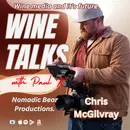
There has been an uptick in wine media. The series "Drops of God" has raised an eyebrow. It has become quite common when I am speaking about wine that someone asks if I have seen the show.
I have been horrified by some of the work I have seen on-line and even on an airline. Just when the industry is reevaluating where it needs to go, ghastly footage shows up in the medai...have we no understanding of what the people want to see?
Film is story telling...and Chris McGilvray is keenly aware of this. Though he was focused on corporate productions in the Silicon Valley, the opportunity to document a story of the winery Eden captured his imagination.
Chris McGilvray’s path to wine was anything but typical—he started at USC’s prestigious film school, dropped out to wander Central America, and finally became an independent filmmaker in Santa Cruz, a place where both winemaking and movie making are decidedly unconventional, and the distance from Silicon Valley is measured in more than miles. Chris bridges the worlds of slow cinema and meticulous viticulture, unraveling the layers behind his films Eden and Terroir. Not only does he reveal how the Santa Cruz Mountains’ small wine community operates on passion rather than profit, but you’ll also gain rare insight into how documentary filmmaking mimics the slow, steady rhythms of vineyard life—a process measured in seasons and decades, not in quick cuts or viral videos.
As you listen, you’ll come away with intimate knowledge of how Chris tracked the entire 2015 vintage with four wineries, walked vineyards to understand the terroir, and wrangled seven years of evolving storylines into a film that is as honest and surprising as the wines it documents. He explores why storytelling is critical for both wine and film in a world crowded with content, sharing why he believes experiences, not data or trends, are the key to reconnecting us with craft. From debates about wine’s value—human, not monetary—to the practical realities of distribution, direct-to-consumer sales, and innovation, McGilvray shares trade secrets, the existential challenges both industries face, and his hopes for what lies ahead. Chris peels back these layers—one slow shot, one vintage, one interview at a time—connecting artistry, agriculture, and authentic narrative with every turn of the cork and every frame of film.
Three points you will learn from this episode:
-
How the art of documentary filmmaking parallels the patient, generational craft of winemaking, and why both thrive on constraint and authenticity.
-
Why storytelling and firsthand experiences matter more than data and metrics in building passion for wine—and what both industries can learn from this approach.
-
What the future might hold for small, independent producers in both wine and film as they navigate distribution challenges, technological shifts, and the quest for genuine connection.
#wine #filmmaking #independentfilm #documentary #SantaCruzMountains #MountEden #RidgeVineyards #terroir #vineyard #storytelling #cinema #slowcinema #artisanalwine #directtoconsumer #wineclub #experientialmarketing #agriculturalworkers #festivalcircuit #podcast #creativeprocess
0:00 I personally really connect to slow long building things. That's what I love about wine. And ironically, there's a movement in cinema too, which is counter to the current trends in cinema. It's called slow cinema. It's literally like, do not cut unless you absolutely have to sit back and grab a glass. It's Wine Talks with Paul King. Hey, welcome to Wine Talks with Paul K. And we are in studio today in a beautiful Southern California day. I'd have a conversation with Chris McGilvray. Did I get that right? You sure did, because I kept spelling it wrong and I couldn't understand. He's the cinematographer by trade, but has a passion for wine as well. We're going to talk about that in a minute. But hey, have a listen and watch your show. We got a new show coming out, folks. It's called Song of America. Song of America is a new podcast that is based on immigration to the United States and successful stories of finance or political, academic and or social success. Really exciting stuff. Some incredible guests. Just to highlight one, no one in the history of America has had all three sons of J.C. agajani and the famed race promoter, as well as Evel Knievel agent, as well as winner of the Indianapolis four times. Ever had them all in the same room.
1:22 And we did it. And you will be surprised and interested in the conversation, but not while we're here. You have a conversation with Chris. It was came to me through, I think the PR agent brought me in to you. Brought you to me. Is that accurate? Yeah, I mean, I have a, you know, a producing intern that I brought on board and we've been reaching out a little bit to be able to try and get more visibility for our films. So Lauren's been doing great. So in general, I can talk to you, Paul. Well, this is interesting because I, I, I'm. Well, you went to USC cinema school. Was it Spielberg center then when we talked about that? Yeah, it was, yeah. Because, you know, I was talking about Max Nikias here. He'd been on the previous different show and he had a lot to do with bringing Spielberg in the fold, but it was still a, it still had a rather prominent position in the world of cinema schools prior to that.
2:18 Did not. It definitely did. I mean, it's, it's always been sort of seen as the, the gateway to Hollywood. Right. Like, if you're really trying to get into, you know, the, you know, very traditional Hollywood approach to filmmaking, USC is one of your best schools to be able to go to, which ironically, and I mean I'm sure we'll get into this and the podcast here. I couldn't have taken a more different pathway because, you know, I now live in Santa Cruz as a very, very independent filmmaker. But it is. It has been really fascinating to see how. How much the industry has changed over, you know, the almost 20 years that I've been doing this.
3:03 I am a frustrated cinematographer. I. To the extent that I had been accepted to USC cinema school, I was already in the business school, and a lot of people said, why are you going to do that? Why would you switch hard enough to get into business school and cinema school? Again, wasn't Spielberg yet, and I had been accepted. I didn't take advantage of it partially because. Let me ask this question. You mentioned Hollywood. Does Hollywood really care at that point, your education in film or most of it, bootstrapped? It's such a great question, Paul. Cause it's something that I've had to think about a lot. And, you know, especially now as like, a father, and my kids are getting a little bit older and starting to think about what the significance of college is.
3:47 And, you know, traditionally, it doesn't really matter whether or not you went to film school. It doesn't really get you in anywhere. What it gets you, I suppose, is the contacts and the connections that you make from, you know, doing that experience. You know, the hope is that, you know, over those, you know, four or five years, you're gonna, you know, meet some other filmmakers that are gonna go on to, you know, be successful, and then you sort of, you know, get into that. That cycle with them. So for me, that's one of the big things. It's of advantage. And it's actually really also interesting for me personally, because I actually did not finish USC film school. I actually ended up dropping out and, you know, traveling throughout Central America. And I actually finished up at UC Santa Cruz with a degree in linguistics of all things, largely so that I could go and, you know, study abroad, live in Barcelona for a year. Wow. So, yeah, I had a very, very different pathway. I, you know, did the. The traditional, you know, film school route with USC for a couple years. And I, you know, for me, it just. I realized that I personally needed to find a lot more stories that, you know, connected with me as an artist. And so I got really interested in travel.
5:20 That's interesting because, you know, we were. We'll talk about this, too. Some wine shows I've been stewing on, and there's reasons for that. And the first thing I do is send my sort of deck to my friend who was a USC cinema student, but a lot produced Encino man and a couple other films. Les Mayfield and George Zaloom. Encino man was great when I was a kid. Those are two Croes's two fraternity brothers. Mine, sure. But you know, the industry has changed so radically and you know, it seems like indie filmmakers really could be on, on the leading edge of most of this stuff because it seems studios are no.
6:02 Not willing to invest and put money up. And there's a whole different direction when it comes to production. I, I think there's a lot of truth in that. And I mean, I think that there's a, a sense that unless you have very established IP at this point that has, you know, quote unquote built in audience before you ever even start filming the, you know, filming your film or your show, it's really, really hard to be able to get people to go with original ideas. And again, you know, I'm sure we'll get into this more. But what I, you know, largely do to be able to make a living is I make branded films. And you know, that part has been really interesting to see take off over the course of my career. I mean, I originally, you know, from the Bay Area. And so I came back up here after, you know, having gone to, you know, USC and then Santa Cruz, UC Santa Cruz. And I traveled around and I ended up in San Francisco and I met a friend who was about 10 years older than me and he had studied film but had gone and gotten into the tech industry.
7:20 And he was looking to pivot in his career. And so he had a couple of tech clients that were looking to do these sort of cinematic style documentary pieces to be able to, you know, we did some hiring videos, we did some promotional videos. And I, you know, really knew the filmmaking side of it. I didn't know anything about the, the business side. And you know, all of a sudden that just sort of became my, my career. And over the course of, you know, 15, you know, 20 years, I've been able to sort of hone in the kind of stories that I like to tell. And I didn't even really realize that I wanted to be a document, you know, documentarian. I, you know, most of my love is narrative film, fictional film, but I just happened to, you know, have this opportunity. And then when I started to, you know, try and make cinematic moments out of real life, it got really, really interesting and I realized I was pretty good at it. And I also really enjoy interviewing people. I'm usually kind of in. In your seat and this position. I love telling people's stories and I love sort of helping them, you know, piece together their. Their narratives.
8:41 It's. It's an interesting point because I think when it's all said and done in the wine trade is. Is in a bad place right now because of all the machiations of AI has nothing really to do with it. It's really more of the avenues for distribution, the avenues for meeting a client. And they're, you know, where they're at. Sure. Crafting a message that's different than the rest of the noise. You know, you walk, I'm sure in Santa Cruz is the same. You walk down the aisles of Ralph's Market and you just get barraged with, you know, shelf talkers and you have no idea, you know, what to choose from a wine standpoint. And I say that because storytelling is so much a part of what wine should be.
9:26 And it's a product that you. That really should express something as you've learned. And we'll talk about Eden here in a second. Should express that time in that place. It's the only product like that. In other words, beer always tastes the same. Jack Daniels always tastes the same. That's their job. And wine is the one that doesn't go to the consumer first. Unless you're one of these big corporations and say, what do you want it to taste like? It really should be. This is what it's going to taste like because of that vintage and that time and place. And so I think that storytelling is critical. And so tell me about Eden a little bit. You have. You've done two films on wine. It looks like Terroir and Eden. Yeah, so. Yeah. So I mean, I have been, you know, working in the wine industry, you know, for about 10 or 11 years. So like I said, I got sort of started in San Francisco. I was doing a lot of stuff in the tech world. And for me, as an artist, I was always really interested in natural lighting and. And people working with their hands. And so I always gravitated more towards craft work and that kind of thing. And so I decided to move back down to Santa Cruz to be closer to my parents as we, you know, my son was born.
10:48 And when I got back to Santa Cruz, I actually met the head of the Santa Cruz Mountain Wine Growers association, which is obviously the trade organization for the Santa Cruz Mountains. Ava. And I didn't know very much about wine. I had known a lot about agriculture. My father always took us to farmers markets and we really cared about fresh produce, but wasn't really intellectually engaged in wine. And so I got a project, and this is in 2015, where, where I spent a whole year tracking the 2015 vintage with four separate wineries to be able to make a promotional film for the Santa Cruz Mountain Wine Growers Association. And the wineries are Ridge Vineyards, Mount Eden, Thomas Fogarty and Storrs. And I fell in love with wine. And one of the reasons I fell in love with it was it was the people that sort of, you know, got to give me insight into why it's worth thinking about and talking about. We spent most of our time actually walking through the vineyards, which still to this day is my favorite part of, you know, wine. I would so much rather come out and see your vineyards and walk through your physical terroir to be able to get a sense of the place. And then at the end, we get to sit down and actually
12:20 drink the wines that are from this specific plot of land. And a lot of the time you can taste certain elements that come from that. And so I got really, really interested in doing that. And then I started this relationship, you know, with the Pattersons, so Jeffrey and Ellie Patterson, who own Mount Eden. And, you know, there was something about Mount Eden for anybody who has been there or, you know, for those that have never been there, it's somewhat trapped in time, which is really cool. It's like you literally, it, you know, sits up above Silicon Valley. It's like probably about a 15 minute drive from like the Apple and the Google campus. So, you know, directly beneath it is like the heart of the tech industry, but it's, you know, another 1500ft directly above that up in the mountains. And so it's super, super rural and like agrarian up there. And you got to drive up this, you know, windy dirt road to be able to get there. You know, they, when I actually started filming there, they didn't even have a tasting room, wasn't actually available to the public, which to me that instantly I was like, what California winery doesn't have a tasting room, Paul?
13:43 It is, it's, it's really rare. And it's, you know, because, you know, it's a very long story, but the, because it's this, this kind of approach, this kind of storytelling when you're talking about, you know, no tasting room now that the industry is in such a bad place, that taste room traffic is off like 30 or 40% already in, in Napa Valley. And here you're, you're highlighting a very small winery In a very small place and listening to the trailer and the screener, watching the screener. You know, these people had pure passion, which is the. Which is the only unifying human trait that I have found traveling the world, talking to these people the same way you have that drives them. Because it can't be for this voluminous amount of cash you get, because it doesn't exist.
14:37 And it's. It's strictly the passion of what you're talking about, which is walking the vineyard and expressing that vineyard. What. So how did it go from this? You started. You were just. Sound like you were just going to work. You were. You had five winers or four winers of Santa Cruz Mountains. You're going to produce some footage for them and possibly some promotional material. And so that. That's where the. That's where you got the bug, or you had it kind of going into it. So that's definitely where I got the bug. And because of the way that that project was largely set up, a lot of it was filming the labor that goes into producing these, you know, mountain wines. And when I started talking to people that, you know, maybe don't know that much about wine, it was fascinating for them to hear how much work actually goes into being able to produce one of these wines. So I, you know, I waited a couple years, and I actually approached Jeffrey and Ellie in 2017 to be able to start working on this film that eventually became Eden. I had no idea when I went into it that it was going to take us seven years of filming to be able to make this thing. But there's a lot of things that evolved over the course of the film.
16:02 And that's one of those things that's really interesting when you're actually making a documentary film about living people and their actual physical lives that are ongoing, you don't really know where it's going. A lot of the time you have to, you know, document, and you have to be available. And the storyline is always constantly shifting. And so our initial intention was to really spend a year documenting, you know, the incredibly, you know, the incredible labor that goes into making these wines so that you can understand, you know, why these wines are so beautiful and why they're so valuable and have a great appreciation for it. When you say valuable.
16:47 Let me stop for a second. When you say valuable. Let's define a minute, valuable, you don't mean valuable in monetary value. I mean, that's actually a really interesting question because, you know, I think as of right now, you get the current vintage of Mount Eden Cabernet for probably, I don't know, 120 bucks, which, you know, compared to Napa prices is, you know, very, very low. But that's also not a cheap bottle of wine. I think it's a very fairly priced bottle of wine. And one of the things about Mount Eden that people that are fans of Mount Eden are always pointing to is its ageability. It is an estate that is known for all three of their varietals that they highlight. Their Pinot Noir, their Chardonnay and their Cabernet are all extremely ageable.
17:42 A good vintage will last potentially 50 years, which, you know, as you know, is pretty unique, especially in California. I was, I was hoping I was going to take you down this other road. Yeah, there's road of a human value. Right. I mean, all our amount that's going to change and the margins suck and, you know, all that goes with it, you know, and we could talk about some of the contemporary issues at restaurants now, what they're doing with pricing and allowing more people to bring wines, etc. But when you said valuable, it took me to. In the human context, sure. Because I do believe that and you've now that you've experienced the vineyard in the process, that it's a connection, it's a human connection to the soil and to the earth and it's to the soul really. It's like it's unexplainable. I've yet to have a pragmatic definition of what that means, but certainly an honest, true bottle of wine like these has a connection, some kind of valuable connection.
18:49 And it's. I, I doubt. Yeah, you can feel that every single one of their bottles of wine, you know, everything from Mount Eden is a state grown and it's, you know, solely from one, you know, plot of earth. And there is this beautiful connection between the passion that, you know, the Pattersons and their very small farming team have for creating this wine that comes across and you get, you know, a serious vintage variation. Every single vintage is very different and it is an expression of that, that actual year and, you know, that there is something where you can't necessarily put a price tag on that. These are all, you know, I constantly would go back and forth, especially with Jeffrey, talking about is, you know, winemaking an art or a craft? And that's always an interesting question because to me, I consider, you know, myself an artist. So I think it's an artist. But Hughes, much more of the belief that it's a craft is in there. It's very Very specific skills that you learn and that you work within. And he's constantly working to be able to create, to utilize those skills, to have the best expression of this particular vintage from the lens of this particular
20:21 plot of earth. You know what? I challenge a lot of winemakers that come through here, French or otherwise, and they almost entirely all agree. In fact, they all have agreed, which is if a wine is honest, like I used that word earlier, and does the winemaker's intention of representing the terroir of that year, whatever they're handed, however, the spring was, however, bud break was all the things that go into farming grapes, that there's no bad vintages because its job is to represent the vintage. And if it does that, it can't be bad. There might be one. There's variations. They taste different, they age differently depending on the vintage.
21:03 But if it's properly made an honest representation, it can't be bad. And I just had the Chateau Yquem on the show, you know, the famous Sauterne in France, and, you know, they with them because the grapes have to rot. Yeah, you have to get the royal right. They haven't made wine 10 years out of their history because the rot didn't come or it was the wrong kind of rot. That's a little bit different. But in this case, there is no bad vintage. So what. What happened to Eden? What did. What did you do with it? How old is the movie, by the way? So the movie came out in 2024. You know, we basically did our festival run and we got picked up for distribution at the end of 2024. So it' anybody to be able to rent wherever you choose to rent and stream your videos at home. Let's talk about that process for a second, then we'll get into the movie a little deeper. But the process of an independent filmmaker like you, we've got to get it funded. We have then come up with a production crew, and once you fund it, you've got to start shooting because people don't want to wait for their money to get back.
22:15 And it's business at this point. How do you balance that business aspect of. With the creative side of this? You're an artist, there's no question about that. Sure. How do you balance that in your mind or what do you do to maintain the creative. I don't want to rush through this. I don't want to get this done because they're breathing on my back. But I want to make sure I put my best foot forward. Is it constant nagging no, it's a really good question, Paul, because it's something that you struggle with at all times, because it's, you know, one thing I that makes me think of is all of the best art that you tend to come across in the world comes from constraint. You know, so often we will see a personal passion project that, you know, maybe the artist was actually very, very successful, they made a ton of money and they were able to then fund their personal passion project, which was their dream thing. And, you know, nobody had a say as to, you know, what was going to happen with that thing other than the actual artist who had dreamt of this forever. And so often those films aren't anywhere near as good as a lot of the other ones that they were, you know, under the. Under the gun from the. The studio and their investors and everything. Old time. Because constraint is actually really, really valuable
23:48 as an artist. I mean, as a. As an artist and a dreamer, you would just go on forever. There were periods of time where I could have kept going forever with filming this film because like we talked about, this is, you know, living, breathing people and real stories. And, you know, one of the key storylines that happens throughout the film is that the next generation gets involved. And so now all of a sudden you have, you know, their kids who are, you know, in their 20s and 30s, you can imagine, you know, obviously their lives are ongoing, so you could just keep going forever. So, you know, one of the hardest things in making a film like this, when you have this, you know, living, breathing thing that is moving through time and you don't know what the end point is. You don't know where the ending is going to be. And it's very, very challenging to be able to find a natural ending to a story that is continuing in real time. I think a lot of great documentaries actually struggle with that. They just sort of have to come up with an arbitrary out point and like, oh, sorry, that's it. And then they throw just a couple title cards up at the end. And this is what happened after the point that we chose to quit filming. Right? Yeah. And so that was really, really. That's interesting. Important for us to think about what the structure of, you know, the story was. And so we had to find a key inflection
25:21 point. And I got really lucky that the film went on. I spent seven years working on this thing. And so it naturally presented itself. And for those that haven't seen it, it's better to not spoil it because it's of course not. There's a very Surprising twist. Well, you won't spoil it and we'll carry on. You know, it's funny you said that. You ever watched the John Wayne D Day movie? It has no end. It's more documentary. I haven't seen that one. I love John Wayne. You know, you just. It's just. It's just over. And you kind of go, well, more of a documentary. Even though it was shot, you know, cinema. Cinematograph. Cinematic, sure.
26:03 But, you know, interesting that way. Sure. So now tell me about Terroir. Is that a separate film altogether or just sort of a. Yes. So Terroir was something I did before. So I have, you know, on the promotional side of things, I've been doing a lot of work for Ridge Vineyards. And that was a piece that was actually one of the first pieces that we did with Ridge Vineyards that, you know, we all felt was so strong because it was really all, you know, anybody that doesn't know anything about Ridge Vineyards, the, you know, first name pops into anybody's head is Paul Draper. Paul Draper was the, you know, winemaker Ridge for, I don't know, 40 some odd years or something, you know, was chairman of the board after that and just recently stepped down from the chairman of the board as he's now in his late 80s. And Paul was one of the people that was really instrumental in what they call pre industrial winemaking, which is now.
27:11 It was just sort of an early version of a variation on natural winemaking. It's not as extreme as natural winemaking. They still use sulfur and that kind of thing. But, you know, their practice, Paul wanted to, you know, try and replicate the practices of, you know, Bordeaux in, like, the 1880s, which are some of his favorite wines that he ever had. And he thinks that's about where, you know, wine production peaked in terms of the quality of what you can actually do. That fruit, right? Yeah. And so we made a piece, we made a film all about that, and that ended up becoming Terroir. And it was a short film.
27:56 We got to play it, you know, a couple different film festivals. And it was fun to be able to get to see audience reactions to it because most of my work ends up online and people watch it, you know, on their phone, they watch it, you know, on their laptop. All of which is wonderful. I'm happy anybody watches my work anywhere, Paul. But getting to see it in a theater and especially the way that we tend to approach filmmaking, like my. My team and I are heavily informed by narrative films. So we really, really consider things like cinematography, editing, sound Design all of the different sound elements that are created. All the music is composed specifically for the film.
28:50 And then you get to piece all of those things together to be able to make a really cool experiential film. You should feel like you're actually in the vineyard when it's harvest day. And so we really have the tractors right around behind you and then you have multiple rows of people picking. You have, you know, the conversations and the chatter and the energy and it was really fun to get to do that with terroir and that kind of told us that we were on the right path and we should, you know, continue this concept on a much larger scale. With the Mount Eden film that became Eaten, you touched on a lot. And I'm going to try and net some of this out because sure, again there's some controversial parts of what is going on in both, both industries. I mean you're, you're two industries that are butts kicked right now. And so I don't know pretty much. But the other experiential. I've been telling winemakers all over the world this. You know, when my father's in this business, actually you can't see it on the picture of my dad. They had a wine shop in the 70s, in the 80s, that, that's what they did. You know, my dad had a, this patch is from Les Ami Devant, which was a. A group of enthusiasts across the country. There were 150 chapters in the country that, that got together
30:23 and tasted wine. And Robert Mondavi would come down from Napa and Lawrence Bowser, the famed critic would come and speak and that would, that was the experiential part of wine. And I think, and I won't get all the boring details about marketing what I had to go through when I was selling wine. But you know, all the metrics in the world and all the AI and all the, all the data driven models can't replace the experience that people feel. And I was in the club business so if somebody went to Mount Eden and they went to the tasting room, they signed up for the club, you know, the experience will take them every, they will go to that day, every time they get a bottle of Mount Eden wine in the mail, they will go to the day that they were there and had the conversation maybe with the filmmaker and maybe with the winemaker, maybe with the, the son, who knows who they spoke with, but they'll remember that. And that's the experiential part of this. And I think it's critical to the Wine to get back on his feet. And maybe films like this, you know, one minute at a time, is how we get the community, the wine community back on his feet.
31:30 The pressures are Gen Z, are there, Are there pressures? I guess there would be in this film business because of verticals and everybody's a producer now and they got a iPhone. You know, some, some kids are pretty good at it. You know, it's funny, I, you know, I. My business, it's all independent contractors that I work with because they're all crew people, right. And, you know, a lot of these relationships I've had for, you know, since the beginning. And I've worked with the same sound designer who does all my post audio really, since, you know, my second film that I ever worked on. But a lot of them are starting to do verticals just because that's the work that is, that is coming in. And it's weird, you know, when you're an audio guy, all of a sudden you have to completely change your, you know, approach because when it's vertical, all of a sudden that microphone is very, very visible in all different places. Usually the microphone is like sitting right above my head. It'd be right there. All of a sudden, in a vertical, it can't sit there. So you got to figure it out. There is a lot of pressure.
32:36 And one of the things that's really challenging is that it's. It used to be that you could make an independently produced film and if it was a good film and you were relatively guaranteed to be able to get into, you know, a couple of top tier film festivals, let's just use Sundance because it's an example that everybody knows what Sundance really is, is a film market. That's the marketplace where you are, you know, bringing your film to hopefully attract distributor distributors and, you know, they will then purchase your film and distribute it all over, you know, the country, the world, all of it. So much of that model has broken down. You know, for one thing, there's just so many films being made that it's very, very challenging to be able to get into top tier festivals. You know, on the second front, a lot of the top tier festivals are already choosing films that have distribution and are, you know, being utilized as, you know, sort of marketing events for, you know, Netflix or whatever will bring their film that they have already, you know, bought. And they're using this as like, you know, the, the PR move of the, the big press.
34:05 It's so much harder to be able to sell your film because there's so much Content. It's actually a lot of the same problems that the wine has. There's so many people that everybody likes their own individual film. It's so hard to be able to get your Star wars anymore because it's really hard to have the big enough bucket that everybody will fall into it. And so everybody sort of ends up poaching from each other. And, you know, five people will see my film, five people will see another wine film, another five people will see a agricultural film, and they're all sort of poaching from each other's core audience. And so figuring out a way to get to a level where all three of those films can actually share audiences will be a really interesting thing if we can figure out a model that works that way. It's funny you said, though. You did. It's just you nailed. You nailed the problem. And I understood certainly those festivals as to what they were from a marketing standpoint. But I just got back from Paris. We were at Wine Paris. 6,000 vendors, okay? And it hit me walking down the aisle that there's 6,000 people here with maybe 100,000 wines all buying for the same thing. It's the same product. I mean, one comes from Pimonte and one comes from Napa. It doesn't matter where they end up. Selling them
35:38 is the same spot, just like you would selling a movie. You either stream it or you're in the theaters or you're being distributed, you know, regular, traditional channels. And so the. The headwinds are exactly the same. So then I wonder, flying back from Paris, I'm scrolling through American Airlines or whatever, Air France, I think it was their options to watch. And I go, oh, here's a nice little film on wine. I should watch this. You know, I've been. This is what I like to do. I was so embarrassed. I thought maybe the stewardess saw me watching this horrible, beautiful lighting stage. Cinematography was great. It was two master of wines trying to be funny and talk about Gruner Veltliner. And I was embarrassed. I thought, how in the hell did this get onto this plane where potentially thousands of people can watch it? And I thought, wow, we can do better than this. And there's a couple of places. Klaus de Jong does master wine stuff, you know, Psalm tv. Jason Wise. You're gonna do more of this, you think? But, you know, based on, I don't know, the drops of God. Incredibly successful, right? I think, you know, for me, it's a really interesting thing, Paul, because it's like the wine industry is so challenging to pivot, as I'm sure you know. Right.
37:03 It's so. It. It moves. It's such a boat that is moving in a singular direction. And it is interesting because, I mean, you know, I'm a Santa Cruz Mountains guy. Yeah. You know, that's what keeps me excited. Santa Cruz Mountains, like, you know, seriously, I think Mount Eden makes roughly 10 to 15,000 cases a year, and they're one of the biggest producers. Yeah, that would be mountains. I mean. Yeah, like Ridge. And then you got them. And there's a couple other that are about the same level. A lot of the producers around here are in the, like, you know, 2000 case a year, and I don't either. But, you know, a lot of them do all D2C, man. It's literally. They don't even have distributors.
37:50 They've got a tasting room and they've got a wine club, and, you know, they can go all. All D to C, and it's working for them. But I. I don't know. I don't know how you do that, but to me, that stuff is. I find that interesting. People can't go to Napa and do that today. Impossible. You can't. Probably not. You can't do it. It won't work. I. I bet you you can. You know, it's also. It's interesting being in a wine region that, you know, wine is not the primary commerce. You know, like, when you think of the Santa Cruz Mountains, I mean, first off, you say Santa Cruz Mountains, people think of Santa Cruz, the town which is actually where, you know, very little of the wine is actually produced. A lot of the best wine, much like Mount Eden, is produced on the eastern side of the Santa Cruz Mountains. It's up above Silicon Valley. It's right next to Cupertino and Saratoga, and you lost Gatos and San Jose and all that kind of stuff. And then, you know, it's so small in comparison to the cultural output that the tech industry has. And so. And I think that's kind of cool. So much of, you know, so many wine regions are so dominated by the wine side that, you know, it's kind of cool being the underdog.
39:17 It's kind of a fun thing. And, you know, I feel the same way about being a filmmaker up here. Most, you know, filmmakers move down where you are. There in Southern California or New York is still a very, very strong place. And there's a lot of places that are popping up because there's, you know, wild tax incentives. Like, Atlanta is very popular. New Mexico, well, The way the studios are closing is fascinating. I want to be. I went to a real estate conference the other day. You know, they were talking about these massive studios closing doors. And one of them just. I think they got paid 1.5 billion for it. And they're trying. They're hoping to get 400 million for it. So that's like, you know, the stage. Sound stages are not happening. It's a tough one. Yeah, it's really tough.
40:04 But I. There's a guy up there. Maybe that's. Maybe that's this the source of all these stories. Maybe this is where these stories should be coming from, these small places. You know, people have heard the. The Napa story before. They've heard the Bordeaux story. And sure, you're right. Like Mount Eden probably has. Well, they were 15,000 cases or 10,000. They probably have to be into the distribution network to get rid of all that wine because they definitely do. And theirs is actually really interesting. So like I mentioned earlier, they didn't have a tasting rum when I first started. And it's because they, you know, actually had great distribution from when the Pattersons got there. The Pattersons got there in 1981 and they already. The winery was established in 1944, so it was already distributed and a lot of the best restaurants and wine shops all throughout the country and in, you know, good number of international markets as well. And so they never felt the need to be able to do the direct to consumer side. Now that the kids are involved, they are, you know, slowly starting to pivot and do some of the D2C side. But they are more of that older model where it was all wholesale. Being able to, you know, get your allocation at all the best restaurants and wine shops
41:34 throughout the the country. The DTC side of this is important. I have a niece that just started so interesting. She started a salad dressing line and she thought that she'd be, you know, influencer by trade, sort of. She thought she would jump into Instagram and Facebook and all that and she would, you know, make billions of dollars selling salad dressing and that. That quickly became a fallacy and that there it wasn't enough to sustain it. She had good traction. But you just. In itself, it'll help you build the brand, but in itself it's not going to create the sales volume, at least in this case, to support it. Now, I came from the DTC world. I was the oldest DTC company in America called the Original Wine of the Month Club. We sold a lot of money to a lot of people over the years and it changed radically and we became, we became prolific digital marketers. I mean, I'll just highlight. And I've told the story before. My last full year, which was 2022, I sent out 33 million emails. So we understood what to do to get dollar sales. But the DTC side has been influenced by a lot and not the least of which is metric selling on Facebook and Instagram and all that. And so their, their job, they have to be DTC because all the margins are there. You know, the side, the margins are clobbered. And I can't tell you. I've sold thousands and thousands of bottles of wine for people through the distressed network of wine connections I have where they're getting pennies on the dollar of what they wanted. But it, but they got to move the merchandise. Sure. A Bunch of Bordeaux.
43:04 4000 cases of Bordeaux for a guy. Because they're sitting, you know, they're sitting there. What are they going to do with it? I sold 6,000 cases of. Put out by a winery in Tuscany that brought it to America. Couldn't sell. They got a dollar a bottle, but they got a dollar a bottle, you know. Yeah, actually they got two bucks. I said, if you don't take it now, you're going to get a dollar. Anyway, the point is, the point is those are the shifting challenges of the wine trade. I don't like the film trade that have. There's a solution somewhere, there's an answer. And it may have to bottom out a little bit before that happens. But all of this tech is gonna, is gonna create a whole new baseline for people to do business. And I think if there's a young person at the helm that has a keener understanding than the traditional, and then you have to decide on the wine side. I don't wanna get away from my, from my core value of what I'm putting out there. Like, was there ever a discussion with the Mount Eden people are even Ridge about a can or a pouch or, you know, a bag in the box? Would those ever. Yeah, yeah, sure.
44:21 You know. No, I mean, they're, they're both very, I mean, those two companies are pretty traditional with their cork and their, their, you know, their bottle. You know, things are changing and they are, you know, they're very connected to like Tablas Creek. Right. You say, you know, wine in a bag. And there is a movement towards that. And I think, to me, I think you already said what one of the big solutions that is going to be able to help both cinema and independent wineries and that's experiences, right? Experiential is still incredibly valuable. And it's actually maybe even more valuable than it ever has been.
45:10 Getting people together in the room for a one off experience. Like, it's funny, people have been talking about the death of theaters and the cinema for, you know, as long as I've ever been in the film industry. And ironically it's come back around in a lot of independent films because if you do it in the right way, where you actually do sort of like a. You almost treat it like a band, like you're going to basically go and do a bunch of gigs and you're going to tour throughout the country and you create a unique and singular experience for your audience, people will come like there's a film that, you know, became really, you know, sort of famous and popular. I think it was last year, maybe two years ago. It's called Thousands of Beavers or Hundreds of Beavers. Have you heard of this?
46:07 So it's basically these two dudes in the Midwest, it's like Wisconsin or something, and they're really good with their computers and they were able to figure out how to do a mixed live action plus animation film with just the one actor. And then it's sort of like a Looney Tunes commercial or a Looney Tunes cartoon where it's like, it's, you know, this guy is a lumberjack at the turn of the century and you know, the beavers like destroy his house and then it's like him trying to kill the beavers and them having, you know, a series of scenarios and battles. This thing did like over a million dollars in roadshow, you know, pop up screenings, movies out the country and people love it. They sold out shows everywhere, Paul.
47:01 People would show up like the actors would show up in the beaver costumes and everything. And it's sort of experiential and fun and it was really, really all over again. Yeah, exactly. It totally is. It's just going right back to the midnight movie, man. It totally is. That's why I think that. Because the theater just closed here in my town of Monrovia. Beautiful theater. And I think their innovation and the reason I brought the other stuff up about cans, I don't expect any ever a winery like Mount Eden or Ridge to go to cans or. Back in the box. Back in the box maybe if. Because you can get decent back in the box wines that are palatable. But it's just like the whole ritual seems. But the, the pundits or the, the. The gen zers and millennials will talk about innovation. They don't understand what innovation is. They understand the wine trade. So. But they take their premise, their outlook on life and they call it innovation. And, and you mount it is not going to be in a can. It's not going to be in the back of. It's not going to be in a pouch. I mean, who wants to drink wine from a pouch? How can that be the, how can that be experiential? Maybe that's the divergence. Maybe because I've noticed at my local markets the can section is getting smaller and smaller. And so that experience, to sit with a bottle of Mount Eden with your friends and tell some stories and reflect on a glass of wine once in a while, because I think that connection to the soil, to how the wine's made and what the winemaker's role is in that wine
48:34 is what stimulates the intellect. And you already said it, it's intellectual. You said, one of the first things you said was it's an intellectual. What did you say? Yeah, the intellectual engagement. Yes, that's. I actually like, again, I was super lucky when I learned about wine. I got to learn about it and it really connected with me because I started to understand the time frame, which was super exciting because I was doing a lot of work in the tech industry, and in the tech industry in particular, everything is so immediate. If somebody sends you an email and you don't respond, within an hour, you are on the naughty list kind of thing. And I'd go and walk around the vineyards with, you know, Jeffrey Patterson, and he is literally looking at that vineyard and thinking about things in terms of decades. Because if he's going to replant a, you know, particular plot, right, like, you know, think about it, he's got to think about how to get the water to be able to do it. He's got to let it go fallow for a while. He's got to, you know, be able to plant the root stock and then he's got to wait a year to be able to graft it over. And then from there it's like seven years before it even produces its very first vintage of even halfway decent wine. It's like 25 years until the root structure goes down deep enough that it actually becomes a real terroir driven
50:05 piece of fruit that then turns into the wine. And I was so excited to hear people talking about things in terms of, of, you know, decades because so much is so immediate. And I personally really connect to slow, long building things. That's what I Love about wine. And ironically, there's a movement in cinema too which is counter to the current trends in cinema. It's called slow cinema. It's literally like, do not cut unless you absolutely have to. We're talking six, seven minute shots. Yeah, man.
50:51 Compared to the crazy like cutty stuff that is all influenced by, you know, things like YouTube, which is great. I don't have like, I love YouTube. I love young people that love YouTube. It's not what I learned, it's not my passion. But there is always a counter to the stuff that you actually see in the popular trends. And some of it is, is slowing things down and what comes around, goes around and it's just the way it works. It's just going to change. You know, you said something and I want to touch on that because you talked about intellectual engagement the other day. We have, you know, wine is a very important part of our lives. Obviously my wife and myself and our good friends, they all have sellers, you know, they're not, you know, there's no classified gross in there, but they, you know, they appreciate the glass of wine. And one wife called the other day, she says, I want you guys to come up. I'm going to open up a really good glass of wine.
51:46 And she drinks wine every night virtually. And she drinks. She has some reasonably fine things like stuff from Paso and whatever. But I thought, what does that mean? Like, what's she saying? There's something about tonight that I'm going to open something really good and, and define really good. Well, to her, I, I'm. She's a educated enough drinker, at least in what she likes to know. That really just means a properly made wine that expresses something, not just Josh from the supermarket that's full of sugar. And so I thought that's an interesting concept and it's not new to anybody. Anybody that drinks wine or anybody that even novices would, would acknowledge a really good glass, they would just. It'll just hit them like, this is a really good glass of wine. And I thought that that's never going to change. I don't care, you know, in film if you're shooting longer shots now or not, if you're in wine, if you're putting it in the can or not, it'll never change the value of that really good glass of wine. And I think that's. That's where we hang our hat. That is that that'll settle and it'll always be that way. It's been around six, more than 6,000 years, as we know. And it's not going anywhere, but it certainly is going through some kind of, you know, stock market adjustment, so to speak. You know, trend, trend change. What's. What's next for you then? Do you think? Are you working on something now in the wine trade or. Yeah, so. So I have a whole nother film that, that I'm working on. And over the course of making this film, I got really, really interested in the
53:17 agricultural workers because there's such a large part of. Of, you know, the actual wine that is produced, the ones that have their hands on touching it every single day. And so currently we're making a film about a couple of Mexican immigrant organic farmers down in Watsonville and the challenges with farm labor and being a immigrant in, you know, the United States in general at this point, but in California and being a farm owner that is also employing other, you know, immigrant laborers that were in the same position that you were in when you first got there. And the interesting ways that that enables the farm owners to actually work better and treat their employees better because they can relate to what that is actually like. Interesting. And they, you know.
54:23 Yeah, you never know what you're going to stumble across doing something like. Sure, that's really interesting. Yeah. Well, we're actually out of time already, which is hard to believe. We had so much to talk about. Oh my God. Hope we can do it again. Sure. And dig a little deeper this time and going to watch the whole rest of the movie. I haven't seen the whole thing. I watched about 25 minutes of it so far in the trailer. But let's just, let's just end on this thought for a second because it is. Goes right to the heart of a movie like Eden. Some slow motion shots, you know, some good interview shots, good lighting, good cinematography, good production value and. But then there's these things like Drops of God, which really about wine, but there's sort of drama miniseries and I'm wondering where the direction of.
55:15 The direction of storytelling for Wine's gonna go. Is it going to land on these wonderful production value shows or is it land on storytelling through as an ancillary part of. Of the. Of the show itself? Like. Like drops we've got to. Or are we. Are they. Are those two divergent paths that both exist all the time and depending what you're interested in viewing or watching or learning about is you're going to pick one or the other? For me, and this is just, you know, my personal thing, I. I hope that we always focus on why wine matters, why anybody should care in the first place.
55:57 I think that a lot of emphasis and too much emphasis has been focused on tasting notes and being able to compare palettes and this and that and that. And that is not what wine is for me, anyway. That is not why I love wine. I actually am not that great at being able to describe a, you know, a wine and, you know, the experience of it in terms of my palate and my taste. What I get excited about in wine and what I think most people do is a real story about where this is coming from, why it matters. Like, why is this great varietal of historic significance or not historic significance here? Maybe it's, you know, you're having a California wine. Maybe you're having, like, dude, I had an Elicote the other day. It's from the Santa Cruz Mountains. And it was so cool because, like, that fascinating that it's like the secondary white Burgundy grape that now finally pops over to California. When California Chardonnay is known so well like that, I'm just. I'll always try somebody's Eligo tape. Right. That's fascinating. Really interesting. Yeah, it's good stuff. Well, it's been a pleasure, and I hope we can do it again soon. Maybe we get up that way. Hang on the line after I turn off the recorder here. But really fun stuff and a great intersection of conversation between filmmaking, artistry, and that of the same in the wine trade.
57:29 So thanks for being on the show. Thank you so much, Paul. It was such a pleasure, and I really, really enjoyed it. Cheers.