

 Apple Podcasts

 Spotify

 Youtube Music

 RSS Feed
 YouTube
 Pandora
 iHeartRadio
From Rocks to Wine: Diana Khandilyan’s Unique Journey Through Terroir and Winemaking
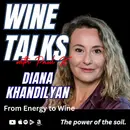
I jumped in on a LinkedIn conversation about wine, soil, volcano's and more. Thought I would contribute to the message string. That is when I engaged Diana on the concept of terroir. But not just any terroir, but volcanic terroir. Then I realized that Diana's expertise in the realm of wine...is the soil! She is a expert in energy and geophysics!
Diana Kandiglian is the kind of guest who measures her excitement in bottles, not hours. If you’ve ever wondered what happens when a scientist who reads rocks for a living falls in love with wine, this episode is for you. You’ll learn how Diana’s background as a geophysicist shapes her curiosity about soils and terroir, and why she believes the best wines surprise you, just like life itself. Through her stories, you’ll uncover why Armenia’s volcanic soils produce wines unlike any other, how centuries-old vines navigate climate change, and why boutique winemaking has become the soul of the country’s industry. Paul and Diana peel back layers of old world tradition and new world innovation, exploring appellations, indigenous grape varieties, and the risks of chasing global trends at the expense of authenticity. You’ll be puzzled—but enlightened—by the paradox of Armenia’s old vines and young winemakers, and why Diana advocates for some rules to keep the magic alive. There’s a fascinating discussion of soil science, climate, and grape selection: from Texan clays to French boulders, you’ll understand how the land whispers its secrets into every glass. You’ll hear why the future of wine in both Armenia and unexpected places like Texas and Brazil depends on resilience, sustainable practices, and stories worth telling. If your palate craves complexity and your mind seeks narratives from every region, Diana’s “Pour Across America” vision will inspire you to taste wines you’ve never imagined—and appreciate the intersection of science and soul in every sip. By the time you finish listening, you’ll carry away a deeper understanding not only of Armenian wine, but of what it means to seek adventure, surprise, and connection in your glass.
-
Pour Across America Wine Club
Website: www.pouracrossamerica.com -
Grgich Hills Winery
Website: www.grgich.com -
Zulal Wines
Website: www.zulalwines.com -
Van Ardi
Website: www.vanardi.com -
Karas Wines
Website: www.karaswines.com -
Messina Hof Winery
Website: www.messinahof.com -
McPherson Cellars
Website: www.mcphersoncellars.com -
En Vino Wine Shop (Envino)
Website: www.invinowine.am -
Terravox
Website: www.terravox.wine
#winepodcast, #winetalks, #DianaKandiglian, #PaulKalemkiarian, #Armenianwine, #terroir, #geophysics, #soilscience, #volcanicwine, #winenatural, #sustainablewine, #boutiquewine, #fingerlakeswine, #pouracrossamerica, #winetasting, #climatechangewine, #winelover, #winenewworld, #wineeducation, #wineinnovation
0:00 I don't want consistent wine because my life is not consistent. My year is not the same last year or this year. Right. We are getting older, we feel differently, we want different things. We want more of this and less of that. Why my wine should be the same year after year. Right. I want this excitement of opening the bottle and don't know what to expect and let it surprise me. Sit back and grab a glass. It's Wine Talks with Paul K. Hey, welcome to Wine Talks with Paul Kay. And we are in studio today. Beautiful Southern California here on a October day. About to have a conversation with Diana Kandiglian. Introductions in just a minute.
0:46 You gotta pay attention. I was just looking at a video I put out with Violet Grgich. Her father was the founder of Gurgich Hills Winery, of course, the famed winemaker who made the Chardonnay in 1973 that won the judgment of Paris. It's a great conversation. Our second time around on the show and so have a listen to that. But not while we're here. We're here to have a multi talented conversation or conversation with multi talented Diana Kandelian. She is an energy expert in soils and terroir as, as a day job. But she's a certified sommelier as well as founding the Poor Across America Wine club. Welcome to the show. Thank you, thank you. Glad to be here. Paul. We had a brief conversation before just to sort of understand where we're coming from on this thing and it sounded so interesting because I found you, so to speak, on LinkedIn. You had written an article about the volcanic terroir of Armenia. Yeah. And that spawned an interest because you, at that moment, at least on LinkedIn, your, your trade was more about geophysiology. What do you call it? Geophysics.
1:51 Geophysics. Geophysics, yes. And the impact of that. And that's what you do every day? Basically, yes. So tell me. I was trained as an oil and gas geophysicist and that's what I did for over 20 years across the world. So it is, it is very interesting profession because you need to understand a lot of physics but also to understand what rocks do and how they react and how we can read them. Right. So basically our job is to read the rocks and understand what is happening, where are they coming from, what they create for, for us as, as a human being in terms of energy. That's, you know, you just spawned a thought. I got to ask you this question and then we'll dig into that. But friends of mine invested in a gold mine in Texas and it was all based on, I don't know, the science of it, but they. They haven't hit anything, of course, and it's been, you know, years since they started drilling. Is that even possible to. To predict something like gold in the ground based on what?
2:58 Surface, soil or core samples? Is that it? It is possible. It's. It's not that easy, but it is possible. Basically, if you have a lot of it in one place, then, yes, we have methods. Think about when you go to ultrasound or. Or other types of gamma rays or anything that you scan your body with. So we do the same for the. For the soil. And if there is a lot of that thing in one place, then we probably would detect it. Yes. For oil and gas, it's harder because we need to go significantly deeper under the ground. But, yeah, see, I kind of asked that question because my friends do listen to this, and I want them to know that they got accolades, if not just because they invested in a gold mine and the proverbial gold mine. So how did you do this?
3:49 You're born in Armenia or were you born in. Yes, I was born in Armenia. And when I was born, it was still Soviet Union. And halfway through my adolescence, Soviet Union got dissolved. And fortunately, we had very big earthquake in Armenia that put us in a bad shape in terms of energy supply. Precisely. So after several years of fighting it and not being able to go to school in the winter because it's cold, my. My family decided to move to Mosc, and this is where I finished the school and got to Oil and Gas University and get my bachelor and master degree there. Wow. And how old were you when that happened?
4:34 I was born in 79, so I. Didn'T want to put you on the spot for that, but. No, we moved to Moscow in 93, so I was 14. So was this interest in soil and rock and geophysics spawned from the earthquake? It was 1988. Right, yeah. So, you know, it's actually very interesting question, because if you ask me at the time, I would say no. But looking back, everybody who have been in Armenia will notice that the only thing we have is rocks. Right. The rocks are around you, everywhere the mountains are around you. There is nowhere you can look not to see beautiful mountains. It can be Ararat Mountain, our iconic landmark, or it can be Aragat's mountain. It can be any mountain, but there's mountains everywhere. And the most beautiful about it is they are different. The rocks are different, the obsidians everywhere are different, and the composition of the rocks are different. So Although I cannot say that I went to study this because I was in love with rocks, but rocks were part of my life for sure. Right.
5:47 Well, you know, one of the first things I ever collected as a kid, and I'm certainly not a specialist in any of this, was obsidian. And. And Armenia is rife with obsidian, at least in certain districts. And it's such a beautiful stone and it's so diverse. Right? Yeah. And I wanted to bring some home, but I guess it's a rather substantial penalty for trying to sneak obsidian out of the country. Oh, no, no. You can buy it. If you go to the vernissage or somewhere, you can buy a piece of it and then you can bring it. Oh, you can? Yeah. I thought I was going to be arrested at the airport. Ernakian was going to arrest me or something. No. You know why we're on the subject. Does wine grow in that kind of soil?
6:29 You know about wine more than I do, but wine grows in the places where nothing else does. Right. And sometimes you look at the Armenian hills and you think, how on earth something can grow there because it's all ash or it's all big rocks and. And somehow we build, build, because there is no other way. It's not just to grow this beautiful, beautiful R and E wines or whiskey heart grapes. And it's. It's amazing actually, because in some places, I mean, most of the Armenia is ungrafted still. Right. So it's pretty unique in the world. Most of it is dry farming. We don't have water to irrigate them. We don't have that much energy and electricity to bring water there. So if it rains, good. If it doesn't, well.
7:19 So it is actually like nature phenomenon, I think, in Armenia. You know, that's an interesting thought. I just. That you just thought of because, you know, the argument goes on about where wine started and you know, hell, you could probably find remnants of fermented grapes, you know, that are maybe older than even the Armenian intact winery. But regardless, there's that argument that wine started in the Caucasus. The Armenians like to take credit for it. I listened to the ARPA thing the other day and they're talking about, well, there wasn't even an Armenia when that winery was established. So you really can't say that. But let's just suffice it to say that it was. It was in the caucus area where wine started as a consumable product for the, for humanity.
8:03 I mean, we all know that Noah landed the ark and planet grapes, etc. Yeah, but what you just said is fascinating because it's naturally sustainable and this whole deliberate movement across the world in wine. And I think wine is one of the great products of the world that can lead itself to sustainability. But it's already naturally sustainable in Armenia, there's no water. It has to grow deep. It's almost inventively organic because of that, at least biodynamic to the extent of you only have so many days or certain days you can do things because of the fact there's no water. I never thought of that before. Is that significant in your mind when it comes to the soil and the way Armenian wines propagate themselves and the fact they've been there for so long and they still survive? Yeah. You know, we are facing a couple of crisis, wine crisis this day. Right. One is about the consumption, but the other one is about it's getting hotter and hotter every day, every year. And in a typical, typical grapes that were growing in certain location 20 years ago are struggling today. And if you think about the old world with Appalachians with very strict rules that simply don't allow you to adapt, it is becoming problem. Right. So one thing that growers are trying to do is going higher in elevation, if they have that elevation. Now think about Bordeaux. There is not much you can do.
9:36 There is no elevation there. Right. Others are trying to pick earlier, not let grapes to ripen that much, and then, et cetera. Armenia is pretty interesting in that way because as you said, we are probably the oldest place in the world that made wine, but we are also very, very young. Right. And this is an interesting paradox because we can find 150 years old vines in Armenia that probably were not producing very good wine for 100 years. And then in the last couple of decades, we have entrepreneurs that came, Armenian heritage that came from all around the world to build this industry from scratch with knowledge, with understanding and with great respect and love to.
10:28 To what they do and our soil. Right. So there is. There's two things. One is our crop resilience. They have been through everything in the last 6,000 years. Right. There was a global warming. There was almost like many ice ages. Everything happened in the last 6,000 years and the wine is still there. So on that point of view, I think our wines can adapt as Armenian people do as well. Right. On the other side, if we keep this industry as it is right now, I'm frankly in love with the state of our industry today, which is relative. They are all small producers. They deeply care about what they do. If we keep it this way.
11:13 Armenia will be one of the few countries that can give this boutique wine experience with a taste of terroir without heavy machinery, without pesticides, and attending to, if it's not fully biodynamic, but attending to clean practices, sustainable practices, and this feel of, you know, homemade food or homemade wine, somebody made it for you. It's not just there on the shelf. You know, the. You said a little mouthful there, and I want to retract it a little bit for the listeners. Well, it's important stuff because it makes you. When I hear it coming from you, a scientist who's involved with. With geophysics, it. It adds an extra element of complexity and not only to the conversation, but the wine. If you think about Armenia's old world problem, the fact that it's old world is 6,000 years old. We all talk about the suspension of the industry, so to speak, for 75 years with the Soviet rule, but. So that makes it Old World. But then we've done so much in the, in the recent years that you can call it New World. It's not.
12:17 It's not plagued with the Appalachian rules that Bordeaux and Burgundy and those places of the world have. So that gives it a new world sense because you can plant whatever you want. But there is an identity crisis going on. And I've heard it many, many times, vintners, that there's that staunch Armenian pride that we're not going to grow anything but indigenous varieties, which is perfectly fine. There's plenty of them. And then there's the like, well, what's the world drinking and wine is, let's face it, wine's consumer driven and they drink Chardonnay and Cabernet Merlot, and those are the big grapes. And so why aren't we planting those? And that argument will go on. But what you said lends itself to. To eventually the quality of the wine in the sense of its complexity, because, wow, we have all this tradition and these old vines that are going to produce this character that you can't find anywhere else in the world, and that's going to be blended with newer technologies to make wines that extract their character. And all of a sudden, we've got layers of complexity that are going to show up on these wines. Maybe not quite yet, but there are a few. That's going to be rather dramatic. You know, this is. This is a conversation that I think we will go on and on around the world. But I would strongly advocate for some appellation type rules in Armenia. And I'll tell You why? Yes, we need to protect our indigenous grapes. Yes, we need to
13:50 protect this. Very careful winemaking practices that emerge naturally. Nobody forced this winemakers to do it. They were doing it because this is the right way to do. But also, I'm sure in California and Texas, we, we don't have that. We don't see that much. But in California, you probably see a new wine, Armenian wine producer every, every day on the shelf, right? So there's a. There's a joke around. Like every Petros now have wine making facility or growing grapes. That can be a problem. I'm not saying it is yet, but that can be a problem. Because if we start to do what world has done 20, 30 years ago for the new world, we will be in the same troubles as everybody else now. And what is that? It's a clonal selection. It's pesticides, it's herbicides.
14:46 Is choosing the side that are producing more grapes and eventually more wine rather than good wines or reduced yields, you know, and it's easy, right, to jump into this because, hey, Zulaal is producing I don't remember how many thousand bottles, but it's very small and it's incredibly good and it has such a reputation, right? So if I introduce a bottle of Zulao to one of my friends, they would see another Armenian wine. They will go buy it and I'm not sure they will like it. So I would want to keep this. Good. Because we can, right? We are small country, we are very limited resources and we can't keep it very, very small and boutique. Go ahead. Yeah. On the other side, what you said Chardonnays and Pinot Noirs and.
15:36 Yes, but also no. How much more Chardonnay do we need? Do we need Chardonnay from Armenia? I don't need Chardonnay from Armenia. I'm happy with Kangun. I'm happy with Voskehat, you know, well done, well made. I don't know. I don't know. I think we. And when I say we, unfortunately it falls into people like you and I and our diaspora that we should make sure that world knows about our wines. That in WSET or court of Master Sommelier books there is a mention of Armenia, which today is not. I just completed the course and it struck me as terrible because not even once we talked about Armenia or Armenian heritage or the cradle of the world or here's a wine and try to drink it.
16:33 I took it on myself to organize events, bring Armenian wines to the, to the people and make sure even at the W said school, they know, you. Know, well, you know, I had. This goes back many years, actually. And this is how slow the industry is. And I have comments on what you just said, a couple of them. But one Master Psalm, Emmanuel Kamigi, who makes wine in Pira, Spain. I've said this on the show before, was visiting California years ago. I'm talking about 10 years ago, probably. And he went to Sacramento, the famed Corti Brothers market and wine shop. Daryl Cordy is one of the world renowned experts on Madeira and port. And. And Daryl brought out an Armenian wine. I don't. Emmanuel did not tell me which one it was on this podcast. But as a psalm and that you studied and you got your certification, he said to himself, wow, this is really good. And I now I need to learn about this as an academic academian in the world of wine, as a Master Psalm, I need to learn about Armenia. Because when he went through the Master psalm test in 1996, you know, South America was like the new region. Yeah. Upcoming region. So that was interesting. That was 10 years ago. It still is in that sort of position that we got to teach what's going on. The second thing he said was, and it was really good. And I have to now, as a maker of wine in Purat, Spain, I have to compete with this wine at this price.
17:57 But let me, let me just dovetail off of that. There are many, many districts of the world that have taken in my career of 35 years of doing this that have just come around from not being a bulk juice district. Languedoc is one of them. I mean, they're making some very fine wines of all kinds of varieties down there, and they're rather sophisticated. Yeah. There is Puglia, which we're going to be visiting next week. You know, here was a bulk wine district of Italy, and with amazing terroir, really now finally getting accolades about its quality and its sophistication that took 30 years almost. And so I think, I think your position is pretty interesting. Accurate. Interestingly accurate. That's even possible in that. Yeah. If you hold the line, you might stay away from that bulk wine mentality that plagued both of these regions and many more. And they had to fight to get some kind of worldwide presence on the wine, proverbially a wine table. Let me go back to something a little bit about the geophysics of this. And you talked about climate change and certainly from the UV situation and the way they canopy the vines. And that Bordeaux stuck with these grapes and Burgundy stuck with Pinot Noir and Chardonnay and a couple others. And they have to train themselves to deal with the changes in temperature.
19:24 How does that affect the soil? What happens to the rocks that, particularly in a place like Grave, where it's all rocky, how does that change? Does that radically change the way the grapes are sensing heat ripening? Yeah. So I actually spent a month traveling through several regions of France, and I am in love with Chateaudon of the Pap, that area, and then eventually the Contrite, and up to Bordeaux, through Burgundy and then through Bordeaux. So it is very, very interesting. Think about regional Chateauneuf de Pap, right? They have 13 approved grape varieties that they can use in a blend. Of course, each of these grapes have their own personality. For example, one likes heat, like Grenache. It's okay under the sun. It doesn't care.
20:17 The others may not be that susceptive to so much heat. When you have these big rocks, as in a terroir or Chateauneuf du Pape, they are big, literally boulders, and they are almost. Almost like white color. They reflect heat up. So in the past, it was very beneficial because it was cool. So grapes will receive the sunlight twice. They will receive it directly from the air, and they will receive it reflected from the rocks back. Right. So that was pretty cool. The other thing that is interesting is the soil underneath this big boulders and big rocks, it's not black, so it's still white, which means that it reflects most of the heat up. So it doesn't heat itself that much. So your roots are a little bit cooler, and that allows you to basically develop or keep the acidity for longer. Right. So we let it dry for longer and get these juicy, fruity, bigger reds. But on the other side, we can have the beautiful acidity. And depending on which grape variety we use, we can make the plant up to our liking. Right. Now, if you go to Burgundy, where there is only one Pinot Noir, then what do you do? Right. Couple of wineries throughout the last maybe hundred years or so, they were doing clonal selection, meaning that they were like a type of
21:50 this Pinot Noir, and they would clone it to have the same type of this, of this grape. And today, this is a problem because they are comfortable to living in certain condition. They don't have that adaptability to adjust for a little bit warmer, a little bit cooler, a little bit more water, a little bit less water. Whereas non clonal selection, and there are very few of them today in. In Burgundy, non clonal selection, they are more resilient. The good, I don't know if it doesn't make any fair comparison, but think about your dog breed, right? If you have this very sophisticated small dog that was bred to be this small, they are more susceptive to disease rather than street dog. Nothing can kill that dog, right? So basically the same goes to wine. In some sense the clonal selection is more susceptive to problems or that less adaptive to climate change. Whether diversity is always better, even within one grape variety. That's so interesting.
22:54 I think it's an ongoing academic argument and certainly many, many Burgundians are not testing other varietals, but in Bordeaux they are testing things like to Rio Nacional to see what happens. And wow, lo and behold, can you imagine, like Lafitte Rashield adds Tariga Nacional to their blend. That's probably not in the near future, but certainly the broader Bordeaux appellated wines might include that. And that's a, that's going to be an act, a serious act of, of, of intervention of all the vintners to try and even make those changes. But let me ask you this question. You mentioned it earlier, actually. The Armenian vines have gone through all these seasons, the 6,000 years worth of seasons, 150 year old vines that are, that have survived all kinds of things.
23:42 There was that, there was that cold snap right through the Veuve Clicquot Champagne days in the late 1700s, early 1800s. And I wonder if they were, I wonder if they sat around the chateau and said, well, we better start testing new grape varietals. We can't live on Pinot Meunier and Pinot Noir and Chardonnay. Or do they just, you know, deal with it, which obviously they did. I just find it fascinating. I wonder if, if those conversations even existed back then. Not that this is a. Yeah, I. Think in the regions like Champagne or Chablis, even Sancerre, it is very cold and it was always cold. Right. So those grape varieties were, the problem was they were not ripening. They were resistant to cold during the winter. But the problem was that they were not ripening. That's why all this Champagne was created, because you eventually add sugar to it.
24:37 Otherwise it's very, very acid driven wines. Right? That's true. Now they are living in a, in a fantastic boom because everything ripens. Yeah, it is amazing. So Champagne is one of those regions that, oh my God, they will be producing more and more of beautiful Champagne. They don't have a problem of vintage. They blend. Right. They can always blend amount of one of the three grapes or produce varietal or whatever they want to do. So they are actually happy right now. Let's see for how long. But for now, they are happy. Well, I guess on the flip side of that happiness, you know, now you can grow those grapes in. In England, you know, And I found some. I found some notes from my father on his trip to England, which is a very interesting story.
25:21 I won't bore you with it now, but, you know, all the grape varieties in those days were German, and they were slightly sweet, and that's all they could grow there because they. The. The cooler temperatures. And now, you know, they can make. I mean, I've had fabulous sparkling wine from. Yeah, from the Isle of White. Right. It's amazing. Yeah. But so let me. Let me tell you the story, and then you tell me how this happens. Had a woman on the show, Stephanie Franklin. She. She was a descendant of a Texan who founded a city called Shankoville. It's south of Dallas, about southeast of Dallas, about an hour and a half in. And obviously not part of the wine trail in Texas. Not near Austin, not near Lubbock, all that stuff. But she's. She's determined to grow grapes there because her grandfather. I can't remember her great grandfather. Grandfather founded this town. It was one of the first cities in America that was for freed slaves post Civil War. And so she's intent on producing Shankoville appellated wines.
26:25 What would she do to decide what to grow there? What's the process for that? Oh, great question. She would analyze the soil first. She would understand. By coring it. Yes, ideally, yeah. Or if you have some outcrops or cliff a little bit. We don't need much. We just need about 10, 15ft to understand what is going on, because this is how far your roots potentially can go there. Right. The problem that we have in Texas overall is we have too much clay. And the clay is very. It has very high. This is technically, I'll go technical, you know, it has very high porosity and very low permeability, meaning it absorbs a lot of water, but that water stays there. Like, think about in. In your sponges, vice versa. All pores are connected. So you put water. Water goes away, right. Whether in clay, just absorbs, it swells, but it stays there. It doesn't move anywhere.
27:26 So grapes don't like that. Because grapes don't like their feet wet. If they reach this layer full of water, it's too much water. They swell, and the crop is basically watery. It's not good grape. It's not Grape you can make wine off. So some areas in Texas, like Hill country, for example, they have that clay layer very, very deep. So they have enough of diverse soil on top of it that is draining very well despite of high rain seasons and too much water that comes from the atmosphere, it drains out. So that's why you can grow some decent grapes in Texas. Not all of them are decent, but some are so interesting. Yeah. So I don't believe that in my studies. And I was invaded by the ta. Ta, what's the Texas Alcohol Beverage Control Board here? Tabc. They came here right where you. Where I'm sitting and audited me on wines we were sending there. And we were. We had featured wines from Lubbock, from the McPherson Winery. And it was. I thought it was great. But they're all Rhone varietals. And then you go to places like Messina Hoffa, outside of Fredericksburg or Kerrville, and they're growing things like Sagrantino. Was that natural selection by these people, do you know, in Texas? Or they just randomly picked them? I think the natural
28:56 selection is happening now because everybody planted whatever they thought they want to drink at some point or they thought would go right at the beginning. But then now, little by little, they start to see that, hey, these grapes are growing better, more susceptible to. Less susceptible to rot, for example, or they are not getting burned by this scorching sun that you have in Hill Country. So naturally, we will adapt to some sort of grapes that will be better. That's why I moved to Texas in 2015 for the first time and somebody brought Texan wine to me. I was like, yeah, I'm never drinking this again.
29:39 Of course, that doesn't mean that all of them were bad, but couple that I tried in 2015, I didn't go back. And now I'm doing this conscious effort to try different wines because I know I can find some good ones. A friend of mine is making movedre, for example, 100% moved. It's beautiful wine. You know, not every bit is beautiful because he needs to learn how to adapt to different climate conditions. And sometimes in around Fredericksburg, it can be really cold. But hey, there is a great potential there. I tried couple of viogniers in Texas. Some of them are still too chewy, but couples were very interesting and preserving this, you know, characteristic Viognier, honey, Honeysuckle, this beautiful flavors and aromas. So I think we will. We will see a great wines from Texas very soon. If. If somebody argue they are not yet there very soon we will.
30:40 You Just said two important things, and I'll touch on them both. One of them is whether it's wine, food, restaurants, maybe even consumer products. You can only probably burn your bridge once or twice before you've scared the consumer away. And I'll highlight this locally. There's a restaurant here in Hermosa Beach. We go there all the time. We went one day and the meat in the. In the sandwich was just. Wasn't good. And we've been reluctant to try it again. And that's. That's just humanity. Yeah. So the same thing is going to happen with wine. And there's a lot of bad Armenian wines, let's face it. And you know, we're not in Texas. We are lucky. We just got the best ones. Yeah, of course. So my job is easier. I mean, just, you know, we know this is the fact you tasted a Texan wine, you said you'll never go back, and it probably took you many years. There's a restaurant. There's a restaurant here in the neighborhood that I. That I sometimes went to twice a day for breakfast and lunch.
31:43 I haven't been there for 10 years because the last time I went, the meat and the hamburger was bad. And so we went the other day, I reluctantly went in, recognized the waitresses. They were so happy to see me after 10 years. And I was glad to say that they changed purveyors and the meat was really good. And I'll go back. But it took 10 years to win that confidence back. Yeah. And that's why the restaurant, the Armenian trade. There's something happening in the Armenian trade which is not unlike any other part of the world. And that is in most glaring example is Napa Valley, where somebody makes a lot of money doing whatever they do, and then they go, I'm going to go retire in the lifestyle of wine. And they go to Napa Valley, they build a big chateau, and then they realize a, it's really hard to make money in this business. I'm tired of losing it. And they realize it's really farming and they don't have a lot of chances to be successful with it. And it's happening in Armenia, and you mentioned it earlier, there's a lot, a lot of new brands. I had Mariam Sagatalian from Envino on the show not too long ago, and she's like, yeah, we got a lot of new brands coming here. Yeah. Are there enough consumers?
32:46 It is scary, frankly. It is scary. Especially one thing is, are there enough consumers? And the other thing is we are cannibalizing the few things that we have, right? And those few things is authenticity of our land. Because you can. There are not many wines in the world where you can sniff it and say, oh, I know where it's coming from. Right. And I actually, I did that. I took Vanardi R E Reserve to restaurant here in Houston that is on a Michelin wait list and I took it to their sommelier.
33:30 We know each other from way back. I went to Rice university for our MBAs together. But I took the wine to him. I was like, I'm not going to tell you what it is. What do you think? You literally could see that his eyes were running around. He's trying to bring some safe heaven. What it is, how I can identify it. And he was like, I have no clue what it is, but I know for sure it is coming from high altitude volcanic soil. Wow, this is amazing. This is amazing. So I want to. I don't know if we can. You and I can plead to Armenian government to create some populations. Let's do it. Because we need to preserve it. If you want to do experiment. I actually did this.
34:16 I had a wine tasting here in Texas and I brought them one wine or any 100% R&E. One is 100 and, sorry, 10 hundred meters altitude and the other one is 1600 meters altitude. Right. So it's 500 meters about what it is. 1500ft difference between one and the other. Both are 100% irony. They taste completely different. But you can get this, you can get this volcanic minerality tension in it, but the taste is different. So I answer this, how to preserve that? Let me ask this question. This is a consumerized question.
35:00 Maybe your studies as a psalm have, you know, presented this to you because of the consumer, because this is really a consumer reaction question. It's not about. We understand that. I mean, in Argentina they've been. They've been growing Malbec at all these various altitudes up the, up the Andes. And of course it makes different wines. But does anybody care? I mean, does the consumer care about. And I'm saying this tongue in cheek because, yeah, you and I were talking about soil and the heat exchange of the rocks. Does the super care? And I'm going to suggest that most consumers don't really give a crap. They just want to know what tastes good. And they. And that can they. Can they rely on that taste from year to year, despite the vintages?
35:46 What have you sensed from that? I think. And I'll tell you, yes, they do. And I'll tell You why? So we are in a business for a long time and you see that lately everybody's talking about young people don't drink wine. Right. So we are worried about the Generation Z or Alpha or whatever will come afterwards and whether they will drink wine and whether they will jump on the train drinking wine as we do. So first of all, I don't think it's a problem because I didn't drink wine until I went to Argentina and I was 25 by then. So there's a personal example. Yes, that's the first thing. Second is the younger generation are curious or care about what it is they consume. Right.
36:43 So instead of just, instead of just buying whatever $5 wine, they probably would rather buy 10. And the value is irrelevant at this point. Just the magnitude, right. If they know that there is a story behind it. So I agree. If we, if we can ride that train in Armenia, we have so much to tell. We have such a beautiful stories like just take the Vanardy story. I think it's my favorite producer of reds in Armenia at this point. They ring a bell for their wines every morning and evening.
37:24 That's what they do because they think this vibration and as a physicist, I can say I understand they think the vibration helps the wine. Wines like it and they grow better. Well, what a beautiful story, right? It's a great story. In fact, I have a wine in my cellar here that's from Sardinia. I believe it's a Sangiovese. And they're the ones that play music, classical music, because the rock and roll, they claim that the rock and the, the grapes don't like rock and roll, which I think is hilarious. But you know, there's some. The Gen these thing is interesting and I think a lot of that has to do with every generation thinks they're unique and they've got different approaches to everything and they just repeat the same problems. And that's why history repeats itself. And so the Gen Zs, I believe all wine generations, all generations come to the wine table.
38:16 Eventually they realize it's a connection to the soil and the earth. Not maybe deliberately, but it happens. And like I said, they all think they're going through their own, own special unique situation. And why they do adult doing things like the neo prohibitionist right now, this non alk movement. Hell, we had prohibition in America, okay? And wine survived that. In fact, it started fabulously actually and actually came out of it better than it was because places like Napa were founded based on that Prohibition. Was it true? I read somewhere that There was more wine cell sold during Prohibition that before it. That's a good question. I've never reviewed that. You know, the. There certainly was a lot of wine made during Prohibition. And what people don't understand, it was not illegal to drink alcohol. It was illegal to make it for public consumption. You could make all, virtually all the wine you wanted in your garage. So one of the great latent industries of Prohibition were grapes being trained out to the east coast so people could make wine. And, and one of the great winemakers facilities in Los Angeles is still around and they survived because of Sacramento wine. But let me go to quickly when we jump on something called a woman, young girl. And this, this is this kind of bucks, this whole generation, this Gen Z thing. Her name is Jess Drewy and she created a brand four, only four years ago called Whiny Baby.
39:42 If you were to pick an adjective for millennials, it would be experiential, maybe even lazy, you know, But Gen Z's, I tell you my experience with them in business anyway, they are whiny babies. I mean seriously. And so she created a brand for Gen Z's called Whiny Baby. You can look it up. She just got bought by Gallo. This is a huge success story for somebody in the consumer side of wine. She, she saw this idea, she came up with a name which is appropriate for their generation and they're flocking to us so much so that it's a brand like Gallo decided we better jump on this thing because it's going to take off. And I thought that was really interesting. So I think you're right. I think that the romantic side of wine eventually is the lure for every generation and its historical character and value to our, to our body and our soul, really, our soul. So how much of your day now, since you're transitioning from rocks and soil to wine, it sounds like it's an ambition of yours is spent with wine and spent with your day job.
40:55 One thing that you learn in this life, I think it's integrity. I have a full time job and I'm paid by that job. So 100% of my daytime goes to that job. However, the other 100%, yeah, these, including the knives in my dreams and everything goes to wine because I think it's, I discovered this great passion and it's not only for Armenian wines, but it's also for more carefully produced wines, you know, curated wines, something. For example, you mentioned that you make wine in Spain. I was in Ribera del Duero about a couple of weeks ago. And I love Rivera wines always. But it struck me as they are having a problem. Although we don't think about Ribera as a problem. Right. They have altitude. They can always go higher. It's relatively cooler. But the DO appellation rules are so strict that they cannot pick grape when they think they should pick. They need to to wait until the appellations say you can. Right. And that makes, for example, tempranillo is a grape that is early ripening.
42:16 So until they are allowed to pick the grape, there is no acidity left whatsoever. Wow. And you will not hear the stories from the big ones, like Protos or SEPA 21. They will not tell you that. But if you go to small producers who make 10,000 bottles, they will tell you how much tartaric acid they need to add into the mix, because they can't make the wine to even hold for a couple of years unless they add acidity into it. Right. What they are trying to do is, and it's very interesting, you talked about different varietals. I think by the appellation, they must use 85% of Tempranillo. Most of the big ones claim that they use 100%, but the smaller ones, they use 15% or as much as they can of Cabernet Sauvignon because it is very acidic wine. So it can help compensate for this acidity.
43:16 It ripens well. It's a good soil for CAB as well. But it has this acidity that can complement Tempranillo and help us drink this Riberas that we like so much. Right. So those kind of stories is something that I chase around the world. And my new discovery, I'll tell you, is a Brazilian wine. And I lived in Brazil for 10 years. And at the time, again, it was like, yeah, bring me Argentina or Chile. It's close and it's good. Every year I go for the last three or four years, I discovered more and more beautifully constructed wines. I'm not sure they will be consistent every year, but. Because it's new, right? But they are beautiful.
44:01 I have a friend, he's a geologist who studied in Bordeaux, and he's making his own wine. The brand is Tactus. I have a couple of bottles with me right now, and they are beautiful, absolutely beautiful wines. You know, it's interesting. Brazil, I featured I personally, right soon after, I bought one of them featured brand called Marcus James, which cracks me up, because many times, especially in those days when they were bringing wines to America from a region like Brazil or Moldavia or something, they tried to make it sound like it was American. Oh, there was one Moldavian wine it featured called Hickory Ridge. You know, it's like, really? But tell me what you said when you said something earlier.
44:51 How would you define then the term you use properly made wine? I think the role of winemaker is the least intervention. I would never go out and advocate, oh, don't put any fertilizer or any this or any that because it's not fair. We need to help the wine to blossom into. Help grapes to blossom into wine. And that's the winemaker job, to make sure that every step is done. Least intervention, but right to the wine. And that would be, in my understanding of properly made wine, you don't add, you don't subtract. You allow your grapes to talk for themselves. That's a good articulate definition. And it leads to this comment, and I brought this up with A lot of French winemakers have been through the show here, which is, if that's the case, which it should be, then it takes a lot of time to get to that point so that the vintage is the talking point of the, of the wine from year to year and not all the emaciations of additives and chemicals and the way you treat wine at, through the process of making it. And that leads me to a comment by Juliana Ernakian at Karas.
46:23 And that is when Michel Roland went to see if kadas was even sustainable or, you know, could be even done. And our odd value was, yes, you can grow grapes here, but we won't know for a hundred years, you know, what's going to happen. And I thought, wow. And you should appreciate that as a geologist, that, wow. It takes a long time for the, the vines to reflect what they're doing and then to understand what that is and then go through so many emaciations of that, of the terroir changes that now we understand how this wine is going to be and that leads to the definition. There's no bad vintages if it's, if you know that much. There are no bad. There's ones that taste better than others or that you appreciate rather than others, but all of them will reflect a properly made wine. A free flex that place to that point. A couple of months ago I was in Finger Lakes and Finger Lakes, you get around. Yes.
47:24 And Finger Lakes is this iconic place in United States. Right. First of all, the Dr. Constantine Frank and all the history of him bringing the vitis vinifera and etc. But one wine was very curious for Me. And it's a Hillock Hox. So they are very young winery. I think they have three or four vintages in a bottle. So it's probably like 10 years old wine by now. And I had opportunity to have this small vertical tasting. 2000, I think it was 19, 20, 21 and 22, something like that, if I'm not mistaken. And 19 again, if memory serves me well, was very bad year. It was cold, it was rainy, it was not very, very pleasant against 22. That was absolutely fantastic year for the wines. Right. And you taste, you taste this austerity in a wine versus the plush. And we are talking about Riesling, dry Riesling. Right. So you can taste the austerity in a wine of 2019 and the splashness and ripeness in 2022. However, it's not a bad wine. It's just different. That's right. So I. Yeah. And I'm actually, I don't want consistent wine because my
48:55 life is not consistent. My year is not the same last year or this year. Right. We are getting older, we feel differently, we want different things. We want more of this and less of that. Why my wine should be the same year after year. Right. That should be wine. I want this excitement of opening the bottle and don't know what to expect and let it surprise me. I think that's the fundamental difference. And we all need the wines that are in the supermarkets, the Josh's and the Apothec reds and those, those are vented and bottled and sugared so that they taste the same. But there's also, there's also a move, not a movement. But there's also a functionality and study that shows that people will get bored of that. They got bored of white Zinfandel in 1974. They'll get bored of that palette and they'll seek other things in. The complexity of a wine you're talking about will eventually come to the table. And there's always the argument that wine should react to the consumer, which I don't agree with. Yeah. And the consumer needs to react to the wine, as you just stated very nicely in that my life is not stable and consistent year to year. Why should the wines be? Why can't they reflect something different? So we're, we're at the end of our time here. But I wanted, I wanted to sort of point this out and get your opinion on the Armenian trade just for a second. Through this conversation, we discussed many little districts that, that are emerging districts. You just mentioned Brazilian wines. I mean, they've been around forever. Like I said, I Featured1 probably 20 years ago and really no movement on the shelves here in America.
50:27 Mexico is another one. The Valley of Guadalupe is huge. Hugely popular now for resorts, cuisine, and now wines coming to America really slow. I mean, really slow. The Finger Lakes is another one. I mean, they've been around forever. I visited in 1994. I went to Millbrook, New York and I watched them, you know, prune the vines in three feet of snow going, what are you doing? You nuts? You know, but another place that is emerging, but man is so hard to get traction. Friuli. Even that, that part between Slovenia and Italy, you know, to try to make headwinds in American wine shelves is not easy. Haven't even talked about Croatia, which has incredible wines coming to the US which is one of the biggest markets in the world. How is Armenia going to do this? What do you think the path is? Is the vine and Wine foundation, the government side, going to be the people, the crux of all this, the fulcrum to make things work? Or is it going to be the vintners? What do you think? What do you think? I have two parts for that. First of all, let me share very quickly my passion that I'm working on right now, precisely because of what you said you probably know, but most of people don't, that every state in United States produces wine. Every state, including Alaska, Hawaii, Utah, any of them. How much do we know? I'm in Texas, I know Texan wine and I know California,
51:59 Washington, Oregon. That's about it, right? And then the same is for they know their own wines and then California, Washington and Oregon, because I think it's incredibly unfair. And places like Finger Lakes or Arizona or Michigan, they need to get some spotlight. I'm building my Poor Across America wine club and I will be traveling around those states, selecting the wines and delivering to my subscribers. And it will be within, within the certain price range, the best I can find. And it's not only about the quality, it's also about the story, sustainable practices and, and everything like that. Right? So that's, that's the one thing. The second thing for Armenian wines, I think it will take our diaspora to step up, up and not just to drink it, but to do what you are doing, right? Invite people, talk about Armenian wine, try to promote the good wines and create this differentiation of why this is a good wine, why it should be on your table. And I don't think we need to replace neither Fruli or Puglia. We just add to this mix for the people who are curious, who are open to trying something new. And believe me, I can. I found so many people around me who tried my wines. Well, not my wine, Armenian wines, who tried Armenian wines, who went and bought bottles after it and who texted me, oh, my God, my mom. Love it.
53:32 Or, you know, this was amazing. I served it at this table. So it will be slow, but it takes a lot of legwork. It's very slow. I want to add to your Pour Across America list of things to investigate. Okay. And I read about this gentleman in the Smithsonian magazine. His name is Eiserhold and the winery is called Terravox. T E R R A V O X. Okay. And he actually, I think he found some of these root stocks in Texas, but he read a book from the 1800s about the grapes that were being grown in America pre prohibition. And you know, as you know, the Midwest of America is sort of the cradle of wine.
54:18 Ohio, beginning. Right? Yeah, Ohio, Louisiana, Texas, Kansas. So he. He had planted 14 indigenous, what would be, quote, unquote, indigenous wine grapes of America. They're not vitis vinifera, but they're what they made wine from in America. Yeah, they're hybrid. Right. And he's already supplanted four varietals. He like, just can't make anything you can drink out of these four wines. But he has 12 or 10 other varietals that he's growing in Kansas. Yeah. And representing a, you know, a section of the wine trade in America that's really been unexplored. Yeah. And so maybe if you taste the wines, I'm not going to comment on their relative quality because one thing I did tell my subman, you have a lot of legwork to do because grapes that are unknown and what they're going to do and soil that's unknown and what it's going to do and, and. But he's built a winery, he's got an experience and it's called Terravox. Anyway, Poor Across America.
55:19 Is there a website for Poor across america? Yes, it's www.pooracrossamerica.com al together and the. Listeners check it out. And if you need any consultation when it comes to direct to consumer wine sales. We did it for a long time, so I ended up here 35 years. Such a pleasure having on the show and it's so glad we could catch up. It took a little while to get us organized, but very interesting. I like to circle back in a few months when Poor Across America's got legs and you can tell us what's been going on. Yeah. My first delivery is going out in November. It's only here in Houston because I'm still small and growing, and the first region is Finger Lakes, so every quarter will be a different state. So I can tell you my first job.
56:10 Well, I worked for my dad's wine shop in the 70s as a teenager. The first. The day I got my license and I turned 16. I guess this was illegal. Actually, I delivered in my dad's van the. The shipments of the Wine of the Month, the original Wine of the Month club. Now, by then, it was already a couple years old, but my very first job with a license was to deliver the club selection. So you've got a lot of room ahead of you to grow this. And congratulations on getting us started because it's a lot of work. Thank you. It's a lot of work, but it's very exciting talking to winemakers. And I collect so many beautiful stories. For example, one of the wine that I wanted to bring. And I just have 24 subscribers for now. Right. It's just two cases.
56:54 One of the winemakers told me he doesn't have them. I cannot get it. He produced such a small amount of wine that I. I traveled to New York to Finger Lakes in June. I wanted to buy them in September. He didn't have them anymore. Wow. It's beautiful. I love this because it's history repeating itself. My father went to Napa Valley in 1973 and was climbing over pallets of wine with Warren Winiarski at Stag's Leap. And my dad says, I'll take this wine. He goes, I don't have enough. Yeah. Now, we were small then, too, but that's 50 years ago. It's the same conversation. That's really cool. That's really cool. Yes. I. I was. I was really. I was like, okay, let me get some allocation for next year. I'll drink it by myself and get. Used to that, by the way. So, just so you know, not only we have that, you'll have the wine arrive, and it wasn't what you ordered or that it went through some. I had a whole container. I had a whole truck.
57:55 17 pallets of wine bake on a truck just from Paso Robles to Southern. California to that point. The other thing is my. My subscribers are asking, why November? Why can't you deliver now in October? I cannot bring them to Texas. Nobody shipped them to me right now because it's hot. So. Have you ever heard about FedEx saying, no I'm not shipping. It's hot. They don't care. They don't care. But there are, there is a movement. Not a movement, but there's a. Shipping companies that now have algorithms that will, that will balance shipments across the States that have, don't have heat and then have heat, and then they'll release shipments that were the. It's part of, it's an integral part of software these days for shipping wine. I never, I never had a problem. I, I am, I appreciate that, actually. I appreciate my winemaker to tell me like you will have to wait when it's safe to ship my wines. I appreciate that. We, the, the thing we had and we were shipping, look, we were shipping 60,000 bottles a month was I would ship them if they froze because FedEx and UPS do not have temperature controlled warehouses.
59:07 So they, the cork will pop on a very, very cold day and the wine will seep on a very, very warm day. But we have such little because it happens so fast. It just passes through those states. But I, I think it's prudent. I think it's prudent to do that because it's not worth. Again, we talked about earlier that one taste that somebody goes, oh, this, this is terrible. And the reason it was terrible because it was baked or been frozen and didn't, didn't survive. So I think you're doing the right thing. No, it's, it's a great journey, as you said and I'm looking forward to learn more from you anytime. Cheers. Thank you for the time today and cheers on your career and we'll talk soon. Thank you so much. Thank you for inviting me.