

 Apple Podcasts

 Spotify

 Youtube Music

 RSS Feed
 YouTube
 Pandora
 iHeartRadio
From Paris to New York: Jonathan Waxman on Food, Wine, and Cooking’s New Frontiers
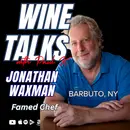
Famed Chef Jonathan Waxman came to Wine Talks through a mutual friend who we lost last year to cancer; Melvin Masters was a one-of-a-kind character in the wine trade and Jonathans partner in the famed Jams Restaruarant.
On a recent trip to Nashville, Tennessee, I insisted that the group I was with follow me to Roberts Western (most probably the last true country bar in Nashville), for a fried bologna sandwich. They looked at me crosseyed and followed blindly. You see, we had just finished dinner and everyone had overeaten and were tired. But I knew if I didn't go the first night we were there, I wouldn't make it.
Pray tell, why would one do that? Well, if Jonathan Waxman says the first thing he did was take famed Italian Chef Giada De Laurentiis to experience the $5 fried bologna sandwich. Who shouldn't? A slice of flat top freid bologna between two pieces of white bread with a side of Lays potatoe chips, I was in hog heaven. Add a PBR, and you are off to the races.
Jonathan Waxman is the kind of chef who can turn a honky tonk fried bologna sandwich in Nashville into high culinary art, then philosophize about the virtues of a perfectly marbled 1961 steak—all before your first glass of Beaujolais is finished. In this episode, you’ll discover the inner workings of an acclaimed chef’s mind as Jonathan shares the flavors, friendships, and formative experiences that shaped his career. You’ll hear about how “wine comes first, food comes second” became his guiding principle, the serendipitous plane rides sourcing lamb and lobster for legendary winery dinners, and the awe-inspiring meals in the kitchens of France that sparked his lifelong passion for simplicity and flavor. Alongside host Paul Kalemkiarian, Jonathan revisits the rollicking days at Michael’s and Jams, brushes elbows with food world icons from Alice Waters to Melvin Masters, and reveals the quiet intensity required to survive and thrive in the high-wire environment of fine dining. From the intricacies of nouvelle cuisine to the rainbow of immigrant influences shaping American food culture, you’ll gain an insider’s appreciation for the nuances of restaurant evolution, the subtle art of pairing local wines with regional dishes, and the uncompromising drive that keeps chefs inventing and adapting—even when the world turns upside down. Whether you’re curious how the Michelin Guide still shapes a restaurant’s fortunes, or just want to know what it’s like to be mentored by legends while flying by the seat of your pants, this episode peels back the layers of taste, tradition, and tenacity, one delicious story at a time.
-
Jordan Winery
https://www.jordanwinery.com -
Willie’s Wine Bar (Paris)
https://www.willieswinebar.com -
Chez Panisse
https://www.chezpanisse.com -
Domaine Chandon
https://www.chandon.com -
Bordeaux Wine Region
https://www.bordeaux.com -
Napa Valley
https://www.visitnapavalley.com -
Michael’s Santa Monica
https://www.michaelssantamonica.com -
Barbuto
https://www.barbutonyc.com -
Jams (NYC)
https://www.jamsrestaurant.nyc -
Wally’s Wine & Spirits
https://www.wallywine.com -
Blue Hill
https://www.bluehillfarm.com -
Daily Provisions (NYC)
https://www.dailyprovisionsnyc.com -
Lutèce (Historic, closed, for reference)
https://en.wikipedia.org/wiki/Lut%C3%A8ce_(restaurant) -
L’Orangerie (Historic, closed, Los Angeles)
https://www.classiccafela.com/lorangerie/ -
Spago (Wolfgang Puck’s Restaurant)
https://wolfgangpuck.com/dining/spago-beverly-hills/ -
Mi Piace (Pasadena, CA)
https://www.mipiace.com -
Campanile (Historic, closed, Los Angeles)
https://en.wikipedia.org/wiki/Campanile_(restaurant) -
Union Pasadena
https://www.unionpasadena.com -
Benno (NYC)
https://www.bennonyc.com -
French Culinary Institute/New York French Cooking School (now Institute of Culinary Education)
https://www.ice.edu -
Le Cordon Bleu
https://www.cordonbleu.edu -
Monterey Bistro (Historic, closed)
https://www.seemonterey.com/listings/monterey-bistro/1197/ -
Ritz Paris Place Vendôme
https://www.ritzparis.com
#WineTalks #JonathanWaxman #PaulKalemkiarian #ChefInterview #FoodAndWinePairing #RestaurantStories #Barbuto #JamsRestaurant #ChezPanisse #AmericanCuisine #ItalianCuisine #WineCulture #MichelinStars #CulinaryInspiration #FoodHistory #ImmigrantInfluence #WineTasting #RestaurantIndustry #NouvelleCuisine #CulinaryMentorship #WineExperiences #PBR #bolognasandwich #giada #giadadelaurentiis
0:00 We're very lucky, Paul, because you think about all these people that have brought their contribution to American soil, whether it be Greek, Thai, all the regions of India, all the regions of China, you know, Japan, Korea. I mean, it's amazing. I think we're so lucky. Sit back and grab a glass. It's Wine Talks with Paul K. Welcome. To Wine Talks with Paul Kay. And we are in studio today in beautiful Southern California, Monrovia, broadcasting all the way through to New York with our good friend Jonathan Waxman. We'll get to introductions in a second. Wine Talks is available, of course, on Spotify, Pandora, iheartradio, wherever you hang out for your podcasts and always sponsored by the original Wine of the Month club, now sporting the Bordeaux and Napa series wine clubs. This is such an honor to have you on the show, Jonathan.
0:59 Mr. Waxman, chef, probably have lots of accolades. Thank you for being on the show today. My pleasure. Happy to be here. Just starting out. I mean, it is 65 degrees today in Southern California. How about. Well, it's interesting, Paul. Yesterday in New York, it was almost 50 degrees and I was talking to one of my ex chefs in Houston, it was 10 degrees. So I. The world is topsy turvy. We probably have to talk about climate change and the world of wine as well. I did want to say one thing, though. Going through this and wanting to have you on the show. And I've read Chef's Drugs and Rock and Roll, I've read your three cookbooks, or at least the intros and prologues and things.
1:45 But we have a pretty amazing list of mutual friends, not the least of which is our friend Melvin Masters, who, I don't know, I think I've been buying from him for probably 30 years now. But Bruce Neiers, an old friend, used to sell wine to my dad in the 70s. That's so funny. So I first met Melvin in 1979 when I was at Michael's and he was at Jordan Winery at that point and he was the wine director for Tom Jordan and getting the winery open. And I was picked to do the opening dinners at the Jordan Winery by Melvin. And Tom was very generous and he said, look, you know, what are you going to serve? I said, I don't know, Tom. He goes, well, that sounds great. Here's my plane. Fly around wherever you want in California and pick up whatever you need. A true story.
2:41 And so I arrived. I was working for Michael McCarty at the time, and it was Michael, myself and Nancy Silverton, I think was one of the sous Chefs. And we arrived at Jordan on this turbo prop plane, and the wings were filled with food, and we just unpacked, you know, Catalina lobsters that I picked up in, literally in Santa Barbara. Wow. Lambs from Sonoma. I got king salmon that we picked up in Point Reyes. And it was, you know, we just. And I got off the plane and Melvin and Janie were there to meet me. And they go, so what are you making for the first dinner night? I said, I have no clue. Let's pick out the food. And we unpacked all the stuff. We laid it out in this beautiful kitchen they had at the Jordan winery. And I just sort of walked around and picked out some stuff. But what I really wanted to know was what kind of wines they wanted to serve. That was because they hadn't told me ahead of time. And I always feel. Feel that wine comes first, food comes second. So I wanted to make sure that whatever we served married up well. So Melvin then proposed to have lunch. And I remember I made. I got some of the lamb legs from, you know, the spring lambs from Sonoma. And we, We. I cooked lunch. And of course, he had Beaujolais for lunch. Not. Not Jordan. And I remember the lunch went. Figure that out. 5:30 in the afternoon. And all of a sudden we realized we had to cook dinner that night for the. For the dinner. The one.
4:14 Yeah. But it all, you know, those days you had more stamina than. Than a horse. And it all worked out well, that. So anyway, that I've got all this conversation to talk about Michaels and Nancy and. And Janie and. And Melvin. But was that normal to just get on a plane and go around and pick up your. No, I. You know, it was. Nothing was ever normal about anything I did with Melvin, to be honest with you. Character, you know. Yeah, character and a half. And, you know, Melvin and I became best friends. You know, we bonded over that, and we ended up becoming partners. And I read that three restaurants in New York starting in 1983. Was Janie part of that?
5:02 She was a trained chef. Did she work at Chez Panisse for a while? Jane, Janie is funny. What happened was, you know, I had been at Michael's since 1979. It was 1983, and I wanted to move to New York for some reason, don't ask me why. And Melvin invited me for lunch at the Four Seasons when I was in New York. It was Janie's birthday, actually, and we had lunch at Four Seasons. And back then, the Four Seasons was the most magnificent place to have lunch. And we sat and had one of those lunches that went from 12 to whenever, till, you know, till dinner. And during that lunch, Melvin and Janie said they had moved to New York and they wanted to open up a fish restaurant and name it after Billingsgate, the old fish market in London, which is sadly no longer there anymore. And they said, we'd like to have you think about becoming the chef for the restaurant. I said, well, you know, it's funny you said that. I'm actually thinking about moving to New York. So we talk about it. Anyway, so long story short, we ended up sort of changing Billingsgate to, you know, more of a Waxman style restaurant.
6:18 And Jenny said, Grace gracefully said that, you know, why don't you be the chef? And you know, I'll, you know, I'll, I'll be there, but not, not in a, you know, real active role. And, and Melvin and I started jams, which stood for Jonathan and Melvin. Wow, I didn't read that. And the thing that. That's what it stood for. Janie's a trained cordon bleu, I think. Right. She's a magnificent cook. And, you know, might have been better for his marriage that he didn't do this with Janie. So who knows? But, yeah, I remember. So, Paul, the funny thing was they had bought a house up in Bethlehem, Connecticut. So we used to go up there before we found a space. You know, in New York there's an old adage, you either have a space and you don't have an investor or you find an investor, you don't have a space. So at that point we had a space, but no investors.
7:14 And we were desperately seeking a name. And Melvin and I were stuck on the bus coming back from Bethlehem, you know. Right. You know, next to the bathroom. And it was pretty disgusting. And going back to New York early in the morning and he looked at me with his sort of baleful eyes that we have to come up with a name right now. So I just blurted out, you know, I don't know. And he goes, you know, in French there's this expression, la vieille d' or son confiture, which means life is not worth living without jam, which really means life isn't worth living without. Without cash. Confiture meaning money. Yes. Right. And so we just said, we both said at the same time, jam. And that's how.
7:56 Oh, Jonathan, Melvin. And then the s. I'm not gonna tell you what that means. Well, all right, so that's, that's Mel. And Mel is Mel. In fact, he's been in here in the studio last time he was in town, and he's promised Magnums at Willy's Wine Bar when all this clears up. So we'll get you on the list. Because, you know, and. And be through. Melvin. Mark and I became very good friends. So I've been going to Willie's. It's the greatest since the beginning. So that's like 83, I think, when he started. I think 1980. 1980, because it's been that. Exactly that. Oh, yeah, he just released his book. Well, I have. I have a poster in my house.
8:42 It's the 1986 or 87, you know, Willie's poster that my dad brought back. And he also had a signed and autographed a menu that. That Mark had signed. And we were up in Napa, my wife and I, during COVID Actually, I was doing some podcasting, and we were walking down through Yountville, and there's a little condo complex on the right side as you're headed into Yontville from the north. And I spy. My wife actually spies a poster through the window. So here we are, like Peeping Tom's looking through this guy's living room window, and there's a Willys wine bar poster. It wasn't the same one, but it was my wife because that looks like a Willy's type poster. And so it looks like, lo and behold, I took a picture and emailed it to Mark. He says, yeah, that's one of our posters. He says, where is this? I go, it's a Gonville Napa. I said, you were already out here.
9:28 People are paying attention. But then I was watching one of the TV stations during COVID It was on the news station. And over the guy's shoulder who's in, you know, broadcasting from his home, is the poster that I have at my house, a Willy's poster. So I took a quick still shot of that and sent that to Mark, and we became friends through those sort of this communication and because of Melvin is too. So you're in Magnum's at Willy's. I don't know. I suppose summertime or sometime before it frees up. But how about Bruce Neiers? I was talking to Bruce the other day, had him on the podcast as well. He used to come to see my father in 1972 and 75 and sell him wine from Joseph Phelps. What he says, he goes, oh, you got to say hi to Jonathan for me. So. So I first met Bruce when I worked at chez Panisse. In 1977. And I had worked in Napa, actually, maybe before that, because I had worked at Domain Chandon in Napa Valley. I think I met him then. Or Barbara. I can't remember who I met first, but Barbara was great friends with Alice, of course, and as was Bruce. And, you know, Chez Panicks was nothing but a kind of a great place to have friends hang out and have dinner and drink wine and, you know, talk stories. And that's when I first met Bruce. But I got to know Bruce even better when I was at Michael's.
10:57 Alice threw a 10th anniversary party at Phelps in 1981 and invited Michael and myself up with our than girlfriends. And, you know, Bruce and I spent a lot of time at that party for some reason, drinking margaritas and talking about life. And we bonded. And then he used to come out and hang out at Wally's. Steve Wallace had become a really good friend. And so I used to spend a lot of time with Steve and Bruce. What a party. Carl Domaney and the whole. That whole group of people.
11:42 And you know, Paul, it was really a remarkable time, I have to tell you. You know, we're going to talk about Michaels in that period. Ken Frank, we become friends. He's been on the show. He wants to want you to come back up to latoke and do another show. But one that surprised me. We'll get into the guts of this conversation. But I was talking to Mark Toll yesterday. He's a vendor. He'd been around the wine business for a long time. And he says, well, Jonathan Waxman used to stay at Sandy Garber's house when he came. Well, that's a. That's actually a kind of funny story. So when I was at Domain Chandone, I. I started off in the pastry department and then I moved over to the savory department. And I used to cook lunch.
12:26 That was my job. And one of the waiters was a guy named Ralph Meyer. And Ralph. And Steve Gordon was another waiter, used to sort of torture me. Over there was. The kitchen was in the basement and we had a microphone and a video set up. And they would yell at me to send food up in the dumb waiter. And, and. And Ralph and I and Steve became really good friends. And Sandy at that time was working at. For Mondavi as a tour director. And she hated me. Yeah, hated me from. Hated me. Hated me from day one. And she just did. It was a long story. Some other time, we'll talk about it. But in any case, when I moved down to LA to become work at Michael's and Ralph and Sandy Ralph came down to LA because he was going to film school at ucla. And so we sort of reconnected in that point. Sandy Ralph and I became somewhat inseparable. And that's funny. That's really funny. Yeah. So we've been really great friends since 1977. She's a character. Well, she called the other day looking for a place to move a lot of Rose real fast. She extended herself a little long, but I think I've been buying from her for, I don't know, 20 years. At least 20 years. And Mark, the sales guy was telling me, he goes, well, well, I asked Jonathan, where should I go in Tennessee
13:58 for a dinner. And you recommended this. I can't remember the name now, Western something, but it's a fried bologna sandwich. He wanted to make sure I mentioned that. Oh, yeah. So that's. It's called the Great Waxman is asking for recommending a fried loni sandwich. Okay. Well, there's a wonderful honky tonk called Roberts on Broadway in Nashville. And it's a place that is the most egalitarian bar in the world. And they have the best Nashville groups that play there. There's no cover charge. There's seemingly no. They don't card anybody, but they give people once over.
14:39 And the only admission is that you go in and, and dance and. And listen to music and eat fried bologna sandwiches and drink cheap beer. I don't know. That sounds pretty. It's really. It's really. Honestly, I took Giada there one. One night and I think, I think Giada has ever had a better time in her life dancing and having a great time. It was really. No pictures? No, no pictures. Okay, good. Sorry. You touched on a couple things just through these stories. I want. I was going to peel back anyways, I'll get to them and we'll talk about your career. Getting into, you know, the aha moment that Freya Troglo and places like that. But, you know, you said something interesting. It's kind of just started at my house, even though we've been doing this a long time. And that is. You said wine first and then we're going to cook around the food. And you know, so much of. I think so much of many people that just that like wine and maybe cook at home or go to dinner will start the other way. They'll start with, well, what am I eating and what should I drink? And I've become.
15:41 When I get home now, particularly through confinement, like I feel like a Beaujolais. I feel like an aged Burgundy. I feel like. And then what should we eat? Is that. Yeah. Is that the way you approach it? Well, it's sort of. You know, I'm loath to use this word, but it's an organic process. You know, Sandy and I go to the market in Santa Monica and we shop for food and bring the food home and kind of lay it around. And. And then she starts talking about wine first. What do you want to drink? I love that because, you know, then you start thinking in your head, what, how can I turn this food into something that will marry up well with those wines we want to drink now, invariably, we don't stick to the program.
16:29 Well, that's because, you know, you'll just. Everything, you know, like, life goes sideways. But I think it's important. I think, you know, I was very lucky when I went to Berkeley for a short period of time, UC Berkeley, and I took an enology course. And it was back in the day when it was taught, you know, very much on the old. On. On the Davis standard. It was very textbook and chemistry oriented. It was very passionate at all. But what was nice about it was I got to learn, you know, so the core values of winemaking and the wine. The wine process.
17:10 And because I worked at Domain Chandome, you know, I got to, you know, go into the. Into the winery and wander around. They let me see everything. And the winemakers were very open about how they did things. And that really helped me along the way, I think, to understanding how important wine is in my world. Well, so I'm going to venture. Say your restaurants embrace that concept. Barbuto and jams, wherever. That's an important part of the equation. And I wrote down here, I know, because particularly with the Italian food, nothing makes me cringe more than when I see somebody come to, let's say, Union here in Pasadena and bring open a bottle of Duckhorn Merlot when.
18:01 Ah SAHM has spent a lot of time and energy to pair up the foods of the restaurant to the wine list and present to the public something that would be interesting to taste and be with. And I don't have any problem, of course, bringing wine to a restaurant I think is fine, but I just want to talk about wine's evolution with their indigenous foods. You spent time in France, where you. Where you were near Lyon, you know, in Rouen, right. Fred Tragro. And. Well, I was very lucky by. I went to school in Paris. I went to La Verne cooking school. And, you know, What? And I actually used to go take classes at the Blue Fox when it was Steven Spurrier. I didn't know Melvin and Steven had a relationship at that time. And actually. And Tim Johnson was there and everything.
18:48 But in any case, you know, there was a. We took an Easter classmates. And I rented this horrible car that had a 2 by 4, 2 by 2 by 4 holding up the front seat. And I said, let's go to all the best restaurants in France that we could afford. And the first restaurant we went to was Trois Gros and Rouen. And I had never, I actually had been to a three star restaurant before that. I'd gone to Chez Denis, you know, the famous Chez Denis in Paris, which was underwhelming at best. But I, I had to go because of that whole, you know, article in the New York Times. But I. We went to, you know, Trois Gro and they, number one, it was the middle of, you know, the first of Easter. It was cold, it was snowy outside. But they welcomed us as if we were, you know, the, like royalty. And they, and they, and they served this sort of classic Trois Gro menu of, you know, the foie gras that was seared that I never had before, the fresh foie gras. And then they had this dish, you know, the salmon o lazai, which is, you know, the famous dish with vermouth and cream. And then they had roast duck with cassis berries and their famous cake. And then after the meal, they took us into the kitchen and showed us the kitchen. You know, I,
20:19 I don't remember the wine at all from that meal. But the next day, everybody abandoned ship except for one person because they had just said, I'm not going to eat like this the rest of our lives. We're done. So this one Trencherman and I, and we were about to leave and it was snowing, and Jean, trial girl walks up to us. What are you guys doing for lunch? And we said, well, we were thinking about heading down the road. He goes, oh, come and have lunch. It's on me. So he sat us down in the bar area of 12 row and he just says, I'm going to cook for you. And he brings out a. A so filled with ice and a pewter jug filled with flurry. Wow.
21:02 Duck it on ice. Wow. And it probably was the best meal I've ever had in my life. They serve, they serve this little dish. It was called panache of poisson, which these little fish from the river, the little sonde. And they were just poached in a little bit of courbillon with a little beurre blanc on top. And then we had light lunch. We had cote du boeuf with these, you know, gratin potatoes that they make at foie gro. And, and we just drank Fleury with that. So. And, and I, and tell you, Paul, you know, that to me was, you know, sort of that, that, that awe moment where you realized that I was going to do this the rest of my life. That's for sure. Yeah, it really was. But you were cooking school at the time, right? I was, but, you know, I had no idea. I was, I was, you know, I was a musician that, you know, turned, you know, I got to go to cooking school and everything else.
22:06 And, you know, it was that seeing that kind of just perfectionism with everything was. Everything was the graciousness, the hospitality, the service of the wine. Everything else was so comfortable and so passionate, yet, you know, he didn't get in the way. He didn't come over and bug us during lunch. He just wanted to make sure we were happy. And it taught me a million lessons that day. And it really stuck with me. Do you think that aha moment, I mean, it definitely has to happen in the wine business, and I'm going to guess it has to happen in the culinary side for you to take on that schedule, to take on the role of not only entrepreneur, but as chef. And then, you know, all the headaches and all the headwinds of opening a restaurant. I mean, isn't that where the passion comes from? A moment like that at Trois Gros where you're like, okay, I get it now 100%. I had another one during that time period.
23:07 I had this Austrian girlfriend who had a car. I didn't, I didn't date her for the car benefits. And one Sunday we, I said, let's go out to the champagne country and go wine tasting. Of course, we arrived too late for wine tasting on Sunday. And I realized that they were, you know, they're Catholic. They're Catholic and they don't do tastings a lot. On Sundays they go to lunch. So we, I looked in the guidebook and there's this two star restaurant called Boyer, which was not in Rennes at that time, was out in the countryside near Epernay. And we showed up this little country house and Sunday lunch and about one o' clock I walk in and stupid me, you know, of course they're booked, you know, and, you know, probably months ahead of time. But the woman at the front looked at us and took pity on us. And they created this little tiny table for us off the side. And I remember sitting down and having a bottle of 61 go say, wow.
24:07 And the first course was a salad of mosh petals, lamb's lettuce to people, lamb's tongue lettuce, if people don't know what it is, with olive oil, sea salt, and shaved paracord truffles on top. And that was it. That's it. That was it. And you think about it, you know, there was no real skill there other than perfection of choosing perfect ingredients, serving them perfectly, and having the restraint to not not, you know, put too many things on the plate and knowing what would go well with champagne. And I, I, to this day, you know, I. I try to emulate that. I never really can because, you know, sometimes those ingredients, because they've been using it for hundreds of years, it's difficult to do that. But it was really, you know, it really. That was another awe moment, I think, for me. It seems that cuisine, then, is that. Would you. Would you call that. Because you're talking 19. What did you say, 70 or 80 something? This is 1976. Yeah.
25:19 So was that nouvelle cuisine? Did they have nouvelle? I mean, it sounds nouvelle. It doesn't sound like. Yeah, it was. It was. It was, I would think, what people now call nouvelle cuisine. And I think there's. There's. There's a lot of sort of, you know, controversy about what that meant. But what it meant was, I think these guys in France and Freddie Girardet, of course, they were sort of tired of the sauces that were, you know, that they cooked, you know, a month ahead of time and just reconstituted, which is what a lot of restaurants did, because it was just economical. And they threw away the old ruse and they had natural reductions, but I think. But it was more. That the cooking got more delicate and it got more refined, and it got. And food became prettier. It looked better on the plate. You know, there was a strong, you know, obviously, you know, Bocuse and Roger Verger and all those people, they had a certain style about what they did, and that style became what is known as nouvelle cuisine. But what it really was was taking the old classics and kind of reinventing them a little bit or adjusting them.
26:38 And I think that's evolution. It has to happen, you know, otherwise a business doesn't work, you know, I think so. And no, I really think that that happens in every. Everything. But I was very lucky to be in Paris when that was happening. So it served me well. Well, it took. Well, it took until, what, the 80s? One of my favorite subjects is haute cuisine in New York, you know, Le Pa? On and Lutesse. And. And then why then did this idea that you're saying in 76 that you tasted in. In. In Leon or Le Ron, you know, how did it land in America? Was, was. Was Alice Waters like the linchpin of this idea moving forward, or was that an accident? And now that you're in New York, was what was happening in New York at this time, was it still the les of the world that were pouring, you know. Yeah, I, I shame out of things. I think if you had to pinpoint one, one area was Los Angeles, you know, when, you know, certain chefs, you know, like l' Orangerie and, you know, those restaurants, I think they were more in tune with what was going on, like in the south of France with Roger Verger and in other places. And Alice was tangential in that respect. I don't think that she was really influenced by some of those guys as much as she just had her own style. And it happened to
28:09 be coincidental in many ways to what they were doing in France, though, You know, Pierre Trois Gros sent his son to work at Chez Panisse right before I was at Chez Panisse. So there was some sort of, you know, you know, communication amongst, you know, chefs around the. Between France and Italy and Switzerland and even in England at that point. And I think, you know, you know, it's like any good idea. It spreads. It spreads like wildfire. And, you know, people gravitated toward it, but it was hard to kind of pinpoint where it really sort of took place in America. Now, I love Lutestown, and Andre Soldner was sort of my uncle when I first moved to New York, and he was really my mentor and. But his food was not what I would call, you know, cutting edge food. He was much more of a classic. Seemed very traditional, according to his cookbook, anyway. Very, very traditional, which I really appreciated as well. Yeah, I think there's room for, for everything. So I think there's, you know, that's why I really appreciate when people do go back to the classics and do you sort of channel, you know, older recipes, which is what Alice really did at Chez Panisse. She went back to old books and she looked up recipes, but she probably did serve them in her style, which probably could be called nouvelle cuisine, which is kind of interesting.
29:40 Well, I have to tell you, I've been after the Hundred Foot Journey. I told you, my daughter. My daughter's a boulanger in New York. She went to Isanjo for pastry school, and she ended up at the New York French Cooking School. She worked for Benno for a while. When they earned the star. She was the boulanger of record for the Michelin star they earned, which they now are closed and reopened. So we've seen a lot of the passion it takes to do this, but I've tried to make the five mother sauces now. I think I got the sauce tamat kind of under control, the bechamel, but, man, I could not eat the espanol. I tried to make the beef broth from scratch, and it.
30:25 I don't know. I don't know what I did. I'll tell you a funny story about sauce espanol. So one of my jobs before Chez Panisse, I went from Domain Chandon. I went to work in Monterey at the Monterey Bistro, which is no longer there. And the chef was. The owner was this old German guy who was very classically trained from the 40s and 50s, and his chef was this very small, wiry, very nice French guy. And I said, you know, so, you know, how do you make your sauces? He comes in and shows me in the. In the walk in There is this 24 gallon VAT of sauce espanol. Really? I said, so how often do you make it? He goes, I make it once every three months. And so I would happen to be there on the day he made it, and literally he made this big vat of. Of beef bone broth in one pot and he cooked it overnight. And he put a can of tomato paste in and two cans of tomatoes, and it was this bubbling cauldron of beef madness. And then his other pot, he made this roux with a number 10 can of flour and oil, and he made this roux. And then he sifted, you know, this cauldron of beef broth into the roux and cooked it for about an hour and a half, this bubbling thing, and it stiffened up
31:57 like glue, stuck in the walk in. And every day he would go in and scoop up enough that night. And you think about it, and that was what people had done for years. Yeah, but real sauce espanol, when I was at Chez Panisse and other places that we did, really is. It's a wonderful. It's a wonderful sauce if it's done correctly. It's really amazing. Well, you're lucky you didn't go on day 29, because that's like the time I would have had sushi and mammoth, and it was the day before the fresh shipment was coming in. You know, it's just not exactly, you know, it's an important. This aha moment, just for reflecting on that a second, do you think, for a young chef, and I'm going to say this from experience, when my daughter was looking for places to learn how to cook and bake, we went to ICA in Napa and listened to that speech, and we went to the one in New York. And it seemed like at that moment, the pitch by the chef was more about, well, if you don't want to go to college, you can come to food school, and then we're going to make you. Well, everybody thinks they're going to be a TV chef, but it seemed like more of an outlet for people that didn't want to go to college than it was for passionate people to learn how to cook, or at least the techniques of cooking to go do something. Because this is a tough industry, and it takes a lot of energy and passion. I mean, just watching my daughter get up at three in the morning to go bake, you know, is enough. You can't do it without that passion. What's the current temperature for
33:31 coming into the industry for young chefs? Well, obviously, Covid is, you know, throwing everything, you know, to. For a loop. But heretofore, you know, I think one of the big pushes that my friends and colleagues and peers are trying to do is throw a wider net to attract more individuals into our business. And I think, you know, that for good or bad, TV has drawn people to our business. So they see people like Bobby Flay and Giada and Michael Simon and people like that, and they said, well, they look happy and successful and rich, and they're doing something they love. You know, I'd like to do that. And the problem is that it, as you and I well know, it's. It's tough work. You know, the old adage is, you know, if you can't stand the heat, get out of the kitchen.
34:32 Because kitchens are. They're, they're hot, they're sweaty, they're uncomfortable, they're just delicious. I love being in the. I love being in the kitchen, but you have to be that type of person. Now, do you have to be in the kitchen to be a chef? Absolutely not. You could work for, as a private chef in someone's home. You could do what your daughter does and, you know, work in a different department where you don't have to work on the line. You have a different style of cooking. You could be a pastry chef, you can make ice cream. There's lots of different facets of it. There are certain people that are very good at just the economics of food and they go into the business part of it, which is, I think, one part of my business, which I think is sorely lacking. You know, I like to be able to attract more MBAs, more people that are, you know, that are business trained individuals that would like to be in the food business.
35:36 But the most important part of the food business is that it really is like a family. And the culture that I was lucky to, you know, glom onto very early on and hopefully, you know, in my restaurants I try to emulate that, is that we try to create places where people can grow as individuals. And the most important thing I think about is, is trying to elicit people's passion and find out what they're good at. And a lot of people are very shy and they don't really. They're reticent about talking about what they really like and really want to do. And I, I feel that's kind of. I, I've, I'm pretty good mentor in that respect. And, you know, I try to get out of people what they're good at. And I think, you know, we all, we all should find that little spark in our belly or that little fire, whatever, whatever you want to be. If you want to become a welder, you want to become a doctor, you want to become a winemaker, whatever it is, that little passion would, will make you happy.
36:43 You know, it sounds like you have the business part of it down pretty well. I mean, maybe the numbers aren't so great when it comes to whether you sit around and look at them, but certainly how to grow a staff in an environment that's quick and hot and fast paced and filled with sometimes complaining customers, and you're tapping into the resources of each employee to maximize their experience with you. Anyway, that's a huge part of business, isn't that? Yeah, I think that, you know, you look at it rather than a business, you look at it as a family and that they're part of your family, they're part of your sort of extended family and that, you know, you, even when they leave, you still feel responsible. Like I was talking to Mark Peel, who was Nancy's husband at Campanile the other day, and, you know, he still says, you know, you're still my boss. Yeah, from 1980, I'm still his boss, you know, and, you know, I always Laugh about that. But I think, you know, to be a good boss is a difficult thing and you make a lot of mistakes and you do a lot of silly things and you say, say stupid things sometimes. But if your intent is correct and you, and you, and you're mindful of, of your place and in your business, the most important thing is making good. Food for people, for sure. You know, and, you know, I think that at the end of the day, if that's the goal that's ever present. So I think I've been lucky in that respect that I didn't shy away from that. You brought up an interesting point because in Andre's
38:15 book, and I talked to him yesterday, by the way, Mr. Soltner, Chef Soldier. I don't call him Andre. We're not that close. But he's gonna be on the show pretty soon when he gets back from a trip he's taking. But he talks about in the book that he didn't really pay attention to the numbers. He was, I forgot who he was talking about. His wife or somebody was doing the numbers and he didn't really care. He ordered what he wanted to order and he made what he wanted to take. And they would tell them, you know, toward the end of the month maybe that things aren't looking so great that we got to do this or do that. And in today's environment, and my, my wife's cousin owns a restaurant here in Pasadena called Mi Piachi, has been around 30 years, which is a huge time frame in certain Southern California for restaurants. And you know, it's not so easy. I mean, it's just not that easy these days with the cost of labor and the cost of government and the cost of food and, and you want to produce high quality food that tastes good, you got to find good food that tastes good. How is this relate to? This is really what the question is.
39:13 You've got chef centric restaurants like yours, right? Like Espago, like, you know, Chez, and then you have corporate restaurants and here's like a Danny Meyer who's got like this amazing chain of, you know, burger joints and a couple restaurants in New York or maybe more. How does a restaurant like that, like yours manage all those pieces still squeak out of profit so you can be there the next day and employ all the people that you're mentoring. I mean, how does that happen these days? You know, Paul, I'm going to say this and you're going to laugh, but a lot of it's luck. Well, you know, I'll tell you A funny story. So when Barbudo was about 5 years old, it was 9th 2009. The crash had just happened in New York, and obviously the world and our business just dropped precipitously.
40:10 It was the darkest days in January of 2009, and certain people told me that I was going to go to business, and that didn't sit well with me. So I fought as hard as I could. And then I got a call from this woman, Sarah Abel, who is my PR person for Baltz & Co. In New York. And she goes, jonathan, I want you to do this TV show called Top Chef Masters. I don't have to do. I'm not doing any TV show. That's, you know, Bobby Flay worked for me, and Bobby did great. And, you know, I was Bobby's mentor and he worked for me for a long time and he, he did great. I said, I'm not gonna be. I'm not Bobby Flay. I'm, you know, I'm, I'm too ugly and I don't want to be.
40:53 And she kept pestering me and pestering me, and I just told her to, please don't do it. And then I got a phone call from Tom Colicchio, and he goes, jonathan, just fucking do it. And I went on the show, and we went from 0 to 100 miles an hour in April in the restaurant, doing the TV show. Now, that wasn't serendipity, that was sheer magic of, you know, tv. And I was very lucky to, number one, have lasted as long I was trying to get fired every week I was on TV because I was so out of shape and old and tired and, you know, I wanted to go home. But at the end of the day, Paul, what was interesting to me was that, number one, I love doing tv.
41:41 So that was. I was wrong about that. And I loved and that worked out, but it was miraculous for my restaurant. Now think about someone else who doesn't have that, that ability to be on TV or, you know, have that exposure. How do they make it work? You know, I think you just have to grin and bear it, and you just have to use every ounce of intellectual and physical power to make things work. And, you know, I, I, it's, it's a tough business. And never sacrifice the quality of the food. No, but I think it's tough. But I think that the tougher it is, sometimes the harder you try, and the harder you try, the better the product becomes.
42:23 True. You know, so prune. I just thought of that, you know, unbelievably. Eloquent article that she wrote about closing. And what my anecdotal story with that is that when my. When we decided after my daughter graduated from University of Southern California, I said, now, if you want to go to cooking school, you find, you know, so she went to Isanjo. I told you that we're going to send her to New York, and she's going to go to the French cooking school, which I think is now icc, which is now closed. She calls and says, well, I'm not going to go to school now. I go, what do you mean? She goes, well, Prune offered me a job. I'm like, you're. No, you're not. Because a lot of chefs have told her, you know, cooking school is not that important.
43:05 Get yourself in on the line and get. Get working. And so she toyed with this idea. But I. I paid a lot of money to send her to New York and get an apartment. She's going to just do this. And then we learn that, you know, what a sad environment. You know, if she's coming back or any rumor of what's going on with Prune in the future. Well, well, the good thing about Gabrielle is that she is a magnificent writer. Yeah. Clearly that, that will. She'll be able to channel that into a bank account that's sustainable. That's number one. Number two is that I do hope she comes back. I hope restaurants of her type will come back.
43:46 I have no idea. Yeah. You know, I think, you know, I think now that that New York got smart and is allowing, you know, restaurant workers to get vaccinated, I think that's. That's a game changer for everybody for sure. Because that was the thing that really has present prevented me from reopening was. Was the safety of my customers and my staff. And, And I think now that we have the wherewithal to protect the staff initially and hopefully customers as well, that that will create some hope. But, you know, I don't. I have. I don't have a crystal ball. I don't know. There's barbud. I really don't know. I don't know. I don't know.
44:30 Tough. On the call, you mentioned that the TV talk, being on TV being so important or having been so important for the restaurant. How important is the Michelin Etoile, the book, the Guide, three stars. How important is that to the career of a restaurant, at least at that level of food quality you're trying to present? Well, you know, when I went to France in the mid-70s and mission guide was everything. You know, if you got in the Michelin guide, you got a, you got a star, two stars, you know, three stars. That was, you know, the ultimate. That was everything. And I bought into that philosophy of, you know, pleasing the Michelin style person or whoever, whoever made that guy.
45:22 And, you know, when Michelin decided to go worldwide, I thought that was really interesting. But I still think back in the day when it was just centered really in France and a little bit in, you know, other countries that were, you know, connected to France. It was a little tighter, a little more succinct, you know, but it's a valuable guide. I still use it. It's right next to my toilet. I always have a commission guy there. I'm not, I'll be honest with you. Great place. And, you know, I think that the romance of finding that little restaurant tucked, like you talked about, the hundred foot journey tucked into a village that you have to drive hours to or your car breaks down in front of this two star restaurant that you didn't know existed and you walk in tired and hungry.
46:16 And, you know, the word restaurant means to restore one's spirit. And that's what the Michelin guide to me means that you find this place. There's a little place that I go to. We go every summer to Talwar. A friend of mine has this wonderful house there. We go every summer, spend two or three weeks there. And there's this restaurant that I found, it's about an hour away outside of Aix le Bain. And it's this young couple and this beautiful little restaurant overlooking the vineyards of this, you know, Savoir vineyards. And, you know, I went in there for the first time, I talked my. I brought my two sons and, and a couple other people and it was a revelation. Paul. Wow. Here's this young couple out in the middle of nowhere cooking food that was magical. And it was of a place. It wasn't importing lobsters in Brittany and, you know, you know, lamb from Germany. It was all food from that region, from that little valley. And you could taste it. And then you had the wines, all these amazing, you know, wines from that region that were. That are extraordinary, that don't travel. You'd never see them in this country. You know, Kermit lynch has a few of them, you know, things like that. But seeing that sort of dedication, they probably have 12 tables, 15 tables. Wow. To me, that's the Michelin guy.
47:41 That's it in a nutshell. It seems like food is food. Wine obviously are partners. But the idea behind going to a place like that, in a restaurant that's tucked away, that's only using local foods, it's somebody else's hands preparing, and they come up with flavors that maybe Jonathan Waxman's never tasted before. And that then that can change from vintage to vintage. For instance, with a wine and how complicated and infinite the idea of good food can be. And finding little places like this. I don't. My listeners know that the Michelin guy, which started like in the late 20s, early 30s, and it was meant for you to drive out of Paris and go use up your tires so that you have to buy more tires from the Michelin people. I mean, that's what. That's what the whole point was. So. And I find that fascinating to have learned that. So the. The.
48:33 There's a movie. I don't know if you've seen it. My French, you know, I take French, but the American in the English translation is the Wing or the Thigh. It's a funny movie. It's a. It's in French. It's probably from the 70s. It's about two competing food guide people, and they're trying to sabotage each other. And it's a huge slapstick comedy. So if you haven't seen it. Oh, I love that. Well, it's interesting that, you know, when I. The reason I went to Paris in the first place, one of the reasons was I saw this guide called the Juilliard Guide to Food. It was written by Gomeau. And so when I went to France and Go Mio at that time was actually more influential and probably a little more avant garde than Michelin.
49:24 And so you looked at Gomeau to find the nouvelle restaurant, nouvelle cuisine restaurants, and they were more, I think, a little more topical, not as stodgy as Michelin was. Michelin was a little more comme il faux, a little more traditional. But I love. I felt that they really were warring against each other. You know, that's what Mayweather was. And. And I love that. I love that sort of juxtaposition. Now, in Italy, funny enough, they have a lot of guides. And, you know, when you go there and you go to the bookstore, there's like eight or nine guides of food that are all very competitive and they're very dense and they go into, you know, they're very wordy and they're talking about these places. And I wonder how do they have the time to do that? You know, go to these restaurants and all they do is drink, drink and eat and write. You know, these flowery phrases about these restaurants, but it informed me about where to go. So that was important. Well, it's, you know, the, the contemporary app. I, I don't use any of them. Foursquare, Yelp, I don't care because I, I can't trust a bunch of people. And you can't trust those ratings anymore anyway because they're so. They're so congested with false information. And so I, that's why I find refreshing about the guide is that at least, you know, that is a baseline of quality, a baseline of what food should be and service should be, that you have a reasonably expect the reasonable expectation that the food's going to have,
50:57 you know, it's going to survive your expectations. You know, there's, there is a dive. What's the name of the show? Drive Ins, Diners and Dives. Gee Fiori Show. And there's an app and I've used it for fun and, you know, I'm like 50, 50 with it. I mean, I went to one place in Tennessee. It was like bad. It was really bad. And so, yeah, I thought. But I think like anything, you know, you want it, you want it to be a fresh guy. That's. You wanted to be newly minted. You wanted to get, you know, you want to make sure. I should look at the air data that show maybe. Exactly. You know, and I think, you know, and listen, the restaurant business, you know, things happen. So that's, you know, you know, restaurant changes, change his hands. So, you know, you never know. I wanted to shift gears a little bit. You're in Italy and, and you don't tell this to the French. But when Catherine Medici came to. The Medici came to from Florence and she married King, was it King Henry? You know, she brought with her these Italian cooks and it's purported that she, you know, taught the French how to cook. You know, the Russians taught you how to serve, serve food and they touch how to cook. But there's, there's such a dramatic difference between Italian and French cooking. I find that hard to believe or find an interesting belief. But how important in America were the immigrants that came here bringing their. What they didn't know was necessarily any kind of cuisine to
52:28 the extent that now Armenian food or Russian food or Chinese food or Italian food is the staples of what we eat. But how important is it? Well, I was very lucky. My. My parents, my father's Bronx and my mother was from Bed Stuy and they moved out to California, I always say, ostensibly to have me in 1950 or 49 and I remember as a young kid, my mother was an intrepid cook and diner, and she would travel to Fresno to buy grape leaves to make dolmas. She would go into Chinatown to find rice noodles. She would scour these. There's a place called Ratto's in Oakland. You know, the barrels to find the best, best olives and, you know, wow. You know, the best olive oil and, you know, and I've never understood how she had that passion. I mean, it didn't, you know, it.
53:21 She. It was never really explained to me. But I think, you know, we're very lucky, Paul, because you think about all these people that have brought their contribution to American soil, whether it be Greek, Thai, all the regions of India, all the regions of China, you know, Japan, Korea. I mean, it's amazing. I think we're so lucky. We are. You know, I think it. The. The layers that are available to us now. If you go to any supermarket or any farmer's market and you see the amount of food and the rainbow effect of all these different cultures colliding in the supermarket, I think it's fantastic. Do you think the New World. These people came, like I said, they didn't know what are. They came, they brought their food, they made it at home because that's what they had to do. But do you think that part of our food culture is because we had nothing indigenous, Maybe corn? Right? I mean, this. We had an open book. And Jacques Lardier said in Louis Jadot, like, that's what. That's what the New World's about. There's no shackles. There's. We're not forced to grow Pinot Noir here. So, yeah, I think there's a little bit of that. But I always love the idea. Like, I read, when I was reading Lonesome Dove about, you know, going on the prairie and knocking a prairie chicken over the head and roasting
54:51 over the fire. You know, we had things they, they. We didn't grow a lot of stuff, though. You know, the, The. The. You know, the. The Native Americans really did have a food culture that we're just now finding more about. You know, Anastasia corn, for instance, back from the 12th century, you know, there's. There's. You know, anthropologists are still gleaning what, you know, what was here. But I think in a way that it was really like, think of these guys from Genoa going to San Francisco. They went. Obviously, they went to another port and they knew how to fish. And that was. That was not alien to them. They became fishermen, but then they Brought their wine stocks with them. So they brought up to Napa Valley and they planted them, you know, they. They planted olives. They, you know, they wanted to have the food from their country, so they started growing these things. And then other cultures did the same thing, bringing their little bits and pieces from home, or they say or write to their cousins in the old country. Can you send me some, you know, some asparagus or whatever? And. And as. As that developed and people started becoming, you know, I remember the whole story about Meyer lemons. Fred Meyer from, you know, this botanist from California went to China and found this, you know, this crazy lemon. He brought it back, and now we have Meyer lemons everywhere in the world. Yeah, think about.
56:22 Exactly. Think about avocados. Think about all these different. Think about blood oranges. When I was a kid, oranges were orange. Yeah. I didn't. I didn't know it. Blood orange. When I first went to Venice and I had blood orange juice, I thought they were kidding me, but it was the greatest thing ever. So I think we're so lucky that these people brought their food with them. And not just. Not just their food, but their recipes, you know, about how to do. You know, I'm in love with Mexican food. I really am. I'm just gaga over Mexico. Come to la. Open a decent place, will you? And, you know, I'm just. I'm enthusiastic about flavor in particular. I'm enthusiastic about colors in food. I'm enthusiastic about. But as I get older, I'm more. Also more in tune about how food affects us both, you know, in our. In our. In our deepest soul. But, you know, that we're healthy with it. And, you know, so the. The, you know, the amount of things that I've changed my way of eating dramatically. And I realized that I'm enjoying food more.
57:38 I'm tasting it better now. I have a better. I love. Like, that's really. Before COVID my wife or, you know, my daughter would go to the farmer's market, and they just buy whatever they want, you know, and then they put it out and they go, okay. And they would go off, do something, and they say, okay, we hopefully dinner will arrive in two hours. And I love that. And. And the things they bring back from the farmer's market are astounding. Paul. I mean, think about Jerusalem artichokes. When I was kidding, there wasn't. Maybe they existed, but I didn't actually see them, you know, I think the most amazing vegetable on the planet. And they're really good for you. And who knew? So, you know, I, I'm, I'm enthusiastic even more about what the future of food will be in America and if. And, and going back to this story about trying to get, you know, people in, involved our business, you know, so it's hard. Who cares? You know, life is hard, really. You know, it doesn't really matter. You know, it and, you know, it's like, like anything.
58:40 It's only hard for the first four or five years. Well, but it, if you have the passion, like, look, I've been. This is my 31st year. I've tasted 100,000 wines. I don't think it really hit me until maybe five, seven, ten years ago. There was something very special about what we were doing in uk, what we're doing and the product that we were selling. And it's no longer work now. I like coming to work. I like turning people onto really interesting vintages of wine that they can hold in a glass and go, I either want to taste this again and figure out what it is, or I'll move on to the next one. But whatever it is, I challenged you to do something with your palate.
59:20 In fact, the other day I tasted. I couldn't believe it. I bought two cases just for my cellar wine from the Canary Islands. And when, when you. In my database of wines that when I taste, I put everything in a database, and if I start to spell a grape that's already in the system, it pops up as, this must be Chardonnay, this must be Cabernet. And nothing was coming up. When I was putting Listin Negro and, like, where, you know, I had never tasted the grape, I had never tasted the wine from the Canary Islands. And it was volcanic all the way. It was absolutely fascinating wine. I said, I got to put this in my own cellar. And that's. That's exciting. That's exciting. It's really. Those little discoveries is so great. You know, one, one thing, you know, when I started doing this, I mean, the only reason I did Barbuda was, you know, I, I. My neighbor, new neighbor upstairs for me here in New York is a Italian fashion photographer, Fabrizio Ferri. And he and his wife, Alessandra Ferri, who at that time was the most famous ballerina in the world, had moved in upstairs for me. And they used to sneak downstairs and I'd be cooking dinner, and Fabrizio is this big bear, like, guy, and he would come in and invite himself to dinner. We became friends. And he said, you know, Jonathan, you have this restaurant called Washington Park. But I had this little space on Washington Street. Would you ever think about opening a restaurant? So I said, no, I don't want to do it. So he said, just come over and see it. So I walked over there with Jimmy Bradley from the Red Cap. And I walked by and Jimmy Bradley said, that's a dump.
1:00:51 And I wouldn't touch that with a ten foot pole. Anyway, so Fabrizio kept bugging me and bugging me. So I finally said, oh, yeah, I'll do this restaurant with you. And I said, what kind of, you know. He goes, we're going to be doing an Italian restaurant. I said, you know, I'm a nice Jewish boy from Berkeley. I don't do Italian food. I'm not worthy of that. He goes, no, Jonathan, you don't get it. You cook like my Roman mother. I said, what are you talking about? He goes, that's funny. You're not from the same place. You don't. You don't have the same, you know, cultural background. You don't. So I open up an Italian restaurant. But what was great about that was that I got to go to Italy and start doing more wine tasting. Now I had with Tim Johnson and Mark Williamson, I had done. I actually done the first Tribuchiere tasting in. In really, in Alba Piedmont in the 90s. And so I've been going to Italy a lot for wine and for food, and I just loved it. But now I got to go back and I realized the hidden treasures of Italy. And one of them were these little wines in these little regions that I'd never heard of. And, you know, and all of a sudden you discover this stuff and you just. It just boggles your mind. And, you know, I love the. I love that discovery, you know. You know, it's like Palo Bella. First time I drank one of the Sagratinos, I almost fainted. I'm sorry. But it was. I think it was. It was such a revelation for me because,
1:02:23 you know, I, you know, listen, I love Roti. I love all those great wines, the Rhone and blah, blah, blah. But I had this wine, the Sagratino from Palabe, and it's still, to me, like a temple. And, you know, how does that person take a grape, a simple grape off the vine and turn it into this magical substance? And so that was very lucky for me. And that's why a part of Barbudo, I think, was such a treasure for me, because I got to put those wines on the wine list. And, you know, occasionally I would pop a bottle open and Michael Kelly, who's my wine director, who's been with me since day one, we've gone on the journey together.
1:03:04 And since then, he's not just been Italian centric, he travels the world wine wise. But his palate of mine are very similar. And we talk about this thing about bearing food and wine. I think my food is so simple that it's, it's not wine agnostic, but it does have a wider, I think, palate in terms of what could go well with my food. And I like that. I like being able to sit down. Whether you want a simple glass of rose or do you want to have a, you know, a glass of champagne with a certain dish, they both will work well, they'll marry well with that dish. They'll just have. You'll have a different flavor profile and you'll have a different experience, which I think is fantastic. I love that. Next time you go to Montefalco, my friend is the mayor, retired mayor there. Valentino Valentini. Okay. The guy should have been a movie star or something. You know, as we're getting on an hour here, and I wanted to touch one subject. We have so much, there's so much still we could share. I wouldn't even talk about the, the, the Michael, Michael's restaurant days, but we used to go to this San Francisco food festival every year. Fancy food festival. I used to do the whole show. We'd walk up and down, and I always had this question. I asked chefs and I ask friends, and the question is this. I'm standing at the booth where they're selling bone sucking barbecue sauce or something. And I asked the young man, I said, okay, I'm
1:04:35 gonna ask you a question. If I brought forward from 1945 or 1958 or somewhere in that range, a reputable steak from a reputable steakhouse. In other words, it wasn't one of the charlatan beef people that, you know why the USDA got involved, right? A real steakhouse. And you put it next to a steak from, let's say, Fleming's or Ruth's Chris or one of the today's steakhouses. Which one would taste better? And he says, well, let me ask my mom, because she used to serve at one of those steakhouses in the 40s, overcomes this woman, she must have been 90. And she says, absolutely, the steak from 1940 would be better. And we've got places like Blue Hill Farms with biodynamic foods and obviously wine and organic wines and biodynamic wines and raw wines. All these new evolution of wine business is happening.
1:05:24 And the concept of you are what you eat, eats, and you are what you drink, drinks, how does that play in. I don't say the quality of the food. I mean, if you and I went to the market together and I went to the organic section and you went to the conventional section, vice versa, and we cooked everything exactly the same, the same temperature, the same serving, would one necessarily taste better? You know, that's such a subjective thing, Paul. I think it's so hard. It's such a huge subject. I'll tell you a funny story. So my uncle worked at Hebrew national in their butcher in the 50s. And when they come to our house in New York, from New York to California, he used to bring what was called shell stakes. We're talking about 1961. 62.
1:06:08 And I remember the eye of the steak was about 8 or 9 inches, and it was perfectly marbled. Wow. And, you know, I remember. I remember the taste of that steak right now. And I think, you know, going back to that whole Blue Hill thing, I think what. What Dan and other people are doing is they're trying to get back to what steaks were like in 1940. I think you're right. Right. You know, I think before there was pesticides and before there was, you know, mechanized growing machines, and before there was, you know, you know, all this stuff, people just. They survive, you know, I grew up on a farm in. In Sonoma. You know, we, you know, we. We had composting because you had to do it, right? We had, you know, we, you know, we dug out the weeds because you had to do it. But I remember putting a board on top of the BlackBerry bush in my grandmother's backyard and picking a pail of blackberries and coming back with an empty pail. My grandma says, well, what happened to blackberries? And she looked at me, I was smear with BlackBerry juice. I. I think, you know, these kind of things are what.
1:07:10 What bring me back to those basics. Right. And I. I applaud anybody that. That tries to do that. So, you know, whether it's conventional farming or organic farming, as long as it's dubbed with love and care, I think it tastes pretty good. Yeah. You know what I mean? Does that make sense? It does. I think you're right. It comes down to how much passion you have in preparing it and growing it. I mean, if you can, I'm sure, conventionally grow beautiful vegetables and beautiful fruit that tastes really good if you. If you care, if you're just doing it for the work that's probably a different story, but. And you need a mentor, you need some. You need to learn from somebody or you learn by mistake, which is the hardest way of doing, because that's the way I've done it. It's far better to have learned from a master, whoever that person is.
1:08:00 You know, that 90 year old woman in the back is where. Who I'd want to learn from. The part that gets to me is they bring the wines in here, for instance. And I had a great conversation with Isabelle Legeron. She's got the raw movement. I had a conversation which is a book you should read. If you haven't called the hotel at Place Vendome. It's Tilar Mazio who wrote Veuve Clicquot's book Widow Clicquot. But she talks about. The liberation of Paris is phenomenal. She turns out, since I love the book, I was talking to her. She has a sparkling wine house on Vancouver island, you know, probably the least hospitable place in the world to grow champagne grapes. And she closed because of COVID but she doesn't even disgorge her sparkling wine. So you get this wine which. Which now reading Widow Clicquot was the wines from the 1750s. You know, they didn't know how to get the stuff out of there. So now they're trying to figure it out, like. And she wants to sell it that way. So. But the point I was going to make is I taste a lot of, you know, these really bad.
1:08:58 It's like I don't want to drink it just because I think I'm doing myself a favor. Even though it's still 14 alcohol. I don't want to have to stomach it just because it's raw or organic or biodynamic. I want to enjoy it. I want to emote over it. I want to have a conversation about it. So I'm not going to force myself to drink something because I think it's contemporary and hip to do. It should taste good. I mean, it should still create experience. Isn't that the bottom line? You know, that's why I think tasting blind is so important. Yes. That you know that you really should not know what's in the bottle or you should guess. You shouldn't see the shape of the bottle. But you, but you pour it in the glass and you know right away you're gonna pinpoint it to pretty close relative. Relative degree. And as soon as you smell it and people think, well, you have to taste it. No, as soon as you smell it. You're 90% there, you know, And I think that's the beauty of winemaking, because it's about the winemaker and the terroir and putting those two things. That's why I love going to. I love going to Piedmont.
1:10:02 I stay with Pia Buffa from Pia Cesare, and I love walking with him in the vineyards. I love going out and getting my finger. I love getting my fingernails into that dirt and seeing what. Seeing those steep, you know, trails in Barolo, walking around and, wow, it's so. I can smell it. Romantic. It's so romantic and so beautiful. But then you sit down the table and you. You try, you know, 202007 Barolos, and they're all so different. It's good work if you can get it. Say. Say, you know, same, same year. So different, my children. It is a fascinating part of the. I mean, that's. That. That is the.
1:10:45 That. That's the part about wine that's different than any other beverage in the world. Right. I mean, you drink Jack Dallas because it tastes like Jack Downs. You drink a Heineken because it tastes like Heineken, but you drink a Barolo from the specific district because it's going to taste different the next year and the year after that and the year after that. And that's the part that, to me, is fascinating about grape. And the grape taking on the terroir and the winemaker really getting out of the way to let that express itself. That's hard. That's really hard. Paul, you think about it, you know, it's really hard not to intervene. Yeah. Not to try to. Not to try to tinker with your product. You know, it's what chefs do. Chefs tinker too much. You know, we're past an hour, Chef, and I don't want to take any of your time.
1:11:29 I hope we can do it again. I do want to talk about your three books real fast. We've got. The latest is the Barbudo, which is recipes from the restaurant. They are. And the simple recipes we're talking about. You know, we're talking about. We're trying to talk about what the quintessential Barbuda recipe is And. And carbonara comes to mind. You know, it's. It's good pasta, good guanciale, good eggs and good cheese, and that's it. What else. What else is there in life? I mean, you think about it, but it's how it's cooked and how it comes together, which is the magic and.
1:12:10 Coming from your hands. We've Got the Great American Cook, which is more traditional American type recipes, that's. More recipes from jams. And it sort of channels my love of regional American cooking. And I'm such a lover of New Orleans food and Southwestern food and food of the Northeast. You know, I could live in Maine, but, you know, it's, it's, it's my sort of little ode to American food. And I'm, you know, I'm, I'm American boy, what can I say? And your first book was Italian My Way. That was first, right? Yeah, yeah, that was, that was my second book. Okay, so the Great American Movie was first. And, you know, Italian My Way was really kind of my love poem to my travels in Italy. And, you know, I, I got to spend, you know, vacations with Alice Waters in Siena, and I got to, you know, hang out in Positano with this and eat amazing. You know, Italy is remarkable in terms of food, and the more you go, the better you like it.
1:13:22 I'm chef. Thank you again for the time. Hope we can do it again. We're, we are due in New York. Nothing can be open if you're going to open again, but we're going to be out there visiting my daughter. She's having her first child this month. She lives in Manhattan Village, and she just got off a short stint with Daily Provisions. She revamped their bread program and got them some fresh. So have a crack at the Multi Grain and multi. And Danny is so amazing. I mean, to have that sort of vision and, and what's her first name? Lisa. Lisa. So she just finished it about. I don't know, they called her in and said, can you help us with this program? She spent about three weeks and they just released the breads, I think, last week. You must be so proud. You know, really, seriously, before we get off, I'm not sure that I would have ever felt that before. I'm Armenian and you're Jewish, so, you know what pressure the parents would put on for other careers and do things and, you know, you know, why can't you be like you're. And when she got back from France and she worked here in Southern California, she worked at Superba, she did their breads, and then went to New York and worked for Lincoln. She worked at Lincoln with Jonathan Benno. Jonathan grabbed her and brought her to Benno and Leonelli. So I, I can't tell you how proud I am about somebody who's pursued her passion and her love of, of cooking and bread. In fact, when she played softball in high school when I got home from work and she was baking, she had had a bad day on the field. This
1:14:55 was her, like, release to just regroup herself. And, and we were, she was destined to do this. And so I, I thought, I never thought I'd be proud of having a baker. And I'm, you know what? To me it's. Matt, it's, it's magical. It really is. And, and it's. To me, it's. They're the real magicians. They are field. They're fantastic. I look forward to one day having a glass with you, chef. And if you do, if you do get out to Southern California and you hang out with Sandy, you know, maybe we'll have a chance to do that. I would love to. Cheers. Thank you so much. Thank you. Cheers. Take care. Thank you. Bye bye. Bye bye. Very good, Chef. Thank you.