

 Apple Podcasts

 Spotify

 Youtube Music

 RSS Feed
 YouTube
 Pandora
 iHeartRadio
Behind the Lens: How Klaus de Jong Brings Wine Culture to the World
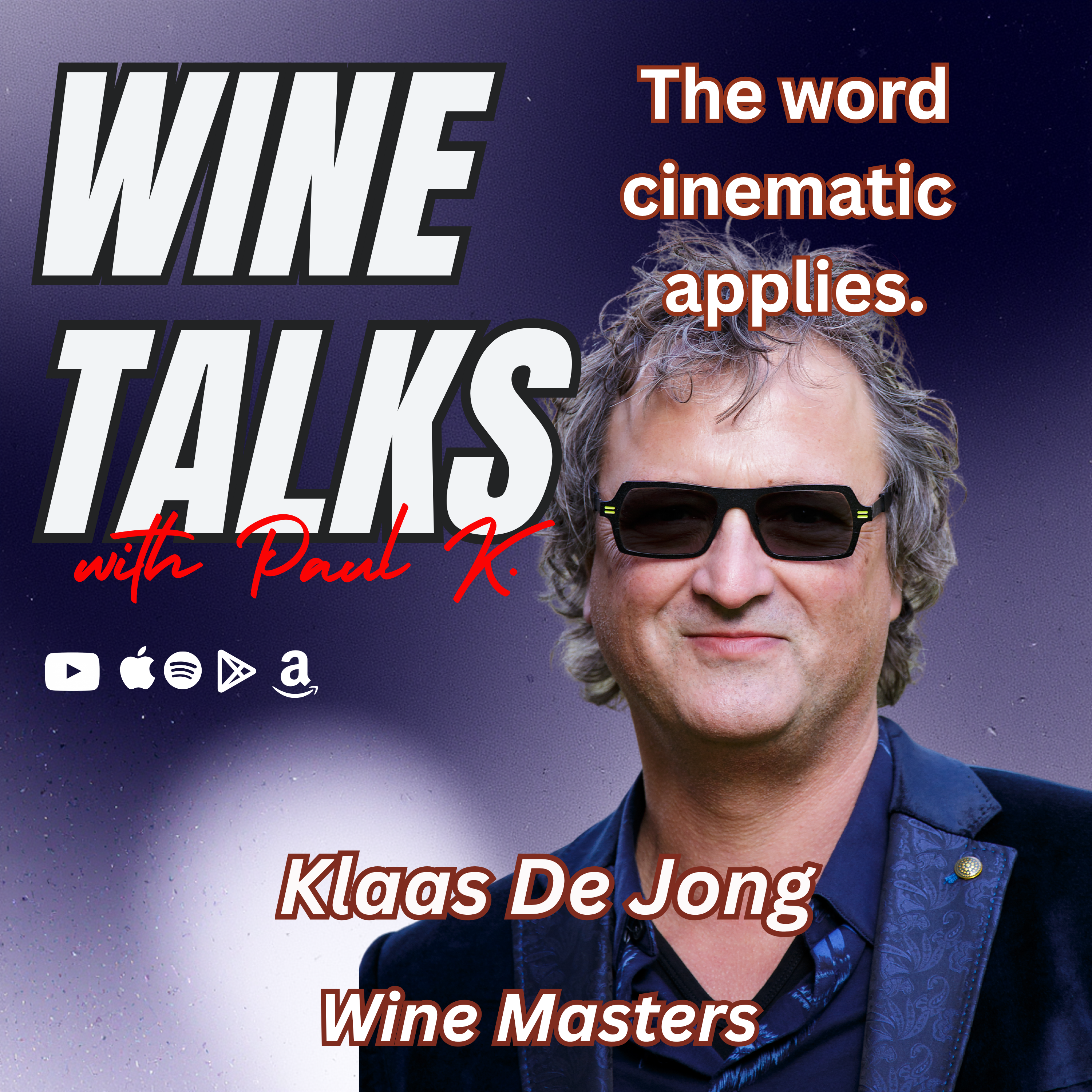
I have been watching, waiting, watching and waiting again...to talk with Klaas De Jong. He produces some of the most unique and cinematic wine footage in the trade. But it isn't just about the footage, it is the story telling. And he didn't come from the wine side, he is a movie maker who loves wine and he brought the two worlds together.
If ever there was a guest who could turn the scrutinizing lens of cinema on a glass of wine, it’s Klaus de Jong—part philosopher, part producer, and entirely convinced that the best stories ferment slowly at the intersection of culture and entertainment. You’ll leave this episode with the rarest of vintages: the inside track on how wine media is shaped, poured, and served to global audiences, straight from someone who’s reimagined vine-to-glass storytelling for the screen. Klaus de Jong unpacks why wine TV shows have long lagged behind food programming, revealing how a cinematic, “Chef’s Table” approach finally cracked open the vault, giving rise to serious “edutainment” for wine lovers and professionals alike 02:25.
He guides you through the dual headwinds of modern film and the wine trade—the shrinking cinema crowds, the anxious global wine industry, and the high stakes of quality demanded by platforms like Apple TV and American Airlines 09:10. Independence—no sponsors, no advertisements, just stories—remains Klaus de Jong’s north star, shaping his work into something both credible and captivating. And through tales of grand cru houses and luxury Champagne brands meeting 21st-century uncertainty 14:07, you’ll witness why authentic, rock-and-roll storytelling must replace snobbery if wine is to reach a new, open-minded audience 17:19.
There’s even a philosophical detour into the very taste experience, courtesy of a Michelin-starred Dutch chef who turns wine pairing—and the traditional swirl-and-sniff routine—on its head 43:29. As Klaus de Jong shares his journey from the Dutch film scene to international streamers, and teases a dramatic English-language feature on the infamous “Sour Grapes” wine fraud, he peels back the curtain on the art, the hustle, and the accidental education that comes with a well-made glass and a well-told story.
🎬 What you’ll learn in this episode:
-
🎬 Why wine TV was once unwelcome—and how cinematic standards opened the floodgates for wine documentaries
-
🎬 How truly independent production changes the way wine stories are told and sold
-
🎬 What luxury wine brands are facing today, from downturns to a changing consumer base
-
🎬 Why authentic, “rock-and-roll” storytelling matters more than ever in wine media
-
🎬 How a Dutch Michelin chef’s no-nonsense approach to wine pairing could upend everything you ever heard from a sommelier
YouTube: https://youtu.be/XIaS_Bxguvc
0:00 The way you know, what is the difference between artistic movies and movies for cinema? Cinema movies always is about heroes and art house movies are always about losers. Think about this. Sit back and grab a glass. It's Wine Talks with Paul K. Hey, welcome to Wine Talks with Paul K. And we are in the studio today in beautiful Southern California, about to have a conversation about with Klaus de Jong of Friesland, Holland. Is it Holland? Yes, it's Holland in the northern part. Very small. So it says here. I got this off of Chap GPT or Claude, one of them, Claus Jung, a Friesland based film producer and entrepreneur based in Ernawald. He studied electronics at the Technical University in Delft.
0:49 You know, these words are not. You said the English might be the word. You know, Dutch might have been the language of New York, but I can't think of the word. It's a very harsh language. It is very hard. So anyway, before moving into creative work as founder of Farmhouse Film and TV, he produced more than 30 Dutch feature films, most famously Michel de Rutter at Redbad. In 2017, he launched Mind Masters TV. This is fascinating for me because I've been following you and paying attention to what you're doing and reading your bio and the questions I have listed here. You have turned Wine Masters TV into a preeminent education source for wine aficionados and professionals. Is that. Was that the objective when you started this? No, no, I'm from entertainment, you see. Already said these films, by the way, in America, as Michelle, the writer is called Epidural. It's. It's also in America.
1:55 You can find it in some streamers. But no, that was not the idea. I just wanted to make entertainment. And I was. We were figuring out why there was no wine shows on tv. There's so many food shows and this wanted to make something with wine. And I had the idea that probably everyone wanted to have that, but that wasn't happening. And I know now why, because television in general, they boycott alcohol. And I think it's too niche. But uncertain moment. There was Chef's Table on Netflix and that was done in a cinema way that's different. It's a different way of shooting. And because I'm from cinema, that's what I'm doing already for 30 years, for me was more easy to adapt that style from Chef's Table and translate that to wine. And later on we made also studio shows, et cetera. But the beginning, it was really meant as pure entertainment and in a cinema kind of style for on Amazon and that kind of for the streams, Apple tv, et cetera. It's an interesting approach because, you know, wine is such a small percentage of the people that understand or care to understand or are interested in wine. If you ask in America, if you ask 100,000 people, do you drink wine?
3:17 25,000 would raise their hand. But some of those are just, you know, Italian, you know, restaurant wine drinkers and they don't drink it at home. So for you to feel like there was a marketplace to show a cinematic, Cinematic. Cinematic approach to wine is very interesting to me. And you know, the production value of your product is very high and I can see then the cinematic background. But. So you did it, you did it as a hobby at this point. Yeah. And still I see. Still I still see it as a hobby. And how is it? I don't like, I don't like to work. Well, that's a good point. It's gotten past that because it sounds like it's being used for the Master of Wine program and all types of W set education as well. There's a lot of wine schools using it also in the States.
4:15 All kinds of. Yeah, a lot of educational use is it? And that wasn't started in that way. In a certain moment I found out that the documentaries find their way on Amazon, etc. But to have a channel and people have to pay subscriptions and it's best to move a little bit to the educational part. But we still call it edutainment, as you say in the entertainment world. So it's educational and entertainment at the same time. Talk about an English word, edutainment. That's difficult. I don't know. There's not English words, but in the world of content, it's quite, quite. There's a word that use a lot. You know, it's one thing to, to bite this off and get into the wine world. And I've been 35 years just sort of, you know, the podcast is now five years old and I see the headwinds of the industry in general. So you've got, you've not only have the headwinds of. Of cinema and you're. We're going to talk about the Dutch film market in a minute. But media has headwinds to get people to watch and then wine has headwinds to get people to venture out of their comfort zone and try wine or try to do things. How did this, how did it grow like that? With both of those being substantial headwinds in both industries, you've been able to land this thing At a point where, you know, people are watching and noticing.
5:48 Yeah, I think my background is. Is important. So from my background I know what the standards are the streamers want to have and all kinds of TV stations and what the level should be of. Of the entertainment. And that is something what we understood very well from, from. From the filming point of view, the cinema point of view. So I, I know the international sales business very, very well. And because all our movies are sold also abroad. They do it, they do it in general. But. So for me it was a kind of logical thing. But what really happened, we would. The idea was to shoot another movie in 2020 in Morocco as an action rom com actually. And then Corona came.
6:38 Rom Com. Wow. Action Rom Com. Yeah, that is something like. Yeah. No, that was not a dvd. He wrote the script and we had money on it, so we could do it, but we couldn't do it because of course Corona Morocco was closed. We were very fanatic about that. And then we had this idea, okay, we have now a bunch of documentaries. Maybe we can start a channel. Because I didn't believe the movie business would come back in take at least three years, at least. And took four years in the end. And the still is only on 50% at the moment in the cinema. And so still not good. So we had this idea suddenly we had time. I had the idea, okay, we start. We started the channel, but from the beginning. And that's what I tried to explain. Just I didn't explain right from the beginning. My, my background was. I know if we make content, we don't do that for a YouTube channel or for our own channel. It should be at. That should be on a level that you can sell it to food stations or any airlines or whatever, or streamers. So for us is that very important. So we have no sponsoring at all.
7:52 Also no advertisement which shows always our subject self independent people never are paying or whatever. Sometimes you get a bottle if you go away, but that's it. But that was for me very important. The content we create also for our own channel. So the, the Wine Master channel that should be also suitable on other platforms. So. And that is actually the channel is only I think 20% of the whole thing. The most of the shows are going to mine schools or airlines. Last week American airlines sold bought 30 shows in once. Wow.
8:34 Let me stop you there for a second because what you just said is against the grain of what most contemporary production companies and at least in Los Angeles, you know, which is struggling with studios, you know, going bankrupt and you Know vertical productions being made on people's hands. And so everybody talks about well you should start your channel on YouTube and let people notice you. And here you are saying no, I'm going direct to the old distribution channels to produce product that going to land in front of people. Now what fits in the, in the quality standards? What by example Apple is very tough. You don't get show easy on Apple TV because they are very tough in the quality standards. Our shows are there, our long shows and then because we meet I know what level we need to deliver to be broadcasted and and additional choice that you, you choose R for free watching and people can, can see it on, on YouTube or whatever or you say of your people have to pay or the licenser has to pay. And people only pay if the quality is top notch because there are already so much free content around. That's true. So we, we have no choice. So if we choose for the pay model what we did and that's what we are used to because our movies are also not for free.
9:59 You know that millions operations that there's a world of distribution with a lot of licenses and everyone has to pay. Of course. Yeah, that's a different way of thinking. And I think in the world of wine we are on maybe one of the so not like not so many people that can say that they are completely independent. I think the, I don't think the Wine Spectator Spectator is independent in that sense. That the producers pay a lot of money and then they get eight pages of attention. You know that's not, that's, that's, that's a financial thing. I don't know if they like to hear this, but I, I, I, I know also with influencers they, they, they get a lot of trips offered and, and, and five star hotels and first class tickets. We don't do that.
10:50 I think that's, that's not unlike being a stewardess or a flight attendant because the industry is very glamorous as you already the places we're going to talk some of the places you visited and the families you've interviewed. But it is a glamorous business. It's a romantic business. There's lots of perks to it and not a lot of cash flow. In fact, that's the current problem with the trade. And I was in Wine Paris, you know, a few weeks ago and everybody's crying the blues and it's not on it's worldwide this problem issue. But at the same time, you know shows like Drops of God just get all kinds of attention. So it seems to me there's a. There's a glimmer, there's a point there and your product is so, you know, properly made that there is opportunity still, you know, in all facets of the wine trade, because it is depressed and it's time to grow. How did you get then to these preeminent families who drew and. And some of these other people that you've interviewed.
12:00 The most of these famous families are based in Europe. And culture wise, the wine is more. Let's say business wise is not Europe, but culture wise is Europe most important. So we can simply drive everywhere. Just to start with. So that's just stepped on the car and six hours later I am. I met place and no, how that works is we. I think we had the right intention. That was actually in the beginning, bit difficult because what you had sour grapes and a lot of producers felt a bit attacked. But no, I just said to him this, you know, don't worry, I just want to. I've just have intention. Not bad intention. I just want to make a documentary about Sira and you are the talking head. And I don't know from the beginning it was quite easy to get them. Yeah. So if the moment one or two or three want to do it. And I made a lot of. Of course, I used also our producer directors, backgrounds from the movies that helped also.
13:08 But I think our intention was from the beginning, not as a journalist. It's not that I wanted to fight with these people, I just wanted to have their stories. And now, so far, everyone is happy to work with us. Even difficult times like Anzo Gary, what is not easy to get. And Piero Antonori also. Same. Talking about Italians, do you think. I got a ton of questions. I want to be efficient with them. But do you think then these luxury brands, the LVMH brands, the Moet Hennessy brands, the Folio brands, do you think that they're feeling the pinch as well right now? Or do you think that level of product in the LVMH world is sort of exempt from some of these market forces? What you've seen cool. I see the panic everywhere, that's for sure. I've here already three years. The panic also with the luxury brands. Yeah.
14:14 We did an Hawaiian Master's class Grand Cru in Champagne two years ago. So we visited there, I think 20 wineries or so in a short time. Many short videos. But we had also all the drinks. So you have to talk with everyone. Yeah, especially now it's a luxury product. You don't need it. You don't need expensive champagne. And I think the generations look at it differently. But at the same time I keep reading and seeing below, Napa particularly, there's some pretty big brands being bought up by these luxury brands to either anticipate the return of the volume, which I expect that the wine is too old of a product and too important to human existence for it to dry up.
15:02 And I don't believe in that doom and gloom position that people are taking. And maybe it's companies like winemasters that are going to keep in front of people. Does it bother you then when you see substandard quality work being done in this trade to share the story like you cringe like I do sometimes Now I don't get the question. To be honest. I missed the point. Ask me again. Oh well, it seems like your product is very polished and you do you set out to do that because of your background. Plus you saw a niche in the wine world that needed cinematic quality wine information. But there's so much bad. There's so much bad product out there. Does it bother you to see that? Or you just kind of let rolls off your shoulders and you go on with what you're doing. The last thing I suppose when bad products. What do you mean by bad products?
16:06 Well, poor cinematography, poor representation of the. I'm not gonna say poor acting, but just bad hosts and all the things that go along with this that maybe forced the industry backwards a couple. Because let me see if I can articulate this better. The wine is always and always will be suffer from this. The concept of aristocracy and the falutin idea of wine. And I see it all the time when I go to a restaurant and there's still somliers that want to know more than you as the client. And so I'm wondering if that whole ambiance still is a barrier for the things you're doing. No, I think I. I'm more.
16:51 You have to know before I was in filming it was also a rock and roll. It was a music and there was a little time overlap. I was. I thought for my 20 to 25 almost constantly but I. I'm very sensitive for real people. So my, my favorite host at the moment is. Is Jamie Goode and he doesn't like to. He doesn't do his best to be pretty but he's more rock and roll, plays guitar and he's very honest and the other guy is. Is Andreas and is also playing guitar and both. Both have enormous knowledge, travel a lot. I. We Try to make it a bit more fun in general. Our not beside Polish our TV shows are mostly we try to make it a bit funny but I think you need that kind of people because there's too many snobism around wine and that doesn't. That is not nice to watch for the people. It's much nicer to see people like Jamie and what we saw. We made this show. It's called the Science of Wine. It's full of music and jokes and we make a lot of fun about ourselves. But in the meantime the information is spot on. There's no one is doing that on that level.
18:19 So that's what I also mean by edutainment. It has both. But I think you need that also more in the wine business. Too many is to snobist. Snobistis. I know. Is that good English? Yes. Snobby snobby, snobby. Yeah, I guess it's not Dutch. Yeah but I think the world world of wine can. Can be have a. Have a bit more rock and roll to my opinion. Well that's funny you said because there's the Cliff Lead Winery in Napa which named all its vineyards after their favorite rock and roll songs. No. So I mean. I mean of course not for marketing point of view but the people that are involved could be a bit more.
19:04 Could be a bit more. Overall I agree with that. Maybe that's the generational flexibility we have to have in this trade. And you know my dad got me into this business and I'm very good friends with people like Bartholomew Broadbent whose father was one of the great critics, you know still placed for that type of position. But I went to a dinner recently at in Beverly Hills, went to a restaurant and. And the sommelier was exactly the person you're talking about who just builds that barrier and wants you to know that he knows more than you. Rather than cater to the client and what they're interested in learning or understanding. And this is the part I don't think we're ever going to rid ourselves of that type of a person because that's just the way you know self education of wine can get. But are you looking to go into drama as well like this drops of God episode where you're going to make sort of rom coms of in the wine trade? Oh no. I had years ago to do. I had an idea to do something in.
20:10 In champagne and someone else stole that idea of me. So that's now in the Dutch television. It's called literally champagne. Yeah, they stole the whole idea. But we are working on an English project actually. But that is more related to our friend. Com. Sour Grapes. Well, you know what, that's an interesting thought but that's a. That's a. That's. That's a feature film. Yeah, that's a feature we're working on. We. We're working on that. On that at the moment. It's a wine related. No, it's based on the. On the Sour Grapes. Sour Grape story. Oh. Oh, wow. Interesting.
20:51 And in English. It will be in English, not an English movie. So we all. My. My feature movies are all in Dutch, you know, sometimes a bit English and I just shoot a trailer last year and that's partly in English but maintain is. Is Dutch. So it won't be the first time we do a feature in English. Wow, congratulations. That's. And now this win related. So I, I just. Someone said why are you not going to do a. Do a feature about that? Because the story is very interesting but you have to dive very deeply to have to get the drama out of it. It's not so easy. You have always in the. In the documentary. A movie needs more than only effects. You need to draw a story but has drama in itself between people. And that's always the hard thing to find out. Well, it's an interesting thought because these, these miniseries now which I.
21:45 When I fly. We're flying to Ireland next week actually and you know, usually what I do, I'll just binge on some series and it looks. It sounds like particular ones about World War II. Masters of the Air, the Brothers in Arms. They. They tend to be drama series but there is at the end it tells you about each character because they were based on characters. It seems to me like for instance, maybe you've thought of this already but the book Wine and War with from the Clad strips. I mean to me there's all kinds of drama and history and edutainment as you call it, built in the stories and I wonder why those don't make it to the screen. Why is it a resistance in the industry to talk about wine? No, no, no. If the story is good then people will be interested. But yeah, no, I don't think there is a problem. But you need to have a spectacular story. It's not. You cannot do every. Not a good story.
22:44 You need a really good story and a good title, et cetera. Yeah. Is it harder now than it was, let's just say five years ago to. To get financed. To get. Yeah. Read the story. The business. Mine is in panic, the moving business especially you're from, from Los Angeles. The panic is complete. I have a lot of friends there and the. The work has drastically gone back and down and they all work for the streamers now. But yeah, there's a kind of panic in the cinema world because the Hollywood doesn't deliver so much new content. Content as in the past and financing in general, people don't go to cinema so much as in the past. So it's all streamer directly to streamers and etc. But because there's so many, the. The budgets are lower, lower. So first in America the, the middle films were already. For 10 years, they're already gone almost. But now the high budget movies are also kind of. Well come in problems. The theater right here, I'm in a little town outside of Los Angeles about a half hour called Monrovia. And they built this theater to great fanfare.
24:01 You know, it's. I don't know, I think it's eight screens. It's. It was opened years ago, it was heavily attended, just closed permanently. And then there's a. There's that famous studio in Hollywood that. That the owner defaulted on a 1.4 billion dollar loan and a studio that was. That filmed some of the greatest, you know, sitcoms from the 60s and 70s and maybe it'll sell for 300 million. So you can imagine the demand for a studio like that is just plummeted. So where do you see that settling, I mean is. I know AI is going to take some of this burden, you know, some of the editing, some of the script writing, some of the formatting of things. Are you using AI now much?
24:50 And how do you. No, no. If you write scripts, what I permanently do with my writer, then we use that also to, to check things and ask the questions how do you think the drama is in or is it exciting enough or whatever that way. But the never writes itself. You have to come up your own with your own storylines, of course, but as a tool you can help. It can help what's interesting now because AI is of course one big stolen show because they still held everything from Internet, including songs and movies. So there are big lawsuits going on between studios and there's AI people they just want to have money because they simply stole everything. So AI in my opinion doesn't exist. I'm technically. You said already in the beginning I'm a technical guy. It just is a very fast way of processing data. But it's not the thought like the system will come up with something with self so if you write movies and all this kind of stuff, you need to with creativity. But that said, what AI Is interesting in the past, if you want to have a movie, animate animated movie, in the past, you had to do the whole movie. Now you can only do parts of your, let's say spaceships or whatever. You create that once in. In. In. In special tool for that called Maya or tools like that. And then you put that in AI and
26:22 then you write story. And then you can make a whole movie based on your own. So you learn AI your own elements, and then you can make, for much less money, you can make in original story. At this moment, Hollywood is not prepared to use AI because of all the lawsuits that are going on. So they cannot use the regular tools because they're based on frauds. The whole AI thing is based on frauds. Plagiarize whatever's on the web. Well, I've used it a lot, playing with it. I actually created a little.
27:02 I had this idea that I would take. And the Psalms never stepped up. But this, you can imagine the sommeliers of the world must have heard amazing things, tableside, anecdotal things, funny things, obnoxious things, annoying things. And there must be a billion stories from Psalms around the world that have stood at a table. In fact, when we were in Portugal, I mean, we were in Sicily, we were at the Palermo, we went to a restaurant. It was the best sommelier service I'd ever experienced in the world. I've been all over the world, been all the great restaurants, blah, blah, blah. But this guy from Slovenia, man, he just loved being a song. And so I got, wow, would it be fun to use AI Just to create these scenarios, tableside scenarios where we can try and get some humor? So what I found was it was very hard to get humor for. For AI to edit humor. It doesn't understand the editing part of getting humor from an expression or from the timing of the cuts, et cetera.
28:03 That's the first problem I ran into. So it didn't understand the storyline. And it can't be creative. You know, it doesn't see facial expressions. And I'll give you another example, and you can chime in on it. I thought, would it be a good idea to use AI And I'm working on another project for Armenian stories during the genocide. So why couldn't I take, let's say, 20 interviews and let. And take the timestamp and shove it into AI and say, look, weave a story from this interview to that interview, to the Next interview on the same subject. Let's just say it's about the internment camp that they were in and they're talking about the food they ate, whatever it is, and let AI find the timestamps of the various 10 episodes and create a story with some B roll and just kind of run with it. And what I found was it doesn't understand the facial expression. It only understands the content, you know, the transcript. But it doesn't understand when somebody might have rolled their eyes or made a funny face or, you know, reacted to something that was said by the previous. By the interviewer. And so it doesn't have that capability to do that, but it can rough cut, you know, it can sort of put things in perspective. So the question is, does that take away human work? Does that. Will that? You know, I know friends that are in the Hollywood business that have lost their jobs.
29:31 Their job is no longer needed. Have you seen that in the Dutch environment? And do you come back or what? I see it, I just from creativity point of view, I see it just as a handy tool and for, I think for software people could be a problem because there are AI tools that they can program websites and all kinds of things. But yeah, my example for Dutch movies, we're doing an experiment now to make a dub with original. The voice of the original actors and the depth that the mouse is in every language doing the right thing. So by example, Admiral, our sea battle movie, that is. You can find it.
30:17 Yeah, we experiment and now actually it's a company quite close to you is doing that. Can we get that done? Because that is for America, Americans, it doesn't matter because they have the English, but we have. If we can have our Dutch movies in every language in the right. And the sync is right. Yeah, and the sync is right. That's interesting. That's very interesting. That kind of things are pretty good possible with AI we did the test now with the trailer and we used it already for Internet and it's on come next week and it works fine. So, yeah, so it won't be like those old Japanese movies from the 60s where the voice was always way off from the. From the lip movement.
31:09 Yeah, it's very. It is interesting because if you now have a very good movie in Spanish or so a lot of people don't want to see that the Spanish, you can do it in English. That there's also a little bit more competition for Hollywood. Well, it certainly would open up more markets if you had a clean, you know, audio sync to separate a different language. Altogether is it? Dutch is a Dutch film industry. You know, I obviously familiar with Hollywood. I was supposed to be a cinema student, by the way. I was accepted to cinema school, but I didn't attend. I stayed in business school. But you know, the French industry is very well respected. That's supplemented by the government. They, they spent a lot of time and energy on the creativity side and the quality of their, of their industry is. Does the Dutch government get involved with. With the creative side.
31:56 Let's put it that way, that movies and all cases. Dutch is a very small country, so small language. So in all cases movies are subsidized by the government. They are. I think 90% is subsidy in Holland. But the taste of the people that give the subsidy is a bit left and a bit alternative. That's the problem. So they don't like broad entertainment. They don't like. Actually don't like the things that I'm doing. I do more things for a bigger audience, but they do more like difficult stories about. And I always say the way, you know, what is the difference between artistic movies and movies for cinema?
32:43 Cinema movies always is about heroes and art house movies are always about losers. Think about that. That's an interesting irony there. Wow, that's, that's. Well, I just. It's interesting to me because I, I love the industry and I, I. If people have to go out and have to pay money and park the car and popcorn etc, they don't want to have this difficult, heavy, heavy thing. You know, you have to have to entertain them. Yes. Yeah. And. And still, you know, still we put always a lot of culture in our, our story. So because we can never can compete with America so it doesn't make sense to do something the same. So we do typical things that belong to the Dutch culture and the Dutch landscape or the Dutch whatever.
33:33 But are people still going to cinema, going out like you said, buying popcorn and doing. They say it's 25% less than 10 years ago, but I don't believe it. I think it's 50% less listening to the numbers. I think especially all the generation still goes with the youngsters. That's also a thing. Youngsters are. How long can they have their attention with something? Oh, it's. Well, it's very, very short as you know. And, and they're watching everything vertically on their phones and movies at least 90 minutes. That's not short. That's hard to do. Yeah. So I, I'm, I'm. It's a very interesting question. I'm old enough so for me it doesn't matter anymore. But I'm. I, I doubt if in 20 years the young people still watch movies because I don't. Maybe it changes. But at this moment, at this moment they don't, they don't do it. They just stay on YouTube and tick tock. So the question is that's generational. That's not going to probably come back. We have the same problem in the wine business with Gen Z's. They say they're not drinking. Millennials, they say they're drinking. I mean, we don't really know what's happening. But I do know maybe you've seen this through your travels, through filming that Eno Tourism, you know, tourism around wines and wine locations and visiting chateau is up, is growing. Have you seen that?
35:03 You see it everywhere where we are always tourists around. If we are filming somewhere, there are always, you know, tourists around. And I wonder. It's interesting because here's my thought. I had this conversation yesterday with, with the Concour mondial Bruxelles owner, Mr. Havo, which is that maybe with movies it's a little bit different, but it didn't. My brain is clicking here. The experience of going to a movie theater is an experience, right? That's the whole thing is you get up, you go, you. Same with wine, right? Wine is very experiential. The experience to me is not that you got it for $3 on the Internet or that you bought a wine in a pouch or a can. The experience is, well, it's, you know, tourism. I go to a foreign country and we want to go down into Bordeaux or to Burgundy or wherever we're going to go in Tuscany and visit a chateau, a villa, taste some wine, have some great food that, that memory of that will never fade.
36:08 Right? This is, this is my opportunity to, to participate in a culture. You would think filming would be like that too, but I think that saves the wine business in that experience. That people will never forget that trip to the Chateau, you know, Cheval Blanc or whatever they go to and take that home with them. Yeah, it's. Yeah. No, you never can compete with the real thing. Although I have to say that people say the only best. Sometimes you get critics and say, oh, why must only going your life there is even better. But that's not really true because a normal person doesn't come further than the tasting room, you know. Yeah, that's true. And we are everywhere. We are where the action is and where we can do things.
37:01 So we show things to the people that they never Will see if they go to a vineyard, to the tasting room, it's different at least. No, you're right. The stuff's really good. What are you seeing? You've been to South Africa, you've been to Georgia, you've done some various locations like that. I just went to a tasting recently. It's called the Raw tasting. It was actually was concomitant with Wine Paris and there's a huge Georgian contingency there. Yeah. Interestingly for me, there's a table of completely rustic, old school Georgian wines and then there's that modern version of it. Crisp and light, easy to drink.
37:51 Other, other emerging wine regions in the world that you think you're going to cover that that might be interesting or were these shows not interested to be. Were they not interesting to people? No, what you see is in general people like everything. What these days we don't show so much areas anymore. We just do now this science of wine thing and do a difficult. The problem is if you go to New Zealand. I like to go to New Zealand or Napa, whatever. The problem is storytelling is difficult because if you go to the Rhone Valley and you have a lot of history and missions and. Yeah, if you go to New Zealand. Yeah. Why do we have Sauvignon Blanc? Yeah, just grows here and we sell a good. But it's not really a story, you know, you cannot. You cannot show for 50 minutes landscapes. It should be a story. That's right. So what we tried to.
38:47 With that series, we tried to find like the limit on had a wine and war id. So you need a bit more in the culture wise. You can't. You can't fool the people really into just cinema, cinematic technique to tell the story. You need the story. Yeah. It always thought so what we did there in Georgia, you had that with the Cradle of Wine and it was a very story. But afterwards I thought that we should have done that differently. We should go to that kind of areas and go more from a journalistic point of view to find stories that are more from journalistic point of view interesting and not. Because there is not so much to tell about the wine in New Zealand that looks like advertisement for producers.
39:36 That's something you don't want. But if I find a story like that, then we always interested. But you need not like, oh, this wine. This winemaker sits on his hill and he makes fantastic wine. You have to go with him, make a documentary. Who cares? No one cares. There's not a particular story behind all these producers. That's the problem I was in Armenia about a year ago, and I commissioned a little crew and went out and we shot five sort of video podcasts with some B roll and stuff. And. And they're out. We just launched them last week. I saw one, yeah. Oh, you did? And. No, I saw you just watch this. Well, here's the point of that. I wasn't. You know, I wasn't. I didn't want to.
40:19 I definitely didn't want a comment about the quality of it, but it looks nice. I'm happy with them, considering what. You know, they're on the fly. The reason I brought it up was the first one was edited here with a Hollywood editor and a friend of mine who was with Anthony Bourdain for two years on Parts Unknown, and he was telling the stories about, you know, they would go into, let's say, New Zealand, as you're saying, with an idea of what they wanted to do, but when they got there, they realized that idea wasn't going to work, and so they had to, you know, change their whole entire direction of what the thought process was going to be and how this show was going to go once they figured out, you know, who these people were and what the story was. Have you had that experience as well? No, it happens a lot. This happened the whole. Happens all the time. Yeah.
41:08 Yeah. Especially with the show we're doing now with Jamie, that you have a lot of. You go and you think you have the story, and then it completely switches to another story. Yeah. So that's a. Last week, we made a story about tasting. And. And the conclusion was that the whole sniffing thing, forget it. It's only for freaks. And you don't, you know, and the whole. There was a. There's a guy that said Davis page View on this, and he did for 20 years, and I worked on this. And he said, also, all these things you can taste in wine, the cherries and the cherries and the citrus, whatever. All bullshit. Comes to wine for pairing. Totally not interesting. It's only about. It is. And I did this for 35 years. I'll tell you a funny story. We were up in Napa not long ago with some friends, and he said that exact word to me. He goes, I think what you guys talk about is. And I said, well, wait.
42:04 I go. I go. I said, you have two wines in front of me, two 2014 cabernets in front of you. And you. And you tasted them from the same wine, Mike. Your same Chateau or, you know, same villa, whatever, but they taste different. Huh? He goes, yeah, they do taste different. I said, well, at least you understand that part. Yeah, the wine geek part. I agree with that completely. In fact, on the back of my T shirt here, it says, no swirling, no sniffing. Because that is the part that. That sort of portrays the aristocracy of wine. But you have to recognize that there's, you know, the wine has different character and that. I mean, it's just complete. It's just completely stupid. If you have Pinot Noir that tastes like Pinot Noir, you just say, oh, there are cherries in a Pinot Noir. But how would you describe then the cherries? The cherries said, oh, they taste like. Then you could say it, sherry tastes like Pinot Noir. It's just stupid.
42:59 You know, my dad. The Pinot Noir tastes like Pinot Noir. My dad and I were on a tasting years ago. He passed away a few years ago. But this is. I'm talking about the late 80s, he says, and. And the winemaker said, this tastes like satsuma plums. And my dad was a chemist by trade, so his palate was incredible. And he goes, I don't know what a satsuma plum tastes like. How am I supposed to. How am I supposed to know this? So you're on your way. You're on the way to do a shoot. Where are you going? No, no, I'm not at home at the office at the moment. But you mentioned what's so interesting on this guy because he just openly said, okay, all the things you learn on the.
43:39 On school, on education of the W set. That's all said. If it comes to food and wine pairing, it's only about. It's. You have three things in your mouth that you can taste, and that's silky, that is hard, and that is sour. And depending on how much harsh it is or how, then you have to find a wine that has the same characteristics. And he's demonstrated that for us with 50 kinds of wines and all kinds, in a certain moment, he had a fish. It was a monk fish. He made on four different ways. One was with only bottle, one was with only stock, one was with the Japanese, etc.
44:21 Slightly small difference. There were five wines and five white wines, completely different wines. And both. All five. Fitted to one of the dishes. And if you do the test, you do the test. We were shooting with five people at that moment. You did have. Everyone could find the right combination. Because he said, okay, this is how your sonulates would work. Not like, oh, there are cherries and the Pinot Noir. So I do a cherries you have to see to all these three things. It's very interesting with all these tests and that plus I didn't see that coming. I know that guy was specialized in sensoric things but the brain does. But taste etc. But didn't see it coming that we were so critical about the whole tasting thing. It's just swirling and sniffing and seeing. What is he fault is also because what he did with Jamie and gave him three wines. Actually they were all three the same wines that they fooled them with stuff odors they put in wine. So one that tasted very sweet, smells very sweet. Oh, that looked like a sweet wine. And the other was like that. And when you taste them, they're all three the same. Wow.
45:36 So who was this? Who was the. That's cool. Oh, I have to look up his name. I forgot his name. It seemed it. Was he a master of wine? No, he is. He is. He's a crazy D. He has a Michelin star restaurant also. Ah. But he's quite famous about this research. If I tried to find his name in the meantime. He's quite famous about this. About this research. And. And more and more people say yeah, it's probably more. He. How do we. He says it's fine that you want to describe all this odors in wine, you know, on the palace, but it's hobby you cannot do. You cannot make conclusions on it. Because he said the biggest problem is that's also very personal. It's very.
46:24 It's very personal. And. And the way he describes it is not personal because if the wine is very tannic. And we did a. We did a comparison with another paper where you make something. I don't know the English word for it. Sanding paper. Yeah. So you lick on sanding paper three times and you would say this and this Compare. So this 3Ws are have the same thing. But that's what he tried to explain also how your. How your mouth feels that that R string from the 10x. So yeah. And so you have. Let's say you have 120 and having a 300 and a 500 sanding paper. So you can compare that with wine. That's very interesting. I didn't see the whole ship you're coming but I was really impressed. Actually.
47:14 No, I. And I agree with it and I was the reason I asked you the name is because I had a podcast. You have to guide it on a podcast. And he has a really good story I'd like to hear because I had a guy on who. Who was saying it's called, it's called Peter Cl. Peter Clauster. It's a Dutch guy and he is. His English is very well, but much better than my English. Peter Classet. Class. Peter Clausset. Yeah, I will, I will appreciate Peter Clausset. Very interesting. Very interesting to hear his, his point of view. I, I agree with it. I. I've. Of all the dinners I put on here and all the wine I sold through the club and all the things we did. I struggled with understanding wine pairing because it never seemed to work. And I wonder with, with. You had five different dishes and you had five different wines. Did anybody align. Did anybody say this goes with this one better?
48:12 And everybody was on the same page that ever happened. Everyone, everyone agrees it's only based on these three characteristics and the, in the intensity of these three characteristics. And that should be back in the. So silky. I don't know how the English word we would say harsh. Like tannins and, and, and sour. Yeah, these are the three factors. Yeah, those are the things your tongue can do. And for the rest, it tastes like Pinot Noir. And so you snap a taste like the Syrah. And yeah, he think it's bullshit. And when I came into the wine, I'm surrounded by all these people. But this happened in a show where Jamie Good is the host. Jim Good is one of the big influencers in wine and he. And he agreed on this guy. So he said if this show will be released next year, then I probably have a lot of criticism from the decanter and from the W set and etc. Because they make him a little bit ashamed. But yeah, if you were sitting there, you would be.
49:13 Yeah. We also say. I'm sorry to interrupt you. Do you think that. That the spectator, the decanter, you wine enthusiast, that they want to defend this idea that that was disproven during this tasting. And do you think that there's that much protection of the whole. The whole tasting on the palate and what you taste and how you describe it, that is, that is kind of standardized. But the problem is what he says. You cannot standardize it because what you think is a cherry is not for other ones, other people to recognizable. So that you have to train on this to find the same thing. But he says it is. And I did a lot of educational shows. We did also level three course completely. And I said to the masters of wine, somebody said, sorry guys, I like wine, I have a wine cellar, but I will never. I'm not interested to learn this.
50:10 Yeah. And that's very Strange for a wino maybe, but. No, but people want to just drink what they like and move on. And they don't necessarily want to hear the pitch. They don't want to hear the story all the time. I. It's kind of an interesting thing for me and we have to wrap this up. We're out of time already. But it's always interesting to me because that, that intimidation does exist. People when I go to a dinner party are worried, you know, what they're going to pour because Paul's coming. Not that I'm a sufficient auto of anything, but it's just I'm, you know, in the neighborhood, I'm in the business. And then however, no matter what is poured, the conversation always is around wine. And it's a non intimidating conversation. It's a fun conversation. Wine does that. It's just leading into that moment. There's a little bit of intimidation and fear and. But eventually it becomes a great talking point. And sometimes a talking point in a dinner conversation. There's nothing else to talk about. Maybe I don't get along with this person, but we can talk about wine. This kind of works, you know. So what's your, what's your next show? And we'll wrap this up. What's your next endeavor?
51:23 This, the English movie. That's how you'll know which list. Yes. And we are also working on a new travel show more like what you just described. More from journalistic point of view, from cultural point of view. Yeah. And not from wine point of view, but combine these things that is from the wine. And we're working on, on a new Sea battle movie in long term. So that's things. What, what's going on. And for the rest we just record 20 shows a year for the average for the channel. 25 sometimes. And do we keep on doing this? How big is your staff?
52:04 It's very small. We always shoot. We shoot always with three people. Yeah, and we do all. We do all. We do all. We have eight cameras and two drones and we have only three people with all kinds. Different kinds. Use all lavalier type mics and. Yeah, for interviews. Yes. Yeah, both. Both. Yeah. But there's also on cameras. Microphones and microphones are everywhere. But actually from the sound you'll hear in documentaries and sounds 90 is made in the studio. It's not recorded live. Yeah. So we have, we have sound, our sound designer. So we shoot with three people. Then one of the cameraman and I do the editing and then this one guy does the sound design and. And the composer is already the same one for years, but he has a lot of music, so that's everything. We do that four or five people. Sounds pretty efficient. Yeah. And we all can do camera, we can all can do sound, we can all do light. We have a lot of light. A lot of light. But. Well, yeah, that's the way we do it.
53:10 And you can see that, you know, the quality of your work is incredible. And it's. It's. It's been an honor to have you on the show and hear, hear the stories and thanks for having me. I hope we can do it again and look forward to seeing more footage and, you know, the idea of my. The. The four shows I shot in Armenia, one, the Concord Mundial, the Brook Sale is. Is coming to Armenia in May for the big tasting, which is a huge thing for the industry because it's a fledging country and a fledging industry, you know, and part of the conversation, I think, if you listen to the one with Vahe Kushkarin, who I think is one of the most brilliant winemakers in the world, you know, you're bringing to the world varietals no one's ever heard of from a region that really no one's ever heard of in a very congested market that's not. That's not doing well right now. So all the headwinds exist, but what you can't quantify is the passion of the people doing it. And I think that's what you try to point out and try to bring, to bring to light. Thank you.
54:16 So I'll. I'll see you on the flip side, as they say in the Hollywood business. Okay, bye. Bye. Cheers.