

 Apple Podcasts

 Spotify

 Youtube Music

 RSS Feed
 YouTube
 Pandora
 iHeartRadio
Growing Wine Brands: Digital Strategies and Innovation with Molly Bossardt
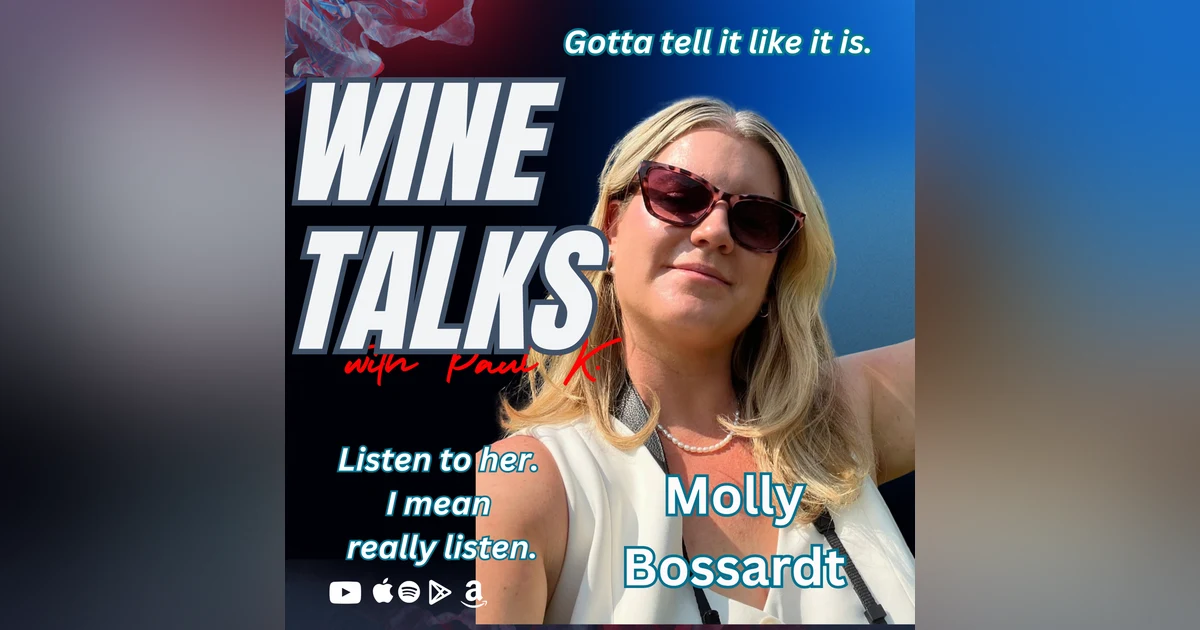

I watch social daily. I guess we all have to. Besides the interaction with peers, it keeps you aware of what people are thinking and doing. Once you get past the chaf and get to the honest opinions and outlooks, you get folks like Molly Bossardt.
I reached out to her to get a glimpse of what she is thinking and doing in our trade. Have a listen.
Molly Bassard proves that you don’t have to be born in Napa or Bordeaux to turn the wine world on its digital head. When she launched Bread and Butter in the thick of 2020, Molly saw what many in the wine trade still missed: wineries remain rooted in old soil, even as marketing spins ever faster into the future. By tuning in, you’ll quickly learn how Molly peeled back the layers of an industry famous for its dusty traditions and discovered a staggering lack of digital innovation, especially among smaller and mid-sized wineries. She exposes why so many vintners are hesitant—even averse—to marketing, and why most farmers don’t realize that great wine is only half the job. Molly demystifies what a modern marketing strategy really looks like, from omnipresent email campaigns to the power of influencers, and explains why hiring “my niece who's good at Instagram” isn’t enough. You’ll get a candid lens into the digital uphill climbs wineries face, why foot traffic still matters in a world obsessed with e-commerce, and how to nurture a genuine community rather than chase short-term trends. Molly also uncorks the realities and limitations of AI in creativity-driven industries, dashing the fantasy that robots can replace passionate marketers. Perhaps most intriguingly, you’ll discover what true innovation means when it comes to wine—hint: it has less to do with trendy packaging, and more to do with reimagining sustainability, experience, and storytelling. By episode’s end, you’ll know why good marketing can’t be handed off to just any agency, and you’ll see how the future of wine lies not in resisting change, but in embracing creative risk. Expect to come away with an insider’s map to the new digital terroir, one meaningful strategy at a time.
0:00 Carson, Leno, Fallon. Now it's Wine Talks with Paul K. Hey, welcome to Wine Talks with Paul K. And we are in studio today in beautiful Southern California, about to have a conversation with Molly Bassard way out in Virginia. Introductions in just a moment. Wine Talks, of course, available on iHeartRadio, Pandora, Spotify, wherever you hang out for podcasting. And hey, give me a review. I mean, give me a good review. If you don't have a good review to say, then don't say it at all. I'd appreciate that. And tell your friends about it. Have a cup. Have a listen to a couple of shows I just released. One of them was with Vito La Fata. And we're going to talk about digital marketing today with Molly. So we're going to talk about a startup winery, startup wine tasting room here in Southern California in Temecula. And Vito, you know, he seems to have it going on. I think you have an interesting conversation, interesting listen of him as well.
0:55 Just off a trip from Bordeaux. And you want a whole different viewpoint of the world of wine. That's where you go. And so I had a conversation with the winemaker at the famed Cheval Blanc and Monsieur Clouet and you will hear the most amazing passion of being in this industry that you've ever heard. So have a listen to that, but not while we're here. We're here to talk with Molly, the founder of Bread and Butter digital marketing. Welcome to the show. Thank you. Thanks for having me. We had a great pre call conversation about what this crazy industry does to our lives. But you're going to share that with us now. But tell me about Bread and Butter, exactly what you know, where your market is and what you do with it. Yeah, yeah, definitely.
1:36 So I founded Bread and butter in 2020. Initially I was supporting local businesses with organic social media and social media, paid social media as well. So basically supporting them with like their digital marketing efforts. Prior to that I had experience. I was living in New York pre pandemic. Like every, a lot of people, you know, uprooted their lives. So I moved back here and I noticed that there were so many wineries. I mean I knew that there were wineries here, but I was seeing this like lack of, of digital innovation or like even digital presence for a lot of wineries. So I really thought that my skill set would like perfectly match the wine industry. So I really niched into wine pretty soon after founding my business and since then I've been supporting wineries with all forms of digital marketing. So kind of coming on site for smaller wineries and helping them out in a360 capacity. So really hitting like omnipresent channels, email marketing, social media management, paid digital website optimization, et cetera. So that's one aspect. I know, I know and I talk really fast, so I'm sorry, I'll try to slow it down. No, no, I mean I just talk about all those pieces of digital marketing prongs, each one of them. Yeah. And they've got multi, you know, so many layers. When we're talking about organic social media. It's
3:10 also managing, working with influencers. There's an element of PR too, you know, when I'm working in that capacity with clients. And then I also support, with paid social advertising, so meta advertising, I support clients in that realm as well and I really love that and find that to be really effective way to drive sales, you know, really effective and measurable. Well, we'll get into the granularity of some of those because. Because an hour, not even an hour is not enough to talk about each one of those things. But there's. You said something interesting. You said you started in 2020, which of course was the pandemic. Yes, the pandemic, at least for the wine trade out here in general on the Internet. Being the Internet marketer that we were, you know, that was, you could do no wrong during the pandemic.
3:59 This was a no brainer. They'd buy anything I told them to buy. And in fact the reason I have such a great collection left over after selling my company is because they didn't buy at all. I mean, you know, it's because the pandemic ended and it changed everything. So how did you see a need for this at that moment? I mean it's like it was like crazy good for everybody. Unless the Virginia wineries were suffering from something else. Yeah, I mean it was. I, I think the wine industry as a whole is a bit behind the times, you know, if we compare to, to other E commerce. So I know the wine industry for legal reasons took a really long time to get on the bandwagon of D2C E commerce sales. Because of that lag, a lot of their marketing has been a lot slower. I think maybe it's not just attributed to that. I think there are other reasons too. So I definitely like, I still stand by this, that this, this idea that the wine industry is many years behind in their marketing and in their efforts. And I mean I read, I read all the news about the wine industry and how it's having a really Challenging time, capturing that younger audience. And I've definitely seen that in some businesses that I work with, we can get into like the granular details of that. But there are, of course, outliers to that. There are people who are marketing, I would say correctly, or being innovative in their marketing practices. So they
5:30 are able to, you know, attract a younger demographic, which that means they're going to withstand, you know, they're, they're going to be more resilient as things get, you know, harder. So coming from 2020, because all you said is accurate and there's a lot of reasons why. And I don't think everybody, you know, the consumer knows that. I just got the phone with a niece of mine who's starting a salad dressing company and she, she actually asked me the same exact questions or the same answers we're going to come up with today. She has a crossroads. And this is a more fluid product, obviously. It's, you know, it's dynamic, it's. But it's just as competitive. It's very hard to find shelf space. The whole thing.
6:13 It's not as slow because wine is slow. It's a one year of a year product. Right. You only get one chance a year. And I think that trickles back to the mentality of the marketeers and the winery people themselves. Let's face it, wineries are farmers. Yeah. Yeah, right. They don't know what you do. No. And I think there's a real aversion to marketing. I don't know, I kind of say I hope your wine makers don't like the people who listen. I hope they don't come at me. But I describe you winemakers as mad scientists meets, like crazy artist and a nice little combination of the two. And it seems like marketing and business kind of don't come into play as much as I would say they should. But I have, I'm a marketer, so I come from, you know, I come to wine with a marketing perspective.
7:06 Well, it's a, it's a. No. This is. You're right on. I mean, this is a serious issue. It's probably not a new issue. We may think it's new because we're new to the, to the environment. Let's just say new. Me, Even the last 20 years, for me, the last 30 years, yeah. Digital marketing for me started a long time ago. We were doing emails for forever. But, but the, the problem is not new. I mean, the problem with any industry to keep up with where the consumer is and who's buying and who isn't I think as as old as marketing is concerned, we just have methodologies now that are faster, quicker, more responsive and more dynamic. So is your main client then the Virginia based wineries? Not necessarily. I work with clients like nationally primarily.
7:50 I don't really work with any international clients because, you know, I was just talking about Virginia wines. We talked about it briefly before, but I had featured one years ago. But there seems to be a resurgence of the east coast, you know, knowledge base of wine. There seems to be a lot of Long island people coming online. Virginia certainly have more wineries than they did 10 years ago. Do you see that effect, you know, immediately, so to speak, in, in your neighborhood? Yeah, definitely. So I'm in Charlottesville, which is kind of, it's in the Monticello ABA. So that's one of the older AVAs in Virginia. And some of the oldest, most established wineries are, you know, kind of like in my backyard. I mean, within an hour radius of where I live.
8:35 Yet year over year, more and more wineries are opening up. So it's becoming a lot more competitive. There's also, I mean, I'm in Charlottesville, but there's a ton of wineries in Northern Virginia. I have some clients up there as well. And that's kind of great because you're next to, you know, you're close enough to the D.C. corridor. So people are coming out from D.C. so I think that they're well positioned. And it's funny, I think there was just an article on Forbes about Northern Virginia being America's next great like wine region. So I think that's really interesting. It's. There's a lot of press, there's a lot of innovation in Virginia. There's a lot of buzz in Virginia.
9:15 And so I just see these, these smaller or lesser known, lesser pop, less popular wine regions are going to really continue to gain some notoriety. And Virginia, you know, they say Virginia right now is similar to what Napa was in the 70s. Like they've been making wine for a while. Right. But they're finally starting to figure out what really works in Virginia and like doubling down on that. So there's some really interesting things happening here. Interesting things with like hybrids happening and. Yeah, yeah. I mean there's a lot of innovation and it's pretty cool. I think I mentioned I went to Napa Valley and I went to the association of African American Vendors association, associate redundant and the first four tables were Virginia based wineries and I hadn't tasted them for a long time. I mean, look, you And I know the marketplace for selling wine is difficult. And so you certainly on a Virginia based Appalachians and wineries would probably stick around their neighborhood a little bit, try to stay local, try to sell locally. Breaking out of the national, you know, marketing efforts is really a tough. I've been representing three brands here that I thought were really great brands. I cannot, even with all the connections in all the years, find a distributor today, in today's environment that want to take on a new brand in both. In all, three of these things are pretty, you know, hot segments because their book is full, they don't have the staff to sell it. And
10:48 unless you have the placements already in hand, you come to them with a hat full of places. Well, I got it here, I got it here, I got it here. So they can pick up immediate sales volume. It's very tough. So how, how do, how do people find you? How do people find bread and butter? You mean my clients? No. Yeah, like you should have said very nice. I'm a nice person. They find me as a grape. No, I mean, So, I mean I'm very active on LinkedIn. I've made a ton of connections as we met on LinkedIn. So that's one of my favorite, like social media places to be currently for a couple of reasons, LinkedIn, obviously you're going to get a more professional crowd.
11:33 Also not a lot of people are posting really interesting content on LinkedIn. So that's a hot tip for anybody else who's like a business provider like me. I made a lot of really great connections there. And then of course, like, I mean, I, you know, honestly, I reach out cold, usually do a lot of cold email introductions to, to people and have gotten clients that way. What are they, what's, what is the typical. I think we had this conversation too. When I went to Napa before COVID I had this conversation like, you know, what are the wineries going to do when Covid hits that don't even have a chat bar on their, on their computer. And that makes sense because I'm a small winery and I'm a farmer. I don't understand how to put a customer service representative in front of a monitor and wait for the chat bar to ring. So what do they usually come to you with like, this is what I'm doing, I'm not doing anything, you know, talk to me kind of thing. What are they, what's their typical?
12:28 Yeah, it varies. So the smaller scale wineries that don't have any kind of marketing team never have generally come to me with like a website that probably is a little bit outdated, I don't do website design so I'll refer them out to other people who do and then really like need to establish some sort of social media presence. So organic social media is typically for those smaller businesses where, where we're going to start essentially after the website has been updated and cleaned up, really establishing that as a channel and like getting people on, you know, getting followers. And from there, you know, we kind of go through a bit of a journey of just creating, you know, creating some buzz around your winery. So I really like partnering with influencers. I think it's kind of an untapped resource in the wine industry because not a line of wineries are necessarily taking advantage of that and it's not expensive. So a lot of those people will come free basically, you know, like for drinks and to, to be able to use it for their own content. So that's really great.
13:48 Then we work on, you know, some, some press. So getting some really good press for my clients has been something that I've been able to do. Forbes, Wall Street Journal for clients. So really good heavy hitting things along those lines. Obviously email marketing is critical so putting in some sort of email marketing infrastructure, it's going to be different for each client based on their needs and priorities. And from the top we're doing a comprehensive strategy and doing a roadmap essentially for the next six months or so of ways what is our goal and then how are we going to get there and breaking it down and then last, the last piece really is like pulling the, like turning up the dial with paid advertising. So whether that's Google or Meta, there's, you know, we can start to funnel some money into paid advertising to really turn up conversion.
14:48 So the best case scenario for something like meta ads, for example, which Meta, if anybody's listening and doesn't really know what that is, it's Meta owns Facebook and Instagram, I'm sure you guys know. So. So it's advertising on both platforms. The best case scenario is to do something like a really. My favorite way to use that is if you are prioritizing e commerce and prioritizing conversions that way. So to actually create sales, generate more sales through, through the platform, you can also. I'm going to stop you for a second. What, what do they, what do you tell them to expect? Let's go back to the beginning. You, they come to you. We've talked about this idea of marketing in our office and we've never done it or we have, we have a website, we have a, we have an Instagram account. We haven't used it for months. What, what do you expect? What do you tell them to expect? When do you, you give them a time frame, like, well, I expect to see some activity and we're going to talk about some of the metrics here. I don't want to get into all of them, but we'll talk about some of them. The, or do they say, look, I had no idea that this was so complicated.
15:57 Yeah, I mean I, it depends upon the person. I think they understand that it's complicated and it's not something they can just like do when they're part time. Like it's not a part time focus. Marketing for your, you know, for wineries really is like either a full time job or a full time focus, if that makes sense for sure. And, and you need to hire the right person, someone who has experience marketing, who understands, you know, how to market. And if you're a novice to that or don't understand it, it's going to be really hard for you to try to teach yourself how to do that. So in terms of expectations and what to see, I don't promise anything.
16:43 I don't say you're gonna like 10 extra revenue. I show them, you know, I'm very, you know, every business is different. Every, every business is going to have a different journey. I have case studies from previous clients, so I have metrics that I can share to say I have proven track record of success and here they are. But I don't like to promise things because I'm not a fortune teller and there's a lot of, there's a lot that goes into it and there's a lot of things that happen that aren't always marketing. You think you could put a, a percentage?
17:24 You know, going back to my experience, we sent 33 million emails in 2022. Yeah. And so to produce that, you know, it's almost, that alone is probably a 20 hour a week job just to do the promo codes, find the content, segment the list, do the graphic and get it set up to mail. But could you put a percentage, you think, on the key revenue generators that you produce? Not, you know, it's not dollar amount but like email produces x percent of the average winemaker winery that's fully immersed in some of this Instagram Facebook meta is so and so Google Ads is another. SEO is another. Is there, is there a way to do that?
18:09 It would vary for each business because each business is so different. Like Some of my clients are bigger and they have, you know, I'm thinking about the people who I work with in a Facebook ads capacity. They're spending a lot more money than the people who are, you know, who I'm working with in more of a 360 kind of capacity. I think it's important but because going back to the concept that these people don't know really what's involved and how complicated it can be. And you know, I think most people I spoke with early on in this, my, my career, I mean later in my career about doing this and what, what it takes, you know, you know, you drive these metrics and they're like what? You know, they're cross eyed. They don't. Which is fine because it's not something we understand. And then the more you get into it, the more their eyes gloss over. And so I'm trying to ascertain how you handle justifying some of these.
19:06 You know, they don't always work. Right. They don't always work. And like I will say there's, there's definitely a lag if that makes sense. Like it takes time when you are doing all of these things to start to see results. Like it can take six months, it can take a year, which is a lot of time. But if you don't do it, you don't see the results, you know, so you don't see the growth. I mean, yeah, there it's hard to quantify like how much each channel is going to make the move. And I hate to say it but like you kind of in this day and age need to be able to do everything. So you know, I really don't think there's one thing that's going to make or break a business. I think you need to be consistently marketing on, you know, on every channel. Marketing has always been a multi pronged event, whether it was back in the day when I was doing mailers, you know, physical mailers, but you always had to have your hands in all the pies or else there's no magic wand wave. No. When it comes to marketing and it's, you know, as being as efficient as you can with the dollar so that when it all adds up, you eventually have more sales than expenses, you know, plus your margin. So.
20:28 So speaking of like saving money, I mean I do think it makes sense to hire an agency or hire someone with experience who can help guide you through this process, who can help, you know, move the needle and take this off. Well, take this off of your plate or if you're not even doing it do it for you. I think I see a lot of these like smaller wineries doing things like hiring. Like I see a lot of smaller wineries or even bigger wineries hiring people with very little experience to run their marketing channels. And you know, I can even say like a former client of mine, they hired a marketing manager who had no marketing experience like in house. And it just made, it just made no sense to me because marketing, it does matter what you know, like it ma. Your experience matters when it comes to marketing because the more it's funny because like, you know, obviously we all have to start from somewhere. I started marketing in like 2018. I mean I had experience before that. I have a master's from Sotheby's Institute of Art. So I studied marketing and I studied branding there and really like focused in on that and touched some aspects of marketing in prior roles like earlier in my career. But from 2018 to like where I am now, that's. What is that? Six years?
21:53 Six, seven years, give or take. It doesn't seem like that long ago, but I've had a lot of experience. It's an important part. What's important about that is this contemporary marketing, right? So let's say I stopped my business 10 years ago when I was doing much less digital marketing and email marketing. I was still doing direct mail, you know, and it was actually pretty successful to a certain extent. If I stopped then I became a consultant today, I'd know nothing. So your basis of six years of current is a contemporary basis of six years, which gives an advantage to somebody coming to you. Because I wrote an article the other day in LinkedIn and when I started thinking about all the pieces and you already mentioned some affiliate marketing, email, email marketing, meta, Google Ads, SEO, you know those, you know that stuff. Every one of those can take a long time and a lot of labor. And it's very hard to find somebody on the street that has experience in all those pieces that you could hire at a reasonable rate and do it yourself. Besides the fact that person will be overwhelmed with all the hours it takes just to produce, like I said, emails. So I, I don't see how you get around a consultancy.
23:14 Maybe because old school business people feel consultants aren't worth their money. But I don't know how you do it without it. Well, if you. Yeah, I mean, I think consultant can also be misleading. I'm not telling people, Ness. I mean I can come in in a consulting capacity and say this is what your team should be doing. But also I have done for you services. So we're taking it all off plate and doing it for you and like kind of really creating. I mean, me and my little team were like an outsourced marketing team. That's what I've been saying for years. So one thing I have seen is like a trend that I, you know, I hate to see, but is like these smaller wineries hiring people who are really good at social media, you know, who are like maybe have a following on their own or like no social media. And that is a skill. But the problem is you can't just hire someone who knows social media because they don't understand marketing as a whole. They don't understand strategy, they don't understand branding necessarily. I mean, sometimes you can find someone like that, but you really should find someone who has, you know, education in this formal training, something that is giving them a broad understanding of, of how marketing works in a comprehensive, you know, way. They have to support each other. I think you're right. A lot of people hired, well, my niece is really good at social, you know, she's really good. And, and then I can tell you, I've had nieces that have done that and then they come to Uncle Paul and they go, I, I didn't know I did. I thought I
24:47 understood this, but now I don't understand it. What are their goals usually? Are they is a typical goal. I just want to sell more. I had this conversation with my niece this morning who's got the salad dressing company. As she asked me for advice, I said, let's go back to the beginning. Are you trying to build a brand to sell the brand off and sell to a big company? Are you trying to keep the brand so you can augment the brand with other, other products in the future? What, what is your big goal so that we can understand what the best prong to go after? Well, what is a typical goal for these wineries to sell? I mean, I think for the smaller scale wineries, their big goal is to drive foot traffic because that's where they're making majority of their money. Right.
25:31 So that's a major goal that can't be overlooked. You know, secondary to that is obviously selling more. So creating an ecosystem to be able to sell online and sell direct to consumer is something that like, I really love to help clients with because I think that's just like the way of the future and a way to, you know, increase revenue. Yeah. So in the old days there used to be a benefit statement like, what, what does a winery tell you, and this is fascinating to me because wine, you know, it's the same product it was 10,000 years ago, but branding and packaging and all the rest of it, you know, changes all that. But.
26:12 Right. Do wineries even understand to. Some of the organic, really farmed farmer type wineries understand their position in the marketplace or where they want to be, or they just have the concept of what they wanted to create when they started this and now realize, you know, we got to find a way to do more. But what do they have a vision of what who they are or want to be or do you create that? That's a great question. I, I think they generally know, you know, they, they know to certain degree. And to be fair, most of the people who work with me, I like, I'm not working with a lot of the small and mom and pop farmers. I mean they don't, again, like, they don't in conversations, it's small budgets and a lack of like desire to want to really market. So I don't really have conversations with the really small farm, like mom and pop shops. I'm working with like more mid sized kind of clients who, you know, maybe the winery is not their primary business or maybe they have multiple, like they have other businesses and they, so they have this like business sense. You know, the people that I'm, that I am working with, my clients are really smart business people who want to make their winery profitable. Right. They want to make it a viable business, I think to like leave a
27:42 legacy. And for my clients, this is kind of their fun business. Right. This isn't like their, their, this is something that you don't want to lose passion and love, but they don't want to lose money. Exactly. Yeah. Yeah. And I think that they like also, yeah, they, they want to be recognized, they want to do good work, they want to build a good product and they want to like connect that product with people. So I mean there is that fundamental passion and love for, for making wine, obviously, and for making a really good product. And so these people. I had this conversation this morning. The concept behind marketing wine is the fact that we just discuss there's two parts of the wine trade. There's that making it and being the farmer. And we just discussed that. But that's almost worthless without the marketeer coming in and the branding.
28:38 And then we find out how complicated it is. So up against all the shelf wines, I mean, you walk into the supermarkets, the same stuff everywhere from across the country. You get Josh, you get Apothec red. I mean this stuff's unpalatable almost, in my opinion. And these winers you represent are up against that. Are they trying to go head to head with those kinds of wines? Brands who have endless marketing dollars? Are they trying to carve out their, their niche? I don't think they're trying to go head to head with those. I think they're focused on what they do well and doing well at that thing and focusing in on that niche.
29:24 Yeah, I think it's. It's really hard to compete with people who have endless marketing dollars. And I think, like, also geographically speaking, being Virginia wine, you know, if I'm talking about my Virginia wine clients, that those people are, you know, really looking locally for their local support and for their local community. And I think community is more important than sales for them. You know, I mean, obviously sales are important, but they're. They're kind of building a community and building like, building a. Yeah. A following, so to speak. I think that's. I think that's. I had a guy come in years ago with a wine called Sleeping Indian with this horrible label, and the wine was average. It was all right. And he was, you know, trying to break into the, the larger world of marketing wine. And he was from Temecula. And yeah, he didn't appreciate my opinion because I said, look, you can't go to the street with Sleeping Indian. The label looks like your daughter designed it on a computer. She just, she did. And I said, you know, I go to stick. I could just stick to the local restaurants that you're already in and make, you know, be happy with that. Because if you open this Pandora's box of marketing wine through the regular channels, it's going to kill you. It's going to cost you a ton of money, and it's going to be very hard to get traction. Let's switch gears a little bit. You're. When I sold the company, I lost my social network and I lost my digital designer and I lost my audio engineer and video engineer.
30:54 And so I went to on the street myself. And so I lost my scheduler. I scheduled these shows that we're talking today, but I'm not going to produce the show anymore to the extent of. I used to do the, you know, Adobe Audition. I would use the video editor, and I just. This just takes way, way too much time. And so I found a Serbian audio engineer. 50 bucks. Okay. This guy, I use, I. I use his. The example he did for me, I use all the time when I hire a consultant to do this or when I look at consultants to do it for me that are local. I go, if you can do this guy's kind of work, like if you can improve the quality, that sounds like this guy could.
31:35 You don't do it for 50 bucks. But then we're on. So I sort of benchmark with the people I hiring, but now AI is kicking in. Yes. And I've been using a lot of AI for, for some of the production side of it that I do. And I have personally no problem that if, if my audio engineer uses the AI algorithms to fix this audio, more power to them, I'll pay them because I don't have the time, even with AI to do it. Have you seen AI creep into the things you're doing or should be? Everything that I'm doing, yeah, yeah, absolutely. AI is a enormous topic and something I touch every single day. So my thought on AI as it stands is it is nowhere close to replacing humans. It is a tool that humans can use. So if someone who's a marketer or, sorry, if there's a wine, like whatever, a winery owner who thinks that they'll just use AI to like do their marketing for them, they're in for a rude awakening because it's really like you still have to know what you're doing. You have to know what you're talking about. I use like, I mean, I pay for ChatGPT. I use the newest version of Chat GBT and it's like always messing up and always getting stuff wrong. So I'm constantly having to like fact check it and like ask it, you know, are you sure about this?
33:06 And, and it. So it's, it's really limited because it's not creative necessarily. Like it's not generating new ideas. Net new ideas. Right. So it's just repeating what has already been done. So if you want to be innovative, which you must be right now, you can't, you're never going to get that from an AI. You need a human who has experience, who loves marketing, who knows wine to help you. That's my thought on it. I mean, it definitely has helped though. It's made things much faster for me so I can do more for my clients in shorter amount of time, which is great. It's a win, win for everybody. Well, you're right. You're right. To the extent anybody thinks it's going to replace anything. I think everybody's intimidated by it. I was, yeah, I'm fascinated by it now and I run into the same headaches you have.
33:55 But it does some amazing Things, particularly for this podcast. I'll take this podcast and the system I'm using here, which is called Riverside, already has AI built into it, but it'll transcribe it, it'll pick pertinent points, it'll take the anecdotal moments we had and it'll summarize them and do all kinds of things for you, which saves a lot of time. Yeah, but I was wondering about on the other side, like somebody runs an ad, let's say they got four or five pieces of creative, and you're on Facebook or you're on Google, and you're trying to maximize the efficiency of the combination of the creative and the graphic and the messaging and the platform and the demographic of who gets delivered. I mean that from a human standpoint, the permutations are endless.
34:39 AI seems to be able to run those ads, pick the best combination, test that again, and then continue. Is that accurate? 100%. Yeah. Meta. I'm less tapped into Google Ads. Again, not my specialty necessarily. Meta Ads has become so smart. There's such like, there's a. So if you're running a campaign, if anybody's out there and listening to this and wants to run a campaign, you should be using Advantage plus audiences, which is basically a broad audience. So what it does is you put. You build out your campaign, the audience that it serves it to is going to be people who are somewhat like, who know about your brand. So it's going to serve your ad to them and then it's going to move out to a broader audience and it's really, really smart and really, really fast. So it's a little, I mean, it's definitely beyond my realm of like, comprehension because it's so techie and it's so like.
35:41 Yeah, yeah. But I mean, it's. With all of these advances in technology, the end result for the consumer is. Or yeah, for like, for the people who are doing the ads, who are paying for the ads is it's making the ads more effective, less expensive, and you're getting better results. Right. So higher return on ad spend, lower cost per lead, etc. So going back to that, I would have no problem if I was still selling wine to hire an agency that uses that to their advantage or other AI packages to get my roas. My return on that spend higher. Because, you know, and I would. I'm going to ask you that question in a second. But, but there is no replacing ni natural intelligence for the creative side and the messaging and who you're to what you're trying to say to somebody.
36:35 In fact, it's very funny when I've used it to write something in regards to the show and then you say, oh, make it more colloquial, make more fun. And then it's like, really? That sounds really stupid. Yep. Yeah. I come across this all the time. I try to use, you know, I do organic social media and email marketing for clients and I sometimes will like throw my draft into ChatGPT and into AI and it sounds like, insane, you know, it just. It doesn't sound natural at all. So I. I don't know. Hopefully it'll change and evolve and get better. But yeah, it's still. It's still not there. And then there's this whole, like, ethical debate. Should it be writing for people? Like, should we just. I don't know. Yeah. Should it be taking all the creative jobs? It's funny, I tried to have. I asked Chat GPT to make a logo for me to today and it was like horrendous and kept getting it wrong. It kept like just. It was an experiment, something fun. And, you know, it even got my prompt wrong. I asked it to like, remove certain things and it just kept. Kept doing the same thing over and over again. So it's definitely, you know, I think there's some kinks to be worked out.
37:46 We'll see in a year from now. I'm sure it's going to be like, vastly different and much more smooth. But I always think it's going to be like there's the humans going. The human element will need to be involved in kind of using it as a tool. There's editing tools too, you know. Yeah, certainly sound editing would be a simple thing for AI to figure out. Video editing would be tougher. I was actually trying to find a package the other day because you can see my studio behind me. I have three cameras here. There must be AI that will. That'll manage the production of a show based on. Who's talking about, like, change the camera for you? Like switch the camera on and off. Yeah, probably. I don't know. But I mean, like, photography. AI has gotten so smart too. I mean, it's like, it's so easy even in Canva. I mean, Canva is very entry level and I can like remove completely remove objects that I don't want in the photo. And it looks great. Canva is great. Yeah. So you mentioned something earlier and this could take a few minutes. We got. We're already at 40 minutes, which is hard to believe. This is a buzzword.
38:49 That is. It's not bothering me, but I'm trying to figure out what it means. And I don't think anybody knows because the definition of innovation itself is. Is not really fixed. Right. It. You can't say this is innovation. It's a whole subject matter in many universities, business schools, and on. On LinkedIn, particularly in other places. We need more innovation in the wine business. And you brought it up twice. And I have a very romantic view of wine. But what do you. What does that mean to you? What does innovation like? If you were to tell a winery, as a consultant, we need to be more innovative, are we talking about the marketing campaign? Are we talking about the experience that when you get to the winery, or are we talking about the promotion value? Like we have to be more innovative on how we promote or the promotions that we offer? What? Yeah. Where does that sit with you? I think it's all of the above. I think it's coming at it with a. A different mindset of not following the rules, but being able to break the rules. And it's interesting. Yeah, that is top of mind. I just wrote a post. I don't know if you saw it on LinkedIn, but I spoke about the New York Times because I was thinking about this. I was listening to the Daily, which I love. It's the podcast from the New York Times. And then I, like, hopped on my New York Times games app. And then there was another thing that I did. Oh. And then that evening I went on the New York Times cooking app and I was like, look at this newspaper.
40:22 This. In the world of newspapers shuttering, like, closing down, closing up shop. New York Times has been able to infiltrate every aspect of my life almost, you know, um, certainly a lot of aspects of my life. So that's innovation, right? That's okay. They're a newspaper. But they then started doing so many different things. I mean, like, that is what I mean when I talk about innovation. It's thinking outside of the box. Right. Obviously, again, comes. This is from. I am a marketer, so my perspective is always going to be in marketing, but I think innovation needs to happen at the. The product level too. Right. You. We talked about this on our initial call. Producing wine that people actually want to buy.
41:07 You know, especially when it comes to younger people, their preferences are very different. So, you know, maybe producing more like high acid white wines is what you need to be focusing on if you want to get a younger audience. I'm not sure if that's necessarily innovative, but there's, you know, there's so many other things. Yeah. So I have this, I have this. Somebody brought me to my attention. The wine. I won't bring up the names, but it's got the. You. It's got a crown cap. And if you pop it open, there's a conversation start at the top. And then if you want to write down, you know, who you had the wine with. And, and I. The comment I made this morning was, but doesn't that presuppose that the wine inside actually is a conversation starter in itself? In other words, you want to drink it rather than the fact that it has a crown cap and a question on the bottom and rather that you can write your, your, your, your.
41:58 The company you're with and the subjects you were talking about and save that sticker. I mean, it wasn't that long ago where my dad used to sell these large pieces of tape and you would wrap the bottle with it and then you pull it off and it. And off came the label and you would save that in your book. I mean, who does that anymore? Nobody. Nobody really does that anymore. Is that innovation? I. I don't know. Is packaging innovation? I think innovation. Go ahead. Like, I think of innovation as maybe being a little bit more deep than that or like meaningful than that. And I don't, I don't know if maybe there's like a big meaning behind that, but something that would be innovative is like, I've seen these, I've seen wine pouches recently.
42:43 So like a eco friendly way of producing wine. Obviously boxed wine is a big thing too. And why are they doing that? They're not doing it just because, like they love wine in a box. No, they're doing it because it's more like, it's, it's more eco friendly. Right. So it's more sustainable. Those are like innovative things that aren't gimmicky. That I actually do think, especially younger generations really care about sustainability. Then we can talk about like organic wine. Right. I mean that's, that can be innovative. If you think about Virginia, I think it's pretty innovative that they're starting to use hybrids and try to get that on the map because it is more sustainable, it is easier to grow and we need more things like that, especially as the climate starts to warm. Right. It's becoming really challenging, especially in Virginia. And I'm sure out west fires and I find that interesting. I had this conversation I had with Keith Sirlos of Sorrows Wines and brilliant young man and he says we're talking about sustainability. I think Wine. The wine industry truly is one of the great industries of the world that can promote and be more sustainable than virtually anything else just for the nature of the business.
44:02 But he looked at me and he goes, you know, you know that a glass was one sand. Well, that's a good point. And you know that a cork is a piece of a tree. I go, yeah, that's true. And he goes, you know, that label was a piece of a tree as a. Was also a tree. I'm like, wait a minute, we're already, you know, we're already recycling items into what's, what's currently the most traditional vessel for wine. And I thought that was kind of an interesting take on it. I personally don't see packaging wine as an innovation. In fact, I had a gentleman on, on the show that his job at Cornell University is to find a food grade lining for a can of wine that lasts longer than the current version, which is like nine to 10 months. And that just sounds gross to me. I mean, you know, that just doesn't sound though. And his argument is, hey, the aluminum. Yeah, aluminum can's got, you know, 10 times the, the carbon. Less of the carbon footprint than the bottle does. Okay, I'll buy that. But it doesn't. You can't run the whole industry around those metrics because that's not what the product is. Eventually the product has its ethera value to the human soul and I think that's what we have to, to manage. But there was another innovation that came up in Bordeaux which I thought was more down the line of what I think.
45:21 And she female directors directus of Chateau Bailly in this winery they built is crazy innovative. And so what for instance, what they did is they took their concrete tanks and they built them vertical so they're a story high almost. And then they built a platform on top of them. And on that platform you can open the top of the tank and do what you got to do, but you can seal it and you can serve a dinner virtually as you're sitting on top of these tanks. Yeah. Wow. Along with the fact that created a whole barrel room underneath in between the taste. So I'm like, wow, that's really cool. Innovation. Yeah. You know the term experiential innovation, like the experience for the buyer and the visitor was very innovative.
46:10 Yeah. And I think there's definitely room for a lot of innovation when it comes to creating more experiences in the world of wine, especially like Virginia is a little funny. We don't do like wine tours, so people aren't Necessarily, like going into the wine cellar or anything like that. It's bizarre. It's almost like. Yeah, yeah. I. I mean, there's a few that will do that, but the standard is you go. You do a tasting at a bar or like, at your table, and then you enjoy wine with some snacks and the view. So I think that there's definitely storytelling going on there. Is there storytelling going on in the. If you are doing a.
46:54 If you're doing a tasting and. And you're interested in that, then. Yes. And, you know, obviously you have a good tasting room person, then you are getting, you know, then they're. They're the storytellers. But I don't. I mean, I don't think this is a great way to present the winery. I think that there would be, you know, I think tours through the vineyards and in, you know, the winemaking facilities would be better. But I think. I don't know why there's. It's just not. It doesn't happen. Maybe it's smaller facilities. I'm not sure. It's just not set up for that. That's fascinating. Yeah, that's. Exactly. That's. You think? So they would start with. I'm sure there's. I mean, I know that there are some. That. Yeah. Do it, but. And some special events. I did see. There's one, like, one winery around here. They're not a client of mine, but they. They do some really amazing events.
47:50 They had a. Their anniversary party, and they skew, like, younger. I mean, their owners are, like, in their 30s or 40s, I want to say. And so they. They seem to attract a younger audience. And they did, like, they. They had a party and they had a DJ and lights and like, it was like a club in this vineyard. It was something I'd never seen. You know, you go to a vineyard, the typical vineyard is going to have, like, an acoustic guitar, like, snooze. This was, like, really, really, really fun. Really, really cool and memorable. Right. So I think if you can create more of those experiences, of course they need to be authentic to you. If you're, like a winery owner or if you're, you know, if your patrons aren't interested in that, then, like, that's not the right move. But I think that those are small ways to innovate.
48:44 Well, that's a good point. We'll kind of wrap it up here. But I had dinner the other night. I think I told you about it. We didn't even get to this subject. Oh, my God. Oh, no. That's the inspiration of all this. I'm about to do it in the next one, but I had a great conversation with a, with a guy that saw him at a steakhouse and, and I was telling my guy, you know, I'm just tired of. I don't even go to Ruth's Chris for a long time or Fleming's around these giant old school steakhouses where you get creamed spinach and creamed corn and you got a baked potato. I don't enjoy that anymore. It used to be. No, you know, the, it would be the height of aristocracy to be able to do that. I don't like it. And he goes, well, we're the, we're called BOA Steakhouse. And he goes, we're slammed. And I go, why? He goes, because what you just said, it's a club. He goes, the Lakers, you know, the basketball team. He goes, they'll call us when their game's over and say, stay open a little longer. Here are the wines we want to drink.
49:37 We're coming over. That's how a destination the steakhouse has become. And I thought, okay, I'm an old guy, so. And I have to keep an open mind on all this. And I think you nailed it. It's that generation that is coming into this fold, and we have to be flexible enough to understand and hopefully figure it out. Now, I know there's lots of studies about Gen Z and X and all that and what they're drinking. I mean, I'm not sure I buy all of that, but the idea is they're different baby boomers, different than Gen Z's and X's and millennials. And the experiential part has to cater to that, I think. Yeah, yeah, agreed. I mean, I think a lot. Yeah, we, we could have a whole nother episode on the generational, you know, the how each generation is responding to wine differently. But, you know, I'm a millennial, so I think I sit in a really good position to help wineries attract that younger. And I hate to say this, but middle age range of people, my birthday, those are the days. But yeah, I know. I'm like. But anyway, so there's, there's a whole. Yeah, we could do that. We will make that a separate episode. And we're at 52 minutes, so we're wrapping it up. It was such a. I enjoy speaking with you just because the perspective is fresh and important part of what we do. And you have to convince
51:11 the farmers and the winemakers of the world and even young entrepreneurs that didn't understand this part of our industry that it's important to do. And so I wish all the luck in the world with this. And I hope I can help you in the future. You know, any, any experience I've stumbled across, I mean, stumbled so well. I mean, I'll riddle you this. Are there any wineries that haven't marketed well that are like doing great or that you think will withstand the test of time? I don't think there are. I think you have to be marketing in order to do well. You have to market. And it's very interesting because I just. This, this part, I have to be careful what I say because I don't want anybody listening. But one of the great chateau of France hired one of the big PR firms. And this kills me about PR in general.
52:04 And so, and I know the girl that was put on the job and I thought to myself is really, I said, you are a grand chateau. And so you reached out to one of the great communication firms in America to market your brand, which I think on the surface would seem like a good idea. But when they shove it down to the root level, entry level PR person who doesn't know anything about what you do, and you can't possibly convey the history that this chateau brings with it unless you have a, a passionate view of the wine business.
52:45 And I thought, how sad. You know, that's misguided, but you're right. Yeah. To answer your question, here's this great chateau that's been reaching out, you know, for, for traditional pr. So I think that has to happen. Yeah. Yeah. And it is unfortunate. When you work with a bigger agency, that can happen. You know, you definitely. This is, I've seen this with clients who've come to me saying, like, they don't understand wine I'm working with, you know, especially when we think about meta ads. You talk to a meta ads agency. A lot of these people don't know. They don't know about wine. And you can't hire a marketer who doesn't understand wine. You just can't. You really need to. Yeah. So working with a more boutique agency really gives you like, I think the best of both worlds because, you know, while we have smaller resources, at least, like we have more experience on your account, you know what I mean? And more hands on your account. And you're definitely going to get more care with a smaller agency. You don't get to say I'm with so and so, but it doesn't matter because all you care about is that people see what you're doing. If you're making money, you'll be happy. Yeah. Right.
53:51 Pleasure to speak. I'll let you know when this is released and we'll do it again. All right, Sounds great. Take care. Thank you for listening to Wine Talks with Paul Callum. Karen, don't forget to subscribe because there's more great interviews on their way. Folks. Have a great time out there in the wine world. Cheers.