

 Apple Podcasts

 Spotify

 Youtube Music

 RSS Feed
 YouTube
 Pandora
 iHeartRadio
Are Gen Z and High Wine Prices Killing the Industry? Paul Mabray and Andrew Levy Answer.
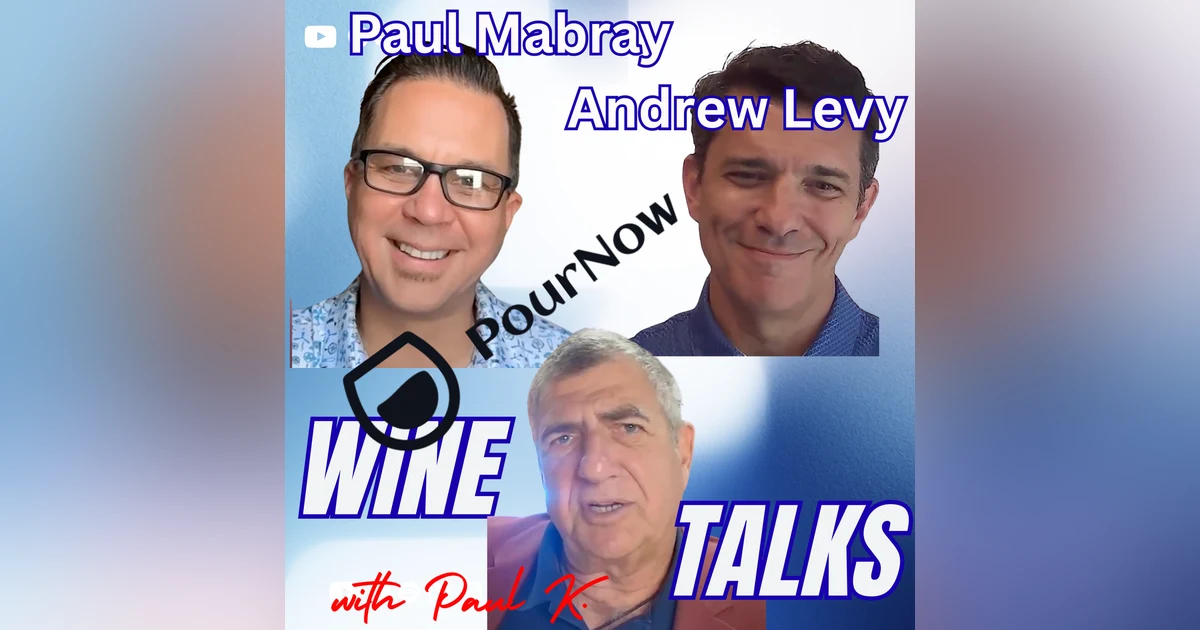

It is going around. The wine business is slow. Slow to change, slow to recognize the market, slow to become digital...shall I keep going.
Two gentleman agree, at least on the retails front. Paul Mabray is an old friend. Andrew Levy is a new friend, and they have teamed up, with dozens of wine tech years between them, to solve some problems. Problems that seem natural to fix through tech in our trade.
Have a listen, these guys get it.
Paul Mabray and Andrew Levy have never been shy about shaking the wine industry’s dusty foundations. They’ve watched as old ideas about how wine gets into a drinker’s glass have collided with the demands of a digital-first world—and now they’re ready to pour out what most in the business are too scared to say out loud.
Think wine distribution’s stuck in the last century? You’re not wrong. This episode takes you inside the chaos and opportunity of “the final mile,” where millions in brand excitement evaporate because a shopper can’t actually find the bottle they want.
PourNow isn’t just another tech solution. It’s a weapon against dead-end marketing and the three-tier system’s ancient gatekeeping. Mabray and Levy aren’t interested in playing nice with tradition—they’re here to dismantle it.
Ever wondered why the average consumer ends up buying whatever’s on sale, not what they love? Hint: Supermarkets stuff shelf talkers at you because nobody has figured out how to truly connect excitement to purchase—until now.
Amazon’s ambitions to own the alcohol game? They fizzled. Listen in for what really happened behind the scenes—and how most digital marketplaces have failed drinkers and brands alike.
You’ll find out why “omnichannel” isn’t just marketing lingo, but a bare-knuckle fight for survival for small wineries, indie shops, and even industry giants. Turns out, nobody is immune from the shakeup.
Are you ready for the blunt truth about digital marketing “consultants” and the masses of self-proclaimed wine influencers? Mabray and Levy spill the real reasons most of them can’t hack it.
Discover why today’s shopper is digitally native and ruthless—expecting to buy whenever and wherever they want, even if it means bypassing the industry’s sacred cows.
This isn’t a glossy industry PR piece. It’s about hard metrics, hard lessons, and the hard reality that the wine business is forever at risk of being outpaced by its own customers.
Pour yourself something bold, because after this episode, you’ll never look at a wine shelf, a tasting, or an Instagram ad the same way again.
What you will learn:
-
🍷 Why the three-tier system’s chokehold on wine sales is crumbling—and who’s panicking behind the curtain
-
🍷 The dirty secret of so-called “omnichannel” marketing (hint: it’s survival, not strategy)
-
🍷 How most consultants and digital “experts” are snake oil salesmen who can’t deliver real conversions
-
🍷 The hidden tech and data tricks that actually trace every ad dollar to a bottle sold—exposing winners, losers, and frauds
-
🍷 How PourNow is arming brands and retailers to bypass the old guard, break dead ends, and put power back in the hands of consumers and innovators
YouTube: https://youtu.be/f7_BbMITmE0
0:00 AI Paul, in the end, it's another tool. The one thing that Paul and I, my Paul, recognizes, you know, talk to the customer, meeting with customers and sitting across the table face-to-face with them. And in this industry, that is part of the future. Sit back and grab a glass. It's Wine Talks with Paul Kaye. Hey, welcome to Wine Talks with Paul Kaye, and I am in studio today in beautiful Southern California, Monrovia, about to have a conversation with Andrew Levy and Paul Mabray about tech and wine and what's going on in the industry. Paul has been doing this for a long time. He's been part of the tech side of wine. He's one of the go-to newsmakers when it comes to digital marketing and digital wine, all things digital. Andrew Levy, just coming out of corporate BevAlc, Bev Alk. That's not even right. Adult Bev? Bev Adult? Hey, welcome to the show, you guys.
0:59 Thanks for having us. Yeah. Yeah. Thanks. I was appreciative that you were available today. I had a blank day back in town. I'm out of town for a little bit and excited to have a conversation with you about your new product because I've been following it and it's called Pour Now. I've been following this a little bit to see what you guys are doing. Tell me what this impetus was. What was it you were trying to do when it came to what's on the street today and who this benefits? Well, look, Andrew and I, if we're going to do a startup, we want to do something that solves a big, big problem, not a small problem, something that touches the industry. And there's not a lot of big problems out there that really scale. And helping the shopper find and measurably buy the product is a very good problem. It's something that plagues every single wine, spirits, beer RTD that exists out there.
1:56 You know, it's interesting when you said that earlier when we were talking and it just hit me when I was on, when the Wine Month Club was running and we, and Amazon had started allowing alcohol sales and they of course were were rumored to be going after the feds to try and break down those barriers. Uh, it didn't work. But at some point I had, I thought, oh, this is so cool. I'm going to put all this wine into Amazon and I'm going to get all these sales, which is always the entrepreneur's expectation. But what was interesting to me, and maybe this is what you're solving, one of the problems is that all they bought from me, if you can believe this, and I pumped everything, all my French Burgundies, Bordeaux, everything into the system.
2:37 was Stella Rosa. And it seemed to me that that's because the Amazon shopper was the type of shopper that knew what they wanted to buy already and was just trying to find, trying to find it cheaper somewhere. And, and that was what ended up happening. How does this sort of supplement all that? Yeah, you know, what we've really seen is, is digital still remains the most cost-effective and efficient way for brands to be communicating with their consumers. But there's been this kind of final mile of shopping gap that results in the brand being able to engage and excite their consumer for, for the, for the brand, but then not being able to find a clean path to purchase to actually get it. And so that's really the opportunity that, that Paul and I saw, which is PourNow is not here to create that consumer demand. We're really here to be that final mile connector to the brand efforts and investments that they were already making to excite their consumer to actually close that gap and complete the purchase. And, and we think that's been, you know, the problem of dead-end brand marketing has only grown over the years since, since you've talked about it. It seems, it seems that, you know, my, my experience was 20 years ago, so much must have changed, will, did change. We all know this with consumer branding and direct-to-consumer marketing through the digital channels. And kind of evidenced
4:08 by the fact that when I started on Facebook, you didn't leave Facebook to go buy something. It just didn't happen. You were there to socialize, and that's how Facebook was structured. And now it's almost entirely advertising and leaving Facebook to go buy something or buying it within the network itself. Paul, to go back to your point though, I mean, you're not wrong in the Amazon effort, with the wine that was bought there. But think about all the brands that you carried at your store, every single one of them that was doing some sort of marketing, and you were a needle in a haystack of a retailer that carried those products because no one could help you get there. That they did the marketing, the shopper got excited, and then they had to go searching for that needle in a haystack through a bunch of different tools that didn't get there. That's our job. We're the one that says, hey, look at the brand, did a message, a press release, anything. And hey, by the way, Wine of the Month Club holds that product. Let's help you get there. So I'm a consumer. I go to a restaurant.
5:04 Well, let's see. I went to this wine bar that we're going to talk about a little bit in Hermosa Beach called Malandrina. And I tasted a sparkling Chambolle from Semeur. And I want to go buy that. What happens? Well, you usually go to the brand site first, right? You Google and go to the brand site. That's kind of the number one path that you do, or you Google it and try to find somewhere to buy it. But you Generally, you Google and go to the brand site or you'll see an advertisement from them that's a placement, and then that's where we take over. And what does that mean? So you're not iFraming into websites, but you are the website. Are you just handing off the information? So I come on one side and all the wineries and brands come on the other side and you are negotiating those relationships?
5:49 No, we're iFraming into their website. We have landing pages, or there's lots of places that they can come into. They can embed other websites, they can embed your website and put a brand, and we can help that shopper find that. If you were doing an interview with a winemaker today, it doesn't matter where it goes. We're just that final mile that helps them find that product. Do you think that this solves— I mean, it seems to me it solves part of the headwinds that the industry is suffering right now in that We just go back to the same old thing because it's easier and the supermarket has it and there's 1,000 shelf talkers at Ralph's today and this is an opportunity to navigate this world without so much intimidation.
6:36 I think, Paul, what we've seen, you know, what the rule of thumb that's developed is, is, oh, there's a limit to how much consumers want to search, shop, and discover online for our industry. And I would argue, we would argue that that's not true. I, you know, we, we believe that the problem is, is that there's been a dead end offered to the consumer as they're looking to search, shop, and discover. And that if we provide a path to licensed retailers, to the consumer, that they're The sales are there, um, and, uh, that's been part of the problem with the industry.
7:17 So in terms of like overcoming the headwinds, uh, more sales definitely help mitigate those headwinds. And there's been an either-or conversation. You said it earlier, is it DTC or 3-tier? Look, if you sell to the trade, you should be doing both of those things. You're supposed to be able to walk and chew bubble gum at the same time and support your retailers while still trying to sell DTC. It's omnichannel is the right answer. I think we all witnessed that during COVID where, you know, brands that were not DTC got clobbered, brands that were only distributors got clobbered. So it certainly is at least a 2-legged stool, but probably more like a 3-legged stool to do this. So there have been a lot of different formats like this where, you know, some started out as information sites, some start as price competitive sites, but not necessarily, you know, DTC or e-commerce sites. How did you, how did you fathom putting all these pieces into one place, into one central location to massage the data and, and make it work for the consumer? A lot of lumps.
8:28 I guess that was a loaded question. I don't know. Yeah, I think that Andrew and I have done a good job experiencing a lot of the internet and digital in general, and finding the answer was important for us. That was something that brought value back to the market. I mean, you don't see us taking a slice of the transaction. You don't see us, you know, being predatory and taking over things. We're trying to re-inject value back into the supply chain and get paid for it. And it's proven to be pretty true. I mean, we're approaching 500 brands in just what, 7 months, 8 months on Stealth. So that's a lot of brands in the system. So, and a lot of transactions going through the system in a very short order of time because we do it better. Are you— and I think, Paul, like one of the things that you, you just touched on, which is coming outta COVID, is that, you know, we want to meet, we want to enable brands to meet that consumer where they are. Sometimes they're gonna want it shipped.
9:21 Sometimes they're gonna want to pick it up. Sometimes they're gonna want it delivered locally. You know, like let's, let's enable the consumer to get access to the product for the occasion that they're shopping for. And that's the way that we've structured our solution as well, to really be able to close that gap is let's get them to the sale and let's get them there the way that they want to get there rather than trying to dictate to them or say, oh, you have to wait 6 months because I don't ship. Maybe I don't ship in the summertime because it's too hot. But I'm available down the street at the, at the at the wine store. So let's get that brand and that bottle in the hands of the consumer when and where they want it. You know, that just struck me how unique that is. And we were talking about this new wine bar that opened in Hermosa Beach called Malandria. They're also a little retail store and they have very unique wines because, you know, we were talking about the distribution side of these things and how it's consolidated and how Southern's become this giant book how there's small distributors going away, but then there's some activity on the other side where some small distributors are banding together. And I didn't recognize a whole lot on their list, but they do sell them retail. So you, you can support a brand, a store like that. And I don't have to go searching for a liquor store or wine shop looking for one wine and settle on something else because they don't have the one I want. We know going out, walking out the door where that wine
10:54 might be. That's 100% correct. And I mean, we're not trying to put our finger on the scale. We're trying to give the shopper the decision what they want to do, if they want to buy from an independent or chain, a regional chain, if they want to be shipped or pick up. And we're not trying to create extra friction in the supply chain by trying to take a slice of the pie or any of those things. We're trying to unlock that velocity that should have been there anyways. I got to tell you a scenario which just blew my mind the other day. We're down here mostly where we hang out much of the time and Instacart becomes a major player in feeding my grandkids. And my wife was complaining the other day because everything that she put on the list, and I forgot what it was, Sprouts, was being re— what do they call it?
11:41 Was out of stock and they needed to replace it with something else. Almost virtually everything in the cart. And the guy's excuse was that the Instacart inventory is not kept up to date with the store's inventory. And I thought, how absurd in today's day and age that, that, that's a problem. I mean, there's, I mean, it's not even the word API anymore. It's, there's so many ways to connect the data and you've solved this problem. Yeah, I think we've done a pretty good job at it. I mean, we look for the availability at the store. That's the job. And, you know, you get different degrees of that availability, but we don't show in any of the, the locations unless it has availability that we've gotten from the store. That's an important part of our value proposition. I mean, it seems— it just seemed natural to have some kind of relationship between the store database and the, and the online database. You know, I just thought of a thought that's kind of interesting because, Andrew, I came from the DTC world of wine. I came through a very tumultuous part of it where at some point, much like Trader Joe's, the deals were actually real.
12:51 You actually found interesting wines at a discounted price because of the millions of reasons why they weren't marketed properly. And that changed, that shifted gears, uh, in the, in the 2012 to '15 sort of space where they started bringing in this 50-cent-a-liter, you know, Valencia wine stuff, and it was bottled under a bunch of brands and sold as legit wine, you know, a case of wine for $89, free shipping. And I think that did a lot of damage to the consumer's confidence in that kind of thing. And it seems to me that this product might start turning the tide like that, because I'm going to start looking for things I know I like or start looking for things I have had in the past at a restaurant. And I know I have access to them because I can get on PourNow and find them.
13:40 Yeah, I really, you know, what Paul and I really saw was that, again, that opportunity to enable that consumer to search, shop, and discover for what products are around them or what product they want and how they can get it. One of the, one of the things that we've seen, for example, is brands doing tastings and really getting liquid to lips, which continues to be important, which, you know, do you want to, do you want to offer a cheap wine or a nicer, a nicer wine and be able to have the consumer experience that? Well, then give them a QR code that takes them to your brand's listing on PourNow where they can actually buy it by the bottle in the case. So, you know, the idea of really being able to engage that consumer when and where they are is something that I think the industry does talk about, but it hasn't quite closed the loop until, until now.
14:42 That's a really interesting thought because I was part of a Bordeaux tasting at a private residence, Château Haut-Bailly. Good friends. The woman that put this on, a young girl, she's a Cornell enology student who got to work at Haut-Bailly thanks to Wine of the Month Club one summer. And what was kind of interesting to me was that Haut-Bailly, here's this Bordeaux house, you know, a classified growth of its own right from the Graves, that reached out to a young girl in America and said, would you mind hosting a dinner? You pay for the food, we'll pay for the wine. We want to expose some higher wealth clients to, to the brand.
15:29 No sales talk, no Tupperware party, no nothing. Just expose the brand. And here it seems like a classic place to say, Here's a QR code for finding the wine. Yep. That, that's, it's exactly right. I mean, the purpose, the purpose of tastings, look, I've been in the industry for 20-plus years. I love going to a great wine tasting. I love experiencing the, the feel and the experience and the romance of the liquid. But in the end, if I'm that brand, I'm doing it to actually sell something. That's right. Right? I, I, I, I want, I want to build the equity. Yeah. But I actually wanna also sell. And, and, and again, like digital, the digital path continues to be the most efficient path for brands to engage with their consumers. And so why not take advantage of that? Convert that sampling, convert that tasting from a fantastic equity experience to an actual sale of a bottle or case at your, at your consumer's favorite local retailer that has it available. I think the point also of this event was that wine is, I think, and Paul and I have had this conversation before, headed back to the experiential side of things. Groups that were around in the '70s, like in this picture here, my father and I in 1975, you know, hosting events in Marineland, which is now Terrenea, for groups. Mondavi would speak. And I think, I think for this industry, and I don't— I'm not a doom and gloomer like everybody reads on LinkedIn. Oh my
17:00 God, the industry's— it's only been around about what, 6,000 to 10,000 years? So I doubt it's going anywhere. But certainly, uh, there's pressures on it marketing-wise. And, and certainly, I think, as Oddity Global, uh, Group says in the Rhône, that, you know, wine is consumer-driven. That's what it is. That's— we expect to have consumers. But I don't see it as, as going away. It's almost ridiculous to even contemplate that. What are the— what do you think the pressures are The number one pressure, do you think it's the Gen Zers, which is— I'm not sure I agree with, but not that it's the Gen Zers, but it's how they buy, it's how those generations are coming to the table versus actual pressure on the brands. It's buzz for buck. I mean, that's the answer. I mean, if you're a Gen Zer or a younger person, where's your disposable income going to spend? How much money you have and the pressures on those generations has been exceptional from economics. I mean, and if you look, wine is premiumized pretty severely over the last 20 years at a price point that's pretty high. That's true.
18:08 So, and I guess your software works with non-alc virtually. I guess it doesn't really matter what the product is. You can pretty much put anything you want in there. But do you think the non-alc movement has put pressure on this industry? And is PourNow just helping shortcut the decision-making process to make it easier and maybe give a boost in sales? Is that— I think that there's a lot of pressures, but I think that if you're talking wine, it's mostly price, right? And, but there's a lot of macroeconomic things happening, whether it's the implosion of R&D, tariffs, socioeconomic stuff. It's a mess out there, right? So there's a lot going on. Wine obviously has a more precipitous decline than all Alcove. But I think our job is to help everybody out.
18:56 Our job is to really help the shopper buy the product they want to buy and not go to the out-of-stock Instacart solution or get an ad and not be able to find it. Right. I wonder if this is like 20, 20-plus years, Andrew, have you seen— I'm not gonna say turmoil, but as much much pressure from variety of outside sources on the wine trade only. And like in this picture of my father, we had Boone's Farm and Matus and Lancer's, and we had Cold Duck. Hey, Cold Duck, who remembers that? So, um, but have you seen a period where there's this many influences changing the way consumers buy? Paul, you haven't aged a day since that photo, by the way.
19:38 Um, thank you. Appreciate that. Look, I think that there's always dynamic pressures across the industry. Sometimes it's on spirits. You know, spirits did a good job of lobbying to get more marketing access. You know, they got back on TV, they were able to get back and talk to the consumer in ways that they hadn't before. And that caused challenges across the industry. We now have kind of unprecedented distributor-tier disruption. There's always competition for the share of stomach or share of throat, however you want to frame it in terms of what people are drinking or the buzz that they're looking for. So I don't know if we're necessarily in a fundamentally different era other than we're just in another cycle of it.
20:27 And the reality is, and I'll pick up a little bit on what Paul was saying in terms of we are in a shift, towards digital. The younger drinker is digitally native. They are looking to buy online. They are looking to search, shop, and discover online. They are looking for experiences with a brand. And so brands that win are gonna be able to offer an experience and translate that into a digital environment. where that consumer can continue to engage with the brand and get them to purchase. That's gonna be the, you know, kind of winning combination, whether you're talking about wine, beer, spirits, RTD, whatever it is. And I even expand on that. Yeah, I'd even expand. Andrew's saying the younger generation's there, but, you know, in any first world nation, it's the older generation too. We're all there, we're all digitally here. So it's, we all have smartphones, we all know how to use Google and Amazon and everything. I mean, We obviously have different levels of use, but like you said, your wife is using Instacart. I mean, it's pretty endemic, the digital tools. We have to meet the shopper where the shopper is, and if we're not meeting them there, we're going to miss them. It's that simple. And so this is extraordinarily attractive then to— let's go back to pre-COVID. I think we've had this discussion before, Paul, but I was on my way,
21:57 I stopped to talk to Sarah Clearman from the, uh, Napa Valley Register. I thought this was gonna be a glowing article about the Wine of the Month Club, what a great guy I was. And it was more, it was more of her probing me on what are these wineries gonna do. They don't even have, uh, they barely have a website. They have, some don't have DTC at all, but let's say the ones that have a, a skeleton of a DTC program, they certainly don't have a customer service rep sitting at, at a monitor looking, uh, for the chat bell to go off. And I thought, okay, that's kind of interesting. These people were caught with their pants down. Does this, does this product then support brands like that that are, you know, let's face it, there's a lot of small places out there that really don't understand any of this still. It's hard to believe everybody talks about how slow the industry is. Well, it's once a year, but does this help those people?
22:49 Yeah, we help anyone that's in distribution for sure. Just that simple. You know, we have different degrees of helping them. We made it simple for them to the degree that we help is, you know, how much traffic or how much, you know, distribution they have and how much they're advertising or marketing their product or promoting it. That simple. And does it matter whether they use 3-tier direct-to-consumer or, you know, tasting room traffic? Well, we supplement DTC. I mean, it's part of omnichannel, but really our focus is their distributed products. Right? We let them obviously offer DTC to be omnichannel, but our big help is the little brands that have distribution and aren't able to manage a market.
23:29 And Andrew and I know we've gotten on planes before, we've flown to different states and rode along with a wholesaler, got a placement, went back home, and that next day there's another rep in this, the same car trying to bump us out of the thing. So this allows that little brand to still help keep that velocity from far away. Right? They're able to say, hey, we're in this state, we're in this area, we're in this city, and those sales can happen. You're offering them more eyes on the product, uh, simpler location, simpler ability to find it, which, you know, you mentioned earlier in the show that, you know, if you're going to Google a brand, who knows where that takes you when you— by the time you get past all the sponsored, you know, uh, auctioned-off locations or, you know, placements in the webpage, and then you, then you're the competitor of that person is buying the keywords for that search term, and you don't, you're not even sure what you're clicking on.
24:24 So this is supporting the, the consumer as well as the brand. But if I, going back to this event thing, if I'm, if I'm holding an event, if, if wine really goes back, which I believe it is headed back to this experiential idea, then is it in the works now with PourNow to support some of those efforts, or is this on the chalkboard for the next release? I mean, we just— it was launched, right? So we have all these plans to, you know, develop more versions of the software. But what— how do we support the retailers that are doing these kinds of things? Andrew? Yeah, we're doing it now, right? And it really comes back to the brands, Paul. We enable a brand to be able to go in and do a tasting or an experience.
25:15 And to be able to then provide a QR code or a link to that consumer who's participating and is now engaged with the brand to actually be able to find where they can go actually buy it. And so, you know, if I, if I am a brand, a distributed brand at retail, the way that I'm gonna stay on the shelf is by investing in activities that are gonna drive velocity. And some of that is gonna be the experiential. But the experiential has to convert to sales. You gotta convert to velocity.
25:57 Some of it's gonna be brand marketing, right? Some of it, I'm gonna run an ad on Facebook or Instagram, or I'm gonna— now TikTok is the hot, is the hot thing, right? But in the end, what your distributor and retailer are looking for And if you're a brand, is do you have velocity to stay on the shelf? And so you've gotta be able to show that the investments that you're making within whatever your current budget is, is actually meeting those velocity hurdles. And we, we help with that. We're not the only solution, but we do help with that. So if I'm a brand, brand and/or retailer on the back end, I log into PourNow and I wanna start looking at the activity? What kind of metrics are you sending me that I can use to refine what I'm doing, my CRM or my SEO or anything? What's, what's, what do I see?
26:49 Some very cool metrics. I mean, we measure attribution of every activity that you're doing marketing-wise, whether it's organic or paid, whether it's your website's where to buy function or a press release that you put a link. And we measure the price-to-consumer click-based attribution, um, and we measure that in the dollars, right? And so that's a, that's a universal metric. Is my social media or my influencer driving real dollars to the retail market? It's the best metric of all. It seems like, you know, we struggle with this a lot because the, uh, the, the processes weren't as defined as they would be today, um, and particularly with AI participating in some of this this analysis, but let's just say I belong to, I don't even know if Commission Junction's around or what's the other one, the affiliate marketing sites.
27:41 And one of the things that was very profitable for us, thanks to my wife, was that she was able to determine the source of a lead that we were supposed to pay commission on. But we found that the people that come to our site first liked the product and then they went out and found a coupon. and came back and redeemed it, and we wouldn't pay commission on that since we stimulated the sale. Can we get that kind of information? I think that we're working on some of those. I mean, generally there's so many variations of the internet. Obviously you have codes that tell you where they came from, the UTM codes where the advertisements. So yeah, obviously all the key measurements on that. I think that what makes us special is most of the stuff that we have is not on the drawing board, or, you know, you said like, That will come in the future. Most of it's already built and running today across big brands. I mean, that was one of the reasons we've been so quiet and just started to talk about the product, 'cause it works across 500 brands and, you know, so many sales are going through our system to retailers, right? Just to the— and we're measuring that every day and we're improving that every single minute. So I guess my question is more about like, what has changed And you've been doing this for a long time and you've been involved with the digital side for a long time. It seems the veil has come off in much of the data that's available to be mined, and particularly in the last few years. How much has changed on what you're able to mine from all this?
29:12 It's endless. I mean, we're trying to find all the answers. I think the difference is the approach, right? I think that's where we really kind of differentiate ourselves as opposed to trying to be the sole arbiter of where the traffic is driven. We are merely a conduit to help that shopper get to that product wherever they are. It's a very different approach than every other brand has ever done in the category. You know, every other digital platform, we're like, hey, we just are here to help that shopper find the right choices for them. That's very different than the usual search engines that have been out there. It's different than the retailers who are driving to a certain thing. We're like, our job is only to help that shopper find that product the way they want to buy it. It's a great job. It's interesting because all this, you know, we know all the products and I won't mention names. I'm not going to throw anybody under the bus, but for the most part, most of these consumer aids have bolted on something to their original core engine. And so, and it seems fairly obvious when you're trying to navigate some of these softwares and some of these websites to find wine or to find anything really, that it started as this functionality, but we're going to bolt this on or we're going to put this on. And then that doesn't seem to talk all the way around the circle. So obviously you end up with this, this unusual experience trying to find something. And it seems to me that this is native ground up, looking at the marketplace and helping understand, you know, putting the pieces together under one umbrella that are clearly integrated.
30:45 Yeah. I mean, is that accurate? I think that's right, my sir. I mean, look, this was built by industry vets that are tech vets, Andrew and myself. This is built by our brands being side by side with us for 6 months, big brands working and helping us build the product the way it should be built and with a perspective on what solves a problem versus, you know, what we think the problem is. So that's a lot of guidance that a lot of these other platforms haven't come. They've come with their own natural bias of what they want the market to do, not what the market needs. And I think that that's where Andrew and I really stepped out of the curve and said, look, brands are asking for this. This is their problem. Let's solve their problem. And this is the shopper's problem first. They have this problem, then meeting those together in a way that creates good economics. And that's also why we're not going to have to pivot as much because those other brands pivoted because they weren't making money on, we think the market needs this. And it's this big.
31:39 Well, and it just seems like the native, the native ability in code today, uh, would make this product much more, um, much easier to, to modify. In other words, you know that it's not going to be the same. What did Kevin O'Leary tell me on the show once? He goes, what's working today is not going to work tomorrow. What's worked yesterday is not going to work today. And he's talking about digital marketing at that point. And you're— and you have all this to offer, and how are you keeping your ear to the ground to, to maybe even predict what the brands are going to need or want today?
32:21 Do you want to try that one, or you want me? Yeah, I mean, look, we work hand in hand. So 2 things: we are a customer-driven product team, right? We, the sales team, the customer success team, we meet with our brands and ask them the questions. We're working very tight with them always. It's important to us. Also, we work very close with the tech valley. I mean, we're not that far from Silicon Valley. You know, I think that we are pretty dialed in with some pretty smart tech people and we use that as an absorption principle to see what's coming around the corner. And we really believe in agility. We wanted an AI-centric organization that was AI at a scale, but not AI to take over what we generate. And so that's also how do we keep getting faster and agile? And AI and digital transformation are just part of that agility, I think. And AI, Paul, in the end, it's another tool.
33:14 But the one thing that Paul and I, my Paul recognizes, you know, Talk to the customer. Like, you know, we went out and we did, I don't know, like 6 customer meetings last week. We drove, you know, all over Napa and meeting with customers and sitting across the table face to face with them. And in this industry, no, like that is part of the future. AI is a tool to help us be more efficient, but the relationships, the knowledge, the The understanding of how this industry works is built upon those, those, you know, personal relationships. And, you know, that's, I don't think that's going to change anytime soon. We actually say usage is our oxygen, Paul, and that's the truth, right? The more we get used, the better we get on that. It's interesting that you guys put it that way because I had a podcast the other day with a new in-store brand, you know, the people that pour off samples or, and I, I was telling the story about being in Columbus Circle in New York and this young woman was trying to, I guess she was selling almond butter. I couldn't tell because she had no clue what she was doing. And she asked me to help her find a knife so she could cut the apples that she can dip into the almond butter that she was sent over to sell. And, but the point of that is that I used to stand at a booth,
34:45 uh, for hours on end, uh, you know, most of the summer to sell memberships. And that, that handshake was so important and that ability to, to talk about wine and to, to understand the concept of the subscription model at that point, because subscription models were like, had a bad rap. But the point I'm making is it seems like that is where your data comes from. And it One of the points this woman was making on the podcast was, you know, we talk to a million people a year through 30,000, you know, in-store pourings. And I thought, wow, what are the— you want grassroots data to work from on what is needed, there you have it. And it seems like you're getting it now digitally, having a conversation with your brand, having a conversation with the people that are using your services. To preempt or hopefully satisfy. Is it too late if an article hits? First of all, frankly, I don't even trust most of the articles that come out in the journals these days. They seem so unresearched and just off the cuff, but let's just say some of them are legit. Is it too late, whatever that article might be presenting to the public or the, or the industry? That information is almost too late to react to because it's already hit the, hit the rags, or we can, we react to some of that stuff? Yeah, we can react to it.
36:11 It's, it's the availability of the product in the market. And I also think that we don't leverage that media enough. We think it's a one-time piece of information. You can reuse that content from that media 6 times in a year and, you know, send it in an email, do it in a Facebook post, do it in a paid advertisement to drive more velocity. You know, the assumption that people are reading everything is absurd in a very noisy world. It's absolutely noisy. And so catching somebody in that moment of time, in that buying window, requires a lot more outreach than it did ever before. Well, that was, you know, I got the, like, whenever I say this term, because my last Full year in 2022, we sent 33 million emails and people thought, weren't you annoying people? I said, I don't think that's the case anymore. It's catching that person at that moment that if you didn't send it that day and they had thought about buying something that you were offering and you missed that window, you lost the sale. And so really it's about as much communication as possible and the noise is just accepted, it seems like in this industry. Are you helping the, your brands understand that piece of it?
37:27 Yeah, we, we spend a lot of time talking, talking to the brands about their marketing strategies because, because again, in the end, you know, the, the mission of, of Pournow is not to create the brand excitement or the brand engagement. It's to actually monetize the brand engagement that, that supplier has, has already done based on their research. And their tastings and etc. And, and, and so, you know, we do see, to be honest, some pretty uneven knowledge about how to effectively market.
38:07 But I, but I, you know, to go back to something you were just talking about in terms of the 33 million emails, it goes back to the consumer, the shopper, and the occasion. Right. Like they could be sitting at their computer and thinking, oh, I need to send my mother next week a bottle because she's across the country for her birthday. Okay, that's an occasion. You got to catch, capture that occasion. The other side of it could be, geez, I'm on the way to Paul's house and I forgot that I'm supposed to bring a bottle with me. I want to get online, I want to order it so I can just, I can just pick it up on my way there. And so really understanding who your consumer is, And the occasions that they're shopping for really do become important because there is a lot of noise and you want to provide some of that signal through all that. Yeah. To me, medium at the occasion is the right purpose, right? And then maybe those multiple emails, you, they have different occasions at different times. I mean, look, we live in a world where the products are infinitely substitutable for the most part, right? And the stores that we buy them from are almost infinitely substitutable.
39:13 So how do we, match that in, in their buying state. That's an interesting thought because, uh, just about this Haut-Bailly dinner, I'm waiting to hear what I hear from them because somebody might be saying, gee, I went to this dinner the other night and it was fabulous. And I remember the '22, you know, Grand Vin of that brand. I, I don't know where to get it. I wasn't told where to get it. I kind of remember the vintage. Then all of a sudden I get an email or a text. Hey, we enjoyed having you over for dinner, whatever the story is. And I would, oh, I remember now, right? That whole, that whole concept. Um, so we're not trying to make them wait 2 weeks to buy it sometimes. We're always trying to force them through a funnel saying, instead of saying, hey, you can buy it the way you want to buy it today. I think that's the differentiation.
40:07 Right. There's a lot of movement. Let me ask you this question about some of this stuff, because I wasn't sure I bought off on the, on the need, this movement to, to have a buying experience. Well, let's say this particular— let me back up. At this thing, I expected them to say, hey, you know, we got it for sale and it's $135 a bottle. And, and then somebody orders 2 bottles and then he goes, hey, what they used to do is upsell you to a case. Well, I can't sell less than a case, so you guys can split the case. And then, you know, that way I can order the whole case and you guys can do what you want with it. And that's, that was one of the sales techniques of these home tasting things. Didn't happen here because nobody's too respectful of a château.
40:49 But there is a digital version of that going around, a couple of them where you can hand off a shopping cart to a friend and supplement the case. So you get your full case or get your economies of scale depending on what you're buying and split it. Is that part of this as well? Yeah. Do you think that's a need? Because I didn't. I think it's a rare, rare need. It's an edge case. I just, I haven't heard much from the 2 platforms that I talked to, but I just tried to, I was trying to think of like, like my average order at Wine of the Month Club reorder was 10 bottles, 10.8 bottles or something. Okay. So they bought 10.8 bottles.
41:30 Why is that a problem? You know, it's not a problem. It's in the warehouse anyway. We're just going to hack it up. But I thought that, I thought that was interesting. Maybe that's what's not happening. Maybe it's, it didn't, it hasn't occurred. So if I'm a consumer, something I download onto my phone? No, no, no. The ad will meet you. We'll meet you where the, the brand will use us to meet you where you're at, right? So whether it's a Facebook ad that the brand did, or if you showed up on the brand's website, or Lots of places where the brand is helping to try to communicate with the, do a touchpoint with the shopper. And then they, at that point, that's when they hand it off to us. And so if it's DTC fulfillment from the winery just before, or there's a— Yeah, DTC comes from the wine. If they choose the DTC choice, maybe I'm looking at options and there's a pickup and a buy and a ship and DTC, and they choose DTC, it'll come from the brand, right? Directly from their DTC operations, wherever that is. Wow.
42:29 It's almost, it's, it's almost hard to get your, your head around this thing because it seems so flexible and so, um, uh, not, you know, flexible is the word, that it can, seems to handle the needs of the brands and whoever else. And then the consumer, it's almost seamless then. Yeah, it starts with the need of the consumer, the shopper first. And then it makes it easy for the brand to meet them there. That's what we've done. We've made it easy for the shopper first, and then the brand can use us to meet them there. That, that's the magic of what we've done is start with where does the shopper need help and how do we help the brand facilitate that? And when did it launch? January. Yeah, that is barely out of stealth in January. So the, you know, the first version, the beta was last June, but January is when it came out of You know, the, for early out of stealth slowly. And then we just really, this week was when we really came outta stealth in a full, full form. Wouldn't you say, Andrew? This is kind of our first like unveiling, unveiling. So we had a soft outta stealth and now we're really, you'll see a lot more of us every week. Yep.
43:36 And if I'm a brand, how do I find you? Well, we recommend you go to launch.four.now and that will tell a brand exactly what the experience is. And how we work with them. And what, what does a typical brand, when they come there, they say, wow, you guys, this is incredible. I've been trying to find a solution for this. What, what are the, what's the number one need they seem to be excited about that they've saw you've solved? Really, it's a measurable path to purchase is that I can actually show the impact that my digital marketing or my sampling is having In the market, I mean, look, there's never been more pressure again on brands to be able to justify room on the truck and space on the shelf.
44:29 And the way to justify that is investments driving velocity. So if you can, you can take and show a measurable path to purchase from the investments that you're making, you're going to win that argument. You're going to be able to go into your distributor and say, "Look, I ran advertise. I ran digital marketing in your market." It drove sales for, for our portfolio, for you, and it drove it to these local retailers who are your paying customers and probably were your dad's paying customers and your granddad's paying customers. And, you know, that's why you should give us another bottle on the shelf. That's why you should give us more cases on your truck and make sure that when that consumer wants to buy us, that we're, we're always available to be bought.
45:14 That just stimulated 2 more thoughts. So I don't know if we're, 'cause I was thinking we're running outta time, but I gotta get the answers to this. Mm-hmm. One of 'em is, uh, certainly the earlier days of, of digital marketing and even up until I stopped doing it, you know, regularly, was this, the idea of these consultants and everyone's a consultant. I mean, just go to Facebook and Instagram and find how many consultants they are. Most of 'em don't know crap from Shinola. And most of them don't understand the trade, right? And I can't tell you how many people I've suggested to that you cannot bring the technologies of shoe sales and expect them to work in alcohol. They just don't. They never have. And you have to understand alcohol. And I won't bore you with all the details and all the stories, but for one thing for sure, I burned through consultants. And I needed the consultants not to tell me what to do, but help me do it because I can't do it all internally, right? And I finally landed on a couple where they took the blame if they didn't work out. They understood the— they took time to understand the marketplace and I stuck with 'em for a few years. So it seems like one, this thing can help a brand validate the people in their periphery trying to help them market and do things because you can just bear it out in the numbers and say you're wrong. 'Cause they said the biggest problem with most consultants is they put you in the mill and you just go right through the process and you get some, You know, 30-something telling you this, and then they pass off to the next guy and the next guy and the next person and get nothing. The other, the other thing I think is really interesting, because I have a really, really
46:45 good friend right now that's got an RTD that's really, really good. Oh. And, and they're a little, not much younger than me, but they're out standing at Costco and, and Whole Foods and all those places pouring off, you know, 3 quarters of an ounce. Is it maybe it's a quarter of an ounce? of alcohol. And that's the number one deal, right? You cannot get a distributor today at all to taste anything unless you show them this track record, unless you show them that you've got 100 placements or whatever the number is that they expect. But they are closed doors to any new brands. And who wouldn't be, right? You know, you— there's no brand builders anymore in this business. You, you just— the logistics people, that's all they are. With sales— with salesmen in tow. So it seems like this, this would be a huge benefit for somebody who can start showing the distributors this, these metrics and these numbers of what's going on out there.
47:42 100%. I can't say anything better than that. 100%. Hey, I got it right. That was good. You got it right. It took a little while to figure it out, but I get it. And it's the same thing you can do with your chain friends showing that you're driving velocity to the market and the marketing dollars are landing in their pocket instead of some ad that affects Alaska and you're an Arizona retailer, right? So everything is about attribution. Does this not have teeth? I have a niece who started a salad dressing line. It's called the Law of LAV, and it's a Higher, higher-end single-serve dressing.
48:28 And so seems to me that this would work with all the entrepreneurs, the self-made entrepreneurs online. They become influencers on Instagram and then they launch a product and some actually really explode and some, you know, fail like, like the old days. But can't this do the same thing for just about any kind of product? It can, but it won't. We are dedicated to the beverage alcohol market in particular, you know, the omnichannel and distributed brands. So, you know, that's another place that we really differentiate ourselves from others that may talk about the path to purchase.
49:15 Uh, we're built specifically for beverage alcohol and we're focused on beverage alcohol. And we're just— well, that's good news. Yeah, we're disciplined. I mean, that's the thing. You build something and you want to build it good and you spread wide and you're jack of all trades, master of none. We have one job is to help the, the, the alcohol industry, um, wine, spirits, and beer RTDs achieve success. But I'm always looking for good salad dressing. If you want to send me a link, I'd definitely love that. She's great. I would follow the whole, the whole It's very fun. She's done a great job, but she used to be an intern at Wine of the Month Club, and I'd got a whiteboard out. I said, okay, let's go over your product. And at the end of the first analysis of selling price, distributor fees, and all the rest of it, there was $3 left to buy a new customer. And I told her, that's just not enough. It's just not going to make it.
50:13 But more importantly, on the other side of this wall here is a new store. It's called Ten Over, which is, as soon as I got my, the, the Type 21 transferred, I'm going to be open. I'm not sure how many hours a day or a week I'm going to do it. I got to sit with my wife and we're going to only sell the high-end stuff, you know, the unique bourbons, the unique scotches, unique vodkas, and, uh, classified growth burgundies, high-end Nappas, stuff like that. And just so to have the license and keep running, it seems like this would where I need to land first. We'll help you easily. We'll send sales to you for sure. And you'll have to say thank you when Andrew and I come down and pop a few bottles. Obviously. We'll do that. Yes. All I want is stanchions outside saying you got to stand in line to get in here.
50:59 Okay. What a great conversation, an interesting story to tell, and listening to you two guys with such a key thumb on the metrics, the pulse of the industry. And we need this. We need these avenues that are tech-related, that circumvent all these old-school methodologies that just can't work anymore. And you're bridging the gap. And so bravo to that. Thanks. Thanks for having us, Paul. Yeah. Pleasure. Talk to you soon, and I will take you up on you coming down and us opening something. Yeah, overdue. Cheers. Thank you.
51:40 Thanks.