

 Apple Podcasts

 Spotify

 Youtube Music

 RSS Feed
 YouTube
 Pandora
 iHeartRadio
Ancient Roots, Modern Revival: Exploring Armenian Wine and Enotourism with Lilit Grigoryan
Not of all wine news is about a drop in sales or activity...wine tourism is up.
On Wine Talks I regularly discuss the idea that wine is headed back in time to the days where the experience of wine is driving the interest in wine. Winery tastings, wine pairing dinners, day long wine excursions and more are peaking the interest in not only wine enthusiasts but wine novices the same.
One destination that is working hard at luring wine travel is Armenia. I have keen interest in understanding the value of and the current climate of wine tourism in my country of heritage.
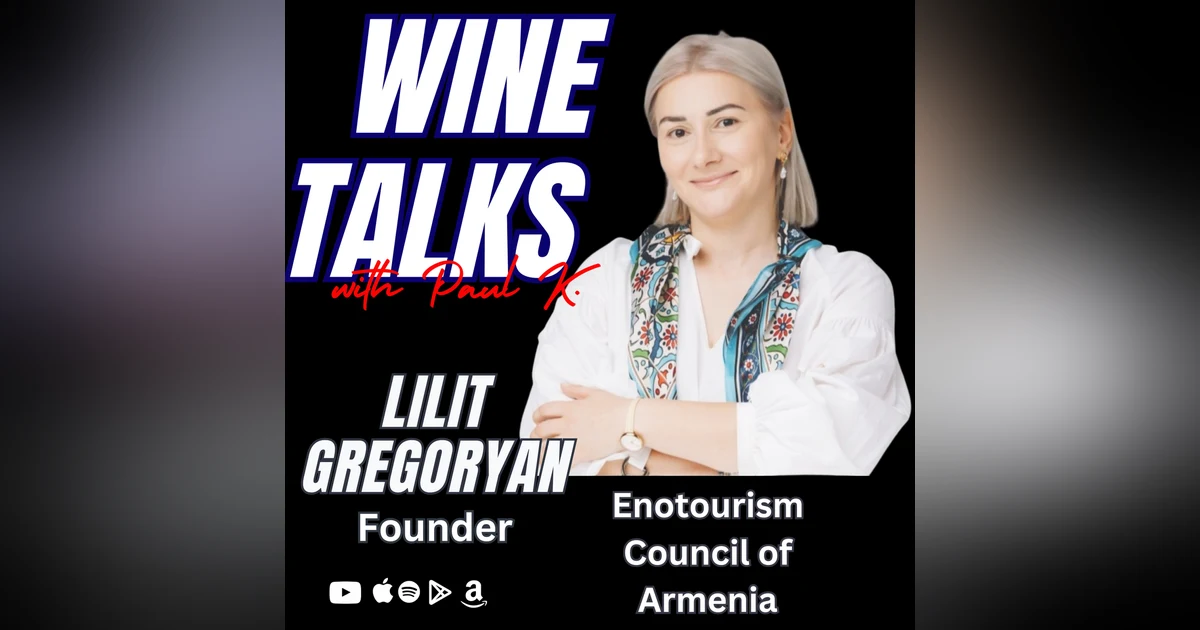
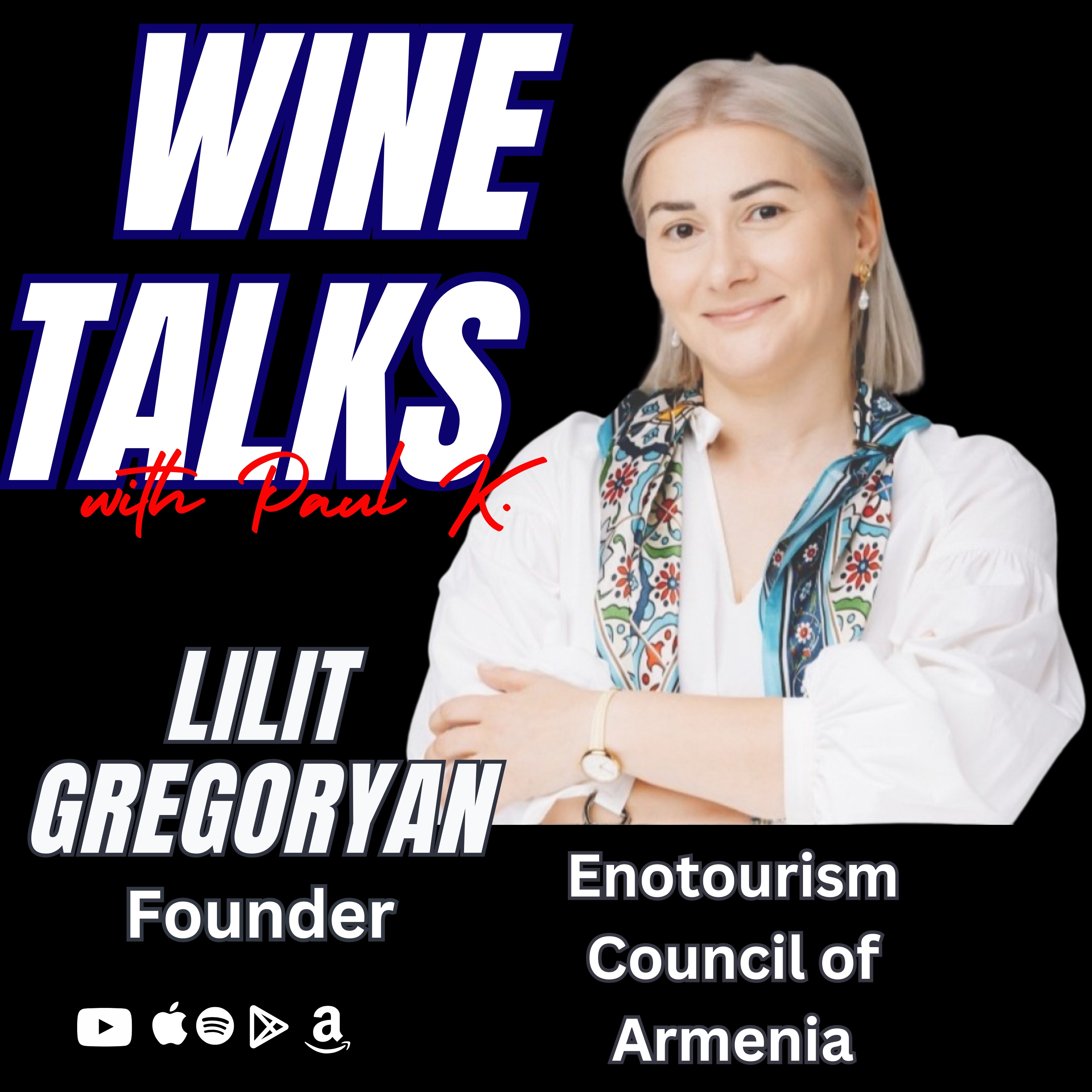
Lilit Gregoryan is on the forefront of the movement and we had a chance to catch up and discuss the current state of Armenian wine travel.
I have to tell you, sitting down (virtually, in this case) with Lilit Grigoryan for this episode of Wine Talks was one of those conversations that leaves you thinking long after you hit “stop recording.” Now, I’ll let you in on a little behind-the-scenes secret: this was our third crack at getting the tech to play nice for a clear connection between sunny Southern California and Yerevan, Armenia. You could say we worked up a thirst before we even started talking wine.
Right from the get-go, Lilit came in with the big picture view—“Winemaking and wine are rooted as a nation in our DNA.” That statement stuck with me. For all the talk we have about terroir, varietals, and fancy cellaring techniques, sometimes you need a reminder that, in places like Armenia, wine’s not just a beverage or even an export—it’s part of the cultural bedrock. She made the bold and very true point: Armenia isn’t just learning from Europe; it’s reminding Europe, and the world, where winemaking really started.
What really fascinated me was her work in building up the Council of Enotourism. Now, enotourism anywhere is having its moment, and Armenia is no exception. I’ll admit, I ended up tumbling down memory lane—remembering road trips that started off about something else (the Monaco Grand Prix, in my case) and somehow veered, as everything in my life seems to, straight into wine country. The magic of enotourism, Lilit pointed out, is that it’s about more than tasting rooms. It’s about connecting public, private, and even academic stakeholders—guides, wineries, archeologists, whole communities—to put Armenia back on the wine map.
There’s a humility that runs deep in Armenian winemakers, which, as Lilit mentioned, maybe ought to be set aside for a bit of healthy self-promotion. Why not, when you have 6,100-year-old wine caves that literally rewrite the history of viticulture? This is a nation where, she told me, even the rituals carved into fourth- and sixth-century churches tell the story of wine’s place in life and faith. “We are the shoulders that the Old World stands on.” I scribbled that down—it’s one for the ages.
We got into some wine geek talk (couldn’t resist)—about amphora and the ancient methods now making a comeback from Bordeaux to California. Funny thing, the rest of the world calls it trendy; for Armenians, it’s just Tuesday. And I had to laugh—she talked about roadside wine in Coke bottles, and yeah, in 2007, I could barely choke down what I found. But the leap in quality is astounding. Armenian winemakers today are winning international gold medals! You can feel the pride simmering up—and frankly, that’s as it should be.
Lilit’s also candid about the challenges—lack of unity among stakeholders, the need for more education, and the always-present tension of getting government support. Reminded me of local feuds in the LA trade; everyone wants the same thing, but getting consensus? It’s like herding cats with corkscrews. But what I love most is her conviction: this is a marathon, not a sprint. Armenians have always been resilient—she’s sure, and so am I, that Armenia’s renaissance is just getting started.
And let’s not forget, she humbly attributes her passion to being “one cheeky university girl” drinking wine with her friends, which, honestly, is how the best careers begin. Lilit is creating a movement, and you can feel it—one that won’t just put Armenian wine on the table but will make it impossible for the world to ignore.
So, next time you’re reaching for something old-world or new-world, remember Lilit’s words: “We are ancient world.” And maybe, just maybe, it’s time to pour Armenia into your next glass.
Wines of Armenia
Organization: "Wines of Armenia" (NGO)
Website: https://winesofarmenia.am/
eNoturos / Council of Enotourism in Armenia
Organization: eNoturos, Council of Enotourism in Armenia
Website: There is not a direct website publicly available from the information provided in the transcript at this time.
Areni-1 Foundation
Organization: Areni-1 Foundation (involved with the Areni-1 cave)
Website: There is not a direct website publicly available from the information provided in the transcript at this time, but general information on the Areni-1 cave can be viewed here: http://www.areniwinery.com/ (Areni Wine Factory), though this is not an official page for the "Areni-1 Foundation."
Wine and Vine Foundation of Armenia
Organization: Wine and Vine Foundation of Armenia
Website: https://armeniandrinks.com/en/wine-foundation
Zatik Wine Festival
Event organized by Wines of Armenia
Website: Not directly available; may be found through Wines of Armenia's site or social media.
Enofest/Enotalks
Event by EnoTourism Council
Website: Not directly available; check Wines of Armenia for events: https://winesofarmenia.am/
Global Wine Tourism Organization
Organization referenced as the global enotourism network
Website: https://gwto.org/
Cordy Brothers / Corti Brothers
Referred to as a famous wine shop in Sacramento
Website: https://www.cortibrothers.com/
Massanois Imports
Mentioned as a wine distributor
Website: https://www.massanois.com/
#wine #winetalks #armenianwine #enotouris, #winedna #armenia #ancientwine #wineheritage #wineducatio, #wineculture #winerenaissance #wineindustry #armenianculture #foodandwine #winehistory #winesofarmenia #winemaking #viticulture #winetourism #armenianhospitality
0:00 Winemaking and wine is something that is rooted as a nation in our DNA. If you remember all our grandmothers, grandfathers in their times, all of them were making wine at their homes. Armenia isn't learning from Europe, it's reminding the world where Europe itself learned from. Sit back and grab a glass. It's Wine Talks with Paul K. Hey, welcome to Wine Talks with Paul K. And I am in studio today in beautiful Southern California, about to have a conversation all the way out in Yerevan, Armenia, with the Gregorian introductions. In just a moment, they have a list to a show I just put out. Actually, it's coming out today with Lisa Kasabian. She's a Cornell University enology student turned Bordeaux intern. It's an incredible conversation with a young girl who's breaking into the industry, who got a chance to work in Bordeaux, France, as her first excursion out of the United States in the wine trade, but not while we're here. Here, have a conversation with Lit Gagorian. She is the director and founder of Wines of Armenia, the NGO, as well as the director and co founder of eNoturos, the Council of Enotourism in Armenia. Welcome to the show.
1:16 Thank you, Paul. Thank you for this opportunity. Opportunity for this third attempt in this. Yeah, Hope the last. Last successful one. Well, when we come out in May, we'll do it live. Usually I get a studio at Civil Net and they let me use their podcast studio so we can sit down and go over all that. But let's talk about that for a second. This group you just founded, which is the Council of Eotourism, that's in. In Yerevan, it's for the promotion of innotourism in. In Armenia. Yeah, yeah. It's for uniting fragmented efforts in the field of EINO tourism and to provide a dedicated platform that connects public, private and academic stakeholders.
2:07 This is the main objective. We just recently establish this organization. There are quite many stakeholders in it. There are tour operators, wine tour operators, actually in the main team, the core team. There are wine guides, also wineries, museums in the team. Also, we work very closely with RE1 foundation, and currently we are in the process with the Ministry of Education in the preliminary application tentative list for making RNE1 cave as UNESCO World Heritage and demonstrate it as a universal heritage. So RNE one Foundation is another part of our current team, working team, and we have great people in our team. Archaeologists Boris Kasparian, as you might know, who actually founded Arenuan Cave. We have another archaeologist, Mariam Shahmurazian, and we work closely with the Ministry now to do this job, it's a long way to go actually. But the most important thing is that we started it eventually.
3:26 Well, you said a lot there, particularly with the innotourism partner. I just had a gentleman on the show last week who started Eno tourism in parts of smaller wine regions of the world. We were talking about Armenia a little bit, but he's, he. The reason I brought that up is there's, there's a little resurgence in the idea of enoturism. Just for instance, I didn't do it on purpose, but we were in Pimonte, dropped into Monaco for the Grand Prix last year in 2024 onto Bordeaux and then Paris. And it end up being this, this Eno tourism group of friends. And I didn't start it as that, I just was going to the Monaco race, which I love to do. But as the plans evolved, we became very interested in traveling to the wine regions, of course, being in the trade and experiencing that. And it was amazing reaction from the group did this. Was this founded on this idea of either trying to expose the world to Armenian wines and the wine culture in Armenia, or it help promote the wines themselves throughout the world? Well, actually we have all the models that Europe already has. The well known regions, famous winemaking regions already have, for instance, the deep antiquity of Georgia, the dramatic terroirs of Mendoza, the integrated lifestyle of Tuscany, the cultural diplomacy of
4:58 Portugal, we have all in one. So the only thing that we don't have is the marketing and shouting it out to the world and having the proof for it. So this discovery that we are talking about that anyone have is why is it so important to protect it and to acclaim it. So this discovery has reshaped understanding of early vitic culture, highlighting in Armenia, in Caucasus region actually, where actually we can't say Georgians or Armenians were living 6,100 years ago, but there was a civilization and it started from here, from this region. And this is very important thing to shout out to the world because the winemaking and viticulture and domestication of the grape actually started in this region. So ongoing research also including DNA analysis of grape remains, aims to further clarify the winery's role in the prehistoric communities.
5:59 So that's why we can say that this is a universal heritage. This is something that was before Bordeaux and other well known countries. So that's why we thought that we should create, establish this organization. And surely this is not the only thing that we're going to do. Main pillars is the education and we are also closely working with global wine Tourism Organization. One and only one international one, which unites 30 countries. So Armenia is represented by our organization and they have this idea of a tourism academy worldwide. And now we are in the process of doing this again with Ministry of Education to either establish the academy in Armenia, which will be actually the regional one for the whole region. It will be the first one, or integrate the courses into this agrarian university courses already like main educational thing. So education is the main pillar for us. Research is also very important for us. Policy advocacy is very important for our organization.
7:15 Capacity building is also. And certification procedures are very important for us. So these are the main directions we're now looking to. This is very inspiring, frankly. And I say this when I talk about the Armenian wine trade and what I know about it and just being so well experienced here in America. But the strides the Armenian industry has made just we were there in 2007, the wine was undrinkable. I mean, literally we stopped at two or three wineries. And of course, in the Armenian pride way, we have to say how good it was. But we, you know, we're cringing at it. And when you think about it and you think about the concept of old world versus new world, which is one of these actually, old world, new world are terms that the Master of Wine program has dropped completely from its curriculum.
8:04 But I think, I don't think that's right. I think because Armenia is old world. We are ancient world actually. Not new, not ancient world. I like that better. Yeah, I like the better better as well. And you know, the. The saying, it says, the old world says, we don't just follow the rules, we made the rules. The new world says the only reason to learn the rules is so you can break them better. And the ancient world says, we are the shoulders that the old world world stands on. Well, we are the shoulders for the world. Actually. I see Armenian winemaking and overall these wine culture in this way. That's really interesting thought process. I've never heard, heard that definition of old flesh new. And I wonder why.
8:56 No, it's really good. And I wonder why there's been dropped from the academic circles of wine. Because when you think about it, you know, the argument has always been there were sort of two classifications of old versus new. One would be the character of the wine and the other would certainly be the location of the wine. And here Armenia has moved the needle so quickly in just a matter of. Years to get reclaiming its history and its reawakening kind of. It's not really. It's not new, it's not old. It's so old that it needs to again reclaim its positions to the world. And Armenia isn't learning from Europe, it's reminding the world where Europe itself learn from. We, when we were discussing this whole history, we come up to this. I don't know, maybe it's very ambitious for, to talk in this way, but we have all the proofs for this and we are very modest nation, but we, we should stop being like that. Well, it's a good point. And I, I don't think it's, I don't think it's arrogant. I don't think it's presumptuous. I think that there's, there's, you know, obviously historical data and historical DNA to, to follow this. But, but wine is a slow industry.
10:18 You get one year. And that's what's been impressive of the quality because it takes a long time. I mean, I guess best explained when I was speaking to Juliana and she said, you know, the knowledge, the famed French enologist said, okay, now we know that this is a great place for wine, but you need a hundred years to figure it out. Because the evolution of winemaking, the evolution of understanding the terroir, the evolution of all these things has happened very quickly here. Oh, yeah, yeah, that's true, that's true. But still we have all the evidence in our spiritual, even rituals, even. This is one thing you won't see anywhere. Like the churches themselves have the whole writings and spiritual evidences that come from 4th, 6th centuries, et cetera.
11:14 So winemaking and wine is something that is rooted in our, as a nation, in our DNA. If you remember, all our grandmothers, grandfathers in their times, all of them were making wine at their homes. So this is actually, this is not the wine that we are used to in today's world. But they did it like, without, without going deep into why are they doing that. They were doing it like they were cooking or doing something else. It was part of their everyday life, of their culture, of their mindset, etc. You know, it's interesting you said that about the, the homemade wines, because when I was back there, and I don't know if you saw that in the real I sent you. I don't think it was in there. But I stopped at the roadside, one of the roadside kiosks outside the Ottomany cave, and tasted the wines.
12:13 And I really thought that this was going to be, you know, impossible to stomach or smell or drink. And you know what it was, it was pretty reasonable Even though it was in a Coke bottle, you know, plastic bottle, I thought it was palatable, and I thought that was amazing because it's probably not like that here in America. I do have a keen interest in understanding the role of wine in the church, and I'll be for a different subject even in. In the modern European times. I just. It's an interesting angle to take on the wine trade because it is cultural. And I. The conversation with Vayakushkarian sort of revealed that that wine has been part of the Armenian culture since we understand the inception of the culture. Yeah, it has been with us before Christ even. Like monasteries, wineries, sacred procedures, sacred wine heritage, we all have it, and we just need to make it more public, nationally public and then internationally public, because our nation itself does not understand, realize what a heritage we have. In every, I mean, monument, you can see these evidences. You just need guides to know deeper, to go deeper into the history, to go deeper. When do you think. Yeah, sorry, sorry to interrupt you. Do you think that without the interruption of the Soviet era, that there would
13:44 have been a completely different position today in the world of wine? Yeah, surely if it was not industrialized and it was not interrupt, interrupted and the heritage wouldn't be forgotten. Surely we would be the same as Georgia is now. They go like, they keep it up to their. They are kind of cradle of winemaking. And actually, when recently I was talking to our Georgian colleague who had been visiting us for annotalks, he agreed that. And everyone agrees. Actually, it's nonsense not to agree. We are the same region. When the wine was born, there was no Georgia, no Armenia, no other countries. There were no borders. This all was one region. So the civilization was created in this region. So that's why. Yeah, that's why. If we wouldn't lose our grapevines, like we wouldn't lose our history, heritage, maybe it would be easier for us to go on. But Armenians are known for their hard life, for all the challenges throughout the centuries. So this is not the first case for us. But surely we will beat it all again and we will reborn.
15:12 We will reborn actually, sooner or later. Well, it's. It seems to be working. And the more I discuss Armenian wines throughout my. My travels here with the show, the more people have raised an eyebrow, the more people have said, I acknowledge that I had. I had a. A master psalm on the show not that long ago. And he had visited a wine shop in Sacramento called the Cordy Brothers, which is a very famous American wine shop. One of these Daryl Cordy is going to come on the show in the near future. One of the preeminent port specialists in the world. And. But the comment made by the Master Psalm was that Darrell pulled out an Armenian wine. Don't know which one it was. And his reaction was, this is so good that not only do I have to learn about it as a Master Psalm, I need to study this, but now I have to compete against it because he's a winemaker in prior at Spain. And I thought, wow, that's an interesting viewpoint from somebody who's, you know, with the highest level of education in the wine world. What, what was your personal track to get here?
16:18 What, what motivated you to create this, you know, tourism group? And the motivation, inspiration to keep the pedal going. How do you say it? Put the pedal to the metal. Yeah, actually, you know, when we were young, I was young, it was not that trendy, I mean, to drink wine, but we were a small group of girls, like cheeky girls, studying at Bruce University, which was known for beautiful, nice girls. And we used to drink wine a lot, every evening, all of, for all our gatherings. And we just, on our shelves, we were going deeper into the knowledge of it, going deeper into what's going on in the world, et cetera. Then somehow I didn't realize it brought me life, brought me to other industries, alcoholic beverage industries, actually. I've been a brand manager for Diageo, portfolio for Heineken brand, et cetera. So, yeah, and I quite forgot about wine during this period of my life. I went into luxury brands, etc. And it was really very interesting to work with these brands worldwide, to cooperate with different giants, etc. But then somehow I came to Wines of Armenia. So this is the place I'm actually thankful for because these three years that I've been working with them, I
17:49 have had also my input put in it. But I've learned much from people, from winemakers, from industry experts. During this time, I got acquainted with, for instance, Cristina Marcarian, who is the one and only scientist for Molecular Biology Institute. She goes deep into the DNA of the grapevine. She has explored nearly 400 grape varieties for Armenia. She's working very closely with German and other institutes, she is making the passport, etc. So these people, these individuals, actually the enthusiast for the sector just inspired me so much that I felt like wanting to be in this industry, wanting to leave a track in it. So this was the idea. I just love this industry.
18:47 This is it. And I want to be one person or my team to be the team that will bring forward the recognition of Armenian winemaking and wine tourism worldwide. And since we have this great demand, big demand worldwide for tourists. So. And it's growing up and up, so we have this global annual tourism market research data which is going up and up. Meanwhile, the alcoholic beverage consumption is going down and down. So we should go with the trends, worldwide trends, and position our world, our country to the world as best and a tourism destination. This is the idea. And I just find. I just want to be in this. Story, you know, I think it's the only solution. And I.
19:47 And I think we said a lot there that we can comment on. But one of the things is for sure, wine consumption is off, you know, worldwide. It's interesting to me that it doesn't take a whole lot of. Of reduction in percentages for. For it to affect, you know, the global world of wine and the cash flow of wine, but it's still well consumed. And I think that's generational. I think all generations eventually come around to that glass of wine. You know, it's interesting that you said you talked about the luxury industry. So two points that I wanted to make on that. One is it must be very. I'm not going to say refreshing, but it's important to have somebody like you on the Armenian side of this because of our culture and our nature. But here's somebody that's got corporate experience in the world of beverage marketing, which is very complicated and difficult to. Difficult to approach in the sense of you don't just break into it, you don't just take over. You. You have to earn your stripe, so to speak, to understand the back end of our trade.
20:51 And you bring to the table for the Armenian culture and the nation worldwide experience in. In luxury brands. I think that's a huge piece of input. Yeah. Also the events, the knowledge for events, they do actually worldwide. So this is. This was a nice experience, actually, for which I'm thankful as well. But this was kind of experience that can also benefit Armenia can benefit from. Surely now we are doing all of these events for the festivals with Wines of Armenia. We've been doing the Zatik Wine Festival, which is being held on Easter days, actually. And we connect kind of these identities that the Easter, Easter again, religion, connecting religion to wine and spirituality to winemaking. The idea is that.
21:50 And the next festival and the next summit that we did was with Eno Tourism Council of Armenia was already Enofest and Enotox. Actually. Enotox was the summit, International summit and Enofest United all of the stakeholders for ENO tourism, if you would be here, you would see in the list of participants, you would see winemakers, gastro. Sure, because gastro is inseparable part of tourism, actually. The flavors and taste of your country, the wine, the museums, the educational universities that teach tourism, we had great many crafts, arts, music, we united all in one. I mean, Ana, tourism is a means of us talking about your country in every single way. I mean culture, knowledge, heritage, history in. In all of the directions. So this is also an easy way to shout out about your country. Not difficult and easy. Yeah, not easy because easy because we have all. We have all. We don't need to invent anything, we don't need to do ChatGPT. We have it all. It's. No, it's incredible.
23:14 And that you, you define something that just made me think because I think in general people think wine is luxury and certainly an edge. An inexperienced wine enthusiast probably still feels like wine is a luxury item. And maybe it's not. Maybe the way you're approaching this culturally, it's just part of the culture. And I always, whenever I give these little speeches around town, I always talk about what five pieces of culture could you talk about if you had a culture, if you came from a place like Argentina or Armenia, what would you talk about? Well, you would talk about a language, for sure. You would talk about land, if you still have it. You would talk about your cuisine and you would talk about your wine and music.
23:57 And so that is defining part of culture. So I wonder why it's considered luxury when it really is ingrained in the culture and particularly in Armenia. Is there camaraderie then? Is there a camaraderie amongst all the different players, the museums, the wineries, the government? Is there a sense of unity to move the needle on this? Not yet. Not yet. If we had this unity, we wouldn't establish ourselves. Actually, this organization, the lack of it was surely. Actually we already talked about it, that Armenian winemaking is very new, newborn reburning a rebirth of Armenian winemaking. So imagine Eenotourism is so young in our places. Actually whenever we talk to each other we say this is even not the first generation, even not going to second generation. We have only the first generation of winemakers now. We cannot yet speak of good and autourism and professional tourism because we have lack of education, we have lack of marketing, we have lack of responsibility, etc. Etc. So the idea is to go deeper into this, to educate people, to unite them, to make these roundtables to have these discussions, to make the annotourism product unique for all, for
25:30 everyone, to make everyone speak the same language, for our history, for our heritage, etc. So this is the storytelling should be very nice and same. Like not every winemaker tells one unique story, but they should talk all in one language. So this is the idea of our organization and hope we can make it actually through our educational things and through our festivals, events, roundtables. So we have a long way to do this. Yes, that is a. It's a long, slow, difficult road, but inspiring road. Yeah. Because it for me, because of. You can't see behind me, there's a picture of my father and I in 1975 in our wine shop. And you know, I thank my father every day for introducing me to this industry because there's something. There's something deep rooted in the human psyche and the human soul that wine brings to the table that nothing else does. So there's always that sort of motivation to bring that same excitement and inspiration to the table for everybody that. That crosses. Even yesterday, I had a podcast with a Chilean winemaker here in the studio and I.
26:47 And I just had this hankering when I got home and I pulled out my best bottle of Chilean wine and had. And just. Just reflecting on our conversation was just fun to do and taste this wine that we talked about. But is there international camaraderie you do. Do you know the oddening group, the global irony Global. Pauline Vaccar, you know, and very famous relay, the famed winemaker up there. Is there camaraderie for the rest of the world to hear this message from the Armenian Council? The message, you mean, sorry, from you. To the international community is there. Are they willing to listen?
27:29 Yeah. So sooner or later, the world will recognize Armenia as the. The most desired and top direction for ANA tourism and winemaking. It will take some 10 more years, I guess. And what I would like people to consider is that we are ancient. We have these origins, we have these high elevations, we have this altitude, we have soul, we have sun, we have the people, we have the story, we have everything. So just let them not postpone their visit to Armenia because they could later they could boast that they've seen Armenia still in the first steps of becoming that giant. So later they can boast on this. So this is my only message. And we sure need ambassadors like you, ambassadors like other people would pass the word of Armenian winemaking and its prospectives and its future. And it's everything. So surely if we have these friends, these People who would help us in doing this PR for Armenian winemaking and tourism. It would help us a lot. And thank you for being a part
29:03 of this journey. Well, that's kind of you to say. It's really, you know, you can't stop learning in this industry. And certainly with myheritage is inquisitive enough to say, look, I gotta find out what's going on here. Yes, I already told you that 2007 was rather shocking to do, but, you know. But it's interesting. You have Concord Mundia de Boxe coming. Yeah. Famed international tasting with 7,000 or 10,000 wines will be tasted. With two or three hundred judges coming to Armenia, that seems like a feather in the cap for the industry to have. Sure, sure. This is a big event for Armenia, surely, and we have much to show these people, much to boast on. And I think that all of these people that will visit Armenia next year, they will become, as I told you already, kind of small ambassadors for Armenia and its heritage and its history. And this is a very good step, a very diplomatic step from our government, from Wine and Wine Foundation. And I hope we make it brilliantly and with dignity and with post effects and post results. I think it's gonna be fabulous. Already booked my room at the Alexander Hotel, of course, and looking forward to our next trip and doing something, you know, to continue moving the needle. Yeah. And there
30:35 is also an anatourism summit worldwide, actually, next year. It's in Portugal. And we hope that in coming years, we'll bring it to Armenia as well. And this will also be a big, big event because again, from 30 countries, the members of Global Wine Tourism Organization will be visiting Armenia. And we're now working on this direction. So much work is done by people, by teams, by companies, by organizations, also by government. And we hope these efforts make it good results. I was talking to Miriam Sargatelian not too long ago, and she did say something to the effect of, you know, Armenian wine. The Armenian wine group, they're.
31:21 We're not team players yet, but we're working on it. And I think your group is part of that impetus. But we also talked about the idea. Let me see if I can phrase this. And you brought it up earlier about the Tuscan, you know, how integrated wine is into the Tuscan lifestyle. And I just. I just find it fascinating, personally from a historical standpoint, how different every wine culture is. Tuscany is way different than Pimonte, and Pimonte is way different than Bordeaux. And then now you have Armenia in the mix. But there's. There seems to be a, an attraction now in the Armenian community in Armenia to be part of the wine lifestyle, to have a brand to create wine. It is, I'm not going to say it was the curse of Napa Valley, but it's certainly in the Napa world.
32:10 You know, you made a lot of money, you went and chased your chateau and you bought all this fancy land and you realize it's very hard to make money in our industry. The margins are really bad. So is there, do you feel that there, that there's a lot of. And I think it's good for the, I think it's good for the industry, even though people find out how hard it is. But I think it's good that people are interested in exploring the lifestyle of wine. And is there a lifestyle of wine in Armenia? Is, is there a culture around wine itself? Like. Well, there is an. There is not a distinct wine culture in Armenia actually. We are on the way to this. But it's.
32:50 If we talk about, if we talk for numbers, it's getting higher and higher for perfect per capita, I mean consumption, wine consumption in Armenia, it's. The number is going up in the world, is going down in Armenia, it's going up. This speaks about, this speaks about the idea that yeah, we are accepting the wine culture. We are going back to our roots. We are realizing that wine is a way, a lifestyle. For Armenians, wine has been a bit complicated for drinking in everyday lives because, you know, they have all of this st stuff to roll up the glass, to smell it, to taste it, to. Etc for young people it's, it's not easy to do all of this stuff and they find it quite complicated to. Well, for them.
33:40 But I guess, yeah, we're, we're going to the wine culture rapidly. And yes, we have very many winemakers, newborn ones. There are very many companies in Armenia and the number is going up and up. But this is normal, I guess, for, for any country that is really awakening from a long sleep. So some wine from. For some winemaking companies, it will work. Some will close. There will be a filter, you know, Paul, the time will filter everything. And eventually we will go to the second generation of winemakers, probably. I, I hope so. And yeah, we will make winemaking one of our main economic branches. This is the most important thing I say, I guess because for Armenia is very, it's very important as a small country. Country is very important to lean on this branch. You know, I have to put a feather in my cap, pat myself on the Back, I don't know, just give myself a couple accolades since I don't get them anyway. And that is the wine just won two gold medals in a very prestigious tasting here in America. And I've been touting this wine. I would pour it anywhere at any time. And it's. I'm getting
35:12 a little bit of an echo. But it's kind of like my. If, you know, it all comes down to when you taste wine. My selection criteria here at the Wine of the Month Club, when I ran it for 35 years, was ultimately, would I serve this to my guests? And so you can talk the vineyards and the soil and the depth of the vines and the roots, and you can talk about the economy. You can talk about all the things you want. When you bring a wine to my table, it's hospitality. It's the Armenian hospitality. Paul, you never thought. It's true, though. You'll be like, yeah, we have lots of stories to tell about that. But the point was, this wine just won, my favorite wine of all Armenian wines, just won a gold medal on both two varietals. And I thought, you know, there's a redemption there. And this is huge to win on that stage, and I'm very proud of it. There was the Voskavas out in the collection, the Hongtulant and the. Yeah. And out of new art. And the reason I like them may be a wine geek reason, because the complexity being aged in amphora, which is a very caucus thing to do. And now catching on, which this is great. I'm sorry to interrupt myself, but isn't it interesting to you that the rest of the world now is looking at things like amphora? And you go to France and Bordeaux, and there's a little section of the winery that's got amphora
36:43 or concrete eggs. Doing the same thing, because the Kwevri actually started. It's UNESCO recognized, you know, for Georgians. But it's a shame, and it's a pity that we have not. We have not kept all of these traditions. We don't have even the masters for making these karasis, these. So. But we hope that we. We will make it as well, because we have lost, actually, the masters who. Who used to make this arm for us. But this is a unique thing, you know, this is something new for the world, and surely it should attract people to this region because it's. Everyone seeks for something new. Everyone is already. I. I guess everyone is already tired of Bordeaux, of Burgundy, of Tuscany. They. They seek for something new. And I think here we can Win because Armenia could take this prize for novelty.
37:48 Well, it is true though. It's an old human adage which is what's old is new. Again. Think about farming techniques. I mean we, we tout ourselves now about organic and biodynamic farming and sustainability and all this wonderful stuff that we're doing in modern times. But wasn't it always like that before, you know, man got involved and changed it all. It was always there and it's kind of like amphora, you know. Okay, you're right, there's no amphora. Clay pot makers. But the concrete egg is basically the same thing. It's a porous micro oxygenation type process that, that has a shape that helps, you know, advance the aging and advance the, the complexity of the wine.
38:32 So, you know, whether it's clay or not, kind of irrelevant conceptually. It's the same thing. Do you think, do you think that the cuisine. You know, I'll tell you the other thing that was amazingly different. When are two recent trips to Armenia from, from 2007 was the cuisine. Yeah, I mean there's been a lot of international cuisine added to the mix in downtown Yerevan for sure and other places in world class cuisine. Has that had an impact on the wine industry as well? Surely it's intertwined actually wine and cuisine is. And food is the main part of experience of wine experience actually, because otherwise wine pairing always wins.
39:19 If you have this good food, good cuisine, good options, food options, then your wine will also win actually your wine experience will also be more complex, be more impressive, etc. So yeah, we, we can boast on this as well. I don't know. We have great many restaurants, we have good chefs who experiment actually with international and Armenian things. Options, food options. And I think that's what I was talking from the beginning. We have everything all in one. All we need is just, is just thinking in the same way. Everyone in the country being united and doing everything for our country and turning to teams from individuals.
40:13 This is very important. Without the government, organizations can't do anything. Without organizations, governments cannot proceed with their ideas and their plans and their strategy. So once we are united, everything will work out very quickly, as you say it will. Wine industry went very quickly. So the results won't keep us waiting. Yeah, that's a good question. I'm going to say this sort of tongue in cheek and that I don't know that I don't know that the government of Armenia is that entrenched in supporting the industry. But you mentioned that it could be a main Economic funnel for the government. So. And maybe that'll change. Now here's the Tongue in Cheek park part. I mean, our governor here in California owned, is owner of one, at least three wineries that I know of. And when Covid hit, he excluded wineries from the restrictions, which was good for me because my license here at the Wine of the Month Club was, was a winery license. So I didn't know it. But all joking aside, so to speak, all seriousness aside, how is the support from the government and do you see it changing? It is changing, surely, but it comes with, with the real realization if the sector realizes what they want and what direction they need to go, then
41:44 the government will surely support. When, when all the stakeholders want different things, the government is confused kind of what to support and where to go to. So I think the idea is that once we are united, we will have all the support from the government as well, because we will speak the same language and it will be understandable for the government as well. At this point, they are just supporting the vine and Wine foundation, the Tourism Committee. These both institutions actually work with the Ministry of Economy. So the budgeting and all the stuff goes through these two organizations. And we hope that with years they will have more understanding of how important is this sector for Armenia. It's interesting and throughout my career here I visited. I mean, I've been to hundreds of wine t. Hundreds might be exaggeration, but dozens and dozens of off premise wine tastings. I, I tasted wine every Tuesday for 35 years without, without exception, unless I was sick.
42:55 But there's also lots of many, many off premise tastings. I went to one last week for, for a South African wine. But part of them, part of the culture here in America was the distributor or supplier would host a tasting. And the big ones were hundreds of tables with thousands of wines and the small ones were dozens of tables with hundreds of wines. But there are also the regional tastings that came to la. So I would go to the Paso Robles tasting put on by the Paso Robles group. I would go to the Napa tasting, the Sonoma tasting, the Central coast, whatever groups are out there, New Zealand, all kinds of international tastings.
43:37 Do you see that ever happening? With the support of the government to send out a crew or to organize a tasting in America, a tasting in la, a tasting in the uk, which would be Armenian only. Yeah, we have many discussions within the organizations actually that we have Wines of Armenia Notoriety Council of Armenia with the government people. We have all of these discussions and we understand that we need to have this strategy to sending ambassadors for Armenian wines and Armenian wine culture and Armenian tourism. Ideology keepers like going to the world, not to us, only to Europe as well. We need these crews, we need these people to also back up the distributors, actually, because sometimes the distributor needs these people in their countries to promote the wine and to promote the production. So this is the idea that we are now considering, but you know, it's a matter of huge financial inputs and investments, so we'll see how it goes. But we clearly understand that we need this because we don't have these big high amount of wines like thousands of hectolitres, et cetera, et cetera. We have this small boutique style industry, wine industry. So we need this word of mouth and we need to be in the specialized high end wine shops
45:10 and wine showrooms, not on the like supermarket shelves, etc. But just in specialized high end, expensive. I mean, because we don't have that amount. But we need the, we have the quality, although we need also to make the quality better. But at this point we, the strategy we see is that way and we need these people to promote it in these showrooms and in these countries. But we just need to have a strategy. Which countries we're starting with at this moment after Russia, since, you know, with Russia when there are complications with sales, et cetera, and the most actually quantity was sold in Russia. But since we now understand that we need new markets, we are now what the government is also making efforts for us, but US is a huge market. So at least we have started. Paul? Well, and I have relationships with winemakers in Armenia that I'm trying to help here. Now it's very difficult because this in LA alone, which is obviously a very large market for the US and California. Distributions, also the story, etc. We have a number.
46:28 Zach's been on the show, but even Zach's brand here, which is, you know, Kushan, Zalal and the rest of it, but their distributor, which is Massanoise here in California, you know, has cut back on the number of SKUs in their book in general. And that's because the consolidation of the distributors in, in California, RNBC leaving here or you know, and, and they became, you know, then all those brands got sucked into Southern wines and spirits. Not to bore the listeners with, you know, trade talk, but that makes it more difficult to bring new SKUs into the marketplace because everybody's scrambling to figure out what to do with the old ones. But let me just tell you a solution that that is a combination of Two things that I've been through in my career. One was I worked for the government here locally, and we had a merchants association, and they could not agree on anything. The restaurateurs wanted to spend the money on certain types of advertising and promotion, and the retailers wanted another. So the city government took that role and brought it in. And what that forced the merchants to do was make a decision because they were given a budget annually of the money that was brought in through filming in the neighborhood. And so by. By putting the bureaucracy in charge of that commission, though it was still made up of merchants, forced an agenda and forced decision making. And it worked. And it happens in the wine trade as well. And, for instance, Washington, the state of Washington,
48:01 taxes. Now, I know this is going to be a very hard sell in the Armenian world, but the government taxes the wineries on tonnage for their metric. It's tonnage. But that money is spent by the merchants, by the wineries. But the organization that the government heads up, the commission, is made up of all winemakers. So these winemakers get together, they've got this budget based on the tax collected by the government, and they get to decide how to spend it. The point being? They have to decide. Yeah. Because if you put a whole bunch of. It doesn't matter if you're Armenian, you know, Georgian or American, if you put everybody in the room, you're never going to get a decision.
48:41 Right, right. Unless the agenda. Unless the agenda forces it. Anyway, it's a thought. You know, we're already out of time. We're at 50 minutes, and we have so much to talk about still when we do this. But it was such a pleasure to have you on the show and hear what likewise you're doing. Likewise. It takes. Takes people like you to do this. No, don't. I don't boast on it. I'm in the process. I don't have results yet. Well, as you know, in this industry, whatever's old is new. Like we talked about, whatever's new is old again. And it's kind of like social network marketing. You know, what worked today is not going to work tomorrow, so. Psycho. Long cycle. Long cycle. Yeah. Such a pleasure. Thank you for the time today.
49:32 Thank you, Paul. Thank you for this opportunity. It was a pleasure talking to you and hope we meet also very soon in Armenia and share a glass of wine and food and cuisine and talk more on upcoming plans and strategies and thoughts. And thank you also for the advices. I'm in. I'm in. See you.