Apple Podcasts

 Spotify

 Youtube Music

 RSS Feed
 YouTube
 Pandora
 iHeartRadio
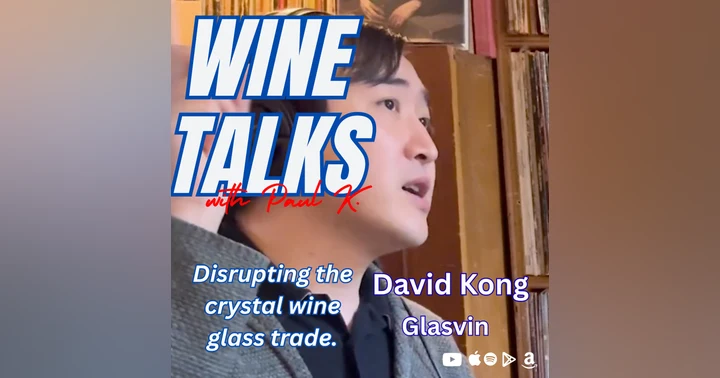
Visionary Disruption: How David Kong Is Redefining Wine Glassware for a New Generation

It takes "b_ll$"to go after industry giants. And it doesn't mean toppling an industry giant, it just means getting a slice of the pie. I have witnessed numerous attempts at this in a variety of sectors, and most fail...and for many reasons..but this idea is working.
David Kong might have traded the high-octane pace of New York hedge funds for the delicate clink of hand-blown glass, but don’t think for a moment he’s lost his edge. In this episode, you’ll hear how an outsider to the wine glass industry spotted a wide-open niche, challenged global heavyweights, and built a thriving company—all by obsessing over quality, price, and experience. Paul Kalemkiarian sits down with David Kong to trace the unlikely journey from financial analysis to the sensory world of wine glass design, unearthing what really happens when you try to disrupt a tradition-bound market.
You’ll learn how, through sharp intuition and a knack for timing, David Kong built a direct-to-consumer glassware company that quietly caught fire through word-of-mouth—not flashy ads or influencers. He reveals what makes a hand-blown glass so irresistible to both diners and restaurateurs, and why elevating the vessel is about a lot more than aesthetics: it’s about economics, market trends, and the way people experience wine. The conversation spans the practical—such as breakage rates and budgets—to the philosophical, with a deep dive into how glassware touches the very heart of hospitality.
Curious how glass thickness, the weight of a vessel, or even the glass company’s business model can change the way you enjoy a bottle? Wonder why the trend toward lighter, featherweight glasses has taken the fine-dining world by storm, or how the rise of non-alcoholic “wines” and ready-to-drinks is shaking up both producers and purveyors? This is your chance to hear it straight from the founder who’s shifting expectations in some of America’s best restaurants.
Here’s what you’ll learn, one wine glass at a time:
-
🍷 The critical role that hand-blown wine glasses play in enhancing the wine experience
-
🍷 Why restaurateurs break more glasses—and why that’s actually a good sign for business
-
🍷 How premium glassware can differentiate a restaurant and boost wine program profits
-
🍷 The surprising ways glassware trends ripple through both high-end and everyday hospitality
-
🍷 Insights into the rise of non-alcoholic drinks—and how glass choice still shapes the experience
-
🍷 Why a business built on word-of-mouth, not marketing budgets, can change the landscape
By the end of this episode, you’ll have an insider’s appreciation for the intersection of touch, taste, and economics—and you might just find yourself scrutinizing your own stemware with new reverence the next time you pour a glass.
YouTube: https://youtu.be/J7kblUtLZAY
-
GlassVin: https://www.glassvin.com
-
Baccarat: https://www.baccarat.com
-
Coravin: https://www.coravin.com
-
Zalto: https://www.zaltoglas.com
-
Riedel: https://www.riedel.com
-
Wine Searcher: https://www.wine-searcher.com
-
Patina Restaurant Group: https://www.patinagroup.com
-
Benno (NYC Restaurant): https://www.bennorestaurant.com
-
Jancis Robinson Glassware: https://www.richardbrendon.com/pages/jancis-robinson-collection
-
Cantillon Brewery: https://www.cantillon.be
-
Whole Foods: https://www.wholefoodsmarket.com
0:00 I think the, the, the primary thing that we're trying to offer is that we're, we're, we're either a, um, the same quality of product at like half the price, or we're the same price and like way higher quality. Sit back and grab a glass. It's Wine Talks with Paul Kaye. Hey, welcome to Wine Talks with Paul Kaye, and we are at an away game. I'm at in my old stomping grounds in Hermosa Beach, about to have a conversation with David Kong out in London right now. He is the founder of— now, do you go by GlassVin? What do you call it? GlassVin. GlassVin. Welcome to the show. Nice to— thanks for having me. The shortest introduction in history. We were just, you know, I didn't want to waste this great content. We're talking about glass, the glass industry off camera here. So we want to get back, jumping back into that. And we were talking about digital marketing and, and the DTC world and PR agencies and consultants. And, uh, one of the things I mentioned was that we, we had such a— I don't say— I won't say it was a difficult time, but I had trouble. Let's just start with this. I had trouble finding PR agents, digital marketeers, consultants on the, on the metric side that understood what beverage industry was like. And I'm going to say that glass vin is, you know, on the periphery of the beverage industry, even though it's not alcohol, but you
1:31 certainly have to comply with and understand the beverage world. Have you had good luck with consultants and firms that understood what you're trying to do? I think our philosophy is to try to do as much in-house as opposed to Um, outside, uh, just, and that's also just because we want to keep prices as low as possible for the consumer. So like a lot of direct-to-consumer companies, they're, they're supposedly low cost because there aren't people like in the, you know, in the middle of the supply chain, same, same as us. But then, you know, they'll spend like 30% of their revenue on marketing. So that's— you know, that is like an implicit cost that you as a consumer is paying for. So, uh, so yeah, we, we, we intentionally try to spend as little money, like we, we really try to let the product do the marketing for us. Um, and I mean, obviously we spend money on ads and stuff like that, like to some degree, uh, but, but, but I think very, very in line with market norms and Um, you know, we don't have like people making crazy ads for us. We don't have like people on our Instagram account making, um, you know, content and like all that stuff. We kind of just try to keep it to the bare minimum. Um, try to keep it simple and just try to like let the product and the price, of course, uh, do the talking. Well, let's, uh, let's let the listeners and
3:03 viewers know what the product is. Like, we should start with that, but, uh, Um, and what do you make? Wine glass company primarily. We also do cocktail glasses now. Um, we do like drinking glasses, whatever. So primarily a glassware company. Um, everything is hand-blown. Uh, so I, if you've ever, never used a hand-blown glass before, like you gotta go on my website and buy one and check it out and just see, compare it with what you're kind of used to. And, um, you know, most people who like wine will use one and then will never go back to like a normal wine glass. You know, being in this industry for so long and, and, and having seen so many different glass companies come and go, and not come and go, but just, uh, produce a philosophy and come up with, you know, their angle on it. And you sent a couple samples to my house and they're gorgeous. And I had this interesting, um, recollection actually, and that is this, this tactile feeling when you hold a glass of wine or hold a proper, you know, spirit in a properly proper serving glass, it does change the experience of what you're doing. Is it not part of the overall gratification when it comes to having the proper glass?
4:22 Yeah, I would like, I would say it's second to the wine. I mean, I've, Like, I've never seen anyone drink like a, like a DRC out of a shitty glass. It's just something you probably don't want to do. I have stories for you. So I'm sure, I'm sure, I'm sure someone in Italy is doing it right now. But, um, no, I don't think you want to be, you know, spending $5,000 on a DRC and then like having it out of like a $5, you know, whatever. I don't want to name names, but yeah, that's right. Yeah, we don't want to throw them all under the bus, but, you know, it is an interesting point. I, it, that's an interesting point that, you know, the famous movie Sideways where he is, you know, having a glass of Cheval Blanc, uh, you know, at the diner in a, in an amber tumbler reminded me of something. Years and years ago, I had a vendor that used to sell me wine. He sold gorgeous wines made by a master of wine, the first winemaking master of wine. up in Seattle or in Washington. And he would take me to his diner in my hometown and we would pour this gorgeous Columbia River, Columbia Valley, you know, Syrah. And he would, I never understood this.
5:36 And I guess I always tell people, go ahead and put the same wine in a plastic tumbler or a plastic cup or even a paper cup and put it in a fine piece of glassware like yours. And are they different substances inside? No. But do they feel different? Absolutely. What you can't— you didn't start in this industry. I mean, first of all, getting into the alcoholic beverage industry is, you know, a little psychotic anyway, but you came out of investment banking or what were you doing before this? I worked at a hedge fund for 3 years. in New York City. And yeah, I mean, I don't know if I would personally like to get into the alcoholic beverage industry. That sounds like, it sounds like an order of magnitude harder than what I'm currently doing. So like, you know, thankfully glassware is like, you know, unregulated and at least from what I can tell right now, it seems underserved. Like it, like the alcoholic beverage industry seems somewhat like overserved in a way. Like, it's like, you know, like how many different brands are there in every category?
6:46 And it just seems, and it also is having some like obviously secular problems, which isn't in itself an issue. Like obviously if the market for alcohol is declining, like the market for wine glasses should also be declining. But I don't know, it just seems like a very underserved industry. There's only a few big brands, really. There's only really one big brand, I would say, um, in, in wine glasses. And, you know, we're like 1/100th of their size. So there's a lot of market share to, to gain over time. Um, even if the market is kind of like going down. But yeah, I was in, uh, hedge funds, New York City, and I was drinking a lot of, uh, a lot of wine that I, I I, like, for the first time in my life was trying and it was, um, yeah, that's like when I first like noticed these glasses in New York City.
7:40 It's, um, you know, even like, like by city, it's like New York City has like a lot of these restaurants have these nice glasses, but then if you go to, you start going to like tier 2 or tier 3 cities, it's like, yeah, maybe like one restaurant. Like, like even today, I think in Toronto, like basically like like 10 restaurants have, yeah, 10 restaurants have nice glassware. And of those 10, maybe like 2, 2 have like hand-blown, um, glassware. So like Toronto's where I'm from, so that's why I'm making that, um, reference point. But was this, was this a, you're having wine and it sounds like you weren't a, a wine enthusiast necessarily prior to your career as a hedge fund manager, but you're having a glass of wine somewhere and it didn't feel right. It was, it didn't taste that good. It didn't, uh, What was it that said, you know what, I wonder if there's room? Because you're right, there is one major, major player who's prolifically social in this industry and will say he's a small company, which he's not. But, you know, what was the entrepreneurial spirit that jumped in and said, you know, I think I can do this better and cheaper? Yeah, it wasn't necessarily like, I mean, I wasn't that smart to be like, oh, like all these restaurants that currently are not on like hand-blown glasses, like they should get on hand-blown glass. Like I didn't, I wasn't even thinking about that. I was just mostly thinking about like how all the restaurants that have these nice,
9:11 really nice hand-blown glasses that are like twice or 3 times the price of mine, like they could save a lot of money by going on to my stuff. So, you know, but like, yeah, in hindsight, that's actually not even the right— way to think about it. Like the right way to think about this is like all the people who are using clunky, thick wine glasses now have options like mine that are both nicer and like kind of comparable in price. Mm-hmm. Um, that market is way bigger than, you know, like the, I mean, New York, there's probably like 50 restaurants that can do hand-blown wine glasses, but then there's, you know, 500 restaurants that can do Like my wine glasses, which are also hand-blown, but they're like priced kind of like the machine-made glasses.
9:57 So what do you, what do you pitch them? What are you telling them? Like you walk into a restaurant or if you're at somebody who's representing you, your wholesaler or whoever, I mean, what are you pitching? Yeah. Better, less expensive. I can increase the value of the experience. What? I mean, this is, I'll say 2 things. One is, um, like We're very rarely pitching, like we don't have a sales team. And again, this goes to like the fact that we're just like very cost focused. So like having people on the ground to like sell things is a cost. I mean, which isn't to say like, you know, if you email me, I'll sell you glasses, you know, but it's not like I'm on the ground and like trying to get these things. But most people who email us are already aware of who we are or at least has an idea and then we'll just send some samples so that Sales process is actually pretty simple. Well, let's go back to the benefit. What is the benefit to the restaurant?
10:57 What are they trying to do when they buy your glasses? I think the primary thing that we're trying to offer is that we're either the same quality of product at like half the price, or we're the same price and like way higher quality. So You know, if you're a restaurant and, you know, your, your average restaurant's what, like marking up these wines like 3x, 4x, 5x sometimes if we're talking about by the glass, right? Like the customer would like to receive something that's differentiated. Um, a lot of these wines you can just like buy off the, uh, off of, you know, Wine Searcher or something, you know, and it'll be like a third of the cost or a fifth of the cost. So I think restaurants understand this.
11:40 I think consumers obviously understand this and restaurants also understand this. And so the restaurant needs to offer an experience that is differentiated from, you know, you drinking at home or, or even like from the restaurant down the street. So at least in places like New York City, where the standard is that like you're going to have a decent wine glass. I'm not saying everyone needs to have like, you know, hand-blown wine glasses or anything, but I think there is a standard in New York City that, you know, if you go there and order a nice bottle of wine that you'll get like some nice thing to drink it, drink it out of. Yeah, we're basically letting you offer that experience to your customer at a significantly lower price.
12:24 So, you know, these are obviously glasses break over time, so it's just part of the annual budget and, you know, we help them reduce that budget. Certainly breaking, certainly that's part of the questions here about the breaking glass part, but I want to dig a little deeper into this. Philosophy because it's so important. And I— and if you, uh, visit Napa and you go see our friends, uh, Jean-Charles Boisset, and he's got a relationship with Baccarat and he's got a product line. And in an earlier question, I never got to finish it to what I wanted to get to, which is I get the obviously the tactile experience of wine, the, the, the way the glass— and if you talk to Max Rudel, he's going to talk about really easy to talk about, you know, how that glass was designed for that varietal, etc., etc. And the whole point being to raise the experience, right? And you mentioned Italy earlier, you know, sitting in a trattoria where they serve a, uh, you know, a local carafe wine in a, uh, an old-fashioned glass is a little bit different than what we're talking about. And so there's a reason that this works. And the question is, Well, let me, let me phrase it in an experience. I was in New York City and I was at a wine bar and I was tasting out of a $60 hand-blown glass.
13:45 And so my first question as an industry person was, how the hell do you keep these in stock because they're so delicate? And then I thought, how is a restaurant even afford that versus a machine-blown glass? The flip side is like, if people have nice glasses, they will go to your place and you'll just make more money on selling more wine. And like I said, the markup on these things is pretty high. So you're actually, you're actually not saving any money by having bad— I mean, obviously I'm talking my book because I sell wine glasses, but I think you can pretty much see that if you have better wine glasses, you'll, um, you'll end up making more, more money in your wine program. Um, that's why like every legitimate New York City restaurant is using You know, like nice. I mean, by the way, like, like high-end Riedels are also like, I would categorize those as nice as well, you know? So like you're, you're, you're choosing between nice and nicer effectively.
14:43 Obviously, like the trattorias in Italy and like, like that's, that's a different game. Like people are not necessarily going to buy nicer, higher-end wines at like, at places like that. If you give, give them a nicer glass, I'm talking about, I'm talking about places that are selling you know, $100, $200, $300 bottles of wine, like as a, as a starting point up to, you know, $1,000 up to a couple thousand. Like, like one way for us to figure out if a restaurant is going to be a good client of ours is basically if they have any wines over $1,000. Um, that's for our higher end line. Um, obviously our lower end line is, is, is very affordable. Like we start at $10 a glass, you know, so it's, it's much more affordable. Like, That's like more like every, every high-end restaurant can, can probably afford our glass. But like the ones that are buying our high-end glasses, they're the ones that have like $1,000 bottles of wine. Um, and obviously if someone orders like a $1,000 bottle of wine, they're going to want something, um, a little nicer. So by the way, what webinar that you went to?
15:46 You're— I can't remember the name of it. My daughter was, uh, baking in, um, in New York. She worked for, um, uh, chef, uh, I can't remember his name. I'll remember in a second. But she was at the, the Ligon Restaurant, um, one of the Patina Group at that point. And then she went off and did Benno. She worked for Jonathan Benno. She, she's a French-trained baker and they were a Michelin star during that period, but then COVID hit and closed the restaurant. Yeah. And so I don't— but we were out there just hanging around. But so are, are your $10 glasses or, or that price range, are they hand-blown as well? Yeah, these, these are restaurant, these are restaurant prices that like in— yeah, wholesale prices. Yeah. So the reason I brought up Baccarat was, and I got an interesting answer from various people that are in this industry on this subject, because the Baccarat glass that JCB sells is this heavy-duty, you know, lead crust. I mean, it is a major glass. This is not this delicate And I'm wondering what your opinion of that, that tactile expression is. So it's a complete opposite of, of what you're selling, which is this delicate, and I, I get both sides, but I'm wondering, I haven't seen anybody other than, than JCB trying to promote the idea of this voluminous glass versus this delicate glass. Yeah.
17:14 Well, JCB's, um, my, my client for my software company, so I can't, I can't like say too much. Um, but, but, but I, I don't, I don't think this is a common product. Okay. Now there's, but like, I'm going out, I'm on their website right now and I'm seeing they're selling it for, you know, 2 for $500, I think. Yeah. They're at $250s. Yeah. Yeah. So, so I guess the difference is you don't need to sell as many of these guys to, um, to make some money. So, um, I was trying to take the money outta the equation. I was sort of trying to, they are expensive and, and I had them in my wine shop when I had a wine shop and sold, uh, none of them. So what I, what I, what I was trying to get to is, and maybe there's no opinion of this, 'Cause I get, I get the sensory tactical part of tasting wine out of both styles. And I, and I, I'll say I prefer the delicate hand-blown style, uh, versus the, the, this voluminous heavy-duty glass. But I get it. I— his martini glasses are just as heavy and they, they're, they're fun to have a martini out of. But I just wondered what your, what your thought on that was.
18:29 But we don't need to dig too deep into that. I wonder, um, When you're out there, what, what stages, and have you helped restaurants move the needle on their wine program because of your glasses? In other words, you, you probably walk into a restaurant, somebody walks into a restaurant, somebody calls you and says, I need to order some glasses. And you probably have a variety of levels of, of awareness of how important this kind of tactile representation is to drink wine. So you see a variety of people like, why aren't you doing this yet? Or I see what you're doing, but here we can improve it. I think, I think like, I think the people who are buying our glasses are already like, they've already, they already understand this. Um, and it's probably because all their peers are doing it and it's, it's, it's very much like a, if everyone else is doing it, you kind of have to do it too. Otherwise you become the restaurant that's just not as, um, just, just, just isn't at that level, unfortunately. So I think people who come to us are already They already know. And then it's really just choosing between us and, you know, like a couple of the other people who also offer this kind of stuff. So, yeah, I don't know if I'm like leading the change or whatever. Like in many ways, I think the change is already happening and we're just here to try to like, you know, make sure our customers know what they're doing and have the— get the right pricing and, um, are able to sustain sustainably do this. Um,
20:00 and also just provide like good customer service over time as they, you know, navigate the transition to like lighter, um, lighter kind of glassware. Also, like there is some labor component to this. Like you need to know how to take care of them, how to wash them, stuff like that. But, you know, that's why like in New York City, it's great because all the servers or all the busboys and whatever that have been in New York City, they already know how to deal with this stuff, so they don't need to do much more in terms of training and things like that. So I mean, over time— go ahead. Sorry to interrupt you. I get it personally. I get a kick out of it to a certain extent where I'm with friends or whatever and we pour some nice wines in a nice glass and that expression on their face, uh, changes. And I'm wondering, you, you're talking about this sort of movement. This is— is this a movement in the wine trade too, that people are realizing that it's important to have this kind of experience so that they can raise their level of wine service? Because that is suffering in restaurants. I was talking to a restaurateur here in LA, uh, not too long ago. He says his bottle sales are down 40%. And let me just hedge that. And I said, well, how about your servers? And he goes, well, they don't know shit.
21:21 And I thought, well, maybe that's your problem. You know, maybe your servers don't understand what you're selling. And now we add this glassware to it, which could, could be, could bolster sales because of the quality of the experience. But are you seeing this idea? Because I haven't gotten to the point where I even know how your customers find out about you because you're doing it social, but you don't have a sales force. How's that happening first? And then do you see this as a movement in restaurant touring and hospitality in general? Yeah, so first of all, LA is definitely its own market. Like my friend sells caviar and a lot of caviar in LA that's also been quite weak. So I think that's like its own market. I think East Coast is actually doing quite well. I mean, I don't know. I don't know if wine sales are up or down or whatever, but like, I think overall, like it's going pretty well.
22:18 Also, obviously wine is like, at least in restaurants, like wine is a very premium product. And obviously we have a bit of a K-shaped economy right now. So I think people who like to drink wine are probably drinking more wine and drinking more expensive wine. And then, and that's like the market that we are predominantly playing in. So, so I haven't seen like a general economic countrywide. I haven't seen much of an economic issue. Um, but yeah, in terms of just, uh, like this, this trend is like, I think, I kind of think this started in like, like 10 years ago or maybe like 15 years ago, this concept of light wine glasses. So you're mentioning like sideways, like Yeah, we could exclude this stuff in, in the, in that time period. Cause like, I don't even know what kind of stuff these people were using. Um, no, I think we have to like credit the, like, like Zalto definitely started this trend of really light, um, really nice wine glasses. And I think their company opened in like the 2000s. Um, and I don't think it really got to the US until probably like the 2010s.
23:26 So. So yeah, this is definitely a new, like, this is definitely totally a new trend. The stuff that you're talking about with the Baccarat and all that stuff like that, that I wouldn't be surprised if that is actually what, what used to be like, kind of like the high quality kind of stuff. Um, but yeah, like over time, obviously, like we then like Riedel came in with all their different wine glasses and the idea of like varietally specific wine glasses. I think that was like a trend for a while. And then. I think like Zalto came in with like these ultralight kind of stuff, and now that's— I think that's kind of the trend now. It's just interesting because the wine industry is very slow, you know. It's just, it in itself, it's once a year, right? You have one harvest a year and you get to have a vintage, and then you, you do nothing for 9 months, and then you, you pick again. It— and I think there's a, there's a marketing issue with that. People are all over LinkedIn and all the pundits are saying, you know, we have to react quicker and we need, you know, we're behind the 8-ball when it comes to marketing merchandising. And I think that's just inherent to the product being that it's such a slow-moving needle to make changes.
24:36 And so I could take this conversation a lot of directions because everybody's talking about you need to react to the marketplace, you need to have cans, you need to have it back in the box. And so certainly there's general direction that some of the naysayers of the industry are talking about is changing, you know, being more innovative. And I, I don't, I don't think I'd take a can of wine and pour it into a, a glass vin glass. That defeats the whole purpose. I, I don't know. It doesn't make any sense to me. But here you are with this amazing product. at the higher end of the marketplace and you're growing.
25:16 And so that tells me a positive part of this industry, which is people are still and will always want the experience of an honest wine and now in an honest glass. Yeah. Like I think the canned wine is to try to, again, it's like the K-shaped economy, right? Like I think I think in general, the wine consumption is obviously down, um, you know, for, for lots of different reasons, but, but I think like high-end wine is still doing quite well. And then, and then I think, you know, like beer is doing okay. So, so you want to like, you basically want to make wine as much like RDT is ready to drink is doing really well. So you kind of want to make wine as close to You either want to premiumize your wine or you want to make it feel like, you know, a Moscow Mule out of a can. Right. So I understand both strategies. Obviously we're, we're not like, by definition, if it's in a can, you don't need me. But, um, but yeah, like, yeah, we're, we're, we're obviously on the, we're, we're, we're on the premiumization side of the industry for sure. Well, you know, years ago I did a, um, I did a special in the summertime on canned wines. I probably tasted 100, maybe 150 different canned wines, and all of them at that time, which you're talking about just post-COVID, were basically what you'd expect them to be. Eh, put it in a can, you
26:47 know, we're not going to bottle this one, we'll put it in a can. And they tasted like that, and they had a purpose, I suppose. But then I did find some varietals. I found appellated wines. I found a really nice Monterey Pinot Noir in a can, and it sort of changed my viewpoint a little bit in that I, you could find decent wines in a can. But then I had a conversation with a Cornell food scientist who was working on a food-grade lining for wine that could last 24 months. And I thought how disgusting that we had to have that conversation. But it was interesting to me that, that I guess we're talking about 2 different parts of the market, right? We're talking about this the part of the market that my dad dealt with in the '70s, which is the white Zinfandel drinkers, bringing them to the table, and then the part of the market that you're dealing with primarily, which is high-end wines, high-end service, good hospitality, and raising the bar for people to experience that, but keeping the costs down and doing that. And so how do restaurants find you in the first place?
27:56 Oh yeah, sorry, I forgot to answer that question. It's all word of mouth. I mean, we do run ads. I think we run like, I don't know, like 5 to 10% of our revenue on ad spend or whatever. So pretty standard marketing expense on that front. But a lot of it is just word of mouth. You know, people like to, some liés like to drink wine together. So if one person discovers a glass that they like, they'll tell other people about the glass. So, so yeah, I mean, it's, it's actually, it's funny. There's a lot of startups in this industry. Uh, even Zalto was a startup not only like 20 years ago, right? Mm-hmm. So, so it is an, it is an industry where you can kind of like get into it and, you know, change people's opinions and just kind of grow through this groundswell kind of effect. I wonder if you see what I just saw, and I've talked about this before on my— on the show with some other restaurateurs and wine folk, and that is the presentation at tableside. Now, the example I give is we were in Palermo and this, I think he was Siberian, Or Serbian. And I was so intrigued, and I ordered a Super Tuscan. Wasn't an extraordinarily expensive one, but didn't matter to him. He was so
29:26 enamored with the concept of wine service for himself as a career that he just made you feel like this was the best thing in the world. I just watched him off, you know, he wasn't even near our table. I just watched him prepare to decant this wine. And I thought this was the most inspirational service of wine I've ever seen. And the way he presented the glassware, the way he put on the table, the way he asked me to taste, the whole thing. Maybe it was a month later, I was in Beverly Hills at a very famous restaurant having a meal, and the somm was the exact opposite. He was the guy that's killing this stuff, that's making people feel like they don't know what they're doing and intimidating them at the table and talking about who he drinks, you know, what he drinks and who he drinks with. And do you see a variety of hospitality levels or you, we're not that granular with what you're doing, but I'm assuming you would see some level of service that's commensurate with what you're trying to sell. Yeah, I mean, it's, it, I mean, yeah, like I think that in anything there's people who do things quite well and then there's people who don't do it as well. And, you know, we all, I mean, I'm a believer in market economics, so You know, like, like ideally the ones that do it well make a lot of money and they can open second, third, fourth, like Carbone has like 50 locations now, you know, because they're doing it well. And then the ones that don't do it well, you know, it just, it's, it's, it's a lot. I mean, you know, restaurants close quite
30:57 frequently. Unfortunately, some of our clients do, close prematurely. Uh, it could— it totally could also be, uh, for other reasons too, uh, not just because of some of the stuff we're talking about. But, uh, but yeah, I mean, it is just life. I think— well, I mean, everybody knows most— most any startup is usually undercapitalized, never gives it a chance in the first place. And I've seen it dozens and dozens of times in our trade. One of the most common mistakes people make, and I'm going to open a bar and a casual neighborhood bar and all the doctors and attorneys are going to come visit this and we're not going to worry about the seedy crowd. And that just, that never works. I've seen that fail many times.
31:43 Well, I'm just down the street, a stone's throw from where I'm sitting today. There's a very prolific restaurant lifestyle. It goes late. There's everything from diners to surf Surf Haven Food, and, and now just opening, uh, was a brand new wine bar. Uh, the gentleman is 20 years in corporate liquor and wine. The wife was a PR, um, and marketing manager for a winery, and they decided to open a wine bar. It's been open now 3 weeks. What would you— if you're, if you're walking in there with your glass line, what would you be telling these people about what you think that level of hospitality should be and what, how your glassware is going to bring it to the table?
32:30 Yeah. So, uh, yeah, first of all, if they're already open, then, then, then it's, it's not, then we'll be able to talk to them in like 2 years or something. But, um, uh, I don't want to pretend to be an expert. Um, well, cause yeah, like it's all, they've already bought all their glasses, so they're, They're, they're actually right at the point where they don't need glasses for the longest amount of time, because really what you want to do when you open a restaurant is you want to put as much of your recurring expenses in the opening budget as possible, because that can be financed, that can be billed to the real estate, the person you're leasing from.
33:12 You know, there's lots of things you can do with opening expenses that you can't do with Recurring expenses. So people often overpurchase wine glasses at the start when they open a restaurant. And so they'll have, you know, glasses that are lasting for quite a, quite a long time. Now, yeah, I don't want to, like, I don't want to step outside of my area of knowledge. Like, I really don't want to pretend to be like a hospitality expert. I probably have very little that I can offer. Uh, in terms of advice for opening a restaurant and, um, things like that, uh, what I really try to do is service my customers' needs. So if my customer comes to me and says, hey, like we're opening these restaurants, we're currently like, we, we would have used these glasses, but we think they're, you know, too expensive or they're too delicate. Do you have something that like, like, is there something you can help us with? You know, that's where I can be helpful is I can be like, yeah, like probably we can get the price down or no, like that's probably the right price for those things. Like we probably can't help you there. You know, like that's the kind of partner that I want to be as opposed to like, you know, like actually giving them much on the hospitality thing because I actually have no expertise there. Well, I, yeah, I suppose that makes sense, but there must be some kind of I mean, education. These people, this guy sold liquor. I mean,
34:44 and that's the cutthroat business of the world is be out trying to outsell your competitor for the well, you know, pour of vodka. And now we're into this hospitality world. And I was, my point was sort of leaning towards the benefit that you would want to explain to them about having proper glassware. And I was just there the other night. I don't remember I'm pretty sure it's, it's the Bormioli Crescendo style glass, rather hardy, but, you know, elegant, semi-elegant in its shape, but, but certainly, uh, hardy in its, in its, um, uh, breakage. Are yours lead crystal? No, no, lead-free crystal. I'm pretty sure most, most of it's lead-free at this point. Yeah. Titanium or Something like that. But that's still a reality. I mean, we break glasses at our home all the time. In fact, I did a demonstration for my son-in-law when he— my daughter lives with us now because of the fires in Southern California. And I said, well, we were— it was like one of the first nights they were living there over a year ago. I'll throw that in there. And I said, watch these glasses. And I tipped it over because they're supposed to survive a tip and they just shattered all over the place.
35:58 So. Yeah. Yeah. It's just the fact of glassware. Like, I don't think anyone's invented a glass that doesn't break. So, uh, and they could be like totally like really thick, clunky glasses. Um, and they'll still break, you know? Um, I don't know if there's that big of a relationship between how thin a glass is and how, how easy it breaks, at least at the bowl, at the bowl area. Whereas like, obviously the stem, the thinner it'll break more, but, um. Yeah. Yeah. So, I mean, yeah, so everyone has a budget. Everyone knows roughly how many glasses that they're going to break in a year. Actually, the more glasses you break, the better, because that probably means you're selling way more wine.
36:40 It's really concerning if a client doesn't come back within a year and say, hey, we need more glasses. Like, I'm very concerned about your business if you're not coming back and buying more glasses. That's an interesting thought. What surprised you when you started out? Here you are, hedge fund, hedge fund, in hedge fund finance. You know, not product related, not industry related. And all of a sudden you bite this off. Was there some headwind that you didn't expect or, or you, you know, had it thought through and got to where you wanted to be, maybe even faster than you expected? I mean, obviously, like, I've definitely made a lot of mistakes building this, but no, No, like no fatal mistakes, you know, like everything we were able to easily just recover from. And, um, at least so far, just, it's been pretty, pretty smooth sailing. Like it, it just seemed like we had the right product at the right time. We, we had it right in front of this like COVID, uh, plus Ukraine war kind of thing, which dried up the supply from Europe. And so we were, You were with like this, the market just like went out of stock and we were there with, with all of our glasses. So, um, you know, I mean, so yeah, like 2020, we started selling. We, we just kind of took off right from nothing, just word of mouth. Um, 2021 just wasn't just an amazing year because it was like your second year. So like, you know, it's just all, it's just like you went from zero to like,
38:14 you know, something. And then 2022, you had the market dry up. So our sales went up like 2, 3x just from that. And then it's just, it just kept on going. Like, like every, every year it just goes up more and more. And I think a lot of that is because like more, more states too, like before it was like a lot of New York and then maybe like LA, like you were saying. But, but like, I think more and more people are, are signing up to this idea of like nice kind of glassware. So yeah, we're, I think we're right, right place, right time. Um, you know, I think we're the, the only real American, um, wine glass company. Uh, everyone, everyone we compete against is in Europe and it's like, what's the better market? You think, is it going to be America? Is it going to be Europe? Right. But then, um, there was no real American company. All these people have importers and distributors. You know, like, no one's really like 2 feet into this market. And so if you want like a company that's going to do what you need them to do and like service you and make sure that everything works out well, like, I don't know how many options you really have.
39:29 So yeah, I'm really happy about that. I have another company, which is like a software company where I think the mistake we made on that one Um, because that one hasn't been growing as fast as my glassware company. The mistake I made there was like, it was just like the market was too small, I think. Like the nice thing about glassware is like, like I said, the biggest company in this space is like, I don't know, $300 million of revenue. So, so like even if I get 10% of that, that's like $30 million revenue. That's like a nice amount of revenue. Yeah. Um, whereas like the other one, like the biggest company in space probably was like I don't know, like $2 million of revenue or something, you know? So it wasn't, I couldn't like, I just like, I wasn't in like the market wasn't big enough. Um, and there was like a lot of competition.
40:17 Um, whereas like Glassware just seems like the market is huge and then there isn't, at least to my knowledge so far, there isn't like too much, um, um, rabid competition. You know, it's interesting. It's really interesting. Because I— you're in London right now, correct? Mhm. There's, um, I had, uh, Greg Lambrecht. Oh, he's a big glassman lover. Yes. And he was talking on the show about there isn't a restaurant that opens or around London that doesn't use Coravin for buy-the-glass programs where they can elevate the level of wine that they serve on a per-glass basis because, because of the Coravin. And I, and that's, that's definitely trendy, not trendy in that a temporary trend, but trendy in an area of, of wine service that hadn't been explored before. And maybe that's one of the movements that's going on, which is a chance to taste Opus or Lafite in a glass without having to buy a bottle. And then now you add a reasonably cost hand-blown crystal glass, and that experience is magnified by doing that. And I think that's, and I think that has a lot to do with the post-COVID level of consumption. You know, COVID for the wine business, mine in particular, was extraordinary, like 30 to 40% growth in sales. But that quickly dwindled as soon as COVID was over. Like, in other words, I didn't sell my company because
41:50 I was making too much money. And then here, the rebound in your case, it was that was growth, which was really interesting to me. Almost the opposite of what the sales volume of wine was, but the presentation of wine and the hospitality of wine was growing for you. I think that's really incredible. Yeah. Well, the thing that COVID did was it a lot of restaurants unfortunately had to close down. And then when they reopened, they need new glassware. So, so that was probably a, that probably helped us in our early stages. Then again, like my revenue back then was like less than $1 million. So it's easier to grow when you, you know, have, you know, $100,000 of revenue. Yeah, right.
42:39 So yeah, I don't know how to quantify that exactly, but yeah, No, overall COVID was very, very helpful to us because people bought a lot of glassware for their homes. They stopped spending money at restaurants and they started buying glasses for their homes. And, you know, so we, we just got really, we got, we sold a lot of glasses to people during COVID And then when the restaurants came back, that was also a tailwind. So, but yeah, I, again, at the start of your company, everything feels like a tailwind because you know, nothing is happening. But yeah, no, Greg and I are, I think we're, we talked a lot. He's a big fan of Glassfin. I'm a big fan of Coravin.
43:21 I actually named my company because Coravin. No Glassfin? Yeah, basically. Well, I was trying to find like a 3-syllable word like Coravin more than Glassfin. I couldn't find one. So I just settled with Glassfin. And yeah, we're gonna do like, they, they're gonna have a new thing. I mean, I, I don't wanna put the cart before the horse, but like we're planning some, some fun partnerships 'cause I think we're pretty complementary kind of products. So. Yeah, that's smart. Last, last question 'cause we're almost outta time here. And that is this movement. When I was at the Fancy Food Festival a few years ago in Vegas, the, the, the leading theme for beverage was non-alc. And I had a young man stop me with a glass of Prosecco, rosé Prosecco, that actually was palatable.
44:11 Uh, he came on the show. Um, but a lot of the distilled spirit, uh, vendors were selling non-alc. And you're, you're too young to know about the Scarsdale Diet from the '70s and '80s, but the Scarsdale Diet was this famous diet, and he had the Scarsdale Cocktail. And what it was is a highball with ice, sparkling water and a lime slice on the edge, and it would make people think you're having a gin and tonic. And so I don't understand the non-alc movement, maybe because I'm too old, but it seems to me that this Prosecco vendor had your glasses at a restaurant, that that experience for even a non-alc drinker would be a positive experience.
44:54 And so how has the non-alch movement been in regards to what you're doing? And have you heard any rumors inside the restaurants about, you know, service of non-alch or low-alch even? So from a business perspective, it's pretty good for the restaurants because you can basically sell like the thing that costs you like almost nothing for like pretty much the same price as, uh, you know, like a non-alcohol cocktail in most of these places pretty much costs the same as an alcoholic cocktail. So for them, I think it's a pretty good business. Um, I don't think the volumes are really there, uh, to, to make it a big part of the business, but, you know, maybe it's like 10% of the bev-alc sales.
45:44 And so maybe it's— You know, maybe it's a little bit accretive to margins. Like, I'm not sure. In terms of how that affects us, like, I mean, yeah, our cocktail glasses are often used in these products. And I think it is another way to premiumize the product. Like, if you have this non-alcoholic wine, you know, like, it's probably not going to taste that good because it's non-alcoholic wine. Um, I haven't had one yet. Uh, and it's probably from like a brand you haven't heard of. So, but if you put it into a nice wine glass, you know, that can make people have better, a better impression of it. So yeah, like our products are definitely used in non-alc kind of stuff.
46:33 Um, there's, there's actually one big chain that I think like for, cause I think they need a different glass for the non-alcs so that people, people can tell like the servers can tell. So they've specifically brought our stuff in for their non-alcohol stuff. Um, and they're a huge chain. So it's like having a small part of a big chain's business is, is, is still lucrative. Um, but it's brilliant. Small right now. It's definitely growing fast, but it's too small to matter. Uh, so far, I think. Well, you know, we, I guess one of the litmus tests about whether successful or not would be, you know, how many do you see on a wine list? I haven't seen very few. There's a new restaurant here in Hermosa that's really, really good and they have White One.
47:18 Like, why wouldn't you just drink sparkling apple juice? I mean, who cares if it's, you know, that's my opinion. But I did notice at Whole Foods not too long ago that there was a fake bourbon, you know, non-alcoholic bourbon, and it was like $32 a bottle, which you can buy a bottle of Templeton Rye for that. And I thought that, I don't know. Whatever. I'm just an old guy, so what am I going to do about it? We were in the liquor business. We had a store, so I understand it. But that's an interesting story. I will say that like I've had some very good non-alcoholic beer before actually. So, you know, like if I pay the same amount and get something that tastes like pretty much the same and my liver doesn't go as bad, like I kind of, I would probably do that. So it just has to taste good. I think the issue is they haven't figured out how to make non-alcoholic wine taste.
48:12 As Jancis Robinson said, who's also in the wine glass business and her glass is cool too, she said something like, I've never had a glass of wine, a non-alcoholic wine that's better than sparkling water. So yeah, if that's, if you're, if you're not as good as sparkling water, then Then, then, then you have a problem. Well, I've had, I've had the luxury of, uh, which is kind of interesting. I've had 2 really interesting, um, experiences in my career. A lot of them, of course, but one was I got to taste, uh, the same wine, the same Chardonnay in a can, bottled as a canned wine. And I also tasted it out of the bottle side by side, same vintage, same vineyard, same you know, just same stainless steel tank. And that showed, showed something that was different. And not too long ago, I got the taste of Pinot Noir from Monterey County that was vinted in the bottle for sale in regular wine shops and its non-alch counterpart. So same grapes, same vineyard, same process. You know, they made, they make the wine and they dealcoholize it and they put stuff back. One of the things that's interesting is the side note is that if you dealcoholize a wine, you end up removing not just the 14% alcohol, but another 16% of of character. And then you have to add something back because you can't live with 30% discounted of what you grew. And so what do you add back? You know, water, flavoring agents, whatever. And I think that's, you know, part of the— where part of the problem is. But I've never
49:44 tasted one that I would enjoy to drink, um, not despite the, the potential benefit, you know, the potential— I think the way you make non-alcoholic wine is just you got to start from scratch. Like the ones that are decent, I think are like tea-based. Um, and yeah, like tea, tea and coffee are so, to me, like so, so similar in terms of taste profile to wine that, um, yeah, like I think you can kind of do it. Um, also like beer, like Cantillon, for example, like in many ways Cantillon is like a low alcoholic, low alk wine. Like it kind of tastes like wine, but it's like. a third of the alcohol. So I think that's the direction you have to go. If you just de-alcoholize wine, I don't, that doesn't seem to work from, from what I can tell. What I didn't understand was when I was at Whole Foods the other day and I was tasting the non-alcohol Corona, that they had the stanchions up and it said you must be 21 to taste. I thought, well, it's not alcohol. Why do I have to do this? This has been a fascinating conversation. I wish you all the luck in, in, in In this product. It's beautiful. And thank you for the samples. Uh, I'm gonna share them.
50:57 We are building in our home in Arcadia a new French-themed bar, and we will bring in some glass vin to stock the bar and raise the level of experience when people come to our home. Fortunately, unfortunately, my kids moved back for a little while, but when they move back out, that will free up the space to make this little bistro that we have planned. And, uh, we'll look forward to having your glasses there to do that. Great. Thank you. Appreciate it. Are you ever in LA or? Yeah. Yeah. I was just there, um, a, a few months ago. Uh, there's also like La Paulette and La Fête LA often. Um, so yeah, I mean, obviously huge wine scene. It's probably our second biggest market after New York City. So lots and lots, lots. They just did the Michelin Guide in LA too. And we were like, that's right. We're like in half of them.
51:53 Uh, we're in half of the new entrants, something like that. Yeah, it was— That's amazing. Congratulations. That's huge. So yeah, I gotta contact and, uh, congratulate the ones that, that got in. We're supposed to go to Gwen Steakhouse. Is that what it's called? Gwen? Oh yeah, yeah, yeah. I, well, I have some relationship with them. I forget what it is exactly. I don't think they, Are my customers out there? Well, then I'll bring it up because Assam invited us, so we'll, um, we'll bring that up. But a real pleasure, David. Thank you for the insights of what you're doing, and congratulations on the success. And, uh, it looks like you're on the right trajectory in this crazy industry, and, uh, we need you.
52:40 Cheers. Awesome. Thanks, Paul. Appreciate it.