

 Apple Podcasts

 Spotify

 Youtube Music

 RSS Feed
 YouTube
 Pandora
 iHeartRadio
How French Village Life Changed the Hoffman Family’s View of Food, Wine, and Culture

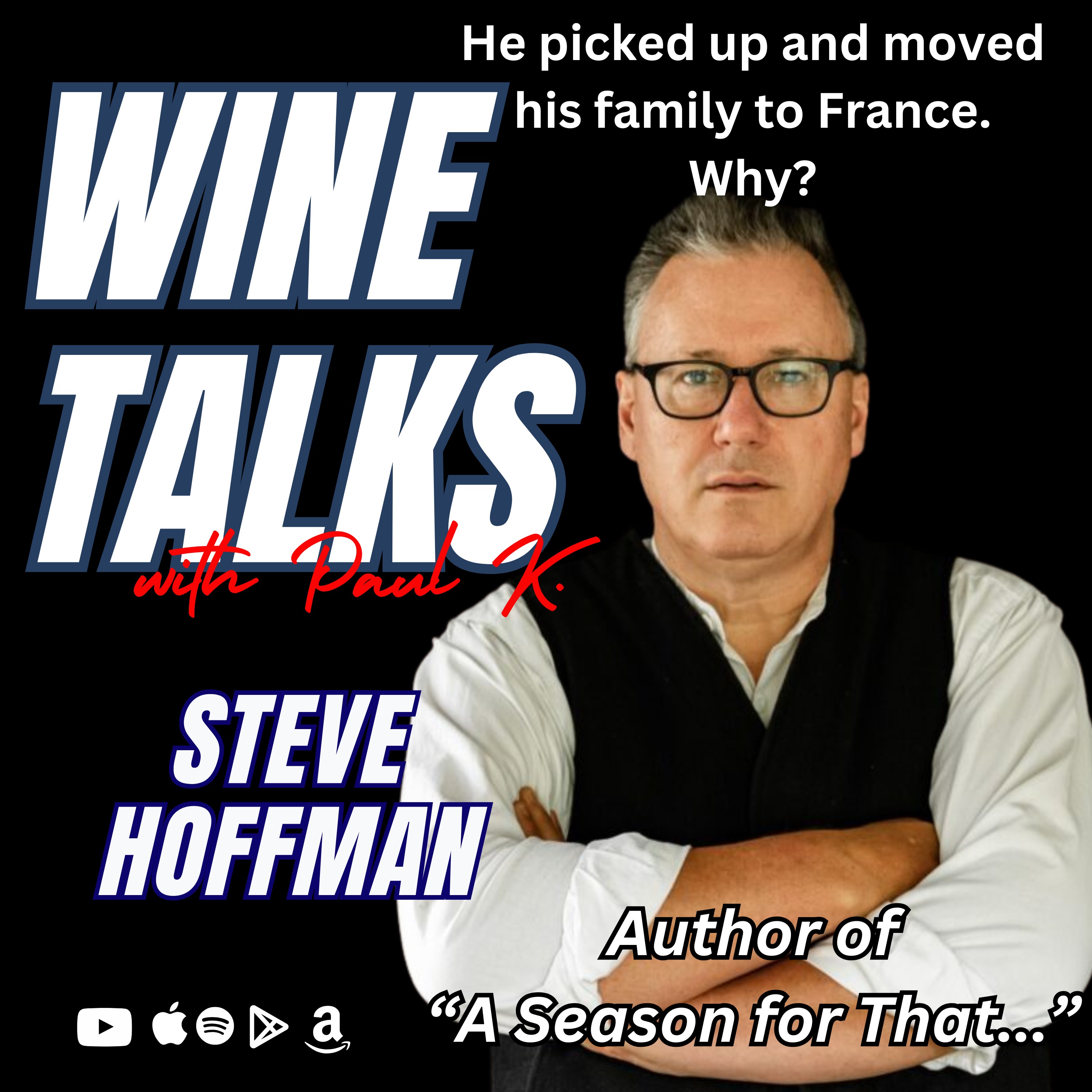
It is a dream for many people to pick up and move to another country. Virtually, no one acts on that dream. Steve Hoffman did.
And it seems it takes a certain type of partner, a certain type of children and a certain type of risk tolerance.
What do you do? Throw a dart and a map of France and moce there? The answer to that question and just about any question you might have in regardst o moving your entire family to a foreign country is answered in his book "A Season for That: Lost and Found in the Other Southern France"
In this episode, I sat down with Steve Hoffman—a truly fascinating guest whose life journey has taken him from tax preparation in Minnesota to writing about food, wine, and the adventures that come when you upend your comfortable life and move your family to rural southern France.
We kicked things off by talking about Steve Hoffman's unusual career blend: by day he’s a seasoned tax preparer (25 years in the game), but his real creative passion lies in writing, especially about food and travel. We dove into his book, "A Season for That," which chronicles his family’s adventure as they left behind their predictable Minnesota routine for a small French village—with two kids in tow. That journey was as much about immersing themselves in French culture and language as it was about discovering how to cook the local food and connect with the local winemaking traditions.
One of the big themes we explored was creativity—how hard it is to switch gears from the structured world of numbers to the freewheeling world of writing. Both of us agreed: creativity is a skill you have to practice, nurture, and work at. We also talked about how the relentless pace of social media and AI-generated content creates burnout for today’s creators, and how meaningful writing (and winemaking) always comes from a deep, unique personal perspective.
We took the listeners through the excitement and challenges of integrating into French village life—the struggles with unfamiliar and often pungent cuisine, and how difficult it was for Steve Hoffman's kids to adjust. We got honest about failed dishes, peculiar local ingredients, and the cultural value of not wasting any part of the food. The conversation was filled with stories about learning from neighbors, the importance of family meals, and how sharing food and wine became a way of connecting across cultures.
Of course, wine was front and center. We talked about the deep agricultural roots of winemaking in France, the differences between American and European wine culture, and why wine is so much more than just a beverage—it's a time capsule, capturing the character of a particular year and place. We compared the American pursuit of "great vintages" to the French view: that every vintage is valuable if it honestly expresses that year and terroir.
Lastly, we dove into the mystique of wine pairing—questioning whether there’s really a “perfect match” or if the best pairings are simply what fits the moment and mood. Sometimes you open a special bottle and let the food catch up, rather than the other way around!
This episode was packed with personal anecdotes, deep dives into creativity and culture, and, most importantly, a celebration of wine as a connector between people, places, and memories. Whether you’re a wine geek, a foodie, or just looking for inspiration to shake up your routine, you’ll find something to savor here. Pull up a glass, and join us for the ride!
YouTube: https://youtu.be/0MtN3SANKak
#WineTalksPodcast
#WineCulture
#FrenchWine
#FoodAndWine
0:00 Bottle of wine is a time capsule to some extent. It is the embodiment of what happened in one given year. And you could push that a few, you know, one way or the other a little bit. But ultimately it's a good vintage if it captures exactly what happened in that year. Sit back and grab a glass. It's Wine Talks with Paul Kay. Hey, welcome to Wine Talks with Paul Kay and I am in studio today. It's sort of a blustery day after a huge storm here in Southern California. About to have a conversation with Steve Hoffman, tax prepar pair and food and wine author. But have a listen to a show that I just put out. It's an incredible conversation with a gentleman named Greg Lambreck and Greg Lembreck, a nuclear physicist who invented the coravan. It's an incredible, incredible conversation. But now while we're here, here to talk about Steve, welcome to the show. Thank you. Thank you, Paul. I'm going to read this thing from Chat gtp since everybody's using AI and I certainly do too, but it's rather, rather magnanimous. Today on Wine Talks, we sit with the Steve Hoff, author, journalist, and a man whose life story reads like a map of curiosity. How about that? Already I'm in. I'm flying.
1:15 Hoffman's path has swung through kitchens, newsrooms and French markets, each chapter sharpening the way he observes people, culture, and the seasons that define our lives. His book A Season for that isn't just a memoir. It's a precise, unvarnished look at change, identity, and the quiet truths we only see when we slow down. Wow, that's, that's awfully impressive. Oh, yeah, I'll take that. I may borrow Almost better than natural intelligence. Certainly mine. You know, I got this, I think, I think a PR agency or a PR person work reached out to me and asked if, you know, you wanted to be, I wanted you on the show and, and I and sent me a book and we read most of the book. I'll admit to the listeners it's, it was really struck home for me. But let's go back to your career for a little bit.
2:04 Just that's not what you do every day, or at least we just mentioned six months of the year. What's your regular vocation? Yeah, my job that actually pays the bills is tax preparation. And I've been doing that for almost 25 years. I was a language and literature major in college, studied French, English and Ancient Greek. And my wife was an aerospace engineer. And so she went to work and I Raised our kids for obvious reasons. And then at some point we were having trouble having baby number two and we thought it was the stress of her job. So we sort of tag team. She jumped out of the ring and I inherited my mother in law's tax business, which sounds like one of the worst ill fitting careers that you can imagine for a language and literature guy. But I ended up loving it. And so I've been doing that for 25 years and only really added my writing career on as a midlife resumption of an early love of words and books and writing. And over those years it's gradually evolved to about a half and half proposition where I work the first half of the year in tax preparation. I do about five or six hundred tax returns. That pretty much funds us through the end of the year. I consider it sort of a form of self patronage.
3:20 I'm kind of my own grant program so I don't have to go out and, and make money with my writing. With every assignment I take on, I can kind of write with some creative freedom because the, you know, the bills are paid by, by about July or for the most part paid by July. You know, you said something interesting. You inherited your mother in law's tax business. And, and I did. I deliberately stayed away from my mother in law's business which was, she was there in trash. And so they wanted me to do this, but you know, my father had, had gotten an offer for the wine of the month club and said son, I think you may come check this out. And of course it paved the way for my career. But this is kind of interesting because your wife is, she's from Slavic country, right? She is half Romanian. Yeah. So her father was 100 Romanian. And so yeah, we've. She's an aerospace engineer from trade.
4:15 From, from Romania or here she went. No, no, no. She was, she was born and raised in St. Paul, Minnesota, but from. Grew up on Rice street on the east side of St Paul where there was a little Romanian enclave. And so her dad was named John Lapidat and she grew up Mary Jo Lapidat. We met in 1987, but she was born and raised in the Twin Cities and studied as an aerospace engineer. She got her engineering degree at Madison and then got her aerospace engineer master's at Stanford and then worked for Honeywell for a bunch of years. And she. Since we both have this weird sort of right left brain thing going, she's since begun a career as an artist. And so she's an artist photographer. I'm now Tax preparer, food writer. But she is a former. I literally did marry a rocket scientist. So that's like. Yeah, you can imagine how often that joke gets told in our household. It doesn't take a long time. You sort of bring it up in the book in the beginning about how you met her and this whole dichotomy, this irony between their two lifestyles. And you're rearing and I, you know, it's. It's fascinating. It's kind of what drew us into the story in the first place. But it's interesting.
5:26 I consider myself a creative person that's kind of, you know, I'm not the organized, structured guy. If you saw the rest of the studio I'm sitting in, you see how what a mess it is. And my wife is that structured accountant type. She's an accountant. How does that balance in your lifestyle? I mean, you've. It's. Particularly when you sort of have a hard line, stop. You know, in six months, you know, April 16th. And it's like, well, now we're going to start the creative side. That seems like that transition is hard. The transition from the writing season into tax season is really easy now. After 25 years, it's very linear. You know, my time is blocked off in one hour increments. My. My clients all sign up for their appointments ahead of time. And so that doesn't. No longer takes as much of my brain as it used to, as much sort of psychic space. But the transition out of taxes into writing is very hard. It takes much longer. It's getting into that place where you're not just solving problems in a world that you are already more or less a master of, but you're always asking questions about, what does this mean? Who am I?
6:33 What is important to me? What are my foundational goals and values? And that fuels the writing, but that it's very hard to dip in and out of that mentality. You've got to kind of be in there. I call it big ship. You know, you can't turn an ocean liner very fast. And it takes me a long time to get started and a long time to stop. That makes a ton of sense because the writer's block in itself is a hurdle that we all have. And here you have to shift gears. Not just like sit in front of sitting at Starbucks on WI Fi trying to write something. But you've come out of a completely different environment. Absolutely. Think that is why the creative process is so interesting to me. And I've always wanted to act, and I'm Using this platform and other platforms in the wine trade to foster that creative spirit that I think I have. But why do you think that exists, this ability to create when you really on a roll and then the ability to just be completely stymied when you're trying to figure something out? Yeah, I think. Well, I think two things. First of all, I think a lot of people think that you can just be creative and decide that you're creative and then start being creative.
7:46 And I don't think. I think creativity requires a set of skills that any other activity does. You can't just step onto a tennis court and be a good tennis player. You can't just decide you like a glass of wine and be a wine expert. It involves repetition and iteration and being in that world for enough time and doing the same thing over and over so that you actually establish skill sets. And I think a lot of people underestimate the amount of rigor is involved in actually being creative. But then the other part of your question is just sort of like, why do we get lost in creativity and why does it take us so long to get into that mindset? And I just feel like creativity is usually asking us to be slightly better than we are. A lot of times our jobs, we more or less understand everything that needs to be done for a job because we've done it. They're relatively straightforward activities. Creativity is always asking you to be a little bit better, to think a little bit beyond what you thought before, to be a little bit better than who you are. David Bowie once had a really good image for what that's like he said, it's like being in a pool where you're dropping down into the deep end and at some point you're not over your head, but you're not touching bottom either, and you're kind of bobbing up and down at the edge of your edge of your physical size. And I feel like creatively that's what happens when you're doing it right, which is you're not quite comfortable. You're a little in over your depth. You're not drowning, but it's not easy either. And I just
9:17 think that's where the best creative work happens. And it's a really hard place to reach and stay in. You know, it's interesting. I don't know the words of that song, that Suffragette City. No, I'm kidding. You know, while you're saying that, reflecting on the. The access to creative tools these days, with of course, the Internet and now AI and all the other Even prior to AI, there was all kinds of wonderful things to do and having to be on TikTok or be on. On Facebook, Instagram, and continue to create. And now it's created this burnout feature of, I think, a generation that doesn't. Didn't understand what you just said. You know, the, the, the crux of what you just said is really important. It's been around since creativity, you know, humanity. Absolutely. And all of a sudden now access to creativity and displaying your creativity is creating a burnout in this because you can do it so fast. If you don't do it fast enough, then somebody else is doing it ahead of you, and you're. You. You're clamoring for attention on the social networks. And I think you've created a whole different generation of. I do, too. And I think some of the impetus or the encouragement to just churn out content has really. It looks like creativity, but it actually gets in the way of creativity. It's more like a grind. It's more like a marathon. Creativity is about sort of sitting still with yourself and being creative, finding a way to be comfortable with that or at least make something out of that. And that's why I think that AI is going to. It's going to be
10:47 a very long time before AI creates writing that really means something, because all good writing comes out of a perspective. It comes out of a very specific set of life circumstances that can't be recreated by anybody else. And you write out of that the very unique weirdness of your life. And everybody's life is weird because everybody's life is unique. And I don't know how AI is ever going to recreate that. Know that. That sense of writing out of a. Out of a single perspective. And you're looking at life through this little keyhole of your own experience. And, you know, that's. I. That's where writing happens. That means something to me. Anyway, I don't think AI is going to get there for a while. I completely agree. And I, I don't know how it could ever. Because it hasn't ever led a life. Yeah, it just, you know, and it admittedly has no common sense in those kinds of pieces. There's a. There's a lot of people on the web. You know, there's one, One person I won't call on any names, but I listen to podcasts and they don't make any sense. Their English is average at best. She's not native English is not English is not her native language.
11:58 But then she writes this Amazing stuff. That's really thoughtful. And I'm thinking myself, there's a problem here because there's no way her brain can create what was written on a post, but because the way she, you know, presents herself on a podcast is just the English. Well, I don't know. You know, I'm a different. I'm a different person live than I am on the page. I'm a. I'm a better thinker and a better expressor of myself on the page than I am live. So I can kind of see that. I can see somebody who would be sort of tongue tied in front of a microphone, but then, you know, alone in a room as an introvert, the words start flowing, that they get in touch with some place in themselves that they can't. They can't access when they're in front of other people.
12:41 I can see that. I'll buy that. I'll buy that. It's. Well, it's. I just kind of creates a lot, you know, this is a person that creates a lot. And I, I do envy that. When I sold the Wine of the Month club, I thought I wanted to be an actor and, and realized that, like you just said earlier, that that creative process takes a lot of time and energy to foster and, and to find the chasms in your brain that, that make it better and, and practice it, just like you have to practice anything. Absolutely. You have to put time into it. Your. Your book, A Season for that Lost and Found in the Other Southern France. I'll hold it up in case somebody's watching. There she is. My baby.
13:24 You know, it drew me in immediately, and I'll tell you why. My father spoke five languages. He came from Cairo. What? French was one of them. I never spoke French with him, but I, I set out about five, seven years ago to, to learn to speak with him before he passed away. And we had a great exchange as he was. Life with his body was fading. And I always thought it was fascinating that he could correct my grammar when he learned it in high school in 19, you know, 48, not even. And. But the, the idea. This goes back to your. Your creative idea thought process. This is a very organic story about your pursuit.
14:10 Maybe it's for an alternative lifestyle. Maybe it was to. To dig deeper into your Francophile needs. Maybe it was a curiosity to your. To. To picking up and moving like you did. Tell me how this, like how you convinced your Romanian wife that this was going to be an idea where you're going to take your whole family and move them to the south of France or in a small village, no less, and try and recreate a lifestyle or create a lifestyle. Yeah. There had always been a sense of adventure that we embraced. We, we liked even from early on in our marriage. In our 20s, she was doing well at Honeywell. She was already a manager. And we took three months off and lived in French Polynesia and just kind of showed up and lived for three months on reef fish and breadfruit and mangoes and papayas. And it started off almost as disastrously as this French trip did.
15:07 We didn't know what we were doing. And that was part of the fun, the sort of screw it, we're just going to give this a try. And we are partners. We were looking at the world shoulder to shoulder. And we like being in that position. We like kind of testing our wits and seeing what the world had to throw at us and overcoming as a team. So it's not quite as crazy to imagine that we would do this thing. And it really, it derived from our kid, from ultimately way back from my taking my junior year of college off, living in Paris, learning how to speak French, falling in love with French language and culture and literature. But then the travel bug and the interest in looking outside, you know, in trying to combine both a comfortable, more or less bourgeois middle class existence and then also having these tangents where we try to figure out something a little less ordinary. The tension between those things has sort of animated our marriage for as long as we've been married. So we both like making enough money to pay all the bills. We would have trouble being pure bohemians, where you don't know where the next paycheck's going to come from. You're sleeping on your friend's couch. And sometimes that can be a very creative place. That just wasn't how we were wired.
16:24 So we are always caught a little bit between this longing for adventure and this need for a certain amount of stability and predictability. And so this was after a period where we'd done the kid raising thing, those busy middle parenting years. Our kids had both gone to French immersion school in St. Paul, so their curriculum had all been in French. And one day Mary Jo was sort of like, I've commuted these two damn kids to St. Paul for 45 minutes a day, five days a week for nine years. They better speak some pretty good French by the time we're done with all this. Why don't we go to France and put them in school and let them actually really cement that language? So while it was my love of France in the French language and my fluency. That was the sort of the energy underneath this. It was also very much Mary Jo's decision. And this is going to be another one of those times where we throw a dart at a map, see where it lands, and get there and start figuring it out when we get there. And as you know from reading the book, it doesn't go very well. When we first arrived, we were very much under prepared, but with the difference being that we had kids this time and kids who were at the edges of their capacities and something needed to be different this time.
17:45 And that's where the book really starts, is in that moment of her saying, this isn't working. You're not doing enough. You're the one who speaks French. You're the one who loves this country. You're not. You're not doing enough to bring us along. And I don't want this to be another trip where we just sit and watch you speak beautiful French. Something more interesting has to happen this time, and that kind of unleashes the whole series of events that make up the narrative of the story. It's so funny. I just got back, but not just back last year it took 12 people, which the, the trip didn't start out that way. It was just. I wanted to go do some podcasting and we were going to be in Monaco for the Grand Prix, and then we ended up in Bordeaux, whatever. And I was very cognizant. And my French is okay, you know, I can hang. I have a hard time hearing it, you know, which is probably common. But I can have a conversation. I walk into wine shops and I discuss my shop here in America, whatever. But I was very aware of the fact that I didn't want my guests, so to speak, my friends, to think Paul's showboating with these people. And so I was very cognizant of that when I was going through the daily tasks and trying to communicate with store vendors and things, that I wasn't acting like that person. But let me ask you this question.
19:06 Americans are very focused group. American history is short. The American personality abroad. You know, if you, if you, if understand what the French think of Americans, what the Italians think of Americans and what the rest of the world think of Americans, you get a clearer view of who Americans are, which is its own culture and has its own peculiarities about it. So what do you think the value to your kids and your marriage and your lifestyle, the. The value of this trip was? That's a great question. And I don't know that anybody's ever asked that question before. And I think what I would say is, yes, there's the easy sort of. Well, the kids got to think of themselves as world citizens, and so they weren't stuck in the mentality of being America, being American, and looking out at the rest of the world the way most Americans look out. But I don't know that that was the most valuable thing.
20:05 I think a couple of things. I think it gave them confidence. That has nothing to do with the fact that we were in France. It had to do with the fact that they were challenging themselves to the edges of their abilities at a young age. Being asked to really step up and meet kids in a strange land. There was no English. We were in a very sort of backwater part of rural southern France, and they had to find some resources in them. And I think it was really scary when they went through it. But when we got back, we could see a new confidence in both of them that I don't think they would have had. You can find that elsewhere. But that was one of the biggest things for me. The biggest thing was because we were this little island of Americans in our house because we were challenging the kids. So, you know, they're being challenged at such a level during most of their days. We created this little refuge in our house where they could come back and they could throw off their backpacks and they could watch friends if they wanted to, and they didn't have to be on at home. And one of the beautiful things about living in France is that, especially in rural France, I think, is that the tradition of family and even grandparents being at the table together twice a day, really. The kids had an hour and a half break for lunch, and you could see all the grandparents taking their kids home from the
21:37 elementary school, holding their hands. They're going to go sit and have lunch together. Then they're going to go back to school. And at the end of the day, they were going to go back and they were going to have dinner together. And that tradition gets sort of romanticized. But it had a very practical effect for us because we entered into that. And what it did was it taught us to be a family even to this day. We can fire up the stove. We got a bunch of raw ingredients. We get together as a family, we put something together. We sit down and talk with the TV off. We actually don't own a tv. But that experience and being in a cultural setting where that was really important taught us really, how do you be a Family together, how do you interact together? How do you spend lots of time together? And I feel like we got to know our kids better than average because we were in there on their wavelength for so much time during that trip. And then that trip fed that kind of habit over many of the years afterwards as well. That's a great explanation of some of the value of this. I mean, the. I know that even with you French, not your primary language, you still probably had those moments where you got home and you just said, okay, you know, I can speak English, and you're trying your brain, but it's so good for your brain. It's so good for the kid's brain. Let's lay the land a little bit for the listeners. This is. You picked up and you moved to France and you moved to this little town, but you call it the other southern France. Why do we call it the other southern France?
23:10 Yeah, I think because most people think of southern France as the Provence in the Riviera. You know, they think of it as a glamorous. Right. Yep. Saint Tropez and. Yeah. You know, the Lubero Mountains. Peter Mayo. And, you know, there's, there's, there's. That's what I think most people think of in southern France. And that's east of the Rhone. So, you know, the Rhone river divides the country in half, not dissimilar to the way Mississippi divides the US Southern coast in half. And on the east side of the Rhone is Provence and the Riviera, and you eventually get to Italy, and west of the Rhone is Languedoc, and then eventually you turn south and get into Roussillon, which leads eventually the Spanish border. So it's. Go ahead. No, I was just gonna say it's. It's the other southern France in that sense. It's sort of the forgotten sister of the glamorous touristed Provence and, and Riviera. And, you know, in some ways, that was an advantage to us that it was a little bit forgotten because we got to spend time in a place that didn't see many tourists, and there was an opportunity to integrate that I think would have encountered a much harder barrier if we were in a tourist town.
24:18 I would, I would agree with that. I think that kind of goes back to most, most travelers who go to France for the first time. They go to Paris, obviously. And the reputation Paris has had for many years, I don't find it myself, is that they're not friendly to Americans and they, they're very rude and, and I don't I don't find that at all. And it's generally accepted that when you go to the rural parts of France and Italy that you. You're greeted with what much more congeniality and. And friendliness. And I suppose that would be true, but then there's less English. I mean, you go to Paris now, everybody speaks English. I mean, it's kind of disappointing, actually, because. Absolutely, absolutely. And even. And even in parts of rural France now, in some of the larger villages that are like the Pluvo village, where they have the most beautiful villages in France, those get very heavily visited. And there's Gourd, for instance, in southern France with this beautiful vista out over the vineyards and the hills. And again, it was mentioned in Peter Mayle's books. And we went there one day again, feeling like our place is a little scruffy and a little backwater. And we got to Gordon and it was magnificently beautiful and everything was kept up and there was. The cobbles were. But then we went to our first restaurant and there was a menu this big, and it was in, you know, English, French, Italian, Dutch, German, you know, and it's like, this is not what I signed up for, you know, so.
25:50 But to your point, I think that the historical rudeness, quote unquote, of Paris is really just simply what happens when they have been overrun for decades by American tourists, many of whom don't speak English, many of whom come with a sense of entitlement about what they have a right, the kind of experience they have a right to have, and they don't do really any research ahead of time and don't really know what they're getting into. And if that happens once or twice in a little remote village, it's not a big deal. And you get to be the person who educates that American, if that's the hundredth American you've seen that day at the cafe, and they've all been that way, without speaking your language and coming to your country with expectations of privilege, it's not surprising that there's a little bit of rudeness. I also think, though, that the rudeness of France is also partly a cultural misunderstanding. And it's just simply that Americans tend to be friendly. We tend to make connections really quickly and get kind of deep with each other emotionally quickly. And then it reaches a bottom where it can stay a little bit shallow, where it's kind of this yucky, yuck, hail, fellow, well met attitude about life. And in France, that just simply doesn't happen. Anybody in France, it takes a While to get in, to become a part of somebody's life.
27:11 But then once you're in, quite often you're in for life. And that was one of the experiences we had there. It took a very long time for us to feel a part of things. But then now those people have remained friends for, you know, for the rest of our lives. Ever since we've been there. I. That's an interesting perspective, being in the wine trade there. I've had many, many, many French expats here that. To sell me wine. And they come here for a reason. The women, particularly the women who, who kind of fled this patriarchal society of France, have a common thread among them. They're very strong, they work very hard, they're very shrewd and they come with a purpose. When they walk into this office to sell me wine.
27:55 And they've all been that way. And I've had a couple that would come. I had one woman, she was great. She's back in Champagne now. She grew up there, but she would come. She was one of the toughest people I ever dealt with. But it was clear to me that amongst them was this drive to prove to themselves. And the only way they could really do it was in America. And they didn't want to speak French, though a couple of them would stay. I had one woman who would book the last appointment of the day, which was 2 o', clock, and then she'd stay and help me practice my French. We would just speak French and I would, you know, we buy wine from her. But it was interesting. But here's a pitch that I make when I talk to, to people about wine. And if you were to find culture, you know, you'd have to say a language, if there is one land, if they still have it, certainly cuisine, the arts and wine. And that's how I tie the wine into that conversation.
28:48 But I found it really important when I was studying France to understand the history of France, Napoleon and Catherine de Medici and the whole evolution of food there. And you have a section in the book where you. Where you're trying to create cuisine out of the local fish and mullis and all kinds of things. And then the kids are like, you know, we're not having any of this kind of thing. No hamburgers in this town, I suppose. And so, yeah, was that the objective is like really the immersion not only in the, the, the language, but wow, we're going to cook what these people cook. Very much so, you know, that was partly my response to that early.
29:38 Little bit of a Slap upside the head from Mary Jo, my wife, when she said, this isn't working. You need to do something new. And one of my first efforts to try to integrate us as a family into this place was to cook my way into it. I'd always been. I'd always love food. I had always loved wine, but as a. As an enthusiast, as a. As a drinker, I hadn't been really. I hadn't had anything like a wine education until we got here and then I got a very deep one, obviously. But yes, the cooking was an initial effort to. Well, what do you do? You know, it sounds great from a couch in Shoreview, Minnesota, that you're going to go live in this village for six months and of course you're going to become a part of things. And then you get there, it's like, well, how does that happen? You can't just walk up to people and shake their hand and say, I want to be your friend. And especially in an 800 person village, it's really more like an extended family than it is like a village. And they don't particularly. They're fine, you know, they don't need you. They don't need.
30:37 They're living perfectly lovely existences without your presence in their village. And so there was no. One of the initial sort of hurdles was there was no inherent desire on the part of our neighbors to welcome us in. We had to earn that. And my first effort to earn it was to get out there and ask questions of the local grocer and asked questions of the fishmonger who came every Friday and delivered his son's fish from the Mediterranean and the shellfishmonger and started to try to cook my way into the village. And eventually that ran up against exactly what you're saying, which is that a. I wasn't much of a cook and I wasn't getting better fast.
31:18 And it's a very strange cuisine. I mean, we think of Mediterranean cuisine as the thing that we're all supposed to be eating for our health. But when you are in the Mediterranean itself, it's a very strongly flavored, very smelly, very, you know, full of unusual ingredients, you know, I mean, not, yes, garlic, of course, but anchovies and lots and lots of shellfish and lots of fish, but lots of small little oily fish. And the meat traditionally has not been pork and beef. It's been lamb and wild boar and some wild game and yes, certainly chicken, but also duck. And suddenly there was this whole new vocabulary of cooking that I had never been familiar with. And my attempts to cook eventually work out, but early on, especially with my first attempt to cook the rabbit that I got from the local grocer that my daughter told me looked like a chihuahua and that she was not going to touch with a 10 foot tall. Yeah, exactly. So, yeah, it was an effort to integrate.
32:31 It kind of failed for a long time. And that failure eventually led to, you know, my asking to pick grapes. We were there during the fall semester, we were there during the grape harvest. And I realized at some point, as I watched the vineyards around the village start filling up with people, that that's what was happening and that that was maybe that's what this place wanted to talk to me about. I had arrived, I think, with some preconceived notions about what this trip ought to be. And I finally stopped talking and shut up for a while and listened. And what the place was trying to tell me is that this is a place that's surrounded by vines in the, you know, the largest vineyard in the world. And this is how people make their livings.
33:11 And this is, this is the culture of this place. If you're going to be a part of this, you need to get out there in those fields and, and accept what it's trying to tell you. That's a whole conversation. I don't want to forget that. But I want to ask you this one question about, you know, I did a podcast with Frederick Caston. He was an amateur when he was a teenager. He won the amateur French chef contest in Avignon, and he came to America, became a famous chef. And he was telling me in this podcast that one of the criteria when he won is that they go check the trash after the cooking contest is over because it's. They're so efficient with their. What they cook.
34:01 They don't throw anything away. And I think that's part of the cuisine that Americans probably don't understand. And it's hard for me sometimes to stomach some of this stuff. I mean, you got. You go to Paul Buku's restaurant and you see this inflated bladder, you know. Yes, Right, right, right. And you kind of think, wow, this is gross. And it does have unusual smells. And it's things that Americans just probably aren't, you know, accustomed to. Absolutely. I mean, I think Americans think of smelly food as inevitably bad food that has gone off and living in the Mediterranean, smelly food is what you crave. And, you know, like, you're saying the, the, the kids of our grocer in town, they're like, Thursday night Thing that they wanted was, was, you know, roasted tripe in a, in a tomato and garlic sauce. Like, that was a family, that was a serious family meal.
34:52 Wow. In this village of these kids who are in their teens, you know, so it's amazing. Yeah. It's learning that that, you know, strongly smelling food is not food that's gone bad. It is a, it is something that you can learn to love. And we did eventually learn to love it. And it's changed really, how I react, how I interact with food ever since. Well, thank goodness you'll live in an apartment building where you make the stuff. And probably the worst, my first exposure to that smell was in Southern California on a Friday night where they're making menudo for the next day. Absolutely, man. You walk into that, and I'll never forget the vision that the guy's holding this big piece of tripe up and he's whacking at it with his knife, and it stunk. The high heaven in the, in the kitchen. And you never get rid of that sort of gut smell. Right. Even when it's washed, even when it's in a soup, there's still that, there's still that intestinal sort of. You fall in love with that. Yeah. And eventually you fall in love with it. Absolutely. Yeah. I'm like as I fall in love with anchovies. I didn't love anchovies. And now I, I can't live without it. Wow. I have a lot to learn and. Because even when you go to Paris, you only have quiche, you know, and croissants and, you know, crepes, and, you know, that's American, stomachable French food. Yeah. It's French hotel food. Right. It's not French regional food. Even the five mother sauces, you get into those and, you know, those are all palatable. Though the one I did try to make from scratch, which was the espanol, I couldn't, I almost threw
36:24 up when I ate it. Really. So I don't know if I used old beef bones or veal bones or whatever. I was boiling down, man, but it was disgusting, so I couldn't eat it anyway. I, I, I do feel like I've mastered a few of three of them, but some are evading me. Well, I think that takes us back to earlier in our conversation where you're talking about creativity. And, you know, sauces are a form of creativity, and they're, they're, they're something that you, that you don't just follow an ingredient list and a set of directions and Master there. They require touch and feel and flavor and tasting and working your way. And I, I think I, you know, I think it takes you a dozen times before you can get really good at some of those things. You know, off subject, but I'm going to get into this grape culture thing, but we had a party last night at a friend's house as a brunch. It was a New Orleans brunch. And I. And I.
37:11 I was in charge of the cocktails and same thing. You know, the recipes are in the book work, but when you put it in your mouth, you got to determine where you think that balance needs to be and where it is 100%. And sauce is certainly are like that as part of the cuisine. So there's an episode in the book where you take a day trip down to a winery in a vineyard, and for the first time, you're sort of on the hot seat to describe a wine or to talk about wine and to hear from the two locals that are making the wines for you. Was that the jumping off point into understanding the culture of winemaking in that area? Are you talking about the blending, the assemblage? Yeah. So that actually comes fairly late.
37:56 That was, yes, a before and after formative moment. I wouldn't say that that's where I felt like where I learned about wine was literally just out in the field picking grapes, listening to people who'd done this all their lives, and then following the grapes back to the winery where they would dump them and they would. Sometimes they choose carbonic maceration, and sometimes they choose traditional fermentation. And on some other day, this huge vat full of grapes and juice would have been fully fermented. And they empty that out and move that, and you've got to do what's called the decoupage, the pulling of all the skins and seeds, and they call it the stems out and press that and add that to another vat and just being on site, listening to people who knew what they were doing talk about this, who'd done it all their lives, and who were still in love with the process.
38:59 That was the education. And what it taught me is how much winemaking is still an agricultural endeavor. I think we have a couple of wine centers in the US but we don't have a wine culture yet. I would say wine is still something that a certain type of person gets interested in. And there it's in the blood and it's in the soil, and it's a part of every single day. And I really fell in love with that end of things, with the production end of wine, it's very blue collar, it's semi industrial.
39:40 It's guys that would be on a construction crew on a new construction project in a suburb in a city in the U.S. these are these same guys who are quote, unquote, making wine there. And I just loved that earthiness and that kind of camaraderie that I felt being part of a team transforming this raw material that grows out of the ground, out of very rocky, very unforgiving soil, and turns into something a little bit transcendent. But the process itself, in getting to know the vines themselves, not just the grapes and not just the smell of wine in the square foot above a glass, was just a huge re. Education and reordering of my thinking about wine. And I really fell in love with that part of it. You know, it's interesting you said a lot just then, because I think wine is entirely transcendent. I think it is best put to me by France Florence Catiar of. Of Smith o Lafitte.
40:44 And she owns a winery here in Napa Valley too. And she. I think I forgot the question I asked her, but her answer was, welcome to humanity, right? Yes. Because I wrestle here with the business of wine and there's obviously very important. Wine is driven, consumer. It's consumer driven. We have to sell it. That's how we stay alive. Just like you do tax preparing. But it's deeper than that. And you nailed on the head, it's a very agricultural product and agrarian lifestyle is completely different than any other lifestyle. And I had a young intern here, right here in the studio that she went on to Cornell enology school and she got a internship at Chateau Bailly this summer. And she almost didn't take it. And I said, you know, Lisa, what are you doing? She said, well, I don't really want to be in the vineyard. I go, hey, honey, if you want to be a winemaker, you know you're going to be in the vineyard. Yeah. And the. And I had the conversation with the directist recently and she said, I put her in the vineyard and she fell in love with the vineyard. And that seems to be where the humanity occurs, you know, where this connection to the soil and the lifestyle and the earth is the transcendent part that when you have that glass of wine and here you are. And I think the wine itself can be a transcendent experience. But the way that you get there, there's no magic really in it. I mean, if you look at all the steps involved from planting a vine to drinking a glass
42:16 of wine. So much of it is just good husbandry. It's just good taking care of the place, of the soil, of the plant itself, of the grapes as they grow. It's a huge amount of just sort of engineering and quality control and attention paid to this thing. But it's not like you wave a magic wand at some point in the process between when they arrive at the vineyard and when you bottle the wine, and suddenly all the magic happens. The magic happens in just the craziness that fermentation releases all these esters and all these aromas, and that the very same species of a plant in 15 different places can produce all these different varietals of wine, and each of those varietals can taste a little bit different.
43:13 That's real magic, but there's no magic in the process. The process is just really hard working, paying really close attention to this thing and making sure that nothing goes wrong, that you don't have disease, that you don't have mildew, that you don't have damaged grapes that come, you know, that. That. That get fermented. It's. It's just this really careful attention to detail, and then the magic happens in the fermentation itself. And to some extent, I would say maybe in the aging, you know, in the. The. The judicious use of a certain amount of oak or the. The. The way that you choose to ferment, etc. But that was part of what I really loved about this, is it brought what can be kind of a douchey enterprise back down to earth. These are just hardworking people who know what they're doing, and they observe carefully all year long. He said something very defining, and I've been discussing this at length recently. What you just defined was the idea that you're a steward of what the earth gives you. You're a steward of the vineyard itself to. For it to produce the best fruit it can produce. And what that means is if you do it right, if you do that exact thing, if you're expressing what that vintage, that year, that location has to offer, then there are no bad vintages. There are bad wines because they're made that way. But if you're expressing exactly what you just said, then that's a good vintage.
44:46 It may taste different than the previous year, the one after it, but that's what you got. Yes, I love that. And it's that sense that a bottle of wine is a time capsule to some extent. Right? It is the embodiment of what happened in one given year. And you could push that one way or the other a little bit. But ultimately, it's a good vintage if it captures exactly what happened in that year. And that doesn't necessarily mean that it's the best wine. And then, of course, there are some wines that are considered failures until they spent some time in a Cav, and 15 years later, we look back and decide that that was actually a remarkable vintage. So there's also this just the fact that it's always living. It's a living thing that keeps constantly evolving, you know, even after it's supposedly. Inert in a bottle. That's fascinating because I just had a tasting of Margot Angelou's tasting, and the 14, which was not considered a great vintage in Bordeaux, was incredible. It was like the best of the show at that day when I was sitting there. But I remember 1989 was a very rough year here in Napa Valley. The wines are very tannic, and they were just. A lot of the wineries didn't release them in the 1990 was a great vintage. And so they put the 90 on the shelf. And then I made a fortune selling 89 because they're sitting in the warehouse, they didn't want to release it. And I bought all this stuff, and they turned out to be really good wines at the end. But what. But that's.
46:19 And I'm not sure how much of the current industry you stay abreast of and what's going on and the decline in sales and Gen Z's and all the things that are going on in the marketplace of wine. But I think what you just described was the staying power of wine, the fact that if a real wine, an honest wine, describes that year, that time, and. And we don't know sometimes as humans whether it's going to be a great vintage in the future or not. Just like this 14. Absolutely. In the business side, when you go to the supermarket in Minnesota and you look at Josh and Apothic Red and these things that have been doctored up and sugared up and acidified and everything, it's very interesting to me. Those wines never develop in the bottle. They can't. They're full of crap. Right. And they just fall apart when time enters into the bottle.
47:07 Whereas an honest wine like we just talked about can actually get better. And we. We're not good enough to understand what's going to happen in the future, because it's up to nature to tell us that. Absolutely. The other. The other thing I'll Excuse me for interrupting, but the other thing that we really learned that I think is important is that I think again, as Americans, we tend to want the best things. And we think of wines that are age worthy and that have aged for a long time as the best wines. And one of the other things we learned is that there are some wines that are meant to be drunk young, they don't age well, but they're beautiful wines for what they are in the first three to five years after they're made. You know, a Grenache is not a long lasting varietal as a rule, but a. But a young, fleshy, voluptuous Grenache from the south of France is a wonder to drink and it's beautiful to drink young. And there are a lot of, I think there are a lot of, you know, wines that don't make it to America because they're from little sub regions and secondary regions around the Old World.
48:23 But in those places, people love their two year old wine that isn't overly tannic, but that's beautifully fruity, that goes wonderfully with food, and they just drink their friends wine from one village over and are perfectly happy and yet are not in any way defective as lovers of wine, as experts about wine, as people who understand what wine contributes to a good life. You said something interesting too, that I wanted to touch on. That's the cultural aspect of wine in America versus Europe. And it's a very slow industry. Obviously it's only one time a year that it occurs. And so the evolution of the understanding of wine is vintage to vintage. The first time we went to Monaco for the Grand Prix, I'll never forget this. I have a picture of it somewhere. We're walking right after the race is over, they break, they start breaking that thing down like immediately. And they've put up these giant guardrails with these huge bolts that are trying, they're now being ratcheted off.
49:27 And I took a picture, Whoa, my chair just fell. I took a picture of one of the construction workers dinner. And it was a bag of shoestring potatoes, a thing of olives or something, and a three liter bag in the box of Bordeaux. And I thought, man, can you imagine OSHA guys pulling a spigot out there, you're taking a break, having a glass of wine. Fantastic. It's really, really fun. But it is a, when you think about the history of wine in America and it's just, it's young and it's, it's, it's a lifestyle that, that when you Make a lot of money. You think this is romantic lifestyle you want to chase, and you try to buy this chateau in Napa, and you're paying a fortune for land and grapes, and you have to sell. Now, wine has to be a minimum of 150 or 200 a bottle, which is not, you know, the primary market spot. And I think so many people realize that this is. This is not what I. It was cracked up to be. You know, I love the lifestyle of being here and love being in the vineyard, but, you know, trying to make a dollar at it is completely different than the environment I came from. Yeah.
50:37 And, you know, I think Napa's been its own worst enemy to some extent. In. In that it's, you know, that's where it is. And it depends on, you know, on people being over $400 million an acre for. For vineyard in Napa. At that point, you can't just make good wine. And I think there's an extent to which in the 80s and 90s and early 2000s, it was pushing, trying to be extraordinary in a way that the terroir was not made for. And so it was out on the bell curve. It was way out here, but it didn't necessarily mean it was a better wine. What do you think of this concept? I get different opinions, but since you lived it and tried to make some of this food, and eventually we're successful at it, the idea that what grows together goes together. Yeah, that's a really interesting phrase. It's used a lot. I think it's mostly true, but I don't necessarily think that that means that there's something. Some magical chemistry that happens that makes the food that grows in a region go with the wine that goes in the region. I think it's more cultural. I think it's just simply that there's a wisdom in centuries of culture and agriculture evolving. And over those centuries, human beings tried to make things taste the best that they could in that part of the world. And that to the extent that it's true that what grows together, goes together,
52:11 it's because there's a certain inevitability that over centuries of working really hard every single day, every year, year after year, century after century, to make the best things that can be made, the most flavorful things that can be made out of these circumstances, this soil, this climate, this air, the aromatics that surround these vineyards, at some point, those start sort of growing into each other. And there's just this history and this culture of this is what you drink, because this is what we grow here. And this is what you eat, because this is what grows here. And, yeah, they go together in that way. I think it's. I think it's. I don't know that you. But I don't know that you could. I heard your other.
52:53 One of your other guests is talking about pairing, and I think that's a fascinating topic, and I very much agree with him. I don't know that I believe as much in pairing as it's cracked, it's been cracked up to be. And part of that comes from our experience in France, which was you didn't make a red wine lamb stew and then think to yourself, in our part of the world, in the Languedoc, you didn't think to yourself, well, I need to go to the big city wine shop so that I can buy a Burgundy or a California Cabernet that's going to perfectly pair with this lamb stew. You drank the wine that your neighbor made in the village because that flavorful wine was what had evolved to go with that flavorful food. And so I don't think pairing goes well with how wine has been consumed and created over the centuries. It has generally been a relatively humble thing that you have on the table every night, because it's part of the. It's part of the ritual of. Of eating a meal together. You know, it's so true. I think you're talking about Tim Hanai, the master of wine. Exactly. I was fascinated with that interview. Yeah, he's fabulous. And I bring him on regularly because he's so interesting. But I had a conversation also years ago with Jonathan Waxman, the famed chef. He owns Barbuto in New York. And
54:24 I just went to Barbuto in Brooklyn. Yeah. Oh, yeah, New York. I was in New York last. A week ago, and I was there. Yeah. That's great. So Jonathan, he was on the show, and I. And I was able to get him on the show because of a mutual friend named Melvin Masters who passed away recently. But he made a great comment. And it's true, as even as we're sitting here talking and you've brought up all these different varietals and regions of the world to talk about wine. He goes, I come home, and I decide what I want to drink first, what I want to open, what character of wine I want to experience. And I think that a lot to do with the transcendent part of wine. Taking you to a different place in time. Yep. And then I open the refrigerator and see what there is that I want to eat with it. That's great. And I, and I go, that's. And that's exactly. Maybe it's because we're seasoned at this. And I think Tim is right. And I don't know if he says this explicitly, but I think pairing, and I see it so many, so many show. Even in la, there's a restaurant, we're. Gonna do a pairing thing.
55:18 We're chefs will come in and we're gonna have wine. I think it, I think it promotes the aristocracy of wine. 100. I'm trying to mitigate. And I still go. It intimidates people, huh? It intimidates people. Yeah. Because they think they're not. They're not good enough to do it. So. And so then they're intimidated by wine, and then they don't want to experiment with it because they think they're doing it wrong. Exactly. That's exactly what happens. And there's no formula for it. There isn't. So. And it's really, the formula is, what do you do, what do you like to drink and what do you like to eat? That's the formula. Well, and here's, I mean, here's the other way of putting it, turning it on its head, which is if you're making a particular dish and you have a beautiful, perfectly aged, you know, 1980 something bottle of a great wine, are you really gonna try to go to the local wine shop and try to pair your dish with what's supposedly the perfect pairing? Or are you gonna drink that fantastic bottle of wine whether or not it supposedly goes with this particular meal? I just don't think it holds water in the end. And I think everybody's. The experience of drinking wine is so subjective and so contextual that the idea of having a formula that this goes with this is just really hard to back up. I just think every once in a while you just have a moment and it's beautiful and it's with the right people and the light is right and you're in the right place and the wine tastes beautiful. You could have that same wine a week later with different people in a different setting, it would taste entirely differently.
56:43 And I'm about celebrating those moments that come out of nowhere that are these just sort of beautiful instance where it all comes together. And I do think that's one of the things that wine does better than almost anything else is that something about if you did that around a keg of beer, it wouldn't be the same. But if you have the right people in the right setting with the right weather with the right view, and the conversation is great. And then you also have a really nice wine. Like, there's something that just turns the dial up another notch or two that's different from any other kind of experience like that. That's the undefinable part of wine, and I think that's what makes it so special. That's the welcome to humanity part of this. Yeah. Yeah. We're out of time, but I have to tell you this funny story. Jean Noel Formaux. He owns a winery in Napa Valley. It was called Chateau Portel when he came to America. And then he went through some health issues and his wife divorced him and. And he was going to die, and then all of a sudden he survived. And now he has a winery called vgs, which stands for Very good.
57:52 There you go. And he's very, very French. He's a good friend. And so I was listening to his podcast the other day, and he said, I didn't catch it the first time around. He says, you can have a bottle of wine that you fall in love with in an experience that you're with. You could be in France and you could be at a little bistro and having this glass of wine, and you think it's so great. And he goes, do you think that wine tastes the same when you open the bottle after your wife just told you she was going to divorce you? Exactly, exactly. You know, he's talking from experience, of course, but I thought, wow, this has been fascinating, and I hope we can do it again because I think we have a lot more to talk about. We're already past an hour. I'd love it. This has been a wonderful conversation, and you're very good at what you do.
58:38 Thank you. You know, there's one. There was one episode in Armenia. I was shooting a show there, and the director goes, we gotta pull over and we've gotta buy some wine from that roadside vendor. I'm like, what? He goes, yeah, let's do that. So he films the whole thing. And then he goes, now you gotta taste it in front of her. I said, come on. He goes, no, you gotta taste it. And I'm telling you, it was completely palatable. I mean, the fact that it was in a 1 liter Coke bottle was irrelevant, but completely palatable. And I thought, you know, this is so indigenous. It's such an. It's such an expression of. Of. Of the location. Yeah, yeah. This is what they make. This is what they make in this part of the world. It's like a. It's like a radish or a tomato. Yeah. Yeah. We're gonna do it again. We're gonna talk about the second half of the book. I love it. And when I finish it, and then we're going to discuss. Continue this discussion on the wine. It's really been a great, beautiful, great chat. Thank you for the time, buddy. I appreciate it. Cheers.