

 Apple Podcasts

 Spotify

 Youtube Music

 RSS Feed
 YouTube
 Pandora
 iHeartRadio
From Vineyards to AI: How Technology Is Shaping the Future of Wine with Laurent David.
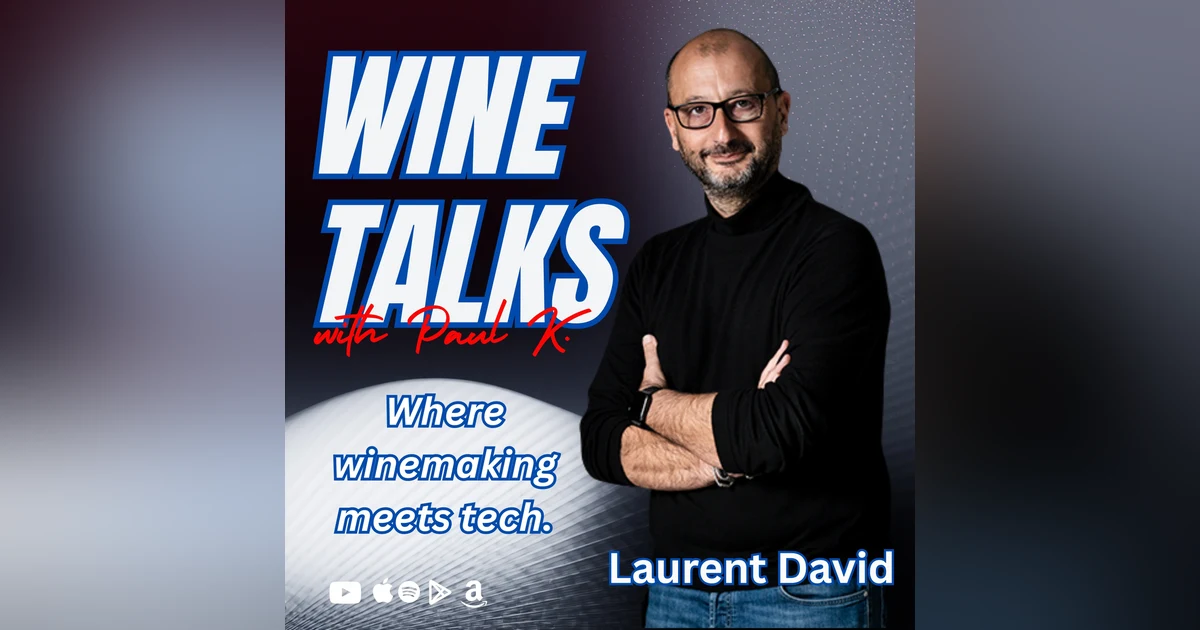

Wine and tech have had their disagreements. There are pundits on both sides of the fence of tech in wine and when I heard there was a LA Wine Tech booth at Wine Paris, I had to explore.
I reached out to the head guy (he doesn't really have a title), Laurent David to explore the opportunity to set up a podcast right there at the show. He agreed and here it is.
Wine Paris has become one of the largest wine shows in the world, with over 6000 wine booths and dozens of seminars, let alone a chance to taste some of the most well known wines in the world, it is easy to understand the throngs of people who attend.
Laurent David traded launching iPhones for nurturing vines—now that’s what you call an unusual upgrade. On this episode of Wine Talks, you’ll get a rare look at the crossroads where Apple-level tech meets centuries-old Saint-Émilion winegrowing, straight from Laurent David himself. But you won’t just hear tales of grape and gadget; you’ll discover why the wine world is not as disconnected from innovation as it seems. You’ll learn how obsessive experimentation drives winemakers—giving them only one annual shot to perfect their art, unlike software engineers who can endlessly tweak. As Paul Kalemkiarian probes the evolving role of data, AI, and digital tools, you’ll see how the experience of wine is being reshaped for a new generation, and why a can of Château Lafite may not be as far-fetched as it sounds. The conversation lifts the curtain on why “best wine” is subjective, how social media and influencers (hello, Taylor Swift!) can spark global trends, and the challenge of making wine approachable without killing its soul. You’ll peek into the ways winemakers are using AI not just to streamline paperwork, but to connect emotionally—with WhatsApp vineyard updates and Instagram journeys. Whether it’s demystifying labels with QR codes, developing consumer clubs inspired by Napa, or finding clever methods to anchor memories like a quiche from childhood, Laurent David and Paul Kalemkiarian reveal how the future of wine depends on blending digital savvy with human touch. By the end, you’ll understand that tech is just the tool—the real goal is sparking happiness, creating moments, and keeping wine a “social potion” for generations yet to come.
https://youtu.be/RmgBN_VFU5A
#WineTalks #WineTech #LaurentDavid #PaulKalemkiarian #AIinWine #WineInnovation #WineExperience #WineParis #LAWineTech #DigitalWineSales #WineClubs #SaintEmilion #WineData #WineMarketing #WineTourism #WineIndustryTrends #WineAndMillennials #BlockchainInWine #WineStorytelling #WineAndTechnology
0:00 A great wine is something that you have a glass of it and you want another one. It's easy to be— to have something very strong, powerful, full body. You take a sip and say, wow, great, you want more? Uh, I'm good. Sit back and grab a glass. It's Wine Talks with Paul Kaye. Hey, welcome to Wine Talks with Paul Kaye, and we are, we are at an away game, way away from where I'm usually at, which is in Paris, Texas, at, at Wine Paris. And we're in the, uh, LA Wine Tech booth with the president, we're gonna call him David Laurent of the— which is a consortium of— so you're really an organization that is bringing tech to the wine world. That, that's exactly the point. I'm coming from the tech. I used to work for Apple for, uh, 10 years launching iPhone here and there in Europe.
0:52 And I, I moved away, uh, in 2019 to the wine world. That was my old dream since I was a kid. So I'm also winemaker in Saint-Émilion doing my own wine. And I, I keep a foot, you know, one, one in the vines, one in the tech where I'm helping all those startups to innovate in the wine world. Well, this is very synergistic. My daughter works for Apple. Yeah. Yes. This is her. She's very smart. Yeah. She ran, uh, two stores in Southern California and now she's in charge of, um, a part of a team that brings women back into the workforce. Okay. On the hardware side. Very important. And so I'm telling her, you stick with this, right? You said it's very— Apple seems to be such a successful company. It's a fantastic company. I miss it a lot. I still have a lot of friends. I admire what they do.
1:35 And, uh, I'm, I'm sure great things are coming. Were you in America at that time? Uh, I was, uh, traveling from Europe. I was living in London at the time, traveling kind of once a month to, uh, Cupertino, California. Yeah. I, I enjoyed it. It was tiring, uh, 9-hour jet lag. But it was so cool. Great time. She had her first visit to corporate and was just taken by the whole place. Yeah, it's beautiful. And I, you know, I was at corporate America when my first part of my career, I was with a company called Xerox, which was— Xerox, great company. Sort of at the same precipice as Apple is now, but failed miserably on technology, even though they're very good at it. Apple took a lot from, from, from Xerox. Yeah, they're talented group. But this is interesting for me because You come from the tech world, which is an important part of the world. Yeah. Particularly today. And we were just talking about AI. I use AI extensively daily.
2:26 And now you're bringing it to the wine world, which I, I'm not having a hard time grasping that, but I'm having— trying to understand the idea between this traditional company, this traditional business, this farmers that are producing something from the soil and you bringing technology to them to help them understand the world— world. Well, in fact, this is pretty close, even though we can't imagine it, because we see a, a wine as a very agricultural thing. And, you know, winemakers are obsessed with innovation, right? Each winemaker— I'm sure you visited— they probably made you taste something they are preparing, a new barrel, a new grape, a new wine. And that's an obsession in the wine world to improve your wine, and you have only one chance once a year. That's right. Software you can do once a week. So slow. It's so slow. That's why it's slow. But the, the obsession for the best wine is there. The obsession for changing, improving is there. So now the only big difference is the pace.
3:27 So the, the— this is a question I ask every winemaker comes in. You're a winemaker and you're on the tech side. What does that mean? What does it mean to produce the best wine? Obviously the wines like— well, let me give you an example. The 1949 Charles Krug Private Selection, you know, was just rated 100, and that's a, that's a wine made with zero technology. But as a winemaker, what, what does that mean to you to say I want the best wine I can make? Is that the best expression of terroir, the best expression of, of you as a person? Yeah, that's a huge question. Yeah. And it's so, it's so important, but it's so important. What is the best one for you, for me, for my 20-year-old daughter, uh, and you know, for, for Spanish, for an Italian, for— no, I can't answer to that. I think there will be very, very different, uh, answers. Number of points used to be something very simple for people to understand. Yes, it was good, great, okay, or bad. Uh, but all the ones seems to be good with the point system. So I think the point system is probably going a little bit away. Now people are more looking at their, uh, uh, Vivino type of, uh, uh, marks they have there rather than, uh, trusting, uh, uh, something else. But that's the way the world we live in today, right?
4:43 Michelin is losing versus TripAdvisor. That's the way we are, right? Um, so having the best wine for me, I will give you my definition. Yes, which is Saint-Émilion. It's Saint-Émilion, yeah, or yeah, of course I love that place. Because, I mean, the, the, the vines love to be there for centuries. So that's a good sign. To have good wine, you might— you may need to have good vines. And, and, uh, uh, place where I work, Château Edmuse, we have planted wine since the 17th century. So that means something, probably, to produce a great wine. Now, for me, a great wine is something that you have a glass of it and you want another one. Yes. You know, it's, uh, it's easy to be— to have something very strong, powerful, full body. You take a sip and say, wow, great, uh, wow, that emotion. You want more? Uh, I'm good. Yeah, right.
5:35 So, so for me, you, you see that point? Yes. The thing that one, one glass calls another one, right? For me, that's, that— so it's a balance. Probably a great wine definition is a balance of a lot of things. So that doesn't give you an answer. What I'm trying to— what I want to do is the one that makes people happy. And I'm not, I'm not saying drunk. No, no, not at all. No, of course. I, I want people to feel an emotion. Uh, you know, you've seen that movie, uh, Ratatouille? Yes. When, when the, the judge, you know, these critics go to the restaurants, he's having a, a tomato and something, zucchinis, and he travels back to when he was a kid. That's right. He said, my mom is— this is powerful.
6:16 But I would— if I can get to that with my wine, I will be so happy. You know, years ago we were in Paris, we were here in Paris, we went to a, you know, brasserie, you know, touriste, but I ordered the quiche. Yeah. And it came and I looked at my wife and she says, what's wrong with you? I go, this smell is from my mom's quiche. Ah, this is so powerful. 40 years ago. I knew you. Yeah. And it was— I almost cried because it was so powerful. And, but so that, that defines something in the wine world because I have this romantic theory that whether you drink, you know, Strawberry Hill or Boone's Farm or, or Josh, you know, off Apothic Red off the shelf, or you drink a fine Saint-Émilion, eventually when you taste that one wine that does what you say, you realize there's something else to this. There's some— it's taking you somewhere else.
7:10 Yes. Not just the alcohol. And so isn't that the, isn't that the crux of all of these people here? I mean, I can't believe the amount of wine in this show, all with the same objective, preferably. Uh, probably yes. And that's, uh, that's not easy. And, and that's great with wine because it's a journey. Yeah. You never stop on discovering. I, I spoke to one of the best sommelier in the world and he told me what he loves about wine. He, even though after 20 years of tasting all the wines in the world from all the region, from all ages, It keeps on learning because there's always something new. So that, that's, that's life basically. Every day is different and what, what you did yesterday counts, but what you're doing today now together is more important. It's like life in a bottle. Yes, life in a bottle. So when you, when you do this, and I want to go around today and I want to talk to every one of your vendors here to talk about what they're doing in the world of wine tech. Now I have people that come to my office, they sit and they're I had one woman tell me she thought Château Lafite Rothschild would be in a can one day. And so I, I, yeah, that's the face I made. So, but when it comes to tech in the world, I mean, are we talking about wine tech where we help the wineries bring it to the market? Are we helping them understand what needs to work behind the scenes in order to be, uh, you know, to produce the best wine they can? Where, where does this organization lie with the tech? And presenting it to the wine— the wine world? I, I will not talk— not talk to you about tech, but about— better about experience. I think we wine world are guilty
8:43 to make the wine too intellectual, too complex, too f— as if you needed a kind of, uh, WSET 4 just to be able to speak, uh, with authority about the wine. What, what matters is you like it or you don't like it. Yes. Second step is Why do you like it or why don't you like it? And that is the most important. And you know, we, is, is the glass coming by, the wine coming by the glass, by, by a can or whatever? I think we need to go back to our customers. We lost the trust, the interest of younger generation, Gen Z. And, and you know, if the moments, I think for me the most important, that's the moment of consumption have changed a lot. The traditional, uh, a Sunday lunch with all the family. It's gone away. Yeah, right.
9:30 Most of the families are just one parent. Yes. And you, you drink a bottle with some friends outside at a barbecue, at an apéritif, as we call it in France. So, so we, we should be able to get the wine better served at that time. Is it in a can? Is it in a smaller bottle? Is it by the glass at the restaurants? Who cares? Yeah, right. No, it does. You're right. I think, I think we're trying to bring to the regular table— I call it the value of an honest wine. Honest wine being the wines you make, wines that express something, wines that bring you back to someplace, the quiche that brings you back someplace. But I'm wondering where the— yeah, you're right. Maybe it's not tech side, but certainly in today's industrial world, digital world, We need to keep up with what's going on. We need to use it. Our way, our way. We can't ignore it. Yes. And so wineries are farmers. Yeah. Right? They want to be in the vineyard. They don't want to— they don't, you know, I don't understand this. And I'll, I'll never forget we were traveling to Napa just the month before COVID had long conversations with what are we going to do? Because we don't have a chat button on our website. We don't have a, you know, robust direct-to-consumer uh, software program, CRM. So are we bringing those to the table for these folks to try— the smaller wineries are trying to figure out how we're going to use technology to, to round things out, to bring to the table? You know, when you're at the bottom of a curve, that's the moment you can— you have to stand up
11:03 and, and jump to do something different. COVID pushed us to do that, and wine sales, uh, digital wine sales at that time boomed. Uh, everywhere in the world. And even winemakers who were not just selling at their cellar and that's it had to do online, and they did. Not all of them, but they did it. So I, I think I told you about this, uh, a perception, this need to innovate in the wine world, in winemakers' head. Yes, I think they're much— we underestimate them. They're much eager and happy to move forward to new things, using new tools, using AI in their decision-making, freeing time to be more into the vineyards, into the cellar, doing the wine, than doing paper and doing, you know, posts on, on social networks. So, so I think that all those tools are now available here. We should, we should just share them the news. Yes. And they will take it. I'm convinced about that. Is there a disconnect between me as a winemaker wanting to just produce my best expression, and that's what the market gets? Like, you're going to produce a Saint-Émilion, we're going to put melon and Cabernet Franc, and this is what I think it is.
12:24 And, and the point I'm getting to is, is wine so unique as a product that you either— you produce what the consumer wants which could be over-sugared, not so dry, in a can versus what you think it should be out of the vineyard because you didn't touch it. I mean, I just came from the Raw Wine Festival yesterday. Yeah. You know, those wines are all like, you know, untouched. So do you— when you talk to a winemaker who's working in your sphere, do they express that concern? Like, well, I want to make it this way. And you're like, yeah, but you gotta, you gotta deal with the marketplace this way. Yeah, I mean, you, you, you pointed out the right way. I mean, winemakers are not only industrial or agriculture. There's a point of view, there's an opinion.
13:13 You're defending something, uh, and, and this is what you've got— try to translate into your wine. There's some kind of art creation around it. Yes. Um, is this coming from a proper marketing analysis of consumer needs? No, not at all. Yes. And maybe that's a problem because we should probably understand that better. But let me rephrase to my previous company. Steve Jobs used to say, consumers, they don't know what they want until they have it in their hands. So we proposing, we keep on proposing and you know, we need smart people, we need connected people, we need people taking risk to reinvent this wine world and something great will come out of it. Wine is all about celebrating, it's all about being together. And this digital life we have today removes us from these interactions.
14:00 And the need for that is bigger than anywhere in human history. So, so I think, right, wine, what I call wine is a, for me, is a social potion, you know, something secret that gives you a superpower to discuss, entertain, meet, share with people you don't know. So that, that is something fantastic. And the more we're gonna share that, the better. You're right. And I suppose the concept, you know, I spent 35 years doing this, selling wine DTC. And let's just take Sancerre for an example. You— nobody bought Sancerre 20 years ago. Nobody cared. Never heard of it. You— now you hear people in the restaurant saying, I want Sancerre. You know why? No. Thank you, Taylor Swift. What's that? Thank you to Taylor Swift. Yeah, that's right. Oh yeah. Well, that's— there you go. Okay. Well, wait, but that's a really good point. Yeah. I mean, that's almost down the line some kind of tech or at least a popularity issue about wine. And wow, the, the, the wine purists would say, wow, that's kind of weird. You know, Sancerre's always been really good, but it wasn't until Taylor Swift said something that people started wanting it. Yeah. I told you it's not about being good or bad. Yes. It's not about that. Actually, I had one of my cousins at a Spanish restaurant, asked the waitress for a Sancerre. And I said, they don't have Sancerre at a Spanish restaurant. That's not— but they totally don't. But they have Sauvignon, I'm sure they have Sauvignon, or they have something else which is great to taste. Yes, of course, Albariño or something. Oh, it's not difficult, I would say, to make a good wine today. Yes, a great one is probably something
15:33 different, and definition is var— change a lot, but the, the knowledge is there, right? There is some great universities, uh, uh, in California, in, uh, in— well, everywhere in the world where you can learn the how, right? The technique is known, there's, uh, research, there's publication, there's teachers. So You probably— it's difficult to make a bad wine. Now, to make a great wine is something different. And maybe we need Taylor Swift. Thank you, Taylor. And we see— yes, right. We, we seek the great stuff. We can't always afford it, but we seek it, right? Actually, you get a chance to taste some amazing wines here if you take the time to do it. I don't know. Let you know, before, before COVID 2019, at least in America, and my company was sort of a a, a temperature gauge of what was going on. I, I always knew what was going to be popular because every Tuesday I tasted wine and I would see what's coming into the marketplace. I'd also see what's distressed because they're selling it cheaper than they were before.
16:31 And so, but then COVID hit and I saw 2019, we were— this industry was starting to suffer. COVID hit, could do no wrong. They'd buy whatever I told them to buy. And then after COVID, it just started to they just started to tail off. And I, I didn't— you guys use a lot of data and a lot of your clients use a lot of data. What have you seen in that data? Have you seen that it is generationally supported by the Gen Zs or it's not? Or the millennials? Everybody was screaming about the millennials. What are we going to do about them? They're not drinking, but it turns out they are. How are we using data to make these decisions? Or how do you teach somebody to use the data? I was a marketing research guy. That's why I was— Another good creation.
17:13 Thank you for that. But let's go back to the roots of what you said. I mean, um, in my time at Apple, uh, going to Cupertino, I was spending my weekends in Napa and Sonoma. I think you guys in the US mastered, uh, wine tourism. Definitely this is something. And, and, and I look at what you done with the clubs, the lists, and I say, wow, this is something super cool in order to make people connected. Right, straight to the vineyards and, and removing all the barriers in between and just having a daran click. So what I did with my, uh, wine Château Edmousse, I create a club for, uh, for consumer club basically. I copy paste the US concept, making it a French way. And I have 200, no, 300 now club members.
17:57 And you know, I connect them as much as I can. I have WhatsApp for that. They got messages from me working in the vineyards. You know, I, I imagine someone working in Singapore getting a message at lunchtime of seeing me just cutting the— some, some grapes in the vines. And I think this, this can create emotions, this can connect, create connection. And out of the data, I think the technology today allow us to build bridges from the grapes, from the vines to the consumer. And young generation, they're digital. They're native digital. So if we don't use their tools, how on earth can we get them getting our story? You know, it's not about getting a TV ad before the news on ABA, on, on ABC or CNN, right? They don't care about it. They don't care. It's, I, it has to be on the social network, on AI. We, we have to speak their language, being at the place where they are. And I think con— to connect with them, digital is one thing. And second thing for me is Creating events. I think what is missing today, we talked about that previously, is that the, the way of consuming wine we used to have, uh, uh, is, is different today because everything has changed since COVID and with digital. And we should find ways to recreate, uh, moments where people have, uh, uh, drink wines. Let me give you an example. There is a, a rock festival in France called Hellfest. It's all about rock, metal, heavy, heavy stuff.
19:24 Uh, it was all about beer. They had beer, you know, those guys drink beers and beers and beers, but they're in the region where they produce some great white wine. Well, ni sauvignon ni le Loire, basically. And they start to introduce a wine 2 years ago. And you know what? It works. 20% of the consumption now is white wine from the region. Yeah, right. Because we brought the wine to the location where people are celebrating and they want to be together. If there was only beer by can, maybe they have a wine by can at the place. Yes. That works. You know, so that again, where tech— this is where I think some of the tech lies. One, it's gonna be very difficult to teach a farmer data-driven reactions. Yeah. That's hard to do.
20:08 Yeah. But— Agree. There's also the movement, and I think this, this patch represents a club of a group of people in the '70s and '80s in America, 150 chapters to experience wine. They go to dinner, they'd have speakers. Robert Mondavi would come down and speak to my father. Great moments. And so that, that, so that I think that's a critical part of what we do is getting this experience, that memory, just like the quiche. And when you, when you start a club on Cento Milione at your winery and they visit and they sign up, every time they get that box, Yeah, they remember that day. Oh yeah. Right. Oh yeah. And so my business was founded on that principle, which was my dad was bringing to the table a story. Well, in the late '90s, all this junk was coming from Europe, 50 cents a liter, putting in different labels, and it soured, I think, the consumers. Okay. They would get even at $60 a case free delivery, you know, they would go, this isn't very good. And I think it's really important that, that experience, we start driving that experience again. Yeah. And so what I've landed on with the data part is how do we use the data?
21:19 And I'm not— this is not necessarily a question, it's sort of a hypothetical question, but how do we use the data to attract the experience, to augment the experience? Uh, how do we get a winery to use AI to understand targeting that data? I'm not sure yet personally, but Isn't that what we're trying to do? That's what we're trying to do, and we have no options but doing it. Yes, let's be honest, right? We are at a turning point. If we don't do it, uh, then probably wine can disappear. Yes, I mean, that's, that's, that's an option on the table. You— I read that in something you wrote, and I thought, wow, that was pretty powerful. I will be dying for that, and I, I don't want to admit that. That's why I'm fighting for that— against that, sorry. Yes, so, so, but you said two words: data What, what do we need data for? We need data to create story. You said that's what you built and experiences. So how do we transform the, you know, the numbers of something people can understand? How do we reach to that? There will be factor number one will be that the winemakers today, the one taking the power in the vineyards are the guys who have 40, 45, you know, the new generations.
22:29 They're replacing the old chaps, such as me. And they're coming— and for them, internet is— they're native on internet. That's not the baseline. This is the baseline. They live on internet. So that will speed up. That will speed up adoption. But that's not fast enough. That's not fast enough. So what we should do is what we try to do here is to show the face of this data and what's the benefit for the winemakers. You know, papers, administration for a winemaker is a nightmare, especially in very regulated countries such as France, and we have in Europe. So we have AI tools now. You can save, save up to 2, 3 hours a week. Oh yeah, using those tools. And I— that fantastic. It's amazing. Then you can do what you like to do, wine, and take care of your customers and not being on, uh, talking to declaration of a legal thing and legal that. Right? So that, that's the— showing the benefit is one. I think we have other benefits. You know, we have, for example, a company here, you just take a picture of your bottle with your iPhone.
23:33 Sorry for that. I could have said with your Google phone, but I didn't say it. And you send a picture to them. And in less than 6 hours with AI, they can generate moments of your consumption of bottle consumption. In great restaurants, in great location. I just started a, a campaign on Instagram to show that my bottle is available in 32 countries. Uh, they, they took one picture of my bottle and they made me a picture in front of the Hollywood sign. Yeah, right. In California, uh, Chinese Wall, uh, uh, uh, 9 locations in the world where I can ship my wine. It cost me €250, so less than $300. I didn't, I didn't spend any carbon footprint with that. I didn't have to travel the world to take that picture, even though I don't have the budget. And it took me 6 hours. No, it's beautiful. And now, now my— on Instagram, you can see my bottle traveling the world as if it was a, a, a Polaroid picture, you know, kind of postcard memory. It's so— I've been using— showing the benefit. I, I had this show idea. Actually, I have this passion to create shows on wine that aren't swirling and sniffing. Yeah. And so I've been using AI. My wife says, why are you wasting your time? But I've created these song tableside shows, these little 30-second shows of a song and doing something all AI. I sit down, I, I don't go through the whole process, but I'll send you a couple. They're very funny. I think they're very funny.
24:57 But, you know, so here's, here's something interesting. You already said it, but the experience of wine is so important. Yeah. Napa Valley is suffering greatly. You know, tasting room traffic is off 30%. Oh, that's massive. It's huge. I didn't know that. Oh yeah, it's bad. And I was— I'm sitting with Grgich Hills, you know, it's one of the great established wineries of, of Napa Valley. Violet Grgich, good friend. And, and she's saying, you know, we, we— they're not coming in the door. Well, there's a lot of reasons for that. One is it's very expensive to go to Napa Valley now. Yeah. It's $1,000 a night. Right, price went up. You know, maybe that's part of the problem, right? That's part of the problem. So, and I'm, I'm gonna go back to this, to the, the beginning of email digital marketing when I, when I was doing that. And that was, I would sell a membership as a handshake, much like you would sell a membership in the tasting room or in Napa Valley. Yeah. So my con— and, and those people were very loyal because they met me.
25:55 Yeah. We stand in a booth, I tell 'em the program, they take the brochure, they sign up, and then they got that package. And you plant a, a seed like a quiche. Right. That's exactly— that's, you have that moment. So the internet doesn't provide that experience because we're— like you said, the generation behind us, they're so used to the internet and buying and selling, uh, subscriptions, canceling subscriptions, you know, with the push of a button. Yeah. So how do we create the experience without the experience, right? So what I did, what I tried to do, is create an introduction video. Every time somebody signed up for my club, the next day they got an email from me. It was me in my warehouse going through the process, how I choose the wines, and all that. And that was my idea to bring myself into their home because they never met me before. They never had a conversation with me before.
26:42 So, and I don't know if it worked or not because we didn't have the data back then to really understand it. We had, you know, click-throughs and we had— Yeah, which is already, uh, you know, KPI, right? Yeah, it's like old stuff now. But now we have a lot more information and we can be more targeted. And, and I, I sent— this is true— in 2022, I sent 33 million emails. 33 million emails? Million. That's called spamming, you know that? Yes. Well, but that's what had to happen because— and this is why I'm leading into this idea with how are we going to use data so I don't have to send 33 million emails. Yeah. I only send 3 million, but I hit the people that really want to see the message. And that's a hard thing to do. So we, we're, that's what I think one of our tasks is. There's a gentleman in Napa named Steven Mock and he's doing a great job with adapting AI to the CRM modules. Yeah. It's, it's Commerce 7, some of the big platforms to help people understand that pinpoint targeting to get a response. Very smart.
27:47 Yes. And so he calls me He consulted me. All right. And what have you learned from that? What about gifts and what— well, it's made me think. It's— I love it because it makes me think like you and I, we kind of have to rotate our access. Uh-huh. Like you have to teach wineries about these products here to augment their business and rotate your perspective on a perspective we're not used to. It's tough. I mean, that's what I love about— was it in Napa? Was it in California? Napa, yeah. Yeah, I mean, not— I mean, US used to lead the world and inspire all of us, and definitely new things were coming from US, and, and California was absolutely at the peak of it. And I'm, I'm glad to hear that there's a new thinking there. I want to go back and, and see what you guys are doing. Yeah, I'll introduce you to him. I think you'd love talking to him. He's a really pretty young man, and he's not a wine guy. He's a data guy like you. He doesn't have to be. He came from, uh, you know, no, you don't have to be. No, no, you know what, you know what, the, the, the first wine unicorn is called Vivino. You know Vivino? Everybody knows Vivino. That's the app that everybody— what the guy, I interviewed him, I met him, uh, is a friend. Hey, heinie.
28:54 Uh, he's coming from Faroe Islands. This is a small island in the middle of the Atlantic and there's no wine. He's a Dane now, he's living in Denmark. There's no wine, uh, culture there, but there was a need. Yes. Oh, to select the bottle of wine. Then, then he create Vivino, which is the wine Shazam. Taking a picture, boom, get an answer. And today, Vivino is the first wine tech unicorn in the world. They're making more than $300 million revenue per year. Boom. And he's not taking— coming from the wine, but he was not afraid. He has no kind of preconceived ideas. He, he had started from a blank page. I have a problem to solve. Well, something in my opinion that could have easily failed as fast as it grew. Oh yeah. So he had to understand the cusp of data and technology in order to make sure people use it. 'Cause I tell you, they would walk into my wine shop. Yeah. And they'd look at a wine and then they'd point Vivino at it. What are they doing? Yeah. And they'd look at the price and the, and the rating. They knew more on, on the wine than you did. And I like slapped their hand. Talk to me. Uh-uh. So how, how about the future for, for LA Wine Tech? What, what's on your plans? What's on the horizon? And how fluid does that have to be in order to make sure you're on the cusp? I think, I think the, the great new things will be AI-based solutions.
30:19 Even though, you know, when you're talking about startup world, AI is a buzzword that everybody needs to have on a speech. Definitely the benefits, the gains of what AI could bring in terms of revenue increase, saving time is so massive that there's no, there's no way to ignore it. Yeah, definitely. So you see, yeah. Quantique computing will come in the coming years to accelerate that. But the solutions will come from a base AI technology. We see already that a lot. So which one is the bet, the one you should bet on to invest? I will not tell you. Yeah, exactly. I'm talking about 120 companies here. Do your homework, look at that.
31:00 Innovation is strong. Yes. It's coming from there. And most of the guys are coming from outside of the wine world. Isn't that one of the problems with, with emerging technologies as you saw at Apple? Um, you, where do you hang your hat on which technology are you gonna hang your hat on? Because some are gonna fail just like the dot-com thing. Some are gonna fail. And yeah. Which one are you using? And, and make sure you vet that out, right? That you— maybe I'm, I, I have a different opinion on that. Failing, uh, internet, everybody said internet is gonna fail. Internet now is there everywhere. The way it has transformed in something different because now it's information, it's a social network. We don't talk about internet as such, but we're using internet as technology. Remember 2 years ago it was all about blockchain and NFT, right? Big hype and everybody— what happened to that? What happened to that? Today in, in the wine world, an NFT is called a, a digital passport.
31:52 Yes. So this is the evidence that the wine you are drinking is coming from that location. As this traceability is a real wine. Yes. It was, so it's kind of the identity, the digital identity of the, of the wine. We don't call it NFT any longer. Nobody cares about the technology behind it. They don't. But do, is, is that functional still? I have not heard much about that whole pro— you know, the idea is a winery ships a wine directly to the NFT, you know, whatever you want to use today. The provenance of that wine is guaranteed based on the blockchain. Yeah. Okay. And then, but once you take possession of that wine, that, that blockchain's broken. But until you take possession, uh, you saw— is that functional? Is that really functional?
32:32 It's functional for a certain— this user case works for certain types of wine. The one that the price usually goes up. Yes. Uh, number one, the one that— yeah, yeah. We have some manapas, we have some Burgundy wines. Yes. That just, uh, crazy pricing. The wines that— and I think for people today to trust that what they have in their glass is not toxic. Yes. It is coming from that location. I mean, usually you ask a glass of red wine, of Chardonnay, of whatever type of grape in the restaurant, they bring you a glass and there's nothing written on it. How do you trust that? Yeah, that's a good point. How do you trust this? I mean, I'm a— You can't trust it. You can't, absolutely not. You can't trust it. And I know if you're a super champion, you can distinguish a Chardonnay and a Sauvignon. Right. But not everybody can do that. No, most of the time. And, and, and you know, why don't we have something, you know, simple to create better experience? You know, a piece of paper at the bottom, at the feet of the glass with a QR code, uh, uh, uh, with the name of the wine, just certifying this is— you wanted a Chardonnay, you have a Chardonnay. Yes. And this is made by Paul. Right.
33:41 And, and, and look at, scan the code, go to the vineyards, have a look at it. Enjoy. That's a really interesting point. Simple paper, but connected to a huge technology, which could be blockchain or something else. And technology that people are getting much more used to. Yeah. Like already my business card is archaic because there's no, there's no barcode on it. I gotta reprint them all over again because, because they're so used to using it. Yeah. When barcodes came out and I had them on my bottles of wine as a source of traffic to the website. Yeah. They're hardly used. And now I was still doing it. I would, I think I'd be losing market share if I didn't use them because they're so, they're so common today. And I suppose that's, you know, part of the irony of what we're into is like, do we, um, I think that's a really good example what you just said, how a restaurateur could use the technology to augment sales because most restaurateurs, their— and then not so good— their sales are— I talked to a guy in LA, his bottle sales are off 40%. Without the commensurate cocktail sales, it's just bottle sales are off. And I said, well, how about— and this is another example, you know, we're almost done here anyway, so— but I said, how about your servers? What do they know? He goes, oh, they don't know shit.
34:56 Server, you mean people serving the wine? Yeah. I said, well, what do you think is going to happen? That's, uh, without— that's a bottleneck, definitely. So how do you connect Uh, uh, first, the, the, what the person— there's no sommeliers in every restaurant. We know that. But, and that's maybe a problem because they don't sell wine. So how do we simplify that? I, I will connect you one of the great sommelier we have here. We managed to do a work on short, very short selection of wines, but it is fast rotating. And for each of the meal you have on the menu, they propose a wine. So the attach rate is, uh, 1.75%. Of a glass of wine attached to the— I mean, you, you connect it.
35:36 You want to be great, uh, uh, T-bone and fantastic Cabernet from Manapa with it. Works well. So you don't have to be a sommelier to know that. Someone did the work for you. It's on the menu and you trust it and you know what, it works, right? So that's maybe a way to kind of go around. That's a good point. Not the right people trained in the restaurant to do that. That's one example I saw which was very— that's a very good example. On the flip side of that, in, um, we were in Palermo last year, and I was— he was Slavic, either Serbian or Slavic. It was the best inspiring wine service I'd ever had. Tell me more.
36:16 And I, I pulled him aside. He's a big guy. I gave him a tip. I said, I want you to know that even the novice wine drinker would be inspired by watching you relish and— I want to know everything. What's the address? I want to go there. I want to see that. Yeah, I'll tell you the name of the restaurant. And I just thought you've, you've really performed because there are the other somms who just do what you say. They, they make it aristocratic and I know and you don't. And that's a problem. Come on. But you need to have trained servers to help with the experience of the, of the food because they're foodies too. You know, this generation, they're foodies. My kids, you know, the thing about the millennials, and then we'll wrap this up. The thing about the millennials was they would have rather spent $100 apiece on sushi than save for that Mustang or that car they wanted. That's— I saved for the Mustang. I could care less about sushi.
37:12 But my grand— my daughters, all three of them would rather go to dinner and spend a lot of money than worry about saving for their car. It's all about living things rather than owning things. Right. And this is where we have— with wine, we have something to play there, right? Because we can bring emotion, experience. Totally. How to do that? How to— so Xavier Twizat is the, the, the, the name of the, the sommelier, best sommelier in France and in Europe who, who made that, uh, simplified kind of recipe. 3 meals, 3 wine attached to it. Yeah. QR code, boom, you know, you know about it. I like it. I like it. And that works fantastic. He was the sommelier at the Ritz. Is the sommelier, uh, chef for Air France, selecting the wines. So he knows about wine. And he knows how to simplify and simplify. Think about Apple, but also about simplifying it, hiding the complexity to make a great experience. So guys, we should learn from Apple more and more.
37:58 I, I watched Steven Jobs recently, uh, uh, when he was talking about the BlackBerry. Yeah. Like nobody wants a keyboard. Bah, yuck. Right? You know, we're not— we're gonna get rid of the keyboard. And that must have been shocking to the industry of tech. Anyway. We're out of time. I hope we solved a couple problems while we're here together, and I'm looking forward to the rest of the week here. I know you. It's really fun, and I'm going to send you off some videos of stuff that we're— I'm playing with, with the AI, so you can see what, what potentially a winery could do with to, uh, display the experience. So I'll send you a QR code for the download of the, the white paper. It's in English as well. Okay, good. Of this AI and wine, you'll see there's at least 12 solutions right away available.
38:45 Ouais, merci, mais je peux, je peux lire français, c'est pas le problème. On parle français next time. Thank you. Merci beaucoup. Enchanté. Merci. Thank you very much. Au revoir.