

 Apple Podcasts

 Spotify

 Youtube Music

 RSS Feed
 YouTube
 Pandora
 iHeartRadio
From Endless Summer to Carmel Wines: The Creative Journey of Walter Georis
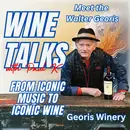
Crazy story.
Walter Georis wrote the soundtrack to the iconic surf film, The Endless Summer. With desires to make it big in music, the soundtrack would be their swan song in show business. What happens after, is shear career poetry.
I have to tell you that sitting down with Walter Georis was the kind of podcast taping that makes me glad I do this show. There’s something about a man whose life story connects surf music, fine dining, art, and wine that just puts a smile on your face—especially when he unspools it with such humble, matter-of-fact wisdom.
Now, I didn’t know much about Walter Georis before a friend tipped me off. I got an email out of the blue—one of those you almost skip past in your inbox. My friend, who I used to surf with in Palos Verdes, had been up late thinking about “The Endless Summer.” He does a quick search, and boom—finds out that the guy who wrote the music for that iconic film now owns a winery up in Carmel Valley. He tells me, “Paul, you’ve got to talk to this guy!” And, boy, am I glad I did.
From the start, Walter Georis came off with a grounded, European sensibility—someone raised on the value of seasons, making things from scratch, and, most importantly, letting nature express itself. I loved his opening line: “I don’t do anything to the wine to manipulate it…” For him, a vintage is a vintage, and that’s the story in the bottle. As someone who’s spent a lifetime talking with both big-shot and backyard winemakers, this kind of honesty always jumps out at me.
What floored me about Walter Georis was the stories. Here’s a Belgian kid, can hardly swim, never surfed, but ends up shaping the sound of California’s surf music scene in the sixties! He and his buddies, playing in garages and school gyms, end up composing for “The Endless Summer”—and not by luck, but because they show up, put in the hours, and play for the right parties (and some of the right glassers, too—if you know, you know). And, this is the kicker—he does all this as a French speaker, blending right in with the “stoked, it’s a trip” Southern California crowd.
But Walter Georis’s life isn’t about hanging onto some faded record label glory. He’s got this restless, creative spirit. After the music, he turns to art, painting eight hours a day in Carmel, living on the cheap. He spends years finding his style, blending the abstract with the figurative—until, naturally, he finds himself in the hospitality business, opening Casanova and La Boheme Song with his family. This is what I love: the European model, building legacy, not just chasing a fast-growing, flash-in-the-pan restaurant business. And Walter Georis gets it right—places that become international, drawing in everyone from actors to race car drivers, all wanting a piece of that Carmel magic.
But for me, this episode really shines when we dig into the winemaking. Walter Georis talks about honest wine—the idea that you don’t mess with what the vineyard gives you. He gets animated describing the soil, the minerality, the farming, the blending. He talks of Merlot and Cabernet, about planting olive trees, raising sheep (well, until the insurance company got involved)—all these things that anchor you to the land and seasons. He reminds me that great wine isn’t about ego or a label; it’s about caretaking, patience, storytelling.
The conversation wraps with stories of his mother giving birth during the Battle of the Bulge in a wine cellar. There’s a sense that all these threads—history, survival, family, creativity—flow right into the glass he pours. A life, a terroir, an honest wine.
And that, my friends, is why I do Wine Talks.
#WineTalks #WalterGeoris #PaulKalemkiarian #CarmelValley #EndlessSummer #SurfCulture #Winemaker #CaliforniaWine #MusicHistory #RestaurantLife #HonestWine #ArtAndWine #WinePodcast #BordeauxVarietals #CasanovaRestaurant #WineStories #VineyardLife #Terroir #FarmToTable #AmericanWine
0:00 I don't do anything to the wine to manipulate it to be able to commercialize it. A vintage is a vintage and it's the expression of the terroir that particular year. Sit back and grab a glass. It's Wine Talks with Paul K. Hey. Welcome to Wine Talks with Paul Kay and we are in studio today in beautiful Southern California about to have a conversation with Walter Gioris up in the Carmel Valley. Introduction collections in just a minute. Hey, have a listen to a show I just recorded with Adam Kablani and he is a winemaker, high tech success who turned winemaker in Armenia trying to bring the wines to America. Great conversation yesterday.
0:46 That's coming out in a day or two but not while we're here. I'm going to read. Walter, welcome to the show. Well, thank you. Great to be here. That was, I mean that was so easy to get, to get it going but it's a, it's all right. Yeah, I'm going to read to you what, what Chap GPT said. As I said, give me a hundred word introduction for Walter. George says today's guest is a true California original. Someone who's creative, creatively has shaped American surf culture, fine dining and the wine world. In the 1960s he co founded the Sandals and wrote iconic music for the Endless Summer, a soundtrack that helped define the spirit and adventure of generations of surfers. But the story doesn't stop there. He moved to Carmel, became an artist, restaurateur and ultimately pioneering vintner in the rugged hills of the Carmel Valley.
1:37 His life work, bridges, art, travel, food, a deep respect for place. Please welcome the musician, the visionary, the winery founder, Walter Giors. How about that? Well, that kind of wraps it up. It's a bit more complicated than that but for the sake of diving into it, that'll work. Well, it's interesting because the reason I reached out to you and so happy you took, took the email and responded was a friend of mine who I served with growing up in Palos Verdes and he was, couldn't sleep one night and for whatever reason he was thinking about the movie the Endless Summer and decided to google information on it and your name came up as the author of the music. And he says my name, my nickname is Cal. He says, cal, did you know that the author of the music owns a winery? I said no, this is incredible. But so you're, we're talking San Clemente, the south, Southern California.
2:38 Right. And this was a band, the Sandals, which I remember. Yeah. And who was in that band? Let me see it Depends at what, which period of time. But officially is myself, John Blakely, my brother Gaston, Danny Bronner and John Gibson. And this is. Was this a high school inspiration amongst you guys? Actually, we started in eighth grade. Wow. Yeah. And we went to school next to the school called Concordia, which is right next to what became the Western, or at least White House.
3:27 Oh, wow. Right by the state park. Yeah, Nixon's place. That's right. We used to practice on Trafalgar Street. That became a very famous surf spot as well. Wow, how interesting. So, but you guys got together, you wanted to play music. I mean, even I, I played the banjo growing up and we tried to, you know, play some gigs and stuff. It was just, just a hobby. Do you think that maybe we are going to make a career out of this? Well, you know, we. We did it all day long, you know, that's all we talked about. That's all we did. We'd practice at least four or five hours a day as kids. I was 13, 14 years old.
4:09 And we got better equipment as we could afford it and we taught each other. The inspiration for a lot of our music came from guys like Dwayne Eddy. You know, there's just a lot of the hot rod, hot rod songs like Stick Shift and so on. And we're just surfacing just a little bit after the Ventures started. Oh, right. So that's that the classic surf beat, you know, rhythmic music. Yeah, yeah. And so. But you had. I suppose as a teenager you had aspirations to make this big. How many albums did you guys produce?
4:53 Or how many? 45, I guess at the time, you. Know, not that many. I think we released. Actually we recorded about three or four albums, but really released the only one, the Endless Summer. Oh, wow. Which originally was called Scrambler. I had the idea of doing motorcycle music because cars were the big thing for nine and that kind of stuff. I figured, oh, the next wave is going to be motorcycle. And so it was called Scrambler and it says, includes theme to the Endless Summer. Wow. And so that, you know that I'm thinking I have a. I just got a new video game. It's built in 2006, but it plays music from that era, I guess, non commission music. And there are a lot of songs about cars and there's even some motor sounds in this thing.
5:50 And you play. It's a bowling game. So you're bowling, which is, you know, my. I love. I love the Americana of bowling. And certainly the music of the surf culture is pure Americana. Absolutely. Yeah. And so it's so it's. So, for me, it's just goes close to the heart because I grew up on this. On this music. But when you reached out to the production company, did you reach out to the production company for Endless Summer? I mean, all the bands of all the world that could have produced the music to this iconic movie, how did that come about? Well, actually, our drummer, Danny Bronner, was a glasser and a foreman at Hobie Surfboards. Oh, really? Yeah. So he was the old guy in the band.
6:41 I think he was three years older than we were. When you're 18, that's a big difference. And so we would play for some of the parties for some of the early manufacturers, if you will. Grubby, Clark, Hobie. Bruce Brown was in the loop. Quite a few people that I didn't even know. Because it may come to a surprise to you that I'm a terrible swimmer. I've never surfed in my life. So. Yeah, yeah, it's just. It's like asking a vegetarian to do some. Yeah, right. Some beef dishes or something. Yeah. But no, I was always on the beach, kind of hanging out where the girls were at that time. Yeah, of course. And so we played for a lot of the parties. And one particular party actually started at LAX when Bruce Brown was receiving and welcoming a young surfer from Australia at the time. And we played in the hallways there at the airport and got paid for it. I think we got paid 75 bucks for the. For the three of us. And we got gigs from that, from people coming off the plane, including the owners of Kranzellerbach.
8:09 So we would play all of their Encino parties at El Calbeiro Country Club. But we ended up being invited, and this. I don't recall how that happened to play for a Long beach surf industry, surf fare. And that was our first big gig where there were 5,000 people and we were not equipped for it at all. There are no monitors or anything at that stage. You know, I had a hard time seeing the other musicians or even hearing them. But at that surf fair, Bruce Brown was showing a lot of his films, which, interestingly enough, the early surf films didn't have surf music. It was mostly jazz and, you know, like Bud Shank, et cetera.
9:01 And. And those came from World Pacific Recordings. And after that particular evening, I approached Bruce Brown. I said, oh, Bruce, can I send you some tapes, some demos? I said, yeah, yeah, kid. And I still have an accent, but at that time, more of one, because I'm from Belgium and French was my native Tongue. Yeah. And says, yeah, yeah, kid. Well, within a week I had a tape going to him and I drove it up there and left it real to reel. And a couple days later I got a call from him at my house, my parents house where I was living. And he says, you know, I'd like to get together with you. I love the music. And we're totally stoked and we're saying, hey, you know, if we're going to do this, we'd like to be able to release a record because as young kids that's what you want to do. And so he says, yeah, I'll put you in contact with Dick Bach from World Pacific Records. And I took that same tape and took it to him and he listened to me. I was 18 years old at the time. And he kind of smiled and you know, I.
10:18 I didn't know what I was doing except I was excited to be in the environment at the recording studio. And so I said, yeah, we can do an album. And that album was really driven by the idea of the theme to the Endless Summer, which my brother and John Blakely composed. I started the song with an acoustic guitar, a little vintage Martin guitar. We wrote that in the garage in San Clemente like a lot of bands have done in the past. And we had one of our friends ride a scrambler to fit 50 motorcycle up and down the street as we followed with a mic to get a motorcycle sound. Wow.
11:09 Yeah, it was a trip, but a two track Tanberg recording recorder. And I didn't really realize that Bruce Brown was a motorcycle fan. And I think that also kind of hooked him into the music as well. So that's what happened. The film was only, as you probably know, and you may have seen it, shown only as a 16 millimeter and live performance where he would speak and react to the crowd and his usual humor. And then he was trying to bring that up to 35 millimeter. And nobody really believed in the idea until, well, you know, the history. I think it was first shown somewhere in Midwest in the wintertime. And it was an incredible response, you know, but the production company or distributor says, well, you know, 16 millimeter, you're blowing it up to 35.
12:17 And they said, you know, the, the definition is not very good. And Bruce would say, did you see the waves? You know, the subject of this whole thing. That's right, yeah. Let me stop it there for a second because you said a lot that's so interesting. For one, I have to say, to hear a native French speaker say stoked and It's a trip is great because my father spoke French and I speak with it. I spoke with him before he passed. But yeah, you know, they're on my wall in Hermosa Beach. I have all these old posters or copies. I got them from the guy. He's a San Clemente as well. He don. This guy was the owner of Old Guys Rule.
13:00 That was last name anyway. But going My Wave, have Board, Will Travel or some of these movies that were going on then. And I thought of something where you said that when you. They played it in the Midwest. Yeah. So much of America believes that the Beach Boys and that surf culture that you defined in the Endless Summ Summer is really what is like pure American, pure Americana. And it's how we live here on the West Coast. I mean, that their whole image of life. Right? Yeah, it's amazing. It's very much like those postcards from the 50s of seeing the orange trees and then seeing the snow on the mountaintop and just a freeway with very few cars on it. It's like really a beautiful dre. Dreamy, idealistic lifestyle, somewhat innocent, if you will. And it became a very.
14:00 Kind of the very center of the industry. San Clemente always kind of competed with Santa Cruz for that title. And of course, home ground was always Hawaii. Well, you know, we had. We had Hobie in Hermosa. We had Dewey Weber. You know, I live here in Arcadia now, and we go to the Sierra Madre, which little village, you know, basically Old Town. And I wear my Dewey Weber shirts all the time. And I get so many comments from characters our age that sort of say, hey, I remember those guys. They still, you know, the whole thing. They're in San Clemente now. But, you know, there's something. I went to an event not too long ago, and the Safaris were playing and they, you know, it was like a Rotary Club or something. Oh, really? Yeah. And he was talking about they were 16 years old or 18 years old like you guys were. And here they were thrown into this limelight of.
14:51 Of Hollywood or music. All that. Was that a. Was that shocking to you guys was this sort of this. We. We said stoked about it, but I mean. Yeah, yeah. You know, we had no idea that we were part of this, what was going to be a huge movement. We knew. We knew what we're doing as young people can. To limited extent, but we were really going following our hearts. So our first gig, actually, it's interesting. You're talking about the Safaris. Our first gig, we got paid $5 each to play for the Lions Club. Really? Oh, wow. And we were 13 at that point. And I think we're just like, cute, I guess. And we were at the entertainment during their lunch.
15:44 So that was along the coast highway, a place that's no longer there, but that's how it started. So we got, and I still have, by the way, those five bucks silver certificate. Paper certificate. Yeah, yeah, yeah. But you know what's interesting? We were like the other kids hanging out at the music store because that's where equipment came in. That's kind of where kind of the mentor of a lot of the young musician kids. And, you know, we started, we learned our basic chords and so on, and then we became teachers to little kids. And it allowed us to make a few bucks. We charged like $3 an hour.
16:33 And then if the kid bought a guitar, we'd get a little commission and then we'd be able to buy a guitar at a discount. And so we got one of the first piggyback Bandmaster. Fender Bandmaster. This was back late 59 or early 60s. I probably got some thunder geeks out there saying, oh, those weren't the dates, but it was an original, a 12 inch Jensen speaker. And we went and bought it at the music store and we blew it up at the first gig at a place called the Casino at that time in San Clemente where, you know, high school kids would come out and dance, do the Surfer Stomp and that kind of stuff. Well, the whole band played on that one speaker and blew it up. So the gentleman who had the music star was so kind to drive us into the orange groves in Fullerton. And we met Leo Fender there and. Leo Fender, wow. Yeah. And Leo Fender says, well, I'm going to set you guys up. And he put in the first band master with two with twin 12 inch. And that worked for a while, and then we were able to afford other amplifiers and so on. So over time, we got equipped pretty well for small gigs.
18:04 And that's how we got into it, you know. But yeah, it was a pretty exciting frontier at that time. My first banjo, which I bought from Amendola Music in Playa Del Rey, was a Fender and it was named the Leo. Interesting. Yeah. Commemorative to him. Yeah, interesting. And I must tell you something really interesting. We played our whole career, musical career, on Gibson guitars. Wow. We never use defenders. Where are those guitars now? I still have mine.
18:44 Oh, my goodness. Those things. Yeah. 1961 Gibson 330 TD, I believe. Yeah. That's beautiful. And so was the movie when you. Produced the soundtrack, which. Yeah, you know, I played it the other day for somebody and they just go, oh, that's Endless Summer. You know, it's just. It's so recognizable. Yeah. You know, it's such an interesting movie. I happened to watch it the other night. Not the other night, but for whatever reason, long before we decided to do this. Yeah. And it's almost timeless. The music is timeless to the era. And I think even today's generation who's looking for fast cuts and all kinds of action can watch the show and go, wow, this is really, you know, it's like a slash documentary, slash sort of surf culture expose on the thing. It's really quite fascinating as a product.
19:33 Was that the. Was that the pinnacle of. Of the Sandals career or did you go on? Well, no. Yeah, we went on, but before I explained, we went on all the way to the San Francisco scene. We played a lot of gigs, light shows, did that whole thing, and we did well with that. And I would produce shows and et cetera, et cetera. But something that I neglected to say about inspiration. Having gone back on a summer vacation back in Belgium, I had my brother in law, or at least at that time, boyfriend of my sister. He had a record store and I would go in the booth and take the records and listen to all the different records as part of way of passing my time while I was there. And one of the big influences was a group called the Shadows. And the Shadows were Fender guitar players. And they're a backup band at that time for Cliff Richard. And therefore in our album, there's two cuts, one called Drifting and the other one's called Jet Black. And those are two songs that came from the Shadows. They inspired us. So when you listen to our sound were really not your typical Fender high echo reverb band. It's a
21:04 bit more sophisticated. We weren't really like heavy duty drums and stuff. We were a bit more refined. How many pieces total? We're four of us. Because the soundtrack is very pure. No, we're five. We're five soundtrack. And you know that. That little haunting harmonica sound in the theme, that's a Claviera, which. The first time I saw that, it was made in Italy. The first time I saw that. Oh, God, Steve, he had a show on television. The keyboard guy, It'll come to me. But he played the Claviera and that gave my brother an idea. That would be kind of a nice haunting sound for this particular song. Well, and it's like a. Was it like a three hour Movie or something. I mean it's just like a. It's pretty long, right? I don't know if it's that long. No, I don't think it's that long. Yeah, but you know, we never really looked at footage and wrote music to it really. He just dropped the needle where, where he thought it should go.
22:26 Well, that's an interesting way of putting. I mean, can you imagine that today and today's, with today's digital production and how, you know, you can drop beats now and everything. That's amazing. So after then this, I'm assuming this gave you national, if not, you know, worldwide? Yeah, it was bizarre. We never made a lot of money out of it. You know, we're kids so we didn't know what kind of contract we're signing. We shared Harbach Publishing, got the publishing and we were happy just to have a record. We got off and on some royalties, but never to the extent today that that would be a very questionable situation. You mean it wasn't like automatic, like somebody didn't say you need an agent and that's how you're going to manage this. That probably back then was more innocent than that that you did.
23:20 It was much more innocent. I was a band member. I wore a different colored jacket because I was the band member at 18, 19 years old. I got the gigs and that was it, you know. And we did vocals also, you know, rock and roll vocals. We did a variety of music and we played different gigs. We played a lot of gigs at Camp Pendleton. Really? The Marines there, huh? Oh yeah. Every weekend. How fun is that? Every weekend we drive from San clemente just about 10, 15 miles, play our gigs, come home and when it, we just moved out of our parents house.
24:03 We pay one gig and we pay for all of our expenses like rent, food and everything. So was this like here you are, you're young and you're thinking, yeah, either you're thinking, this is big. We're going to be like, you know, the Beatles really weren't happening when they're just happening, but that whole movement, the whole rock and roll movement was happening. And there's this genre of surf music and you were sort of a jazz side of that. But were your vision, was there vision in the band to we're really going to kill it or we're just, we're just having a grand old time making rent and you know. Yeah, I, I think it was that way. We all had Danny, the drummer was making boards, you know, he was, he's still doing it Matter of fact. Really?
24:48 Wow. Glassing boards down at Dana Point. And I had some other interest. I loved the music, but I. I was always interested in art, painting. You know, it's funny because you were talking about your. Was it the drummer who's a glass. Who's still glassing? Well, he's working out of his home. Yes, but he's still assembling or glassing, I should say. Surfboards. That's. Danny brought her. I was. My son in law at the beach. We're here in Hermosa beach. When we go to Hermosa Beach. There's an old board there. I forgot where I even got it. And he goes, let's get this repaired. So I took it down the street. I hadn't seen a place like this since I was a teenager. And there's probably the last glasser in Hermosa beach under the old sort of school working. So you walk into this. This sort of industrial little warehouse complex which I wish I owned, and it's. You were walking on years of resin in fiberglass.
25:59 It's got all sorts of layers and layers and colors. Yeah, it's pretty cool, actually. It was so nostalgic. And the smell is so great. I mean, I tried to glass a board or two in those years and of course they're really crappy, but. So was that somebody else is doing it? Yeah, let's do it. Was that. So we were talking a little bit about the career of the sandal and how you weren't sure you were signing contracts, you were getting paid, you know, that you thought this was wonderful. But was there ever a point where you guys sort of sat down and said, look, we have a shot at this and let's really get serious. Or it just sort of played itself out over time and, you know, you went on your separate ways. I think it kind of played itself out. There was obviously a change in the genre of music from surf to Jimi Hendrix. True. Quote him, it says surf music is dead. It didn't totally die. There's more layers of music. Certainly the whole San Francisco thing was happening and we had. Each one of us had individual personal things we wanted to do. My brother who was a professor, Danny, who had a good job at Hobie working as a foreman. John Blakely was
27:31 a great guitar player. He moved on and played with Stone Ground. Maria Moldart country to go a lot of the San Francisco group. He did some recording with Van Morrison. Yeah, a lot more. And I. I kind of traveled and wanted to go back into my true interest and that was painting. And I didn't want to really kind of depend on attorneys, producers and the industries to kind of guide on how I was going to live. And so that's what I pursued. And I wanted to get out of LA because in the 60s, LA still, you know, was still using leaded fuel and it was just an awful place to live. So I kind of wanted to go north. I overreacted and tried to go into Lincoln City, Oregon, stopped in Carmel and rented a place. And I said, I'm going to paint. Wow. And I did. And I bought a house close to the Beach. This is 1970.
28:40 And I had no idea what was going to happen through real estate. And I bought a house for $42,000, Carmel beach with $4,000 down, which is all I had. And I couldn't afford the payments and so I got a roommate. My payments were $232 a month, but I got a roommate that paid 150. So it was costing me 70 some bucks a my payments and my whole house got turned into a painting studio, quite frankly. And how old were you then when that happened? I was 25. So the sandals really. I don't know. We're going to sit, sit on Carmel now for a second. But just, just to highlight that because I, having dabbled in media now with this podcast trying to monetize, of course things are radically different, but what's not different is the relationship between talent and all the rest of the people that play in the media space and who you report to and how you try to get money and how you try to, you know, jobs. The talent part of it seems like, you know, it's the, not even the primary part of the whole thing. It's all about the other guys.
29:53 That's what it feels like. So you landed in. Now, last time I was in Carmel, I have never played Pebble Beach. I've been there many times. I was in the Concord Elegance. I told you we visited, which is an incredible thing. I'm sure it's terrible for residents about the traffic and the parking that goes on. Yes. So is that, is that the area around pebble beach? That whole enclave of homes that, you. Know, that beautiful half circle white sand with cypresses down on the beach? That's. I was three blocks from there. Wow. Yeah, Beautiful. It's really beautiful. It must have been in the 70s. Well, let's, let's talk about that. You were, you, you left LA leaded gas. You know, it's very interesting because when you get behind a car today, that even though there's no leaded gas still, those cars, you.
30:48 You remember the smell, right? And you think, how did I even live with this? Remember the smell like your father's cigars when you were little. That's right. How did you even live with that back then? How do we do that? But anyway, so you went. You went up to Carmel. It must have been a completely different place, as most towns are, but it had to be very rural at that point. You know, it was a place for a bunch of little cabins. Basically, artisans could afford to come in, which I was one of them. And a lot of vacation homes for people out of Bakersfield, Fresno, because when it gets hot in the summertime, they would come into Carmel, kind of hang out.
31:31 You could park all day long on the major track of Ocean Avenue. You could park anywhere. In the wintertime, there was nobody in town. In fact, after opening a restaurant, we would close the whole month of December. Things were reasonable. The parking ticket was three bucks. Oh, wow. What? Did you realize that you, you know, painting was your thing? I mean, like, oh, as a child. As a child. Oh, yeah. Back home in Belgium, was there creativity and music in your family prior to that? It's really interesting. There are a couple of musicians, but my whole town in Belgium, my hometown, it was an extremely creative community, especially musically. We had to take music, and I took solfege at that time. In third or fourth grade.
32:27 Third grade. Our music teacher was the organist at the cathedral. Wow. And so we. We were taught actually theory at a young age. Wow, that's interesting. When I was three years in third grade, I could sight read music. That's amazing. At third grade. It's incredible. My mom tried to get me to play the piano, though. I just sit down the other day and looked at the notes for Sound of Music and I kind of remembered it. I. There you go. Pick it out. My wife's like, who? What are you doing? I said, I don't know. I just got there. I played the banjo.
33:11 Yeah, I played the banjo for, I don't know, 10 or 15 years and. And to play, could read the music, but never no one wanted to sit down and listen to me. So that's not the music. The banjo, yes. It doesn't really sound that great. Right. So, you know, it's interesting. Did you have to take the Bach? Was it the Bach in Belgium? You know, the French requirement at eighth grade? I think it is, where you determine whether you're going to become a tradesman or a academic. Actually, I left Belgium just Before that. Oh, I see. Okay. Belgium. It already is. It was at that time in fourth grade. Wow, that's really early.
33:54 Yeah. Either you had the capacity to go on and. Or not. If you didn't, you would go to night school and also learn the trade. Wow. I don't think it's that much different really today. It's maybe a little more eighth grade. I think it's. You still take. You still take that test, and you still sort of get pigeonholed into something. Well, you know, I think it's a favor to everybody, to society. You end up with craftspeople that are really good, disciplined, and well trained. If. If in Belgium, you. You. You become a carpenter, you'll have gone to school for that. You just don't pick up, you know, a skill saw and a couple hammers and. And drills and just go to work as a goat.
34:45 When you went, you. You already were qualified. I don't know what they call a journeyman or something like that, but certainly by 16, you. You were actually working and you were a professional. I. I kind of agree with that in the sense of we're. America got rid of that. We're gonna get on. We're gonna get on the Carmel here in a second. But this is an interesting thing because, you know, when I was in high school and the young man that told me about your career in wine that stumbled across the end of the summer story, you know, we. There was trade tax. You. There was auto school, and there was wood shop, and all those things happened, and they're all gone now, and they're coming back in the US And I always thought the European model for that was. Was a good one, as well as protecting the food, you know, the regional foods, the regional butter, the regional cheese, regional wines, I think is an important aspect of the European lifestyle that the Americans kind of lost. And we'll talk about that in a second. We're talking about your restaurant. So you're. You're in your hot. You're in this. Your. Your shack in Carmel.
35:51 It's a pretty cool house. Oh, was it okay? I would say for 42,000, you got a cool house, kind of Mediterranean, built by a local artisan, curved ceilings, you know, nice hardwood floors. You could actually move to Carmel and buy a $12,000 house, which was kind of like a batten board type. Yeah, right. Cabin. You could put your finger through the walls. But you were in Carmel. There's a couple of hotels there that. That rent those. Right. I mean, I think I stayed in one, which is Sort of just a little. Yes, two bedroom, one bedroom kind of thing. Not even. Yeah, yeah, yeah. Close to the beach. Yeah. Right. Wow. But you just start painting with no idea how you're going to sell this, earn a living. What did you do? Did you go find galleries or did you.
36:42 Well, it's interesting. First of all, I, I drew every day and I'm talking about. I was drawing eight hours a day. Wow. I was chopping wood here. And it was my life and I was determined. I had the discipline from the music industry and when I was. To the clothing business in la, I knew how to focus in and understand the abstraction of painting. I was not into painting prefectures or representing, you know, doing a painting of Cyprus on the beach. I was a conceptual painter and I wanted to surround myself as a young man, young painter with some influential people. So I did find two people and I was fortunate that Carmel at that time had a couple really great painters and we became friends and I learned through them and I excelled really fast because I knew how to handle a paintbrush and how to see.
37:53 But I needed to understand some of the theory, the abstract theory that applies to realism or abstract paintings or any genre, matter of fact. So that was part of it. So I painted, I would say at that point, about three years every day until I took a painting and hung it in a gallery. Wow. Then I belong to an art association where I was able to show and a couple of galleries and I did quite well. That's fascinating. You know, the art galleries, my, my, my sister in law just had opened one here in Glendale for mostly Armenian artists. It was very nice, but, you know, a tough business to make a go and let alone the artistry side of it. That's, that's. I mean there's the term starving artist is there for a reason. Right.
38:49 So was there, you know, in your mind, was there any connection between, you know, the abstract portion of music, understanding music and your ability to paint or visualize on our. Yeah, well, I think if I had been, if I dove into that, the abstraction to music, I would have become a better musician. So I learned by ear. Here's a C chord, here's a D going up. The fretboard at that time was a little bit more abstract. Yes, Right. That kind of stuff. So I was able to play gigs. But where my abstraction came in, or at least my DNA gift, if you will, is I knew how to connect with people and put the music and the people together. And that of putting music and the people together applied to painting and that is, I've got the paints, I got all the equipment and then I've got the mindset on how to paint and deal with subconscious, with intellect and know where to work that fine line and then know when to put the paintbrush down before I. Before I ruin it. So the signature gioris on a painting and Carmel meant something to the locals. And how widespread did that
40:20 get? Well, it's very interesting. I was selling paintings at that time. I'd sell a painting, you would pay the rent for the month. Wow, that's start. But when I was doing music, I'd pay one gig and pay rent for the month. Right. So I. Those things existed. There was a middle class of business, so. And then some of the designers that came into town and as the real estate market developed, the following become greater and greater. I start doing really large paintings. Then I had San Francisco collectors come in and buy my paintings. I had out of Palo Alto a gallery that would show my pieces. I would do one man show over there. Then the museum in Monterrey asked me to do a one man show at the museum, which is unusual because they never feature local painters unless they really believed in the work itself.
41:28 Do you call this abstract? I'm a figurative painter, but I can get very juicy. In my early days I started with more conservative pieces, little still lives and stuff and loosely painted. But if you took a very small section of that, it looked like an abstract painting. I started making it larger and so I did for about a year. I did all erotic paintings that were just kind of, kind of a piece you'd find in New York perhaps. Yeah. And I also had my favorite painting painters, you know that international painters that obviously inspired me and directed me in different show as well.
42:16 Did you, did this surprise you? This popularity that you. That grew and, and people were seeking to put you in their shows, put you in a museum? No, no. That's really strange. I, I've. I've never thought, I never thought that was important. I always had a basic economic structure that allowed me. And I, I could talk about it now, but that allowed me the freedom of expression regardless of what I've done. Including the wine. Yeah, well, I think we'll discuss that in a minute. But when it comes to wine, you better be in a pretty good position because it's pretty hard. Oh yeah. So you left your painting, you're probably still painting, but somehow you decided hospitality was a great direction. And Carmel of course known for its food and it's sort of nouvelle cuisine.
43:15 It's. I never decided that actually my sister and her boyfriend wanted to get out of Southern California as well. He came up here, I think he was 20 years old. And they didn't have the money and I had a few bucks. I decided I'll be asylum partner. I don't think that's the case. And here I am, the solo guy. Yeah. So what, what's the name of the restaurant? We have a restaurant called Casanova. Casanova. And then. So that was started then you were supposedly going to be just. And I don't know in the restaurant business. We have very successful cousin here in Southern California.
43:59 The restaurant called me Piache 37. In the years, as you know, on the, you know, it's interesting to me. Let's touch on that for a second. The French culture, Belgian culture, restaurants are lineage their family. It's not unusual to see a 30, 40, 50 year restaurant. It's not unusual to see third generation. But America, that's really not the case. You know, they're business, business enterprises. How fast can you get in, get out and, and move on to the next one? Well, how can you convince somebody to be contributing financially and take the loss for a period of four or five years? That's true. It's a write off. They try to get some hot chef who's like elite guitarist who wants to move on to a different band. You know, that's the vulnerability and that's the anxiety. Whenever you have a restaurant who's who the real draw is the chef. You're in trouble unless the chef's the owner.
45:00 Chef centric. Yeah. If the chef leaves all of a sudden the identity of the restaurants out. You're right. I've seen that happen many times and I've seen some, some you know, migration successful and the restaurant's still, still handling it. But yeah, we're, we're, we talk about that a lot because of our experience with our, our, with our cousin. So. But you, you weren't planning on that. You funded the thing and then. So what happened that you had to become an operator? Oh, that first restaurant was called La Boheme Song. Yeah. Right. So La Boheme is kind of a painter song, the blank canvas, you know. And that eventually became La Bicyclet, which is still there today. Very popular. Probably one of the most popular restaurants on the west coast.
45:57 But that had a Jors name on it at one point. Yes, it still does. But on my brother's side now I see. Yeah. So French cuisine, obviously it's kind of a hybrid. It's, it's more Mediterranean, slash California. Okay, so we were just have to tell you, this is your. Your native language is French. We. We're in Paris, Texas. Yesterday, I was in there. My wife's still there. Yeah. And it's a great town. It's a rural. Like the movie. There's a movie called Paris, Texas. Yeah, Right. In this. The town.
46:38 The. The movie that's most recent about the girls that go there. That's. None of us filmed there, unfortunately, except for the Eiffel Tower. But. But I. I had two things going. I had. I did a podcast with last year's winner, the grand champion of the state championship barbecue. Oh, okay. And so I went to it Saturday. If you've ever had a beef hangover, which maybe you've had one before. Jesus Christ. It was. It was amazing. Anyway, the reason I brought it up was there's a new restaurant there. This is a very, very cute, prideful town. So the restaurant's called Bonfire, and it says on the window, French Texan cuisine.
47:18 And so we're walking in, I'm like, I wonder what that means, you know? And so I had French onion soup with brisket in it. Oh, my God. It's a brisket too. But it was pretty good. But I just thought it was pretty unusual. Anyway, so. But did you enjoy that part of the business? Because operating a restaurant is, you know, tireless work. Well, yeah, it's really. Aside from the food with. My sister's boyfriend was a chef. It's really the show business. Yeah, right.
48:01 The servers or the actors and the customers are on stage with you. There's music being played. There's a rhythm to it. You hope at the end of the night that you've done good numbers so that you can open the next day. And the longevity of that is, in fact, knowing how to manage food costs, labor costs, and all of those things, which are very mechanical, easy to study, oftentimes neglected. But, yeah, it was fun. You get to meet people.
48:42 Especially in our restaurants, we get to meet people, all sorts of. You know, we get all people from all over the world. We got all the movie stars, all the musicians come in, all the sports team, of course, all the golfers, the people that race cars at Laguna Seca. So we're kind of a international Casanova. Is an international restaurant in an artistic community. Less artistic now than before, but just one of the most beautiful places in the world, quite frankly. That's a really interesting perspective. I didn't think about the clientele base because of the.
49:25 Because of Laguna Seca, of course. Pebble beach and Spyglass and all the rest of them. You probably get an amazing cross section of people that hear about Casanova. Oh, yeah. And want to experience it. Yeah. All the movie actors, Jack Nicholson, you know, all the Tonight show guys, the musicians from the bands, the 49ers, Eric Ryan, Joe Montana, Bobby Ray hall, you know, really good. Everybody comes through our restaurant. Clint Eastwood. Oh, yeah, absolutely. I'm sure he was a regular. I had to bring that. I had to. I had to throw that in. He had a shop down the street. Yeah, yeah. We had to show that in there. So that. That turned into.
50:11 This is. I don't think this is horribly unusual. And I just had a podcast with Chef David Slade here in Hermosa beach, who continues to open restaurants, and they continue to be successful. So you understand that. That task. But he also features wines on his list from Slay Vineyards, which is a real place in Santa Ines. And it's. The wine trade, as you know, is. Is not an easy trade. Did you find this alluring from the restaurant side of it? In other words, wouldn't it be cool to have a wine on a list here or you fell in love with some other. Well, it was never ego driven. I come, as I may have mentioned earlier, from farm families, you know, back in Belgium.
51:02 To me, the seasons have always been something that I've always enjoyed. The winter, fall, the dropping of the leaves, you know, all that kind of stuff. So farming and the dirt has always been in my DNA. I had no choice. So wherever I lived, automatically the garden was a big part of it. The house I have now in Carmel, I grow most of our produce right in the front yard. Wow. We're in a little sun belt now. Not the same house, by the way, a more interesting house a little further from the beach, but a larger property. And that part kind of dovetailed right into the restaurant, the wine part. I remember as a child, the first wine I ever drank was a Alsatian wine. I think it was after my first communion. I must have been, oh, my buddy and I drank a bottle of Alsatian wine and then didn't get tipsy, but we acted a little bit tipsy because we thought that was the protocol. And we had a grocery store where we sold nice wines, but my grandparents always had a barrel of Burgundy and a barrel of Bordeaux in the cellar. Really? Yeah, in those days.
52:26 Hence comes the terminology, you have chateau barrels or transport barrels, because prior to the 60s, all of the wine out of France was being shipped in barrels. Transport barrels. Because the roads were so bad that you could not ship bottles. The roads were bad, the distance, the weather fluctuation. So it was always shipped. And then it was bottled in Belgium by local wine distributors with the Belgian label. But of that chateau, and also they ship to Germany, to Holland, to England, and still today you'll find that you'll find some of the old vintages saying bottled in Belgium, et cetera.
53:16 Even sometimes you'll find a 7, 730 ML bottle instead of 750. Interesting. Yeah. And. But if they did send wine in bottles, they would drop one or two drops of eau de vie of alcohol for the journey, you know, to protect the wine. Sure, yeah. Well, I mean, part of that was the negociant system that was prevalent in Burgundy and Bordeaux during all that. That period until the 70s, I think it was. It still is rather popular methodology, but. But I can see the other problem that Madame Clicquot had the same problem in the late 1700s. Things get blown up on her because of the roads and the shipping. I wanted to mention. I'm not sure I answered your question. Sometimes I'm listening to my head and not paying as forward to the sentence, I'm dropping out here. So for me, I had a restaurant, Casanova, and I had 30 wines on the wine list.
54:19 Okay. As I tasted the wines and so on, and having been in the environment of not producing wine but in Belgium, it was part of our environment through the selling of wine and consumption as well, even as children, I kind of want to connect that earthiness with the idea of wine. And having lived in Los angeles for about 10 plus years, a little bit more, I realized that there are no seasons in Los Angeles. You've got kind of spring, summer, and that's it.
55:00 And a year is gone within six months. Right. And I wanted to go further north and do something that would put me potentially in the vulnerability or the challenges or the excitement of seasonal activities. Pruning to training, to harvest, to making of the wine gave me a different sense of the calendar and therefore a different sense enrolled my life and my position within that. And however, the years are going just as fast, but at least I have better distractions. Yeah, that's like a biodynamic life, isn't it? That's something it's always been. It's always been even when I had the band that collected wines. So when I would cook dinner for the band and I'd have a bottle of wine at dinner time, we all ate and we had this beautiful eight Bedroom Victorian in Riverside, where we all lived.
56:04 And it was like, yeah, we really did it well. Riverside, Cucamonga, you know, the birthplace of really of California wine in the 1700s. But this is an interesting thing. Let me see if I can articulate this. The seasonality of food is critical, I think, for the health of the food and the healthy organisms. And I always thought it fascinating that, for instance, with organic. Let's just go with organic wines in this case. They were always. Were organic. The wines that you. Your parents drank in the 60s were organic. They weren't. They weren't pesticides around or insecticides. They didn't use them then. And. And they now. And then we butcher them. We butcher, particularly in America, we butcher our farms and they produce a ton of stuff, but it's all crap.
56:49 And then now we're going back to seasonal foods, which is so critical, and organic or biodynamic wines. And we. We applaud ourselves for doing this. And it's like. But it always was this way. We screwed it up. I have a lot of comments. Obviously, you know, I studied winemaking and working in the vineyard pruning in Bordeaux for a couple of years, in and out of Bordeaux. And I kind of, as a mentor, was an old gentleman in Margaux. Very little vineyard under capitalized.
57:32 But I learned what I already knew from my childhood and that was how to deal with the earth, recognize the vulnerabilities and the advantages and what that ground can produce and tying it in to produce. I really believe, and I've always used this as an example to make a point in Germany. I really believe that part of the strength of the German people in the past, and perhaps still today, was the cabbage that was being grown in these particular soils that were high in the minerality. And you look at. That's interesting. Probably one of the best food that you probably could eat, you know? Yeah, interesting. It's a natural probiotic and so on. So natural. Let's go back to natural. At that time, you basically improve the soils by manure. That was it. Okay. Yeah. And so you depended on the local villagers that had cows, sheep, horses, whatever that was. And we had one of those farms. My godfather, uncle had one of those. And the urine from the cows was spread over the fields where the cows would eat the grass and the little daisies and they made milk. The
59:04 fertilizer was spread also in the gardens. And we grew things. Wow. No pesticides. Because if there were some economically, didn't make any sense. It was too expensive. Okay, so now to winemaking. You see, most of these small producers in France and all over Europe prior to the 70s were small, the small producers, except some of the first growth, but small producers all. And we always know that the better market usually is one geographically close to you. It requires less shipping, you get your money faster, et cetera. So that's how it happened.
59:53 So I bought bottles of chateau Petrus for 75 bucks in the 70s or good luck, you can't buy the empty. Yeah, that's right. So, so how do I, how does do I relate to that? Well, I traded that original house, the 42,000, for 40 acre ranch, and I planted vines on it. Wow. And then I had a friend of mine make the wine who had a small winery. And once I tasted the wine, I said, now I can go to the bank and borrow some money to build a winery. Phenomenal. So 40 acres. So what's now planted? How many?
1:00:35 I will have 13 acres planted and I've got about 6 acres, 700 olive trees. And we just finished the olive harvest. We got three tons. I think. You monetize the olives as well or just for fun? Yes, well, it's kind of just for fun and the wine too, quite frankly, because your profit margin or just like you're buying it to a lifestyle. And I never understood why people that have a lot of money would do a winery if they're not winemakers. It didn't make sense to me. I think they just like to be there and be there. Then I'm the owner of a winery that's got nothing to do with making wine. And the farming side, if you're not taking care of the vineyard, the viticulturist, and making the wine, you're not going to make great wines. You know, that's a really important question. We could probably talk for a whole podcast on that alone. But it's very important because this is what happened to Napa in that, you know, a lot of money. You're government contractor, surgeon, successful eye surgeon, whatever. And you, you think this lifestyle is what you want because you can have your own brand.
1:01:47 But then you get there and you realize it is farming. And I'm not a farmer. Absolutely. Interrupt you. Go ahead. You can't make great wine if you don't have a great piece of land. You have to have those soils. And people only look at the top of the soil. It's all the way 20ft down. You have layers of minerality where the vine pulls from. And obviously we're familiar with the microclimates. But part of the microclimates are actually the people themselves who take care of the vineyard. Right. The bird life, the trees around the vineyard, who also who the roots connect with the vineyard and communicate.
1:02:36 There's a lot of factors in how to produce good fruit. Let me add to that equation for a second, see if you agree with me. I had May Elian Longson on the show. She's 100 now. She was the Comtesse of Pichon Longville and she was 15 when her, when the Nazis came into her chateau and shot it up. And she remembers, she saw it. And I contend not only is the terroir what you're talking about, the soil and the depth of the vines and the, and the caretaking of those vines, but it also kind of should include or does include these stories that was handed down from generation to generation of what happened here and what.
1:03:23 You're not going to taste it in some kind of tannic acid or fruit component, but you're going to the lesson learned from all those different types of, of environmental changes to somebody's life and the family's life, I think show up in the bottle as part of the terroir. They, it crafts part of the wine. And I think that's, that's the part that's lost. I'm in a crossroads. Wine's consumer driven. We have to sell it, we need to make money at it. But at the same time, it's like no other product in the world as it represents a place and a time and a culture balance that. Well, well said.
1:04:06 I may add something that you may not have thought of During World War I and World War II, the women were making the wine. Good point. Right. Well, I did learn during my studies. I was. Well, you know the book Wine and War, I'm sure with the clad strips, they're good friends, they wrote the book. But it's interesting that they found, let's go back to that for a second, that In World War I, the invading armies were tearing up the vineyards and they've ruined some of champagne, still can't plant there from all their phosphorus bombs. But World War II, they, they knew better and so they were like took over the wineries and you know, Hitler had a 80,000 bottle seller and didn't. It didn't even drink. So they want the wine of the cognac. For sure they wanted the wine of the cognac. So do you have these conversations with your guests when your guests come to the winery, if you're there hanging out in the tasting Room.
1:05:01 Do they get pretty ethereal like that? Pretty deep about what wine is, or it's mostly consumer tourism type? I think it's mostly consumerism. However, I've been in Carmel now since 1970 through the restaurants. We have a couple other restaurants, one that's called the Corkscrew Cafe. It's right next door to our tasting room. And our son, who has Michelin accolades, has a place called In Seaside. People come there because they know it's different. My establishment are designed kind of old world, if you will. I've always replicated what felt comfortable to me, and that's what I, you know, usually you kind of go back to your childhood for many reasons. And so they like coming to our establishment. And I make honest wine, and I need to kind of define what that means.
1:06:04 I love that. That's my favorite word. I want to hear your definition. Okay, well, definition is I don't do anything to the wine to manipulate it, to be able to commercialize it. Excellent. A vintage is a vintage, and it's the expression of the terroir that particular year. Okay. Now, what I will do, however, as a winemaker, I am good at blending. So when I harvest, even though I have 13 acres, I will have seven or eight different lots because they mature at different times or different varietals at different age divides. So I keep those lots independent of each other.
1:07:00 Ferment them separately, pick them, obviously, at different times, and then I. Taste them through the year, and then I decide at which point we start doing our blend. So we bring out the glasses, the graduates, and we start figuring out how can we make the best wine possible from our state fruit. I'm going to go back to that definition of honest wine. This is what I add to it, because you're not touching it. And it's a definition that I came up with with a French winemaker sitting here in the studio. And they go. He goes, you know, I'm going to start using that. And that is the concept is if you're making honest wine, in other words, it's the best example of what you can produce for that vintage.
1:07:43 Obviously, vintage division, the beauty of wine is that it's different every vintage, is that there's no bad vintages. Meaning under the definition that I'm going to make what's been presented to me the best that could be presented, then that's an honest wine. That's a good wine, period. Well, honest, there are no hidden things. The only thing that we add is a certain level of SO2 based on the ph and the acidity of the wine. Right. Well, that's normal. We want to have a balance there. Okay. So. So 2. And possibly tartaric acid if your ph is too high. Okay.
1:08:25 Not very often, but when necessary, it's the thing to do in order to protect the wine, in the integrity of the wine. That is it. Yeah, that. That's a preservative. This. Preserve it, basically. Well, it's not preservative. It's natural. It's a natural preservative. Preservative is not the word because we associate that with chemistry only and whatever you can use to preserve it. You know, everyone has its lifespan based on the structure that the fruit is going to provide. Right. And the environment that it's being stored. All right. So we make wine on great vintages, which I would say is probably the great ones. As one out of three, those will age 30 years, no problem.
1:09:16 The one lighter vintages year into about 10 years. Yeah. But they all will age so great. What are you growing? I know you have Syrah. No, no. Syrup? No, I've got. Well, we may have bought some syrup to do an endless summer red. Yeah. That's the only reason I know it is. That's what I figured. What we have as an estate wine, we have. We grow Merlot. Wow. Cabernet and Malbec. All Bordeaux varietals. All Bordeaux varietals. I do have a little over an acre of Pinot Noir, and I just planted between rows a white varietal called Pic Poul. Oh, Pic Poul de Panet. Yeah. One of my favorite wines at the Wine of the Month Club when I featured them. Yeah. So when we first established the vineyard, the rows were like eight feet wide. But we have equipment so that we can go between the rows. In one part, we put some pig pool.
1:10:23 That's pretty interesting. Yeah, it's pretty. Where the Monterey never known, at least in the general area, for Bordeaux varietals, though, there have been some good ones. Now I think everybody's learning. But. But where is the vineyard that you. Well, Monterey doesn't want to produce Bordeaux varietals. Okay. The climate was produced Sauvignon Blanch, Chardonnay, Pinot Noir, and some other less popular, if you will. Where are Carmel Valley Appellation, which is a sub appellation within Monterey County?
1:11:04 Different influences of wind. Oh, yeah. We're in the little Valley, and I think we may be five or six wineries there in a couple of vineyards. And it gets hot in the summertime. Monterey does not where Pinot Noir grows. So we get the temperatures and what is unique about, again, that's part of the terroir during the day. In the summertime, we get temperatures up to possibly 95, mostly upper 80s, and the nights drop down to the 50s. Wow, that's great. 40 degree difference. Yeah, that's great. What that does.
1:11:44 And I learned this from a guy that grows cherries in the foothills of the Sierras. It brings on color, so we harvest later because we're not like napa, where it's 90 degrees at midnight and the fruit's hot. Our fruit is cold in the morning from the night, and so it needs to start up again through photosynthesis, as you know. So our harvest is usually towards the end of October. Napa is done by September. September 15th. That's right. You're going deep into the.
1:12:25 Almost to the fall now. So you know about making a good sauce, right? It's got to go slowly. Yeah. You can't make a good sauce. Just hot heat, make it quick. So I like to use that. It's a great analogy if you like the five mother sauces. And you have to know that. Yeah, yeah. So basically, for quite a while, we used to raise on part of our property, we used to raise sheep for personal consumption. And eventually my insurance company. This is a boring story, but they said, do you have livestock? Yes. Well, your insurance is doubling. I said, why?
1:13:07 Because they could run on the road and cause an accident. I said, okay, we're getting rid of the sheep. We're going to put a plant, a vineyard. That was their reason. Well, they'll find any reason, but whatever. But it ends up that that's the best parcel. And the way I found that, well, was as I mentioned earlier, we do. We keep the parcels separate of each other with Vinify. And I had a psalm from France from Van Gogh's Maison Van Gogh north of Paris. I had a connection with that establishment. He came and we did barrel tasting. And he says, God, those three barrels over there are really good and exceptional. Now, this was a guy that drinks only French wines.
1:14:01 And I went back, looked at my record, and it was from that vineyard. And I'm going, okay. Now, we harvested separately all the time, and we ended up producing a wine called Clos des Moutons. Clos de Mouton. Not Mouton or Shield. Yeah. Cheap. Yeah. But Clos de Mouton, which is a cloister where we kept the sheep. Wow. Now, that particular vineyard clone, a friend of mine had visited Chateau Petru's vineyard in the wintertime and they were cutting out some of the vines and. And he picked up a couple cuttings and sent them to me. Wow.
1:14:47 I planted them and propagated that. And Claude Mouton is Chateau Petrus cologne. Hey, that's pretty pedigree stuff right there. The wine we had a. I have a distributor in Japan with a blank tasting and our clothing with D won the blank tasting with Petrus being the other wine. Wow, that's pretty. I know the winemaker and I own some of that wine and I've drank older vintages back in the 50s and so on that I was able to get in Belgium and some of the family cellars. But the wine's exceptional. I've got to get your address, by the way.
1:15:35 Well, it's funny because I was telling this story about our first episode to. I have coffee at Starbucks in the morning usually. And as a regular guy there and regular friend. And I told him, he goes. When I got. He got home that morning and he faxed, texted me a picture of the endless bottle that he apparently bought at your winery. He knew all about you. And I thought, wow, how interesting is that? How random is that? That I'm in Starbucks at Sierra Madre. Yeah. And he showed me the bottle. I thought that was. That's why. Only reason I knew there was Syrah somewhere around. Right, right, right, right. But I find this fascinating that you're making these Bordeaux style wines and having.
1:16:17 Having this success with this. I think it's fascinating. And the reason I brought the end of the story bottle is because Stephanie Bois was here from Chateau Angelouz and I did a tasting with her and they, they have a bottling of their 007 or 2007. Angelou's in a magnum that celebrates the movie Casino Royale with. With James bond. Yeah. It's $7,000 retail. Yeah. I think I can pick it up for a song at 3,000 for the wholesaler. But they, but they don't. They only have a handful of bottles left. And I've been trying, I was trying to kind of court her into getting. Letting me buy one through the distributor here in Los Angeles. You mentioned though, you use Japan. We're going to be out of time here a second. We're going to have to do this again because it's really fascinating. But use a distributor in Japan. Do you make enough to handle distribution that many countries? No, no, I only just. I have one distributor that's in Japan.
1:17:24 That's it. Okay, this is going to loop around to one of the questions about the economics. I have a wine club and I have three restaurants. So that's why you can afford to have a winery. And so the good Belgian business sense is, for me, I wanted to make wine. I wasn't looking to make money, but I knew it had to pay for itself. So I'm able to do it because I have the tasting rooms and the restaurants and Japan, and I sell out.
1:18:09 That's a really, really good model, the Clos de Mouton. I only do under 200 cases, depending on the vintages. That's me. And then the other flagship wine is called La Chapelle. Okay. The other thing that's interesting, Paul, is that Sideways, the movie really damaged the industry of anybody that produced Merlot. Right. So people didn't know about it 10 years. It took more than 10 years to recover. Exactly. So immediately I figured I got to stop making Merlot.
1:18:54 But I'm Gros Merlot. So I changed my label. The design was the same. I called it La Chapelle and Crudemouc. That's smart. So La Chapelle is a blend of Cabernet. ILF fluctuates in percentages, so I'm not stuck to the definition of the varietal and those percentages. It's all about making the better wine. All right. Yeah. But I still do a little bit of Merlot from whatever's left from my final blends. There's usually some odds and ends, and those are being sold at a different price point.
1:19:36 Okay, so what is interesting now? I don't remember which one it is, but one of the great Pomerol, I believe producers has decided because of the climate change that they're going to be able to buy fruit from outside of the appellation in order to be able to make a better wine. And it will not come out. Do the research. And it will not come out as a Pomerol or Satign. I forget what can't. Yeah, but it's going to come out under their label. But no appellation, because they feel they can produce a better wine that way, which means they extend their option for blending.
1:20:29 You know, that. That's a very historical viewpoint as well. But I think I. I thought the Right bank, unlike the. Unlike the classification where classification only classified the chateau, it had nothing to do with the land necessarily. And in the Right bank, it is the land that is being classified. But, you know, it wasn't that long ago that all that stuff was perfectly accepted. I'm talking about maybe the 40s and 50s, you know, they were buying juice from all over the world and putting. It in Bordeaux in the docks over in Bordeaux. There are hoses coming out of there from north, you know, and they needed color. They weren't getting color right.
1:21:11 And in Bordeaux, at the end of the roast, they would always have these other. I don't know what the varietals are, but in French they call them vin tatterrier. Wine to dye color. Dye the wine. Oh, wow. Strictly for color. I don't know that term. Yes. Well, let's. We're going to wrap this up now. I don't want to. This is a whole show in itself, but. And we'll do it again. Actually, we're going to come up to Carmel and I'll bring my little studio and we'll sit down there at the chateau and in the wine tasting room and, and talk again. But you know, there is this current issue with the trade. I'm not an alarmist, I'm not a doom and gloomer. I think wine, wine is the one product. This is what I try to tell people that talk about how we need to change our way of thinking and we have to put it in cans or put it in 100ml or whatever we're trying to do to attract the consumer. Look, white Zinfandel did it in the 70s, Lancers, you know, Matuse, all those.
1:22:19 Boone's Farm. I had to tell you a funny story. I met this barbecue in Texas. It's this championship and I went and visited a couple of his trailers as they're smoking their meats and the guy's literally drinking Boone's Farm out of a bottle. And it says wine on the label. So look, we need those kinds of wines into the industry. But the point I'm going to make is wine is wine is the product that doesn't shouldn't change. Wine is what you're doing. An honest glass of wine is produced based on what the vineyard provided. And it doesn't change for the consumer. The consumer has to change for it. And that's a unique part of the product. Any other product in the world you can manipulate to do something, but it takes away from its honesty. And so the industry's suffering a little bit. You're not in the sense of you have you built this beautiful model where you're selling. Of course the wine has to be.
1:23:15 What's in the bottle has to be very good in order for this model to work. That's the key. But a lot of people that over planted that Were projecting five years down the road, and now we have a glut. They're tearing out vineyards. And my advice to most of these people that are in the honest side of it is just, you got to stay the course. You know, if you can afford to stay the course, it's going to. The honesty is going to pay off. The honesty is going to be dyed in the wool. Well, I have to. If I may interrupt you. I'll add two to that. You'll find very few people that are the winemaker, viticulturist, and owner. Yeah. Very few. Good point. And those that are not over planting because they know intuitively. Intuitively what's going on. That makes a ton of sense. The other thing is there may be a reduction in consumption, but I look at the wine almost like a perfume. Not everybody can afford the special quality scents that are expensive, that have been made from essential oils and so on. But the best stuff is all. Always gets sold. Yeah. Because there's always an enthusiast for that. And I always say, drink less and better. That's my philosophy. And I, you know, my. Similar to that. I drink as much
1:24:47 as I can, but better. I can afford. Well, it's good to have good friends. Yes, that's right. Well, you know, my. My daughter. Unfortunately, her home was not burned in the fires in Altadena, but it was affected, so they're living with us. Oh. Which is fine. I. I have my three grandkids. Special time. It's a very special time. We had a great time. The only negative to it is when I sold the Wine of the Month club, the buyer wanted none of my premium vintages here. And I have. I don't know, I had like 3,000 bottles of all kinds of stuff, including Petrus Magnums, but all kinds of boutique Napa and all kinds of classified growth and lots of Grand Cru and Premier Crew Burgundy. And they didn't want it, which was great. So I have this stash.
1:25:37 So I built a cellar at the house, which holds about 900 bottles in our kitchen. Nice. But the depletion is going much faster than expected, so I have to thank goodness I still have my licenses. I can still buy stuff wholesale, but whatever. There you go. There you go. I have a special relationship with somebody. That's right. Let me know if you have a problem. It's a great honor to have you on the show, and I look forward to meeting you in person and doing it again, because we have a lot to talk about. Let me know. We'll open up a nice Pile of Claude. I'd love to do that. That sounds like a fun. Okay. Thanks again, Walter. I really appreciate the time. And good luck. Good luck means keep doing what you're doing.
1:26:20 Exactly. And thank you for taking me on this journey of reflection and kind of digging in a little bit and not losing sight of what's important. Well, you know, it's funny you said that and appreciate that. It is about the stories and it's. That's what builds businesses, of what builds a life and what builds. I just realized this when I got home from Paris, Texas. I was there for a week. My wife's there for a month. My daughter had her fourth child. You know, when I take the kids to the barbecue, then there's huge barbecue and he's. I think they're 4 and 3 or 5 and 4. Those are the stories that they're going to tell.
1:27:00 Those are the influences they're going to have in their lives. And. And you get to do that with your wine and your restaurant. And that's sometimes hard to keep that target because people that walk into your restaurants and get that experience. It's got to be warming. It's got to be. Yes. Thing I may not have told you about this is. You can edit this out, but during the Battle of the Bulge is when I was born and middle of it, my parents had to evacuate from the house. Wow. To the next village where my mother gave birth to me in a wine cellar. Wow. How crazy that we should have started with that conversation.
1:27:50 That's pretty incredible. That's incredible because I forgot the Baston. Yeah. If you look it up later, my hometown was Malmedi, where there was a huge massacre. That's in the movie. They talk about that town in the movie. Yeah. So that's where I was raised. Oh, my gosh. And our farm. My father was a farrier. In our backyard, in the garden, we had two American tanks broken down. Tanks still. Not now. When you grew up. When you grew up. I grew up, yeah. Wow. And when the snow melted, 1945 was a very cold year. When the snow melted, there was a hand sticking out of. Out of the snow. And it was like a young 16 year old German soldier.
1:28:46 And my mother never planted vegetables there again. She just planted flowers. That is an amazing story. That's what I'm talking about. That's what's going to come back into your wines. How can you. How can that not be part of your history? Exactly. So leave it at that then. That's amazing. And as kids we would look for bullets. And take. Separate the shell and light the gunpowder powder. The gunpowder burn. Look at me around. Burned our hair often and. Yeah. You know what? Do you travel to Paris much? Yeah, I think, you know, we're there. Well, I would live there if I could.
1:29:28 Yeah. The clad strips live there. They're. He's a. They're American expats. She just finished the book called Eugenie, about the Princess Eugenie, which is a great story. It just got published. And they're also, like I told you earlier, the. The authors of the book, Wine and War, which started with a conversation with Monsieur Hue, you know, from the Loire, and he was just opening a bottle of 45. I guess it's Sauvignon Blanc or chin a blanc. Huh. And. And they. He. He says, guess what this is? And they were guessing in this. This is about 2000, 2001. They were guessing it was from the 70s. He goes, no, this is. This is the vintage that kept me alive in the prison of war camp I was in.
1:30:17 Because he was at Cayet. Yeah. And it would be a fascinating dinner if we ever. Oh, wouldn't that. Yeah. And they're wonderful people. He was the ABC correspondent for. For 40 years in America, in France, with. When our kids were little, we moved to Paris for a year. Took him out of school because I always felt, never let school interfere with your education. So. Il sa Louis. The little island behind Notre Dame. Wow. Yeah. Beautiful. We lived above Bertillon. Ice cream. And by the way, to wrap it up, my last name is Greek.
1:30:57 Yes. Georis, from the earth. Oh, wow. It's all come together, full circle. It's like. What? I love it. I look forward to having this conversation in Carmel. Yeah. Come on up. We'll have a bite to eat and have a nice bottle of wine. I love it. Okay. Look forward to it. Take care, Walter. Thanks so much. Bye. Bye. Bye.